1098Crusaders break out of Antioch and rout Kerbogha’s army
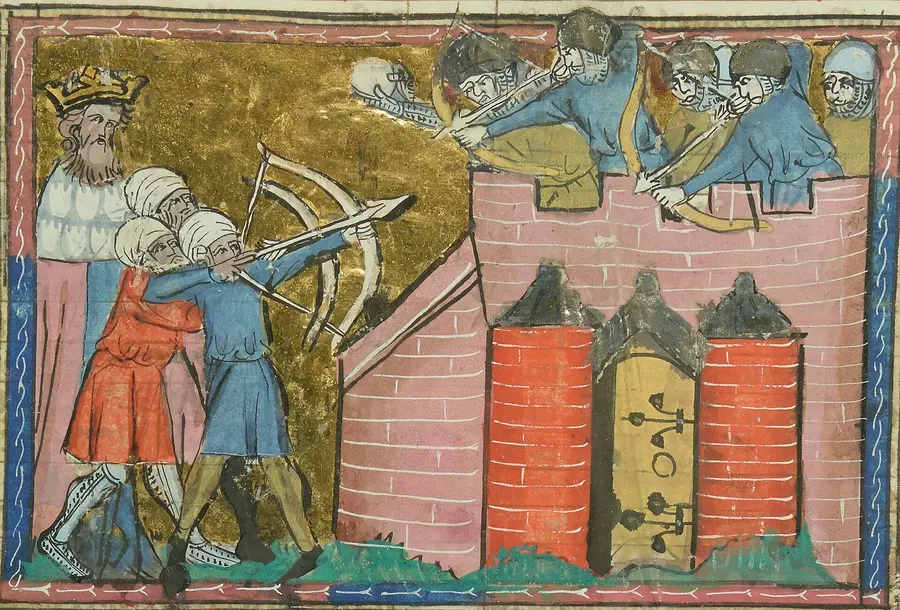
The armies of the First Crusade had spent a miserable winter outside Antioch, one of the great fortified cities of northern Syria, before a traitor let them over the walls at the start of June 1098. Within days they were themselves trapped. A large relief army under Kerbogha, the Turkish governor of Mosul, arrived and shut the crusaders inside the city they had just taken, short of food and horses and with some of their leaders slipping away.
Morale was restored in a strange way. A pilgrim named Peter Bartholomew claimed that visions had shown him where the lance that pierced Christ’s side lay buried, and a spearhead was dug up in the cathedral of St Peter. On 28 June the crusaders marched out to fight with the relic carried before them. Kerbogha’s coalition of emirs, divided and distrustful of him, broke up rather than stand, and the crusaders were left in possession of Antioch. The road to Jerusalem, which they would take the following year, was open.
Read the full storyHistory & Timeline →Source: Britannica: Siege of Antioch (1097-1098) ↗
1575Oda Nobunaga’s musketeers win the Battle of Nagashino
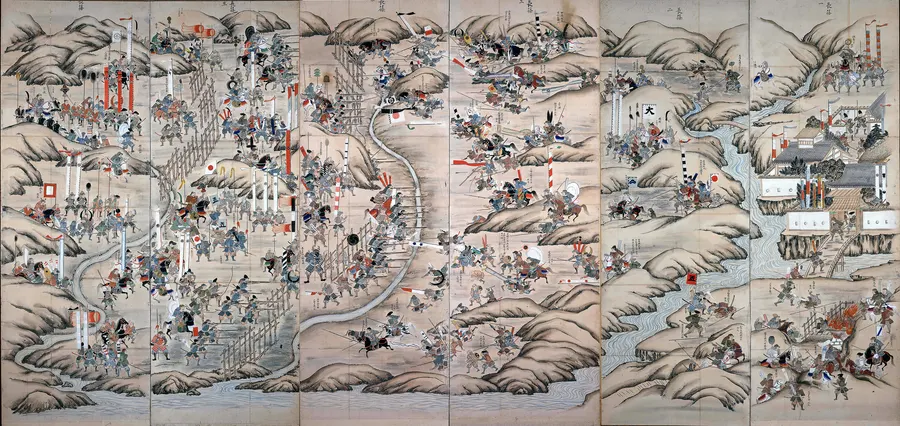
In the spring of 1575 Takeda Katsuyori, heir to one of the most feared warrior houses in Japan, laid siege to the castle of Nagashino in Mikawa province, held for Tokugawa Ieyasu. Tokugawa called on his ally Oda Nobunaga, the warlord who was fighting to bring the country under his control, and together they marched to relieve it with an army far larger than Katsuyori’s.
Nobunaga placed several thousand foot soldiers armed with matchlock guns behind a wooden palisade, and when the Takeda horsemen and infantry charged across the open ground they were cut down by the volleys. Most accounts give the date as 28 June 1575, though some give 29 June. The Takeda lost thousands of men and many of their best commanders, and never recovered. The battle became the famous example of how firearms, first brought to Japan by Portuguese traders in 1543, changed the way its wars were fought.
Read the full storyHistory & Timeline →Source: Britannica: Battle of Nagashino ↗
1914Archduke Franz Ferdinand is shot dead in Sarajevo
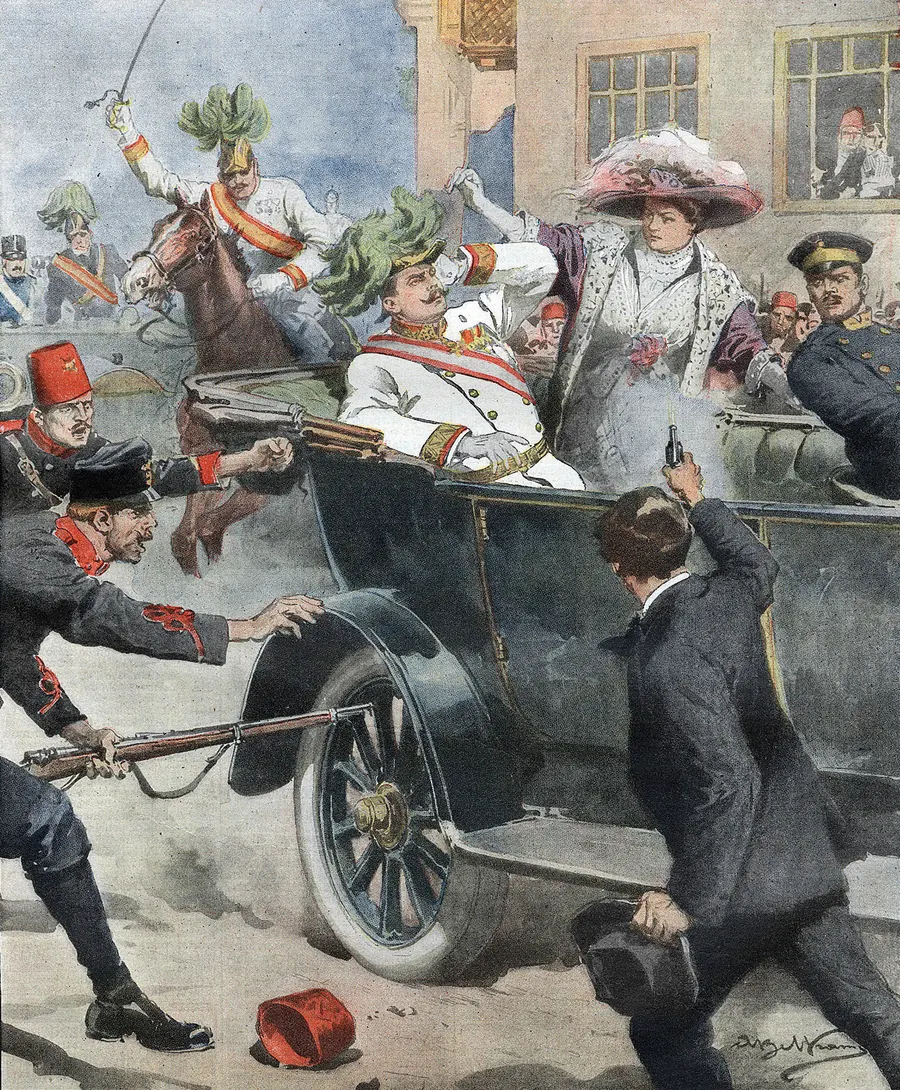
Franz Ferdinand, nephew and heir of the aged Austrian emperor Franz Joseph, went to Sarajevo in June 1914 to watch army manoeuvres in Bosnia, which Austria-Hungary had annexed six years earlier to the fury of neighbouring Serbia. Waiting for his motorcade on 28 June was a group of young Bosnian Serb nationalists, armed with help from a secret Serbian society. One of them threw a bomb that bounced off the archduke’s car and wounded people in the vehicle behind.
Later that morning the archduke set off to visit the wounded in hospital. His driver took a wrong turn and stopped to reverse, just where one of the conspirators, 19-year-old Gavrilo Princip, was standing. Princip fired twice, killing Franz Ferdinand and his wife Sophie. Austria-Hungary blamed Serbia and, backed by Germany, declared war on it exactly a month later. Within days the alliances of Europe had pulled the great powers into the First World War.
Read the full storyHistory & Timeline →Source: Britannica: Franz Ferdinand, archduke of Austria-Este ↗
1919The Treaty of Versailles is signed in the Hall of Mirrors
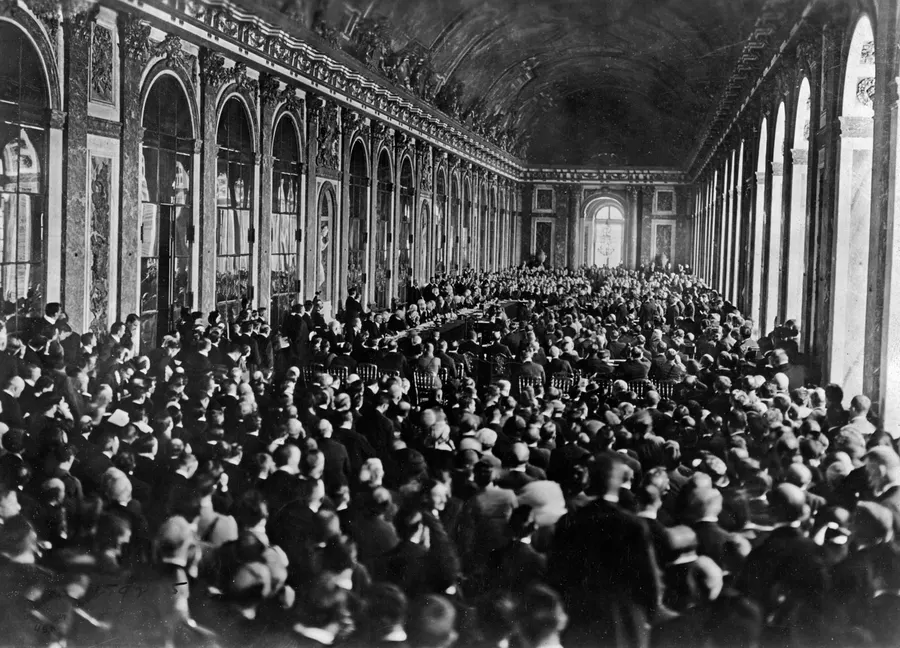
The fighting of the First World War had stopped with the armistice of November 1918, but a formal peace took months to write. At the Paris Peace Conference the terms were shaped by the leaders of the victorious powers, above all Woodrow Wilson of the United States, Georges Clemenceau of France and David Lloyd George of Britain. The German delegation was not allowed to negotiate and, faced with the threat of renewed war, its government reluctantly agreed to sign.
The place and day were chosen with care. The ceremony was held in the Hall of Mirrors at Versailles, where the German Empire had been proclaimed in 1871, on 28 June 1919, five years to the day after the shots in Sarajevo. Germany gave up territory and all its colonies, accepted strict limits on its armed forces and was required to pay reparations. The treaty also set up the League of Nations. Its terms were bitterly resented in Germany, and argument over whether they were too harsh or not harsh enough has continued ever since.
Read the full storyHistory & Timeline →Source: Château de Versailles: The Treaty of Versailles, 1919 ↗
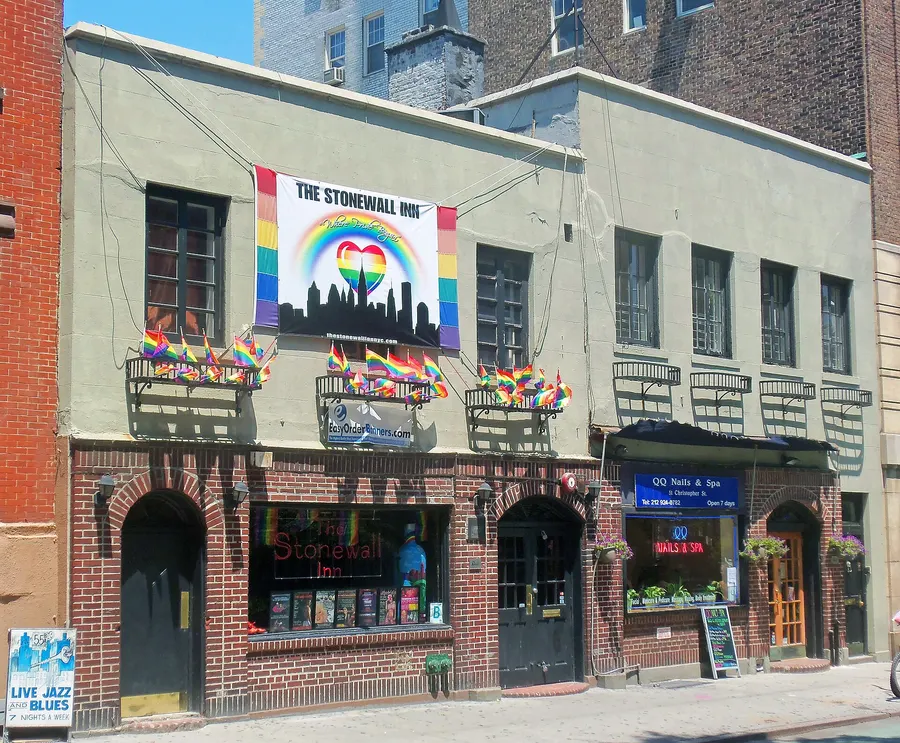
1969A police raid on the Stonewall Inn sparks an uprising
In the 1960s gay men, lesbians and transgender people in New York could be arrested for how they dressed or whom they danced with, and the bars where they met were raided often. The Stonewall Inn in Greenwich Village, run without a liquor licence, was one of the few places where they could gather openly. In the early hours of 28 June 1969 plain-clothes police officers arrived with a warrant, began questioning the customers and arrested staff and several patrons.
This time the crowd that gathered outside did not melt away. People jeered at the police and threw coins, bottles and debris, and the officers ended up barricaded inside the bar. Protests and clashes went on for several nights. In the months that followed new and far more outspoken campaigning groups were founded, and on the first anniversary marchers walked from Greenwich Village in what is remembered as one of the first Pride marches. The Stonewall Inn is now at the heart of a US national monument.
Read the full storyHistory & Timeline →Source: US National Park Service: Stonewall National Monument, history and culture ↗