1644Parliament and the Scots crush the Royalists at Marston Moor
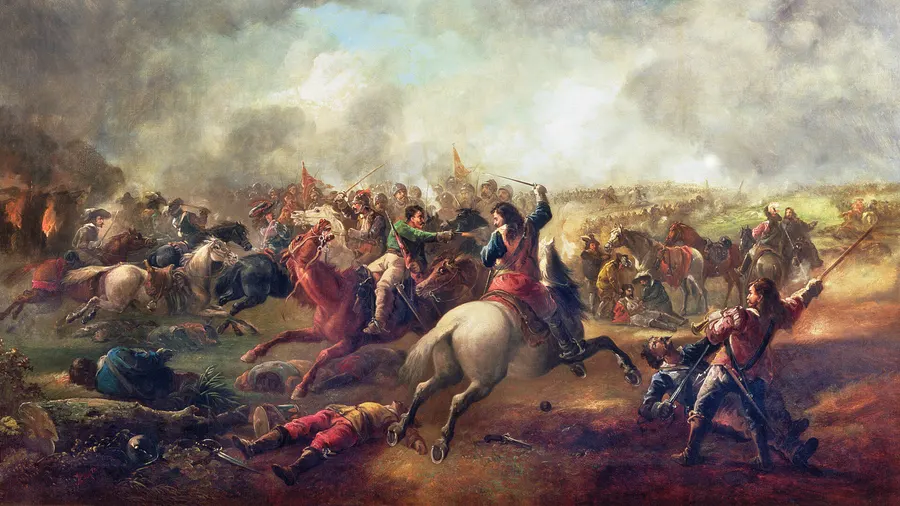
Two years into the English Civil War, the north of England was the king’s stronghold. In the spring of 1644 the Marquis of Newcastle’s Royalist army fell back into York, where it was besieged by the combined forces of Parliament and its new Scottish allies under the Earl of Leven and the Fairfaxes. Charles I sent his nephew, Prince Rupert of the Rhine, to break the siege, and Rupert’s arrival drew the allies out onto the open moor west of the city.
On 2 July 1644 the two armies faced each other all afternoon, and Rupert assumed there would be no fighting until the next day. Early in the evening, in a thunderstorm, the allies attacked. Oliver Cromwell’s horse routed the Royalist cavalry on one wing and then swung round to help the infantry break the centre. It was the largest battle of the war and the Royalists’ first major defeat. York surrendered within weeks, the king lost the north, and Cromwell’s reputation as a cavalry commander was made.
Read the full storyHistory & Timeline →Source: Britannica: Battle of Marston Moor ↗
1776The Continental Congress votes for American independence
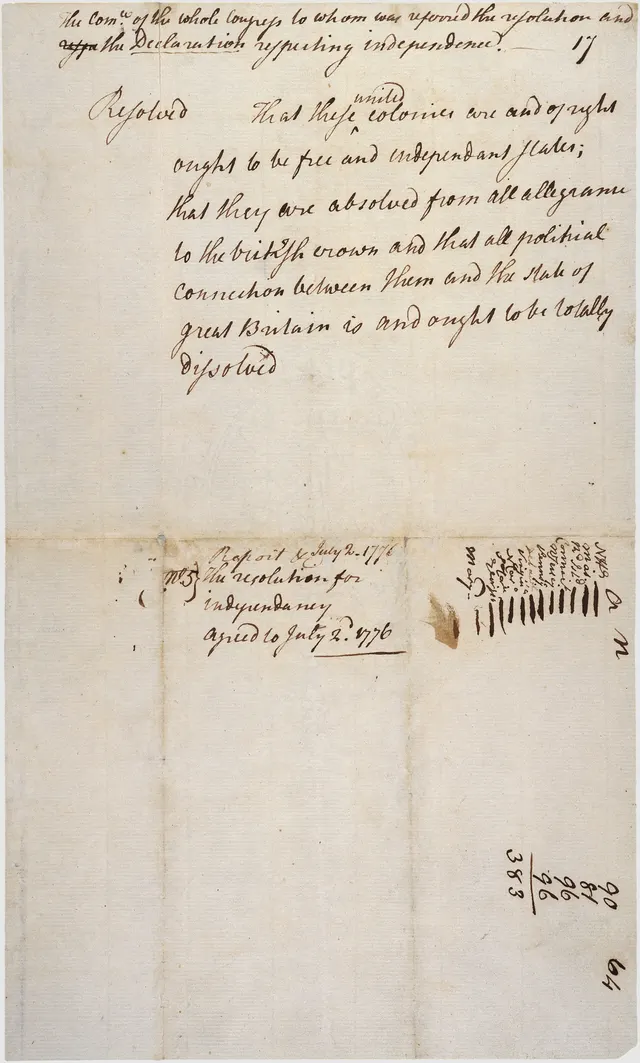
On 7 June 1776 Richard Henry Lee of Virginia rose in the Continental Congress at Philadelphia and moved that the united colonies ‘are, and of right ought to be, free and independent States’. His resolution also called for foreign alliances and a plan of confederation. Several delegations were not yet ready, or were waiting for instructions from home, so the vote was put off, and a committee including Thomas Jefferson was asked to draft a declaration in the meantime.
On 2 July 1776 Congress adopted Lee’s resolution. Twelve colonies voted in favour; New York abstained until its own convention agreed a few days later. The legal break with Britain was made that day, and John Adams expected 2 July to be celebrated for ever after. Instead Congress spent two more days revising Jefferson’s text, and it was the adoption of the Declaration of Independence on 4 July that Americans came to mark.
Read the full storyHistory & Timeline →Source: US National Archives: Lee Resolution (1776) ↗
1937Amelia Earhart and Fred Noonan vanish over the Pacific
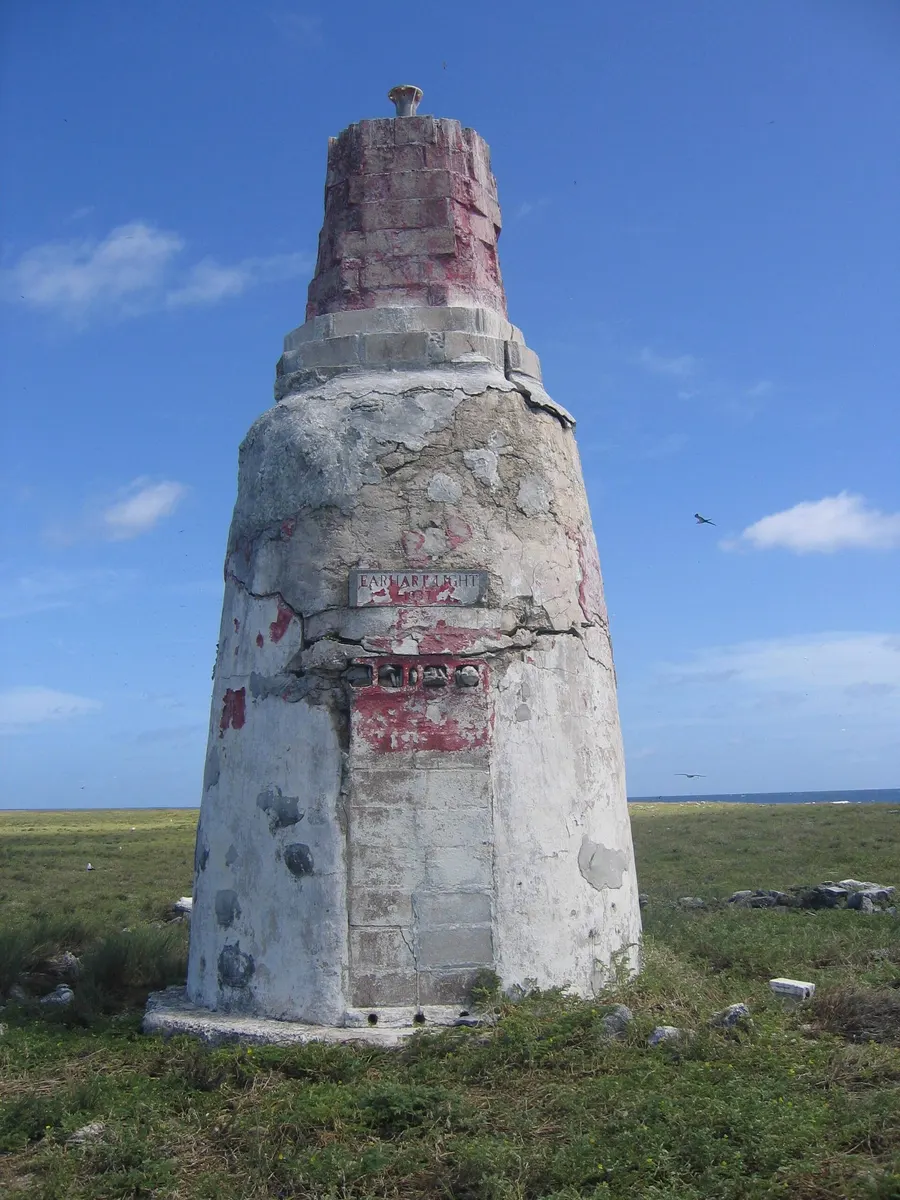
In 1937 Amelia Earhart, the most famous woman flyer in the world, set out to circle the globe near the equator in a twin-engined Lockheed Electra, with Fred Noonan as her navigator. After more than a month of flying eastward from California, they reached Lae in New Guinea with only the long Pacific stretch left. The next stop was Howland Island, a speck of land about 2 miles (3 km) long, where the US Coast Guard cutter Itasca waited to guide them in by radio.
They took off from Lae at 10am on 2 July 1937. Through the following morning, Howland time, the Itasca’s operators heard Earhart’s voice at intervals, saying that they must be close, that fuel was running low and that they could not see the ship. Confused radio arrangements meant the two sides never made proper contact. Her last message came at about 8.43am, and nothing more was heard. A huge naval search found no trace of the plane or its crew, and what became of them is still debated.
Read the full storyHistory & Timeline →Source: US National Archives: Radio log of the last communications of Amelia Earhart ↗
1964President Johnson signs the Civil Rights Act
In June 1963, as protests against segregation spread across the American South, President John F. Kennedy asked Congress for a sweeping civil rights law. After his assassination that November, his successor Lyndon Johnson made the bill his priority. It passed the House of Representatives in February 1964, but in the Senate southern members kept up a filibuster for weeks until, for the first time, the Senate voted to cut off debate on a civil rights measure.
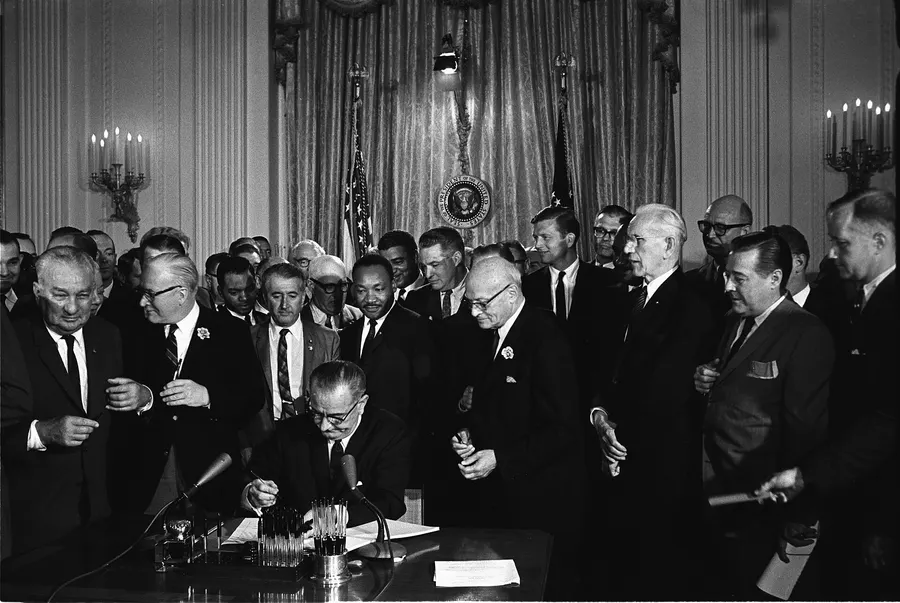
Johnson signed the Civil Rights Act on the evening of 2 July 1964, in a televised ceremony at the White House attended by Martin Luther King Jr and other civil rights leaders. The law banned discrimination on grounds of race, colour, religion, sex or national origin in employment, outlawed segregation in hotels, restaurants, theatres and other public places, and gave the federal government new powers to desegregate schools. It was the most far-reaching civil rights law since Reconstruction, and was followed a year later by the Voting Rights Act.
Read the full storyHistory & Timeline →Source: US National Archives: Civil Rights Act (1964) ↗
1976North and South are formally united as the Socialist Republic of Vietnam
The Geneva Accords of 1954 split Vietnam at the 17th parallel, leaving a communist state in the north with its capital at Hanoi and a Western-backed state in the south ruled from Saigon. Two decades of war followed. On 30 April 1975 North Vietnamese tanks entered Saigon and the southern government surrendered, but for more than a year the country remained two states in name, with a military administration running the south.
Elections for a single National Assembly were held across the whole country in April 1976. On 2 July 1976 the assembly formally reunited Vietnam as the Socialist Republic of Vietnam, with Hanoi as its capital, and Saigon was renamed Ho Chi Minh City after the revolutionary leader who had died in 1969. The division begun at Geneva was over, though the new state faced a shattered economy, the flight of hundreds of thousands of refugees by sea and, within a few years, fresh wars with Cambodia and China.
Read the full storyHistory & Timeline →Source: Britannica: Vietnam War, the fall of South Vietnam ↗