1811Venezuela declares its independence from Spain
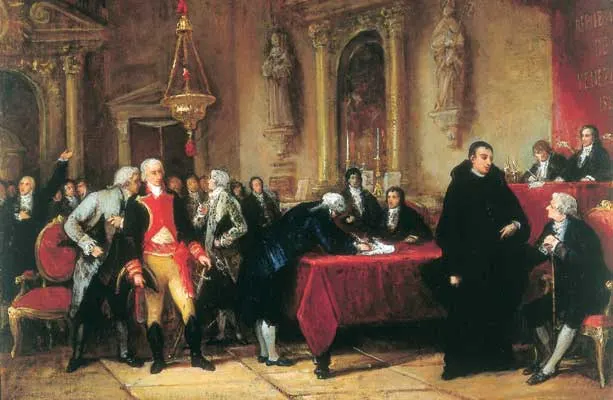
In 1808 Napoleon’s armies occupied Spain and forced its king from the throne, and across Spanish America local leaders began to ask who now had the right to govern them. In April 1810 the town council of Caracas pushed aside the Spanish captain-general and set up a junta of its own, still nominally loyal to the captive king. Early in 1811 a congress of deputies from the Venezuelan provinces gathered in Caracas to decide how far to go.
The young Simón Bolívar, not himself a deputy, urged a clean break, warning that hesitation would be fatal. After long debate the congress declared on 5 July 1811 that Venezuela was a free and independent state. It was the first such declaration in Spanish South America. The new republic, led in the field by Francisco de Miranda, collapsed within a year, and the war that followed lasted until Bolívar’s victory at Carabobo in 1821. Venezuela still celebrates 5 July as its Independence Day.
Read the full storyHistory & Timeline →Source: Britannica: Venezuela, the independence movement ↗
1852Frederick Douglass asks what the Fourth of July means to the enslaved
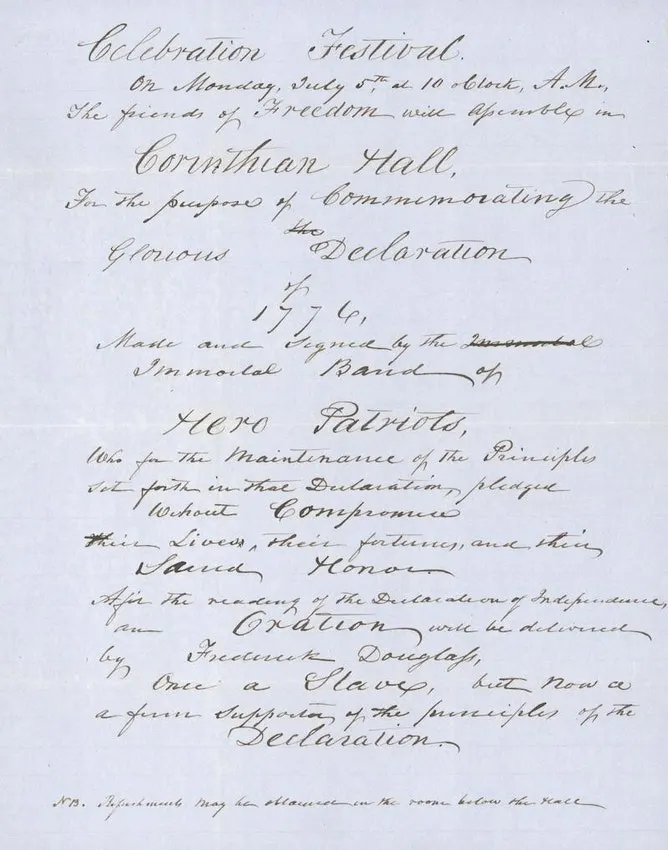
Frederick Douglass was born into slavery in Maryland and escaped to the North in 1838. By the 1850s he was the most famous Black abolitionist in America, a gifted speaker who ran his own newspaper in Rochester, New York. In 1852 the Rochester Ladies’ Anti-Slavery Sewing Society invited him to speak at the town’s Independence Day celebrations. He agreed, but asked to speak on 5 July, as many Black Americans in New York preferred to mark the day apart from the white celebrations.
On 5 July 1852 some 600 people filled Corinthian Hall to hear him. Douglass praised the founders of the republic, then turned on his listeners: while about three and a half million people were held in slavery, the nation’s festival of liberty was a sham. “This Fourth of July is yours, not mine,” he told them. The speech was printed in his newspaper a few days later and sold as a pamphlet. It is now counted among the greatest speeches in American history, and it is often read aloud around the Fourth of July.
Read the full storyHistory & Timeline →Source: National Park Service: What to the Slave is the Fourth of July? ↗
1948Britain’s National Health Service opens its doors
Before the Second World War, health care in Britain was a patchwork. Many workers were covered by a national insurance scheme, but their wives and children often were not, and hospitals were run by charities or local councils, some of them struggling to survive. The wartime Beveridge report of 1942 called for a health service for everyone, and after Labour won the 1945 election the new Minister of Health, Aneurin Bevan, drove the National Health Service Act through Parliament in 1946, overcoming fierce opposition from many doctors.
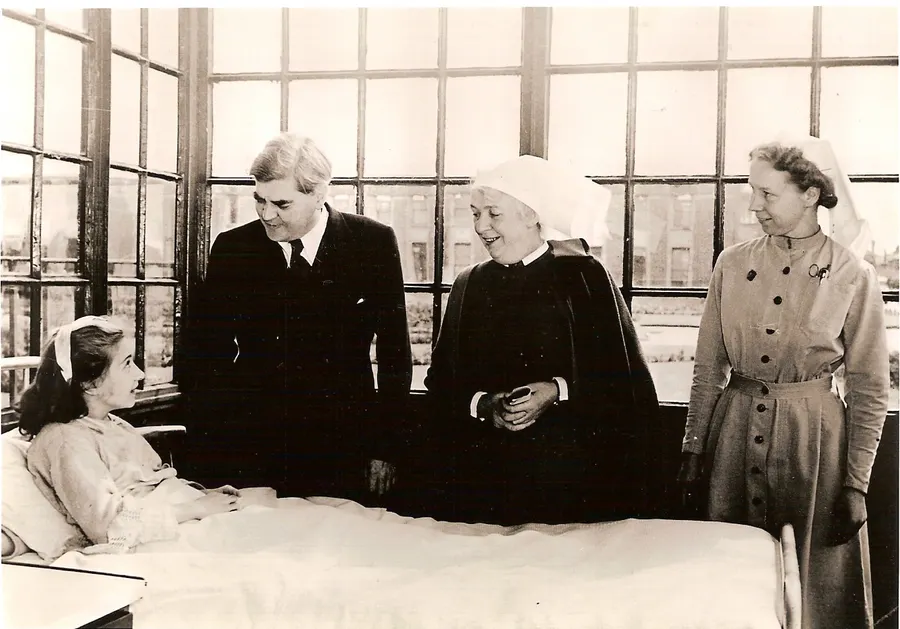
The service began on 5 July 1948. That day Bevan visited Park Hospital at Davyhulme, near Manchester, now Trafford General Hospital, which is remembered as the first NHS hospital. From then on hospital treatment, family doctors, dentists, opticians and medicines were available to everyone, paid for from taxation and free when they were used. Separate services were set up for England and Wales, Scotland and Northern Ireland. The NHS quickly became one of Britain’s most valued institutions.
Read the full storyHistory & Timeline →Source: The National Archives: The foundation of the NHS ↗
1975Cape Verde becomes an independent nation
The Cape Verde islands, off the coast of West Africa, were uninhabited when Portuguese navigators found them in the 15th century. They became a Portuguese colony and a way station for the Atlantic slave trade, and their people, of mixed African and European descent, often suffered droughts and famine. In 1956 Amílcar Cabral founded the African Party for the Independence of Guinea and Cape Verde (PAIGC), which from 1963 fought an armed struggle against Portugal on the African mainland in Guinea-Bissau.
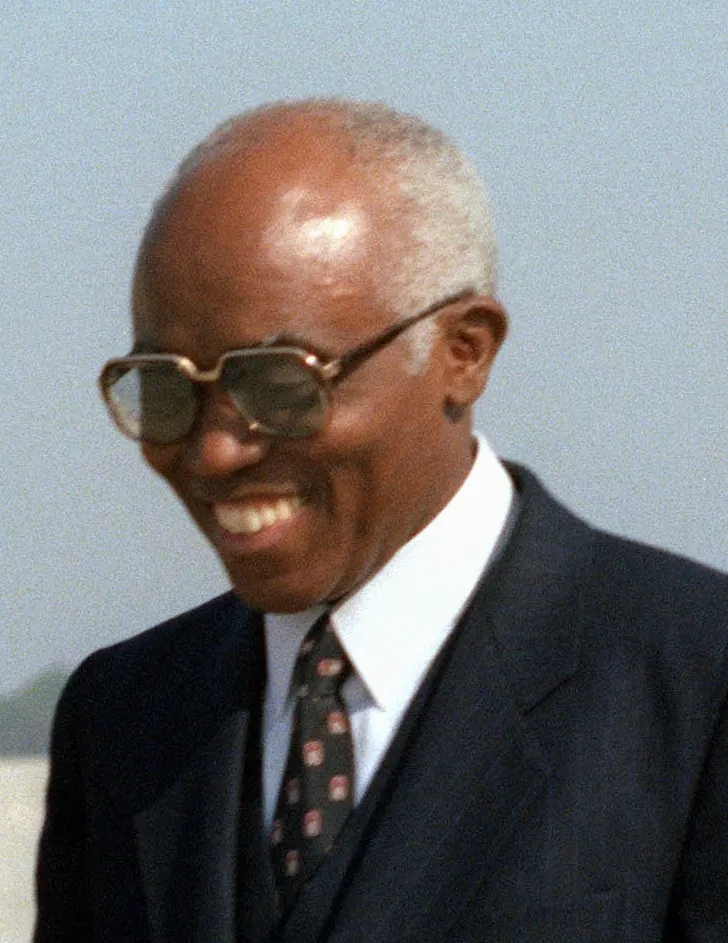
Cabral was murdered in 1973, but in April 1974 a revolution in Lisbon brought to power a government ready to give up the colonies. On 30 June 1975 Cape Verdeans elected a national assembly, and on 5 July 1975 it received independence from Portugal. Aristides Pereira, the PAIGC’s leader, became the first president and Pedro Pires the prime minister. Plans for union with Guinea-Bissau were abandoned after 1980, and in 1991 Cape Verde held its first multiparty elections. It has since been one of Africa’s most stable democracies.
Read the full storyHistory & Timeline →Source: Britannica: Cabo Verde, struggle for independence ↗