2011South Sudan becomes the world’s newest country
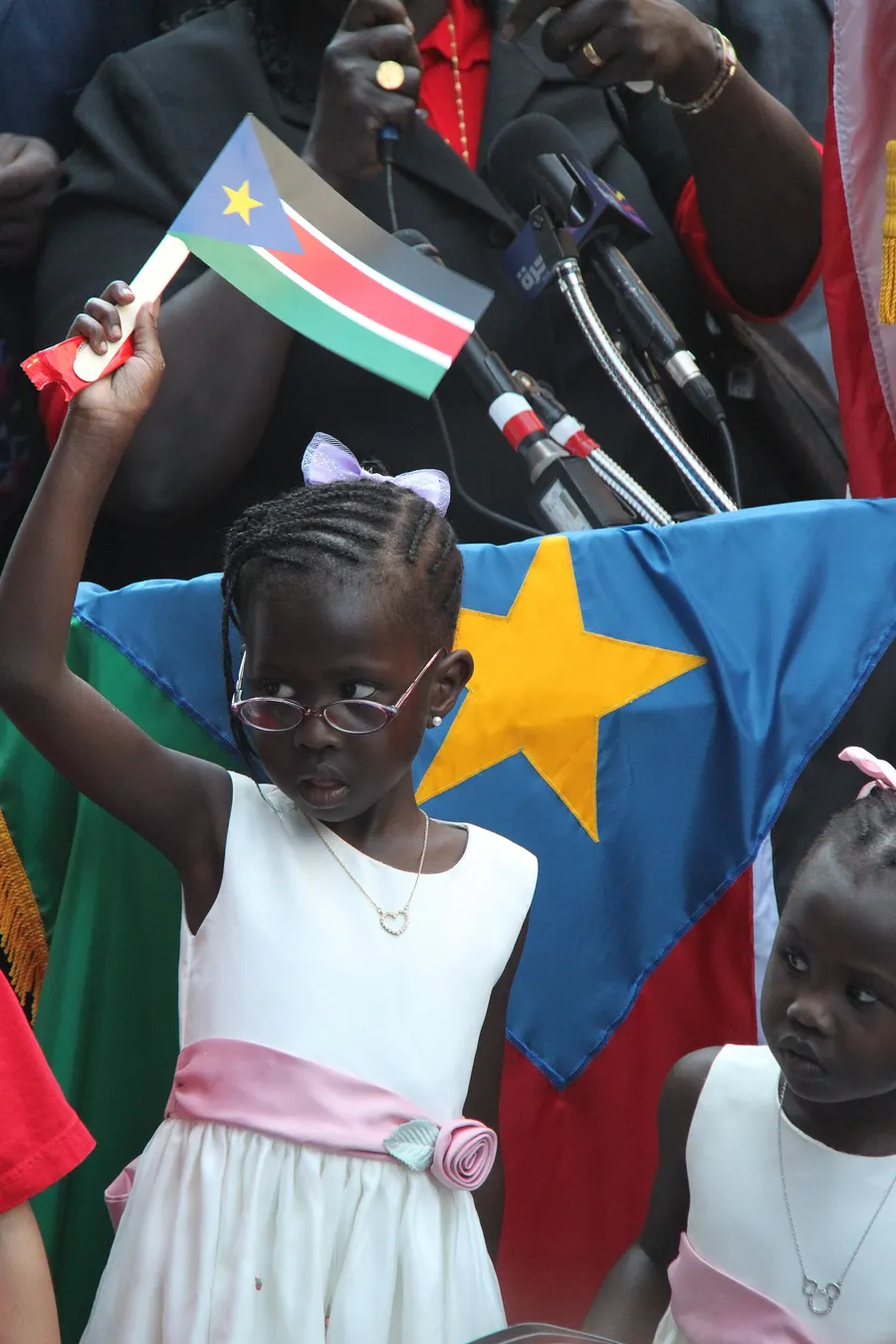
For most of the time since Sudan’s own independence in 1956, its mainly Christian and traditionalist south had been at war with the government in Khartoum. Two long civil wars cost well over a million lives before a peace agreement in 2005 gave the south self-rule and the promise of a vote on its future. When that referendum was held in January 2011, almost 99 per cent of voters chose to break away.
On 9 July 2011 huge crowds gathered in Juba for the independence ceremony. The Sudanese flag was lowered for the last time, the new flag was raised to cheers and ululation, and Salva Kiir took the oath as the first president of the Republic of South Sudan. The UN Secretary-General, Ban Ki-moon, was among the foreign guests, and within a week the country had joined the United Nations as its 193rd member. The hopes of that day were badly shaken when civil war broke out again at the end of 2013.
Read the full storyHistory & Timeline →Source: UN News: As South Sudan celebrates independence, UN vows support ↗
1816Argentina declares its independence at Tucumán
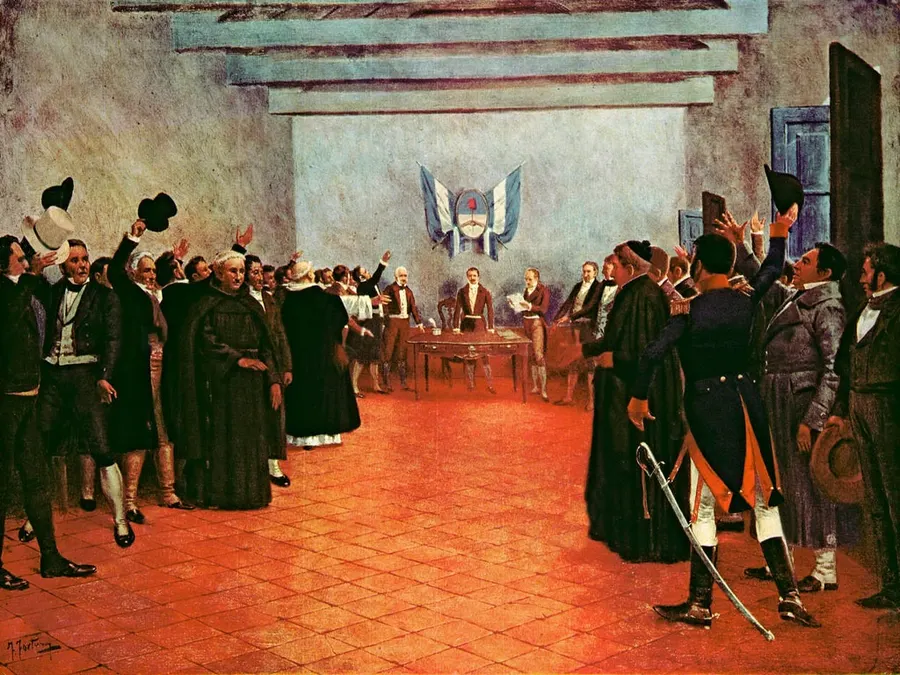
Buenos Aires had governed itself since the May Revolution of 1810, but it still did so in the name of the Spanish king, Ferdinand VII. By 1816 that fiction was wearing thin: Ferdinand was back on his throne, Spanish armies were winning back much of South America, and generals such as José de San Martín wanted a clear declaration before they marched on. Delegates from the provinces met in congress in San Miguel de Tucumán, far from the rivalries of the port city, from March that year.
On 9 July 1816 the congress, presided over by Francisco Narciso de Laprida, asked each deputy whether the provinces should be a free nation, independent of the kings of Spain. Every one said yes, and they signed a declaration of independence for the United Provinces in South America. Spain did not recognise it until 1859, but the modest colonial house in Tucumán where it was signed is now a national museum, and 9 July is Argentina’s Independence Day.
Read the full storyHistory & Timeline →Source: Argentina.gob.ar: 9 de julio de 1816, Declaración de la Independencia ↗
1762Catherine the Great seizes the Russian throne
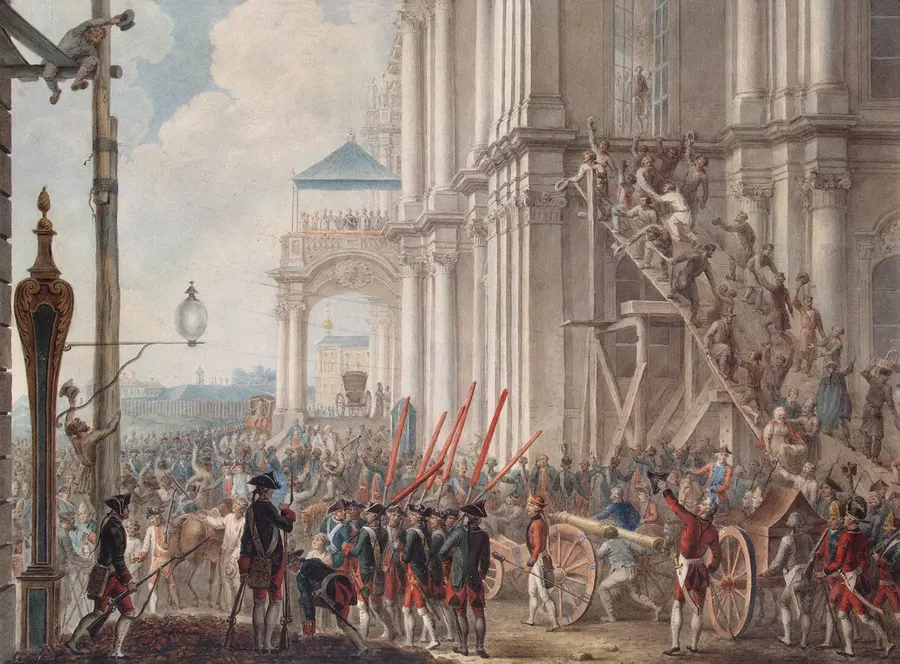
Peter III became emperor of Russia at the start of 1762 and quickly made powerful enemies. He pulled Russia out of the Seven Years’ War just as it was beating Prussia, whose king he openly admired, planned a new war to benefit his native Holstein, and offended both the Church and the elite Guards regiments. His German-born wife Catherine, whom he treated with contempt and was rumoured to be planning to set aside, had friends among the Guards, above all the Orlov brothers.
On 28 June 1762 by the Russian calendar, 9 July by ours, Catherine hurried into St Petersburg at dawn. The Izmailovsky regiment swore allegiance to her as sole empress, the other Guards regiments followed, and she was proclaimed in the capital that day. Peter, isolated, abdicated the next day and died in custody within a week, in circumstances never fully explained. Catherine II went on to rule for 34 years, one of the longest and most ambitious reigns in Russian history.
Read the full storyHistory & Timeline →Source: Presidential Library: Russian palace revolution, Peter III dethroned ↗
1357Work begins on Prague’s Charles Bridge
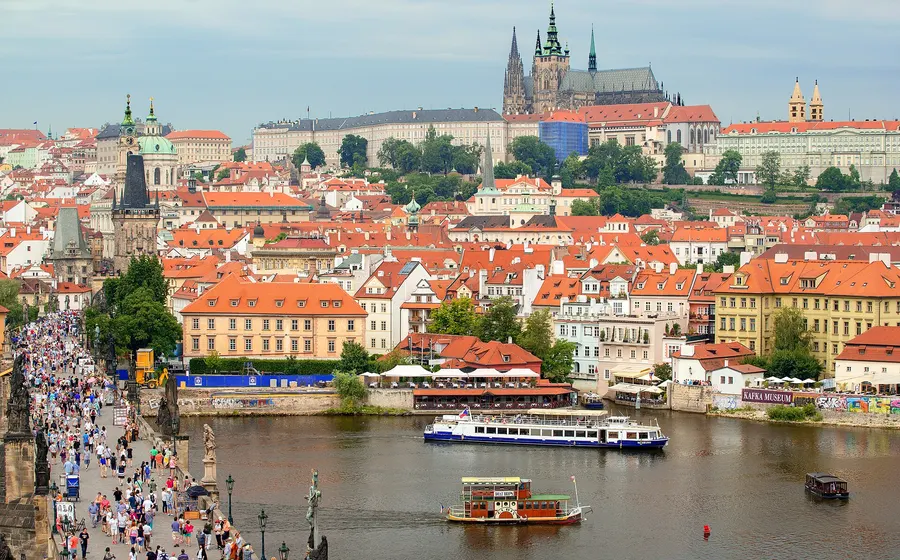
In 1342 a flood badly damaged the Judith Bridge, the stone crossing that had linked the two halves of Prague across the Vltava since the 12th century. The city was growing in importance: its king, Charles IV, was also Holy Roman Emperor, and he was turning Prague into a capital to match. He ordered a new, wider bridge.
According to the city’s tradition, the foundation stone was laid on 9 July 1357 at 5.31 in the morning, a moment said to have been picked by the court astronomers because the figures read 1-3-5-7-9-7-5-3-1, rising and falling like a bridge. The work, led by the architect Peter Parler, took until the early 1400s. Known for centuries simply as the Stone Bridge, it was named after Charles only in the 19th century, and the baroque statues that now line it were added from the late 1600s onwards.
Read the full storyHistory & Timeline →Source: Prague City Tourism: Charles Bridge ↗
1850The Báb is executed in Tabriz
In 1844 a young merchant from Shiraz, Sayyed Ali Muhammad, announced that he was the Báb, the ‘Gate’, a messenger sent to prepare the way for a promised figure awaited by all faiths. His teachings spread quickly across Iran and alarmed both the Shia clergy and the Qajar state. He was held in remote fortresses in Azerbaijan, while clashes between his followers and government forces broke out in several towns.
The chief minister, Mirza Taqi Khan, decided that the Báb must die. On 9 July 1850 he and a young disciple were suspended against a wall of the barracks square in Tabriz and shot by a regiment of soldiers. Accounts by his followers say the first volley only cut the ropes, and that the sentence was carried out with a second regiment. His remains were later hidden and eventually taken to Haifa, where his shrine stands on Mount Carmel. Bahá’ís, whose faith grew from his movement, remember him as a forerunner of Bahá’u’lláh.
Read the full storyHistory & Timeline →Source: Encyclopaedia Iranica: Bāb, ʿAli Moḥammad Širāzi ↗