
HISTORY & TIMELINE
9 July

A journey through
9 July in history

The story of 9 July runs from the acclaiming of the emperor Avitus in Roman Gaul in 455 to the launch of the African Union in Durban in 2002 and the birth of South Sudan in 2011. In between come a great earthquake and tsunami in north-eastern Japan, the first stone of Prague’s Charles Bridge, a palace coup in St Petersburg, the first law in the British Empire to limit slavery, Argentina’s declaration of independence, the execution of the Báb in Tabriz, the royal signature that created Australia, a warning to the world about nuclear war, the highest wave ever recorded, Warhol’s soup cans and a World Cup final remembered for a headbutt.

I
EARLIEST RECORDS

Ancient & Early History

The earliest worthwhile records and events connected with this date.

455
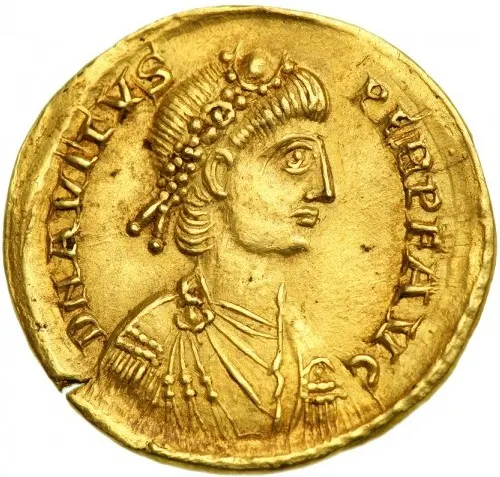
A gold solidus of the emperor Avitus, struck at ArlesA gold solidus of the emperor Avitus, struck at ArlesImage: Numismatica Ars Classica NAC AG · CC BY-SA 3.0 ch
politics · Europe

Avitus is acclaimed Roman emperor in Gaul

In the spring of 455 the western Roman emperor Petronius Maximus was killed and Rome was sacked by the Vandals. In Gaul, the Visigothic king Theoderic II proclaimed his friend Avitus, a Gallo-Roman noble and general, emperor at Toulouse, and the leading men of Roman Gaul acclaimed him at Arles on 9 July 455. His reign was short: in 456 he was defeated by his own generals, Ricimer and Majorian, and ended his days as a bishop.

Source: Britannica: Avitus ↗
II
THE MIDDLE AGES

Medieval History

Kingdoms, conflict, faith, power and the changing medieval world.

869
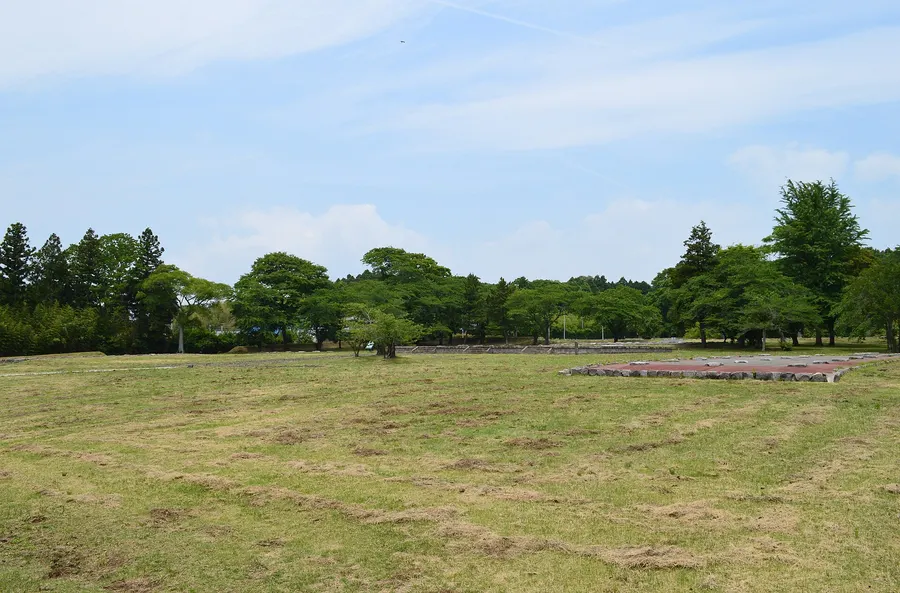
The site of Taga Castle, the government seat of Mutsu province, near SendaiThe site of Taga Castle, the government seat of Mutsu province, near SendaiImage: Saigen Jiro · CC0
world · Asia

The Jōgan earthquake and tsunami strike north-eastern Japan

Japan’s court chronicles record a great earthquake in the province of Mutsu on the 26th day of the fifth month of the year Jōgan 11, 9 July 869 in the Julian calendar. People could not stand, buildings collapsed at the government seat of Taga, and a giant tsunami swept inland and carried everything away. Sand it left behind near Sendai, found by geologists, showed that the 2011 tsunami had a forerunner of similar size.

Source: US Geological Survey: Tsunami evidence in Arahama, AD 869 and 2011 ↗
1357
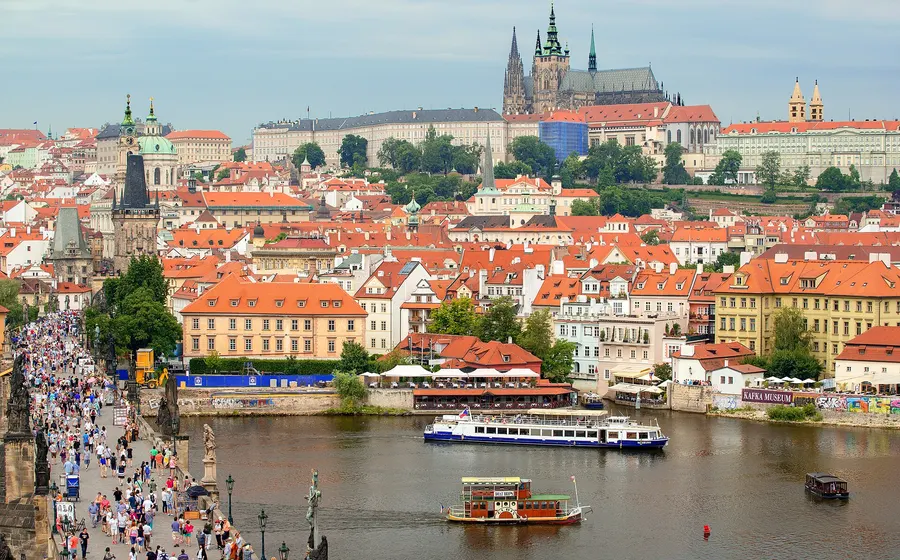
Charles Bridge crossing the Vltava below Prague Castle, photographed in 2015Charles Bridge crossing the Vltava below Prague Castle, photographed in 2015Image: Peter K Burian · CC BY-SA 4.0
world · Europe

Work begins on Prague’s Charles Bridge

In 1342 a flood badly damaged the Judith Bridge, the stone crossing that had linked the two halves of Prague across the Vltava since the 12th century. The city was growing in importance: its king, Charles IV, was also Holy Roman Emperor, and he was turning Prague into a capital to match. He ordered a new, wider bridge. According to the city’s tradition, the foundation stone was laid on 9 July 1357 at 5.31 in the morning, a moment said to have been picked by the court astronomers because the figures read 1-3-5-7-9-7-5-3-1, rising and falling like a bridge. The work, led by the architect Peter Parler, took until the early 1400s. Known for centuries simply as the Stone Bridge, it was named after Charles only in the 19th century, and the baroque statues that now line it were added from the late 1600s onwards.

Source: Prague City Tourism: Charles Bridge ↗
III
A CHANGING WORLD

Early Modern Era

Exploration, political change, scientific development and expanding global connections.

1762
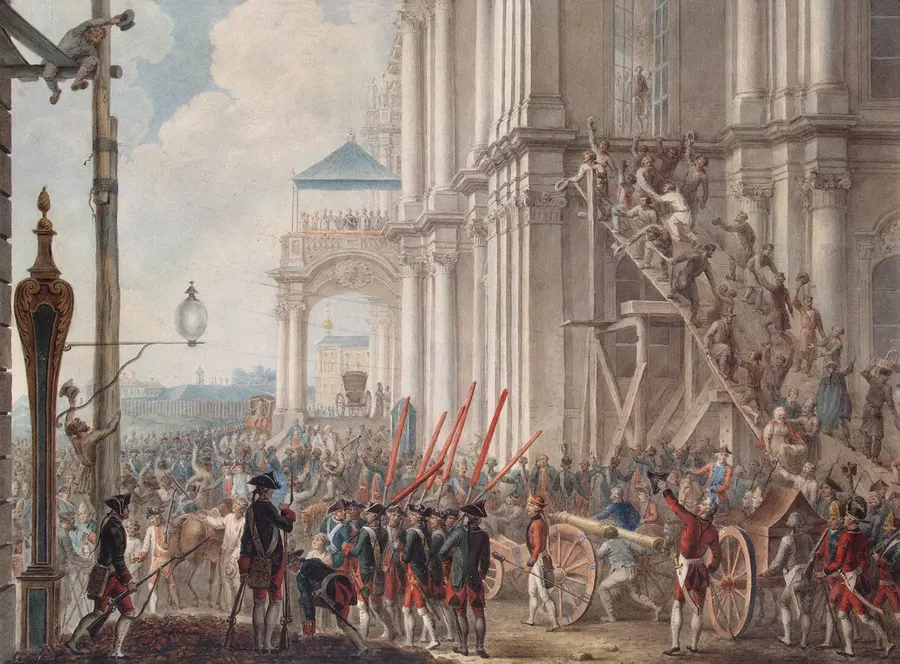
Guardsmen and crowds hail Catherine on a palace balcony in St Petersburg in 1762, in a print after Joachim KaestnerGuardsmen and crowds hail Catherine on a palace balcony in St Petersburg in 1762, in a print after Joachim KaestnerImage: Кестнер (Kaestner) Иоахим X. · Public domain
politics · Europe

Catherine the Great seizes the Russian throne

Peter III became emperor of Russia at the start of 1762 and quickly made powerful enemies. He pulled Russia out of the Seven Years’ War just as it was beating Prussia, whose king he openly admired, planned a new war to benefit his native Holstein, and offended both the Church and the elite Guards regiments. His German-born wife Catherine, whom he treated with contempt and was rumoured to be planning to set aside, had friends among the Guards, above all the Orlov brothers. On 28 June 1762 by the Russian calendar, 9 July by ours, Catherine hurried into St Petersburg at dawn. The Izmailovsky regiment swore allegiance to her as sole empress, the other Guards regiments followed, and she was proclaimed in the capital that day. Peter, isolated, abdicated the next day and died in custody within a week, in circumstances never fully explained. Catherine II went on to rule for 34 years, one of the longest and most ambitious reigns in Russian history.

Source: Presidential Library: Russian palace revolution, Peter III dethroned ↗
1793
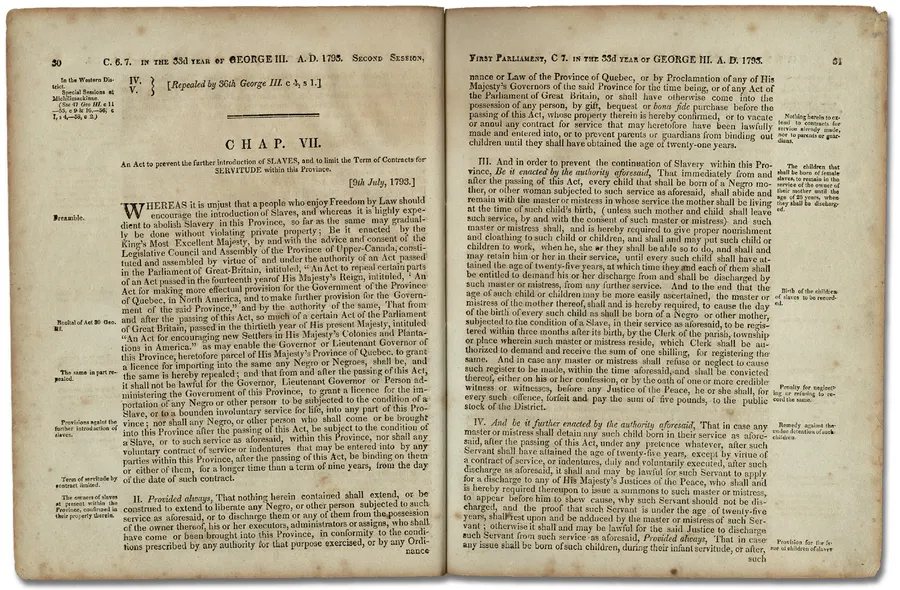
The printed text of Upper Canada's 1793 act to limit slaveryThe printed text of Upper Canada’s 1793 act to limit slaveryImage: Legislative Assembly of Upper Canada · Public domain
politics · Americas

Upper Canada passes the first law in the British Empire to limit slavery

In March 1793 an enslaved woman, Chloe Cooley, was bound and forced into a boat at Queenston to be sold across the river into the United States, fighting all the way. Her case spurred the lieutenant-governor, John Graves Simcoe, to act, but slave-owning members of the assembly resisted. The compromise act, given royal assent on 9 July 1793, banned bringing new enslaved people into Upper Canada and freed children born to enslaved mothers at 25, but freed no one who was already enslaved.

Source: The Canadian Encyclopedia: 1793 Act to Limit Slavery in Upper Canada ↗
IV
THE NINETEENTH CENTURY

The 1800s

Industry, empire, invention, reform and a century of enormous transformation.

1816
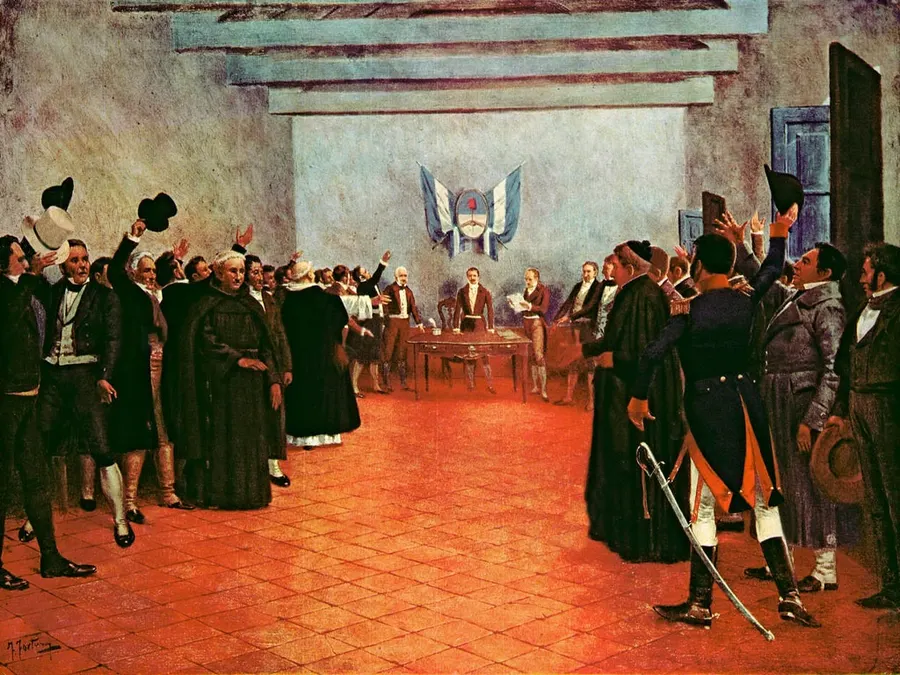
The Congress of Tucumán declaring independence in 1816, as imagined by the painter Francisco FortunyThe Congress of Tucumán declaring independence in 1816, as imagined by the painter Francisco FortunyImage: Francisco Fortuny · Public domain
politics · Americas

Argentina declares its independence at Tucumán

Buenos Aires had governed itself since the May Revolution of 1810, but it still did so in the name of the Spanish king, Ferdinand VII. By 1816 that fiction was wearing thin: Ferdinand was back on his throne, Spanish armies were winning back much of South America, and generals such as José de San Martín wanted a clear declaration before they marched on. Delegates from the provinces met in congress in San Miguel de Tucumán, far from the rivalries of the port city, from March that year. On 9 July 1816 the congress, presided over by Francisco Narciso de Laprida, asked each deputy whether the provinces should be a free nation, independent of the kings of Spain. Every one said yes, and they signed a declaration of independence for the United Provinces in South America. Spain did not recognise it until 1859, but the modest colonial house in Tucumán where it was signed is now a national museum, and 9 July is Argentina’s Independence Day.

Source: Argentina.gob.ar: 9 de julio de 1816, Declaración de la Independencia ↗
1850
The barracks square in Tabriz where the Báb was executed, from an early photographThe barracks square in Tabriz where the Báb was executed, from an early photographImage: Photograph published in The Dawn-Breakers (Nabíl's Narrative), 1932; via bahai-library.com · Public domain
world · Middle East

The Báb is executed in Tabriz

In 1844 a young merchant from Shiraz, Sayyed Ali Muhammad, announced that he was the Báb, the ‘Gate’, a messenger sent to prepare the way for a promised figure awaited by all faiths. His teachings spread quickly across Iran and alarmed both the Shia clergy and the Qajar state. He was held in remote fortresses in Azerbaijan, while clashes between his followers and government forces broke out in several towns. The chief minister, Mirza Taqi Khan, decided that the Báb must die. On 9 July 1850 he and a young disciple were suspended against a wall of the barracks square in Tabriz and shot by a regiment of soldiers. Accounts by his followers say the first volley only cut the ropes, and that the sentence was carried out with a second regiment. His remains were later hidden and eventually taken to Haifa, where his shrine stands on Mount Carmel. Bahá’ís, whose faith grew from his movement, remember him as a forerunner of Bahá’u’lláh.

Source: Encyclopaedia Iranica: Bāb, ʿAli Moḥammad Širāzi ↗
1900
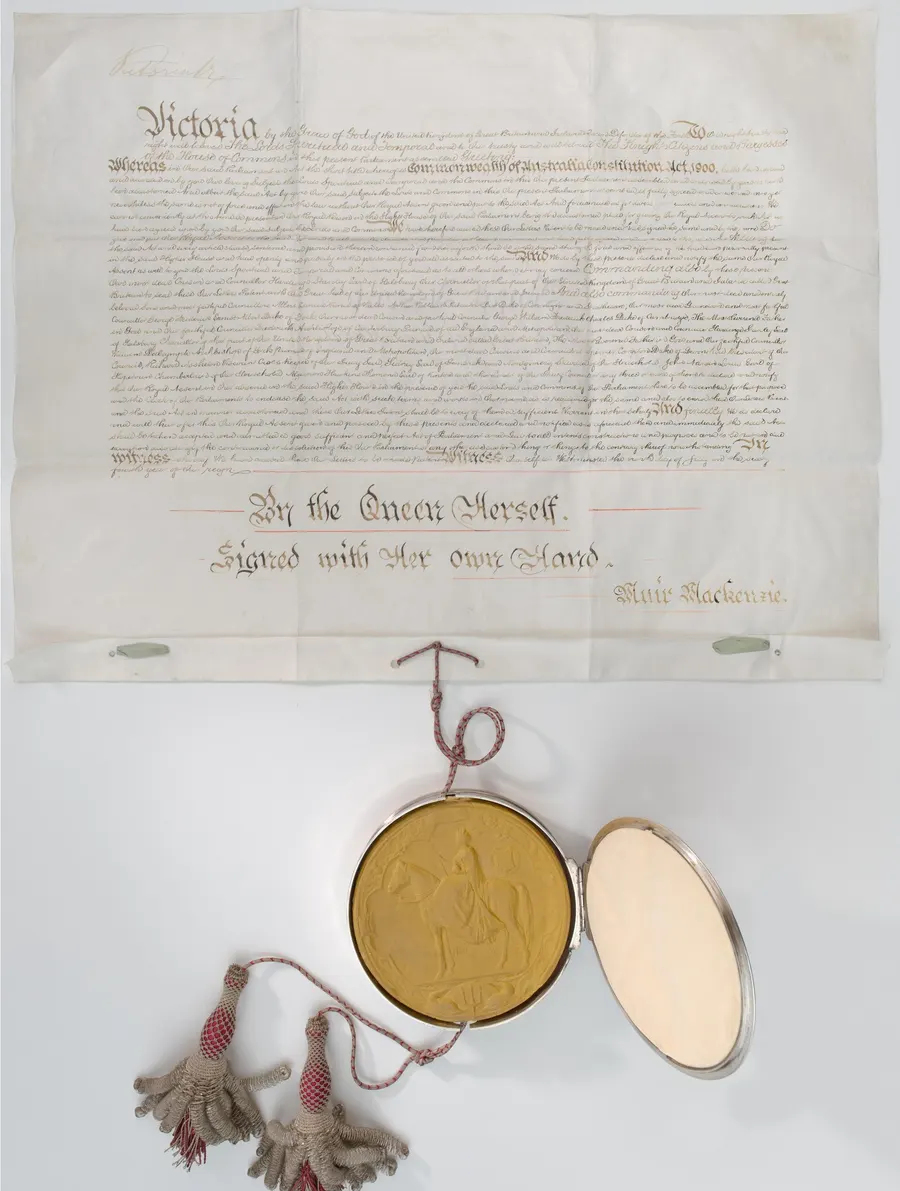
Queen Victoria's signed commission of assent to the Commonwealth of Australia Constitution Act, with its sealQueen Victoria’s signed commission of assent to the Commonwealth of Australia Constitution Act, with its sealImage: National Archives of Australia · Public domain
politics · Oceania

Queen Victoria signs the act that creates Australia

Through the 1890s delegates from the six Australian colonies drafted a federal constitution, and voters in the colonies approved it in referendums. Because the colonies were British, the constitution had to be passed as an act of the parliament in London. On 9 July 1900 Queen Victoria signed the commission giving her assent at Windsor Castle. The act said the new Commonwealth would begin on a date set by proclamation, and Australia came into being on 1 January 1901.

Source: National Archives of Australia: Royal Commission of Assent to the Commonwealth of Australia Constitution Act ↗
V
THE TWENTIETH CENTURY

The 1900s

War and peace, technological leaps, social change, politics, sport and popular culture.

1955
Caxton Hall in Westminster, London, where the manifesto was launchedCaxton Hall in Westminster, London, where the manifesto was launchedImage: Eirian Evans · CC BY-SA 2.0
science · Global

The Russell–Einstein Manifesto warns of nuclear war

The philosopher Bertrand Russell drafted a warning that hydrogen bombs could end the human race, and Albert Einstein signed it days before his death in April 1955. On 9 July 1955 Russell read it to a packed press conference at Caxton Hall in London, chaired by the physicist Joseph Rotblat. Signed by eleven leading scientists, it urged people to ‘remember your humanity’. It led to the first Pugwash conference of scientists in 1957, and to a Nobel Peace Prize for Rotblat and Pugwash in 1995.

Source: Pugwash Conferences: London launch of the Russell-Einstein Manifesto ↗
1958
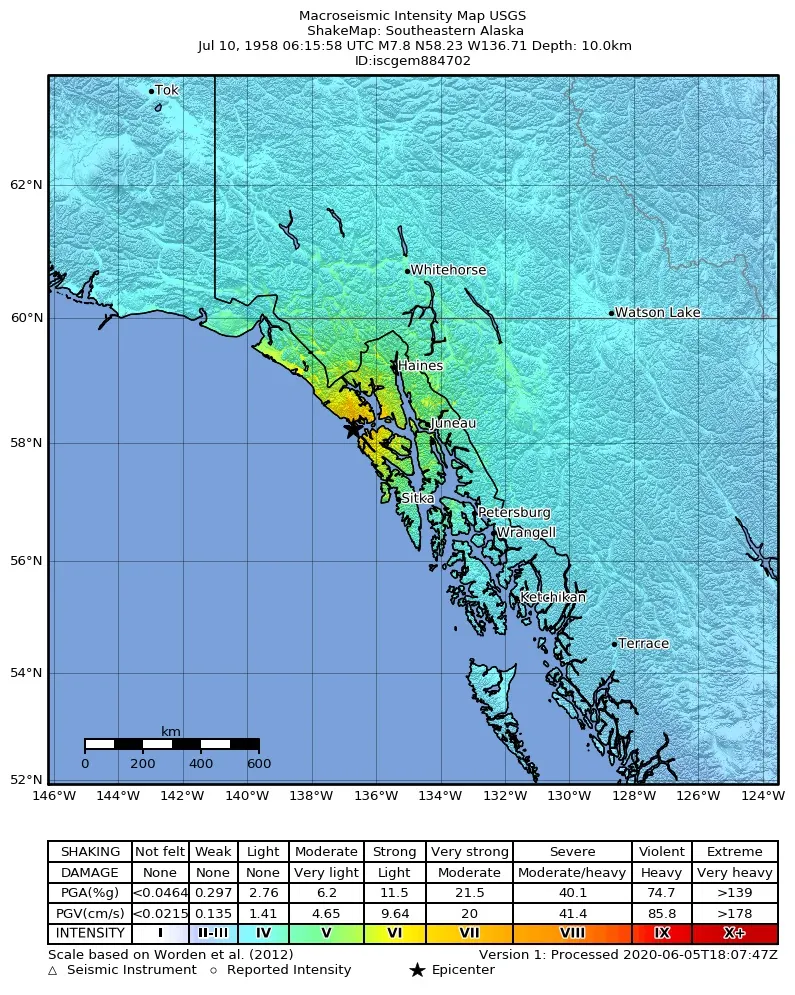
A US Geological Survey map of the shaking from the 1958 earthquake in south-east Alaska; the star marks the epicentreA US Geological Survey map of the shaking from the 1958 earthquake in south-east Alaska; the star marks the epicentreImage: US Geological Survey (ShakeMap) · CC0
science · Americas

A rockslide raises the highest wave ever recorded

Lituya Bay is a deep, narrow fjord on the coast of south-east Alaska, running up to glaciers along the Fairweather Fault. On the evening of 9 July 1958 local time (10 July in universal time), a major earthquake on the fault shook loose an enormous mass of rock from the steep wall at the head of the bay, and it plunged into the water of Gilbert Inlet. The splash sent a wave surging across the inlet and down the bay. On the spur opposite the slide it stripped away the forest to a height of 1,720 feet, about 524 metres, above sea level, the highest wave run-up ever recorded. Three fishing boats were in the bay: one rode out the wave, one was carried over the spit at the entrance and its crew survived, and one sank with its two people. The US Geological Survey geologist Don Miller mapped the damage, and his study made the bay a classic case of how landslides can cause giant waves.

Source: US Geological Survey Professional Paper 354-C: Giant waves in Lituya Bay, Alaska (D.J. Miller, 1960) ↗
1962
The building on La Cienega Boulevard, Los Angeles, that once housed the Ferus Gallery, in 2023The building on La Cienega Boulevard, Los Angeles, that once housed the Ferus Gallery, in 2023Image: TonyTheTiger · CC BY-SA 4.0
culture · Americas

Warhol’s soup cans go on show in Los Angeles

In 1962 Andy Warhol was a successful commercial illustrator in New York, but almost unknown as a painter. Irving Blum, who ran the Ferus Gallery in Los Angeles, saw some of his soup-can canvases in his studio and offered him a show. Warhol painted 32 of them, one for each variety of soup that Campbell’s then sold, each almost identical to the next. The exhibition opened on 9 July 1962, without Warhol and without a formal opening party. Blum set the canvases in a single line on narrow shelves, like tins on a supermarket shelf. Many visitors were baffled. Only a handful of paintings sold, so Blum persuaded the buyers to give them back and bought the whole set himself for 1,000 dollars. It was Warhol’s first solo show of paintings, and the series now hangs in the Museum of Modern Art in New York as one of the defining works of Pop art.

Source: Museum of Modern Art: Andy Warhol, Campbell’s Soup Cans, 1962 ↗
VI
2000 TO TODAY

Modern Day

The events of recent decades that have already become part of the historical record.

2002
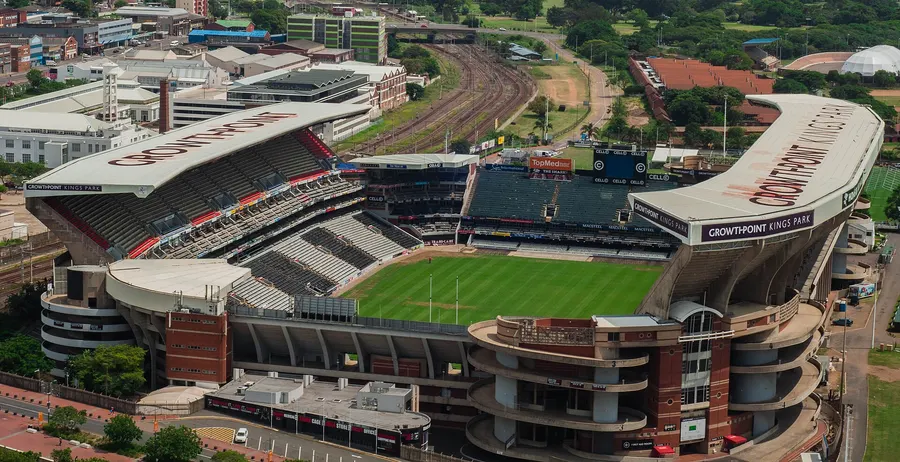
Kings Park Stadium in Durban, the venue of the African Union's launch in 2002Kings Park Stadium in Durban, the venue of the African Union’s launch in 2002Image: Vauxhall Bridgefoot · CC BY-SA 4.0
politics · Africa

The African Union is launched in Durban

In 1999 Africa’s leaders agreed to replace the Organisation of African Unity, founded in 1963 to fight colonialism, with a body that could do more for peace, democracy and development. The African Union was formally launched at a stadium in Durban, South Africa, on 9 July 2002, at its first summit of heads of state, and South Africa’s president Thabo Mbeki became its first chair. Its headquarters are in Addis Ababa.

Source: African Union: About the African Union ↗
2006
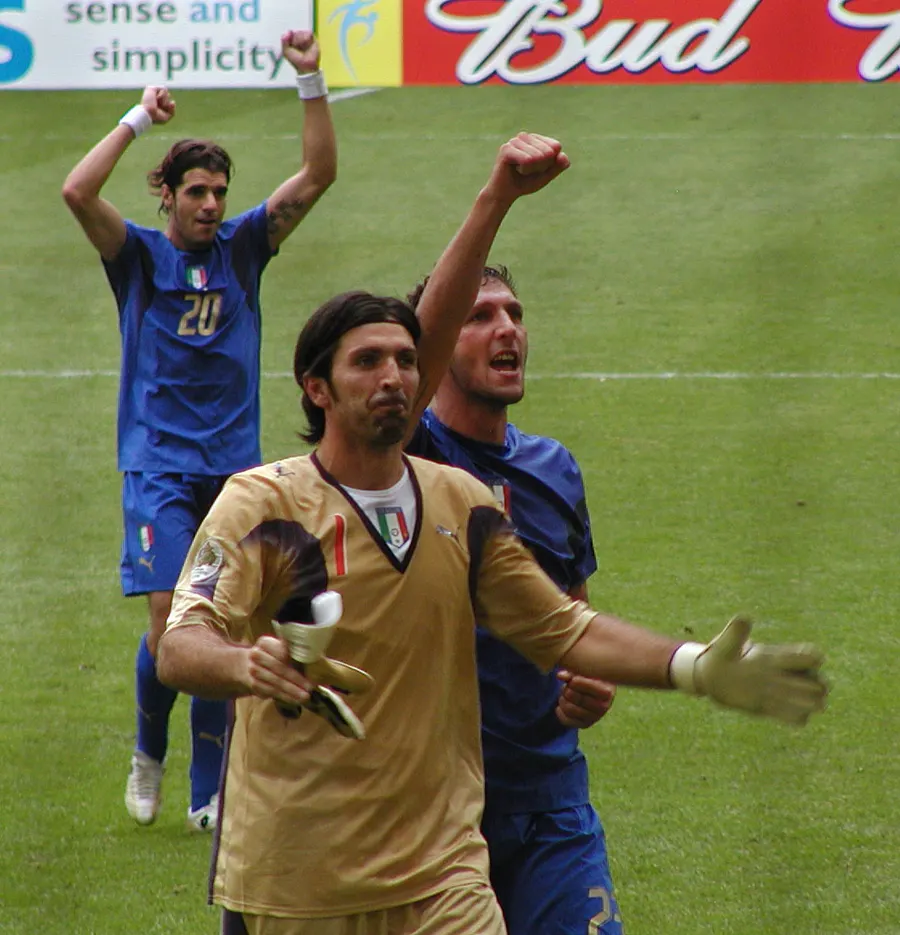
Italy's goalkeeper Gianluigi Buffon with Marco Materazzi and Simone Perrotta at the 2006 World Cup in GermanyItaly’s goalkeeper Gianluigi Buffon with Marco Materazzi and Simone Perrotta at the 2006 World Cup in GermanyImage: Original: Olaf Nordwich / Derivative work: Danyele · CC BY-SA 2.0
sport · Europe

Italy win the World Cup as Zidane is sent off

Italy arrived at the 2006 World Cup in Germany under a cloud, as a match-fixing scandal engulfed several of its biggest clubs back home. France, the 1998 champions, had made a slow start but came alive in the knockout rounds, led by Zinedine Zidane, who had announced that the tournament would be his last. The two sides met in the final at Berlin’s Olympic Stadium on 9 July 2006. Zidane put France ahead after seven minutes with a cheekily chipped penalty, and Marco Materazzi headed Italy level twelve minutes later. Deep into extra time, after an exchange of words, Zidane drove his head into Materazzi’s chest and was sent off in his final match. The game ended 1-1, and Italy won the shoot-out 5-3, Fabio Grosso scoring the last kick after David Trezeguet had hit the bar for France. It was Italy’s fourth world title.

Source: FIFA: Italy v France 1-1, 2006 FIFA World Cup final ↗
2011
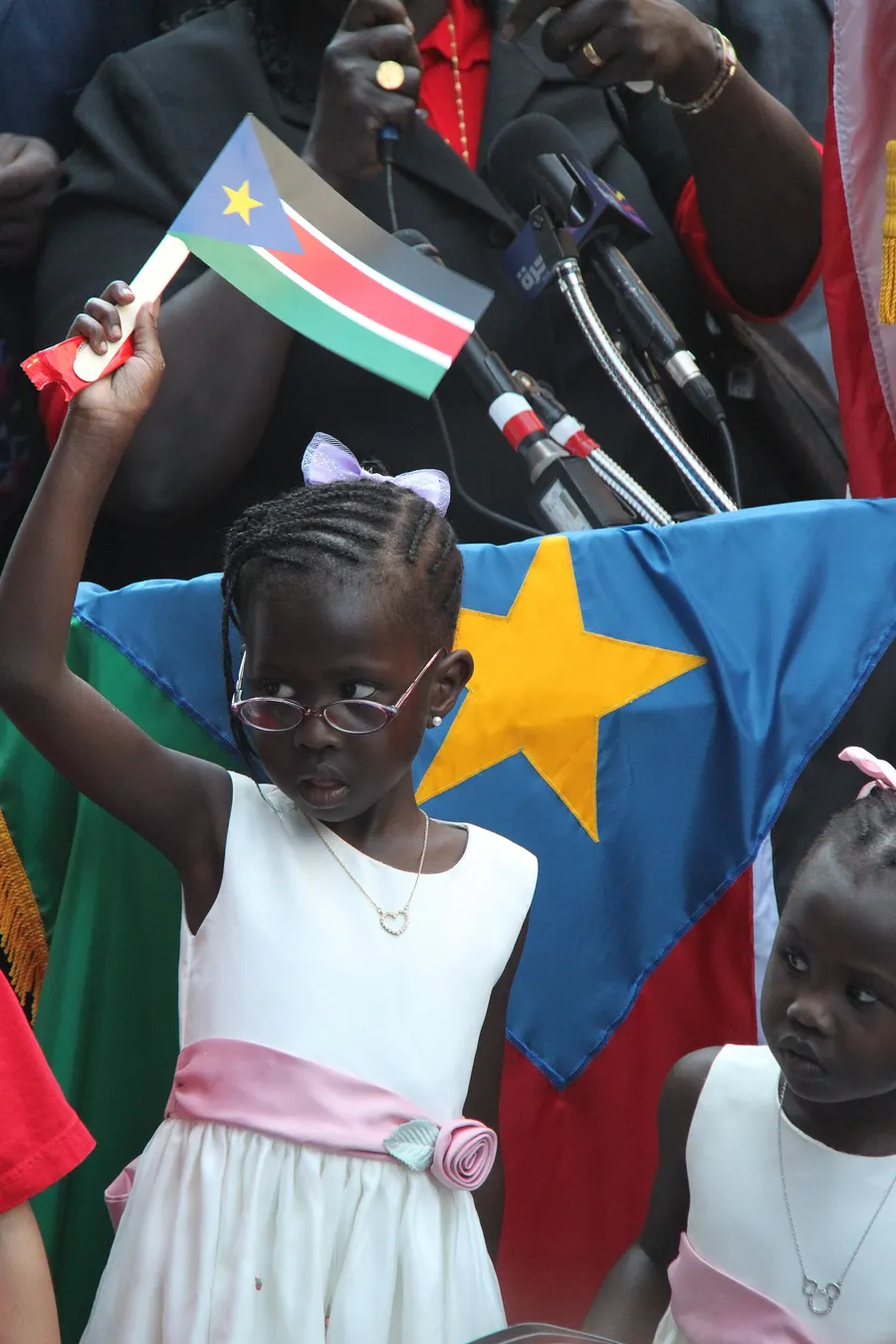
A young girl waves the new South Sudanese flag at the independence festivities in July 2011A young girl waves the new South Sudanese flag at the independence festivities in July 2011Image: USAID Africa Bureau · Public domain
politics · Africa

South Sudan becomes the world’s newest country

For most of the time since Sudan’s own independence in 1956, its mainly Christian and traditionalist south had been at war with the government in Khartoum. Two long civil wars cost well over a million lives before a peace agreement in 2005 gave the south self-rule and the promise of a vote on its future. When that referendum was held in January 2011, almost 99 per cent of voters chose to break away. On 9 July 2011 huge crowds gathered in Juba for the independence ceremony. The Sudanese flag was lowered for the last time, the new flag was raised to cheers and ululation, and Salva Kiir took the oath as the first president of the Republic of South Sudan. The UN Secretary-General, Ban Ki-moon, was among the foreign guests, and within a week the country had joined the United Nations as its 193rd member. The hopes of that day were badly shaken when civil war broke out again at the end of 2013.

Source: UN News: As South Sudan celebrates independence, UN vows support ↗
RESEARCH

Sources & Further Reading

Selected authoritative references supporting the events on this page.

Britannica: Avitus↗De Imperatoribus Romanis: Avitus↗US Geological Survey: Tsunami evidence in Arahama, AD 869 and 2011↗Geological Survey of Japan: Size and type of the 869 Jogan earthquake↗Wikipedia: 869 Jōgan earthquake↗Prague City Tourism: Charles Bridge↗Britannica: Charles Bridge↗Presidential Library: Russian palace revolution, Peter III dethroned↗Britannica: Catherine the Great↗The Canadian Encyclopedia: 1793 Act to Limit Slavery in Upper Canada↗Archives of Ontario: An Act to Prevent the further Introduction of Slaves, 1793↗Argentina.gob.ar: 9 de julio de 1816, Declaración de la Independencia↗Britannica: San Miguel de Tucumán↗Encyclopaedia Iranica: Bāb, ʿAli Moḥammad Širāzi↗Britannica: The Bāb↗Bahá’í World Centre: The execution of the Báb↗National Archives of Australia: Royal Commission of Assent to the Commonwealth of Australia Constitution Act↗Parliamentary Education Office: Queen Victoria signed the Australian Constitution Act in July 1900↗Pugwash Conferences: London launch of the Russell-Einstein Manifesto↗Atomic Heritage Foundation: Russell-Einstein Manifesto↗US Geological Survey Professional Paper 354-C: Giant waves in Lituya Bay, Alaska (D.J. Miller, 1960)↗US Geological Survey: Lituya Bay, 1958↗Museum of Modern Art: Andy Warhol, Campbell’s Soup Cans, 1962↗Smithsonian Libraries: Warhol’s 32 soup flavors↗African Union: About the African Union↗South African History Online: Speech at the launch of the African Union, 9 July 2002↗FIFA: Italy v France 1-1, 2006 FIFA World Cup final↗Britannica: Zinedine Zidane↗FIFA: Italy conquer the world as Germany wins friends↗UN News: As South Sudan celebrates independence, UN vows support↗Britannica: South Sudan↗
WHY THESE MOMENTS?

Significance before volume

This page is not the longest possible list of events. It is a chronological journey through 9 July, where each entry is chosen for historical significance, human interest and reliability.

Facts are checked against authoritative museums, archives, universities and reference works. Where sources disagree, the page says so.

EXPLORED THE DEEPER STORY?

Return to the highlights of 9 July

Discover the lighter side of the date with famous birthdays, culture, firsts and lives remembered.

Explore This Day →
← PREVIOUS DAY8 July
HISTORY & TIMELINE9 July
NEXT DAY →10 July