1776Congress adopts the Declaration of Independence
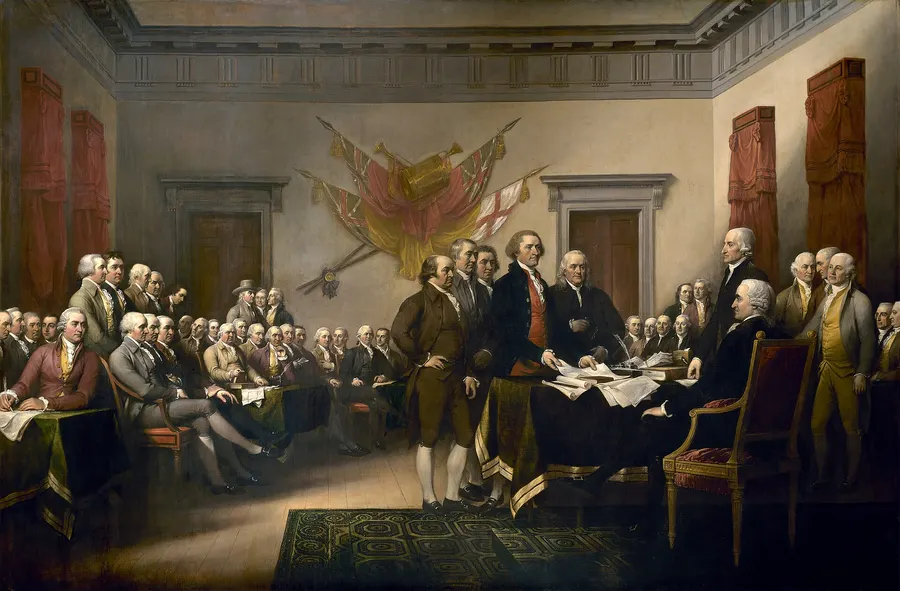
By the summer of 1776 the thirteen American colonies had been fighting British troops for more than a year. On 2 July the Continental Congress in Philadelphia voted to break with Britain, and it then turned to a statement explaining why. A committee of five had prepared the draft, written mostly by Thomas Jefferson, and over two days the delegates cut and reworded it, removing among other things a passage attacking the slave trade.
On 4 July 1776 Congress approved the final text. Its opening lines set out the claim that all men are created equal, with rights to life, liberty and the pursuit of happiness, and that governments draw their power from the consent of the governed; the rest listed grievances against King George III. That night the printer John Dunlap set it in type, and copies went out to the colonies and the army the next morning. The handwritten parchment copy was signed by most members on 2 August. It is the anniversary of the adoption, not of the vote, that Americans celebrate.
Read the full storyHistory & Timeline →Source: National Archives: Dunlap Broadside, the first printing of the Declaration of Independence ↗
1187Saladin destroys the Crusader army at Hattin
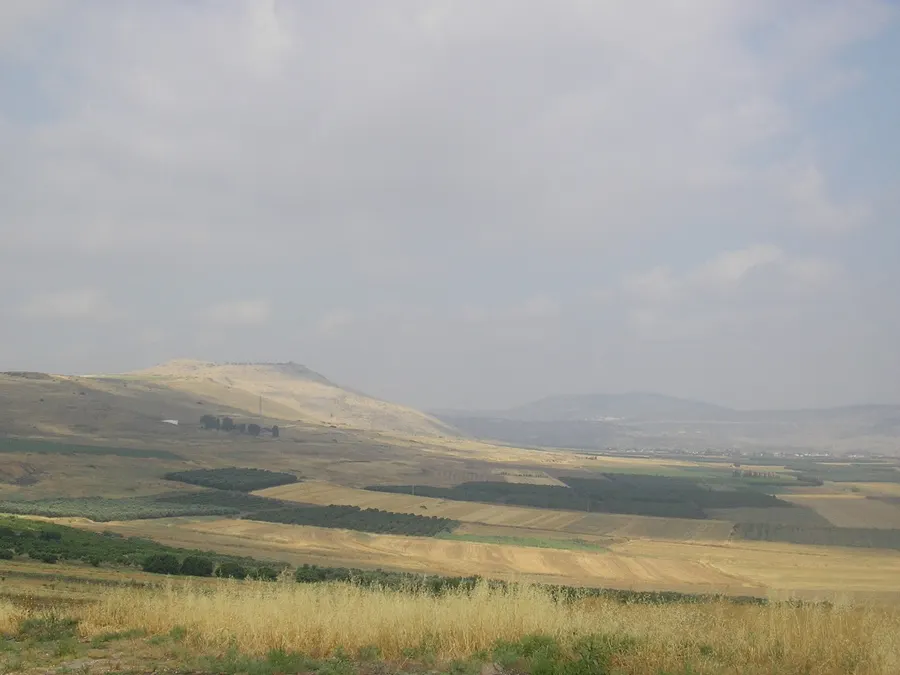
Saladin, sultan of Egypt and Syria, had spent years uniting the Muslim lands around the Crusader Kingdom of Jerusalem. When the lord Raynald of Châtillon broke a truce by attacking caravans, Saladin declared war and in the summer of 1187 besieged Tiberias on the Sea of Galilee. King Guy of Jerusalem gathered the largest army the kingdom could raise and, on 3 July, marched it out from the springs at Sephoria across a dry plateau to relieve the town.
Harassed all day by mounted archers and cut off from water, the Crusaders camped for the night near a double-peaked hill called the Horns of Hattin. On 4 July they tried to fight their way through, but Saladin’s men set the dry grass alight and the smoke blew into their faces. The infantry broke away from the knights, and the army was destroyed. Guy was captured, the relic of the True Cross was lost, and Saladin killed Raynald himself. With the kingdom’s field army gone, its towns fell one by one, and Jerusalem surrendered on 2 October, prompting the Third Crusade.
Read the full storyHistory & Timeline →Source: Britannica: Saladin ↗
1054Chinese astronomers record a brilliant guest star
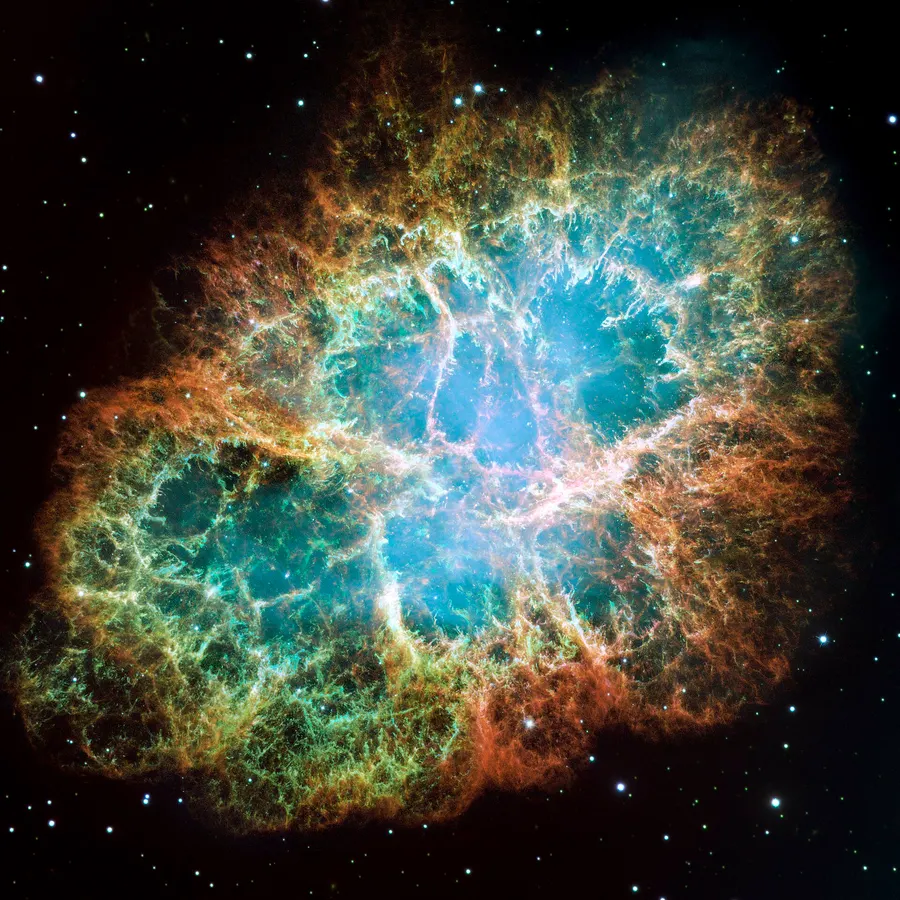
The astronomers of the Song dynasty court watched the sky for omens and kept careful records of anything new. Their reports describe a ‘guest star’ that appeared in the early morning of 4 July 1054, close to a star now known as Zeta Tauri in the constellation of Taurus. It was so bright that for more than three weeks it could be seen in daylight, and it stayed visible at night for almost two years before fading from view in 1056.
What they had seen was a supernova, the violent death of a massive star some 6,500 light years away. Observers in Japan also noted it, and it may appear in the rock art of the American South West. In the 20th century astronomers realised that the Crab Nebula, a glowing cloud of gas in exactly that part of the sky, is the debris of this explosion, still expanding more than 900 years later. At its heart spins a pulsar, the collapsed core of the star, making the Crab one of the most closely studied objects in the sky.
Read the full storyHistory & Timeline →Source: NASA Science: Messier 1 (the Crab Nebula) ↗
1946The Philippines becomes an independent republic
The United States took the Philippines from Spain in 1898 and then fought a long war against Filipinos who wanted independence. In 1934 Congress passed the Tydings-McDuffie Act, which created a self-governing Commonwealth and promised full independence after ten years. The Japanese invasion and occupation of 1942 to 1945 devastated the islands, and Manila was left in ruins, but the timetable held.
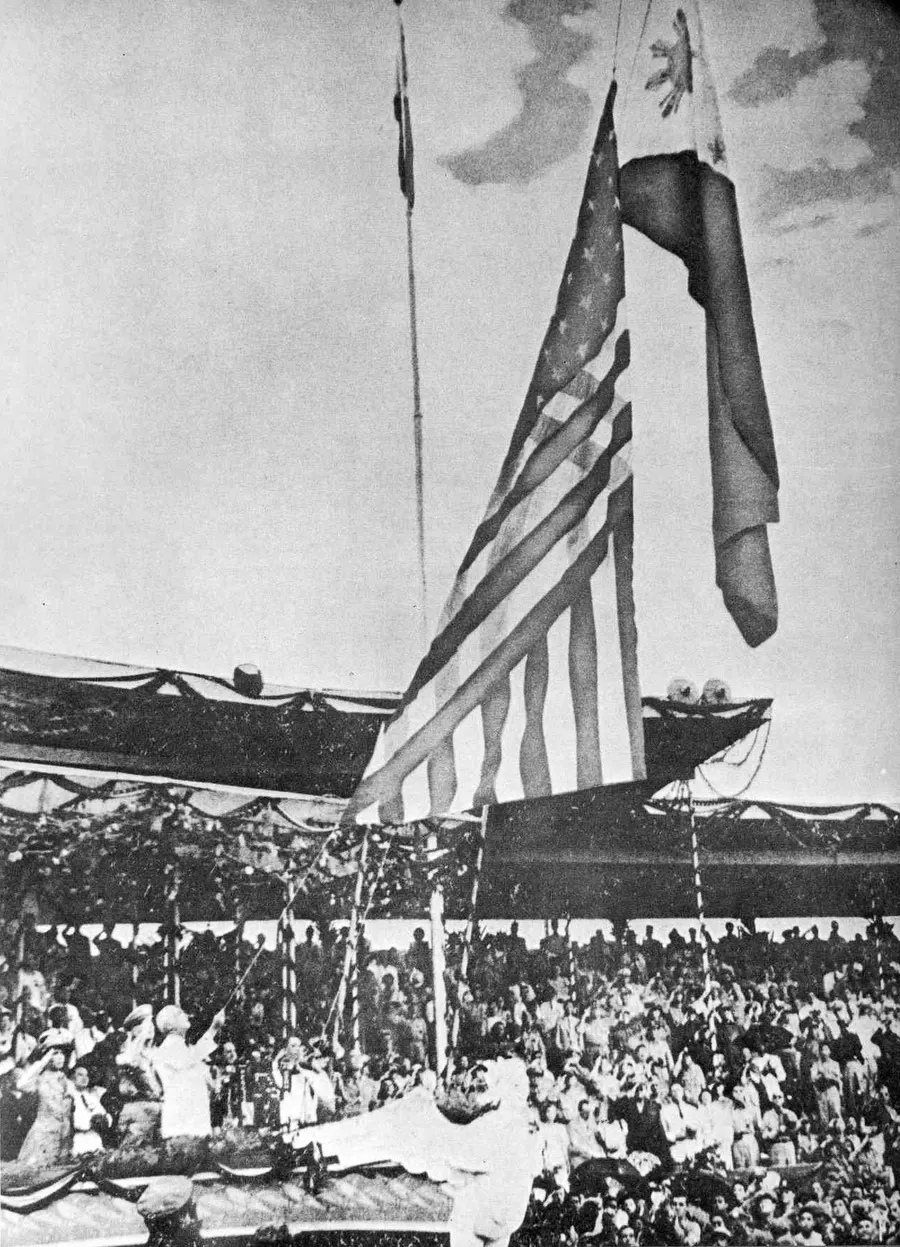
On 4 July 1946, at a ceremony in front of the Rizal Monument in Manila, the American flag was lowered and the Philippine flag raised to fly alone. Manuel Roxas took the oath as the first president of the new republic, and the two countries signed the Treaty of Manila establishing their relations as equals, while President Truman proclaimed American recognition. In 1962 President Diosdado Macapagal moved the country’s Independence Day to 12 June, the anniversary of Emilio Aguinaldo’s declaration of 1898; 4 July is now remembered as Republic Day and as Philippine-American Friendship Day.
Read the full storyHistory & Timeline →Source: Official Gazette of the Republic of the Philippines: Republic Day ↗
1879The Zulu kingdom falls at Ulundi
In January 1879 British forces invaded the Zulu kingdom of King Cetshwayo, part of a plan to bring the region under British control. Within days a Zulu army wiped out a British column at Isandlwana, one of the worst defeats of the Victorian army. Lord Chelmsford, the British commander, withdrew, gathered reinforcements and advanced again, this time towards oNdini, the royal homestead near Ulundi.
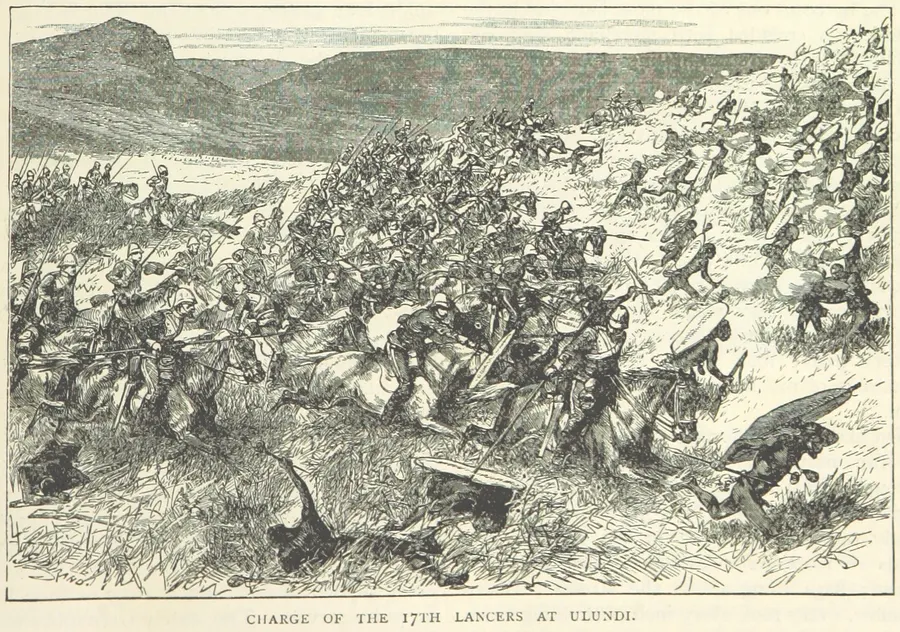
On 4 July 1879 Chelmsford formed his men, British and African troops together, into a great hollow square on the plain near oNdini, with artillery and Gatling guns at the corners. Some 20,000 Zulu warriors charged it again and again but could not get close through the fire. When their attacks faltered, the 17th Lancers rode out to drive them from the field. British losses were fewer than a hundred killed and wounded; estimates of the Zulu dead run from about 1,500 to several thousand. The British burned oNdini that afternoon. Cetshwayo was captured in August and sent into exile, and his kingdom was broken up into chiefdoms.
Read the full storyHistory & Timeline →Source: National Army Museum: Zulu War ↗