
HISTORY & TIMELINE
4 July

A journey through
4 July in history

The story of 4 July runs from a teenage princess taking charge at the court of Constantinople in 414 to a packed seminar at CERN in 2012. In between come a guest star in the Chinese sky, the rout of a Crusader army beneath the Horns of Hattin, a declaration that founded the United States, a surrender on the Mississippi, a river trip that gave the world Alice, the last great battle of the Anglo-Zulu War, a new Philippine republic, a Caribbean community, a raid on Entebbe, the fall of Kigali, a rover on Mars and an underdog triumph in Lisbon.

I
EARLIEST RECORDS

Ancient & Early History

The earliest worthwhile records and events connected with this date.

414
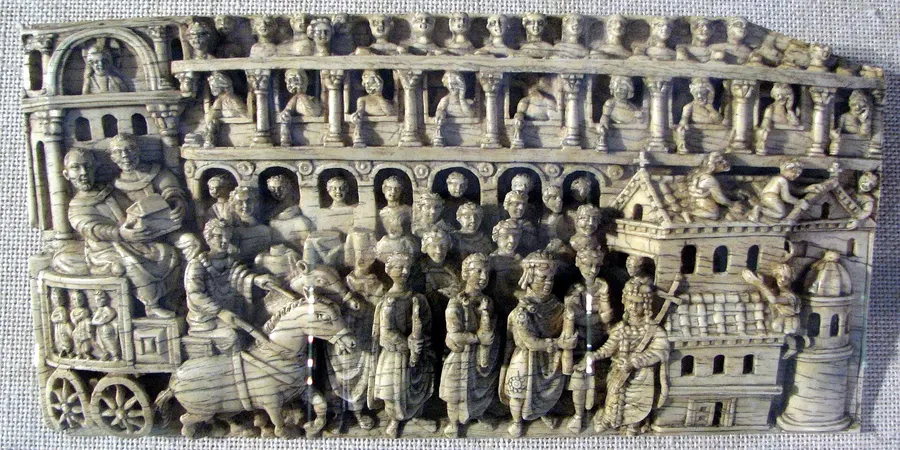
The Trier Ivory, a 5th-century carving from Constantinople of a procession bringing holy relics; the empress receiving them is sometimes identified as PulcheriaThe Trier Ivory, a 5th-century carving from Constantinople of a procession bringing holy relics; the empress receiving them is sometimes identified as PulcheriaImage: Unknown · CC BY-SA 3.0
politics · Europe

Pulcheria becomes empress and takes charge at Constantinople

Theodosius II became emperor of the eastern Roman Empire in 408 at the age of seven, and at first his ministers ruled for him. On 4 July 414 his elder sister Pulcheria, then only 15, was proclaimed Augusta and took charge of the court and of her brother’s education. Deeply devout, she led a household devoted to prayer and chastity, and she remained a powerful figure for most of his long reign.

Source: Britannica: Pulcheria ↗
II
THE MIDDLE AGES

Medieval History

Kingdoms, conflict, faith, power and the changing medieval world.

1054
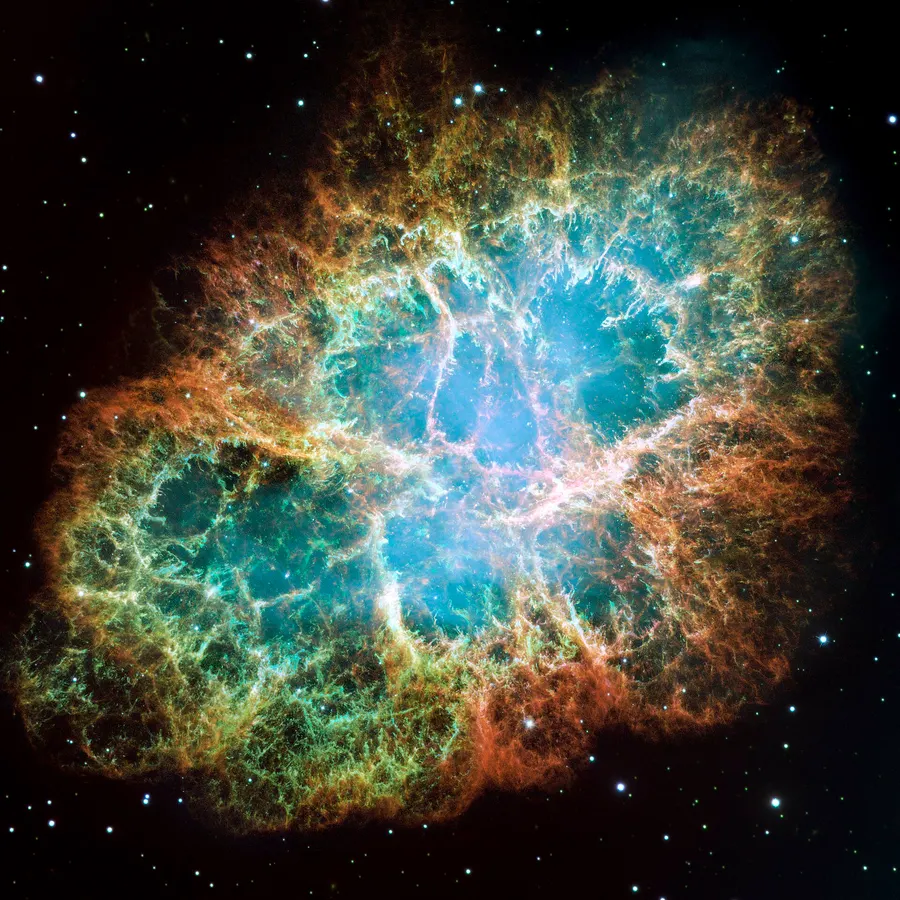
The Crab Nebula, the expanding remains of the star seen to explode in 1054, pictured by the Hubble Space TelescopeThe Crab Nebula, the expanding remains of the star seen to explode in 1054, pictured by the Hubble Space TelescopeImage: NASA, ESA, J. Hester and A. Loll (Arizona State University) · Public domain
science · Asia

Chinese astronomers record a brilliant guest star

The astronomers of the Song dynasty court watched the sky for omens and kept careful records of anything new. Their reports describe a ‘guest star’ that appeared in the early morning of 4 July 1054, close to a star now known as Zeta Tauri in the constellation of Taurus. It was so bright that for more than three weeks it could be seen in daylight, and it stayed visible at night for almost two years before fading from view in 1056. What they had seen was a supernova, the violent death of a massive star some 6,500 light years away. Observers in Japan also noted it, and it may appear in the rock art of the American South West. In the 20th century astronomers realised that the Crab Nebula, a glowing cloud of gas in exactly that part of the sky, is the debris of this explosion, still expanding more than 900 years later. At its heart spins a pulsar, the collapsed core of the star, making the Crab one of the most closely studied objects in the sky.

Source: NASA Science: Messier 1 (the Crab Nebula) ↗
1187
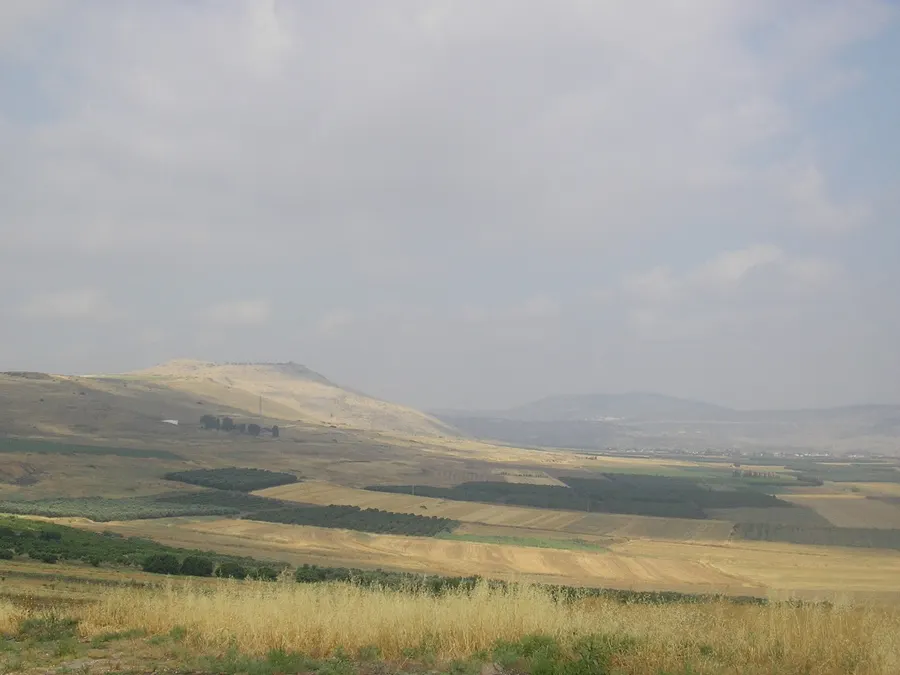
The hills at the Horns of Hattin, west of the Sea of Galilee, where the Crusader army made its last standThe hills at the Horns of Hattin, west of the Sea of Galilee, where the Crusader army made its last standImage: Almog · Public domain
world · Middle East

Saladin destroys the Crusader army at Hattin

Saladin, sultan of Egypt and Syria, had spent years uniting the Muslim lands around the Crusader Kingdom of Jerusalem. When the lord Raynald of Châtillon broke a truce by attacking caravans, Saladin declared war and in the summer of 1187 besieged Tiberias on the Sea of Galilee. King Guy of Jerusalem gathered the largest army the kingdom could raise and, on 3 July, marched it out from the springs at Sephoria across a dry plateau to relieve the town. Harassed all day by mounted archers and cut off from water, the Crusaders camped for the night near a double-peaked hill called the Horns of Hattin. On 4 July they tried to fight their way through, but Saladin’s men set the dry grass alight and the smoke blew into their faces. The infantry broke away from the knights, and the army was destroyed. Guy was captured, the relic of the True Cross was lost, and Saladin killed Raynald himself. With the kingdom’s field army gone, its towns fell one by one, and Jerusalem surrendered on 2 October, prompting the Third Crusade.

Source: Britannica: Saladin ↗
III
A CHANGING WORLD

Early Modern Era

Exploration, political change, scientific development and expanding global connections.

1776
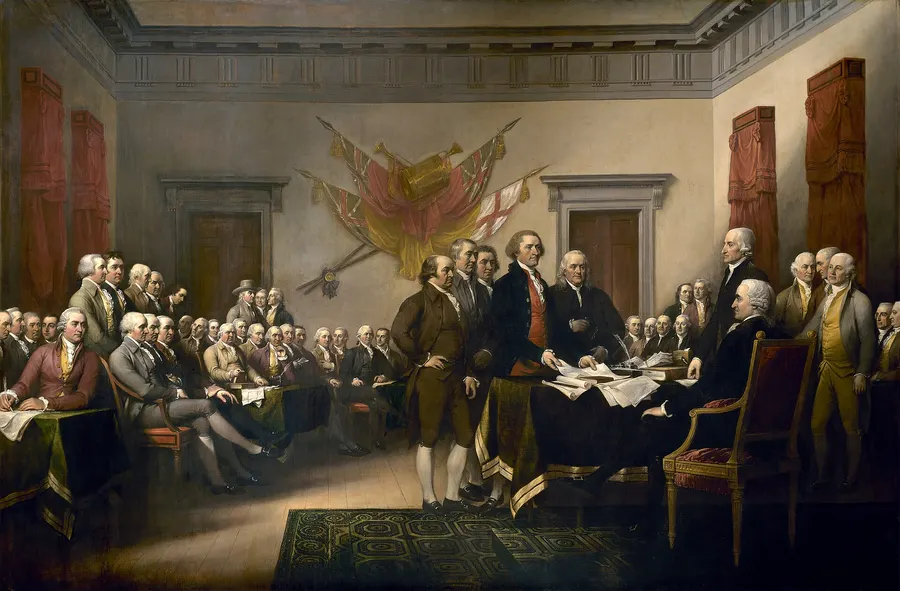
John Trumbull's painting in the US Capitol of the drafting committee handing its text to Congress, a scene set on 28 June 1776John Trumbull’s painting in the US Capitol of the drafting committee handing its text to Congress, a scene set on 28 June 1776Image: John Trumbull · Public domain
world · Americas

Congress adopts the Declaration of Independence

By the summer of 1776 the thirteen American colonies had been fighting British troops for more than a year. On 2 July the Continental Congress in Philadelphia voted to break with Britain, and it then turned to a statement explaining why. A committee of five had prepared the draft, written mostly by Thomas Jefferson, and over two days the delegates cut and reworded it, removing among other things a passage attacking the slave trade. On 4 July 1776 Congress approved the final text. Its opening lines set out the claim that all men are created equal, with rights to life, liberty and the pursuit of happiness, and that governments draw their power from the consent of the governed; the rest listed grievances against King George III. That night the printer John Dunlap set it in type, and copies went out to the colonies and the army the next morning. The handwritten parchment copy was signed by most members on 2 August. It is the anniversary of the adoption, not of the vote, that Americans celebrate.

Source: National Archives: Dunlap Broadside, the first printing of the Declaration of Independence ↗
IV
THE NINETEENTH CENTURY

The 1800s

Industry, empire, invention, reform and a century of enormous transformation.

1862
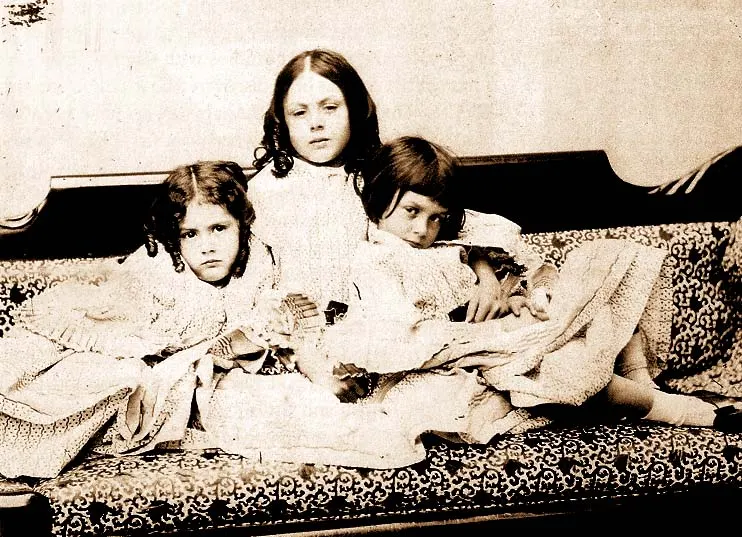
The three Liddell sisters, Lorina, Alice and Edith, photographed by Charles Dodgson a few years before the river tripThe three Liddell sisters, Lorina, Alice and Edith, photographed by Charles Dodgson a few years before the river tripImage: Lewis Carroll · Public domain
culture · Europe

Lewis Carroll first tells the story of Alice

Charles Dodgson was a mathematics lecturer at Christ Church, Oxford, and a friend of the family of its dean, Henry Liddell. On 4 July 1862 he and his friend Robinson Duckworth rowed three of the dean’s daughters, Lorina, Alice and Edith, up the Thames from Folly Bridge to Godstow, a few miles upstream, where they picnicked on the bank before rowing back in the evening. On the way Dodgson made up a story about a girl called Alice who fell down a rabbit hole into a strange world. Ten-year-old Alice Liddell begged him to write it down. He gave her a handwritten, illustrated copy, Alice’s Adventures Under Ground, in 1864, and in 1865 he published an expanded version, Alice’s Adventures in Wonderland, under the pen name Lewis Carroll, with pictures by John Tenniel. Later he remembered a ‘golden afternoon’, though some have argued that the weather that day was actually wet.

Source: Lady Margaret Hall, University of Oxford: Alice’s day ↗
1863
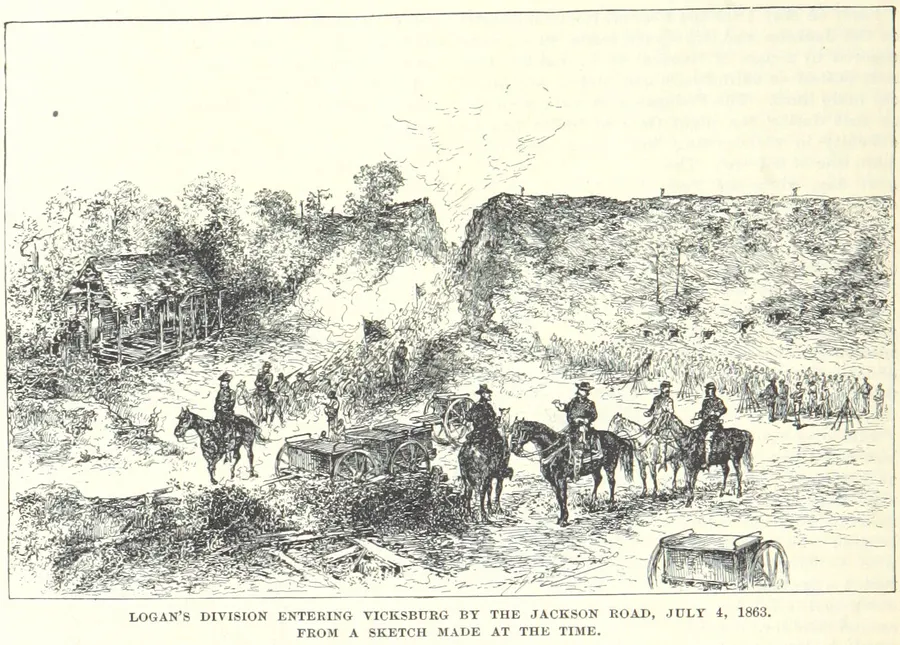
Union troops of Logan's Division entering Vicksburg by the Jackson road on 4 July 1863, from a sketch made at the timeUnion troops of Logan’s Division entering Vicksburg by the Jackson road on 4 July 1863, from a sketch made at the timeImage: Theodore Russel Davis · Public domain
world · Americas

Vicksburg surrenders to Grant

Vicksburg, on high bluffs above the Mississippi, was the Confederacy’s last great stronghold on the river. After some six weeks of siege, with its defenders and townspeople close to starving, General John C. Pemberton surrendered the city to Ulysses S. Grant on 4 July 1863, the day after the Union victory at Gettysburg. Some 29,000 Confederate soldiers marched out and laid down their arms. The Union soon controlled the whole river, splitting the Confederacy in two.

Source: National Park Service: Surrender (July 4), Vicksburg National Military Park ↗
1879
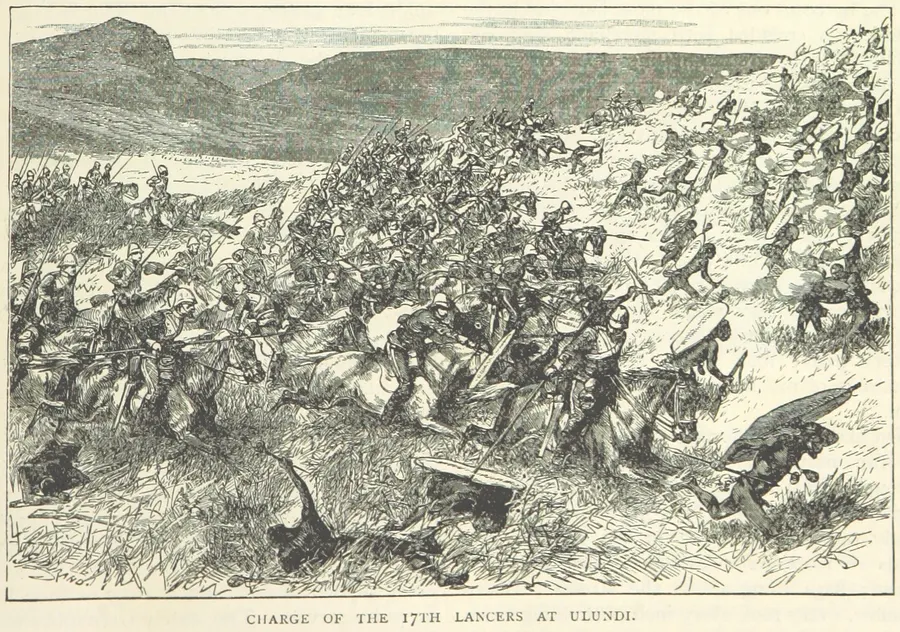
The charge of the 17th Lancers at Ulundi, an engraving from an illustrated Victorian history of the century's battlesThe charge of the 17th Lancers at Ulundi, an engraving from an illustrated Victorian history of the century’s battlesImage: Archibald Forbes, Arthur Griffiths and others. · Public domain
world · Africa

The Zulu kingdom falls at Ulundi

In January 1879 British forces invaded the Zulu kingdom of King Cetshwayo, part of a plan to bring the region under British control. Within days a Zulu army wiped out a British column at Isandlwana, one of the worst defeats of the Victorian army. Lord Chelmsford, the British commander, withdrew, gathered reinforcements and advanced again, this time towards oNdini, the royal homestead near Ulundi. On 4 July 1879 Chelmsford formed his men, British and African troops together, into a great hollow square on the plain near oNdini, with artillery and Gatling guns at the corners. Some 20,000 Zulu warriors charged it again and again but could not get close through the fire. When their attacks faltered, the 17th Lancers rode out to drive them from the field. British losses were fewer than a hundred killed and wounded; estimates of the Zulu dead run from about 1,500 to several thousand. The British burned oNdini that afternoon. Cetshwayo was captured in August and sent into exile, and his kingdom was broken up into chiefdoms.

Source: National Army Museum: Zulu War ↗
V
THE TWENTIETH CENTURY

The 1900s

War and peace, technological leaps, social change, politics, sport and popular culture.

1946
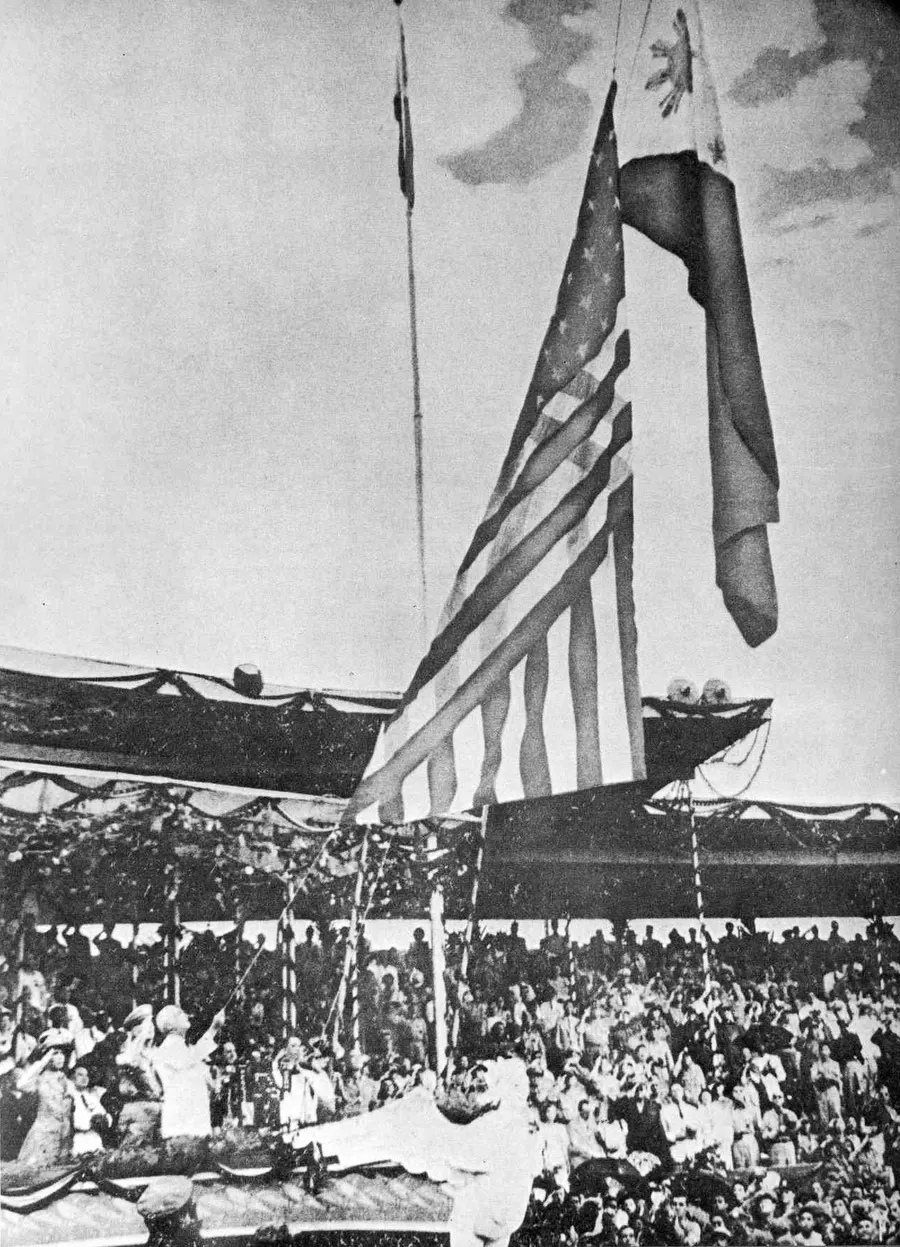
The independence ceremony in Manila on 4 July 1946, when the US flag was lowered and the Philippine flag raisedThe independence ceremony in Manila on 4 July 1946, when the US flag was lowered and the Philippine flag raisedImage: Philippine Presidential Museum and Library · Public domain
world · Asia

The Philippines becomes an independent republic

The United States took the Philippines from Spain in 1898 and then fought a long war against Filipinos who wanted independence. In 1934 Congress passed the Tydings-McDuffie Act, which created a self-governing Commonwealth and promised full independence after ten years. The Japanese invasion and occupation of 1942 to 1945 devastated the islands, and Manila was left in ruins, but the timetable held. On 4 July 1946, at a ceremony in front of the Rizal Monument in Manila, the American flag was lowered and the Philippine flag raised to fly alone. Manuel Roxas took the oath as the first president of the new republic, and the two countries signed the Treaty of Manila establishing their relations as equals, while President Truman proclaimed American recognition. In 1962 President Diosdado Macapagal moved the country’s Independence Day to 12 June, the anniversary of Emilio Aguinaldo’s declaration of 1898; 4 July is now remembered as Republic Day and as Philippine-American Friendship Day.

Source: Official Gazette of the Republic of the Philippines: Republic Day ↗
1973
A map of the member states and associate members of the Caribbean Community in 2024A map of the member states and associate members of the Caribbean Community in 2024Image: Kermitigated · CC BY-SA 4.0
world · Americas

The Treaty of Chaguaramas creates the Caribbean Community

On 4 July 1973 the prime ministers of Barbados, Guyana, Jamaica and Trinidad and Tobago signed a treaty at Chaguaramas, in Trinidad, setting up the Caribbean Community and Common Market, known as CARICOM. It replaced a looser free-trade association formed in 1968 and aimed at closer economic ties, shared policies abroad and co-operation in areas such as health and education. The treaty came into force on 1 August 1973, and the community has since grown to fifteen member states.

Source: CARICOM: Treaty establishing the Caribbean Community ↗
1976
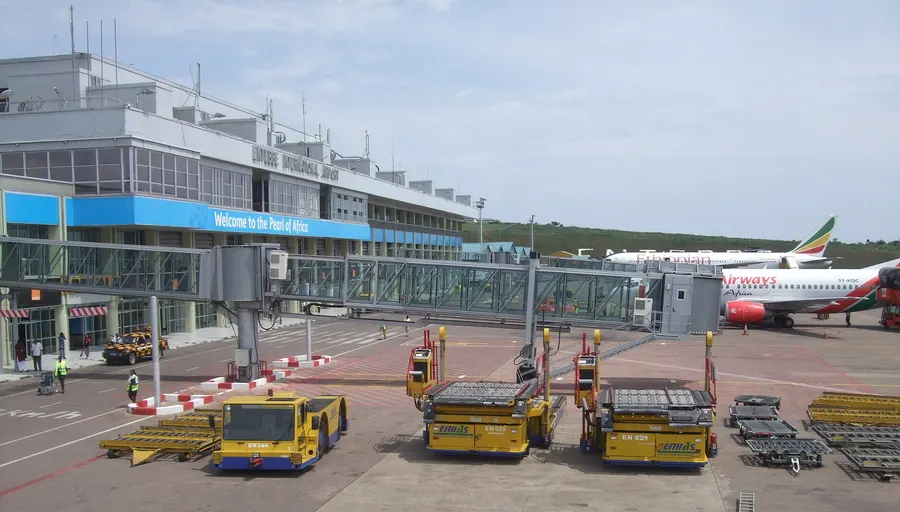
Entebbe International Airport in Uganda today; the hostages were held in the airport's old terminal buildingEntebbe International Airport in Uganda today; the hostages were held in the airport’s old terminal buildingImage: User: (WT-shared) Katanasov at wts wikivoyage · Public domain
world · Africa

Israeli commandos free the hostages at Entebbe

On 27 June 1976 Palestinian and West German militants hijacked an Air France flight from Tel Aviv to Paris and flew it to Entebbe in Uganda, where Idi Amin’s regime sheltered them. They freed most passengers but held about a hundred, mainly Israelis and Jews. Late on 3 July Israeli commandos landed at Entebbe, and by the early hours of 4 July they had flown out with more than a hundred hostages. Three hostages and the Israeli commander, Yonatan Netanyahu, were killed.

Source: Britannica: Entebbe raid ↗
1994
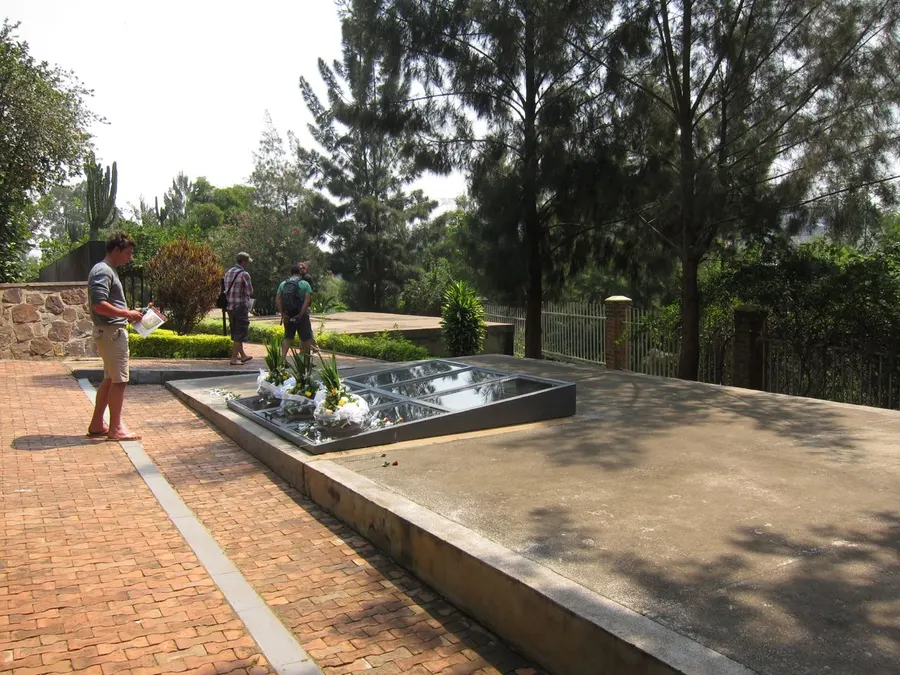
Graves at the Kigali Genocide Memorial in Rwanda's capitalGraves at the Kigali Genocide Memorial in Rwanda’s capitalImage: Martijn.Munneke from Netherlands · CC BY 2.0
world · Africa

The fall of Kigali brings the genocide in Rwanda towards its end

From April 1994 extremist Hutu forces in Rwanda carried out a genocide against the Tutsi minority, killing some 800,000 people, including moderate Hutu, in about a hundred days. The rebel Rwandan Patriotic Front fought its way across the country, and on 4 July 1994 it took the capital, Kigali. Within weeks it controlled almost all of Rwanda and formed a new government. Rwanda marks 4 July as Liberation Day.

Source: United Nations: Outreach Programme on the 1994 Genocide against the Tutsi in Rwanda, historical background ↗
1997
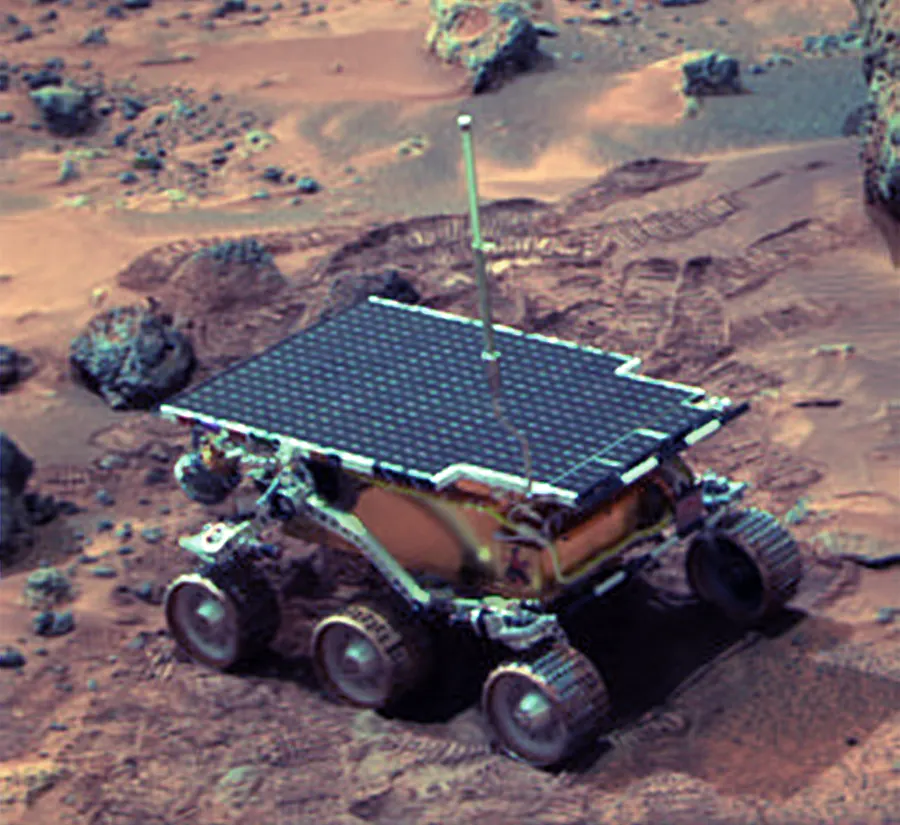
The Sojourner rover on the surface of Mars in 1997, photographed from the Pathfinder landerThe Sojourner rover on the surface of Mars in 1997, photographed from the Pathfinder landerImage: NASA · Public domain
world · Americas

Mars Pathfinder lands and sets a rover loose

NASA’s Mars Pathfinder came down in Ares Vallis, an ancient flood plain on Mars, on 4 July 1997. Instead of rockets it used a cocoon of giant airbags, bouncing at least 15 times before it came to rest. The lander then released Sojourner, a six-wheeled rover about the size of a microwave oven and the first wheeled vehicle to drive on another planet. The two sent back thousands of pictures before contact was lost in September.

Source: NASA Science: Mars Pathfinder ↗
VI
2000 TO TODAY

Modern Day

The events of recent decades that have already become part of the historical record.

2004
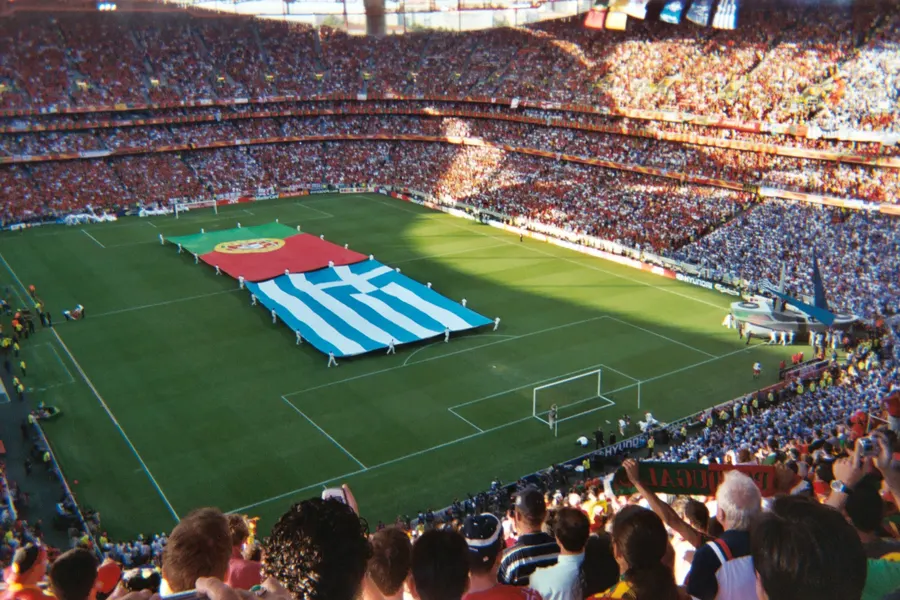
Giant Portuguese and Greek flags laid out on the pitch of the Estádio da Luz in Lisbon for the finalGiant Portuguese and Greek flags laid out on the pitch of the Estádio da Luz in Lisbon for the finalImage: Jarrett Campbell · CC BY 2.0
sport · Europe

Greece win the European Championship

Greece arrived at Euro 2004 in Portugal as rank outsiders, priced at 80 to 1 by bookmakers, having never won a match at a major tournament. Under their German coach, Otto Rehhagel, they played disciplined, defensive football, and they beat the hosts in the opening game, then knocked out the holders, France, and the Czech Republic on the way to the final. On 4 July 2004 they met Portugal again, in the final at the Estádio da Luz in Lisbon. In the 57th minute Angelos Basinas swung over a corner and the striker Angelos Charisteas rose to head it in. Greece held on to win 1-0. It was the country’s first major football trophy, Portugal became the first host nation to lose a European Championship final, and UEFA still counts it as the biggest shock in the history of the tournament.

Source: UEFA: Greece crowned kings of Europe after EURO 2004 final win against hosts Portugal ↗
2012
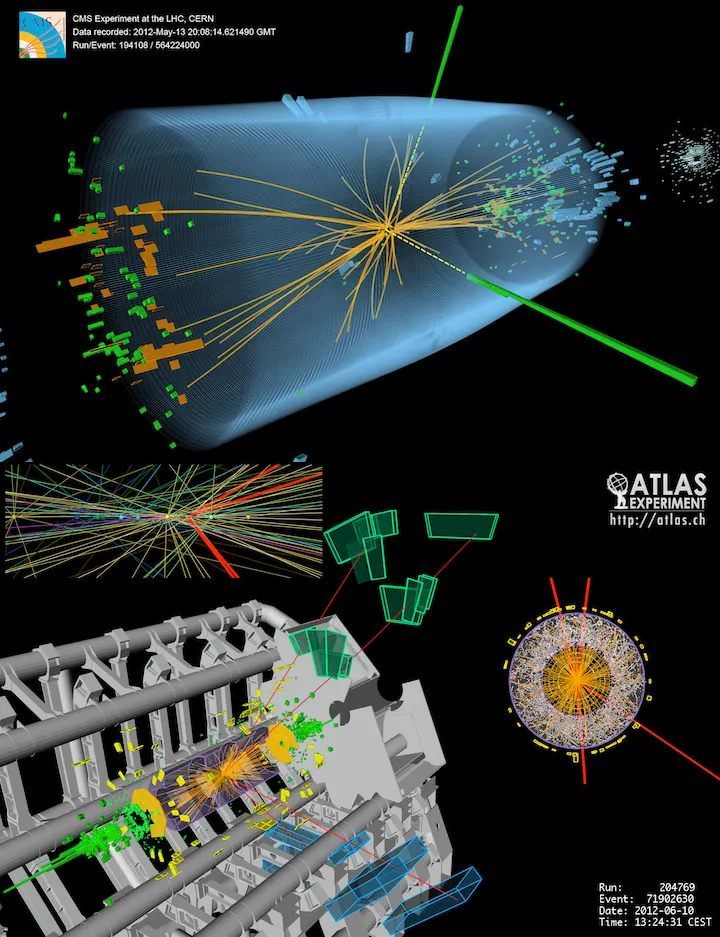
Candidate Higgs boson events recorded by the ATLAS and CMS detectors at CERN's Large Hadron ColliderCandidate Higgs boson events recorded by the ATLAS and CMS detectors at CERN’s Large Hadron ColliderImage: CERN for the ATLAS and CMS Collaborations · CC BY-SA 3.0
science · Europe

CERN announces the discovery of the Higgs boson

In 1964 Peter Higgs, François Englert, Robert Brout and others proposed that an invisible field fills the universe and gives fundamental particles their mass. The theory predicted a particle that would prove the field was real, but finding it needed a machine powerful enough to create it. The Large Hadron Collider, a 27-kilometre ring beneath the French-Swiss border near Geneva, was built partly for that search. At nine in the morning on 4 July 2012, in a CERN auditorium so crowded that people had queued all night for seats, the spokespeople of the two big experiments, Fabiola Gianotti of ATLAS and Joe Incandela of CMS, presented their results one after the other. Both teams had independently found a new particle with a mass of about 125 GeV, at the level of certainty physicists require to claim a discovery. Higgs and Englert, both in the audience, shared the Nobel Prize in Physics the following year.

Source: CERN: The Higgs boson ↗
RESEARCH

Sources & Further Reading

Selected authoritative references supporting the events on this page.

Britannica: Pulcheria↗De Imperatoribus Romanis: Pulcheria↗NASA Science: Messier 1 (the Crab Nebula)↗Green and Stephenson: The Historical Supernovae (arXiv)↗Britannica: Saladin↗World History Encyclopedia: Battle of Hattin↗National Archives: Dunlap Broadside, the first printing of the Declaration of Independence↗Library of Congress: In Congress, July 4, 1776, a declaration (Dunlap broadside)↗Lady Margaret Hall, University of Oxford: Alice’s day↗Britannica: Lewis Carroll↗National Park Service: Surrender (July 4), Vicksburg National Military Park↗American Battlefield Trust: Vicksburg↗National Army Museum: Zulu War↗Britannica: Ulundi↗Official Gazette of the Republic of the Philippines: Republic Day↗Britannica: Independence Day (Philippines)↗CARICOM: Treaty establishing the Caribbean Community↗Britannica: Treaty of Chaguaramas↗Britannica: Entebbe raid↗Israel Ministry of Foreign Affairs: Statement in the Knesset by Prime Minister Rabin on the rescue at Entebbe, 4 July 1976↗United Nations: Outreach Programme on the 1994 Genocide against the Tutsi in Rwanda, historical background↗Human Rights Watch: Leave None to Tell the Story, the Rwandan Patriotic Front↗NASA Science: Mars Pathfinder↗NASA: 25 years ago, Mars Pathfinder launches to Mars to deploy Sojourner↗UEFA: Greece crowned kings of Europe after EURO 2004 final win against hosts Portugal↗UEFA: Portugal 0-1 Greece, EURO 2004 final↗CERN: The Higgs boson↗CERN: CERN70, announcing the Higgs boson discovery↗
WHY THESE MOMENTS?

Significance before volume

This page is not the longest possible list of events. It is a chronological journey through 4 July, where each entry is chosen for historical significance, human interest and reliability.

Facts are checked against authoritative museums, archives, universities and reference works. Where sources disagree, the page says so.

EXPLORED THE DEEPER STORY?

Return to the highlights of 4 July

Discover the lighter side of the date with famous birthdays, culture, firsts and lives remembered.

Explore This Day →
← PREVIOUS DAY3 July
HISTORY & TIMELINE4 July
NEXT DAY →5 July