
HISTORY & TIMELINE
2 July

A journey through
2 July in history

The story of 2 July runs from the death of a German king on the battlefield at Göllheim in 1298 to the bloodless rescue of Íngrid Betancourt from the Colombian jungle in 2008. In between come the Royalist defeat at Marston Moor, the vote that made the American colonies independent, the Amistad revolt, America’s first anti-monopoly law, the first flight of a Zeppelin, Amelia Earhart’s last flight, the Civil Rights Act, a peace agreement at Simla, a reunified Vietnam and a golden goal that won Euro 2000.

II
THE MIDDLE AGES

Medieval History

Kingdoms, conflict, faith, power and the changing medieval world.

1298
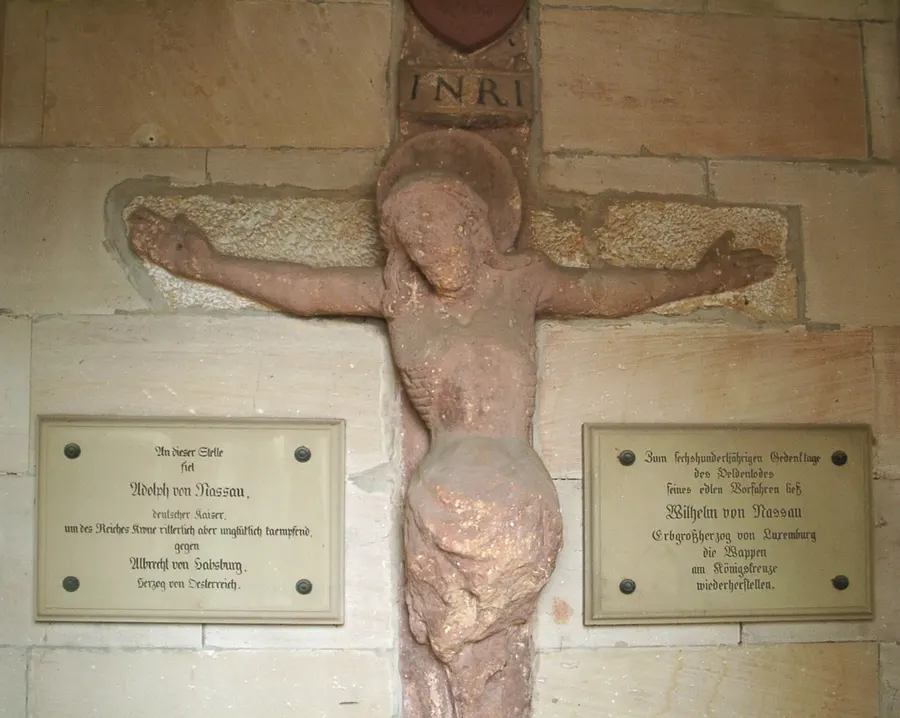
The crucifix of the Königskreuz at Göllheim, the memorial to King Adolf of NassauThe crucifix of the Königskreuz at Göllheim, the memorial to King Adolf of NassauImage: Unknown · CC BY-SA 3.0
world · Europe

King Adolf of Nassau is killed at the Battle of Göllheim

Adolf of Nassau was elected king of Germany in 1292 by princes who expected a weak ruler, but he used English and French subsidies to build up lands of his own. On 23 June 1298 a group of electors declared him deposed in favour of Albert of Habsburg. The two kings met in battle at Göllheim, near Worms, on 2 July 1298. Adolf was killed and his army scattered, and Albert was left as undisputed king.

Source: Britannica: Battle of Göllheim ↗
III
A CHANGING WORLD

Early Modern Era

Exploration, political change, scientific development and expanding global connections.

1644
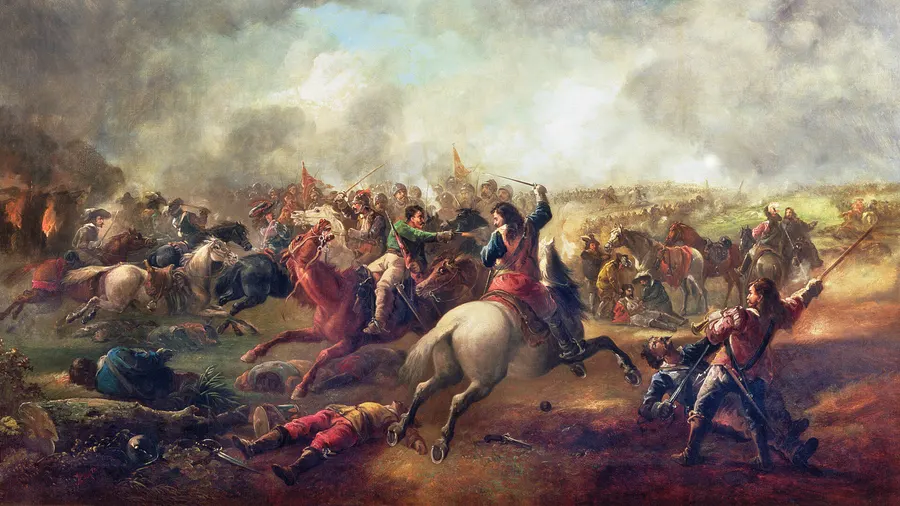
The Battle of Marston Moor as imagined by the Victorian painter John BarkerThe Battle of Marston Moor as imagined by the Victorian painter John BarkerImage: John Barker (1811-1886) · Public domain
world · Europe

Parliament and the Scots crush the Royalists at Marston Moor

Two years into the English Civil War, the north of England was the king’s stronghold. In the spring of 1644 the Marquis of Newcastle’s Royalist army fell back into York, where it was besieged by the combined forces of Parliament and its new Scottish allies under the Earl of Leven and the Fairfaxes. Charles I sent his nephew, Prince Rupert of the Rhine, to break the siege, and Rupert’s arrival drew the allies out onto the open moor west of the city. On 2 July 1644 the two armies faced each other all afternoon, and Rupert assumed there would be no fighting until the next day. Early in the evening, in a thunderstorm, the allies attacked. Oliver Cromwell’s horse routed the Royalist cavalry on one wing and then swung round to help the infantry break the centre. It was the largest battle of the war and the Royalists’ first major defeat. York surrendered within weeks, the king lost the north, and Cromwell’s reputation as a cavalry commander was made.

Source: Britannica: Battle of Marston Moor ↗
1776
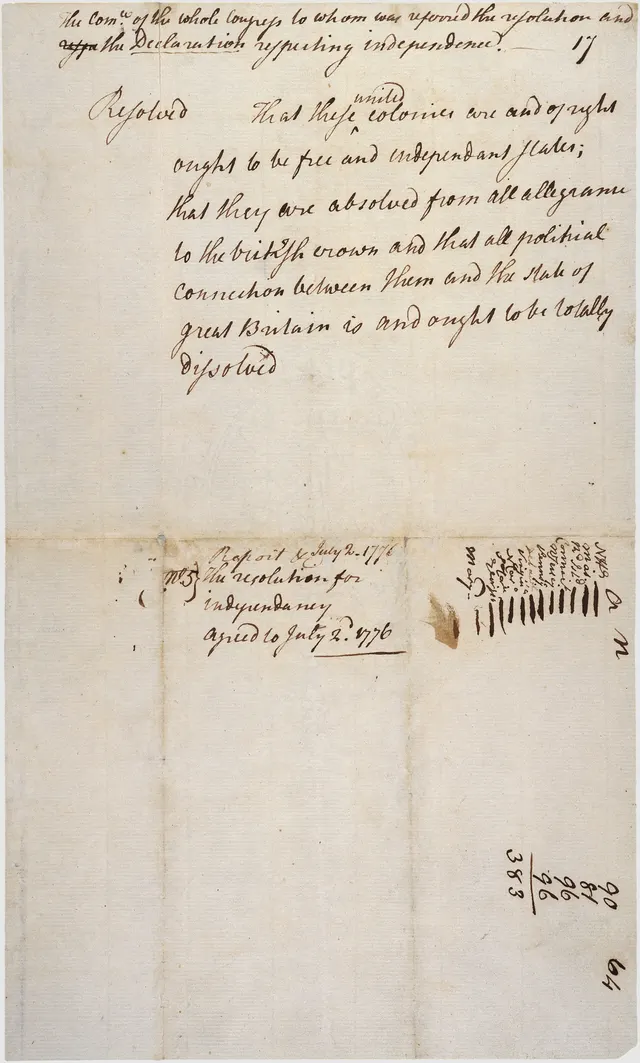
The Lee Resolution, the motion for independence adopted by the Continental Congress, now in the US National ArchivesThe Lee Resolution, the motion for independence adopted by the Continental Congress, now in the US National ArchivesImage: Richard Henry Lee, recorded by Charles Thomson · Public domain
politics · Americas

The Continental Congress votes for American independence

On 7 June 1776 Richard Henry Lee of Virginia rose in the Continental Congress at Philadelphia and moved that the united colonies ‘are, and of right ought to be, free and independent States’. His resolution also called for foreign alliances and a plan of confederation. Several delegations were not yet ready, or were waiting for instructions from home, so the vote was put off, and a committee including Thomas Jefferson was asked to draft a declaration in the meantime. On 2 July 1776 Congress adopted Lee’s resolution. Twelve colonies voted in favour; New York abstained until its own convention agreed a few days later. The legal break with Britain was made that day, and John Adams expected 2 July to be celebrated for ever after. Instead Congress spent two more days revising Jefferson’s text, and it was the adoption of the Declaration of Independence on 4 July that Americans came to mark.

Source: US National Archives: Lee Resolution (1776) ↗
IV
THE NINETEENTH CENTURY

The 1800s

Industry, empire, invention, reform and a century of enormous transformation.

1839
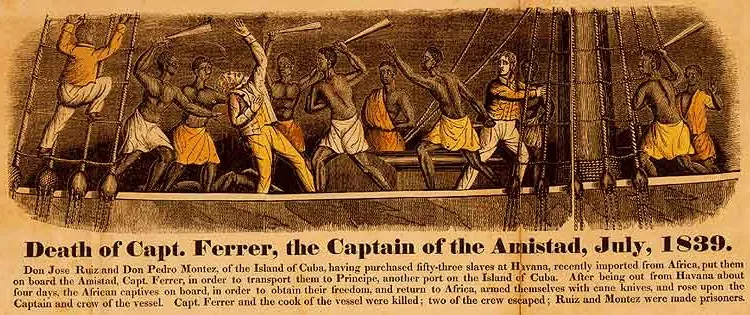
A 19th-century print of the revolt on board the Amistad, showing the death of its captainA 19th-century print of the revolt on board the Amistad, showing the death of its captainImage: Unknown · Public domain
world · Americas

Captive Africans seize the slave ship Amistad

In 1839, 53 Africans recently kidnapped from Sierra Leone were being carried along the coast of Cuba on the Spanish schooner Amistad. On 2 July 1839, led by Sengbe Pieh, known as Joseph Cinqué, they broke free and took the ship, killing the captain and the cook, and ordered the surviving Spaniards to sail for Africa. The ship was seized off Long Island two months later, and in 1841 the US Supreme Court ruled that the Africans were free.

Source: Britannica: Amistad mutiny ↗
1890
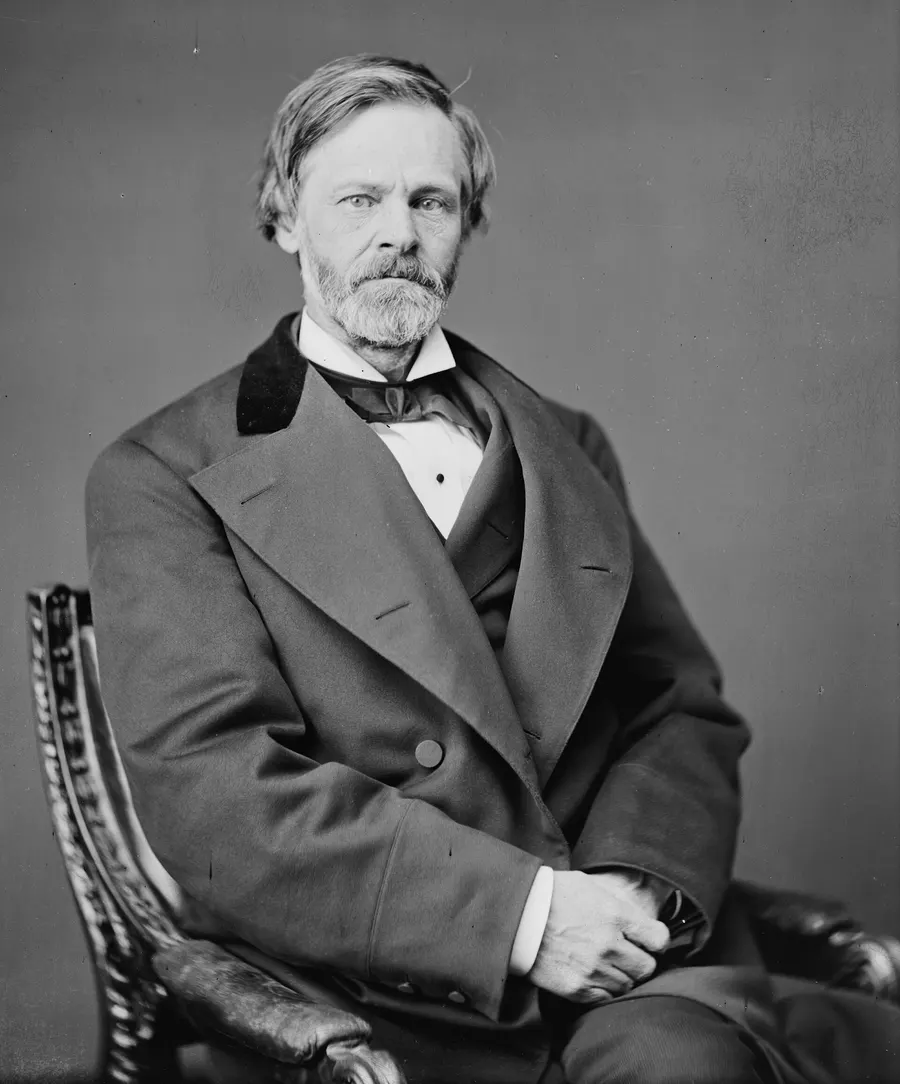
Senator John Sherman of Ohio, after whom the act was namedSenator John Sherman of Ohio, after whom the act was namedImage: Mathew Benjamin Brady / Levin Corbin Handy · Public domain
world · Americas

The Sherman Antitrust Act becomes law

By the 1880s giant trusts controlled much of American oil, sugar and other industries. Named after Senator John Sherman of Ohio, a bill to outlaw contracts and combinations in restraint of trade, and attempts to monopolise, passed the Senate by 51 votes to 1 and the House without opposition. President Benjamin Harrison signed it on 2 July 1890. It was the first federal law against monopolies and is still the basis of US competition law.

Source: US National Archives: Sherman Anti-Trust Act (1890) ↗
V
THE TWENTIETH CENTURY

The 1900s

War and peace, technological leaps, social change, politics, sport and popular culture.

1900
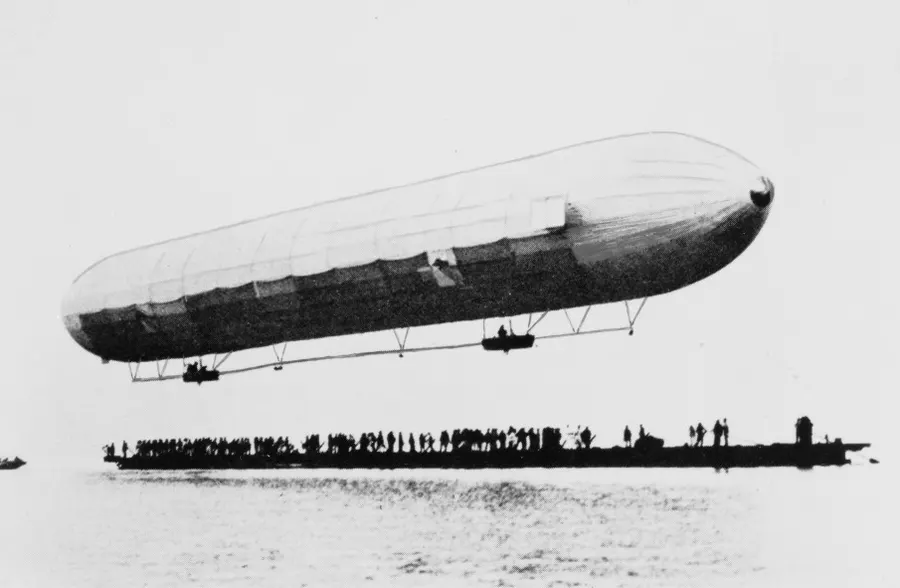
LZ 1, the first Zeppelin, rises from its floating hangar on Lake Constance, 1900LZ 1, the first Zeppelin, rises from its floating hangar on Lake Constance, 1900Image: Peter Scherer · Public domain
world · Europe

The first Zeppelin airship flies over Lake Constance

Count Ferdinand von Zeppelin, a retired German cavalry general, spent the 1890s working on a new kind of airship. Instead of a soft gas bag, his design had a rigid frame of aluminium girders covered in fabric, holding separate cells of hydrogen, so that it could be built much larger than earlier balloons and steered with engines. His first ship, LZ 1, was about 128 metres (420 feet) long and was assembled in a floating shed on Lake Constance near Friedrichshafen. On the evening of 2 July 1900 LZ 1 was towed out of its hangar and rose over the lake, watched by crowds on the shore and in boats. The short flight was not a complete success: a weight used to trim the ship jammed and it came down on the water with some damage. But it proved the idea worked. Public donations kept the count’s work going, and within a decade Zeppelins were carrying paying passengers across Germany.

Source: Britannica: LZ-1, zeppelin ↗
1937
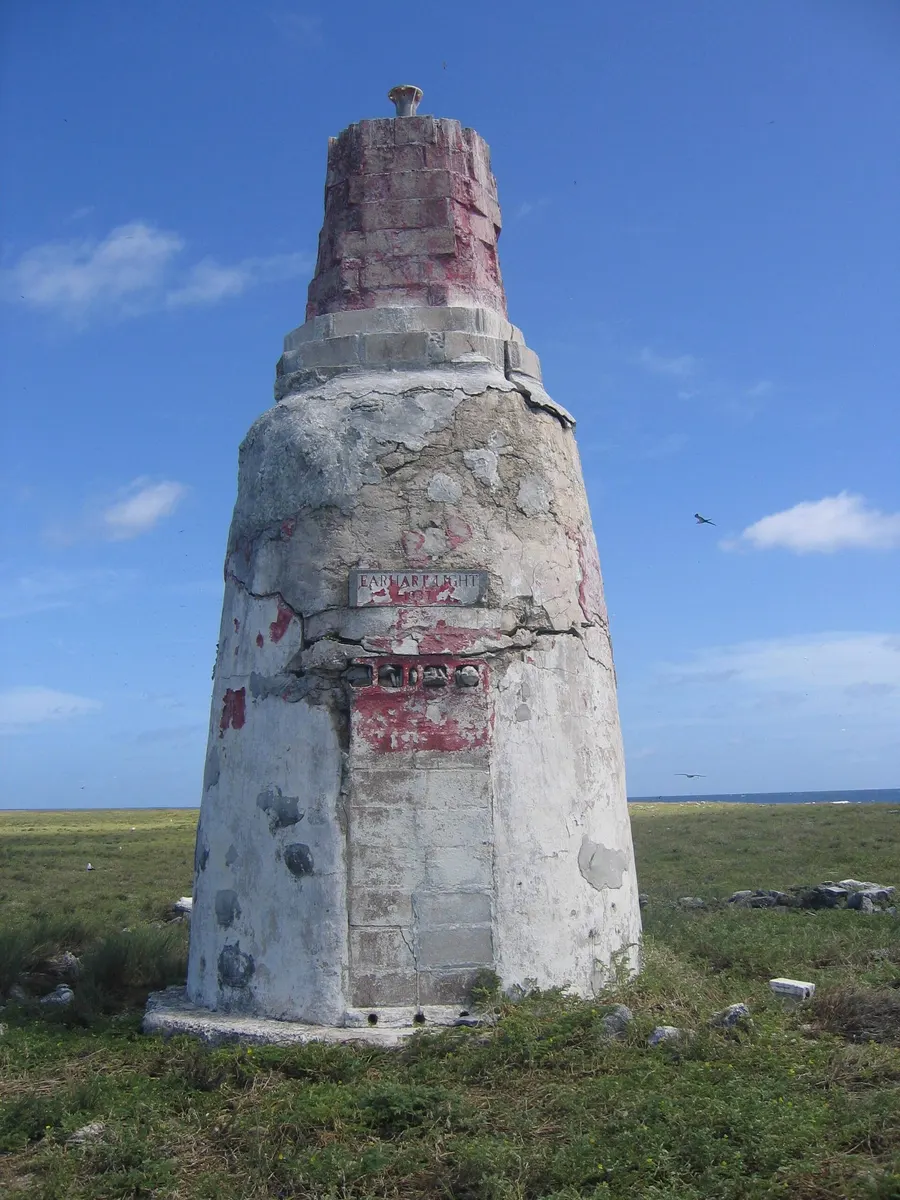
Earhart Light, the day beacon built on Howland Island in her memory, photographed in 2008Earhart Light, the day beacon built on Howland Island in her memory, photographed in 2008Image: Joann94024 at English Wikipedia · CC BY-SA 3.0
world · Oceania

Amelia Earhart and Fred Noonan vanish over the Pacific

In 1937 Amelia Earhart, the most famous woman flyer in the world, set out to circle the globe near the equator in a twin-engined Lockheed Electra, with Fred Noonan as her navigator. After more than a month of flying eastward from California, they reached Lae in New Guinea with only the long Pacific stretch left. The next stop was Howland Island, a speck of land about 2 miles (3 km) long, where the US Coast Guard cutter Itasca waited to guide them in by radio. They took off from Lae at 10am on 2 July 1937. Through the following morning, Howland time, the Itasca’s operators heard Earhart’s voice at intervals, saying that they must be close, that fuel was running low and that they could not see the ship. Confused radio arrangements meant the two sides never made proper contact. Her last message came at about 8.43am, and nothing more was heard. A huge naval search found no trace of the plane or its crew, and what became of them is still debated.

Source: US National Archives: Radio log of the last communications of Amelia Earhart ↗
1964
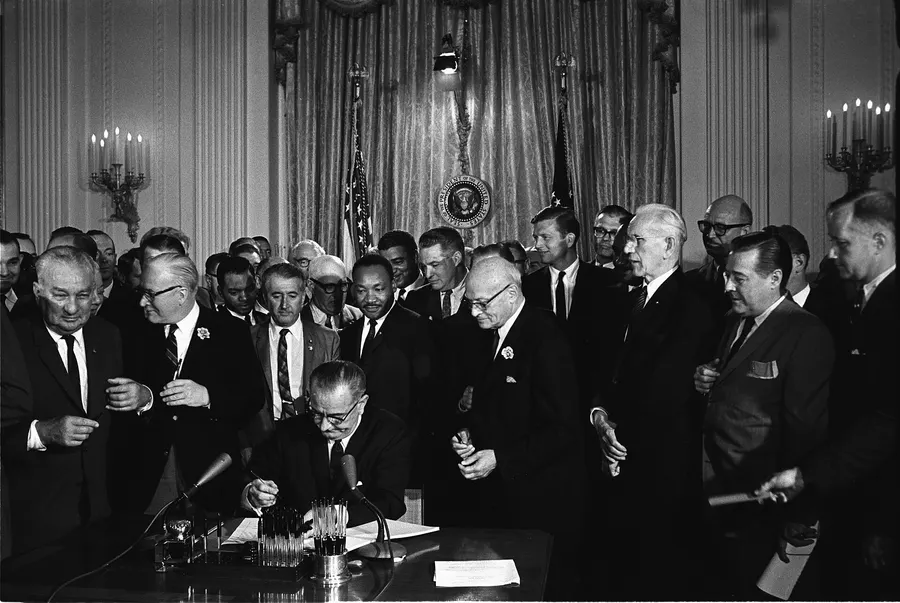
President Lyndon Johnson signs the Civil Rights Act in the White House on 2 July 1964, with Martin Luther King Jr among those looking onPresident Lyndon Johnson signs the Civil Rights Act in the White House on 2 July 1964, with Martin Luther King Jr among those looking onImage: Cecil Stoughton, White House Press Office (WHPO) · Public domain
world · Americas

President Johnson signs the Civil Rights Act

In June 1963, as protests against segregation spread across the American South, President John F. Kennedy asked Congress for a sweeping civil rights law. After his assassination that November, his successor Lyndon Johnson made the bill his priority. It passed the House of Representatives in February 1964, but in the Senate southern members kept up a filibuster for weeks until, for the first time, the Senate voted to cut off debate on a civil rights measure. Johnson signed the Civil Rights Act on the evening of 2 July 1964, in a televised ceremony at the White House attended by Martin Luther King Jr and other civil rights leaders. The law banned discrimination on grounds of race, colour, religion, sex or national origin in employment, outlawed segregation in hotels, restaurants, theatres and other public places, and gave the federal government new powers to desegregate schools. It was the most far-reaching civil rights law since Reconstruction, and was followed a year later by the Voting Rights Act.

Source: US National Archives: Civil Rights Act (1964) ↗
1972
Indira Gandhi, prime minister of India, who signed the agreement for her countryIndira Gandhi, prime minister of India, who signed the agreement for her countryImage: Anefo · CC0
world · Asia

India and Pakistan sign the Simla Agreement

Seven months after the war of 1971, in which East Pakistan broke away to become Bangladesh, India’s prime minister Indira Gandhi and Pakistan’s president Zulfikar Ali Bhutto met at Simla in the Himalayan foothills. Their agreement, dated 2 July 1972, committed both countries to settle their differences peacefully and between themselves, and to respect the line of control in Kashmir resulting from the ceasefire of December 1971.

Source: Ministry of External Affairs, Government of India: Simla Agreement (text) ↗
1976
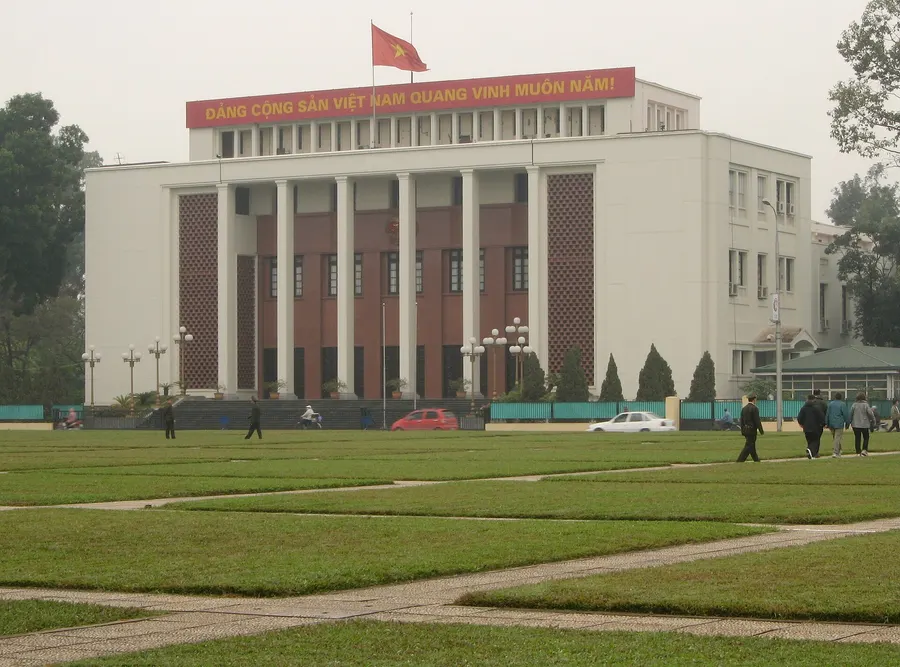
Ba Đình Hall in Hanoi, for many years the meeting place of Vietnam's National AssemblyBa Đình Hall in Hanoi, for many years the meeting place of Vietnam’s National AssemblyImage: Hector Garcia · CC BY-SA 2.0
politics · Asia

North and South are formally united as the Socialist Republic of Vietnam

The Geneva Accords of 1954 split Vietnam at the 17th parallel, leaving a communist state in the north with its capital at Hanoi and a Western-backed state in the south ruled from Saigon. Two decades of war followed. On 30 April 1975 North Vietnamese tanks entered Saigon and the southern government surrendered, but for more than a year the country remained two states in name, with a military administration running the south. Elections for a single National Assembly were held across the whole country in April 1976. On 2 July 1976 the assembly formally reunited Vietnam as the Socialist Republic of Vietnam, with Hanoi as its capital, and Saigon was renamed Ho Chi Minh City after the revolutionary leader who had died in 1969. The division begun at Geneva was over, though the new state faced a shattered economy, the flight of hundreds of thousands of refugees by sea and, within a few years, fresh wars with Cambodia and China.

Source: Britannica: Vietnam War, the fall of South Vietnam ↗
VI
2000 TO TODAY

Modern Day

The events of recent decades that have already become part of the historical record.

2000
De Kuip, the Feyenoord stadium in Rotterdam where the Euro 2000 final was playedDe Kuip, the Feyenoord stadium in Rotterdam where the Euro 2000 final was playedImage: R.M.Jaarsma · CC BY 2.5

sport · Europe

A golden goal wins Euro 2000 for France

Euro 2000, co-hosted by the Netherlands and Belgium, was the first European Championship held in two countries. France, the reigning world champions, reached the final in Rotterdam against Italy, whose tight defence had knocked out the Dutch hosts on penalties in the semi-final. Italy led through Marco Delvecchio early in the second half and were seconds from the trophy when Sylvain Wiltord equalised in stoppage time. Under the golden goal rule, the first goal in extra time would end the match. In the 103rd minute Robert Pirès worked his way down the left and pulled the ball back, and David Trezeguet, a substitute, drove it into the roof of the net. France became the first reigning world champions to win the European Championship.

Source: UEFA: History, France 2-1 Italy, EURO 2000 final ↗
2008
Íngrid Betancourt speaking in 2010, two years after her releaseÍngrid Betancourt speaking in 2010, two years after her releaseImage: Justin Hoch photographing for Hudson Union Society · CC BY 2.0
world · Americas

Íngrid Betancourt and 14 other hostages are rescued in Colombia

The French-Colombian politician Íngrid Betancourt was kidnapped by FARC guerrillas in February 2002 while campaigning for the Colombian presidency. On 2 July 2008 Colombian army intelligence, having infiltrated the rebels’ communications, sent soldiers posing as aid workers in a helicopter to collect the hostages. Betancourt, three American contractors and eleven Colombian soldiers and police were flown to freedom without a shot being fired.

Source: US Department of State: Rescue of hostages from FARC captivity, 2008 ↗
RESEARCH

Sources & Further Reading

Selected authoritative references supporting the events on this page.

WHY THESE MOMENTS?

Significance before volume

This page is not the longest possible list of events. It is a chronological journey through 2 July, where each entry is chosen for historical significance, human interest and reliability.

Facts are checked against authoritative museums, archives, universities and reference works. Where sources disagree, the page says so.

EXPLORED THE DEEPER STORY?

Return to the highlights of 2 July

Discover the lighter side of the date with famous birthdays, culture, firsts and lives remembered.

Explore This Day →
← PREVIOUS DAY1 July
HISTORY & TIMELINE2 July
NEXT DAY →3 July