
HISTORY & TIMELINE
1 July

A journey through
1 July in history

The story of 1 July runs from a crusader victory at Dorylaeum in 1097 to the midnight handover of Hong Kong in 1997. In between come the union of Poland and Lithuania at Lublin, the first reading of the theory of natural selection, the end of slavery in Suriname, the opening shots at Gettysburg, the birth of the Dominion of Canada, the first Tour de France, the worst day in the British Army’s history, the start of the International Geophysical Year, a united Somali Republic, the independence of Rwanda and Burundi, the Nuclear Non-Proliferation Treaty and the first Sony Walkman.

JUMP THROUGH TIME
II
THE MIDDLE AGES

Medieval History

Kingdoms, conflict, faith, power and the changing medieval world.

1097
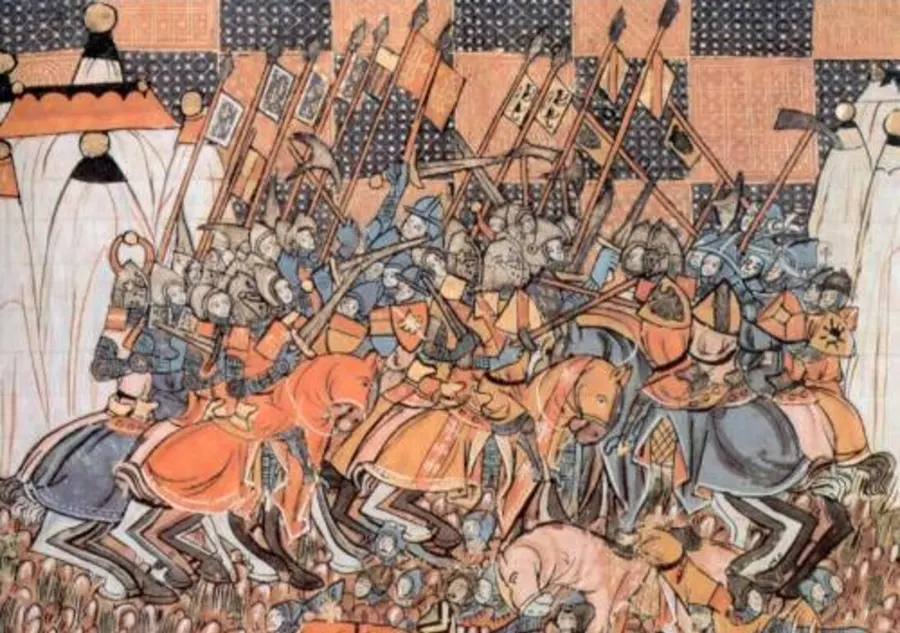
A medieval illumination of the battle at Dorylaeum, from a manuscript of William of Tyre's history of the crusadesA medieval illumination of the battle at Dorylaeum, from a manuscript of William of Tyre’s history of the crusadesImage: Unknown, Guillaume de Tyr · Public domain
world · Middle East

Crusaders defeat the Seljuk Turks at Dorylaeum

After taking Nicaea, the armies of the First Crusade marched across Anatolia in two columns. On 1 July 1097 the Seljuk sultan Kilij Arslan attacked the leading column near Dorylaeum, close to modern Eskişehir in Turkey. The crusaders held out through a morning of heat and arrows until the second column arrived, and the Turks were routed. The victory opened the road across Anatolia towards Antioch.

Source: Britannica: Battle of Dorylaeum ↗
III
A CHANGING WORLD

Early Modern Era

Exploration, political change, scientific development and expanding global connections.

1569
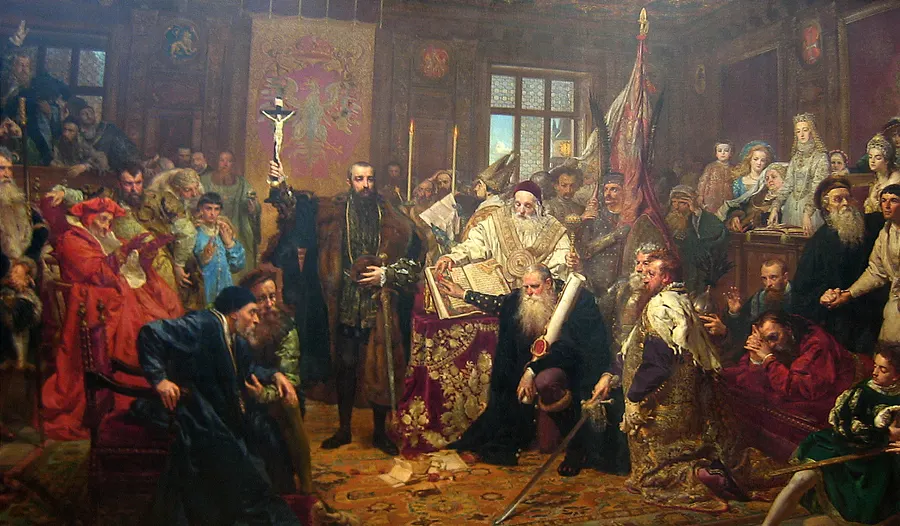
Union of Lublin, a painting by Jan Matejko, 1869Union of Lublin, a painting by Jan Matejko, 1869Image: Jan Matejko · Public domain
politics · Europe

The Union of Lublin creates the Polish-Lithuanian Commonwealth

Poland and Lithuania had shared a ruler since 1385, but under pressure from Muscovy the Lithuanian nobility accepted a closer tie. The act agreed at Lublin on 1 July 1569 joined the Kingdom of Poland and the Grand Duchy of Lithuania into one Commonwealth, with a single elected king and a common parliament, while each kept its own laws, treasury and army. It became one of the largest states in Europe.

Source: Britannica: Union of Lublin ↗
IV
THE NINETEENTH CENTURY

The 1800s

Industry, empire, invention, reform and a century of enormous transformation.

1858
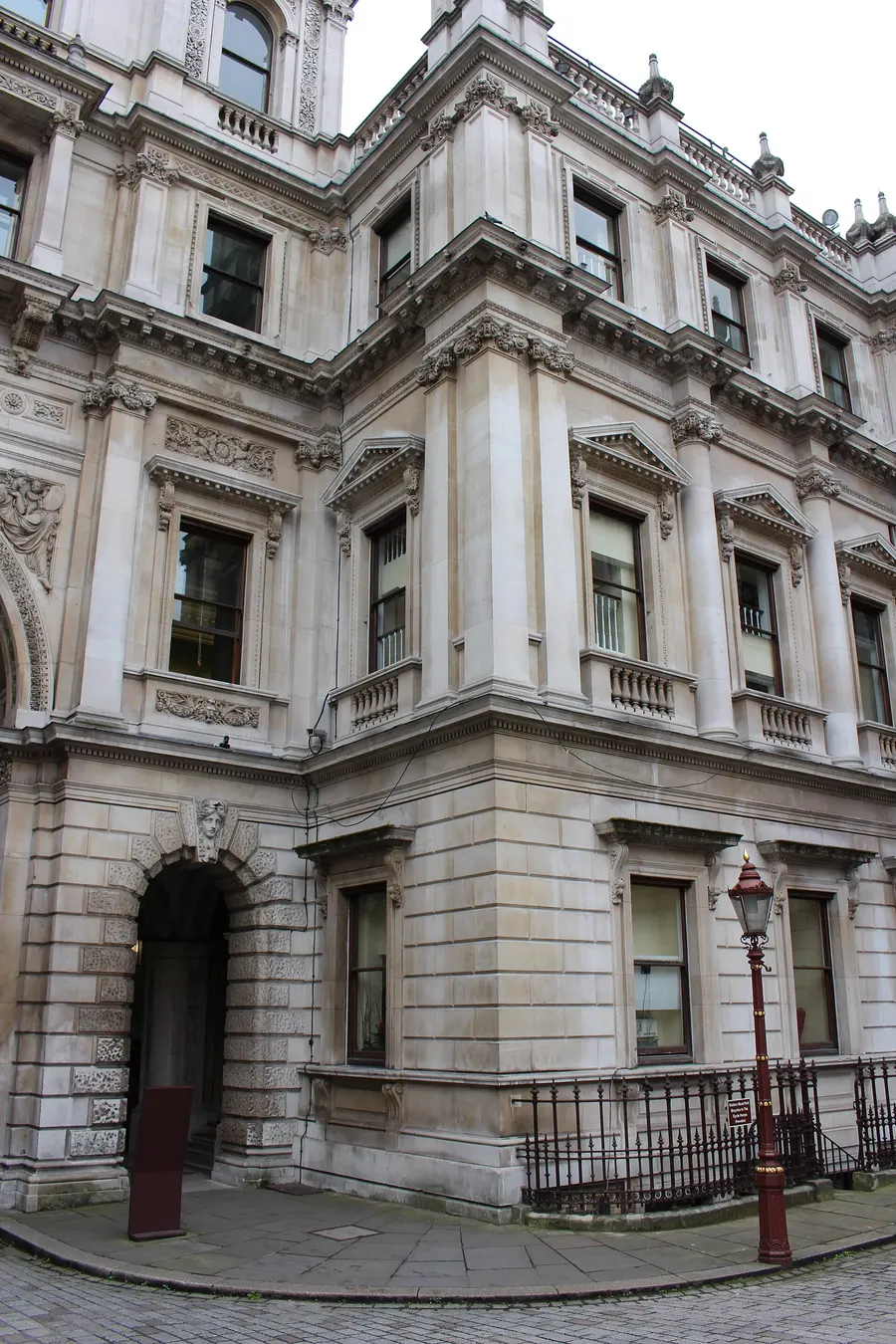
The Linnean Society of London at Burlington House, Piccadilly, where it has met since the 1850sThe Linnean Society of London at Burlington House, Piccadilly, where it has met since the 1850sImage: Tomgsimpson · CC0
science · Europe

Darwin and Wallace’s theory of natural selection is first presented

Charles Darwin had been quietly developing his theory of evolution by natural selection for twenty years when, in June 1858, a letter arrived from Alfred Russel Wallace, a naturalist collecting in the Malay Archipelago. Wallace’s essay set out almost the same idea. Darwin’s friends, the geologist Charles Lyell and the botanist Joseph Hooker, arranged for both men’s work to be presented together so that each would receive credit. On 1 July 1858 the Linnean Society of London heard extracts from Darwin’s writings and Wallace’s essay, read by the Society’s secretary. Neither author was there: Darwin was at home mourning his infant son, and Wallace was still in the Moluccas. The papers caused little stir at the time, but they were the first public statement of the theory, and Darwin went on to publish On the Origin of Species in 1859.

Source: The Linnean Society: 160th anniversary of the presentation of ‘On the tendency of species to form varieties’ ↗
1863
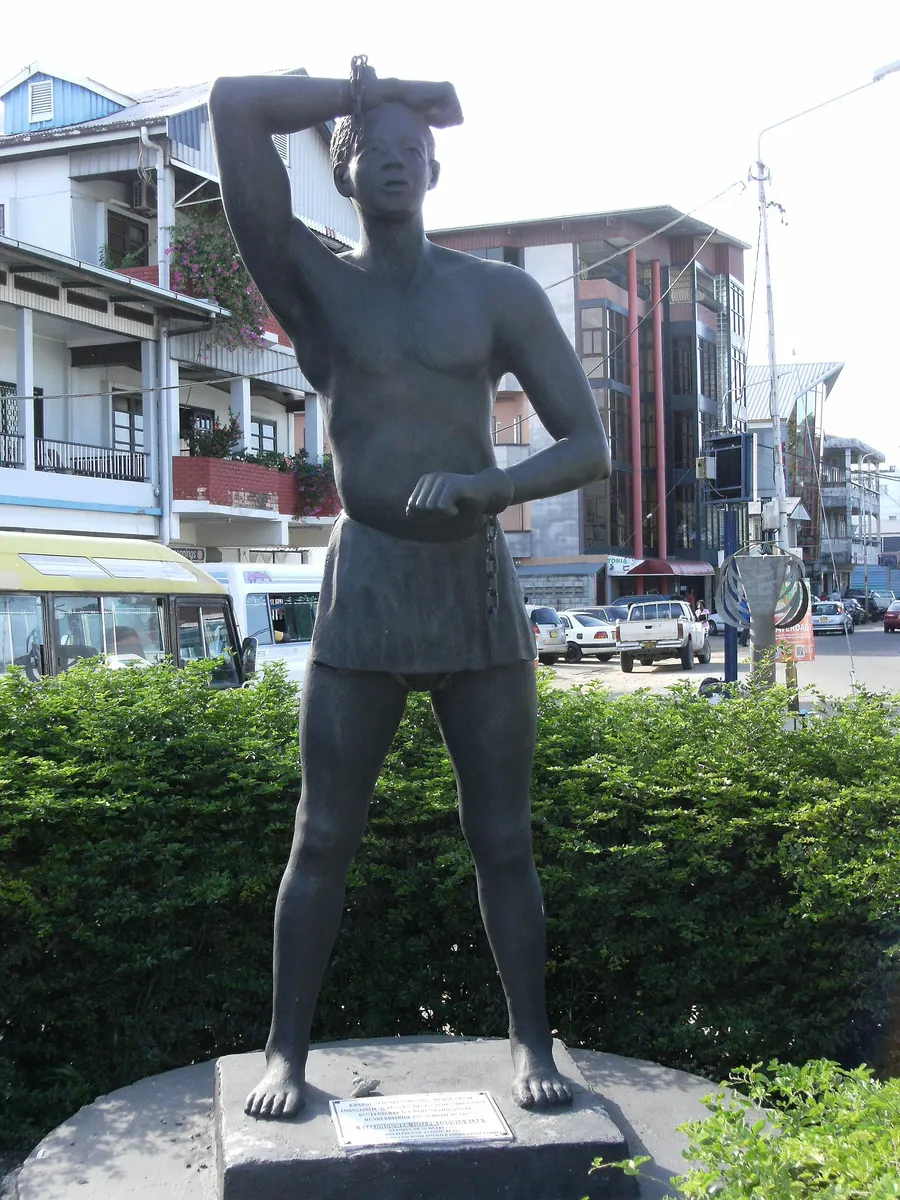
The Kwakoe statue in Paramaribo, Suriname, a monument to the end of slaveryThe Kwakoe statue in Paramaribo, Suriname, a monument to the end of slaveryImage: Mark Ahsmann · CC BY-SA 3.0
world · Americas

The Netherlands abolishes slavery in Suriname and the Caribbean

For two centuries Dutch planters in Suriname, on the north coast of South America, grew sugar, coffee and cotton with the forced labour of enslaved Africans and their descendants. Britain abolished slavery in its colonies in the 1830s and France in 1848, but the Netherlands held out, arguing over how much the owners should be paid for their loss. Slavery was finally abolished by law on 1 July 1863 in Suriname and on the Dutch Caribbean islands. The owners were compensated; the freed people received nothing, and in Suriname they were bound to go on working on the plantations under state supervision for another ten years, until 1873. The day is remembered as Keti Koti, ‘broken chains’ in Sranan Tongo, and is marked each 1 July in Suriname and the Netherlands with commemorations and celebrations.

Source: Nationaal Archief: Keti Koti, afschaffing slavernij ↗
1863
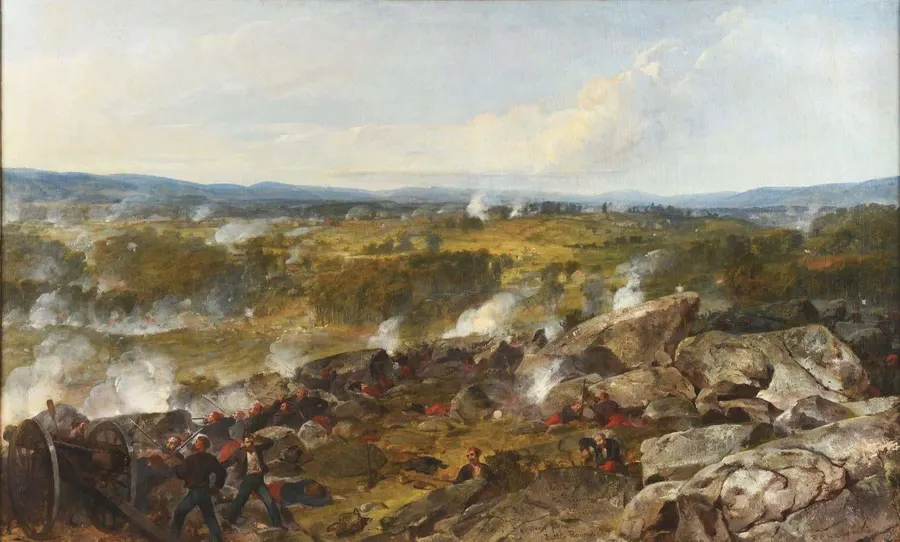
Peter Rothermel's painting of the Battle of Gettysburg, showing the fighting on the third dayPeter Rothermel’s painting of the Battle of Gettysburg, showing the fighting on the third dayImage: Peter Frederick Rothermel · Public domain
world · Americas

The Battle of Gettysburg begins

Robert E. Lee’s Confederate army had invaded Pennsylvania when, at about 7.30 am on 1 July 1863, Union cavalry under John Buford clashed with Confederate infantry west of the town of Gettysburg. Both sides poured in troops. By evening the outnumbered Union forces had been driven back through the town onto Cemetery Hill, where they dug in. Two more days of fighting ended in a Confederate defeat and a turning point in the American Civil War.

Source: US National Park Service: First Day’s Battlefield, Gettysburg ↗
1867
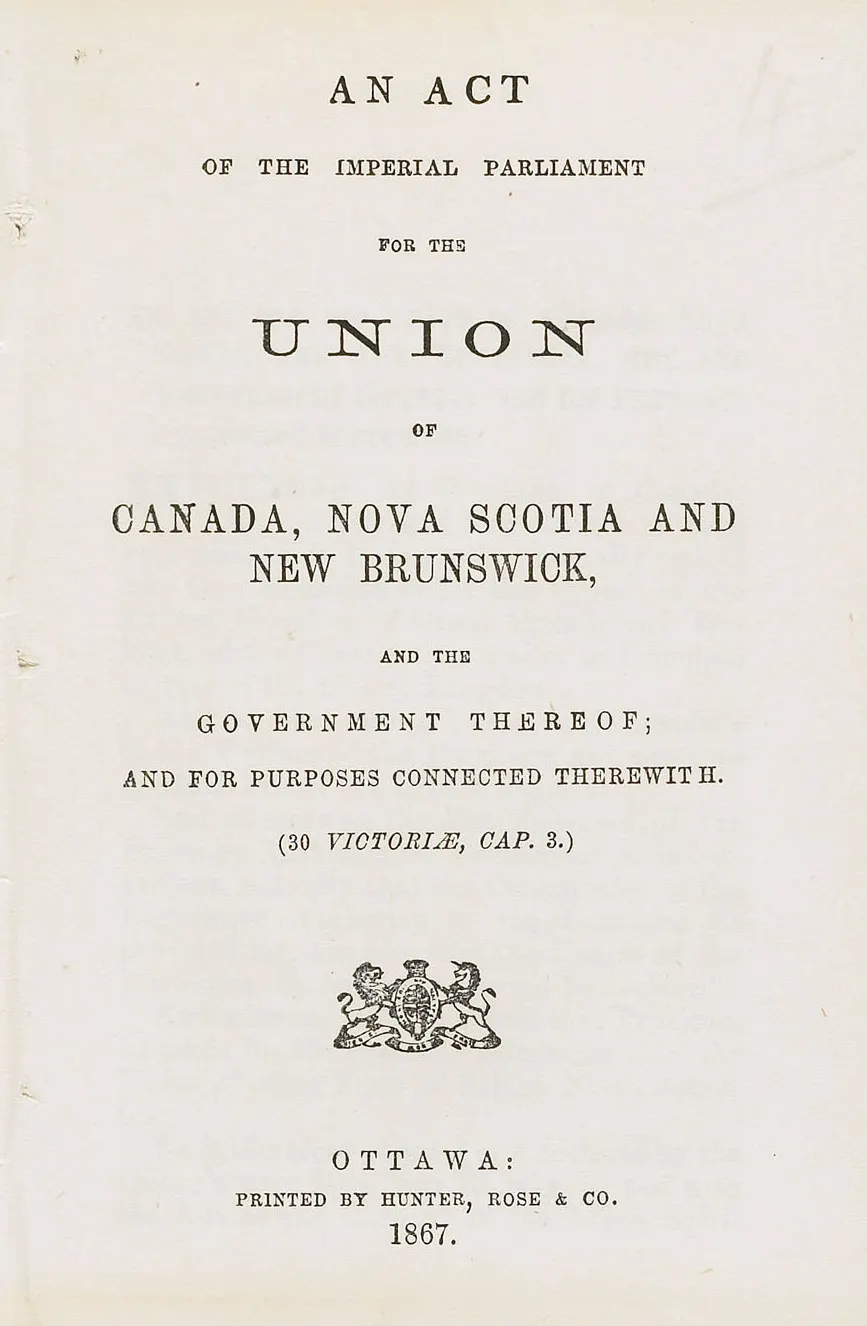
The title page of an 1867 Ottawa printing of the British North America Act, the law that united Canada, Nova Scotia and New BrunswickThe title page of an 1867 Ottawa printing of the British North America Act, the law that united Canada, Nova Scotia and New BrunswickImage: Parliament of the United Kingdom; published by Hunter, Rose, Ottawa · Public domain
politics · Americas

The Dominion of Canada is born

In the 1860s Britain’s colonies in North America faced hard questions: the Province of Canada was deadlocked between its English- and French-speaking halves, trade and railways needed a larger market, and the United States, fresh from its civil war, looked a threatening neighbour. At conferences in Charlottetown and Quebec City in 1864, and in London in 1866, colonial politicians worked out a plan for a federal union, which the British Parliament passed as the British North America Act in March 1867. The act came into force on 1 July 1867. Nova Scotia, New Brunswick and the Province of Canada, split into the new provinces of Ontario and Quebec, became the Dominion of Canada, with a federal parliament in Ottawa and John A. Macdonald as the first prime minister. Indigenous nations had no say in the arrangement. The act, renamed the Constitution Act, 1867, is still the core of Canada’s constitution, and 1 July is celebrated each year as Canada Day.

Source: The Canadian Encyclopedia: Constitution Act, 1867 ↗
V
THE TWENTIETH CENTURY

The 1900s

War and peace, technological leaps, social change, politics, sport and popular culture.

1903
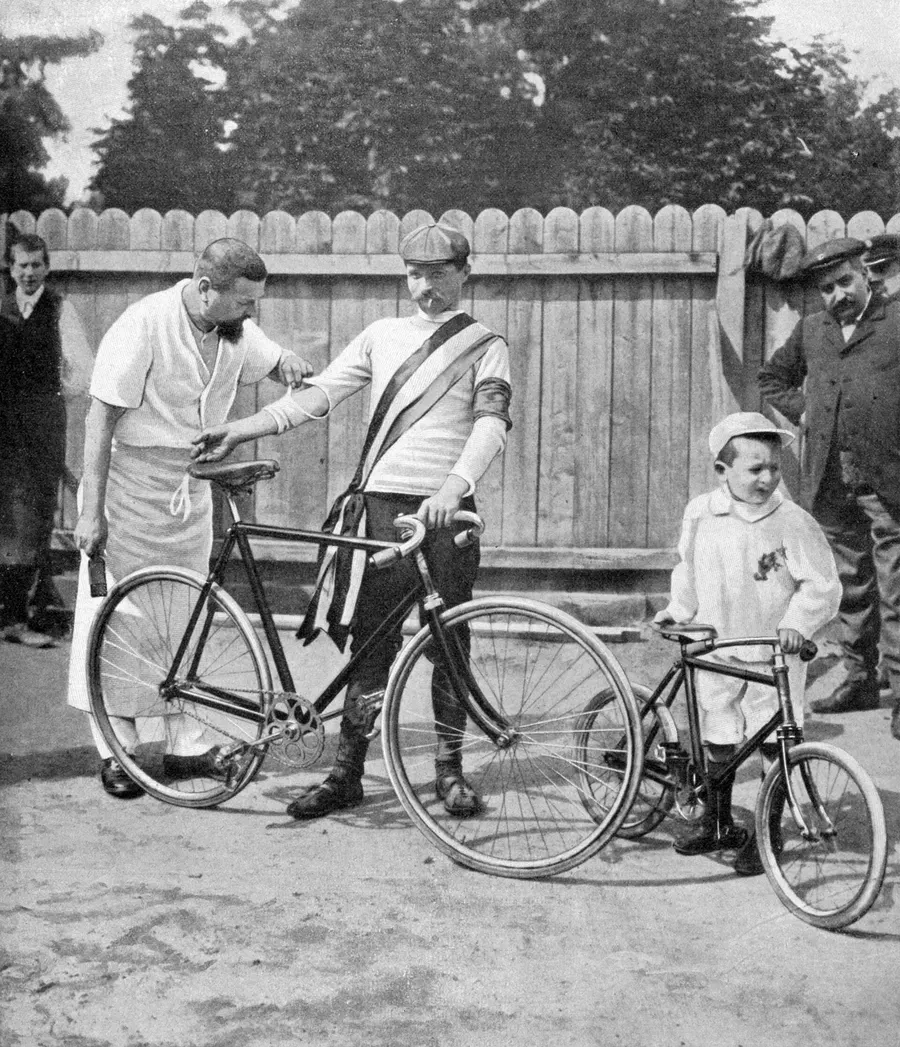
Maurice Garin, winner of the first Tour de France, with his bicycleMaurice Garin, winner of the first Tour de France, with his bicycleImage: Unknown · Public domain
sport · Europe

The first Tour de France sets off

In 1902 the Paris sports newspaper L’Auto, edited by the former cyclist Henri Desgrange, was losing a circulation battle with its rival. To win readers it announced a bicycle race around France, far longer than anything tried before, with the newspaper reporting every stage. The first Tour de France started on 1 July 1903 outside the Réveil-Matin inn at Montgeron, south-east of Paris. Sixty riders set off on a course of about 2,428 kilometres in six stages, from Paris to Lyon, Marseille, Toulouse, Bordeaux, Nantes and back to Paris, riding through the night on the longest legs. Only 21 finished. Maurice Garin, a chimney sweep turned professional cyclist, won on 19 July, and the race has been held almost every summer since.

Source: Bibliothèque nationale de France, BnF Essentiels: Maurice Garin, premier vainqueur du Tour de France ↗
1916
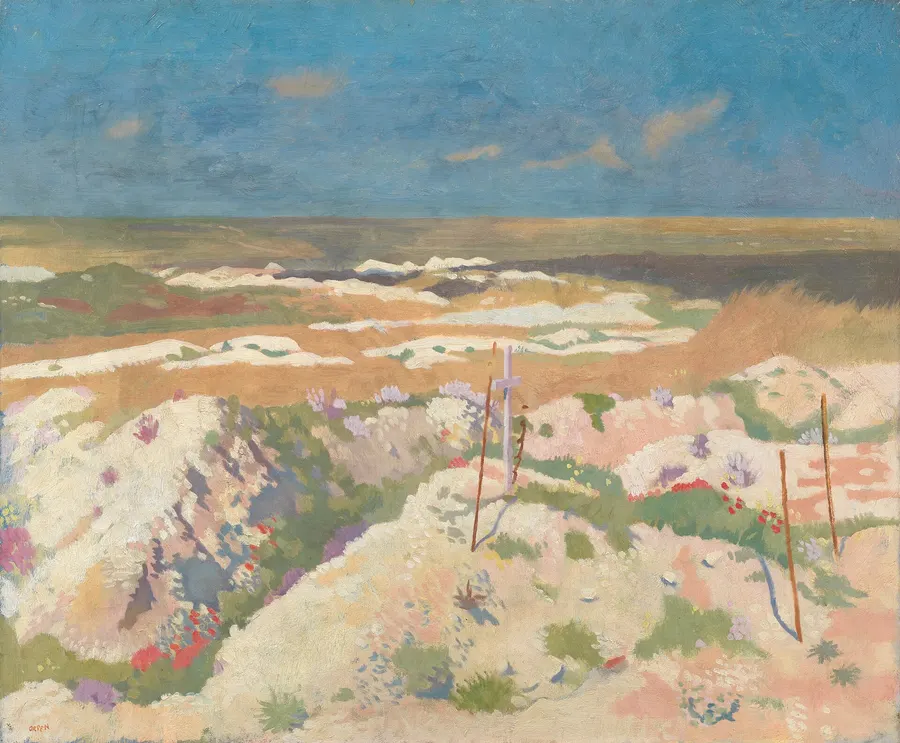
A Grave and a Mine Crater at La Boisselle, painted by William Orpen in August 1917, showing ground where the Somme attack beganA Grave and a Mine Crater at La Boisselle, painted by William Orpen in August 1917, showing ground where the Somme attack beganImage: William Orpen · Public domain
world · Europe

The first day on the Somme

In 1916 the British and French planned a joint offensive astride the River Somme in northern France to break the deadlock on the Western Front and ease German pressure on the French at Verdun. For a week beforehand British guns fired more than a million and a half shells at the German lines, meant to smash the barbed wire and the trenches, and huge mines were dug under the German positions. At 7.30 am on 1 July 1916 the mines were blown and the infantry climbed out of their trenches. Much of the wire was still intact and the German machine-gunners had sheltered in deep dugouts. By nightfall the British had suffered 57,470 casualties, 19,240 of them killed, the heaviest losses in a single day in the army’s history, although the French to the south did better. The battle went on until November, and the first day became a lasting symbol of the slaughter of the First World War.

Source: Imperial War Museums: First Day of the Battle of the Somme ↗
1957
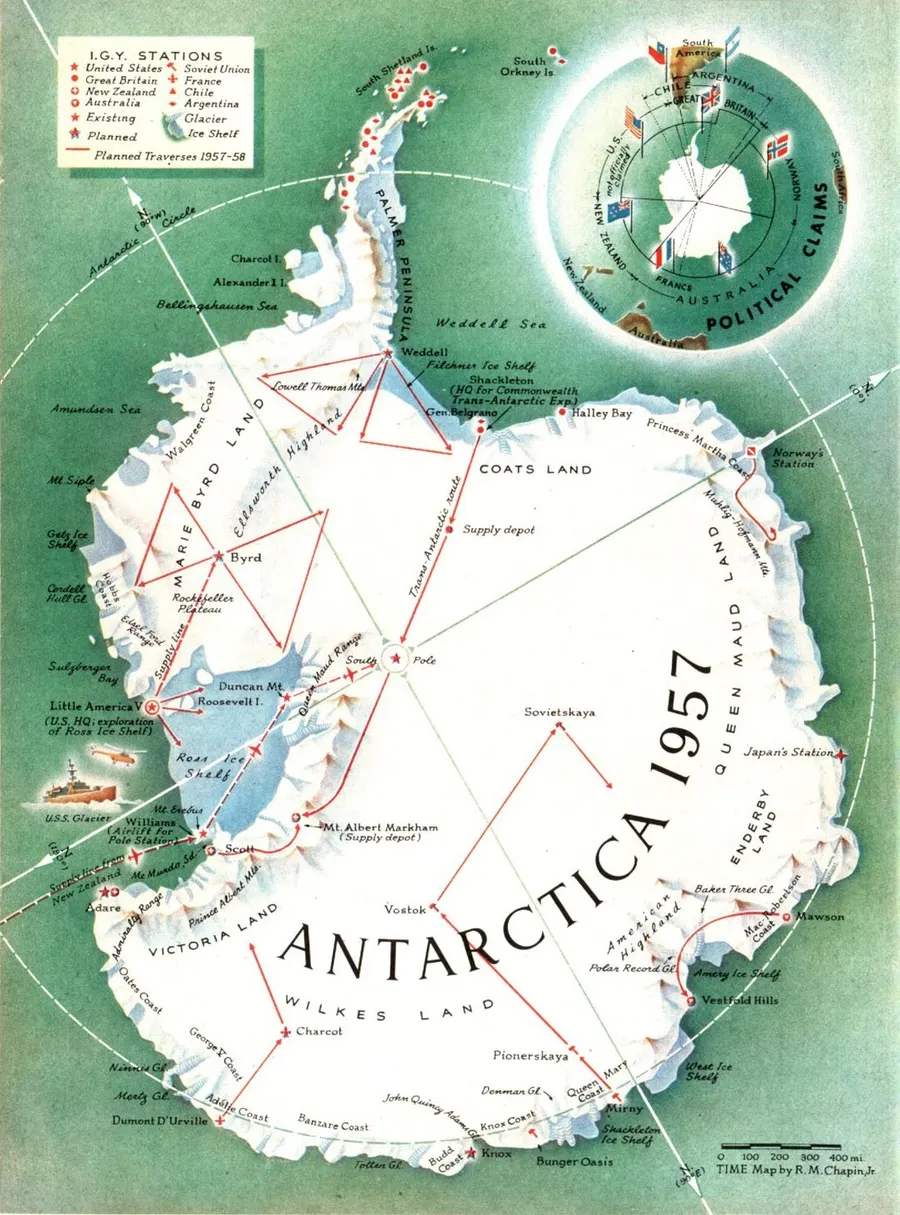
A map of Antarctica published in 1957, when the continent was a main focus of the International Geophysical YearA map of Antarctica published in 1957, when the continent was a main focus of the International Geophysical YearImage: Chapin, Robert M. · Public domain
science · Global

The International Geophysical Year begins

On 1 July 1957 scientists around the world began an eighteen-month programme to study the Earth, its oceans and atmosphere, the poles and the Sun. By its end at the close of 1958, 67 countries had taken part. The International Geophysical Year saw the launch of the first artificial satellites, new research stations in Antarctica and the discovery of the Van Allen radiation belts.

Source: NASA: 70 Years Ago, Scientists Establish the International Geophysical Year ↗
1960
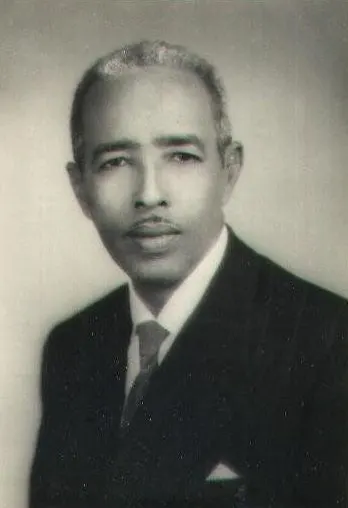
Aden Abdullah Osman Daar, the first president of the Somali RepublicAden Abdullah Osman Daar, the first president of the Somali RepublicImage: Somalia Government · Public domain
politics · Africa

Somalia becomes independent and unites with Somaliland

The former Italian colony of Somalia, run by Italy since 1950 as a United Nations trust territory, became independent on 1 July 1960. On the same day it joined the former British Somaliland, independent since 26 June, to form the Somali Republic, with Mogadishu as its capital and Aden Abdullah Osman Daar as its first president.

Source: US Office of the Historian: Somalia ↗
1962
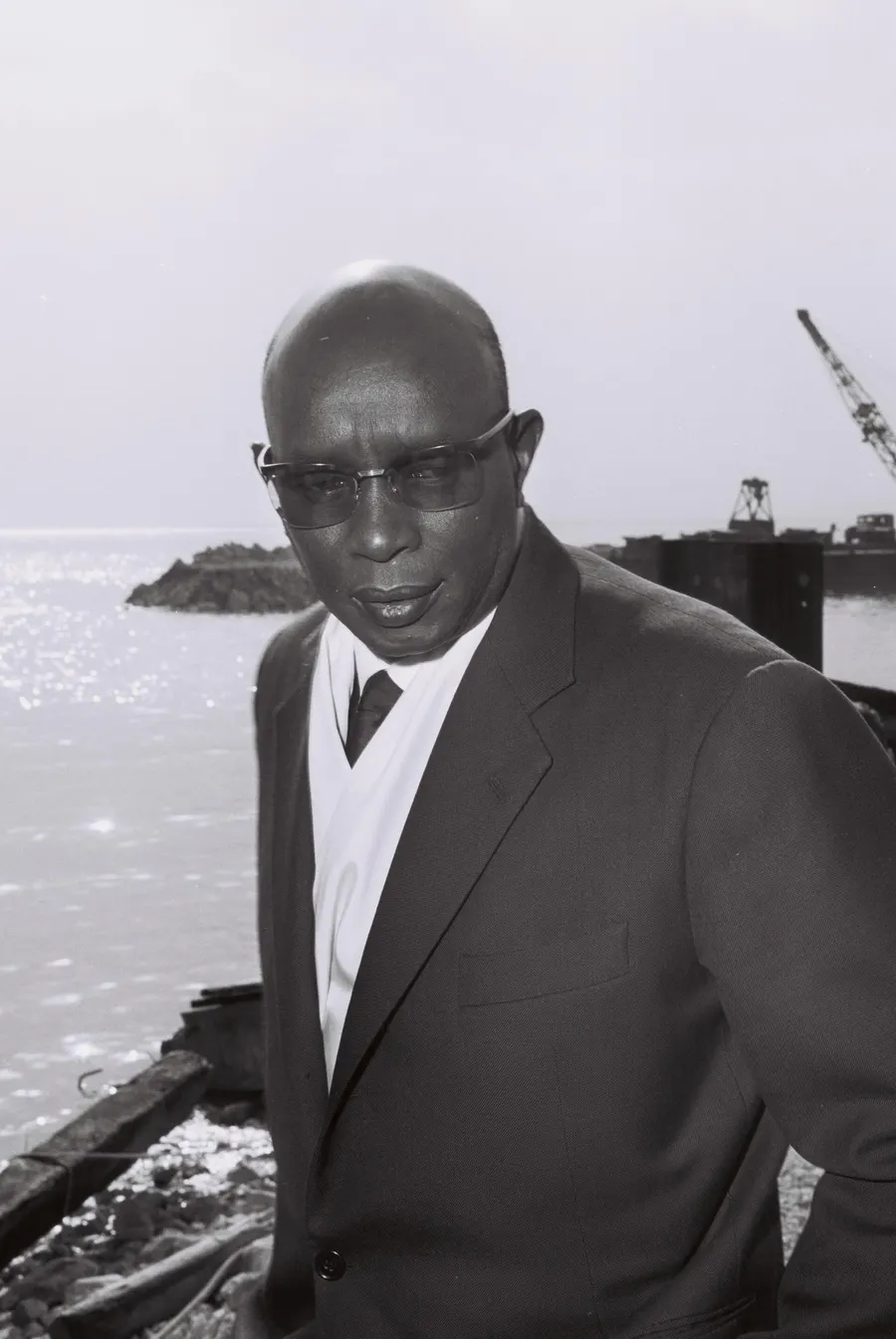
Mwambutsa IV, king of Burundi, photographed in 1962, the year his kingdom became independentMwambutsa IV, king of Burundi, photographed in 1962, the year his kingdom became independentImage: Fritz Cohen · Public domain
politics · Africa

Rwanda and Burundi become independent

The kingdoms of Rwanda and Burundi, in the hills of central Africa, were taken into German East Africa in the 1890s. Belgium occupied them during the First World War and then ruled them together as Ruanda-Urundi, first under a League of Nations mandate and after 1945 as a United Nations trust territory. Belgian rule relied on the Tutsi elite and hardened the division between Tutsi and Hutu, with lasting consequences. The two territories went their separate ways as independence approached. In Rwanda, violence from 1959 drove many Tutsi into exile, the monarchy was abolished and a republic declared under Hutu leadership. Burundi kept its king, Mwambutsa IV. On 1 July 1962 the UN trusteeship ended and both became independent: Rwanda as a republic and Burundi as a constitutional monarchy, which lasted until 1966. Both countries mark 1 July as their Independence Day.

Source: Britannica: Ruanda-Urundi ↗
1968
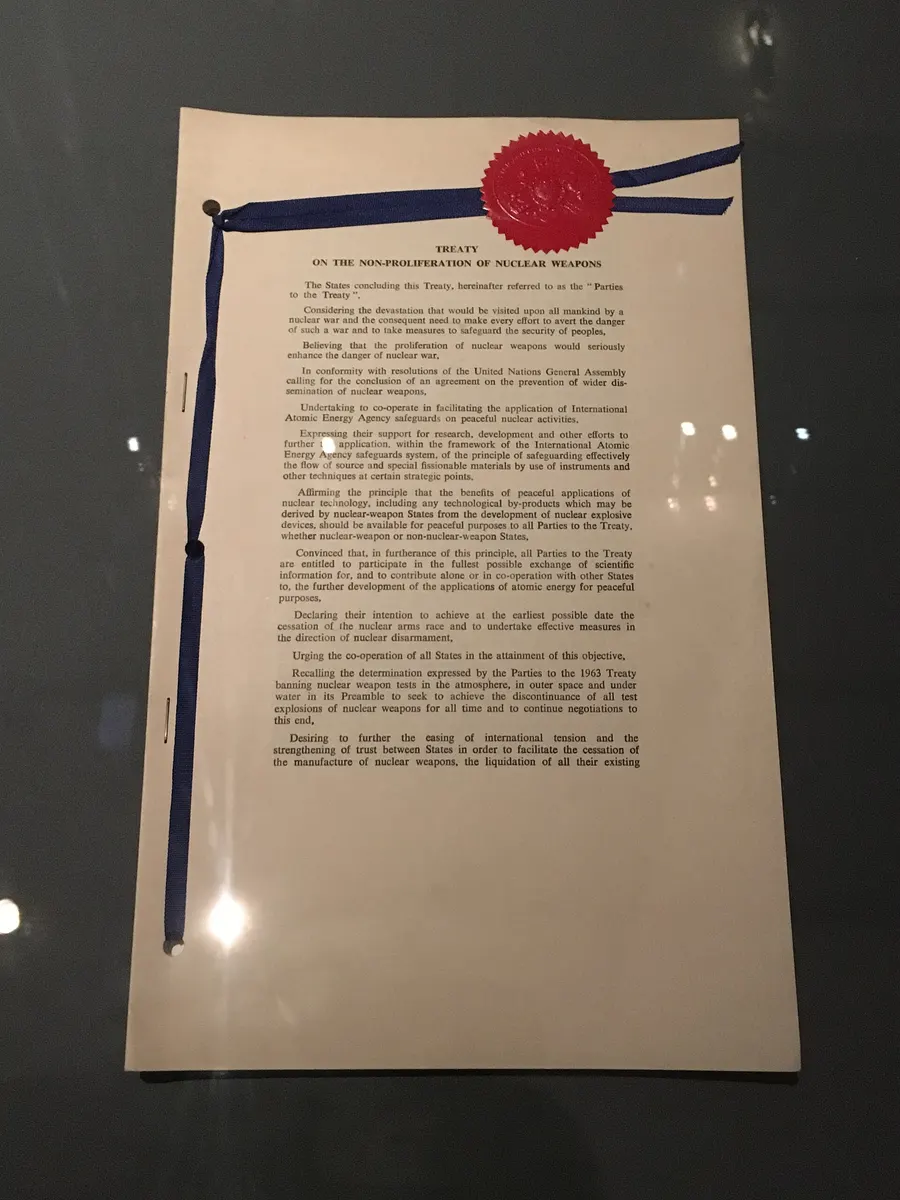
A signed copy of the Treaty on the Non-Proliferation of Nuclear Weapons on displayA signed copy of the Treaty on the Non-Proliferation of Nuclear Weapons on displayImage: Marc Baronnet · CC BY-SA 4.0
politics · Global

The Nuclear Non-Proliferation Treaty is signed

The Treaty on the Non-Proliferation of Nuclear Weapons was opened for signature on 1 July 1968 at ceremonies in London, Moscow and Washington, and 59 states signed it that day. Countries without nuclear weapons promised not to acquire them, while the nuclear powers promised to work towards disarmament and to share peaceful nuclear technology. It came into force in 1970.

Source: US Office of the Historian: The Nuclear Non-Proliferation Treaty, 1968 ↗
1979
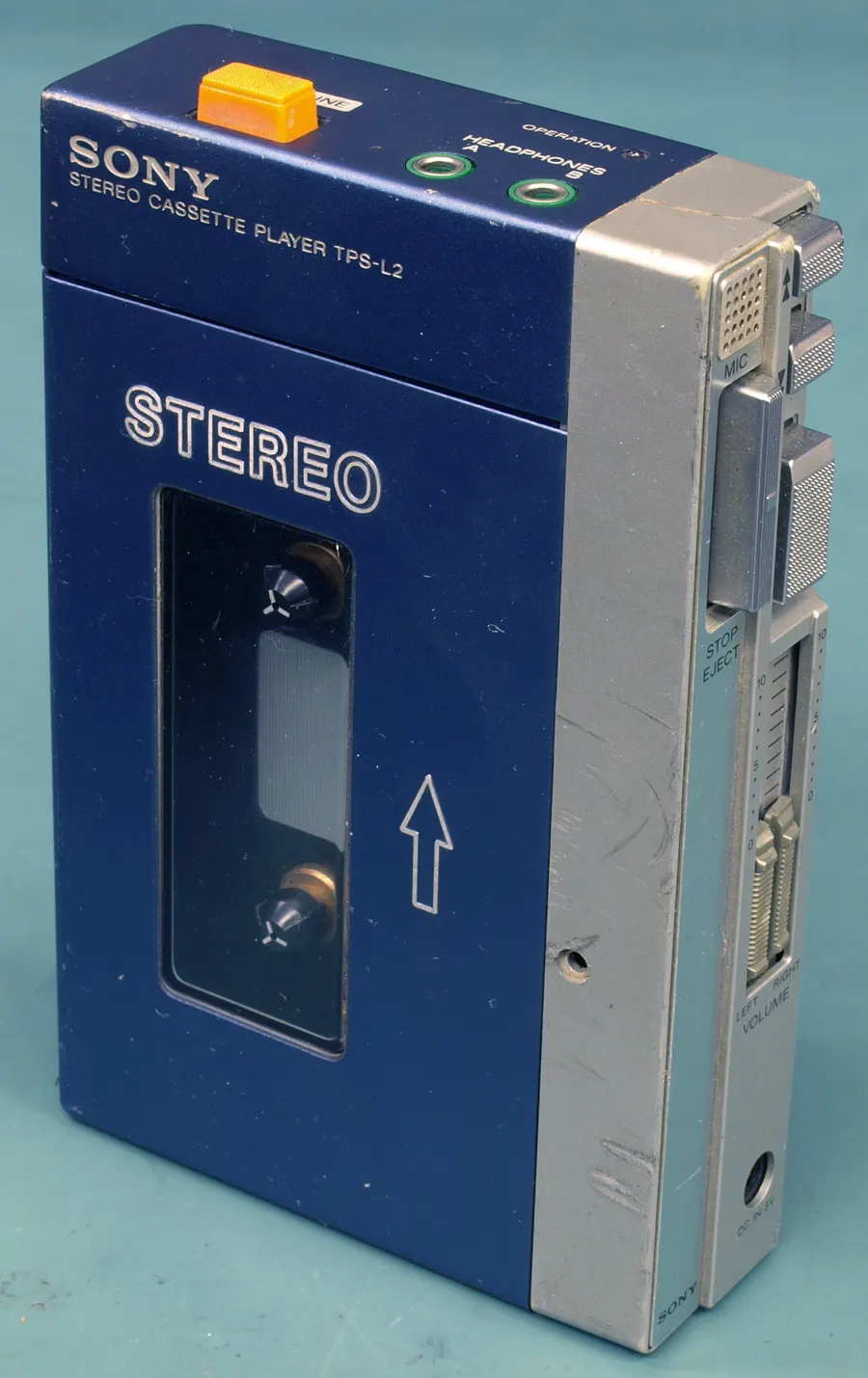
An original Sony Walkman TPS-L2 cassette player, the first Walkman modelAn original Sony Walkman TPS-L2 cassette player, the first Walkman modelImage: Binarysequence · CC BY-SA 4.0
culture · Asia

Sony launches the Walkman

In the late 1970s portable music meant a bulky radio-cassette player. At Sony, the company’s co-founder Masaru Ibuka wanted something small enough to listen to on long flights, and engineers adapted a compact cassette recorder by removing the recording parts and adding stereo playback and light headphones. The chairman, Akio Morita, pushed the idea through despite doubts inside the company that anyone would buy a player that could not record. The TPS-L2 Walkman went on sale in Japan on 1 July 1979. The blue-and-silver machine ran on two AA batteries and had two headphone sockets so that friends could listen together. Sales were slow at first, then took off, and within a few years the Walkman had changed how people listened to music, turning it into something private and portable that went everywhere with them.

Source: Sony Group: Time Capsule vol. 20, Walkman ↗
1997
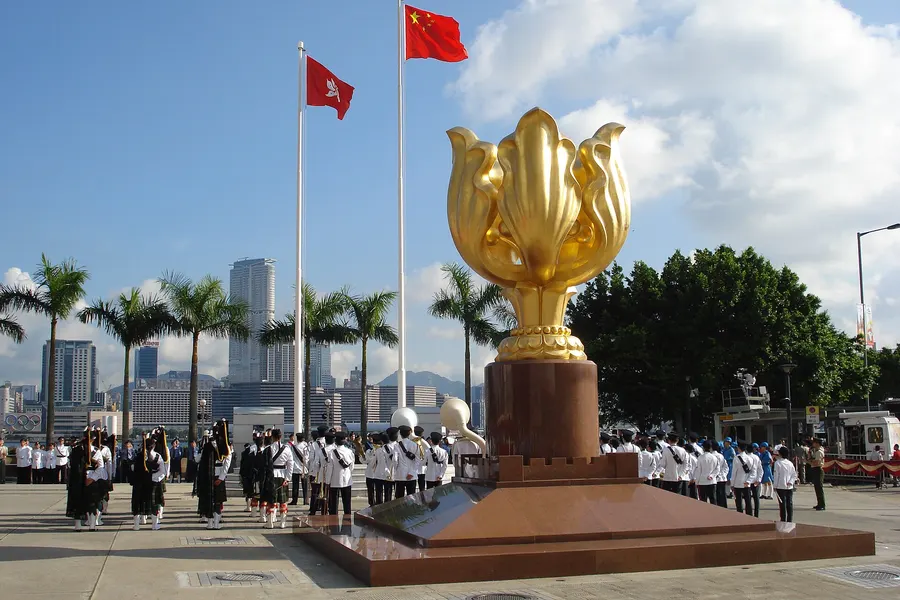
The golden bauhinia sculpture in Golden Bauhinia Square, Hong Kong, a gift from the Chinese government to mark the handover, with the flags of China and Hong Kong behind itThe golden bauhinia sculpture in Golden Bauhinia Square, Hong Kong, a gift from the Chinese government to mark the handover, with the flags of China and Hong Kong behind itImage: Tksteven · CC BY 2.5
politics · Asia

Hong Kong passes from British to Chinese rule

Britain took Hong Kong Island in the 1840s and Kowloon in 1860, and in 1898 it leased the much larger New Territories from China for 99 years. As the lease ran towards its end, the two governments negotiated the colony’s future, and in the Sino-British Joint Declaration of 1984 Britain agreed to hand back the whole territory in 1997. China promised that Hong Kong would keep its own legal system, economy and way of life for fifty years under the formula of ‘one country, two systems’. The handover ceremony opened at 11.30 pm on 30 June 1997 in the new wing of the Hong Kong Convention and Exhibition Centre, beside the harbour, with speeches by Charles, Prince of Wales, and President Jiang Zemin. At midnight the British flag came down and the Chinese flag went up, and Hong Kong became a Special Administrative Region of the People’s Republic of China. Chris Patten, the last British governor, sailed away on the royal yacht Britannia, and early on 1 July Tung Chee-hwa was sworn in as the territory’s first chief executive.

Source: Hong Kong Government Yearbook 1997: A New Era ↗
RESEARCH

Sources & Further Reading

Selected authoritative references supporting the events on this page.

Britannica: Battle of Dorylaeum↗Britannica: Qilich Arslan I↗Britannica: Union of Lublin↗UNESCO Memory of the World: The Act of the Union of Lublin document↗The Linnean Society: 160th anniversary of the presentation of ‘On the tendency of species to form varieties’↗Darwin Correspondence Project, University of Cambridge: The writing of Origin↗Nationaal Archief: Keti Koti, afschaffing slavernij↗Rijksmuseum: De ketens zijn gebroken↗US National Park Service: First Day’s Battlefield, Gettysburg↗American Battlefield Trust: July 1, 1863↗The Canadian Encyclopedia: Constitution Act, 1867↗Britannica: Canadian Confederation↗Bibliothèque nationale de France, BnF Essentiels: Maurice Garin, premier vainqueur du Tour de France↗UCI: Tour de France↗Imperial War Museums: First Day of the Battle of the Somme↗National Army Museum: Battle of the Somme↗NASA: 70 Years Ago, Scientists Establish the International Geophysical Year↗NOAA: The International Geophysical Year↗US Office of the Historian: Somalia↗Britannica: British Somaliland↗Britannica: Ruanda-Urundi↗US Office of the Historian: Burundi↗US Office of the Historian: The Nuclear Non-Proliferation Treaty, 1968↗United Nations Audiovisual Library of International Law: Treaty on the Non-Proliferation of Nuclear Weapons↗Sony Group: Time Capsule vol. 20, Walkman↗Victoria and Albert Museum: Stowaway TPS-L2 personal stereo↗Hong Kong Government Yearbook 1997: A New Era↗House of Lords Library: Hong Kong Handover, 20 Year Anniversary↗
WHY THESE MOMENTS?

Significance before volume

This page is not the longest possible list of events. It is a chronological journey through 1 July, where each entry is chosen for historical significance, human interest and reliability.

Facts are checked against authoritative museums, archives, universities and reference works. Where sources disagree, the page says so.

EXPLORED THE DEEPER STORY?

Return to the highlights of 1 July

Discover the lighter side of the date with famous birthdays, culture, firsts and lives remembered.

Explore This Day →
← PREVIOUS DAY30 June
HISTORY & TIMELINE1 July
NEXT DAY →2 July