
HISTORY & TIMELINE
30 June

A journey through
30 June in history

The story of 30 June runs from a Swiss defeat below the castles of Bellinzona in 1422 to a handshake at the border between the two Koreas in 2019. In between come the Spaniards’ desperate flight from Tenochtitlan, a tightrope walk over Niagara, the great Oxford debate on evolution, the Yosemite Grant, the opening of Tower Bridge, a vast explosion over Siberia, Hitler’s Night of the Long Knives, an emperor’s appeal at Geneva, the publication of Gone with the Wind, the birth of an independent Congo, the loss of Soyuz 11, the first leap second and Egypt’s first civilian president.

II
THE MIDDLE AGES

Medieval History

Kingdoms, conflict, faith, power and the changing medieval world.

1422
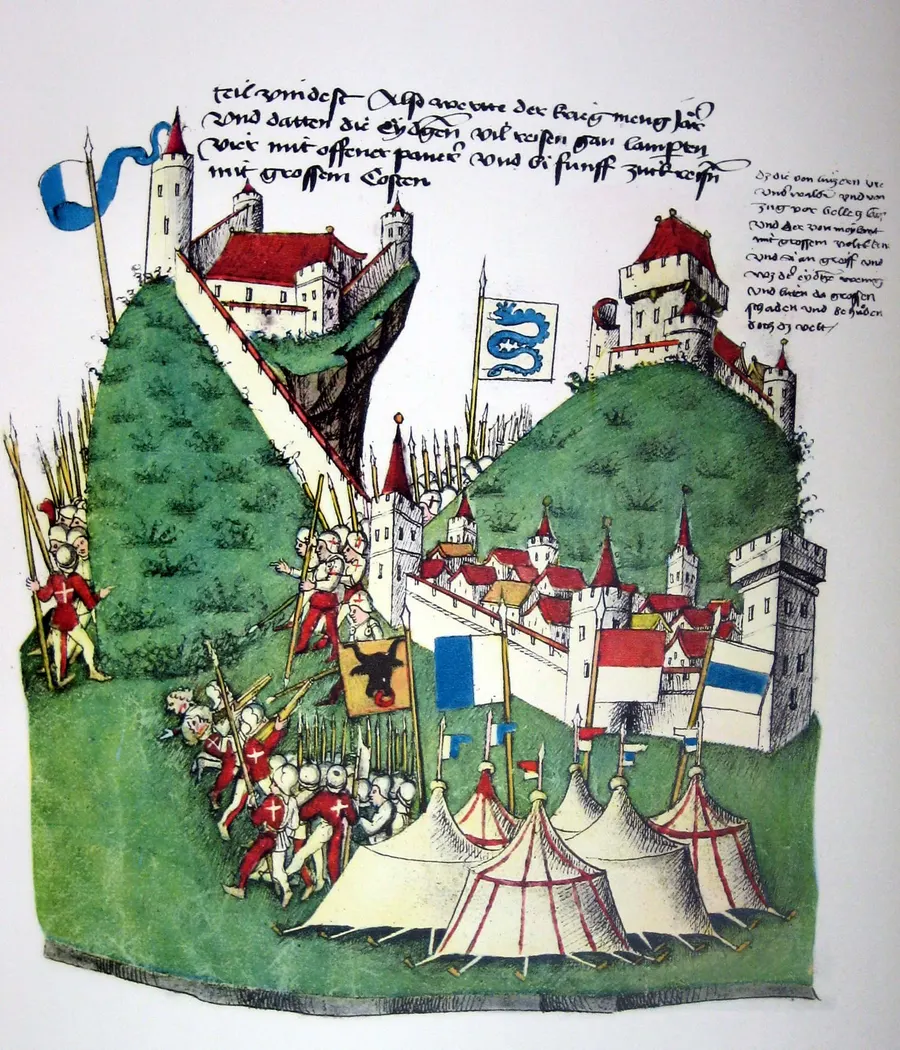
The Battle of Arbedo in the Tschachtlan Chronicle of 1470, with the Swiss camp before the castles of BellinzonaThe Battle of Arbedo in the Tschachtlan Chronicle of 1470, with the Swiss camp before the castles of BellinzonaImage: Benedicht Tschachtlan; upload by Adrian Michael · Public domain
world · Europe

Milan defeats the Swiss at the Battle of Arbedo

The Swiss cantons of Uri and Obwalden had pushed south over the Alps and bought the town of Bellinzona, but in April 1422 the Duke of Milan’s general, the Count of Carmagnola, took it back. The Swiss camped near Arbedo, just upstream, and at dawn on 30 June 1422 Carmagnola surprised them with a much larger army. Both sides lost several hundred men, and the defeat halted Swiss expansion south of the Alps for decades.

Source: Historical Dictionary of Switzerland: Arbedo, bataille d’ ↗
III
A CHANGING WORLD

Early Modern Era

Exploration, political change, scientific development and expanding global connections.

1520
The Spaniards' night-time flight from Tenochtitlan, in a late 17th-century painting from a series on the conquest of MexicoThe Spaniards’ night-time flight from Tenochtitlan, in a late 17th-century painting from a series on the conquest of MexicoImage: Unknown author · Public domain
world · Americas

The Spaniards flee Tenochtitlan on La Noche Triste

Hernán Cortés and his Spanish soldiers had been received in Tenochtitlan, the island capital of the Aztec (Mexica) empire, in November 1519, and soon made the emperor Moctezuma II their prisoner. In 1520, while Cortés was away on the coast, his deputy Pedro de Alvarado attacked Mexica nobles during the festival of Toxcatl and killed many of them. The city rose in revolt. When Cortés returned, the Spaniards were besieged in their palace, and Moctezuma died during the fighting. The Spaniards decided to break out under cover of darkness along one of the causeways that linked the island to the mainland. On the night of 30 June 1520 (some accounts give the night of 30 June to 1 July) they were spotted, and Mexica warriors attacked from canoes and the causeway. Hundreds of Spaniards and many more of their Tlaxcalan allies were killed or drowned, many weighed down by looted gold. The Spaniards remembered it as La Noche Triste, the ‘Sad Night’. The survivors reached Tlaxcala, regrouped, and returned the next year to besiege and destroy the city.

Source: Britannica: Noche Triste ↗
IV
THE NINETEENTH CENTURY

The 1800s

Industry, empire, invention, reform and a century of enormous transformation.

1859
Blondin on his tightrope over the Niagara River, photographed by William England in 1859Blondin on his tightrope over the Niagara River, photographed by William England in 1859Image: William England · Public domain
sport · Americas

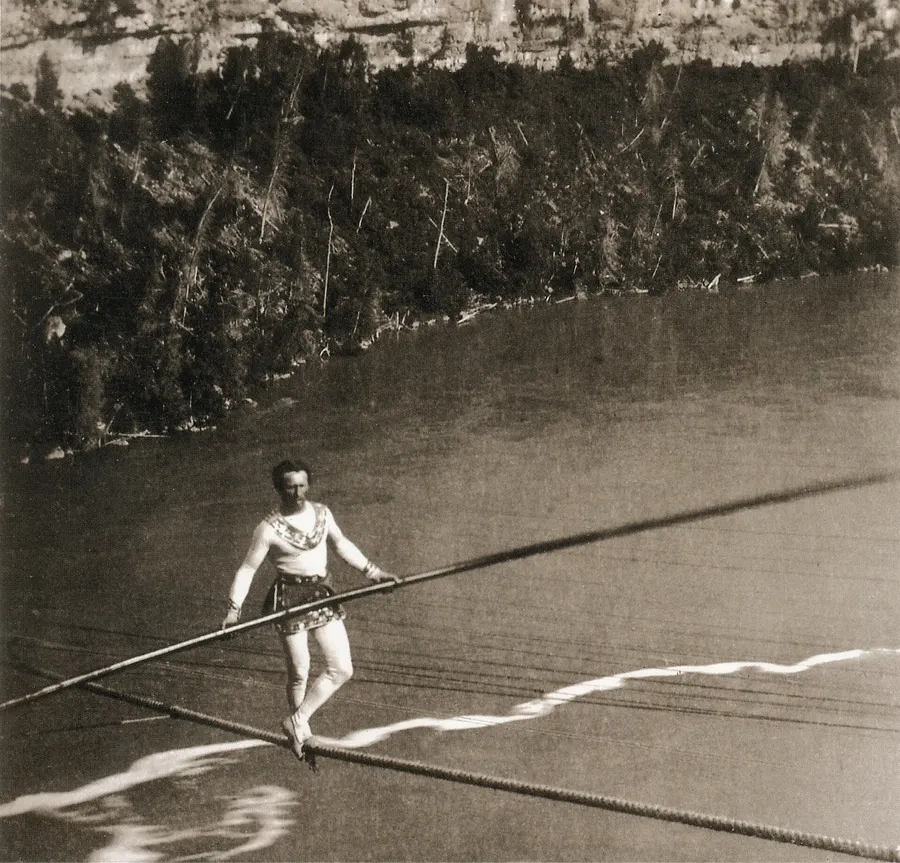
Blondin crosses the Niagara gorge on a tightrope

Jean-François Gravelet, known as Blondin, had trained as an acrobat in France since early childhood and came to the United States with a travelling troupe. He announced that he would do what no one had tried: walk across the gorge of the Niagara River, just below the falls, on a rope stretched from the American side to the Canadian side, with no net beneath him. On 30 June 1859, in front of thousands of spectators, he set out across a rope about 330 metres long, high above the water, carrying a long balancing pole. Halfway over he lowered a line to a boat below and drew up a bottle to drink from before walking on to Canada, then made the crossing back. Over the next two summers he repeated the feat many times with new tricks, walking blindfolded, pushing a wheelbarrow and even carrying his manager on his back, and he went on performing into old age.

Source: Library of Congress, Headlines and Heroes: The Daredevils of Niagara Falls ↗
1860
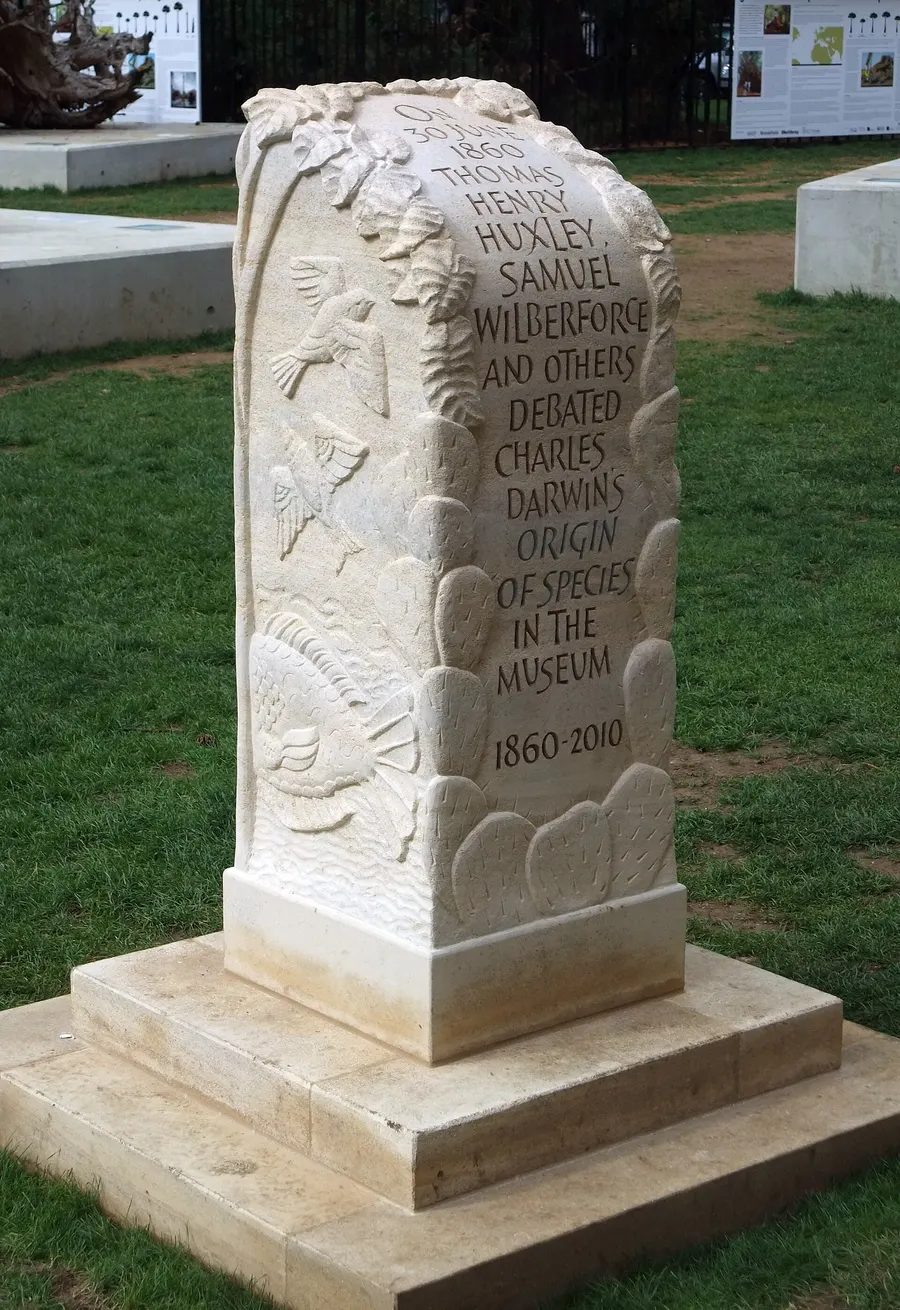
A memorial stone to the 1860 evolution debate outside the Oxford University Museum of Natural HistoryA memorial stone to the 1860 evolution debate outside the Oxford University Museum of Natural HistoryImage: Stemonitis · CC BY-SA 3.0
science · Europe

Huxley and Wilberforce clash over evolution at Oxford

Charles Darwin’s On the Origin of Species had appeared only seven months earlier when the British Association for the Advancement of Science met in Oxford’s new University Museum. On 30 June 1860 a discussion there became a famous confrontation between Samuel Wilberforce, Bishop of Oxford, and the biologist Thomas Henry Huxley, Darwin’s champion. No one kept an accurate record of what was said before a crowd of several hundred, and the celebrated exchange about apes and ancestors survives only in later recollections.

Source: Oxford University Museum of Natural History: The Great Debate ↗
1864
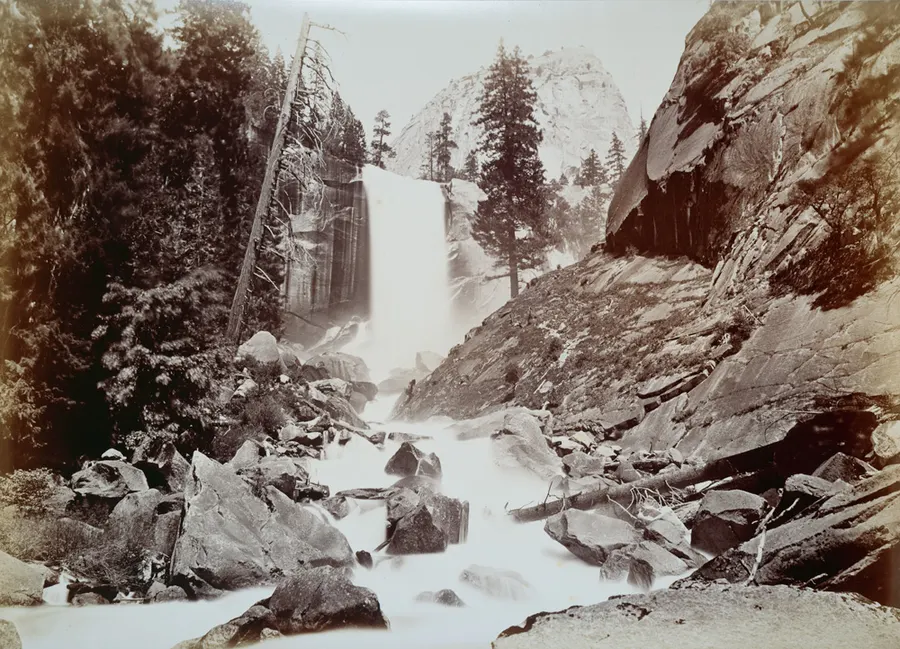
The Vernal Fall in Yosemite Valley, photographed by Carleton Watkins in the 1860sThe Vernal Fall in Yosemite Valley, photographed by Carleton Watkins in the 1860sImage: Carleton Watkins · Public domain
world · Americas

Lincoln signs the Yosemite Grant

The Ahwahneechee people had lived in Yosemite Valley for generations before a militia unit entered it in 1851, during a campaign to drive them out. Within a few years tourists were arriving to see its granite cliffs and waterfalls, and the giant sequoias of the nearby Mariposa Grove, and settlers began to claim land. A group of Californians, worried that the valley would be fenced off and exploited, asked their senator John Conness to protect it. In the middle of the Civil War, on 30 June 1864, President Abraham Lincoln signed the act granting Yosemite Valley and the Mariposa Big Tree Grove to the state of California, on condition that they be held ‘for public use, resort, and recreation’ for all time. It was the first time the US government had set aside land specifically so that it could be preserved and enjoyed by the public, an idea that led to the world’s first national park at Yellowstone in 1872. California handed the valley back to the federal government in 1906, when it became part of Yosemite National Park.

Source: National Park Service: Yosemite Grant Act of 1864 ↗
1894
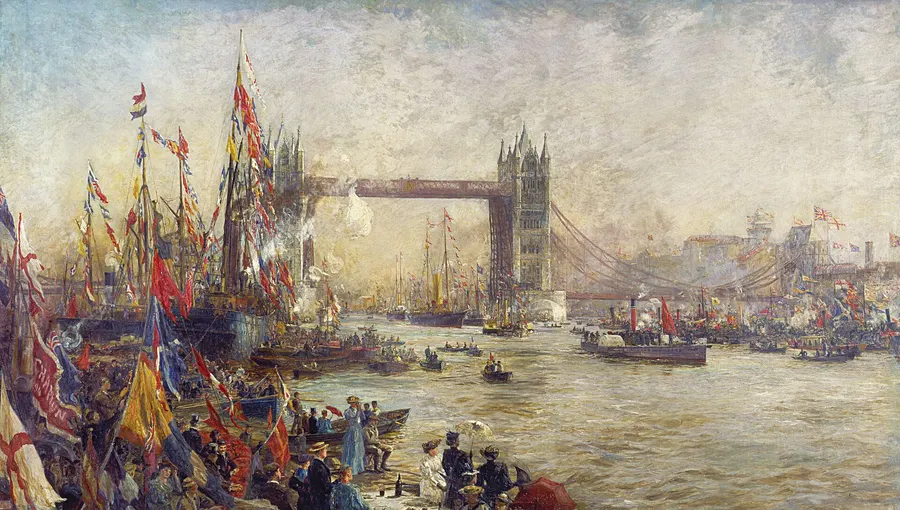
The opening of Tower Bridge, a painting by William Lionel WyllieThe opening of Tower Bridge, a painting by William Lionel WyllieImage: William Lionel Wyllie · Public domain
culture · Europe

Tower Bridge is opened in London

London’s growing East End needed a new crossing of the Thames below London Bridge, but tall ships still had to reach the Pool of London. The answer was a bascule bridge whose roadway could be raised, designed by the City architect Horace Jones and the engineer John Wolfe Barry. After eight years of building, the Prince of Wales opened Tower Bridge at noon on 30 June 1894, on behalf of Queen Victoria, amid processions and decorated boats on the river.

Source: Tower Bridge: Timeline of the construction of Tower Bridge ↗
V
THE TWENTIETH CENTURY

The 1900s

War and peace, technological leaps, social change, politics, sport and popular culture.

1908
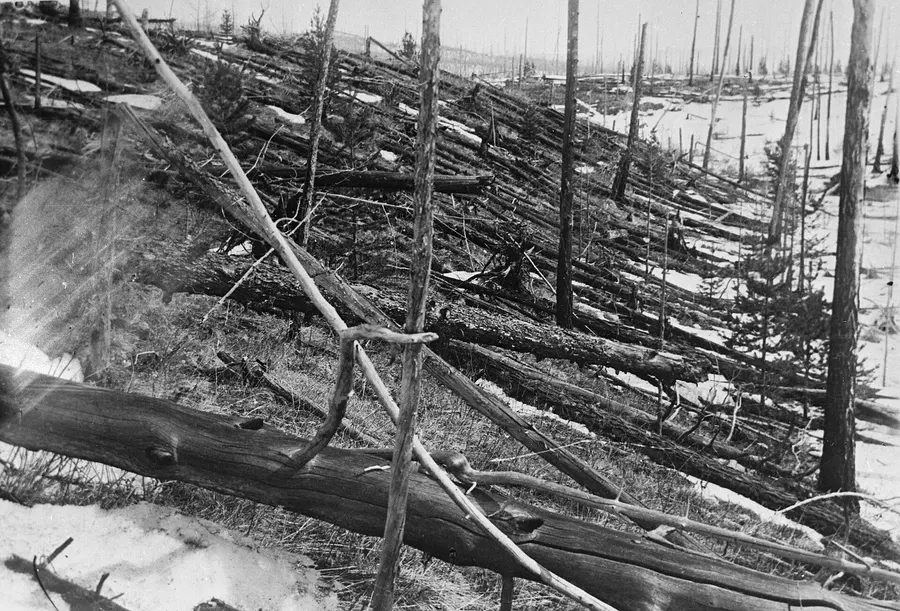
Trees flattened by the Tunguska blast, photographed by Leonid Kulik's expedition in the late 1920sTrees flattened by the Tunguska blast, photographed by Leonid Kulik’s expedition in the late 1920sImage: Leonid Kulik, the expedition to the Tunguska event · Public domain
science · Asia

A huge explosion flattens the forest at Tunguska in Siberia

At about a quarter past seven on the morning of 30 June 1908, people in central Siberia saw a fireball cross the sky, followed by a blast that knocked people off their feet and shook buildings dozens of kilometres away. The explosion, over thinly populated forest near the Podkamennaya Tunguska River, flattened trees across some 2,000 square kilometres. Its energy is estimated at up to about 15 megatons of TNT, around a thousand times the power of the Hiroshima bomb. Because the area was so remote, no scientist reached it until the mineralogist Leonid Kulik led an expedition in 1927. He found the trees laid out in a vast radial pattern, but no crater. Most scientists now think a stony asteroid, perhaps 50 to 100 metres across, exploded in the air several kilometres above the ground, so that almost nothing of it reached the surface. Tunguska remains the largest impact event in recorded history, and the United Nations now marks its anniversary as International Asteroid Day.

Source: Britannica: Tunguska event ↗
1934
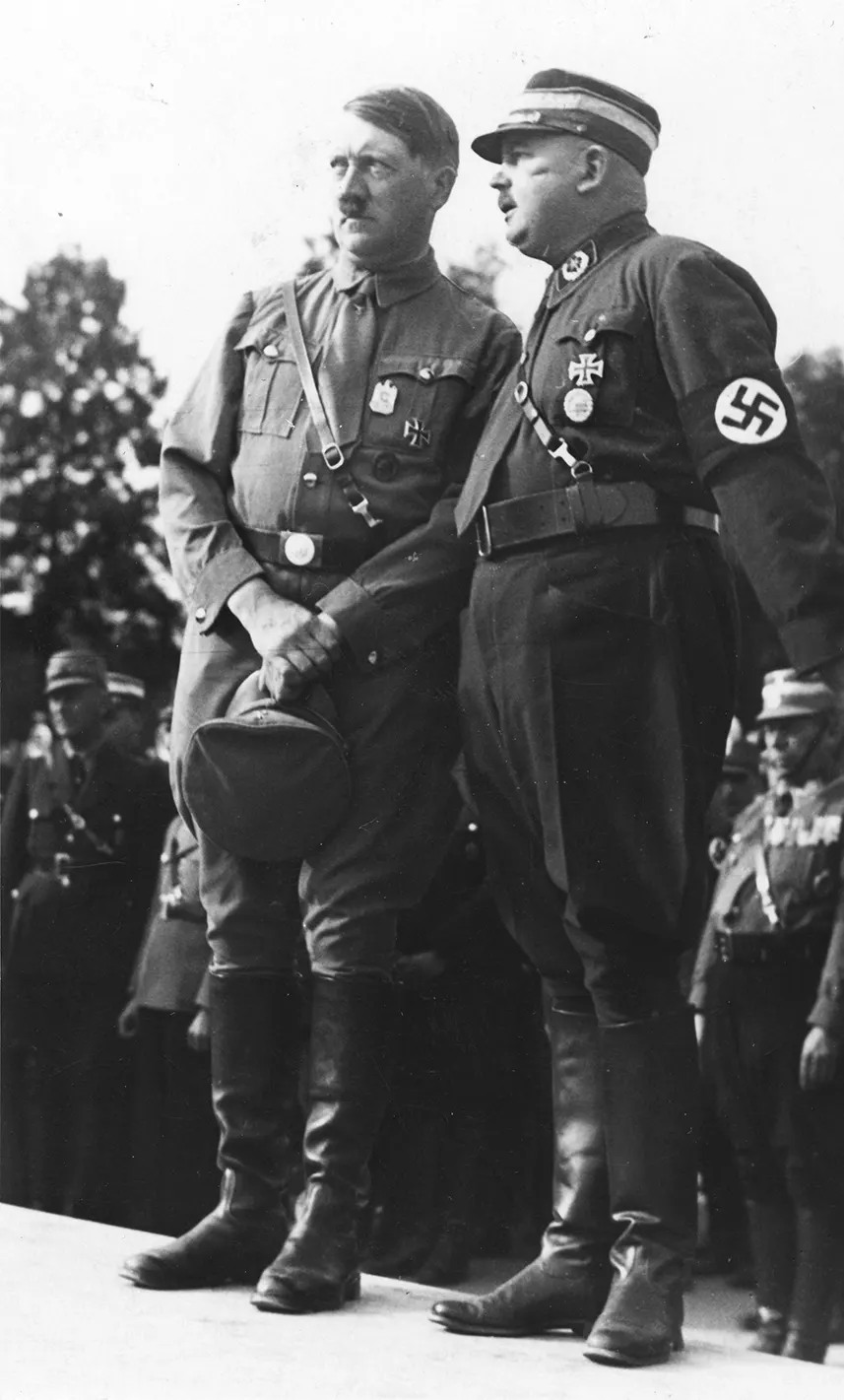
Adolf Hitler with the SA leader Ernst Röhm at the Nazi Party rally in Nuremberg in 1933, a year before the purgeAdolf Hitler with the SA leader Ernst Röhm at the Nazi Party rally in Nuremberg in 1933, a year before the purgeImage: Unknown · CC BY-SA 3.0 de
politics · Europe

Hitler purges the SA in the Night of the Long Knives

Hitler became Germany’s chancellor in January 1933, but his power was not yet complete. The Nazi storm troopers, the SA, had grown to some three million men under their chief of staff Ernst Röhm, who talked of a ‘second revolution’ and wanted his brownshirts to absorb the regular army. The generals, business leaders and the ageing President Hindenburg were alarmed, and Hitler needed their support. Early on 30 June 1934 Hitler himself led a raid on SA leaders gathered at a resort hotel at Bad Wiessee in Bavaria, while SS units and the Gestapo arrested and shot people across Germany. Röhm was killed in his cell on 1 July. The killings reached far beyond the SA: among the victims were the former chancellor Kurt von Schleicher and his wife, and Gregor Strasser, once Hitler’s rival within the party. The exact number killed has never been established. Hitler justified the murders as the crushing of a plot, the army stood aside, and when Hindenburg died in August Hitler took the presidency as well, with the soldiers swearing an oath of loyalty to him personally.

Source: Britannica: Night of the Long Knives ↗
1936
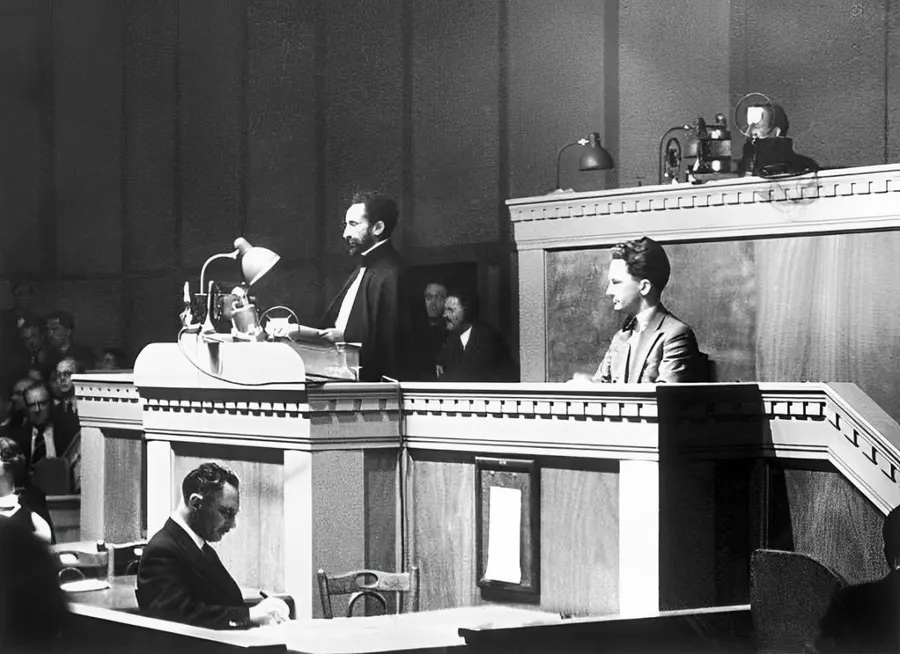
Emperor Haile Selassie addressing the Assembly of the League of Nations in Geneva in 1936Emperor Haile Selassie addressing the Assembly of the League of Nations in Geneva in 1936Image: Bettmann Archive · Public domain
politics · Africa

Haile Selassie appeals to the League of Nations

In October 1935 Mussolini’s Italy invaded Ethiopia, one of the only African countries still free of European rule and, like Italy, a member of the League of Nations. The League condemned the attack and imposed limited economic sanctions, but it did not stop Italy’s oil supplies, and Italian forces used aircraft and poison gas against Ethiopian troops and civilians. In May 1936 they took Addis Ababa, and the emperor Haile Selassie went into exile. On 30 June 1936 the emperor stood before the League’s Assembly in Geneva. He began in French and then spoke in Amharic, describing the gas attacks and asking the member states whether they would honour their promise to protect a small nation against a powerful one. The League did not act: within weeks its members lifted their sanctions against Italy. The speech made Haile Selassie a world figure and is remembered as a warning of the failure of collective security in the years before the Second World War. He returned to Addis Ababa in 1941, after British and Ethiopian forces drove the Italians out.

Source: UN Archives Geneva: Ethiopia, speech by the Emperor Haile Selassie to the League Assembly ↗
1936
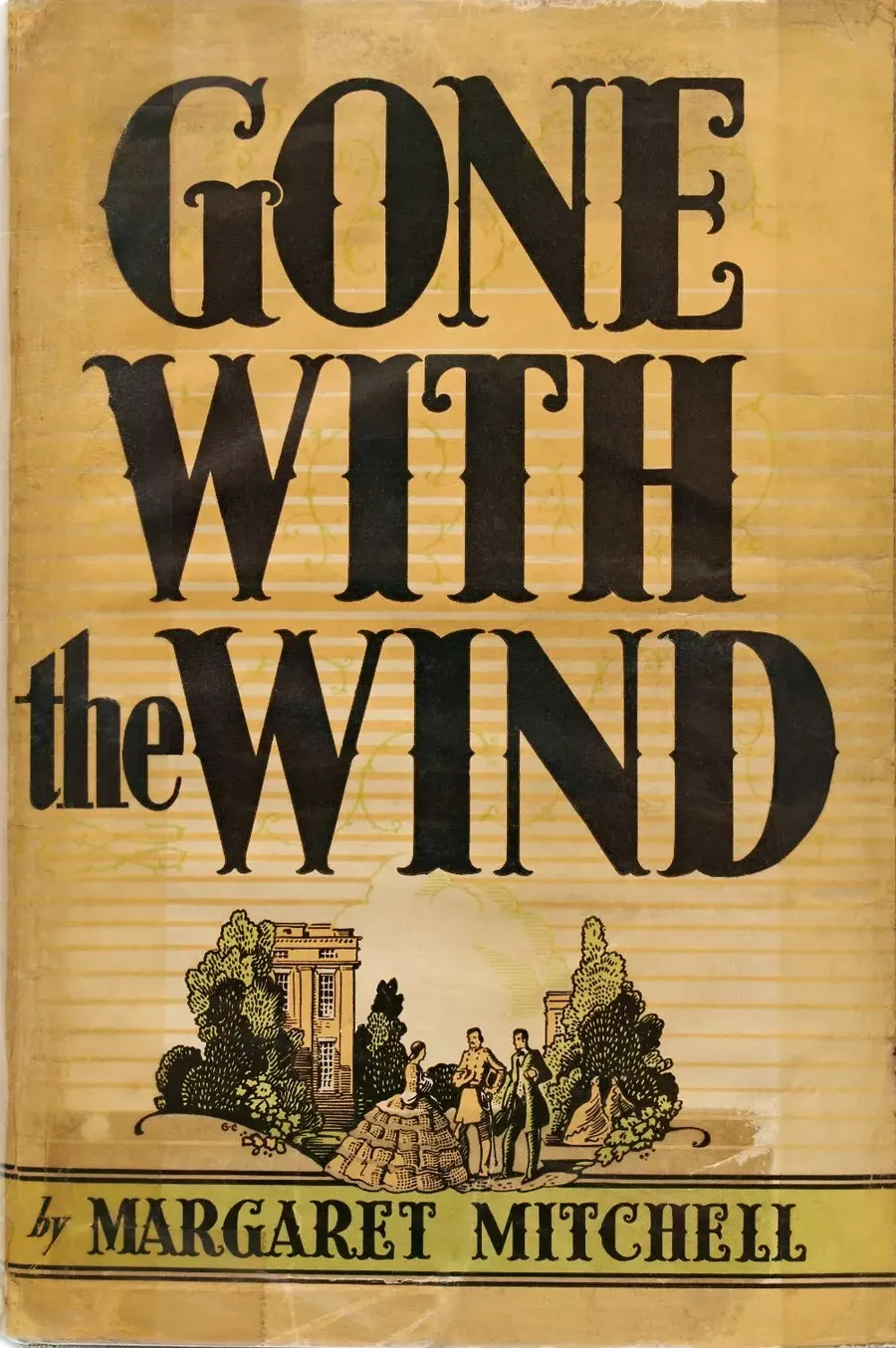
The dust jacket of the first edition of Gone with the Wind, published by Macmillan in 1936The dust jacket of the first edition of Gone with the Wind, published by Macmillan in 1936Image: Macmillan Publishers · Public domain
culture · Americas

Margaret Mitchell’s Gone with the Wind is published

Margaret Mitchell, a former reporter for the Atlanta Journal, began writing a novel about Georgia in the Civil War and Reconstruction in the 1920s while recovering from an injury. She worked on it for years, writing chapters out of order and keeping the pages in envelopes. In 1935 an editor from the Macmillan company visited Atlanta, heard about the manuscript and signed her up, and she spent months pulling it into shape and checking its facts. Gone with the Wind was published on 30 June 1936. The story of the headstrong Scarlett O’Hara sold in huge numbers, passing a million copies within six months, and won the Pulitzer Prize for fiction in 1937. The 1939 film made it even more famous. The novel has also long been criticised for its romantic picture of the slave-holding South and its racist portrayal of Black characters. It was the only novel Mitchell published.

Source: Britannica: Gone with the Wind (novel) ↗
1960
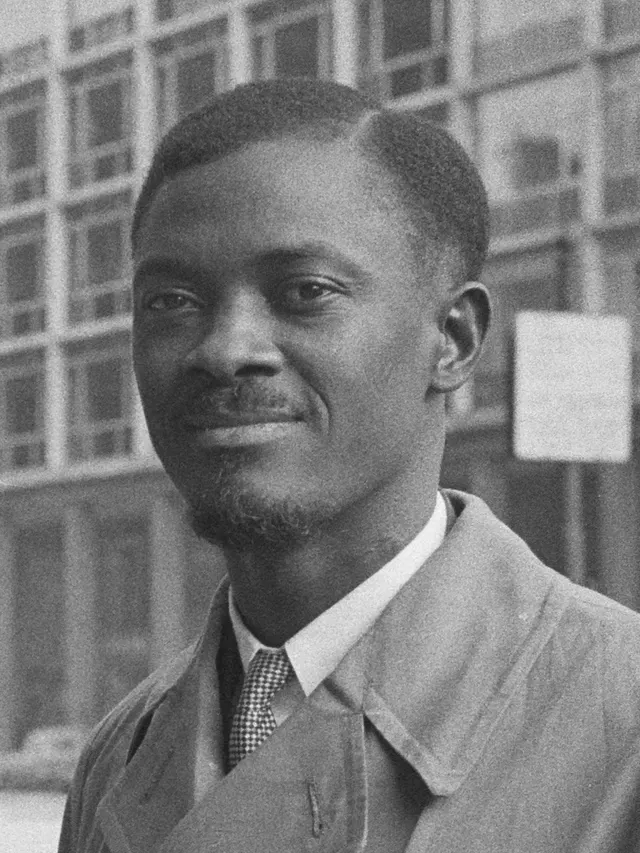
Patrice Lumumba, the Congo's first prime minister, photographed in 1960Patrice Lumumba, the Congo’s first prime minister, photographed in 1960Image: Harry Pot for Anefo ) · CC BY 4.0
politics · Africa

The Congo becomes independent from Belgium

For more than half a century Belgium ruled the vast Congo basin, first as the private property of King Leopold II and then, from 1908, as a colony. Few Congolese were allowed higher education or a share in government, and as late as the mid-1950s Belgian planners imagined independence decades away. Riots in Léopoldville in January 1959 changed the timetable. At a round-table conference in Brussels in early 1960 Belgium agreed to hand over power within months, and elections that May made Joseph Kasavubu head of state and the nationalist Patrice Lumumba prime minister. On 30 June 1960 King Baudouin came to Léopoldville, now Kinshasa, to proclaim the independence of the Republic of the Congo. His speech praised the work of Leopold II and of Belgian colonisers. Lumumba, who had not been expected to speak, answered with a fierce account of the humiliations Congolese people had suffered under colonial rule, which delighted many listeners and alarmed Belgium. Within a week the army had mutinied against its Belgian officers, and the new state slid into the long Congo Crisis. The Democratic Republic of the Congo still celebrates 30 June as its Independence Day.

Source: Britannica: Belgian Congo ↗
1971
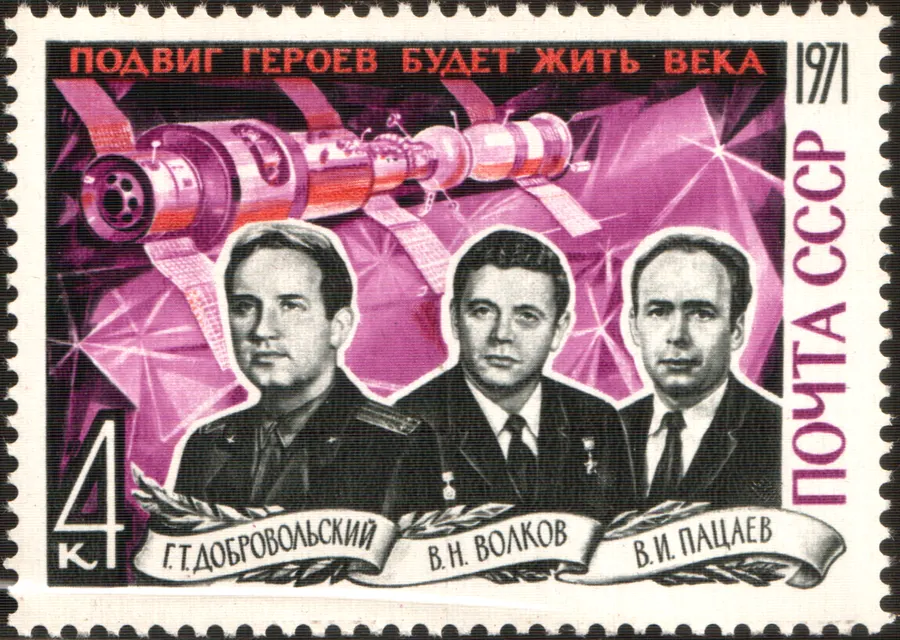
A Soviet stamp of 1971 honouring the Soyuz 11 cosmonauts Dobrovolsky, Volkov and PatsayevA Soviet stamp of 1971 honouring the Soyuz 11 cosmonauts Dobrovolsky, Volkov and PatsayevImage: USSR Post · Public domain

science · Asia

The Soyuz 11 crew die on their return from the first space station

Georgy Dobrovolsky, Vladislav Volkov and Viktor Patsayev were the first crew to live aboard a space station, spending more than three weeks on the Soviet Salyut 1. On 30 June 1971, as their Soyuz capsule prepared to re-enter the atmosphere, a valve opened too early and the cabin lost its air. The capsule landed normally in Kazakhstan, but the three men, who wore no pressure suits, were found dead in their seats. Since then Soyuz crews have worn spacesuits for launch and landing.

Source: NASA: 50 Years Ago, Remembering the Crew of Soyuz 11 ↗
1972
The official US time display from NIST showing 23:59:60 during the leap second at the end of 2016The official US time display from NIST showing 23:59:60 during the leap second at the end of 2016Image: US Government / NIST · Public domain

science · Global

The first leap second is added to the world’s clocks

Atomic clocks keep far steadier time than the Earth, whose rotation varies slightly. To keep Coordinated Universal Time (UTC) in step with the Earth’s turning, timekeepers agreed to insert an occasional extra second. The first was added at the end of 30 June 1972, when clocks ran from 23:59:59 to 23:59:60 before reaching midnight. Twenty-seven leap seconds were added between 1972 and 2016.

Source: NIST: Leap second and UT1-UTC information ↗
VI
2000 TO TODAY

Modern Day

The events of recent decades that have already become part of the historical record.

2012
Mohamed Morsi, President of Egypt, in May 2013Mohamed Morsi, President of Egypt, in May 2013Image: Wilson Dias/ABr · CC BY 3.0 br

politics · Middle East

Mohamed Morsi is sworn in as Egypt’s president

After the 2011 uprising that ended Hosni Mubarak’s thirty years in power, Egypt held its first competitive presidential election. Mohamed Morsi of the Muslim Brotherhood narrowly beat Ahmed Shafiq, Mubarak’s last prime minister, in a run-off, and was sworn in on 30 June 2012 as Egypt’s first civilian president. His time in office was brief: after huge protests, the army removed him on 3 July 2013.

Source: Britannica: Mohamed Morsi ↗
2019
Kim Jong Un and Donald Trump speaking to reporters in the Freedom House at the Demilitarised Zone on 30 June 2019Kim Jong Un and Donald Trump speaking to reporters in the Freedom House at the Demilitarised Zone on 30 June 2019Image: The White House from Washington, DC · Public domain
politics · Asia

A US president steps into North Korea at the border village of Panmunjom

Donald Trump and North Korea’s leader Kim Jong Un had held summits in Singapore in 2018 and Hanoi in early 2019 without agreement on the North’s nuclear weapons. While visiting South Korea, Trump invited Kim to meet him at the Demilitarised Zone at short notice. On 30 June 2019 the two men shook hands at the line dividing the Koreas, and Trump stepped briefly onto North Korean soil, the first sitting US president to do so, before talks in the Freedom House on the southern side.

Source: White House archives: Remarks by President Trump, Chairman Kim Jong Un and President Moon at the Korean Demilitarized Zone ↗
RESEARCH

Sources & Further Reading

Selected authoritative references supporting the events on this page.

Historical Dictionary of Switzerland: Arbedo, bataille d’↗Wikipedia: Battle of Arbedo↗Britannica: Noche Triste↗Wikipedia: La Noche Triste↗Library of Congress, Headlines and Heroes: The Daredevils of Niagara Falls↗Wikipedia: Charles Blondin↗Oxford University Museum of Natural History: The Great Debate↗Darwin Correspondence Project: British Association meeting 1860↗National Park Service: Yosemite Grant Act of 1864↗National Archives: S. 203, the Yosemite Grant↗Tower Bridge: Timeline of the construction of Tower Bridge↗London Museum: Tower Bridge↗Britannica: Tunguska event↗NASA: 115 Years Ago, the Tunguska Asteroid Impact Event↗Britannica: Night of the Long Knives↗United States Holocaust Memorial Museum: Röhm Purge↗UN Archives Geneva: Ethiopia, speech by the Emperor Haile Selassie to the League Assembly↗Britannica: Haile Selassie I↗Britannica: Gone with the Wind (novel)↗New Georgia Encyclopedia: Gone With the Wind↗Britannica: Belgian Congo↗Office of the Historian, US Department of State: The Congo, Decolonization, and the Cold War, 1960-1965↗Royal Museum for Central Africa: The decolonisation of the Belgian Congo↗NASA: 50 Years Ago, Remembering the Crew of Soyuz 11↗Britannica: Georgy Timofeyevich Dobrovolsky↗NIST: Leap second and UT1-UTC information↗Britannica: Leap second↗Britannica: Mohamed Morsi↗Britannica: Egypt, transition to an elected government↗White House archives: Remarks by President Trump, Chairman Kim Jong Un and President Moon at the Korean Demilitarized Zone↗Britannica: North Korea, engagement with South Korea and the United States↗
WHY THESE MOMENTS?

Significance before volume

This page is not the longest possible list of events. It is a chronological journey through 30 June, where each entry is chosen for historical significance, human interest and reliability.

Facts are checked against authoritative museums, archives, universities and reference works. Where sources disagree, the page says so.

EXPLORED THE DEEPER STORY?

Return to the highlights of 30 June

Discover the lighter side of the date with famous birthdays, culture, firsts and lives remembered.

Explore This Day →
← PREVIOUS DAY29 June
HISTORY & TIMELINE30 June
NEXT DAY →1 July