Explore 21 June

Explore 21 June: Oda Nobunaga dies at the Honnō-ji temple in Kyoto, New Hampshire’s vote brings the US Constitution into force, Louis XVI’s flight ends at Varennes and the interned German fleet sinks itself at Scapa Flow. Born today: Machado de Assis, Clara Immerwahr and Benazir Bhutto.

This day through time →14 verified events across 4 eras

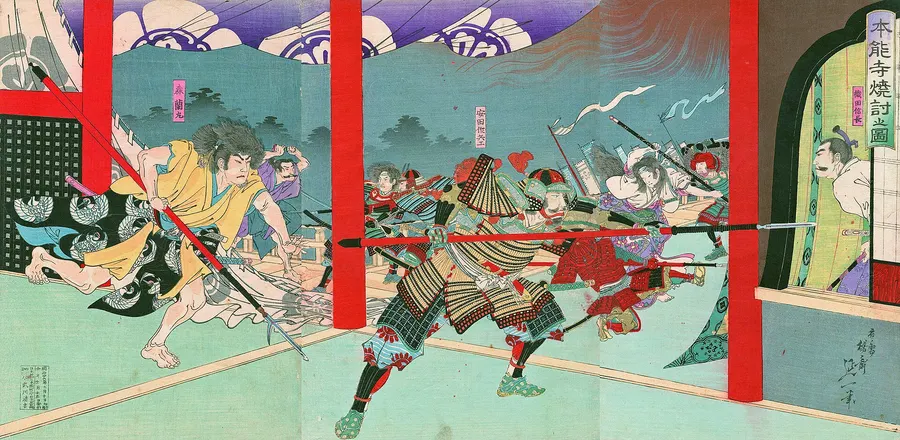
The attack on the Honnō-ji temple, a Meiji-era woodblock triptych by Yōsai Nobukazu
Image creditNobukazu Yōsai · Public domainResized and cropped for display.

Oda Nobunaga dies at the Honnō-ji temple in Kyoto

In the second half of the 16th century Japan was divided among rival warlords, and Oda Nobunaga was the most formidable of them. From his base in Owari he fought his way to Kyoto, drove out the last Ashikaga shogun in 1573 and brought much of central Japan under his control, using massed musketeers and ruthless force against his rivals and against armed Buddhist temples.

In the summer of 1582 he stopped in Kyoto with only a small guard, lodging at the Honnō-ji temple on his way to support his general Toyotomi Hideyoshi in the west. Another of his generals, Akechi Mitsuhide, who had been ordered west with his army, turned it on the capital instead. Before dawn on 21 June 1582 his troops surrounded the temple. Hopelessly outnumbered, Nobunaga died as the building burned, by his own hand according to most accounts, and his eldest son and heir was killed in Kyoto the same day. Mitsuhide’s motives have been argued over ever since. He held power for less than two weeks before Hideyoshi defeated him, and it was Hideyoshi who went on to finish the work of unifying Japan.

Read the full storyHistory & Timeline →Source: Britannica: Oda Nobunaga ↗
The first page of the engrossed Constitution of the United States, signed at Philadelphia in September 1787
Image creditConstitutional Convention · Public domainResized and cropped for display.

New Hampshire’s vote brings the US Constitution into force

The Constitution drawn up at Philadelphia in the summer of 1787 was only a proposal until the states accepted it. Its seventh article laid down that it would take effect once conventions in nine of the thirteen states had ratified it. Over the following months the debate between its Federalist supporters and Anti-Federalist critics was fought out in pamphlets, newspapers and state conventions, and by the late spring of 1788 eight states had said yes.

New Hampshire’s convention had first met early in 1788 and adjourned without a vote, as its supporters feared defeat. When it met again in June the Federalists had won over enough delegates, and on 21 June 1788 the convention voted to ratify, by 57 votes to 47. New Hampshire was the ninth state, so its vote made the Constitution binding on the states that had accepted it. Virginia and New York narrowly followed within weeks, and the Congress of the old Confederation then fixed March 1789 for the new government to begin in New York City.

Read the full storyHistory & Timeline →Source: National Archives: The Real Constitution Day? ↗
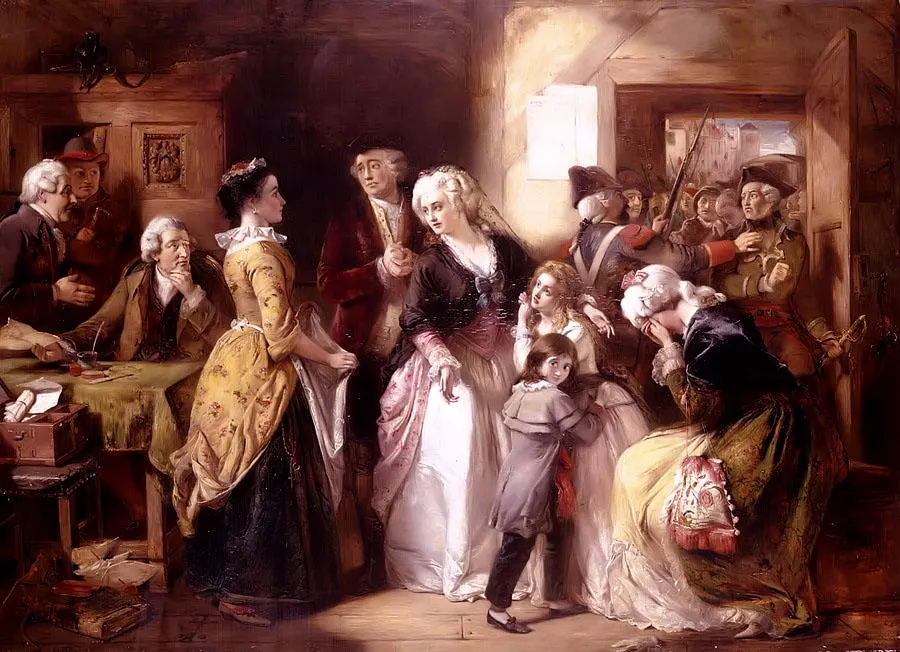
The arrest of Louis XVI and his family at Varennes, a 19th-century painting by Thomas Falcon Marshall
Image creditThomas Falcon Marshall · Public domainResized and cropped for display.

Louis XVI’s flight from Paris ends at Varennes

Since October 1789 Louis XVI and his family had lived under watch in the Tuileries palace in Paris, as the Revolution stripped away the powers of the crown. With help from loyal friends the king planned an escape to the fortress of Montmédy near the eastern frontier, where royalist troops were waiting and from where he hoped to deal with the Revolution on his own terms.

Around midnight on 20 to 21 June 1791 the family slipped out of the palace in disguise and set off east in a large, slow coach. The journey fell behind schedule, and at Sainte-Menehould the postmaster, Jean-Baptiste Drouet, recognised the king and rode ahead to raise the alarm. Late on 21 June the coach was stopped at the little town of Varennes and the family were held there, only a short distance from safety. They were brought back to Paris under guard. The flight destroyed much of the trust that remained in the king and gave strength to those who wanted a republic. Just over a year later the monarchy fell.

Read the full storyHistory & Timeline →Source: Britannica: Jean-Baptiste Drouet ↗
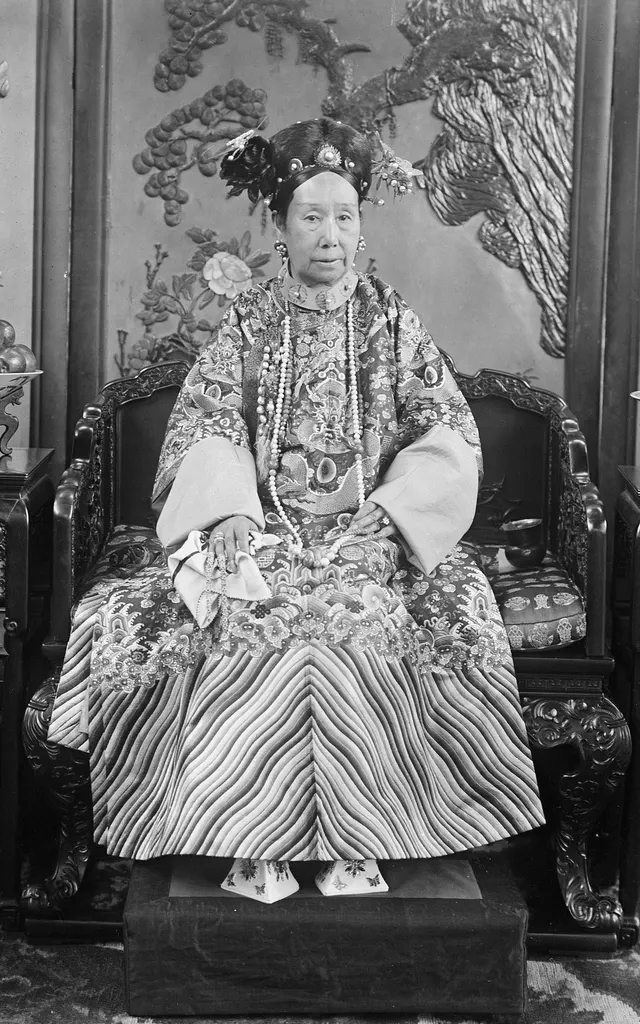
The Empress Dowager Cixi, who dominated the Qing court in 1900, photographed at the palace by the court photographer Yu Xunling
Image creditJohn Yu Shuinling · Public domainResized and cropped for display.

China’s court declares war on the foreign powers

At the end of the 19th century northern China was suffering from drought and poverty, and anger was growing at foreign missionaries, foreign railways and the concessions the great powers had forced from the Qing dynasty. A secret society known to foreigners as the Boxers, for its martial-arts rituals, spread from Shandong province, attacking missionaries and Chinese Christians, and by June 1900 its followers had poured into Beijing and Tianjin.

At first the court of the Empress Dowager Cixi hesitated between crushing the Boxers and using them. When foreign troops landed and pressed their demands, the hardliners won. On 21 June 1900 the court issued an edict declaring war on the foreign powers and threw its support behind the Boxers. Qing troops and Boxers besieged the foreign legations in Beijing, where diplomats, soldiers and Chinese Christians held out for weeks until an international army fought its way into the capital in August. The settlement that followed forced China to pay a crushing indemnity.

Read the full storyHistory & Timeline →Source: Ohio State University, Origins: The Boxer Rebellion ↗
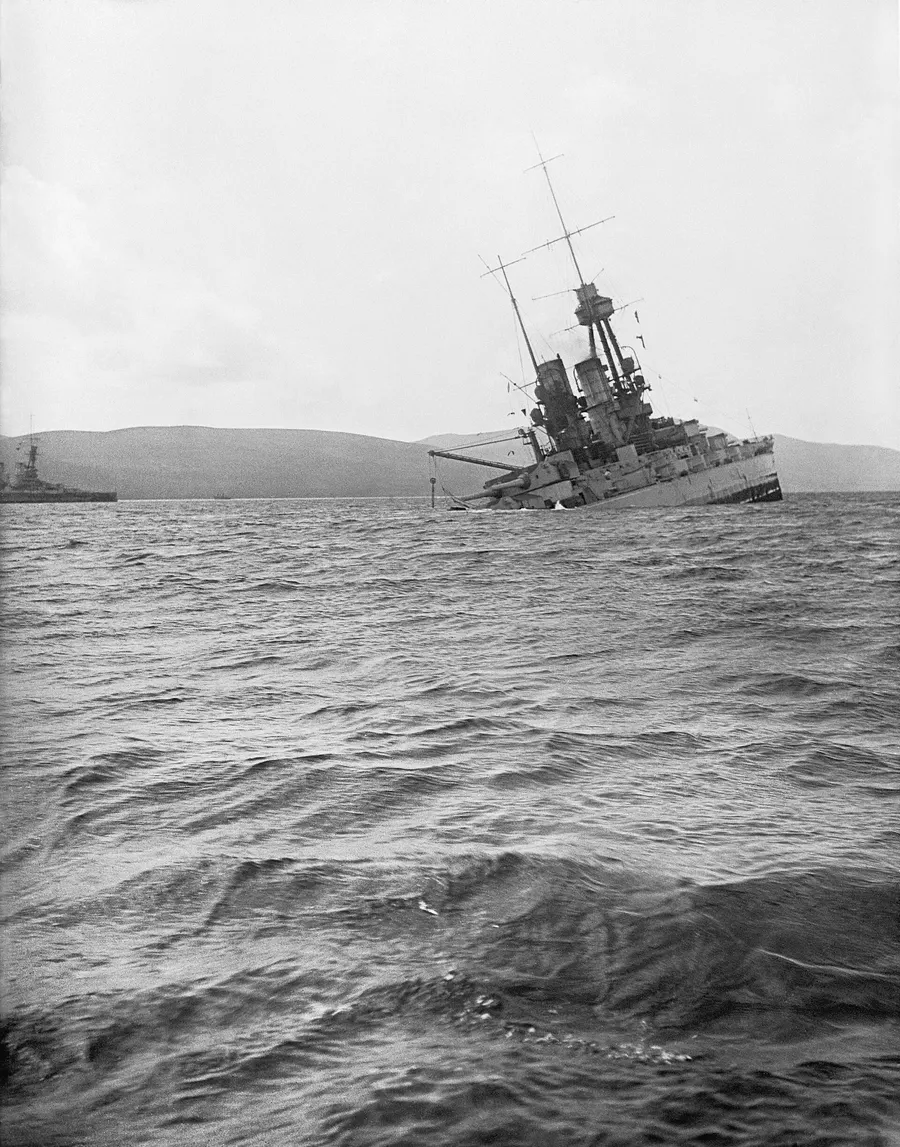
The German battleship SMS Bayern going down by the stern in Scapa Flow, photographed by a Royal Navy photographer
Image creditRoyal Navy official photographer (C. W. Burrows) · Public domainResized and cropped for display.

The interned German fleet sinks itself at Scapa Flow

Under the armistice of November 1918 the pride of Germany’s navy, 74 warships of the High Seas Fleet, sailed into British custody and was held in Scapa Flow, the great natural harbour in Orkney. Skeleton crews stayed aboard under Rear Admiral Ludwig von Reuter while the victorious Allies argued in Paris over the peace terms and the fate of the ships.

Reuter believed that the talks had broken down and that his ships were about to be seized. On the morning of 21 June 1919, while most of the British squadron guarding them was away on exercise, he gave the signal to scuttle. His crews opened valves, portholes and torpedo tubes, and within about five hours 52 ships had gone to the bottom, one of the greatest losses of shipping in a single day. In the confusion British forces shot and killed nine German sailors, among the last German deaths of the war. Most of the wrecks were later raised for scrap.

Read the full storyHistory & Timeline →Source: Imperial War Museums: The Scuttling of the German Fleet, 1919 ↗

♙
PEOPLE

Born Today

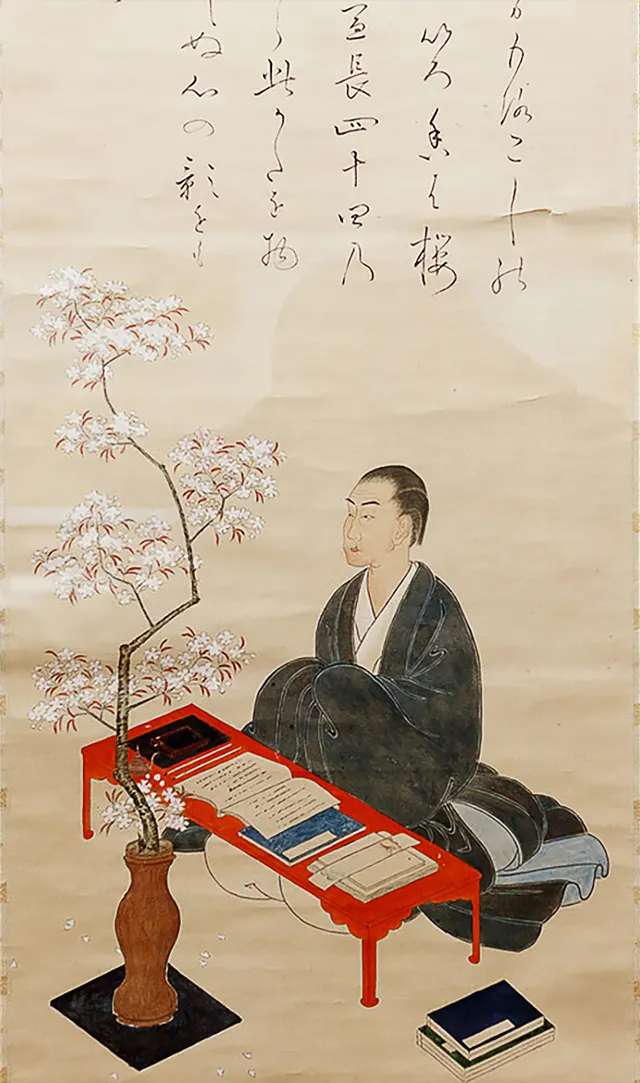
Motoori Norinaga
Image creditMotoori Norinaga · Public domainResized and cropped for display.

Motoori Norinaga

Japanese scholar and doctor who spent some 35 years on a commentary on the ancient chronicle Kojiki and became the leading figure of the ‘National Learning’ movement.

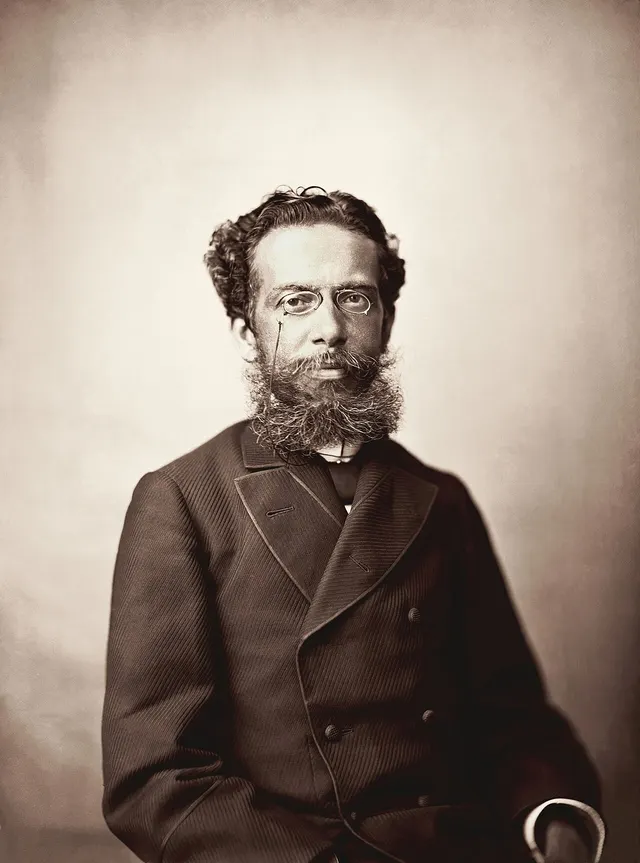
Machado de Assis
Image creditMarc Ferrez / Adam Cuerden · Public domainResized and cropped for display.

Machado de Assis

Brazilian novelist, poet and short-story writer, the grandson of freed slaves, author of ‘The Posthumous Memoirs of Brás Cubas’ and first president of the Brazilian Academy of Letters.

Clara Immerwahr
Image creditUnknown author · Public domainResized and cropped for display.

Clara Immerwahr

German chemist, the first woman to earn a doctorate at the University of Breslau, and an opponent of the chemical weapons work of her husband, Fritz Haber.

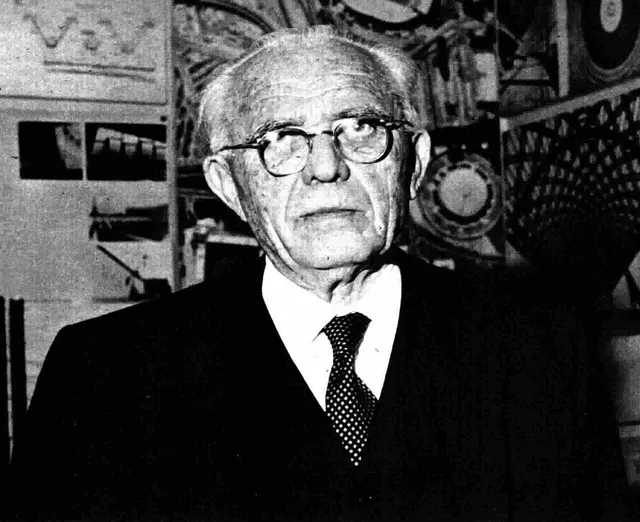
Pier Luigi Nervi
Image creditUnknown author · Public domainResized and cropped for display.

Pier Luigi Nervi

Italian engineer and architect whose ribbed concrete roofs covered sports halls for the 1960 Rome Olympics and who worked on the Pirelli Tower in Milan.

Shirin Ebadi
Image creditBengt Oberger · CC BY-SA 4.0Resized and cropped for display.

Shirin Ebadi

Iranian lawyer, one of Iran’s first women judges, who won the 2003 Nobel Peace Prize for her work for the rights of women and children.

Benazir Bhutto
Image creditUnknown · CC BY-SA 4.0Resized and cropped for display.

Benazir Bhutto

Pakistani politician who in 1988 became the first woman elected to lead a Muslim-majority country; twice prime minister, she was assassinated in 2007.

Yang Liwei
Image creditDyor · CC BY-SA 3.0Resized and cropped for display.

Yang Liwei

Chinese air force pilot who became China’s first astronaut, orbiting the Earth aboard Shenzhou 5 in October 2003.

◉
IDEAS THAT CHANGED THINGS

Firsts, Science & Discoveries

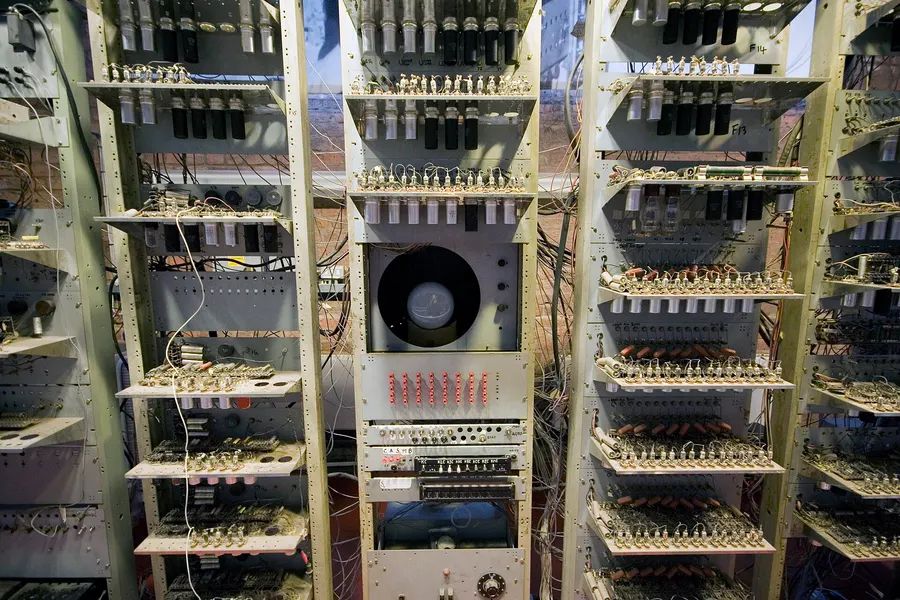
A close-up of the working replica of the Manchester Baby at the Science and Industry Museum in Manchester
Image creditParrot of Doom · CC BY-SA 3.0Resized and cropped for display.

The Manchester ‘Baby’ runs the first stored program

The early electronic computers of the 1940s had to be set up for each new task by hand, with switches, plugs or punched tape. The alternative, a machine that kept its own instructions in fast electronic memory alongside its data, needed a reliable memory store. At the University of Manchester, Freddie Williams and Tom Kilburn were working on one that held bits as dots of charge on the face of a cathode-ray tube.

To test it they built a small computer around it, the Small-Scale Experimental Machine, soon nicknamed the Baby, with help from Geoff Tootill. On 21 June 1948 it ran its first program, written by Kilburn, which searched for the highest factor of a number. It was the first time a computer had run a program held electronically in its own memory, the stored-program idea on which every modern computer depends. A later run on a much larger number took 52 minutes, and the machine led directly to the larger Manchester computers that followed.

Read the full storyHistory & Timeline →Source: University of Manchester, Computer 50: The Manchester Baby ↗
☆
SPORTING HISTORY

Sporting Moments

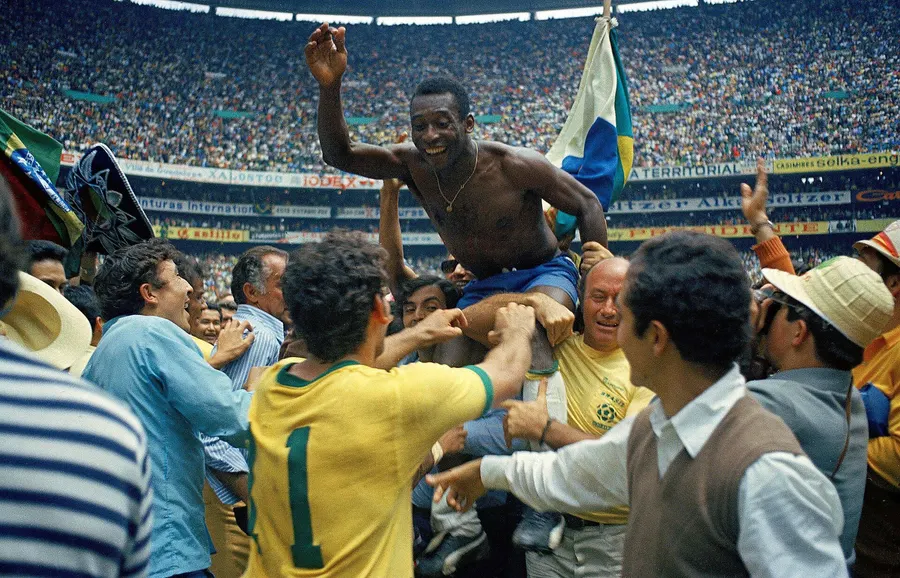
Pelé carried shoulder-high at the Estadio Azteca after Brazil's World Cup final win over Italy on 21 June 1970, an Associated Press photograph
Pelé carried shoulder-high at the Estadio Azteca after Brazil’s World Cup final win over Italy on 21 June 1970, an Associated Press photograph
Image creditAssociated Press · Public domainResized and cropped for display.

Brazil win a third World Cup in Mexico City

The 1970 World Cup in Mexico was the first to be watched around the world in colour, and the Brazil team that arrived there has often been called the finest ever to play. Pelé, playing in his fourth World Cup, led an attack that included Jairzinho, Tostão, Gérson and Rivelino, and the team won every match on the way to the final.

The final against Italy was played at the Estadio Azteca in Mexico City on Sunday 21 June 1970. Pelé headed the first goal, Italy equalised, and Brazil pulled away in the second half with goals from Gérson and Jairzinho. The last, from the captain Carlos Alberto, finished a flowing move across the field and is still shown as one of the great team goals. Brazil won 4-1 to become the first country to win the World Cup three times, and so kept the Jules Rimet Trophy for good.

Read the full storyHistory & Timeline →Source: FIFA: Brazil v Italy, Mexico 1970 final ↗
♫
MUSIC • FILM • BOOKS • CULTURE

Culture Stories

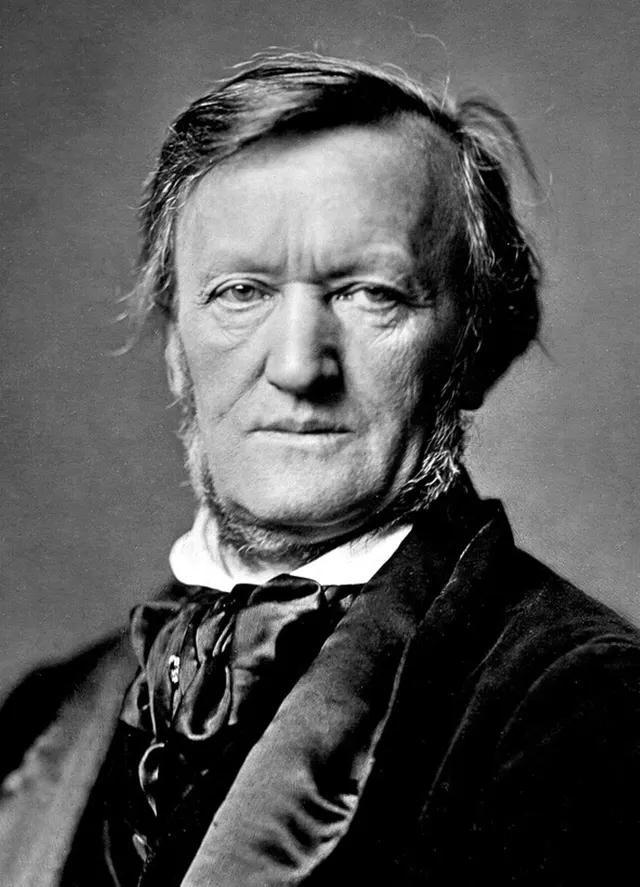
Richard Wagner, photographed by Franz Hanfstaengl
Image creditFranz Hanfstaengl · Public domainResized and cropped for display.

Wagner’s ‘Die Meistersinger’ opens in Munich

Richard Wagner is best known for vast operas of myth and tragic love, but he wrote one great comedy. Die Meistersinger von Nürnberg is set in the city of Nuremberg in the 16th century, among the craftsmen of the mastersingers’ guild, who compose songs by strict rules. At its heart is the wise cobbler-poet Hans Sachs, who helps a young knight win both a song contest and the bride promised to its winner.

Wagner had first sketched the idea in the 1840s and returned to it in the 1860s, when King Ludwig II of Bavaria became his patron. The opera had its premiere at the court theatre in Munich on 21 June 1868, conducted by Hans von Bülow. Long, warm-hearted and rich in melody, it became one of Wagner’s most performed works, though its closing hymn to German art later gave it an uncomfortable place in Nazi propaganda.

Read the full storyHistory & Timeline →Source: Britannica: The Mastersingers of Nürnberg ↗
✦
LIVES REMEMBERED

Remembered Today

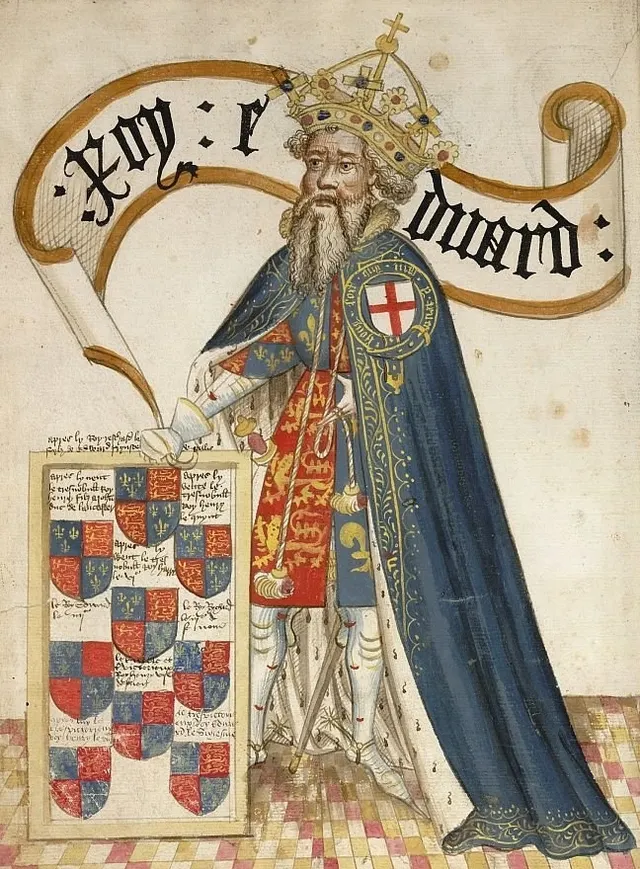
Edward III
Image creditWilliam Bruges · Public domainResized and cropped for display.

Edward III

King of England for fifty years from 1327, who claimed the French crown and began the Hundred Years’ War, winning victories at Crécy and Poitiers.

Inigo Jones
Image creditAfter Anthony van Dyck / William Hogarth · Public domainResized and cropped for display.

Inigo Jones

English architect and stage designer who brought classical Italian design to England with the Queen’s House at Greenwich and the Banqueting House in Whitehall.

Anders Jonas Ångström
Image creditUppsala University · Public domainResized and cropped for display.

Anders Jonas Ångström

Swedish physicist, a founder of spectroscopy, who mapped the lines of the Sun’s spectrum; the ångström unit of length is named after him.

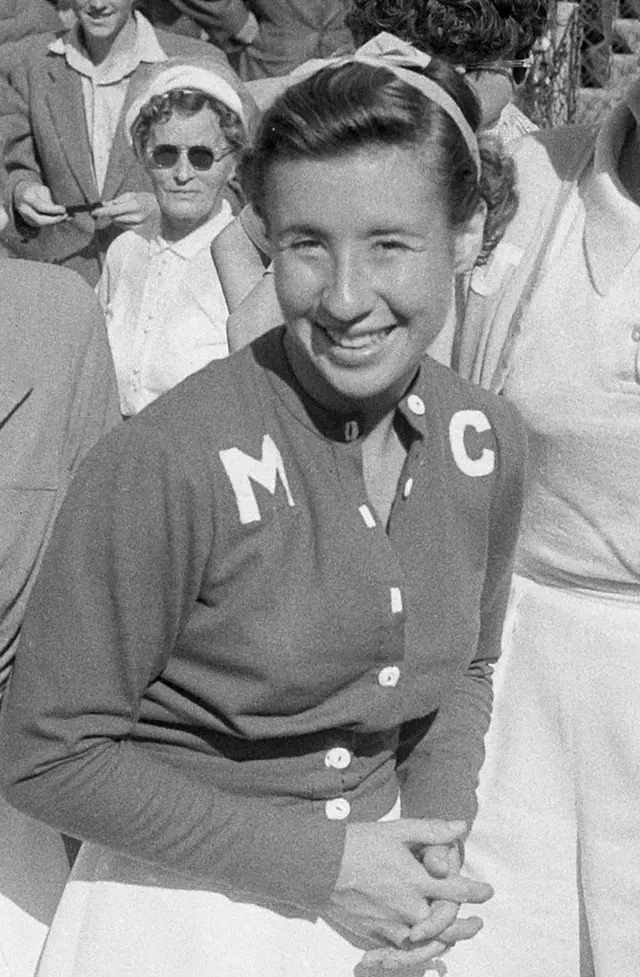
Maureen Connolly
Image creditHarry Pot for Anefo · CC0Resized and cropped for display.

Maureen Connolly

American tennis player known as ‘Little Mo’, who in 1953 became the first woman to win all four major titles in one year; she died of cancer at 34.

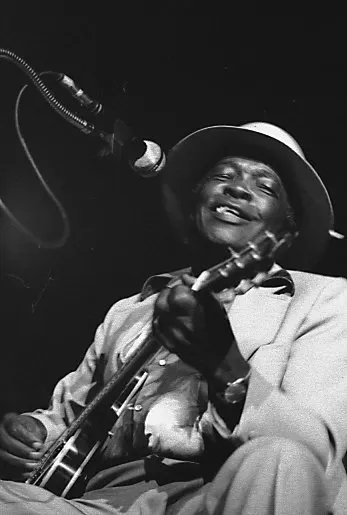
John Lee Hooker
Image creditJean-Luc · CC BY-SA 2.0Resized and cropped for display.

John Lee Hooker

American blues singer and guitarist from Mississippi whose hypnotic ‘boogie’ style, in songs such as ‘Boogie Chillen’ and ‘Boom Boom’, shaped rock and blues.

☉
AROUND THE WORLD

Observances & Anniversaries

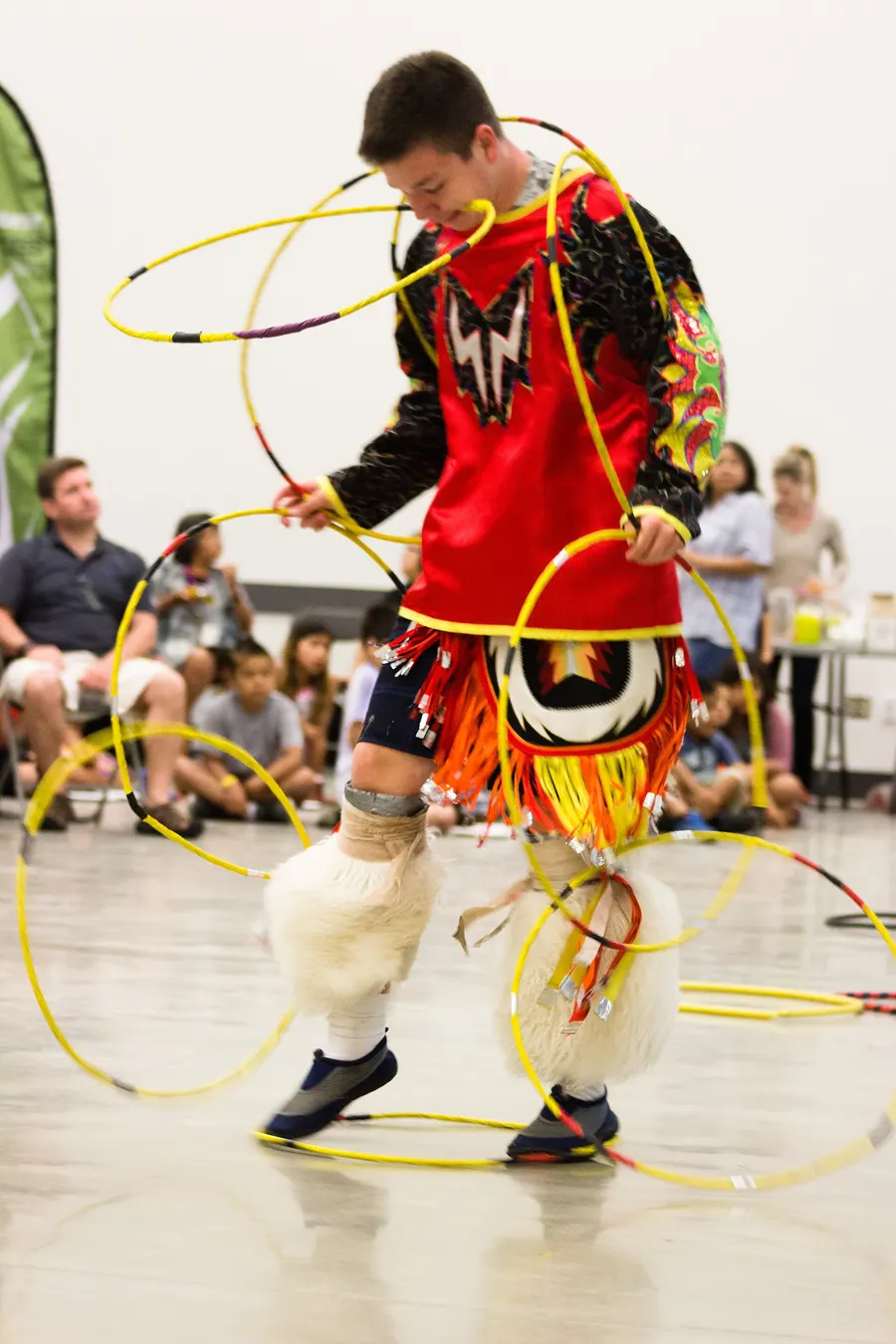
A hoop dancer performing at a National Aboriginal Day celebration at the University of the Fraser Valley, British Columbia, in 2015
Image creditUniversity of the Fraser Valley · CC BY 2.0Resized and cropped for display.

National Indigenous Peoples Day

Canada marks 21 June as National Indigenous Peoples Day, to celebrate the heritage, cultures and achievements of First Nations, Inuit and Métis peoples. It was first proclaimed as National Aboriginal Day by the Governor General in 1996 and took its present name in 2017. The date falls at the summer solstice, a time of renewal and gathering in many Indigenous traditions.

Source: Crown-Indigenous Relations and Northern Affairs Canada: National Indigenous Peoples Day ↗
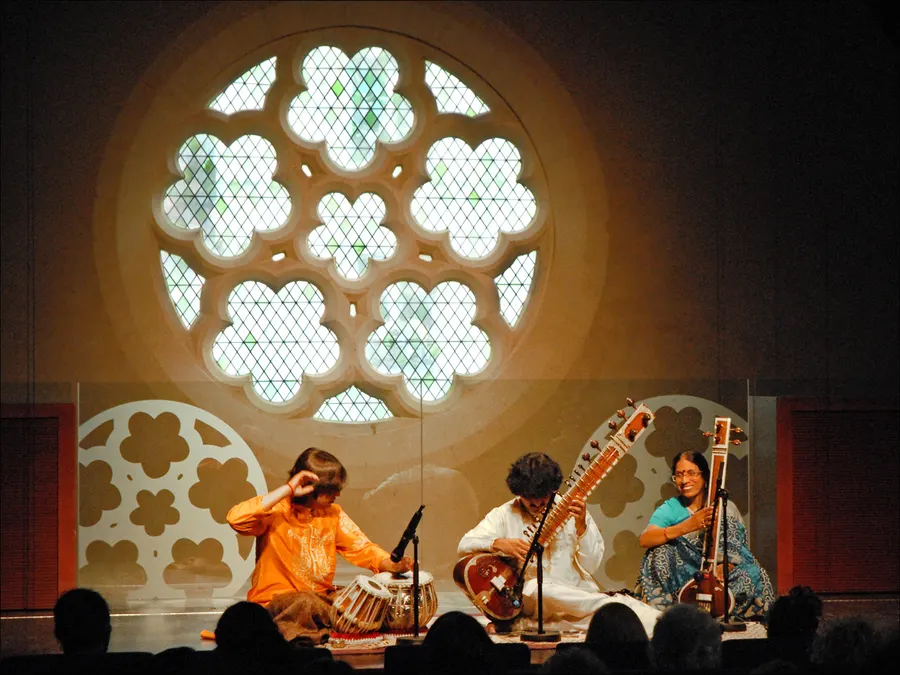
Indrajit Banerjee on sitar, with tabla and tanpura players, giving an evening raga concert at the Collège des Bernardins in Paris on 21 June 2010
Image creditdalbera from Paris, France · CC BY 2.0Resized and cropped for display.

Fête de la Musique

On 21 June, the longest day of the year in the northern hemisphere, amateur and professional musicians play free concerts in streets, squares and halls. The Fête de la Musique was launched in 1982 by France’s Ministry of Culture and is now celebrated in cities on every inhabited continent.

Source: French Ministry of Culture: Fête de la Musique ↗
HISTORY & TIMELINE

Finished the highlights?

Follow 21 June chronologically, from the Middle Ages to the modern day, with 14 verified events and the sources behind them.

This day through time →