1314Robert the Bruce routs the English at Bannockburn
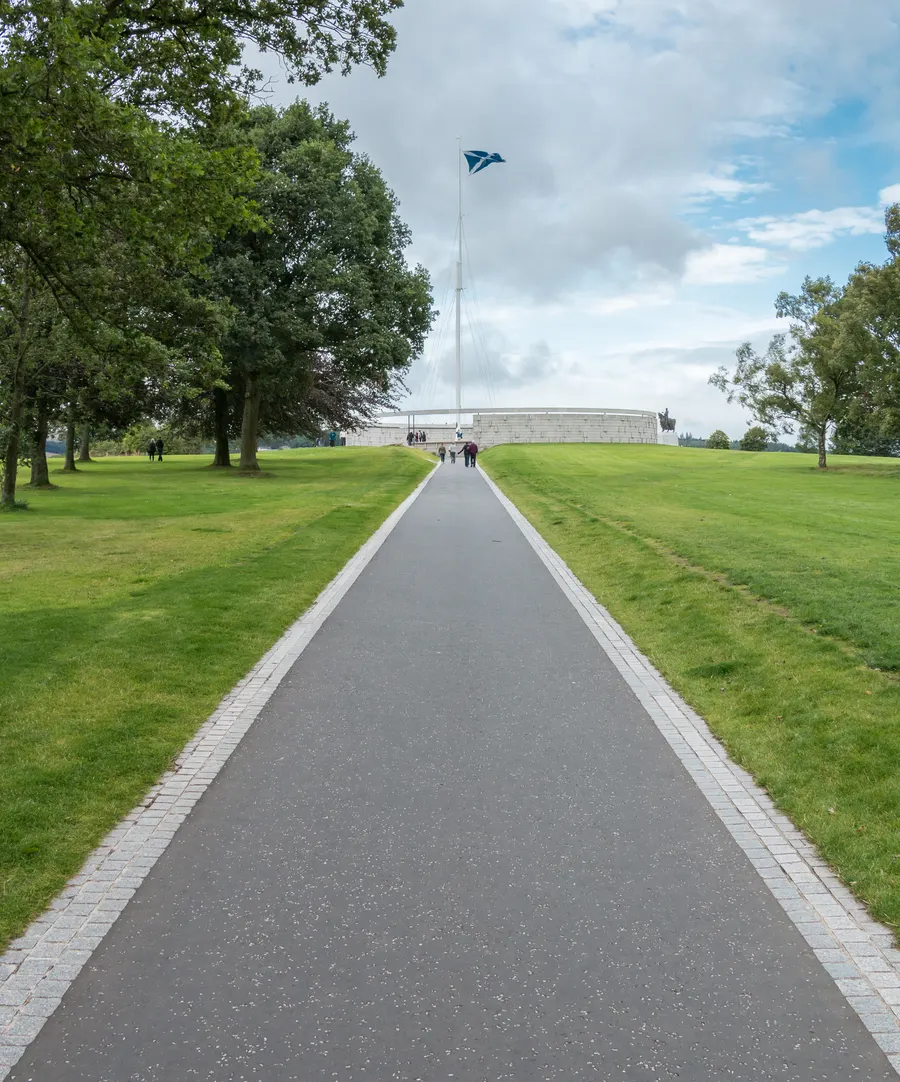
By 1314 Robert the Bruce, crowned King of Scots in 1306, had taken back almost every castle the English held in Scotland. Only Stirling Castle still stood out, and its English commander had agreed to surrender it unless an English army came to relieve it by Midsummer Day, 24 June. Edward II marched north with one of the largest armies England had sent into Scotland, and Robert chose his ground carefully, in the New Park beside the road to Stirling, where a small stream called the Bannock Burn and boggy land hemmed in any attacker.
Fighting began on 23 June, when Robert himself killed the English knight Henry de Bohun in single combat in front of both armies. On 24 June the Scottish spearmen advanced against an English army crowded onto cramped and marshy ground, where its cavalry could not manoeuvre. The English broke, many men were killed or drowned as they fled, and Edward II barely escaped. Bannockburn secured Robert’s hold on his kingdom, though England did not formally accept Scottish independence until 1328.
Read the full storyHistory & Timeline →Source: Britannica: Battle of Bannockburn ↗
1497John Cabot reaches the coast of North America
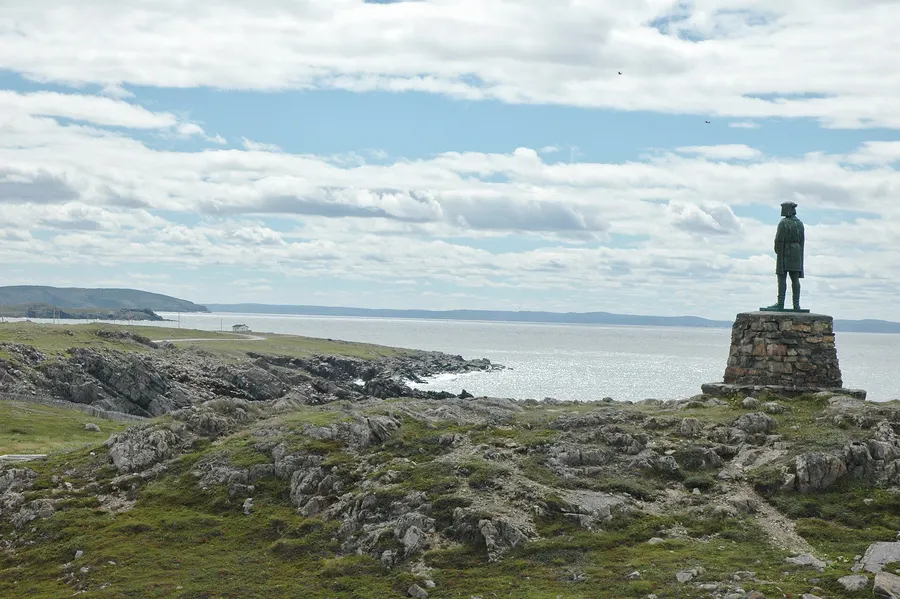
Giovanni Caboto, known in England as John Cabot, was an Italian navigator who, like Columbus, believed Asia could be reached by sailing west. He settled in Bristol, whose merchants had already sent ships into the Atlantic, and won letters patent from Henry VII to search for new lands. In May 1497 he left Bristol in the Matthew, a small ship of about 50 tons.
Some five weeks later, probably on 24 June 1497, he sighted land. Exactly where is still argued over: Newfoundland, southern Labrador and Cape Breton Island all have their supporters, and Newfoundland marks the landfall at Cape Bonavista. Cabot went ashore, saw signs that people lived there though he met no one, and claimed the land for the English king. He was back in Bristol by 6 August. His voyage was the first European visit to the mainland of North America since the Norse, and it later gave England its claim to the region.
Read the full storyHistory & Timeline →Source: Britannica: John Cabot ↗
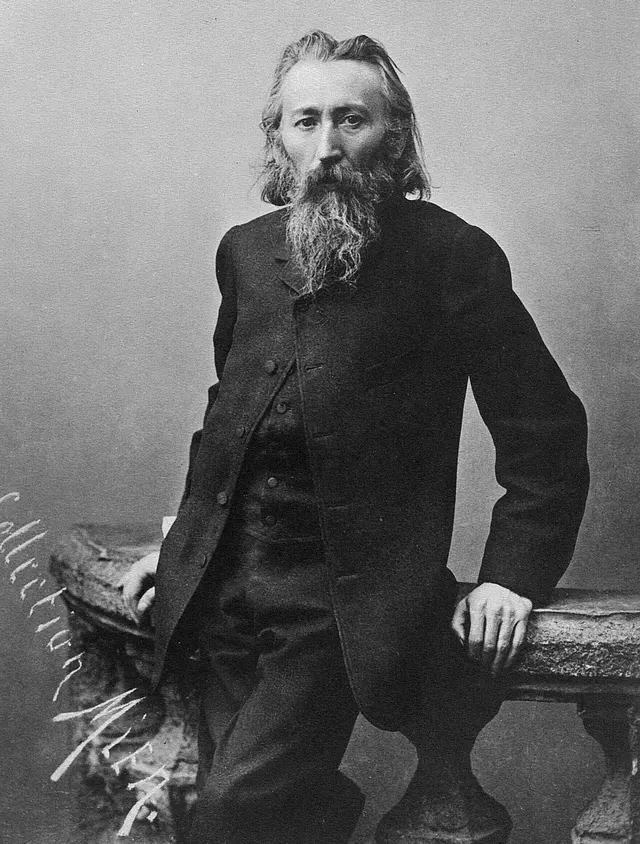
1859Carnage at Solferino inspires the Red Cross
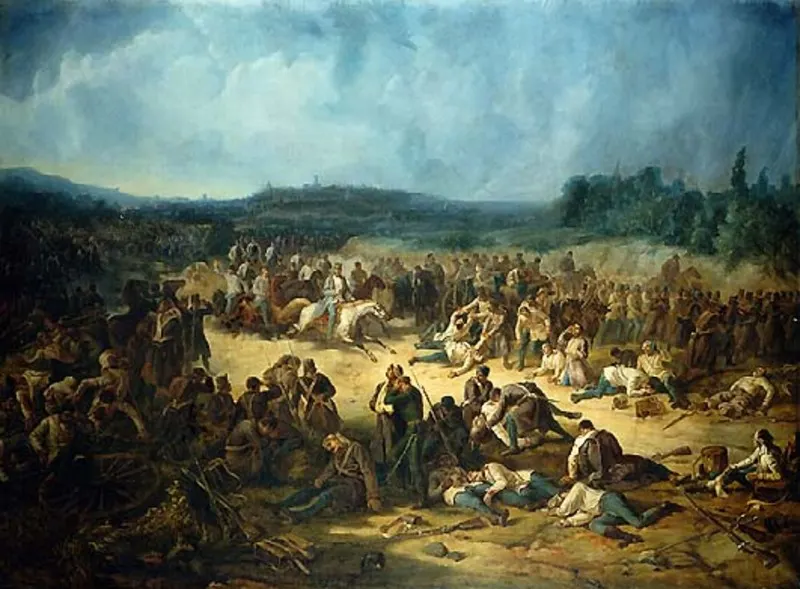
In 1859 France and the Kingdom of Sardinia-Piedmont went to war with Austria to drive it out of northern Italy. After defeat at Magenta early in June, the Austrian emperor Franz Joseph took personal command of his army of about 120,000 men. On 24 June 1859 it met a French and Piedmontese army of similar size, led by Napoleon III and Victor Emmanuel II, around the village of Solferino, south of Lake Garda. The fighting spread along a wide front and lasted all day before the Austrians fell back.
The cost was terrible. According to Britannica, each side lost around 14,000 to 15,000 killed and wounded, with thousands more missing or taken prisoner. The shock helped persuade Napoleon III to make peace within weeks, and Lombardy passed to Piedmont, a big step towards a united Italy. Among those who saw the wounded lying untended was Henry Dunant, a Swiss businessman, who organised help for them in the nearby town of Castiglione. His book A Memory of Solferino, published in 1862, led to the founding of the Red Cross and the first Geneva Convention.
Read the full storyHistory & Timeline →Source: Britannica: Battle of Solferino ↗
1821Bolívar wins Venezuela’s freedom at Carabobo
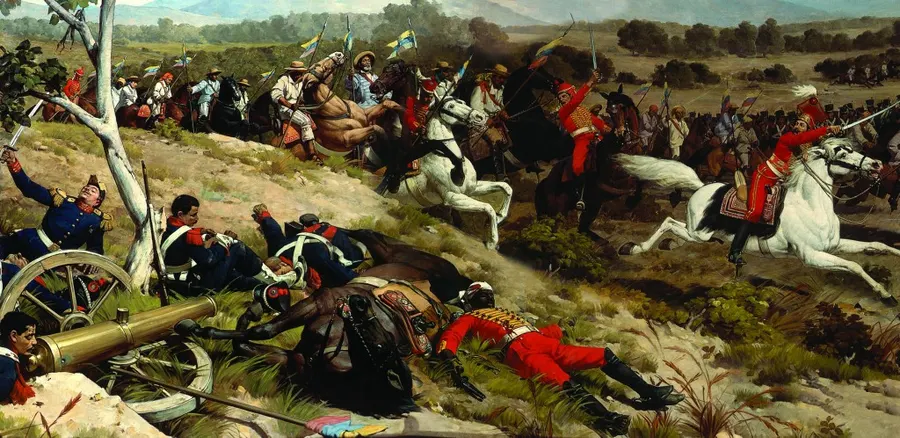
Venezuela had declared its independence from Spain in 1811, but for ten years the war swung back and forth and royalist forces kept returning. By 1821 Simón Bolívar had freed New Granada, and he turned back to his homeland to face the royalist army that still held the heart of Venezuela.
On 24 June 1821 about 6,500 patriot troops met the Spanish forces under General Miguel de la Torre on the plain of Carabobo, west of Caracas. José Antonio Páez’s llaneros, the horsemen of the plains, and a legion of British and Irish volunteers turned the royalist flank, and the patriot cavalry broke the centre. Carabobo virtually ended Spanish rule in Venezuela, and Bolívar entered Caracas a few days later. Venezuela still marks the anniversary as the Day of the Battle of Carabobo and Army Day.
Read the full storyHistory & Timeline →Source: Britannica: Battle of Carabobo ↗
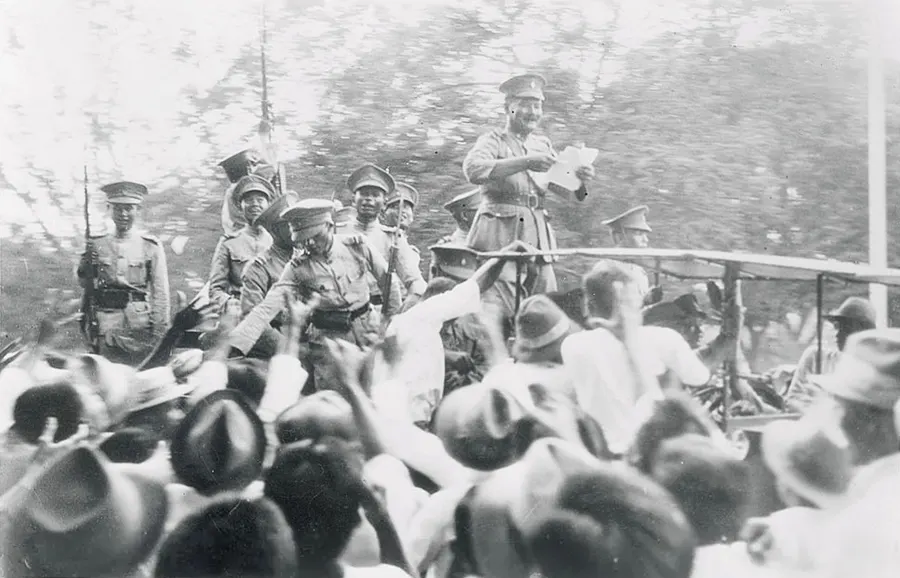
1932A bloodless revolution ends absolute monarchy in Siam
Siam was the only country in Southeast Asia never ruled by a European power, but its kings still held absolute power. By the early 1930s the world depression had hit the kingdom hard, and a new class of Western-educated officials and army officers resented rule by the royal princes. In 1927 a group of young Siamese, among them the lawyer Pridi Phanomyong and the officer Plaek Phibunsongkhram, had formed the People’s Party to change the system.
In the early hours of 24 June 1932, while King Prajadhipok was away from Bangkok, the conspirators, known as the Promoters, took control of the army in the capital, detained leading royal officials and had their manifesto read to troops in the Royal Plaza. Not a shot was fired. The king agreed to reign under a constitution, first a temporary one that gave power to the People’s Party and then a permanent constitution in December 1932. The revolution ended centuries of absolute monarchy and opened Thailand’s constitutional era, though soldiers would stage many more coups in the decades that followed.
Read the full storyHistory & Timeline →Source: Britannica: Promoters Revolution ↗