1865The enslaved people of Texas are told they are free
Abraham Lincoln’s Emancipation Proclamation had declared enslaved people in the rebel states free from 1 January 1863, but freedom depended on Union armies reaching them. Texas, far to the west and barely touched by the fighting, was the last corner of the Confederacy to be occupied. Many slaveholders had moved there with the people they held in bondage to escape the advancing armies, and when the war ended in the spring of 1865 more than 250,000 people in Texas were still enslaved.
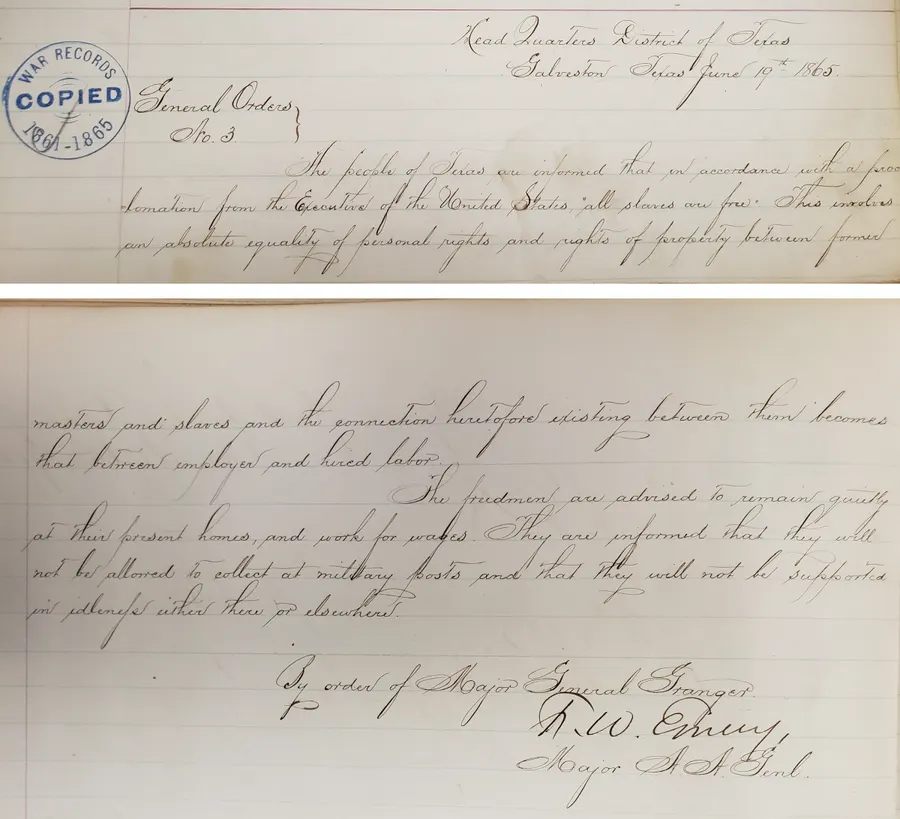
Union troops under Major General Gordon Granger landed at Galveston on 18 June 1865. The next day, 19 June, Granger issued General Order No. 3, which informed the people of Texas that, in accordance with the President’s proclamation, all slaves were free, with absolute equality of personal and property rights between former masters and slaves. Freed people in Texas began marking the day the following year, and ‘Juneteenth’ became the oldest known celebration of the end of slavery in the United States. In 2021 it became a federal holiday.
Read the full storyHistory & Timeline →Source: National Archives: National Archives safeguards original ‘Juneteenth’ General Order ↗
1867Emperor Maximilian faces a firing squad at Querétaro
Ferdinand Maximilian, a younger brother of the Austrian emperor Franz Joseph, had been installed as emperor of Mexico in 1864 with the backing of Napoleon III’s French army and Mexican conservatives. Most Mexicans still looked to the republican government of Benito Juárez, and once the American Civil War was over the United States pressed France to leave. The French troops sailed home early in 1867, and Maximilian, refusing to abdicate, made his stand at Querétaro.
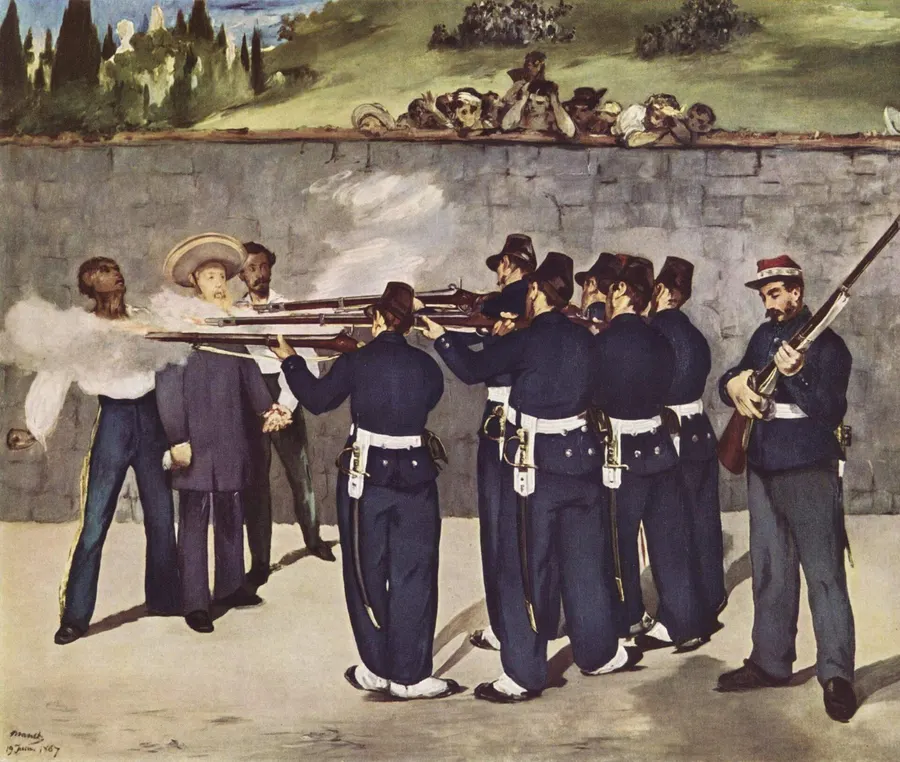
After a siege of some two months the city fell to the republican army in May 1867, and Maximilian was captured and tried by court martial. Pleas for mercy came from across Europe, but Juárez would not intervene. On 19 June 1867 Maximilian was shot on the Cerro de las Campanas, a hill outside Querétaro, together with his generals Miguel Miramón and Tomás Mejía. His death ended Mexico’s Second Empire and France’s adventure in the Americas. In Paris, Édouard Manet began a series of paintings of the execution within weeks of hearing the news.
Read the full storyHistory & Timeline →Source: Secretaría de la Defensa Nacional (gob.mx): 19 de junio de 1867, fusilamiento de Maximiliano de Habsburgo y los generales Miramón y Mejía ↗
1913South Africa’s Natives Land Act becomes law
Three years after the Union of South Africa was formed, its all-white parliament passed the Natives Land Act, which became law on 19 June 1913. It set aside about 7 per cent of the country’s land as ‘native reserves’ and barred Black Africans from buying or renting land anywhere else. It also struck at the sharecroppers who farmed white-owned land in return for part of the harvest, and thousands of families were turned off the farms where they had lived.
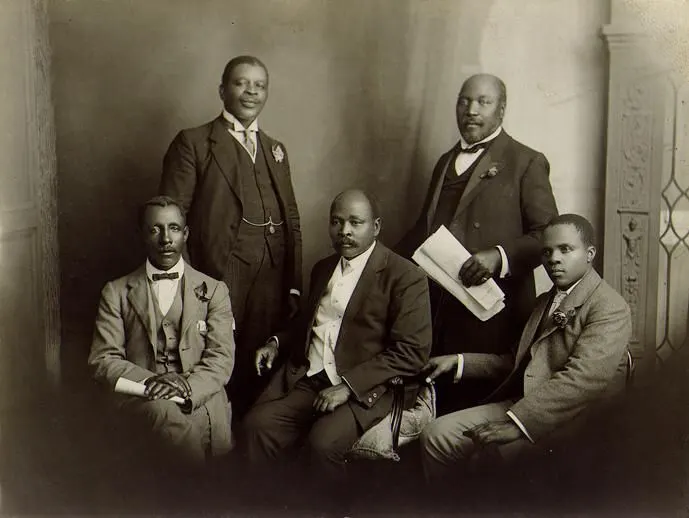
The journalist Sol Plaatje, secretary of the newly founded South African Native National Congress, cycled around the country recording the act’s effects, and in 1914 he and other Congress leaders travelled to London to appeal to the British government, without success. His book Native Life in South Africa (1916) opened by saying that the Black South African had woken to find himself a pariah in the land of his birth. The reserves were later enlarged to about 13 per cent, and the act laid the ground for decades of dispossession under apartheid. It was finally repealed in 1991.
Read the full storyHistory & Timeline →Source: South African History Online: The Natives Land Act of 1913 ↗
1961Kuwait becomes an independent state
In 1899 Sheikh Mubarak Al-Sabah, ruler of Kuwait, signed an agreement with Britain that handed it control of his foreign affairs in return for protection, chiefly against the Ottoman Empire. The discovery of oil in 1938 and the growth of exports after the Second World War turned the small trading port into one of the richest states in the world, and by the late 1950s Kuwait was ready to run its own affairs.
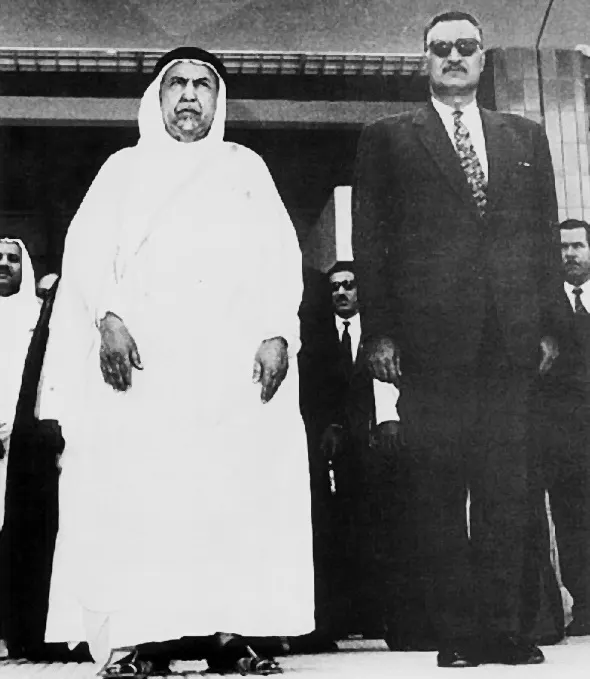
On 19 June 1961 Sheikh Abdullah Al-Salim Al-Sabah and the British Political Resident in the Gulf, Sir George Middleton, exchanged notes ending the 1899 agreement and recognising Kuwait as a fully independent state, bound to Britain only by a treaty of friendship. Within days Iraq claimed Kuwait as part of its territory, and British troops, soon replaced by an Arab League force, were sent to protect it. Kuwait joined the Arab League that summer, adopted a constitution in 1962 and became a member of the United Nations in 1963.
Read the full storyHistory & Timeline →Source: UK Treaties Online: Exchange of notes regarding relations between the United Kingdom and Kuwait, 19 June 1961 ↗