
HISTORY & TIMELINE
24 June

A journey through
24 June in history

The story of 24 June runs from a naval battle off the coast of Flanders in 1340 to the longest tennis match ever played in 2010. In between come a Scottish victory beside the Bannock Burn, an Italian sailor’s landfall across the Atlantic, the founding of Spanish Manila, an Egyptian army’s triumph over the Ottomans, a battlefield that gave rise to the Red Cross, the victory that freed Venezuela, the first singing of O Canada, the end of absolute rule in Siam, the first flying saucers, a jumbo jet whose engines were stopped by volcanic ash and a rugby final that helped unite South Africa.

II
THE MIDDLE AGES

Medieval History

Kingdoms, conflict, faith, power and the changing medieval world.

1314
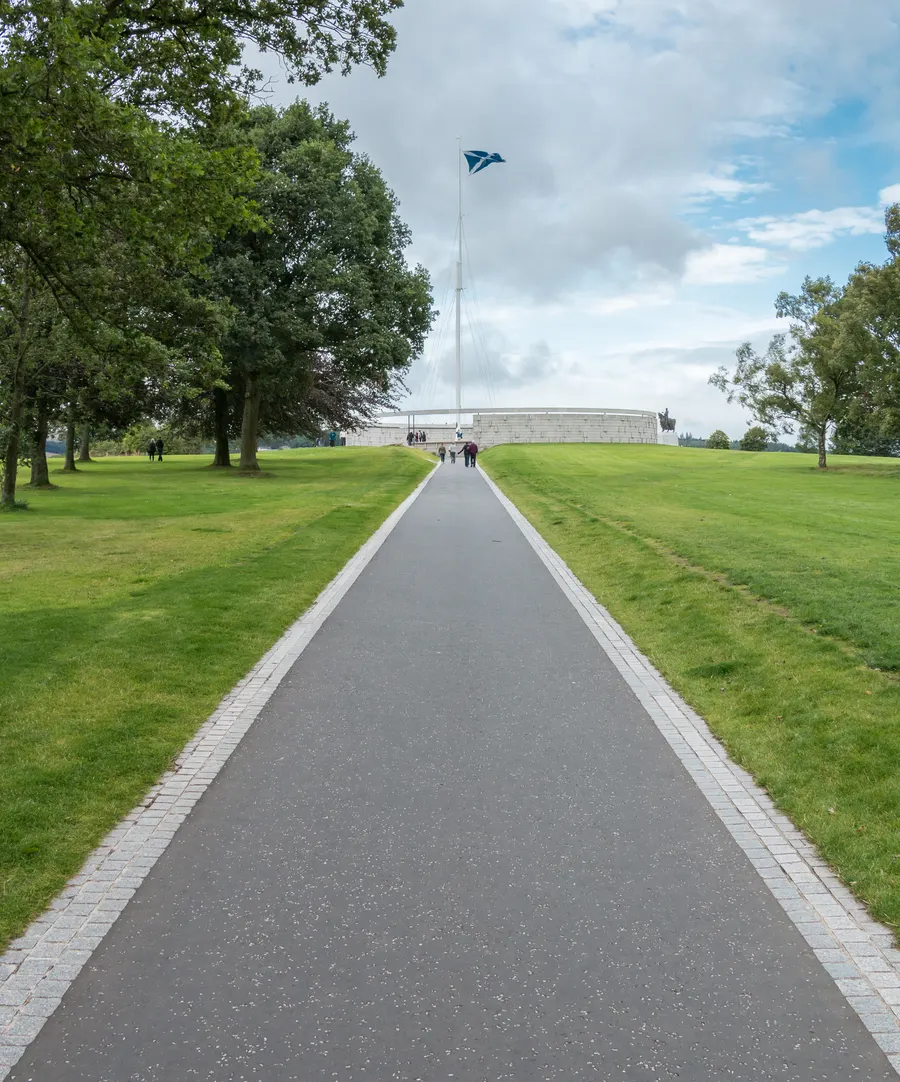
The path to the rotunda of the Bannockburn battlefield monument near Stirling, where the Saltire fliesThe path to the rotunda of the Bannockburn battlefield monument near Stirling, where the Saltire fliesImage: Martin Kraft · CC BY-SA 3.0
world · Europe

Robert the Bruce routs the English at Bannockburn

By 1314 Robert the Bruce, crowned King of Scots in 1306, had taken back almost every castle the English held in Scotland. Only Stirling Castle still stood out, and its English commander had agreed to surrender it unless an English army came to relieve it by Midsummer Day, 24 June. Edward II marched north with one of the largest armies England had sent into Scotland, and Robert chose his ground carefully, in the New Park beside the road to Stirling, where a small stream called the Bannock Burn and boggy land hemmed in any attacker. Fighting began on 23 June, when Robert himself killed the English knight Henry de Bohun in single combat in front of both armies. On 24 June the Scottish spearmen advanced against an English army crowded onto cramped and marshy ground, where its cavalry could not manoeuvre. The English broke, many men were killed or drowned as they fled, and Edward II barely escaped. Bannockburn secured Robert’s hold on his kingdom, though England did not formally accept Scottish independence until 1328.

Source: Britannica: Battle of Bannockburn ↗
1340
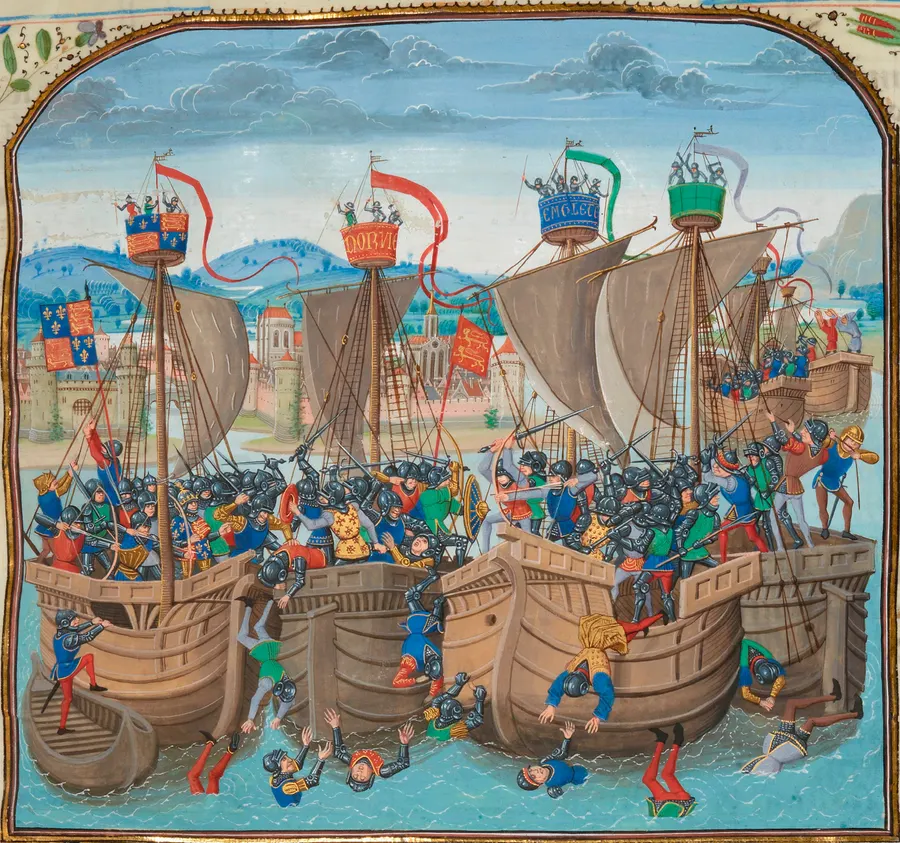
The Battle of Sluys in a 15th-century manuscript of Froissart's Chronicles, illuminated by Loyset LiédetThe Battle of Sluys in a 15th-century manuscript of Froissart’s Chronicles, illuminated by Loyset LiédetImage: Loyset Liédet · Public domain
world · Europe

Edward III destroys the French fleet at Sluys

Early in the Hundred Years’ War, France gathered a great fleet in the Zwin estuary at Sluys, on the coast of Flanders, to block or even invade England. On 24 June 1340 Edward III sailed in with an English fleet and attacked the French ships, which had been chained together at anchor. English archers outshot the French and Genoese crossbowmen, almost the whole French fleet was captured or sunk and both French commanders were killed. The victory gave England control of the Channel for years to come.

Source: Britannica: Battle of Sluys ↗
1497
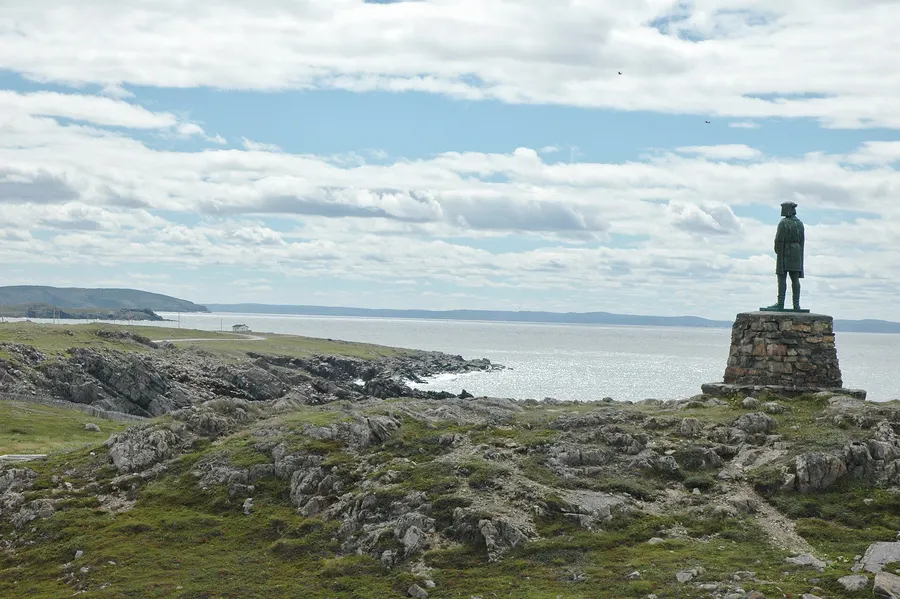
A statue of John Cabot looking out over Bonavista Bay from Cape Bonavista, Newfoundland, the traditional site of his landfallA statue of John Cabot looking out over Bonavista Bay from Cape Bonavista, Newfoundland, the traditional site of his landfallImage: Evan T Jones · CC BY-SA 4.0
world · Americas

John Cabot reaches the coast of North America

Giovanni Caboto, known in England as John Cabot, was an Italian navigator who, like Columbus, believed Asia could be reached by sailing west. He settled in Bristol, whose merchants had already sent ships into the Atlantic, and won letters patent from Henry VII to search for new lands. In May 1497 he left Bristol in the Matthew, a small ship of about 50 tons. Some five weeks later, probably on 24 June 1497, he sighted land. Exactly where is still argued over: Newfoundland, southern Labrador and Cape Breton Island all have their supporters, and Newfoundland marks the landfall at Cape Bonavista. Cabot went ashore, saw signs that people lived there though he met no one, and claimed the land for the English king. He was back in Bristol by 6 August. His voyage was the first European visit to the mainland of North America since the Norse, and it later gave England its claim to the region.

Source: Britannica: John Cabot ↗
III
A CHANGING WORLD

Early Modern Era

Exploration, political change, scientific development and expanding global connections.

1571
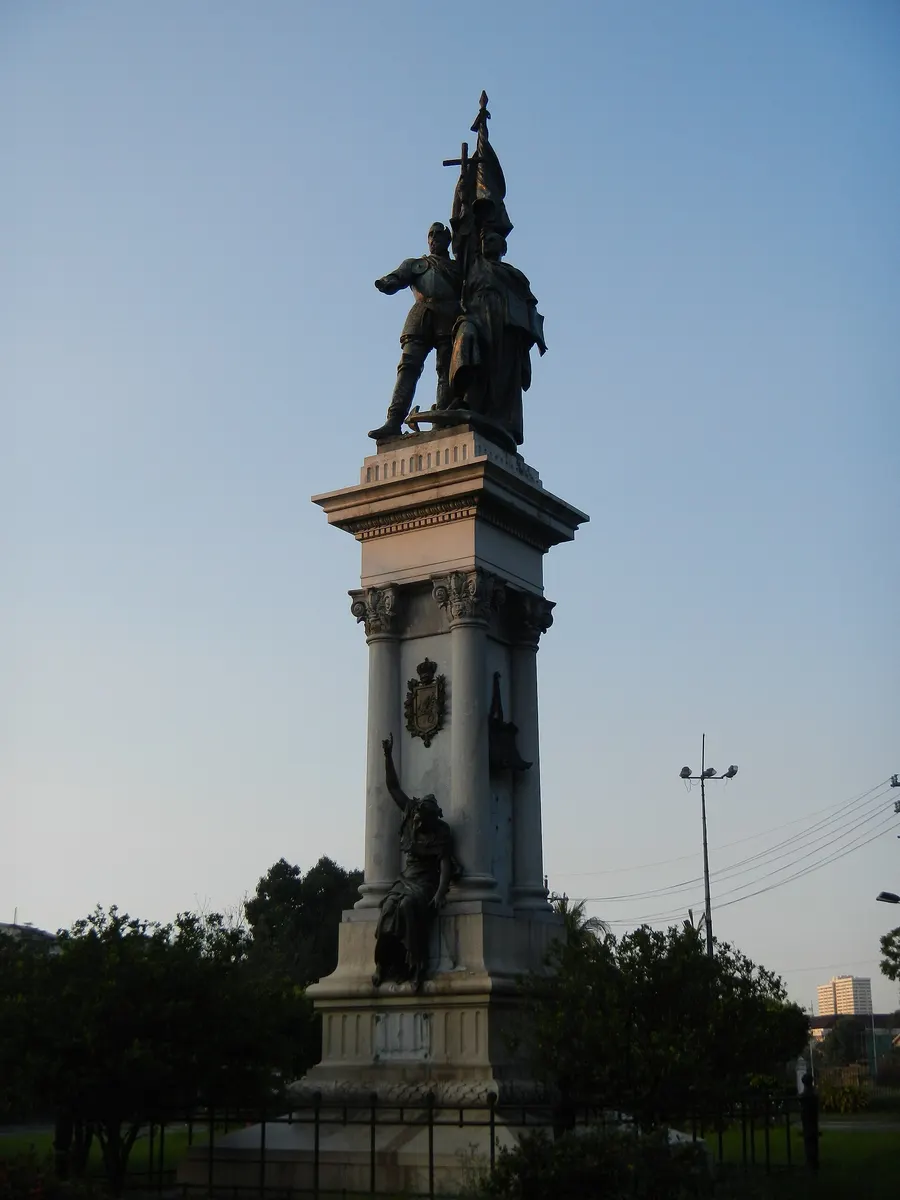
The Legazpi and Urdaneta monument in Intramuros, the old walled city of ManilaThe Legazpi and Urdaneta monument in Intramuros, the old walled city of ManilaImage: Ramon FVelasquez · CC BY-SA 3.0
politics · Asia

Legazpi founds Spanish Manila

Miguel López de Legazpi had led a Spanish expedition from Mexico to the Philippines in 1565 and set up the first Spanish base on Cebu. In 1571 his forces took the settlement of Maynila on Manila Bay, and on 24 June 1571 he established it as a Spanish city with its own city council. Manila became the capital of the Spanish Philippines and the Asian end of the galleon trade with Mexico. The city still celebrates its founding every 24 June.

Source: Philippine News Agency: June 24 declared holiday in Manila for its founding anniversary ↗
IV
THE NINETEENTH CENTURY

The 1800s

Industry, empire, invention, reform and a century of enormous transformation.

1821
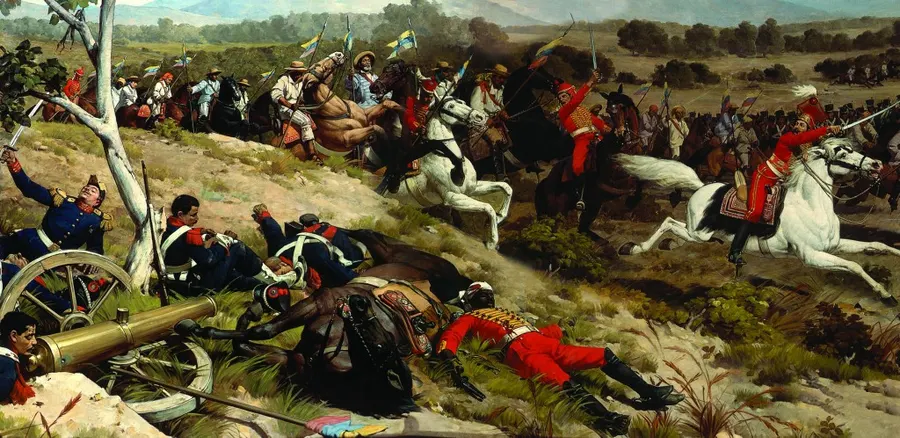
The Battle of Carabobo, painted by Martín Tovar y Tovar in 1887 for the Federal Legislative Palace in CaracasThe Battle of Carabobo, painted by Martín Tovar y Tovar in 1887 for the Federal Legislative Palace in CaracasImage: Martin Tovar y Tovar · Public domain
world · Americas

Bolívar wins Venezuela’s freedom at Carabobo

Venezuela had declared its independence from Spain in 1811, but for ten years the war swung back and forth and royalist forces kept returning. By 1821 Simón Bolívar had freed New Granada, and he turned back to his homeland to face the royalist army that still held the heart of Venezuela. On 24 June 1821 about 6,500 patriot troops met the Spanish forces under General Miguel de la Torre on the plain of Carabobo, west of Caracas. José Antonio Páez’s llaneros, the horsemen of the plains, and a legion of British and Irish volunteers turned the royalist flank, and the patriot cavalry broke the centre. Carabobo virtually ended Spanish rule in Venezuela, and Bolívar entered Caracas a few days later. Venezuela still marks the anniversary as the Day of the Battle of Carabobo and Army Day.

Source: Britannica: Battle of Carabobo ↗
1839
The Prussian adviser Helmuth von Moltke urges the Ottoman commander Hafiz Pasha to attack at Nizip, an illustration from a Victorian book of 19th-century battlesThe Prussian adviser Helmuth von Moltke urges the Ottoman commander Hafiz Pasha to attack at Nizip, an illustration from a Victorian book of 19th-century battlesImage: Archibald Forbes, Arthur Griffiths and others · Public domain
world · Middle East

Egypt’s army crushes the Ottomans at Nizip

Muhammad Ali, the ambitious governor of Egypt, had seized Syria from his nominal overlord, the Ottoman sultan, in the 1830s. When the sultan sent an army to win it back, it was met on 24 June 1839 near Nizip, in what is now southeastern Turkey, by Egyptian forces under Muhammad Ali’s son Ibrahim Pasha, and decisively beaten. Soon afterwards the Ottoman fleet sailed over to Egypt. The European powers stepped in to save the Ottoman Empire and in 1840 forced Egypt to give up Syria.

Source: Britannica: Battle of Nizip ↗
1859
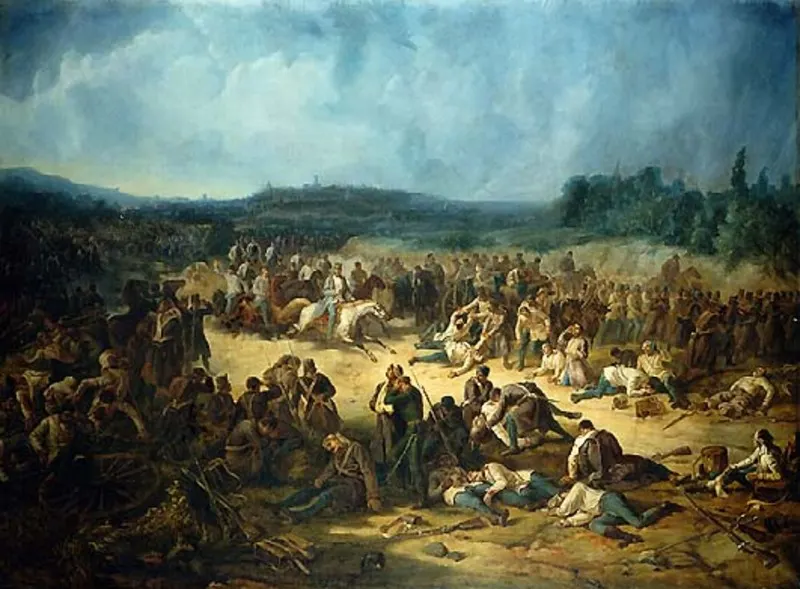
Wounded soldiers on the field of Solferino, from a painting of the 1860s showing Henry Dunant at the battle, now in the Museo Nazionale del Risorgimento, TurinWounded soldiers on the field of Solferino, from a painting of the 1860s showing Henry Dunant at the battle, now in the Museo Nazionale del Risorgimento, TurinImage: Unknown artist · Public domain
world · Europe

Carnage at Solferino inspires the Red Cross

In 1859 France and the Kingdom of Sardinia-Piedmont went to war with Austria to drive it out of northern Italy. After defeat at Magenta early in June, the Austrian emperor Franz Joseph took personal command of his army of about 120,000 men. On 24 June 1859 it met a French and Piedmontese army of similar size, led by Napoleon III and Victor Emmanuel II, around the village of Solferino, south of Lake Garda. The fighting spread along a wide front and lasted all day before the Austrians fell back. The cost was terrible. According to Britannica, each side lost around 14,000 to 15,000 killed and wounded, with thousands more missing or taken prisoner. The shock helped persuade Napoleon III to make peace within weeks, and Lombardy passed to Piedmont, a big step towards a united Italy. Among those who saw the wounded lying untended was Henry Dunant, a Swiss businessman, who organised help for them in the nearby town of Castiglione. His book A Memory of Solferino, published in 1862, led to the founding of the Red Cross and the first Geneva Convention.

Source: Britannica: Battle of Solferino ↗
1880
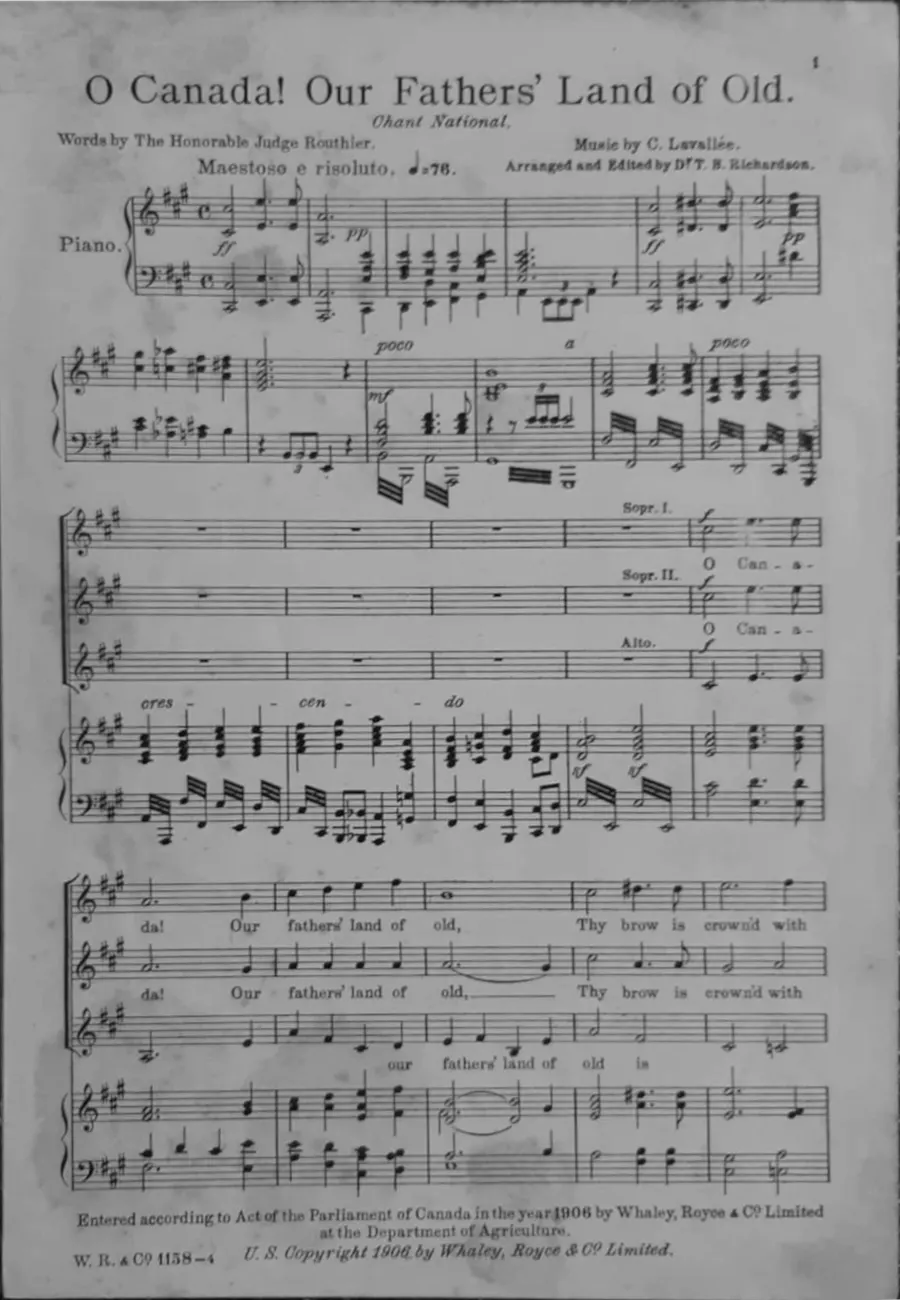
The first page of a 1906 edition of O Canada, with music by Calixa Lavallée and English wordsThe first page of a 1906 edition of O Canada, with music by Calixa Lavallée and English wordsImage: Whaley Royce & Co. · Public domain
culture · Americas

O Canada is sung for the first time in Quebec City

In 1880 French Canadians gathered in Quebec City for a national congress timed to coincide with Saint-Jean-Baptiste Day, the feast of their patron saint. The Lieutenant-Governor of Quebec, Théodore Robitaille, commissioned a patriotic song for the occasion. The judge and poet Adolphe-Basile Routhier wrote the French words, and Calixa Lavallée, the best-known Canadian composer of the day, set them to music. O Canada was first performed on 24 June 1880 at a banquet in the Skaters’ Pavilion in Quebec City, played by massed bands, and was well received. For decades it was mainly a French-Canadian song, but English versions followed, including the words by Robert Stanley Weir that became the basis of the English lyrics. It gradually came to be sung across the country, and on 1 July 1980, a century after its first performance, it was proclaimed Canada’s national anthem.

Source: Government of Canada: The history of O Canada ↗
V
THE TWENTIETH CENTURY

The 1900s

War and peace, technological leaps, social change, politics, sport and popular culture.

1932
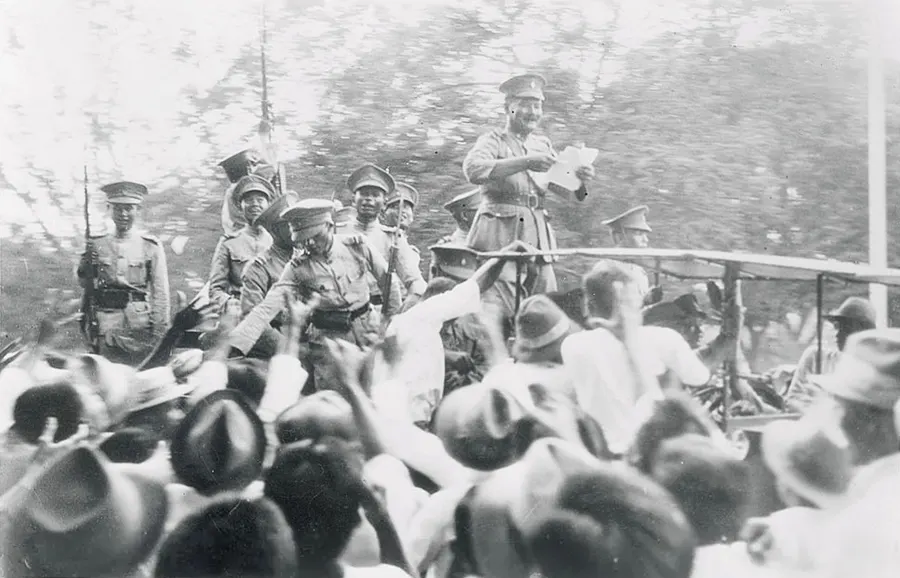
Phraya Phahon reads the People's Party manifesto to troops in the Royal Plaza, Bangkok, on 24 June 1932Phraya Phahon reads the People’s Party manifesto to troops in the Royal Plaza, Bangkok, on 24 June 1932Image: Unknown author · Public domain
politics · Asia

A bloodless revolution ends absolute monarchy in Siam

Siam was the only country in Southeast Asia never ruled by a European power, but its kings still held absolute power. By the early 1930s the world depression had hit the kingdom hard, and a new class of Western-educated officials and army officers resented rule by the royal princes. In 1927 a group of young Siamese, among them the lawyer Pridi Phanomyong and the officer Plaek Phibunsongkhram, had formed the People’s Party to change the system. In the early hours of 24 June 1932, while King Prajadhipok was away from Bangkok, the conspirators, known as the Promoters, took control of the army in the capital, detained leading royal officials and had their manifesto read to troops in the Royal Plaza. Not a shot was fired. The king agreed to reign under a constitution, first a temporary one that gave power to the People’s Party and then a permanent constitution in December 1932. The revolution ended centuries of absolute monarchy and opened Thailand’s constitutional era, though soldiers would stage many more coups in the decades that followed.

Source: Britannica: Promoters Revolution ↗
1947
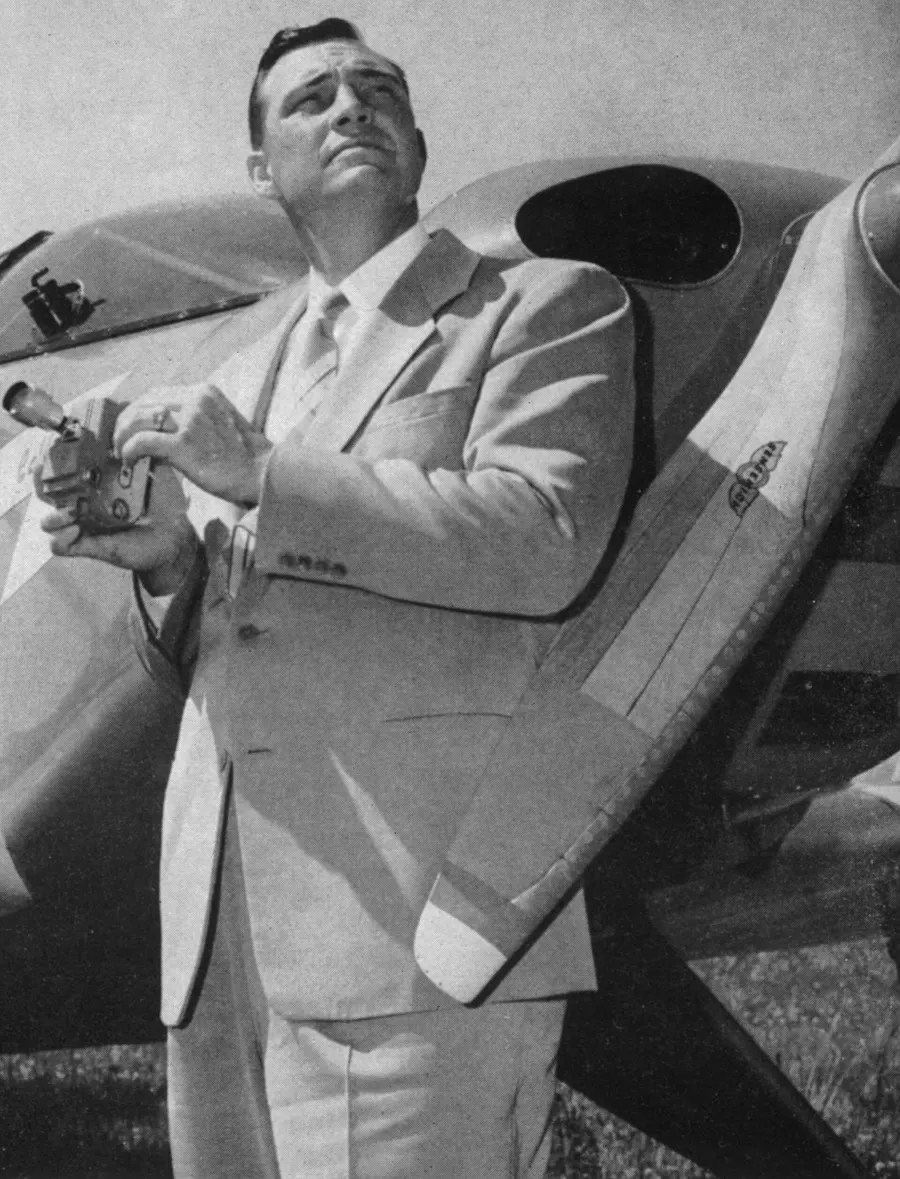
Kenneth Arnold with a camera beside a light aircraft, in an Associated Press photographKenneth Arnold with a camera beside a light aircraft, in an Associated Press photographImage: Associated Press · Public domain
world · Americas

A pilot’s sighting launches the flying saucer

On 24 June 1947 Kenneth Arnold, a businessman and experienced private pilot, was flying near Mount Rainier in Washington State, looking for a missing Marine Corps transport plane, when he saw nine bright objects racing across the sky. He told reporters they moved like saucers skipping on water, and newspapers soon shortened this to flying saucers. Hundreds of similar reports followed across the United States that summer, and the phrase entered languages around the world.

Source: Smithsonian National Air and Space Museum: 1947, year of the flying saucer ↗
1982
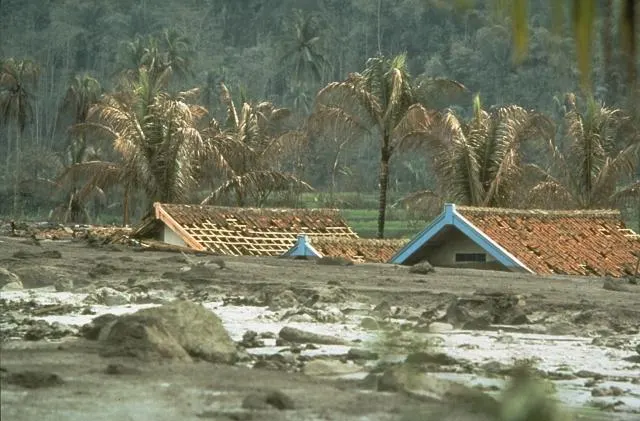
Houses half-buried by a lahar, a flow of volcanic debris and water, from Galunggung volcano on Java during its 1982 eruption (US Geological Survey photograph)Houses half-buried by a lahar, a flow of volcanic debris and water, from Galunggung volcano on Java during its 1982 eruption (US Geological Survey photograph)Image: Robin Holcomb, U.S. Geological Survey · Public domain
science · Asia

Volcanic ash stops all four engines of a jumbo jet

In 1982 Galunggung, a volcano in western Java, began a series of violent eruptions that destroyed villages and forced tens of thousands of people from their homes. On the night of 24 June 1982 a British Airways Boeing 747, flying from Kuala Lumpur to Perth with about 240 people on board, passed some 150 kilometres from the volcano at a height of about 11 kilometres. It flew straight into an ash cloud that the crew could not see on radar. St Elmo’s fire glowed around the cockpit, and one after another all four engines stopped. The jumbo jet glided down and lost about 7.5 kilometres of height before the crew managed to restart the engines in cleaner air. With its windscreen and wings scoured by the ash, it landed safely at Jakarta. The incident showed how dangerous invisible ash clouds were to jet engines, and led the International Civil Aviation Organization to set up an International Airways Volcano Watch, with advisory centres around the world that now warn pilots of ash.

Source: Smithsonian Global Volcanism Program: Galunggung, June 1982 report ↗
1995
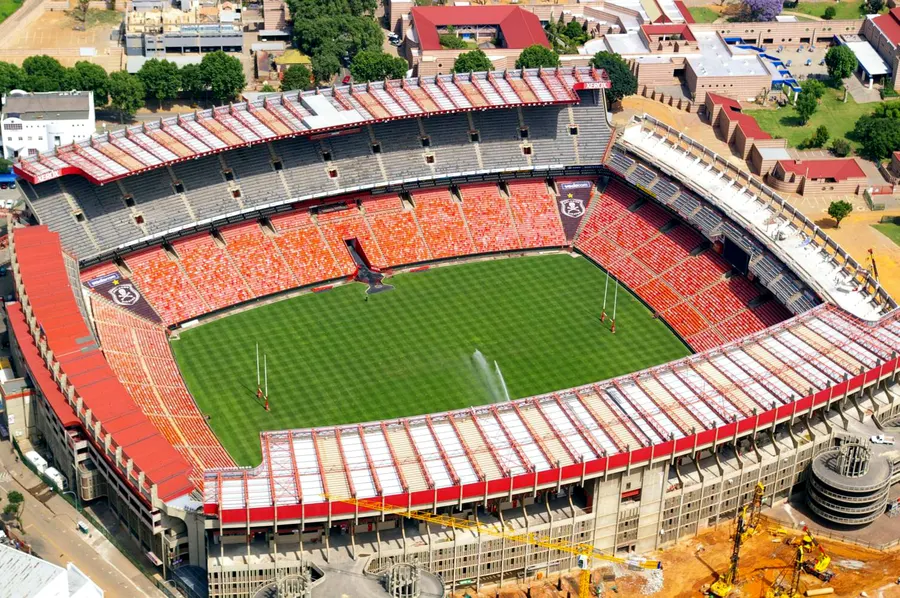
Ellis Park Stadium in Johannesburg, scene of the 1995 Rugby World Cup final, in a later aerial viewEllis Park Stadium in Johannesburg, scene of the 1995 Rugby World Cup final, in a later aerial viewImage: Leglo09 · CC BY-SA 2.0
sport · Africa

Mandela hands the Rugby World Cup to the Springboks

For years South Africa had been shut out of international rugby because of apartheid, and the Springboks had never played in a World Cup. In 1995, a year after the country’s first all-race elections, South Africa hosted the tournament. Rugby had long been seen as a white Afrikaner game, and President Nelson Mandela set out to make the team a symbol for the whole nation. On 24 June 1995 South Africa met New Zealand in the final at Ellis Park in Johannesburg. Neither side scored a try, and the match went to extra time, the first World Cup final to do so, before a drop goal by Joel Stransky gave South Africa a 15-12 victory. Mandela, wearing a Springbok jersey with the captain’s number six, presented the Webb Ellis Cup to François Pienaar, a moment that came to stand for hopes of reconciliation in the new South Africa.

Source: South African History Online: Springboks beat New Zealand in Rugby World Cup final ↗
VI
2000 TO TODAY

Modern Day

The events of recent decades that have already become part of the historical record.

2010
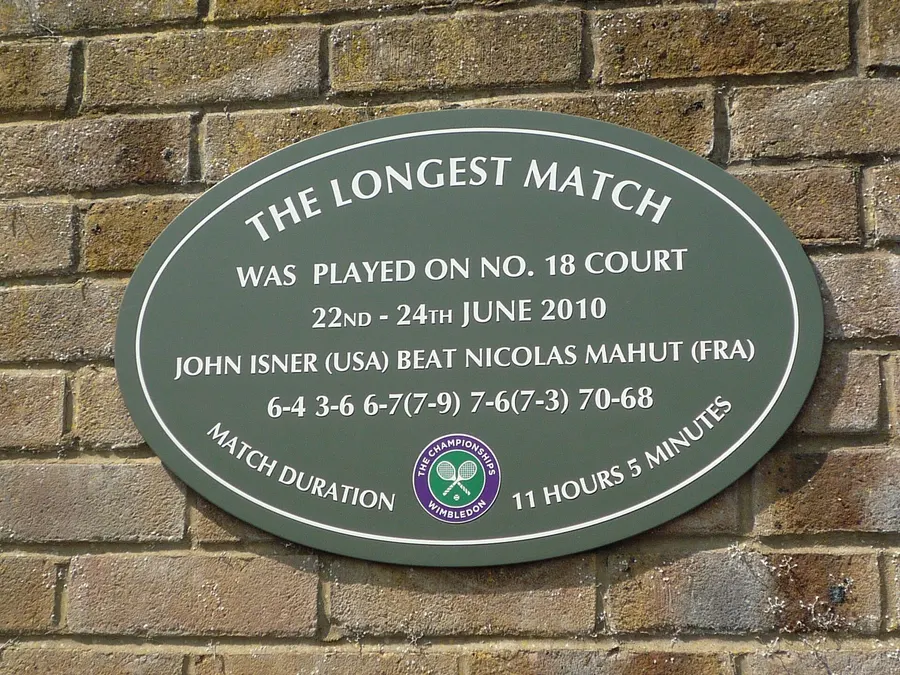
The plaque on Wimbledon's Court 18 commemorating the match between John Isner and Nicolas Mahut, 22 to 24 June 2010The plaque on Wimbledon’s Court 18 commemorating the match between John Isner and Nicolas Mahut, 22 to 24 June 2010Image: Jonotennis · CC BY-SA 3.0
sport · Europe

The longest tennis match ever played ends at Wimbledon

John Isner of the United States and Nicolas Mahut of France began their first-round match at Wimbledon on the evening of 22 June 2010. Darkness stopped play twice, and the fifth set, which at Wimbledon then had no tie-break, went on and on. On 24 June Isner finally won 6-4, 3-6, 6-7, 7-6, 70-68, after 11 hours and 5 minutes of play over three days, by far the longest match in tennis history. A plaque on Court 18 records it.

Source: Wimbledon: The longest match in history ↗
RESEARCH

Sources & Further Reading

Selected authoritative references supporting the events on this page.

WHY THESE MOMENTS?

Significance before volume

This page is not the longest possible list of events. It is a chronological journey through 24 June, where each entry is chosen for historical significance, human interest and reliability.

Facts are checked against authoritative museums, archives, universities and reference works. Where sources disagree, the page says so.

EXPLORED THE DEEPER STORY?

Return to the highlights of 24 June

Discover the lighter side of the date with famous birthdays, culture, firsts and lives remembered.

Explore This Day →
← PREVIOUS DAY23 June
HISTORY & TIMELINE24 June
NEXT DAY →25 June