
HISTORY & TIMELINE
23 June

A journey through
23 June in history

The story of 23 June runs from a battle in a Bengal mango grove in 1757 to the opening of Bangladesh’s longest bridge in 1998. In between come a record climb on an Andean volcano, a patent for the first practical typewriter, Canada’s first national park, cannon fire on Iran’s parliament, a victory that settled the Baltic wars, a city hall opened on Midsummer Eve, a law that brought the vote to French Africa, a cricket final at Lord’s, a new bullet train to the north of Japan, a bombing that killed 329 people and a scientist’s warning about a warming world.

JUMP THROUGH TIME
III
A CHANGING WORLD

Early Modern Era

Exploration, political change, scientific development and expanding global connections.

1757
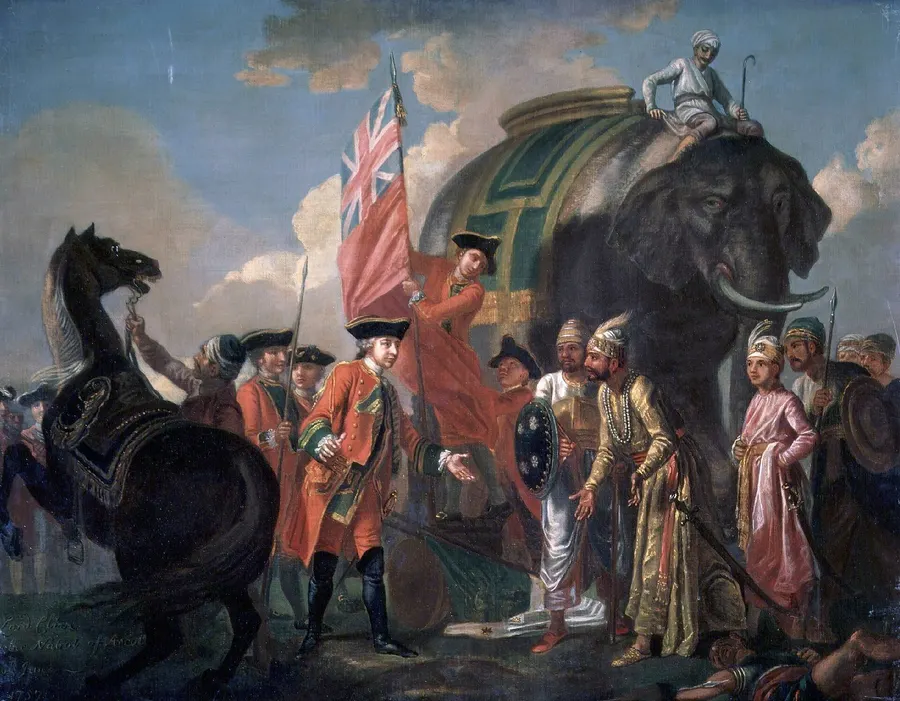
Robert Clive meeting Mir Jafar after the Battle of Plassey, a painting by Francis Hayman of about 1760Robert Clive meeting Mir Jafar after the Battle of Plassey, a painting by Francis Hayman of about 1760Image: Francis Hayman · Public domain
world · Asia

Robert Clive wins the Battle of Plassey

In 1756 Siraj-ud-Daulah, the young Nawab of Bengal, seized the British East India Company’s trading post at Calcutta. Robert Clive was sent from Madras to win it back, and he did so early in 1757. But Clive wanted more than a trading post. He and a group of Bengal’s powerful bankers plotted with Mir Jafar, one of the nawab’s own generals, promising to make him nawab if Siraj was beaten. On 23 June 1757 the two armies met in a mango grove at Plassey, north of Calcutta. Clive had about 3,000 men against a force of around 50,000, but Mir Jafar held his cavalry back from the fight. A heavy storm soaked the nawab’s gunpowder while the British kept theirs covered, and by the end of the day Siraj’s army had broken. Mir Jafar was made nawab and Siraj was soon killed. The victory turned a trading company into the real power in Bengal, and it is often seen as the start of British rule in India.

Source: National Army Museum: Battle of Plassey ↗
IV
THE NINETEENTH CENTURY

The 1800s

Industry, empire, invention, reform and a century of enormous transformation.

1802
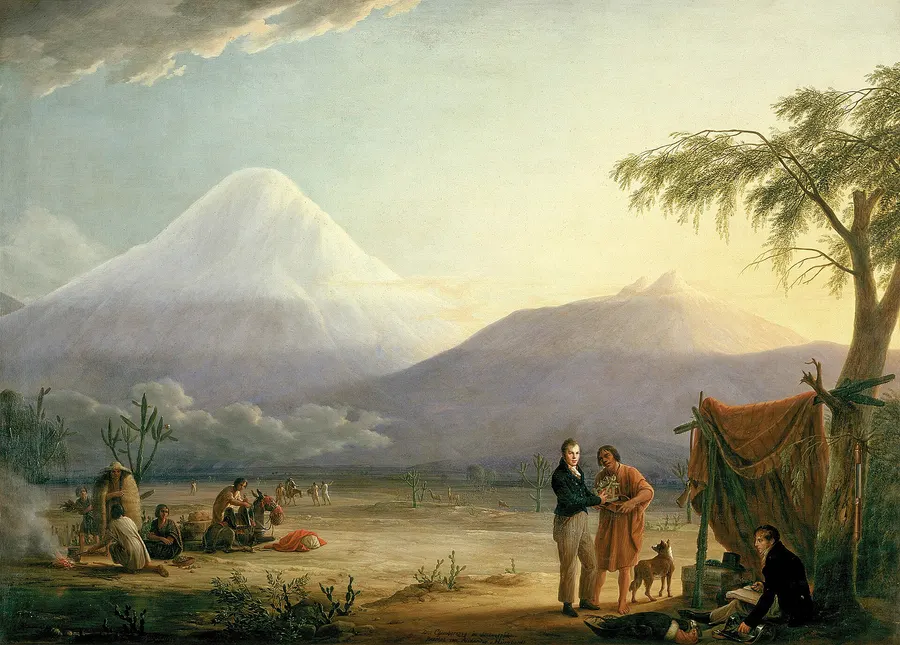
Alexander von Humboldt and Aimé Bonpland at the foot of Chimborazo, painted by Friedrich Georg Weitsch in 1810Alexander von Humboldt and Aimé Bonpland at the foot of Chimborazo, painted by Friedrich Georg Weitsch in 1810Image: Friedrich Georg Weitsch · Public domain
science · Americas

Humboldt climbs higher than anyone before him on Chimborazo

The Prussian naturalist Alexander von Humboldt and the French botanist Aimé Bonpland spent five years travelling through Spain’s American empire, measuring, collecting and mapping as they went. In 1802 they reached the Andes of what is now Ecuador, where the snow-capped volcano Chimborazo was then believed to be the highest mountain in the world. On 23 June 1802 they set out to climb it, with no ropes, crampons or oxygen. Suffering badly from altitude sickness, they were stopped by a deep ravine short of the summit, but they had reached nearly 5,900 metres, a height no one was known to have climbed before, and the record stood for about 30 years. Humboldt turned the ordeal into science: he was among the first to link mountain sickness to the thin air, and his famous drawing of Chimborazo, showing how plants change with height, helped found the study of how life is spread across the Earth.

Source: Britannica: Alexander von Humboldt ↗
1868
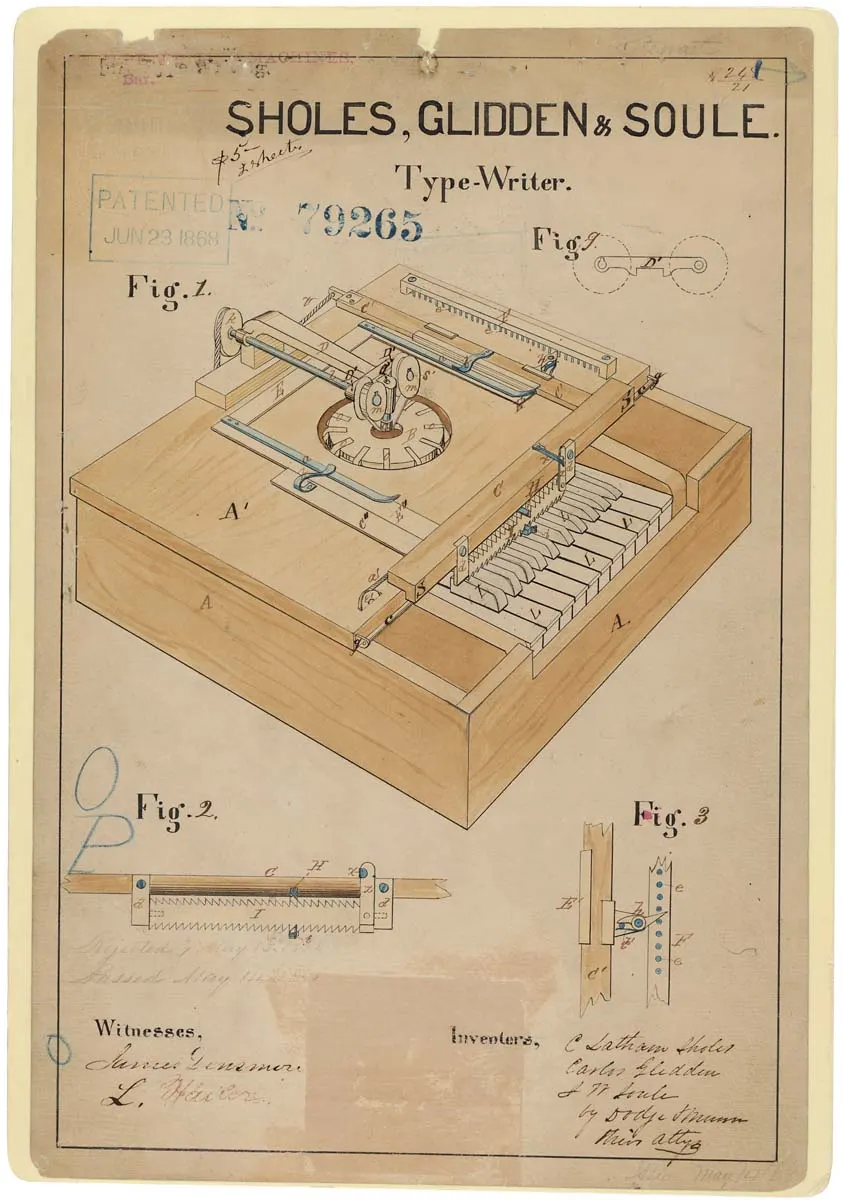
The patent drawing for the typewriter of Sholes, Glidden and Soule, granted on 23 June 1868The patent drawing for the typewriter of Sholes, Glidden and Soule, granted on 23 June 1868Image: Unknown illustrator (US patent drawing) · Public domain
science · Americas

The first practical typewriter is patented

In Milwaukee, the printer and newspaper editor Christopher Latham Sholes worked with the machinists Carlos Glidden and Samuel Soule on a machine that would print letters as its keys were pressed. On 23 June 1868 they were granted US patent 79,265 for an ‘improvement in type-writing machines’. Sholes kept improving the design, and in the 1870s it was sold to the gunmakers E. Remington and Sons, whose typewriter brought the QWERTY keyboard into offices around the world.

Source: Google Patents: US79265A, Improvement in type-writing machines ↗
1887
Moraine Lake in Banff National ParkMoraine Lake in Banff National ParkImage: Gorgo · Public domain
world · Americas

Canada creates its first national park at Banff

In 1883 railway workers came upon hot springs in a cave on the slopes of the Rockies, and two years later the government set aside a small reserve around them to settle rival claims. On 23 June 1887 the Rocky Mountains Park Act enlarged the reserve to 665 square kilometres and made it Canada’s first national park, ‘a public park and pleasure ground’ for the people of Canada. It was renamed Banff National Park in 1930.

Source: Parks Canada: Cave and Basin, Banff’s legacy ↗
V
THE TWENTIETH CENTURY

The 1900s

War and peace, technological leaps, social change, politics, sport and popular culture.

1908
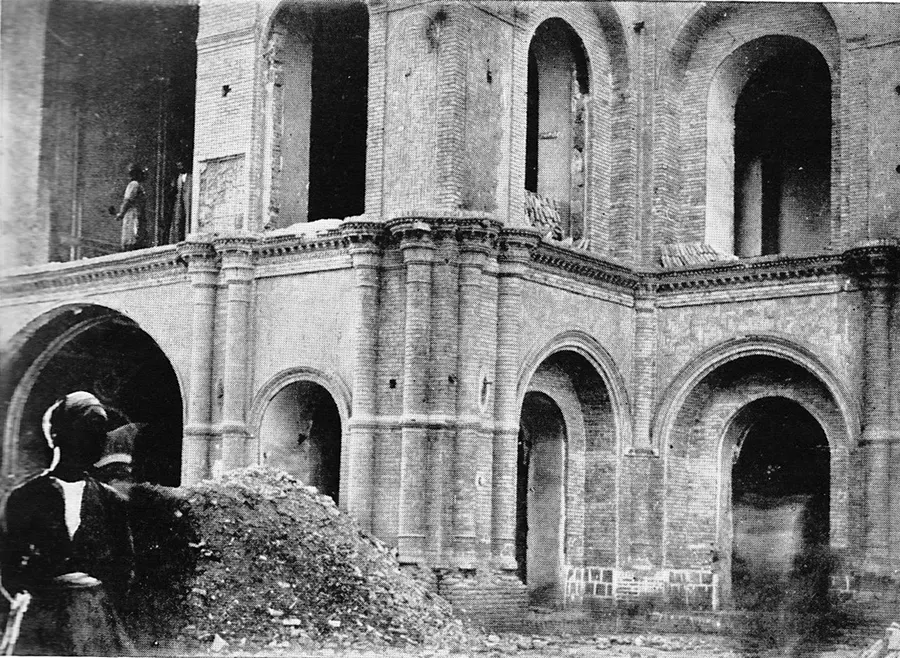
The damaged parliament building in Tehran after the bombardment by the Cossack Brigade in 1908The damaged parliament building in Tehran after the bombardment by the Cossack Brigade in 1908Image: Unknown author · Public domain
politics · Middle East

The shah’s Cossacks shell Iran’s parliament

In 1906 a revolution forced Iran’s Qajar ruler to grant a constitution and an elected parliament, the Majles. His son Mohammad Ali Shah, who came to the throne in 1907, was determined to undo it, and he had the backing of Russia and of the Persian Cossack Brigade, a force commanded by Russian officers. On 22 June 1908 the shah made the brigade’s Russian commander, Colonel Vladimir Liakhov, military governor of Tehran. The next day, 23 June, the Cossacks surrounded the parliament building with artillery and, when fighting began, shelled it and a neighbouring mosque. Several hundred people were killed, the Majles was shut and leading constitutionalists were arrested or executed. The victory did not last: supporters of the constitution fought back from Tabriz and the provinces, took Tehran in 1909 and deposed the shah.

Source: Encyclopaedia Iranica: Cossack Brigade ↗
1919
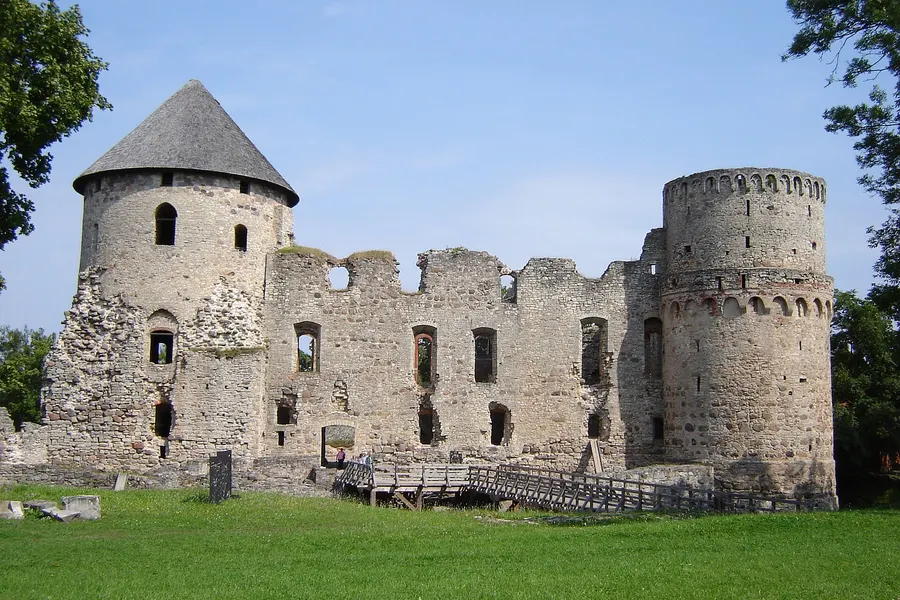
The ruins of the medieval castle of the Livonian Order at Cēsis in Latvia, where the battle of 1919 was foughtThe ruins of the medieval castle of the Livonian Order at Cēsis in Latvia, where the battle of 1919 was foughtImage: Greifen · CC BY-SA 3.0
world · Europe

Estonian and Latvian troops win the Battle of Cēsis

After the First World War, the new republics of Estonia and Latvia fought for their survival against the Red Army and against the Baltische Landeswehr, a force raised by the Baltic German nobility with help from German troops. In the spring of 1919 the Landeswehr took Riga and pushed north, hoping to put the region under German-led rule. Around the small town of Cēsis in northern Latvia, known to Estonians as Võnnu, the Estonian 3rd Division, the Kuperjanov Battalion, armoured trains and the Latvian Northern Brigade stood against them. The Landeswehr’s main attack was held on 21 June, and on 23 June 1919 an Estonian counter-attack retook Cēsis and drove the Germans back towards Riga. The victory ended the hopes of a German-dominated Baltic state, after some 600 years of Baltic German power in the region. Estonia marks 23 June as Victory Day, and Latvia also honours the battle.

Source: ERR News: June 23, Estonia’s Victory Day ↗
1923
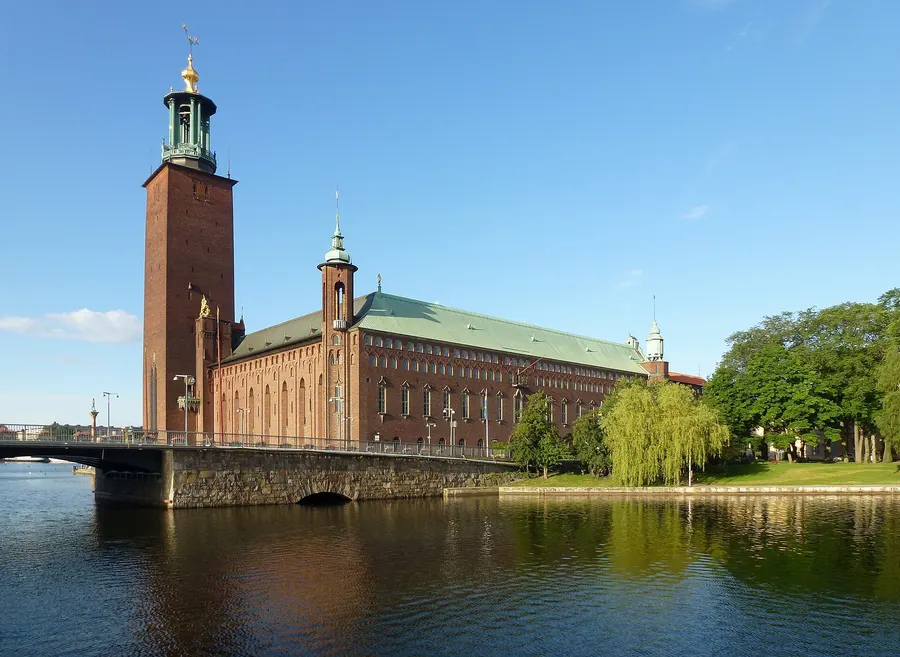
Stockholm City Hall, designed by Ragnar Östberg, seen in 2012Stockholm City Hall, designed by Ragnar Östberg, seen in 2012Image: Holger.Ellgaard · CC BY-SA 3.0
culture · Europe

Stockholm opens its new City Hall on Midsummer Eve

The architect Ragnar Östberg won a competition in 1902 to design a new courthouse for Stockholm, but the city decided to make the building its City Hall instead. Work began in 1911 on a site at the water’s edge on the island of Kungsholmen, and for twelve years Östberg refined his plans for a great red-brick palace with courtyards, arcades and a tall tower topped by three golden crowns, a landmark of the Scandinavian National Romantic style. The hall was opened on Midsummer Eve, 23 June 1923, the 400th anniversary of Gustav Vasa’s entry into Stockholm. King Gustav V arrived by boat, more than 2,000 guests filled the Blue Hall for speeches, and the poet Verner von Heidenstam spoke in Vasa’s memory. A regatta, a children’s choir and a long procession of the city’s societies followed, and the celebrations ran on until two in the morning.

Source: City of Stockholm: The inauguration of the City Hall ↗
1956
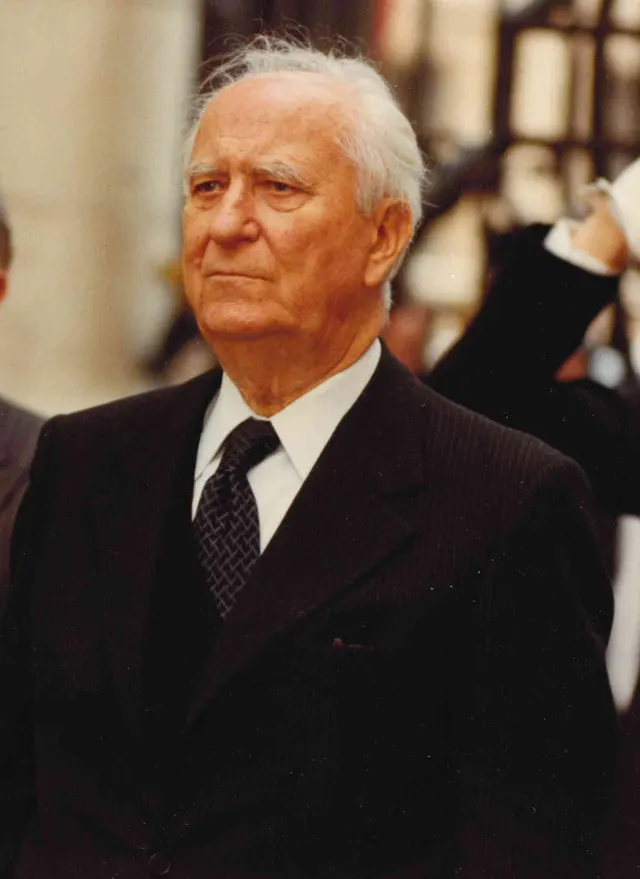
Gaston Defferre, the French minister who gave his name to the 1956 law, photographed in later lifeGaston Defferre, the French minister who gave his name to the 1956 law, photographed in later lifeImage: Service de l'information et des relations publiques du ministère de l'Intérieur · CC0
politics · Africa

France passes the loi-cadre for its African territories

After the loss of Indochina and with war under way in Algeria, France looked for a new deal with its colonies south of the Sahara. The overseas minister Gaston Defferre, working with the Ivorian leader Félix Houphouët-Boigny, steered through a framework law, dated 23 June 1956, that brought in universal suffrage and gave each territory its own elected assembly and government council. Critics such as Léopold Senghor warned that it would split French West Africa into small states; within five years most of the territories were independent.

Source: Assemblée nationale: Léopold Sédar Senghor, speech of 29 January 1957 on the law of 23 June 1956 ↗
1979
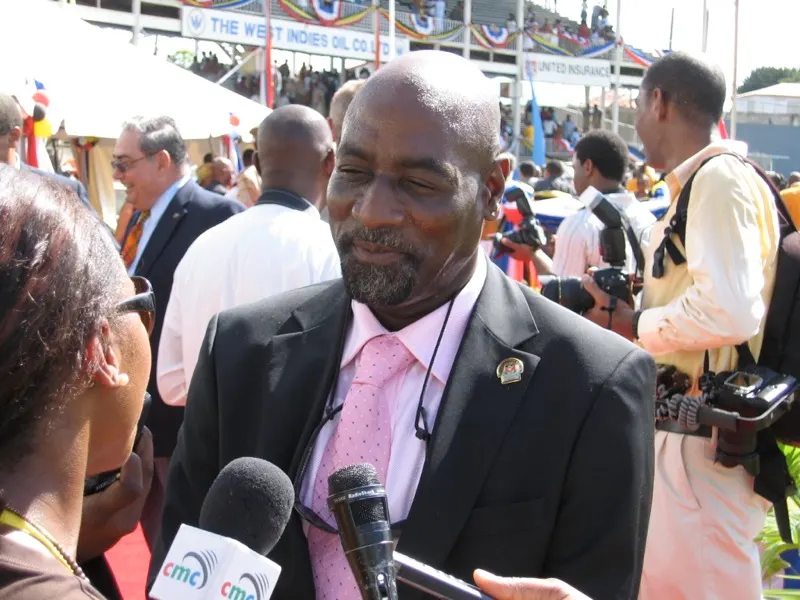
Sir Vivian Richards, whose unbeaten 138 won the 1979 World Cup final, photographed in later lifeSir Vivian Richards, whose unbeaten 138 won the 1979 World Cup final, photographed in later lifeImage: balhead · CC BY-SA 2.0
sport · Europe

The West Indies keep the Cricket World Cup at Lord’s

The West Indies had won the first Cricket World Cup in 1975, and four years later, captained again by Clive Lloyd, they returned to Lord’s in London for the final against the host nation, England. At first the English bowlers had the upper hand, and the West Indies slipped to 99 for four. Then Viv Richards and Collis King took the game away. King hit 86 from only 66 balls, and Richards finished unbeaten on 138, carrying the total to 286 for nine. England’s openers began steadily, but once they were out the innings collapsed: from 183 for two they were all out for 194, with the tall fast bowler Joel Garner taking five wickets. The West Indies won by 92 runs on 23 June 1979 to become world champions for the second time running.

Source: ICC: Men’s Cricket World Cup 1979 overview ↗
1982
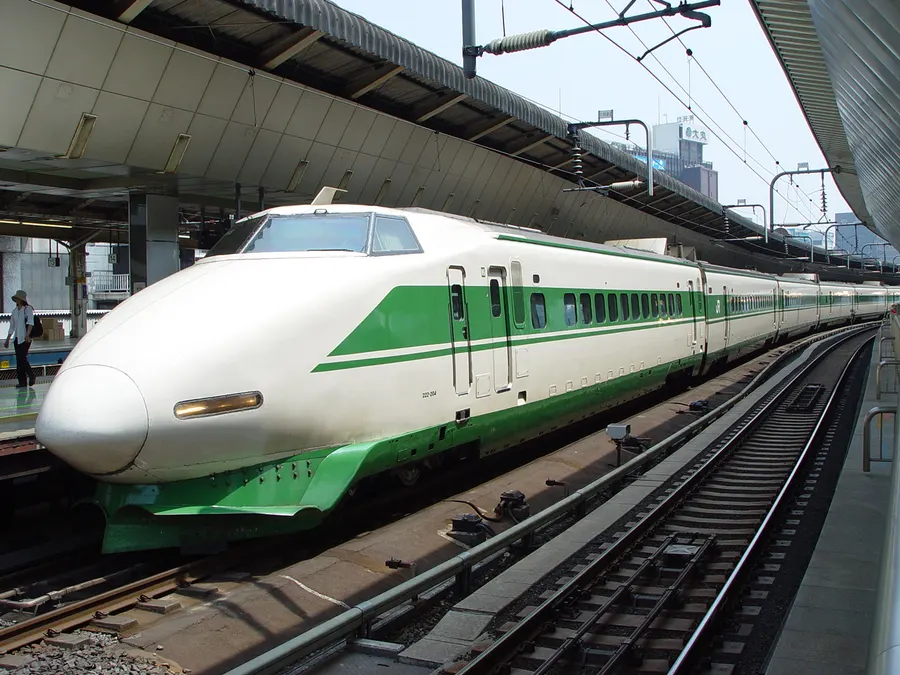
A 200 series train, the type that opened the Tōhoku Shinkansen, at Tokyo Station in 2002A 200 series train, the type that opened the Tōhoku Shinkansen, at Tokyo Station in 2002Image: DAJF · CC BY-SA 3.0
science · Asia

The Tōhoku bullet train opens to northern Japan

Japan’s first high-speed line, from Tokyo to Osaka, had opened in 1964. On 23 June 1982 the Tōhoku Shinkansen began carrying passengers between Ōmiya, just north of Tokyo, and Morioka, nearly 500 kilometres away, cutting hours from journeys to the country’s north-east. The line was extended into Tokyo itself in the following years and reached Shin-Aomori, at the northern tip of Honshu, in 2010.

Source: JR East: Railway Town Omiya, history ↗
1985
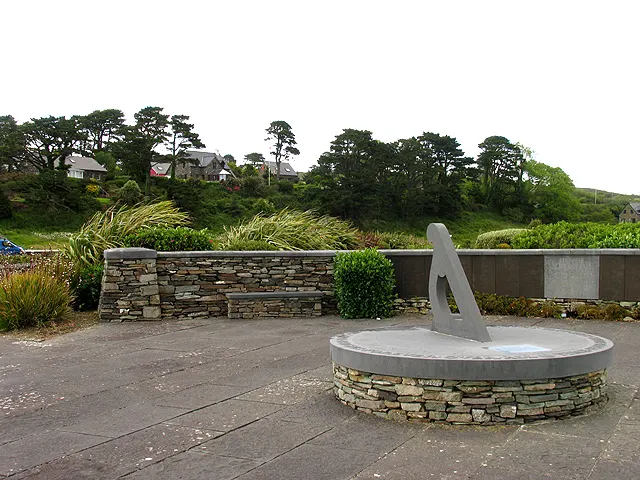
The memorial at Ahakista in County Cork, on the Irish coast closest to where Air India Flight 182 came downThe memorial at Ahakista in County Cork, on the Irish coast closest to where Air India Flight 182 came downImage: Pam Brophy · CC BY-SA 2.0
world · Americas

A bomb destroys Air India Flight 182

Air India Flight 182, a Boeing 747 named Kanishka, left Canada for London and Delhi on 22 June 1985. A bomb hidden in a suitcase had been checked in at Vancouver and transferred onto the flight. On 23 June 1985, as the plane approached Ireland, the bomb exploded and the aircraft fell into the Atlantic off the south-west Irish coast. All 329 people on board were killed, most of them Canadians of Indian origin. Less than an hour earlier, a second bomb from the same plot exploded at Tokyo’s Narita airport, killing two baggage handlers. The attacks were blamed on Sikh extremists; only one man was ever convicted. A Canadian public inquiry later found a ‘cascading series of errors’ by police and security agencies. It remains the deadliest terrorist attack in Canada’s history, and Canada marks 23 June as its National Day of Remembrance for Victims of Terrorism.

Source: Public Safety Canada: Remembering Air India Flight 182 ↗
1988
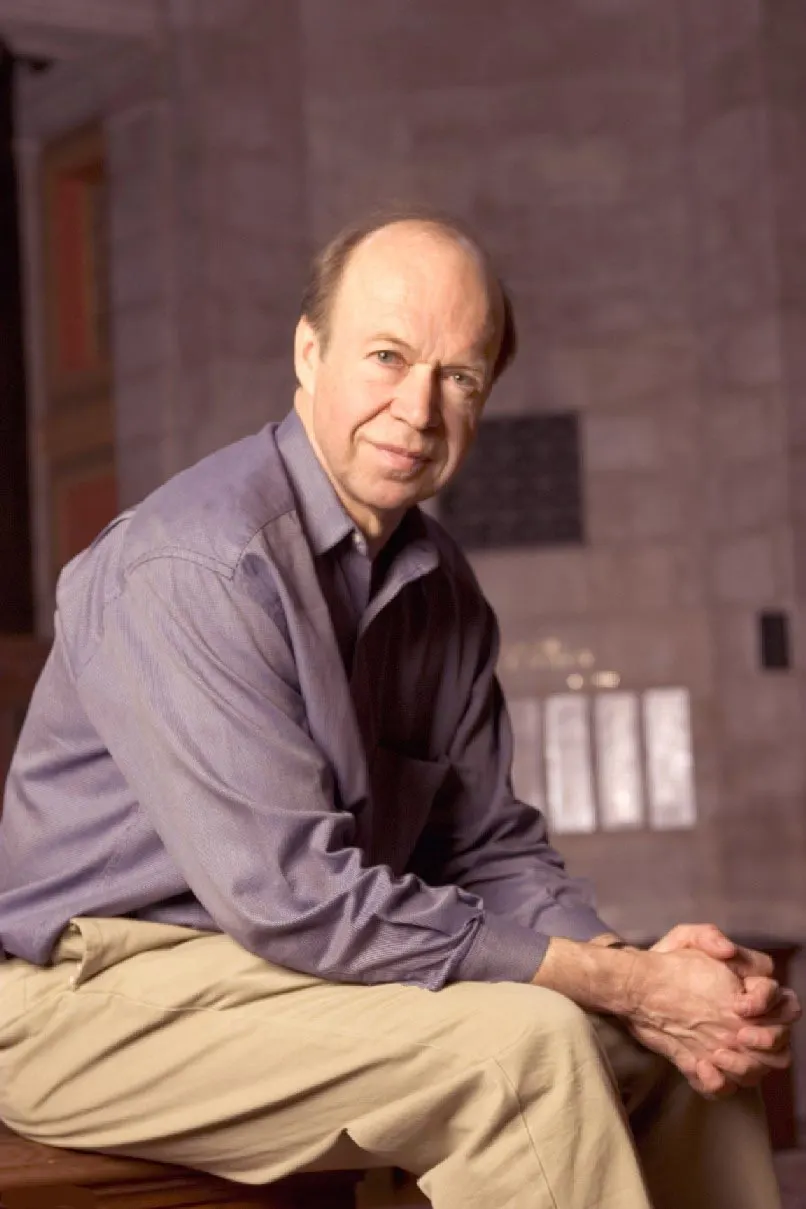
The NASA climate scientist James Hansen, photographed in 2005The NASA climate scientist James Hansen, photographed in 2005Image: NASA · Public domain
science · Americas

James Hansen tells the US Senate that global warming has begun

Scientists had long known that carbon dioxide traps heat, and by the 1980s computer models warned that the gases released by burning coal, oil and gas would warm the planet. But most researchers were wary of saying that the warming could already be seen. James Hansen, who ran NASA’s Goddard Institute for Space Studies in New York, was ready to go further. On 23 June 1988, during a sweltering summer of drought in the United States, Hansen was the lead witness at a hearing of the Senate’s energy committee. He told the senators that the Earth was warmer than at any time since reliable measurements began, and that he was 99 per cent sure the warming was caused by greenhouse gases rather than natural chance. His testimony made headlines around the world and turned ‘the greenhouse effect’ into an everyday phrase. The Intergovernmental Panel on Climate Change was set up later that year.

Source: Columbia Climate School: James Hansen’s climate warning, 30 years later ↗
1998
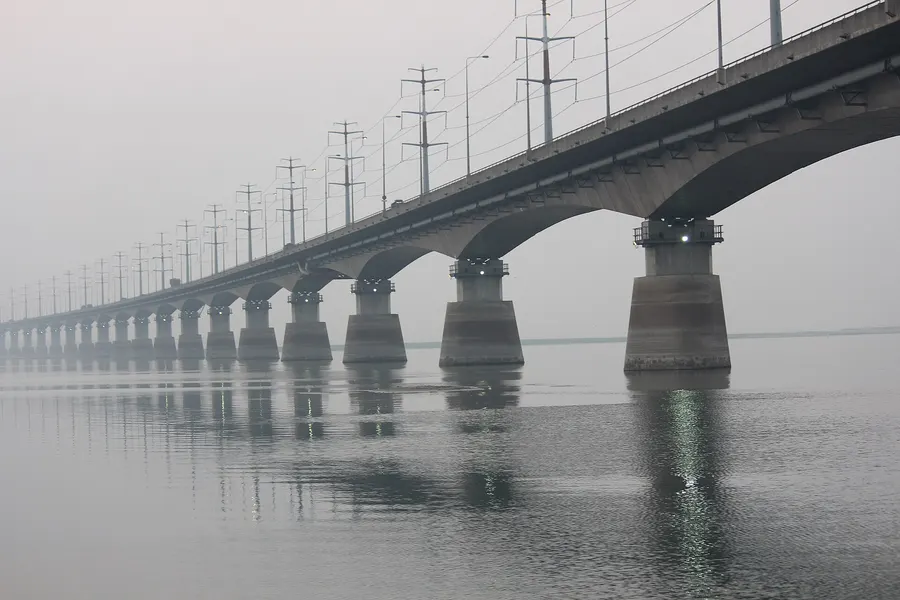
The Bangabandhu Bridge across the Jamuna River in BangladeshThe Bangabandhu Bridge across the Jamuna River in BangladeshImage: Rohul Amin Khan · CC BY-SA 4.0
science · Asia

The Bangabandhu Bridge joins the two halves of Bangladesh

The broad, shifting Jamuna River long cut Bangladesh in two, and crossing it meant a slow ferry. Building began in 1994 on a 4.8-kilometre bridge carrying a road, a railway, power lines and later a gas pipeline, paid for with help from the World Bank, the Asian Development Bank and Japan. It opened to traffic on 23 June 1998, halving the journey from Dhaka to Bogra, and was named after the country’s founder, Sheikh Mujibur Rahman, known as Bangabandhu.

Source: Banglapedia: Bangabandhu Jamuna Multipurpose Bridge ↗
RESEARCH

Sources & Further Reading

Selected authoritative references supporting the events on this page.

WHY THESE MOMENTS?

Significance before volume

This page is not the longest possible list of events. It is a chronological journey through 23 June, where each entry is chosen for historical significance, human interest and reliability.

Facts are checked against authoritative museums, archives, universities and reference works. Where sources disagree, the page says so.

EXPLORED THE DEEPER STORY?

Return to the highlights of 23 June

Discover the lighter side of the date with famous birthdays, culture, firsts and lives remembered.

Explore This Day →
← PREVIOUS DAY22 June
HISTORY & TIMELINE23 June
NEXT DAY →24 June