1456Hunyadi breaks the Ottoman siege of Belgrade
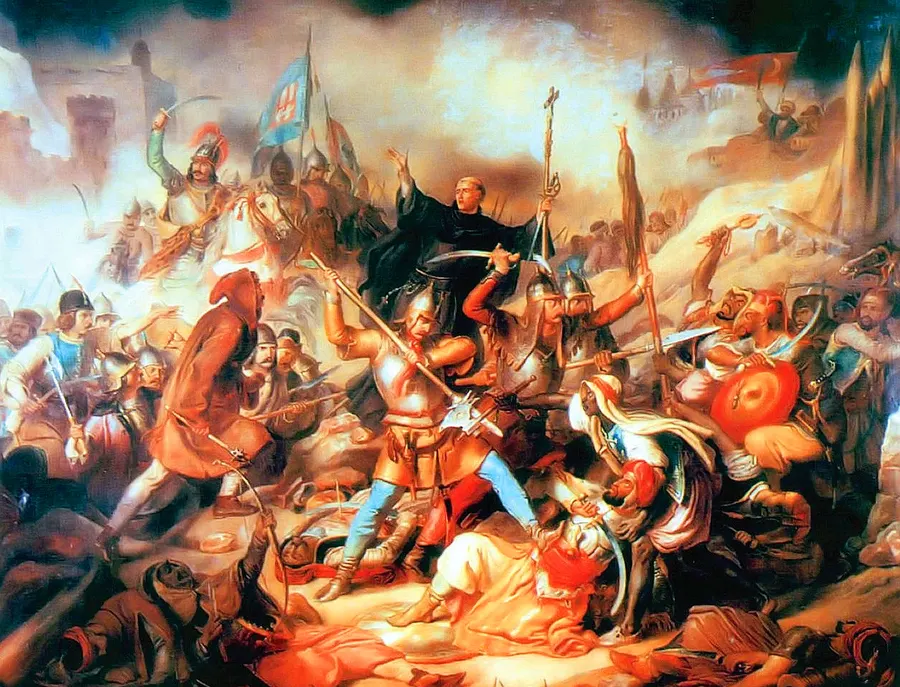
Three years after taking Constantinople in 1453, the young Ottoman sultan Mehmed II turned north towards Hungary. The fortress of Belgrade, where the Sava meets the Danube, was Hungary’s gateway, and in early July 1456 Mehmed surrounded it with a large army, heavy cannon and a river fleet. The Hungarian commander János Hunyadi broke through the Ottoman boats on the Danube to reinforce the garrison, while the Franciscan preacher John of Capistrano brought a crowd of poorly armed crusaders to the walls.
The Ottomans stormed the town on the night of 21 July and were thrown back. On 22 July 1456 the defenders’ counter-attack spilled out of the fortress into the besiegers’ camp, Mehmed was wounded, and that night the Ottoman army withdrew, abandoning its guns. The victory held off the Ottoman advance into Hungary for some 70 years. Hunyadi did not live to enjoy it: he died of plague in the camp a few weeks later, on 11 August.
Read the full storyHistory & Timeline →Source: Britannica: János Hunyadi ↗
1793Alexander Mackenzie reaches the Pacific ‘from Canada, by land’
Alexander Mackenzie was a Scottish-born fur trader with the North West Company who wanted to find a route from the fur country west of Hudson Bay to the Pacific. In 1789 he had followed a great river north, hoping it would lead west, only to reach the Arctic Ocean; the river now bears his name. In October 1792 he set out again from Fort Chipewyan on Lake Athabasca, wintered on the Peace River and in May 1793 pushed on with nine companions by canoe and on foot across the Rocky Mountains.
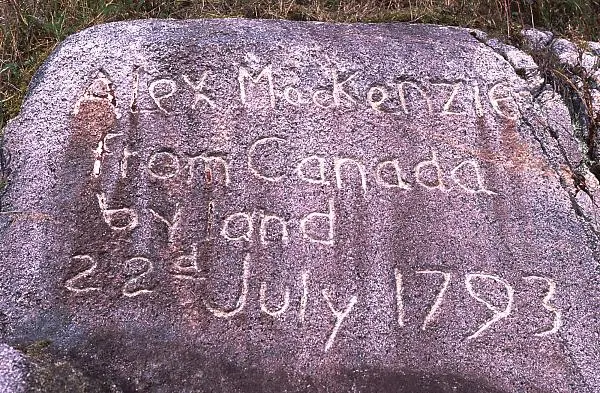
Guided along trading trails by local First Nations, the party came down the Bella Coola river to the sea. On 22 July 1793, on a rock beside the Dean Channel in what is now British Columbia, Mackenzie mixed vermilion with grease and wrote: ‘Alexander Mackenzie, from Canada, by land, the 22nd of July, 1793.’ He was the first European known to have crossed North America north of Mexico, twelve years before Lewis and Clark.
Read the full storyHistory & Timeline →Source: The Canadian Encyclopedia: Sir Alexander Mackenzie ↗
1944The Bretton Woods conference creates the IMF and the World Bank
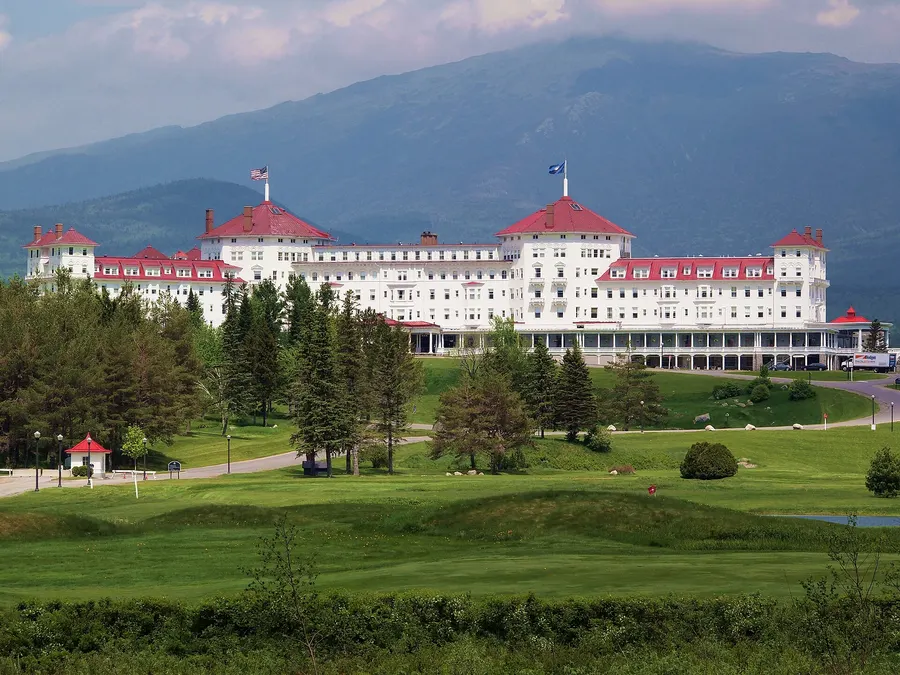
The collapse of world trade and the currency wars of the 1930s had helped push the world towards war, and the Allies were determined not to repeat them. On 1 July 1944, while fighting raged in Normandy, delegates from 44 nations gathered at a grand resort hotel at Bretton Woods in the mountains of New Hampshire for the United Nations Monetary and Financial Conference. The leading figures were the British economist John Maynard Keynes and Harry Dexter White of the US Treasury.
The talks overran, and on 22 July 1944 the delegates signed the Final Act. It set up the International Monetary Fund, to steady exchange rates and lend to countries in difficulty, and the International Bank for Reconstruction and Development, now part of the World Bank. Currencies were fixed against the US dollar, which in turn could be exchanged for gold at 35 dollars an ounce. That system lasted until 1971, but both institutions are still at the centre of the world economy.
Read the full storyHistory & Timeline →Source: US Department of State, Office of the Historian: Bretton Woods-GATT, 1941-1947 ↗
1921Abd el-Krim’s Rif fighters rout the Spanish army at Annual
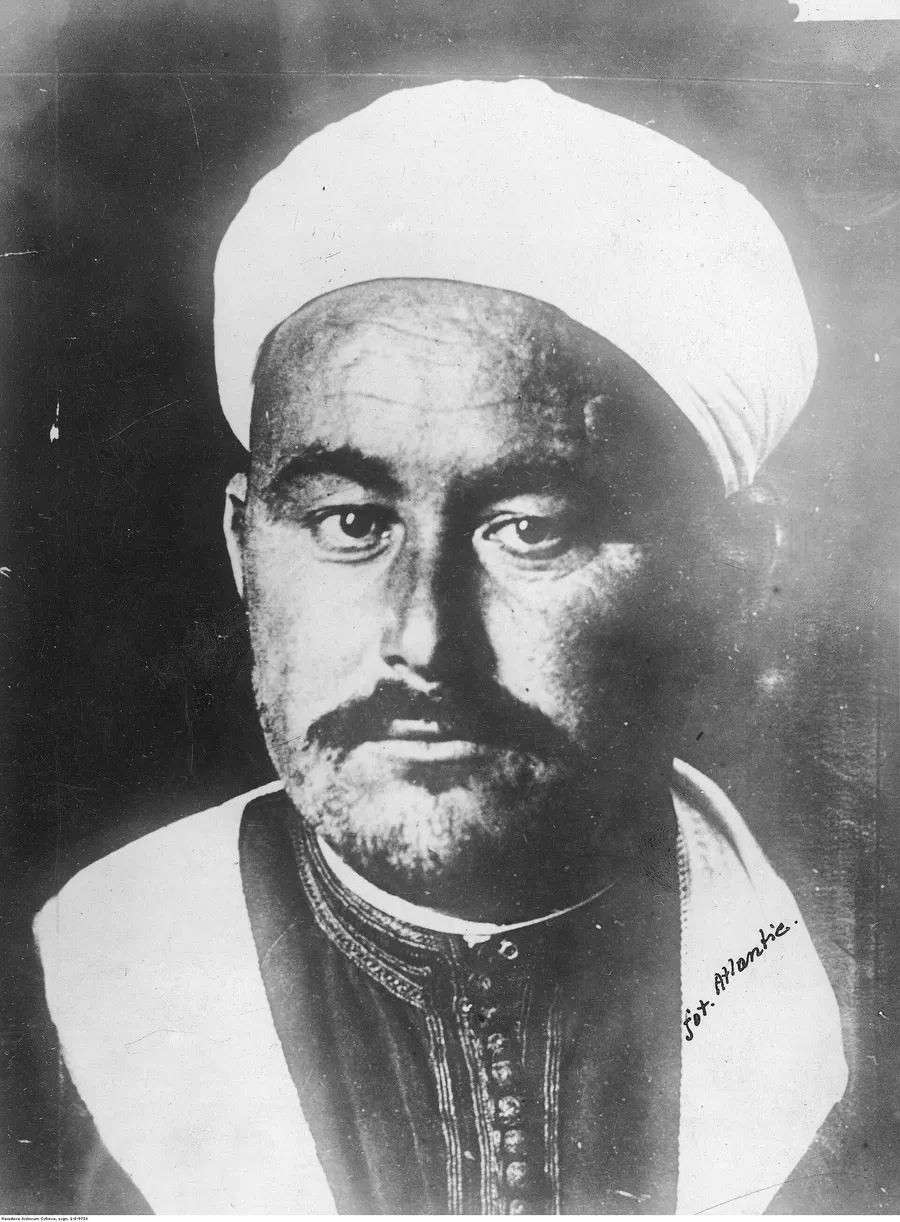
In 1912 northern Morocco became a Spanish protectorate, but the Berber tribes of the Rif mountains never accepted it. Their leader, Muhammad ibn Abd el-Krim al-Khattabi, a former judge and newspaper editor who had worked for the Spanish in Melilla, united the tribes against them. In the summer of 1921 General Manuel Fernández Silvestre pushed a line of forts deep into the Rif, and in June and July Abd el-Krim’s fighters began picking them off.
On 22 July 1921, with his camp at Annual surrounded and short of water, Silvestre ordered it abandoned. The retreat turned into a panic, the fall-back posts collapsed one after another and Silvestre was killed. Britannica puts the Spanish dead at 8,000 to 10,000, and Spain lost everything it had taken in the east of the protectorate since 1909. The disaster shook Spanish politics, and Abd el-Krim became a hero to opponents of colonial rule far beyond Morocco.
Read the full storyHistory & Timeline →Source: Britannica: Battle of Annual ↗
1947India’s Constituent Assembly adopts the tricolour
For decades the Indian independence movement had rallied behind flags of saffron, white and green, and from 1931 the Indian National Congress used a tricolour with a spinning wheel, the charkha, at its centre as a symbol of Gandhi’s call for home-spun cloth. In the summer of 1947, with British rule due to end on 15 August, the Constituent Assembly that was drafting India’s constitution had to choose a flag for the new country.
On 22 July 1947 Jawaharlal Nehru moved the resolution, and the Assembly adopted a horizontal tricolour of deep saffron, white and dark green in equal bands, with the charkha replaced by a navy-blue wheel of 24 spokes, the Ashoka Chakra, taken from the lion capital of the emperor Ashoka at Sarnath. The flag became the national flag of the Dominion of India on 15 August 1947 and remained that of the Republic of India from 1950.
Read the full storyHistory & Timeline →Source: Know India, Government of India: National Flag ↗