1967Five nations found ASEAN in Bangkok
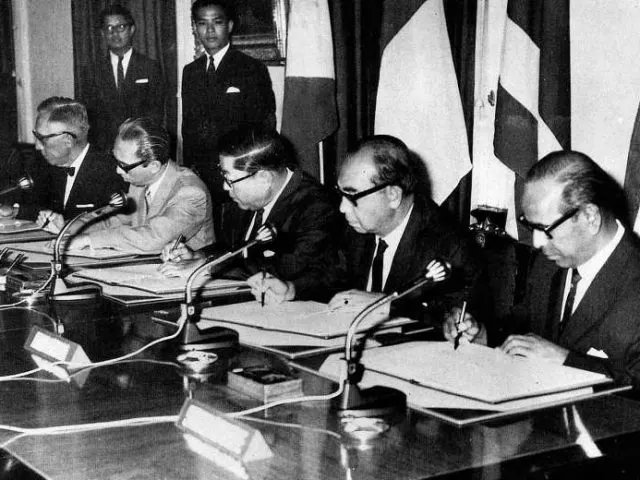
In the mid-1960s Southeast Asia was a region of quarrels. Indonesia under Sukarno had waged a ‘confrontation’ against the new state of Malaysia, the Philippines claimed part of Malaysian Borneo, and Singapore had just been expelled from Malaysia. Earlier attempts at regional groups had come to little. After Suharto took power in Indonesia and the confrontation ended in 1966, the Thai foreign minister Thanat Khoman pressed his neighbours to try again.
On 8 August 1967 five men met in the Department of Foreign Affairs building in Bangkok: Adam Malik of Indonesia, Tun Abdul Razak of Malaysia, Narciso Ramos of the Philippines, S. Rajaratnam of Singapore and Thanat himself. They signed a short declaration of five articles setting up the Association of Southeast Asian Nations, to promote economic growth, social progress and regional peace. Brunei joined in 1984, and Vietnam, Laos, Myanmar and Cambodia followed in the 1990s. 8 August is marked each year as ASEAN Day.
Read the full storyHistory & Timeline →Source: ASEAN: History, the founding of ASEAN ↗
1588The Spanish Armada is broken off Gravelines
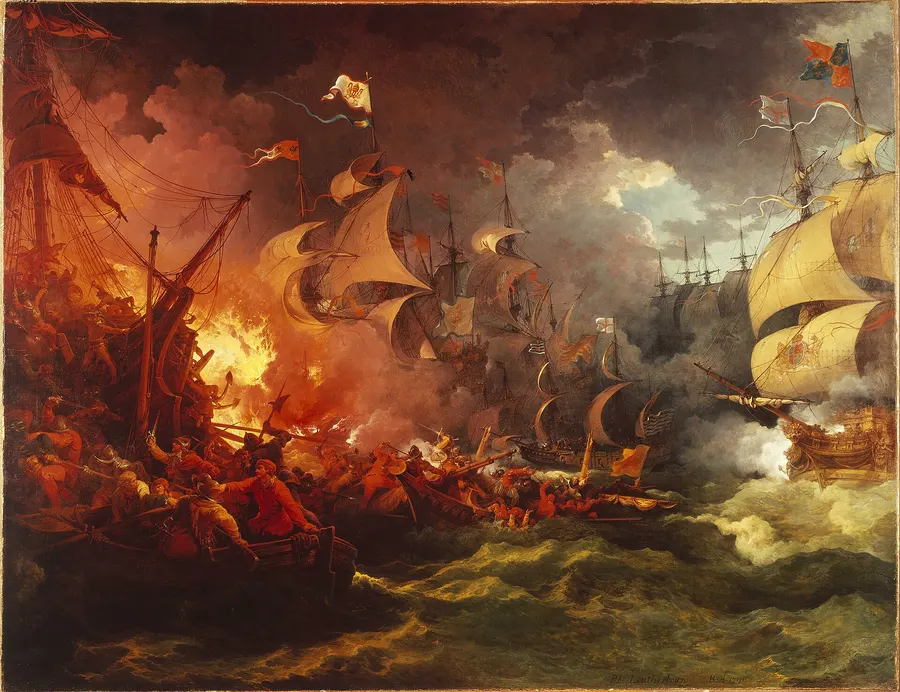
In the summer of 1588 Philip II of Spain sent a fleet of about 130 ships up the English Channel. Its task was to meet the Duke of Parma’s army in the Spanish Netherlands and carry it across to invade England, ending Elizabeth I’s support for the Dutch rebels and for the privateers raiding Spanish treasure fleets. The English ships under Lord Howard of Effingham and Francis Drake harried the Armada up the Channel, but its tight crescent formation held, and it anchored off Calais to wait for Parma.
Around midnight the English sent eight burning fireships drifting into the anchorage. No Spanish ship caught fire, but many cut their cables in panic and scattered. At dawn on 8 August 1588 by the Continental calendar (29 July in England, which still used the older Julian calendar), the English attacked off Gravelines in Flanders. Several Spanish ships were lost or driven ashore, and a change of wind carried the rest into the North Sea. They struggled home around Scotland and Ireland, where storms wrecked many more.
Read the full storyHistory & Timeline →Source: Royal Museums Greenwich: The Spanish Armada, history, causes and timeline ↗
1942Gandhi tells India to ‘Do or Die’ as Congress calls on Britain to Quit India
By the summer of 1942 Japanese armies had overrun Burma and stood on India’s eastern border. Britain had brought India into the Second World War without consulting its leaders, and a mission led by Sir Stafford Cripps that spring had offered self-government only after the war, which the Indian National Congress rejected. Mohandas Gandhi now demanded that the British leave India at once.
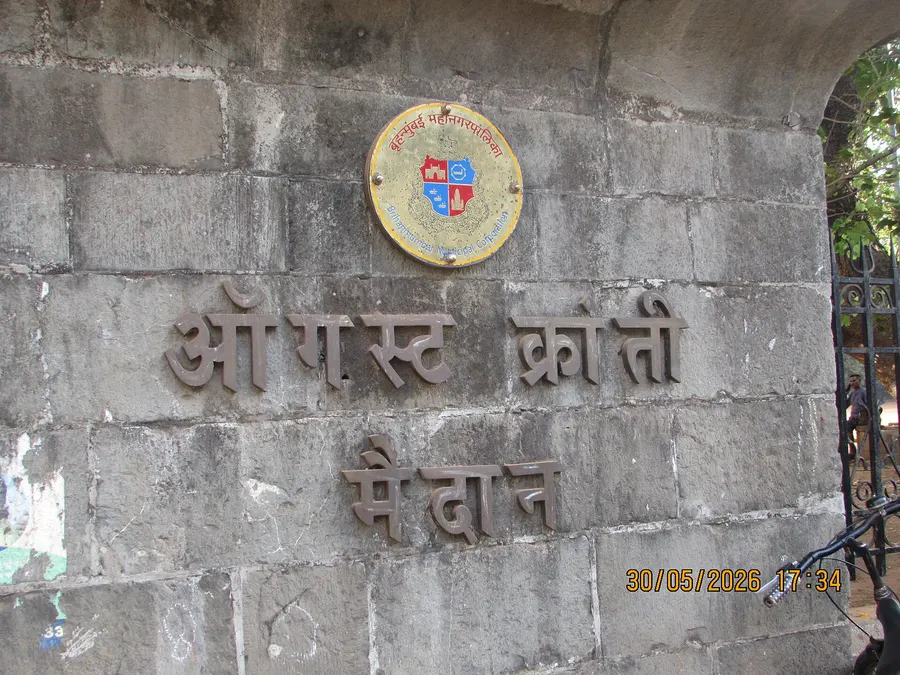
On 8 August 1942 the All-India Congress Committee, meeting at the Gowalia Tank ground in Bombay, passed the Quit India resolution, and Gandhi told the crowd that the mantra was ‘Do or Die’: India would be freed or they would die in the attempt. Early the next morning Gandhi, Jawaharlal Nehru and the other Congress leaders were arrested. Strikes, protests and sabotage spread across the country and were put down with force, and many thousands were jailed. The ground is now called August Kranti Maidan, the August Revolution Ground.
Read the full storyHistory & Timeline →Source: Indian Culture, Ministry of Culture: The clarion call to Quit India at the AICC in Bombay ↗
1918The Allies break the German line at Amiens
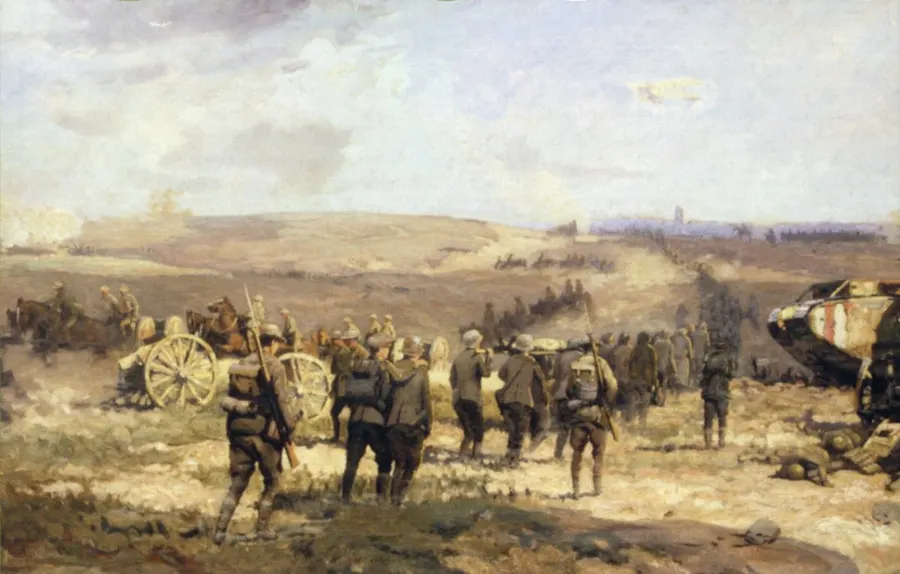
In the spring of 1918 Germany had thrown its last great offensives at the Western Front and pushed close to the city of Amiens, a vital rail junction. By the summer the attacks had run out of strength, and the Allies prepared a counter-blow in secret. The Australian and Canadian Corps were moved into the line east of Amiens, with a British corps on their left and the French First Army on their right.
At 4.20 a.m. on 8 August 1918, in thick mist and without a warning bombardment, the infantry went forward behind a creeping barrage with hundreds of tanks, armoured cars, cavalry and aircraft. The Canadians advanced about 13 kilometres that day, and the Australians took all their objectives within hours. The German commander Erich Ludendorff called it ‘the black day of the German army’. Amiens began the Hundred Days, a run of Allied victories that ended with the armistice on 11 November.
Read the full storyHistory & Timeline →Source: Australian War Memorial: The Battle of Amiens, 8 August 1918 ↗
1963Robbers stop the Glasgow mail train in the Great Train Robbery
Every night a Travelling Post Office train ran from Glasgow to London, with staff sorting mail on board. Its high-value coach often carried large sums in used banknotes on their way to be destroyed. A gang led by the London burglar Bruce Reynolds, tipped off by an inside informant, planned to stop it in the quiet Buckinghamshire countryside.
In the early hours of 8 August 1963 they covered the green light at a signal near Sears Crossing and lit the red one with batteries. When the train stopped, they uncoupled the front coaches, moved them to Bridego Bridge and threw sacks holding about £2.6 million down the embankment. The driver, Jack Mills, was struck on the head and badly hurt. The gang’s hideout at Leatherslade Farm was found with fingerprints everywhere, and most of the robbers were caught and jailed for up to 30 years.
Read the full storyHistory & Timeline →Source: The Postal Museum: The Great Train Robbery ↗