1914Germany declares war on Russia
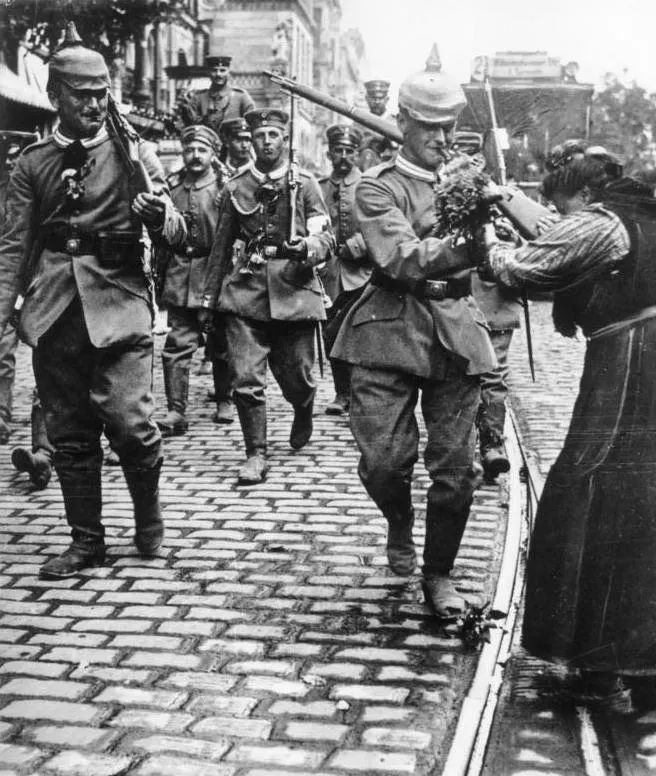
When Austria-Hungary declared war on Serbia on 28 July 1914, Russia, Serbia’s protector, began to mobilise its huge army, first against Austria-Hungary and then, on 30 July, against Germany too. Germany’s war plan depended on striking France quickly before Russia’s slow mobilisation was complete, so Berlin sent St Petersburg an ultimatum on 31 July demanding that it stop within 12 hours. Russia did not reply.
On 1 August 1914 Germany ordered its own general mobilisation, and that evening the German ambassador, Count Friedrich Pourtalès, handed Russia’s foreign minister, Sergei Sazonov, a declaration of war. France began mobilising the same day. Within days Germany had declared war on France and invaded Belgium, and Britain had entered the war. A local Balkan quarrel had become a European war that would last more than four years and kill millions.
Read the full storyHistory & Timeline →Source: Imperial War Museums: How the world went to war in 1914 ↗
1944The Warsaw Uprising begins
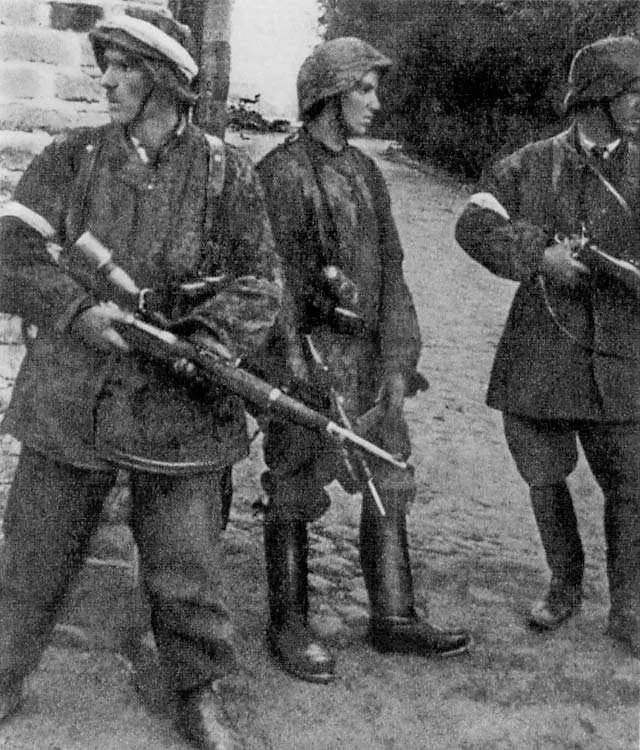
By the summer of 1944 the German armies were retreating across Poland and the Soviet Red Army was approaching the Vistula river opposite Warsaw. The Home Army, the underground force loyal to the Polish government in exile in London, decided to free the capital itself before the Soviets arrived, so that Poles, not Stalin, would decide the country’s future.
At 5 p.m. on 1 August 1944, the moment known as ‘W-hour’, tens of thousands of poorly armed fighters rose across the city. They held large districts for weeks, but the Red Army halted on the far bank and gave little help, and German forces crushed the rising street by street, killing huge numbers of civilians. The Home Army surrendered on 2 October after 63 days, and the Germans then set about levelling what remained of Warsaw. Every year at 5 p.m. on 1 August sirens sound and the city stands still.
Read the full storyHistory & Timeline →Source: United States Holocaust Memorial Museum: The Warsaw Polish Uprising ↗
1834Slavery ends across most of the British Empire
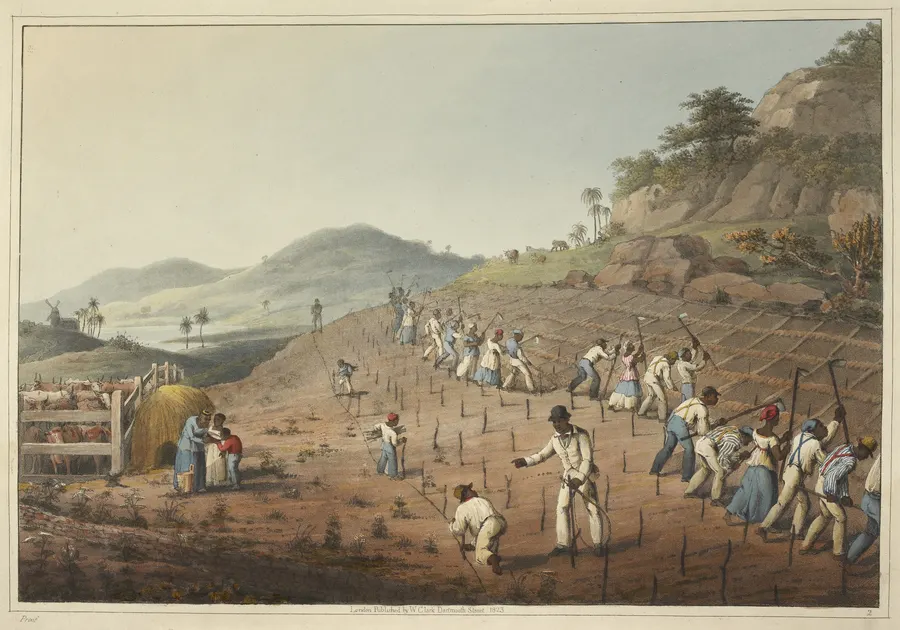
Britain had banned its slave trade in 1807, but hundreds of thousands of people remained enslaved on the sugar plantations of the Caribbean, at the Cape and in Mauritius. After decades of campaigning, and a great rebellion by enslaved people in Jamaica in 1831-32, Parliament passed the Slavery Abolition Act in 1833. It came into force on 1 August 1834, freeing more than 800,000 people.
Freedom came with strings attached. Only children under six were freed outright; everyone else became an ‘apprentice’, still bound to work unpaid for their former owners for most of the week. Slave owners were paid £20 million in compensation, a vast sum, while the enslaved received nothing. Protests forced the early end of apprenticeship, and full freedom came on 1 August 1838. Emancipation Day is still marked on 1 August in Jamaica, Barbados, Trinidad and Tobago and other Caribbean countries.
Read the full storyHistory & Timeline →Source: The National Archives: The 1833 Abolition of Slavery Act and compensation claims ↗
1798Nelson destroys the French fleet at the Battle of the Nile
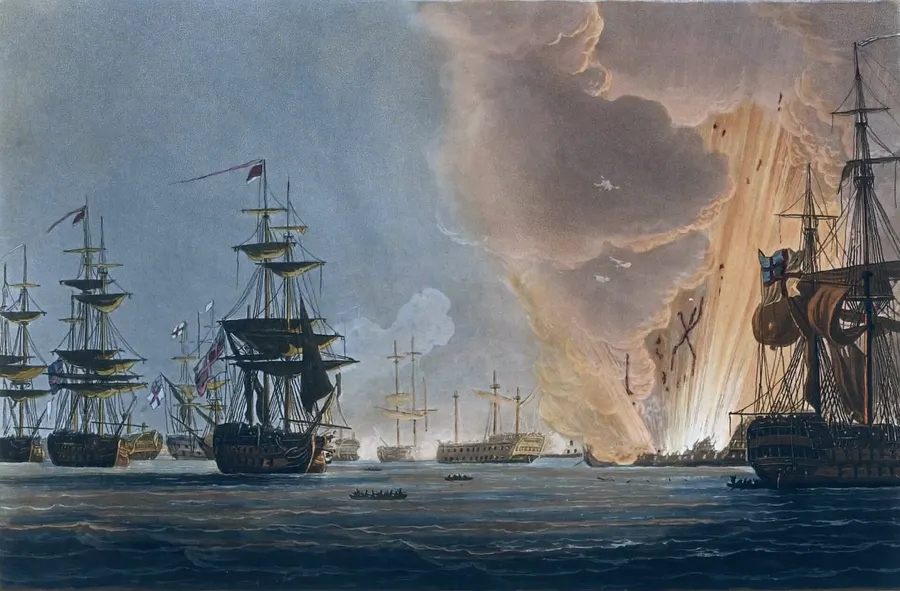
In the summer of 1798 Napoleon Bonaparte sailed from France with an army to conquer Egypt, and the British sent a squadron under Rear-Admiral Horatio Nelson to hunt his fleet down. After weeks of searching the Mediterranean, Nelson found the French warships on the afternoon of 1 August, anchored in a line in Aboukir Bay, east of Alexandria, under Admiral François-Paul Brueys.
Nelson attacked at once, though night was falling. Some of his ships slipped between the French line and the shore, catching the enemy between two fires. At about 10 p.m. the French flagship L’Orient caught fire and blew up with most of her crew, Brueys among them. By morning only two French ships of the line had escaped. The victory left Napoleon’s army cut off in Egypt, made Nelson a national hero and gave Britain command of the Mediterranean.
Read the full storyHistory & Timeline →Source: Royal Museums Greenwich: The Battle of the Nile, 1 August 1798 ↗
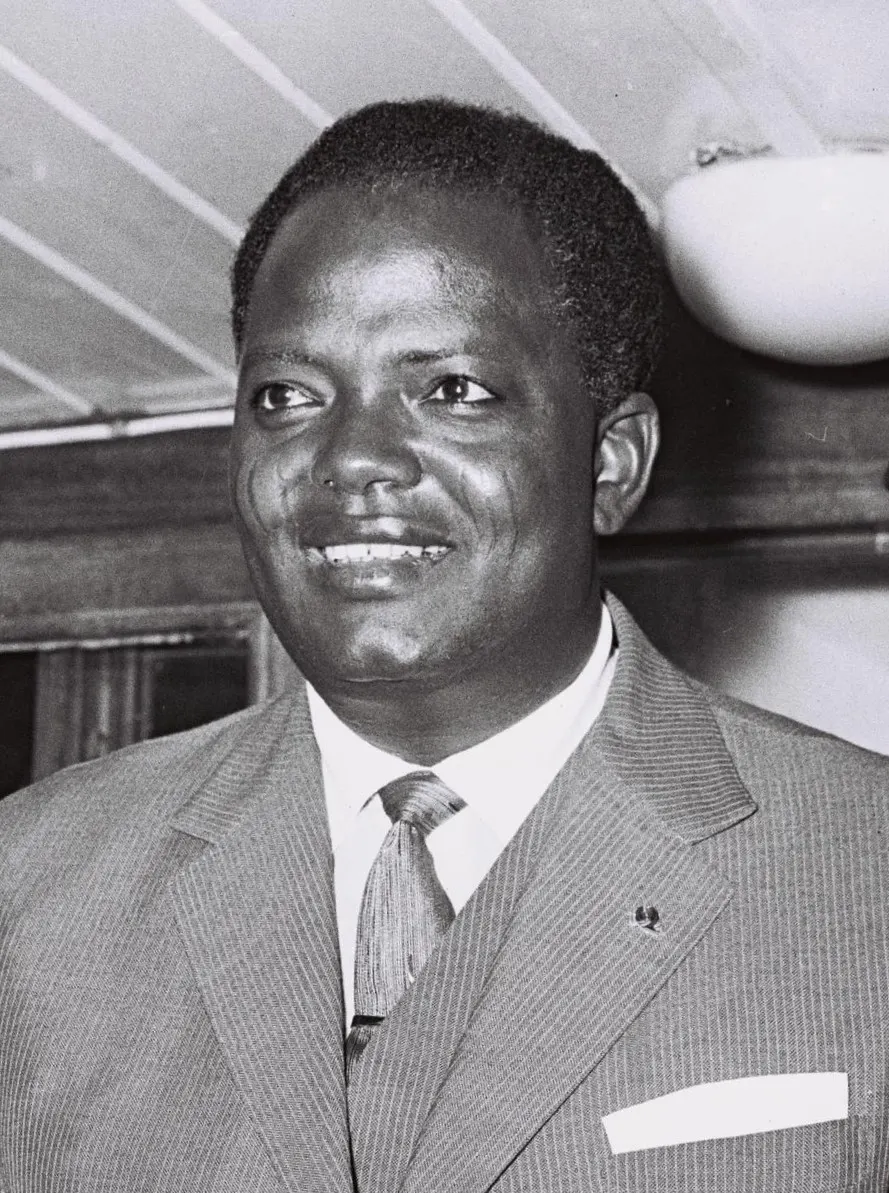
1960Dahomey, now Benin, becomes independent from France
France conquered the old West African kingdom of Dahomey in the 1890s and made it a colony. After the Second World War its people gained a voice in French politics, and in 1958 Dahomey became a self-governing republic within the French Community, as France’s African territories moved towards independence one after another.
On 1 August 1960 Dahomey became fully independent, with Hubert Maga, a teacher from the north, as its first president. The new state struggled with rivalries between its regions and saw a string of military coups in the 1960s. In 1972 Mathieu Kérékou seized power, and in 1975 he renamed the country the People’s Republic of Benin. 1 August is still Benin’s Independence Day.
Read the full storyHistory & Timeline →Source: Britannica: Benin, decolonization, independence and military coups ↗