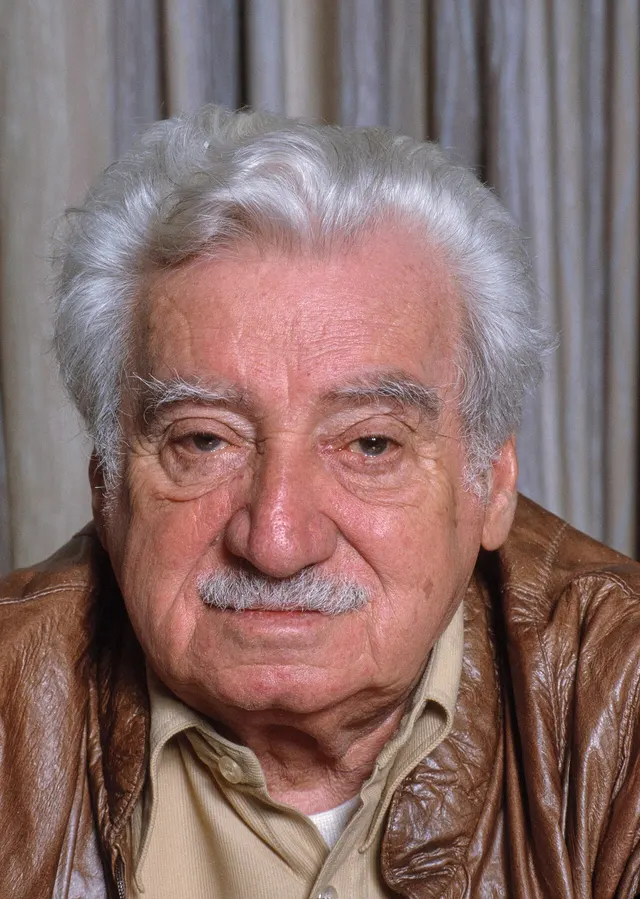
1945An atomic bomb destroys Hiroshima
By the summer of 1945 Germany had surrendered, but the war in the Pacific went on. On 26 July the Allies’ Potsdam Declaration called on Japan to surrender unconditionally or face ‘prompt and utter destruction’, and Japan’s government did not accept. In the United States the Manhattan Project had tested the first atomic bomb in New Mexico ten days before, and a uranium bomb nicknamed Little Boy was flown to the island of Tinian in the western Pacific.
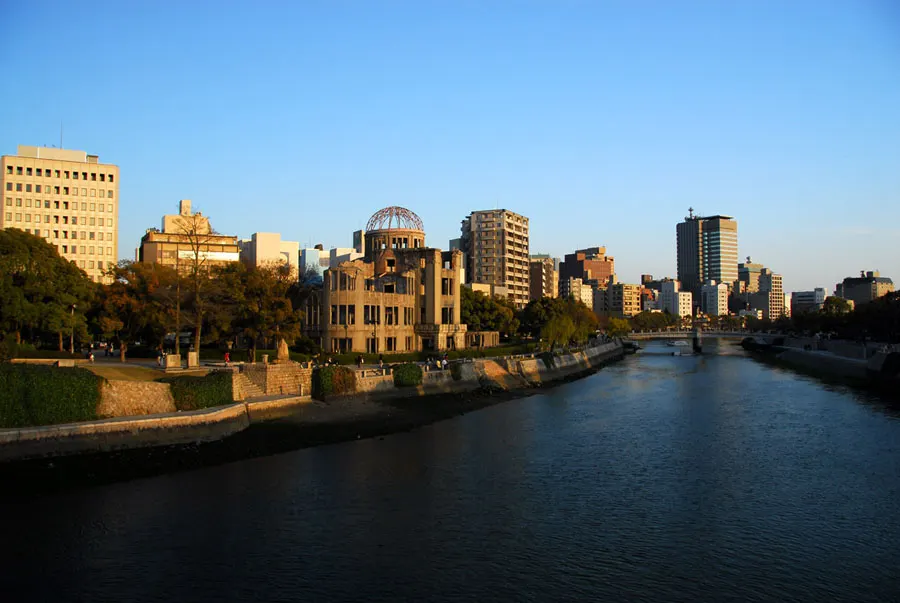
At 8.15 a.m. on 6 August 1945 the B-29 bomber Enola Gay dropped Little Boy on Hiroshima, a city of about 350,000 people. It exploded in the air near the Aioi Bridge with the force of about 15,000 tons of TNT, flattening and burning most of the city. Estimates of the dead vary; about 70,000 people are thought to have been killed at once and more than 100,000 by the end of the year, many from burns and radiation. The shell of the domed exhibition hall near the centre of the blast was kept as the Genbaku Dome, and each 6 August the city holds a ceremony for peace.
Read the full storyHistory & Timeline →Source: National Park Service: Timeline of the atomic bombings of Hiroshima and Nagasaki ↗
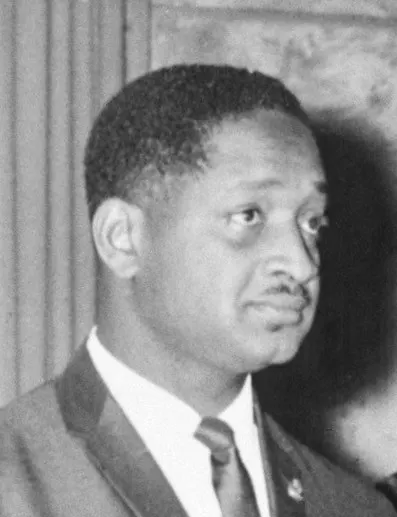
1962Jamaica becomes independent
England seized Jamaica from Spain in 1655, and for nearly two centuries it was one of Britain’s richest sugar colonies, worked by hundreds of thousands of enslaved Africans until slavery ended in the 1830s. In the 20th century unrest among workers in the late 1930s gave rise to two political parties, led by the cousins Alexander Bustamante and Norman Manley. Jamaica joined the short-lived West Indies Federation in 1958, but in 1961 its voters chose to leave it and go it alone.
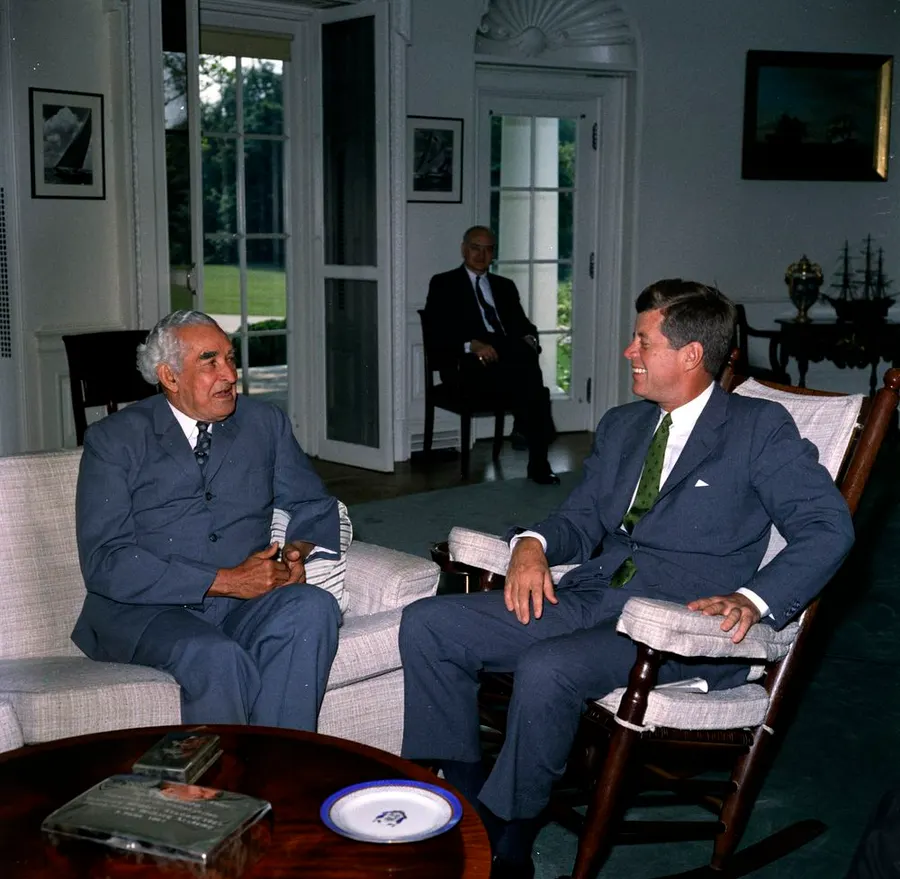
Independence came on 6 August 1962. At midnight the Union Jack was lowered in Kingston and the new black, green and gold flag was raised, and Princess Margaret represented the Queen at the celebrations. Bustamante, whose Jamaica Labour Party had won the election that April, became the first prime minister. Jamaica stayed in the Commonwealth with the British monarch as head of state, and 6 August is its national day.
Read the full storyHistory & Timeline →Source: National Library of Jamaica: Jamaica Independence, 1962 ↗
1806Francis II brings the Holy Roman Empire to an end
The Holy Roman Empire traced its origins to the crowning of Charlemagne in Rome in 800, and for centuries its emperors claimed to be the leading rulers of Christian Europe. By the 18th century it had become a loose patchwork of hundreds of German kingdoms, duchies, bishoprics and free cities, and the title of emperor had been held by the Habsburgs of Austria almost without a break since the 15th century.
Napoleon’s victory over Austria and Russia at Austerlitz in December 1805 finished it. In July 1806 sixteen German states left the empire to form the Confederation of the Rhine under French protection, and Napoleon demanded that Francis II give up the imperial title. On 6 August 1806 Francis laid down the crown and declared the empire dissolved, rather than let it pass to Napoleon. He had already proclaimed himself Emperor of Austria in 1804, and ruled on as Francis I until his death in 1835.
Read the full storyHistory & Timeline →Source: Britannica: Germany, the end of the Holy Roman Empire ↗
1284Genoa crushes the Pisan fleet at Meloria
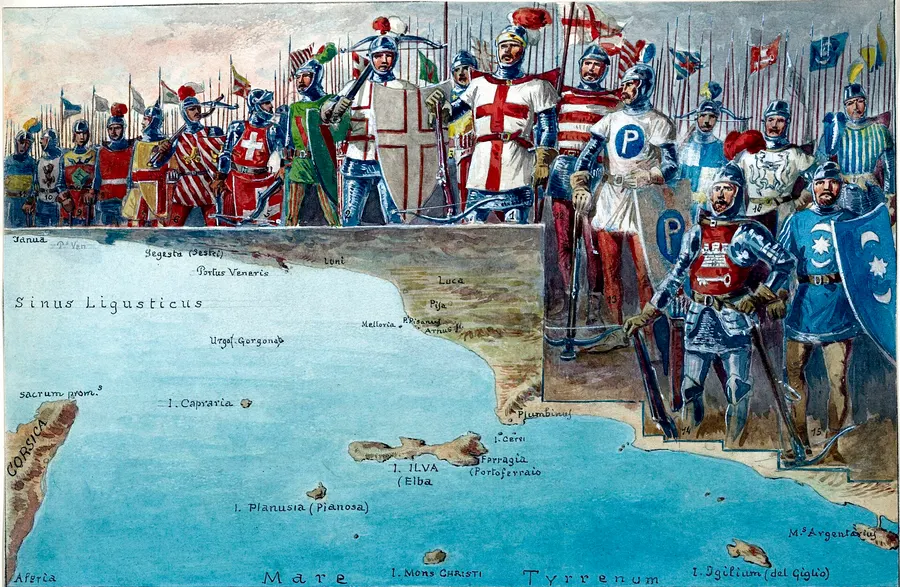
In the 13th century the trading republics of Pisa and Genoa were bitter rivals for the commerce of the western Mediterranean and for control of Corsica and Sardinia. War broke out again in 1282, and by the summer of 1284 both cities had built large fleets of galleys. The Pisans, led by the Venetian-born podestà Albertino Morosini and Count Ugolino della Gherardesca, had more ships than the Genoese fleet under Oberto Doria.
On 6 August 1284 the fleets met near the shoals of Meloria, off Pisa’s harbour close to modern Livorno. As the fight hung in the balance, a second Genoese squadron under Benedetto Zaccaria fell on the Pisan flank, and the Pisan fleet was destroyed. Thousands of Pisans were taken to Genoa as prisoners, and many died in captivity; one of them, Rustichello da Pisa, later wrote down Marco Polo’s account of his travels in a Genoese prison. Pisa never recovered its power at sea.
Read the full storyHistory & Timeline →Source: Britannica: Battle of Meloria ↗
1965Lyndon Johnson signs the Voting Rights Act
The 15th Amendment of 1870 had promised that no American could be denied the vote because of race, but across the South literacy tests, poll taxes, rigged registration and violence kept most Black citizens off the voting rolls. In March 1965 state troopers beat peaceful marchers on the Edmund Pettus Bridge at Selma, Alabama, on the day that became known as Bloody Sunday, and the pictures shocked the country. Days later President Lyndon Johnson asked Congress for a strong voting rights law.
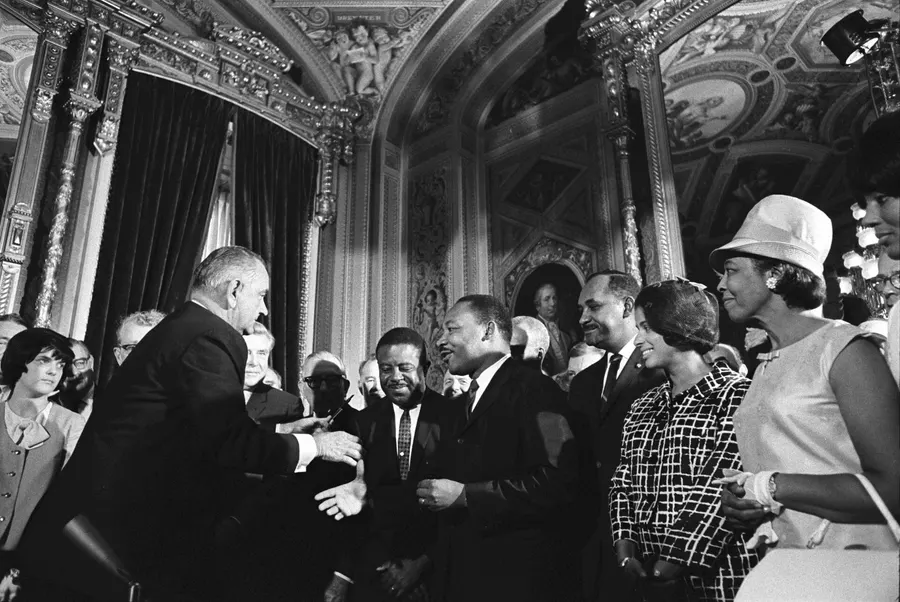
Congress passed the bill on 5 August, and on 6 August 1965 Johnson signed it in the President’s Room of the Capitol, with Martin Luther King Jr. and Rosa Parks among those watching. The act banned literacy tests, sent federal examiners to register voters and required places with a history of discrimination to get approval before changing their voting rules. Within a few years the number of Black voters registered in the South had risen sharply.
Read the full storyHistory & Timeline →Source: National Archives: Voting Rights Act (1965) ↗