1981IBM launches the Personal Computer
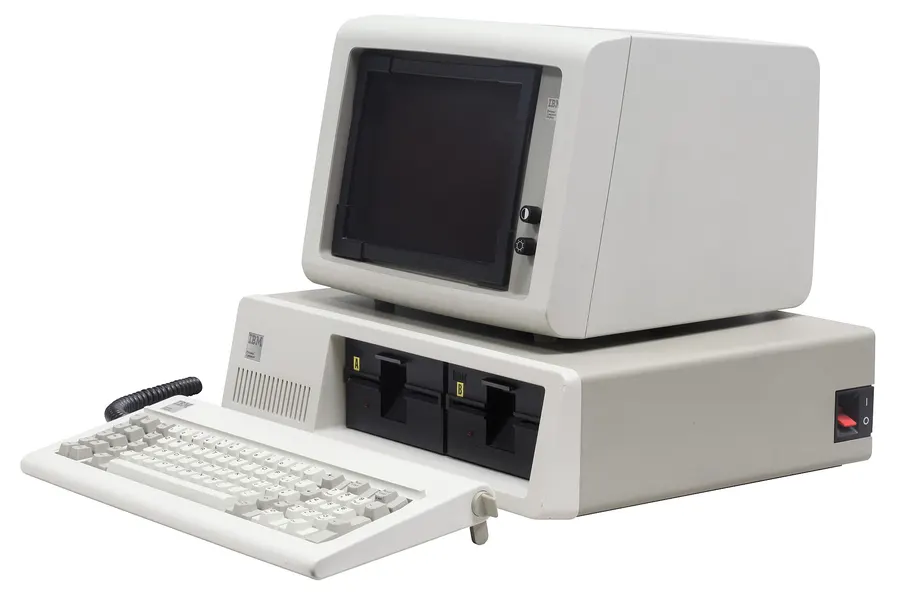
By the end of the 1970s small computers such as the Apple II and the Commodore PET were selling fast to hobbyists and small businesses, and IBM, the giant of office machines and mainframes, had nothing to offer. A small team at its plant in Boca Raton, Florida, was given about a year to build one. To move quickly they broke with IBM habit and used parts bought from outside: a 16-bit Intel 8088 processor running at 4.77 MHz, and an operating system, PC DOS, licensed from a young company called Microsoft.
IBM announced the Personal Computer, model 5150, on 12 August 1981. The cheapest version cost $1,565 and had 16 kilobytes of memory and no disk drive. Businesses bought it in huge numbers, and more than 750,000 were sold within two years. Because its design was open and its parts could be bought by anyone, other firms were soon making cheaper ‘IBM-compatible’ machines, and the PC standard it created still shapes most desktop and laptop computers today.
Read the full storyHistory & Timeline →Source: IBM: The IBM PC ↗
1949The four Geneva Conventions are adopted
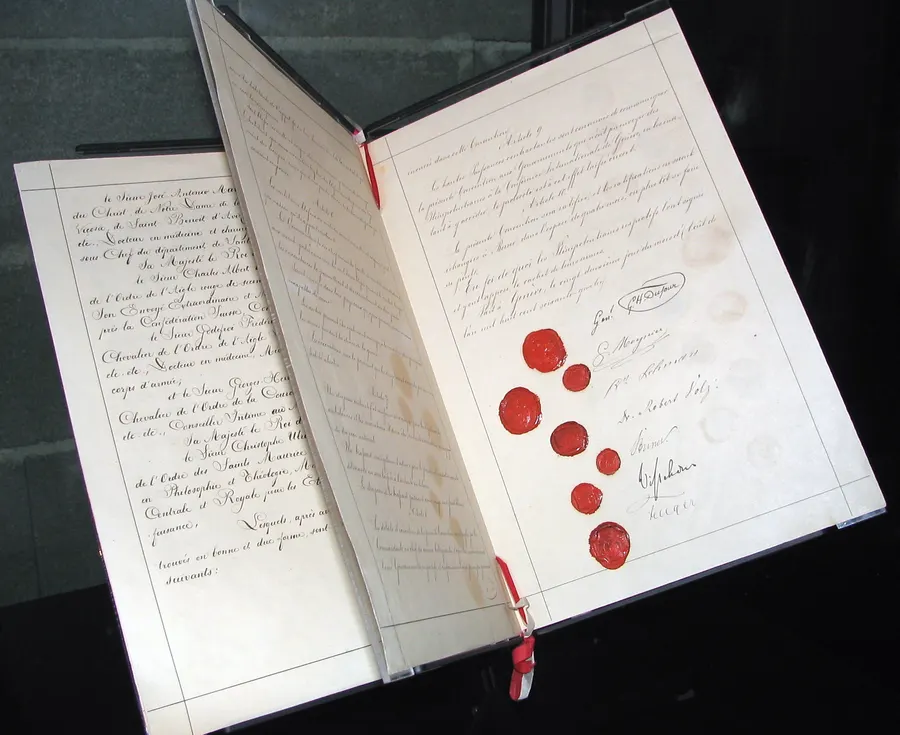
The first Geneva Convention, signed in 1864 after a campaign by the Swiss businessman Henry Dunant, protected wounded soldiers and the people who cared for them. Later treaties extended the rules to war at sea and to prisoners of war, but the Second World War showed how far they fell short: millions of prisoners were starved or killed, and civilians in occupied countries had almost no protection in law. In April 1949 the Swiss government brought the world’s states to Geneva to write new rules.
After four months of work the conference adopted four conventions on 12 August 1949. They cover the wounded and sick on land, the wounded, sick and shipwrecked at sea, prisoners of war, and, for the first time in a separate treaty, civilians in enemy hands and in occupied territory. An article common to all four also sets minimum rules for civil wars. The Geneva Conventions of 12 August 1949 have since been accepted by every state in the world and remain the core of the law of war.
Read the full storyHistory & Timeline →Source: International Committee of the Red Cross: The Geneva Conventions of 12 August 1949 ↗
1121King David IV of Georgia wins the Battle of Didgori
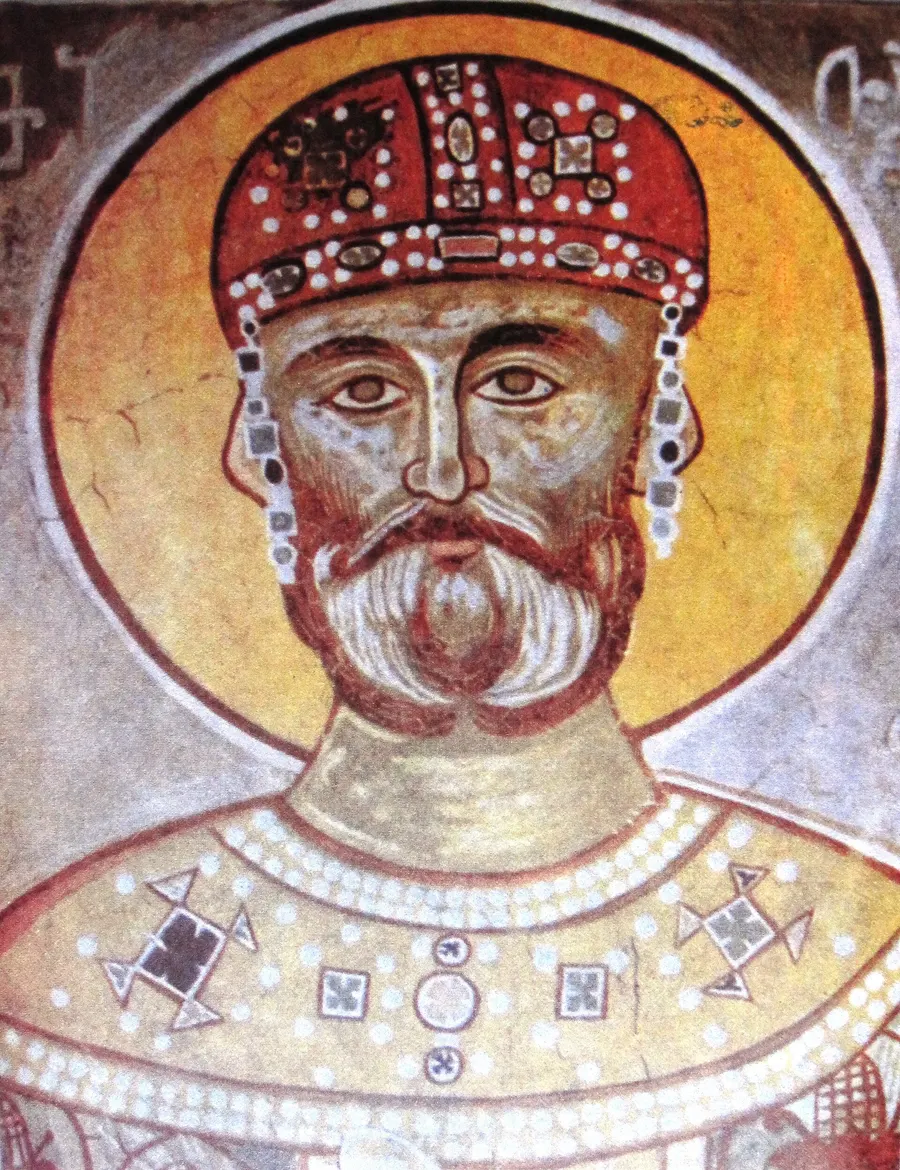
When David IV came to the throne of Georgia in 1089 his kingdom was small, divided and paying tribute to the Seljuk Turks, whose tribes had overrun much of the Caucasus. He curbed the power of the great nobles, reformed the Church and built up a standing army, strengthened by thousands of Kipchak warriors from the northern steppes whom he invited to settle in Georgia with their families. By 1121 his raids had provoked the Muslim rulers of the region into sending a large coalition army under Ilghazi, the Artuqid lord of Mardin.
The two armies met at Didgori, in hills west of Tbilisi, on 12 August 1121. Although heavily outnumbered, David’s troops used the narrow ground to break up the larger army and routed it. The next year he took Tbilisi, held by Muslim emirs for centuries, and made it his capital. Didgori opened Georgia’s golden age, which reached its height under his great-granddaughter Queen Tamar, and the victory is still celebrated in Georgia every August.
Read the full storyHistory & Timeline →Source: Ilia State University repository: History of Georgia ↗
1806Buenos Aires is won back from the British
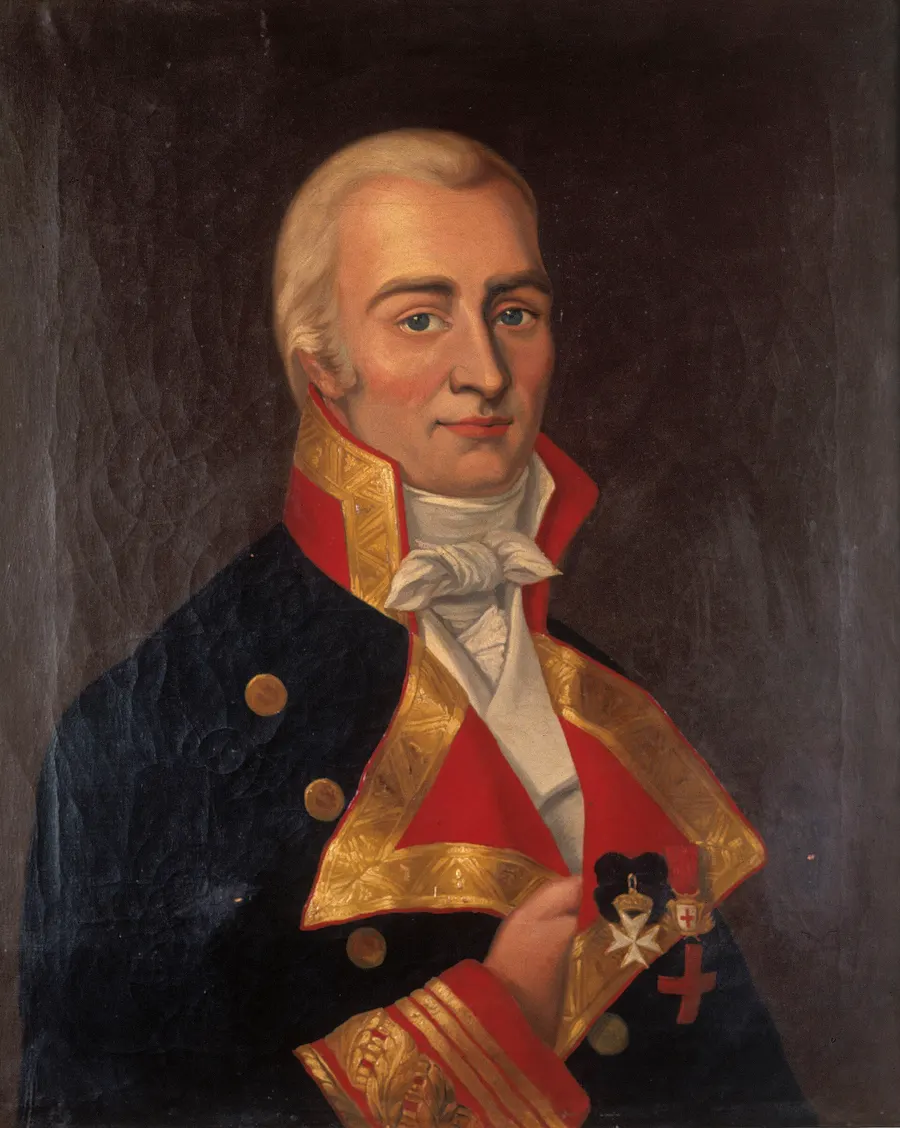
In June 1806 a small British force under William Carr Beresford, sent from the newly captured Cape Colony without clear orders from London, landed on the Río de la Plata and marched on Buenos Aires, the capital of Spain’s viceroyalty there. The viceroy, the Marquis of Sobremonte, fled inland with the treasury, and the British took the city on 27 June with little resistance and raised their flag over the fort.
Santiago de Liniers, a French-born naval officer in Spanish service, gathered troops across the river in Montevideo, landed at Las Conchas on 4 August and marched on the city. On 12 August 1806 his men, joined by local volunteers, fought their way through the streets to the main square, and after some hours of fighting Beresford surrendered. The city’s people, Creoles, Spaniards and Afro-Argentines alike, had driven out a European army with little help from Spain, and when the British returned in 1807 they were beaten again. That new confidence helped lead to the May Revolution of 1810 and independence.
Read the full storyHistory & Timeline →Source: Argentina.gob.ar: 12 de agosto de 1806, la Reconquista de Buenos Aires ↗
1898The Hawaiian flag is lowered over ʻIolani Palace
In January 1893 a group of mainly American businessmen, backed by marines landed from a US warship, overthrew Queen Liliʻuokalani, the last monarch of the Hawaiian Kingdom. They set up a republic led by Sanford Dole and asked to join the United States, but a treaty of annexation failed to pass the US Senate, where many opposed it. In 1898, during the war with Spain, Hawaii’s harbours suddenly looked vital to the navy, and Congress annexed the islands by a joint resolution instead, which President McKinley signed in July.
On 12 August 1898, at a ceremony on the steps of ʻIolani Palace in Honolulu, the royal residence where the queen had once been held prisoner, the Hawaiian flag was lowered and the Stars and Stripes raised in its place, while Dole handed over sovereignty to the American minister, Harold Sewall. Many Native Hawaiians stayed away in protest. Hawaii became a US territory in 1900 and the 50th state in 1959, and in 1993 Congress formally apologised for the overthrow of the kingdom.
Read the full storyHistory & Timeline →Source: Digital Archives of Hawaiʻi, Hawaiʻi State Archives: Annexation ceremonies, 12 August 1898 ↗