
HISTORY & TIMELINE
8 August

A journey through
8 August in history

The story of 8 August runs from the Spanish Armada’s defeat off Gravelines in 1588 to the raising of the Confederate submarine Hunley in 2000. In between come the first ascent of Mont Blanc, the peace that returned Afghanistan’s foreign affairs to its own hands, the Battle of Amiens, Congress’s call for the British to Quit India, the Soviet declaration of war on Japan, the Great Train Robbery, the founding of ASEAN, the Beatles on the Abbey Road zebra crossing, the 8888 uprising in Burma, the ceasefire that ended the Iran-Iraq war, the Dream Team’s Olympic gold and a Chilean court’s ruling that General Pinochet could face trial.

JUMP THROUGH TIME
III
A CHANGING WORLD

Early Modern Era

Exploration, political change, scientific development and expanding global connections.

1588
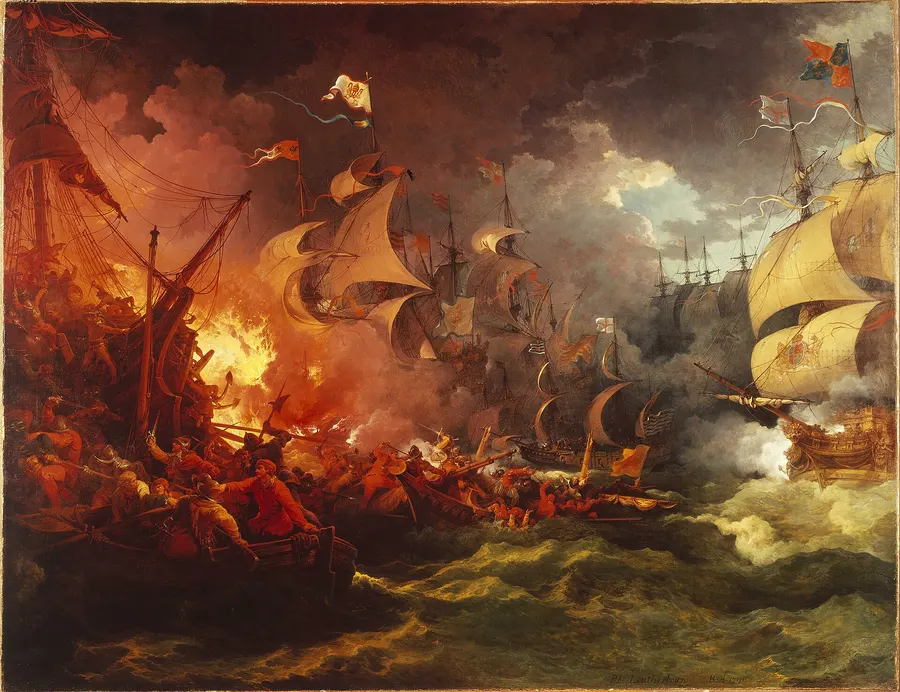
Defeat of the Spanish Armada, 8 August 1588, painted by Philip James de Loutherbourg in 1796Defeat of the Spanish Armada, 8 August 1588, painted by Philip James de Loutherbourg in 1796Image: Philip James de Loutherbourg · Public domain
world · Europe

The Spanish Armada is broken off Gravelines

In the summer of 1588 Philip II of Spain sent a fleet of about 130 ships up the English Channel. Its task was to meet the Duke of Parma’s army in the Spanish Netherlands and carry it across to invade England, ending Elizabeth I’s support for the Dutch rebels and for the privateers raiding Spanish treasure fleets. The English ships under Lord Howard of Effingham and Francis Drake harried the Armada up the Channel, but its tight crescent formation held, and it anchored off Calais to wait for Parma. Around midnight the English sent eight burning fireships drifting into the anchorage. No Spanish ship caught fire, but many cut their cables in panic and scattered. At dawn on 8 August 1588 by the Continental calendar (29 July in England, which still used the older Julian calendar), the English attacked off Gravelines in Flanders. Several Spanish ships were lost or driven ashore, and a change of wind carried the rest into the North Sea. They struggled home around Scotland and Ireland, where storms wrecked many more.

Source: Royal Museums Greenwich: The Spanish Armada, history, causes and timeline ↗
1786
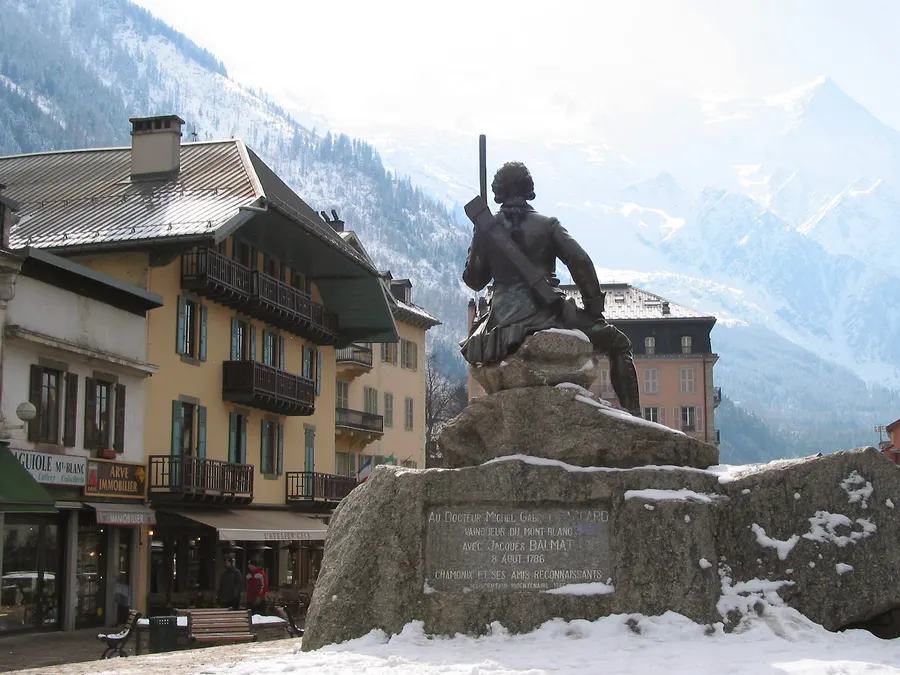
The statue of Michel-Gabriel Paccard in the centre of ChamonixThe statue of Michel-Gabriel Paccard in the centre of ChamonixImage: Jean-Pol GRANDMONT · CC BY 3.0
world · Europe

Paccard and Balmat make the first ascent of Mont Blanc

The Genevan scientist Horace-Bénédict de Saussure had offered a reward in 1760 for anyone who found a way up Mont Blanc, the highest peak in the Alps. On 8 August 1786 two men from Chamonix, the doctor Michel-Gabriel Paccard and the crystal hunter Jacques Balmat, reached the summit at 6.23 p.m., with no ice axes or crampons, only long iron-tipped poles. The climb is often called the birth of mountaineering.

Source: Britannica: Michel-Gabriel Paccard ↗
V
THE TWENTIETH CENTURY

The 1900s

War and peace, technological leaps, social change, politics, sport and popular culture.

1918
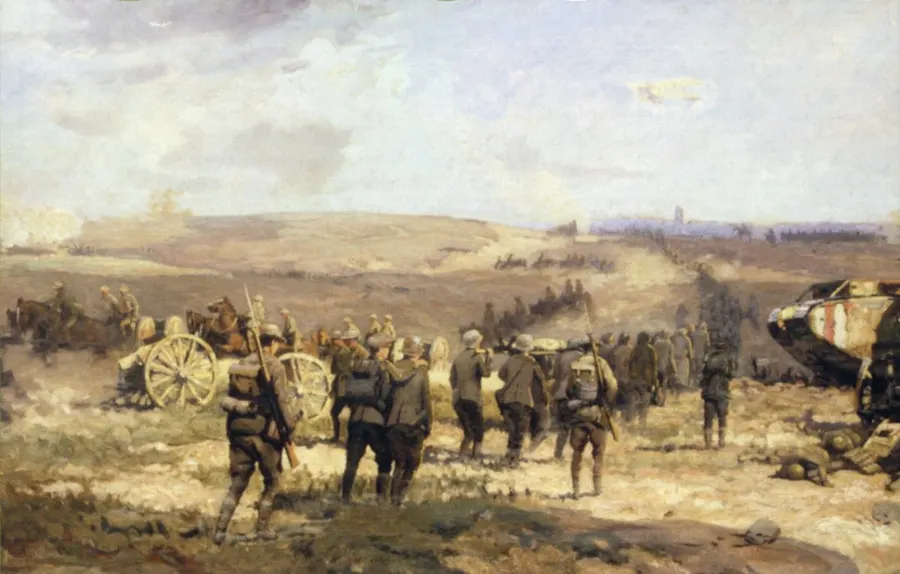
8th August, 1918, painted by the Australian official war artist Will Longstaff, shows the advance at Amiens8th August, 1918, painted by the Australian official war artist Will Longstaff, shows the advance at AmiensImage: William Longstaff · Public domain
world · Europe

The Allies break the German line at Amiens

In the spring of 1918 Germany had thrown its last great offensives at the Western Front and pushed close to the city of Amiens, a vital rail junction. By the summer the attacks had run out of strength, and the Allies prepared a counter-blow in secret. The Australian and Canadian Corps were moved into the line east of Amiens, with a British corps on their left and the French First Army on their right. At 4.20 a.m. on 8 August 1918, in thick mist and without a warning bombardment, the infantry went forward behind a creeping barrage with hundreds of tanks, armoured cars, cavalry and aircraft. The Canadians advanced about 13 kilometres that day, and the Australians took all their objectives within hours. The German commander Erich Ludendorff called it ‘the black day of the German army’. Amiens began the Hundred Days, a run of Allied victories that ended with the armistice on 11 November.

Source: Australian War Memorial: The Battle of Amiens, 8 August 1918 ↗
1919
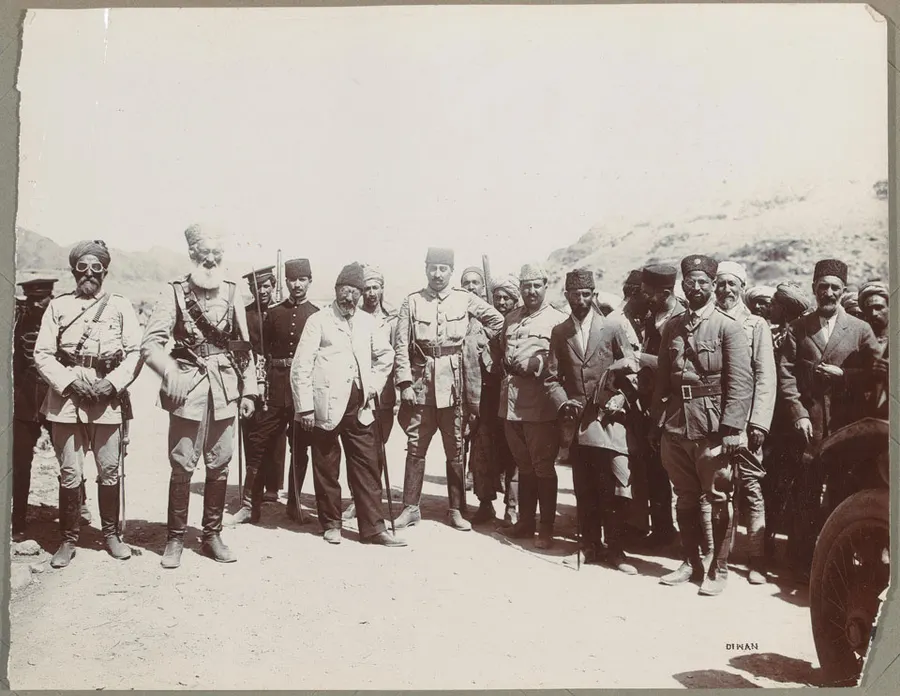
Afghan delegates to the peace talks with British India in 1919Afghan delegates to the peace talks with British India in 1919Image: Unknown author · Public domain
politics · Asia

The Treaty of Rawalpindi ends the Third Anglo-Afghan War

When Amanullah Khan became ruler of Afghanistan in 1919 he declared his country fully independent of Britain, which had controlled its foreign relations for decades. A short war with British India followed in May. The peace treaty signed at Rawalpindi on 8 August 1919 let Afghanistan run its own foreign affairs and reaffirmed the Durand Line as the border with British India. Afghanistan celebrates its independence each year on 19 August.

Source: Britannica: Treaty of Rawalpindi ↗
1942
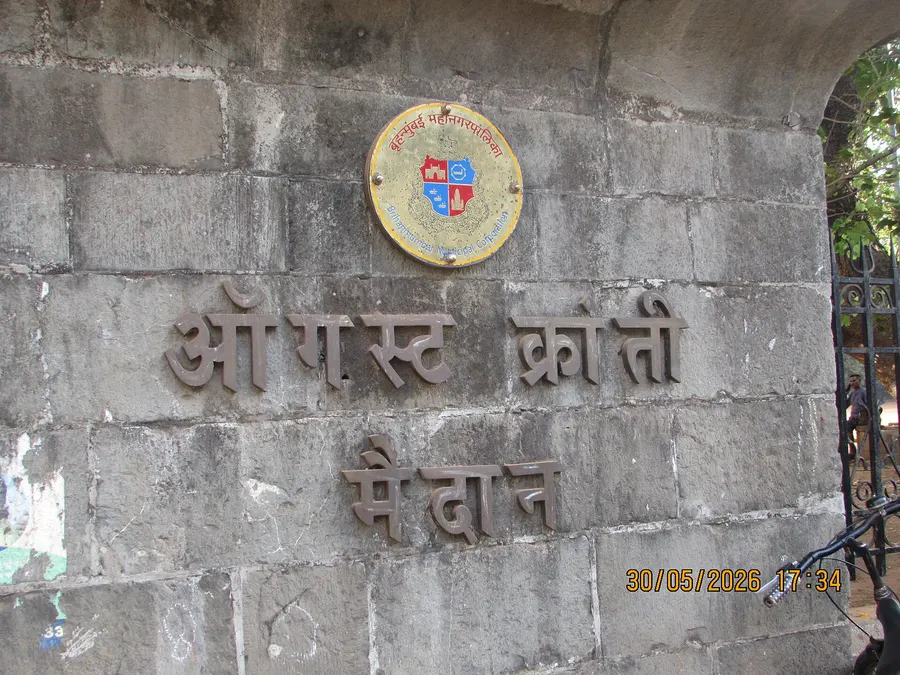
The entrance to August Kranti Maidan in Mumbai, the former Gowalia Tank ground where Congress launched the Quit India movementThe entrance to August Kranti Maidan in Mumbai, the former Gowalia Tank ground where Congress launched the Quit India movementImage: Count of Dombivli · CC BY-SA 4.0
politics · Asia

Gandhi tells India to ‘Do or Die’ as Congress calls on Britain to Quit India

By the summer of 1942 Japanese armies had overrun Burma and stood on India’s eastern border. Britain had brought India into the Second World War without consulting its leaders, and a mission led by Sir Stafford Cripps that spring had offered self-government only after the war, which the Indian National Congress rejected. Mohandas Gandhi now demanded that the British leave India at once. On 8 August 1942 the All-India Congress Committee, meeting at the Gowalia Tank ground in Bombay, passed the Quit India resolution, and Gandhi told the crowd that the mantra was ‘Do or Die’: India would be freed or they would die in the attempt. Early the next morning Gandhi, Jawaharlal Nehru and the other Congress leaders were arrested. Strikes, protests and sabotage spread across the country and were put down with force, and many thousands were jailed. The ground is now called August Kranti Maidan, the August Revolution Ground.

Source: Indian Culture, Ministry of Culture: The clarion call to Quit India at the AICC in Bombay ↗
1945
Vyacheslav Molotov, the Soviet foreign minister who delivered the declaration of warVyacheslav Molotov, the Soviet foreign minister who delivered the declaration of warImage: G. Weil for TASS · Public domain
world · Asia

The Soviet Union declares war on Japan

At the Yalta conference in February 1945 Stalin had promised to join the war against Japan within three months of Germany’s defeat. On 8 August 1945, two days after the atomic bombing of Hiroshima, the Soviet foreign minister Vyacheslav Molotov told the Japanese ambassador in Moscow that a state of war would exist from the next day. Soon after midnight more than a million Soviet troops poured into Japanese-held Manchuria, adding to the pressure that brought Japan’s surrender.

Source: US Department of State, Office of the Historian: Foreign Relations of the United States, Potsdam conference, document 1382 ↗
1963
Bridego Bridge in Buckinghamshire, now known as Train Robbers' Bridge, where the mail train was unloadedBridego Bridge in Buckinghamshire, now known as Train Robbers’ Bridge, where the mail train was unloadedImage: Spborthwick · CC BY-SA 3.0
world · Europe

Robbers stop the Glasgow mail train in the Great Train Robbery

Every night a Travelling Post Office train ran from Glasgow to London, with staff sorting mail on board. Its high-value coach often carried large sums in used banknotes on their way to be destroyed. A gang led by the London burglar Bruce Reynolds, tipped off by an inside informant, planned to stop it in the quiet Buckinghamshire countryside. In the early hours of 8 August 1963 they covered the green light at a signal near Sears Crossing and lit the red one with batteries. When the train stopped, they uncoupled the front coaches, moved them to Bridego Bridge and threw sacks holding about £2.6 million down the embankment. The driver, Jack Mills, was struck on the head and badly hurt. The gang’s hideout at Leatherslade Farm was found with fingerprints everywhere, and most of the robbers were caught and jailed for up to 30 years.

Source: The Postal Museum: The Great Train Robbery ↗
1967
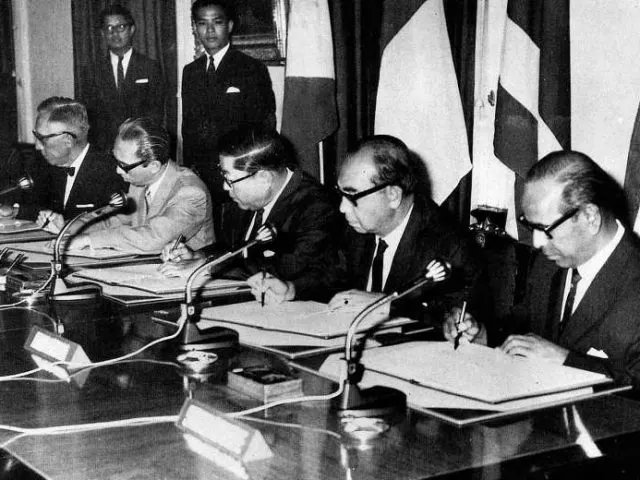
The five foreign ministers sign the ASEAN Declaration in Bangkok on 8 August 1967The five foreign ministers sign the ASEAN Declaration in Bangkok on 8 August 1967Image: Unknown photographer (source: ASEAN) · Public domain
politics · Asia

Five nations found ASEAN in Bangkok

In the mid-1960s Southeast Asia was a region of quarrels. Indonesia under Sukarno had waged a ‘confrontation’ against the new state of Malaysia, the Philippines claimed part of Malaysian Borneo, and Singapore had just been expelled from Malaysia. Earlier attempts at regional groups had come to little. After Suharto took power in Indonesia and the confrontation ended in 1966, the Thai foreign minister Thanat Khoman pressed his neighbours to try again. On 8 August 1967 five men met in the Department of Foreign Affairs building in Bangkok: Adam Malik of Indonesia, Tun Abdul Razak of Malaysia, Narciso Ramos of the Philippines, S. Rajaratnam of Singapore and Thanat himself. They signed a short declaration of five articles setting up the Association of Southeast Asian Nations, to promote economic growth, social progress and regional peace. Brunei joined in 1984, and Vietnam, Laos, Myanmar and Cambodia followed in the 1990s. 8 August is marked each year as ASEAN Day.

Source: ASEAN: History, the founding of ASEAN ↗
1969
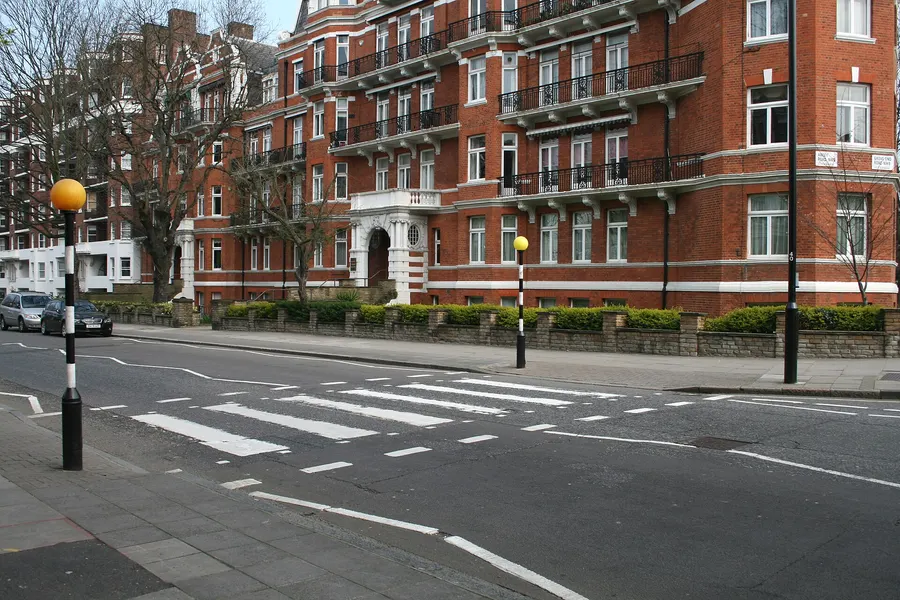
The zebra crossing outside Abbey Road Studios in London, photographed in 2007The zebra crossing outside Abbey Road Studios in London, photographed in 2007Image: Misterweiss · Public domain
culture · Europe

The Beatles walk across the Abbey Road zebra crossing

In the summer of 1969 the Beatles were finishing what would be the last album they recorded together, at EMI’s studios on Abbey Road in north-west London. Short of time and tired of elaborate ideas for the cover, they settled on simply naming the album after the street and being photographed outside. On the morning of Friday 8 August 1969 their friend the photographer Iain Macmillan stood on a stepladder in the middle of the road while a policeman held up the traffic, and the four walked back and forth over the zebra crossing. He took just six pictures, and the fifth became the cover of Abbey Road, released in September. The crossing became one of the most visited sites in London, and in 2010 it was listed for its cultural and historic importance.

Source: Abbey Road Studios: Deconstructing the Abbey Road cover photography session ↗
1988
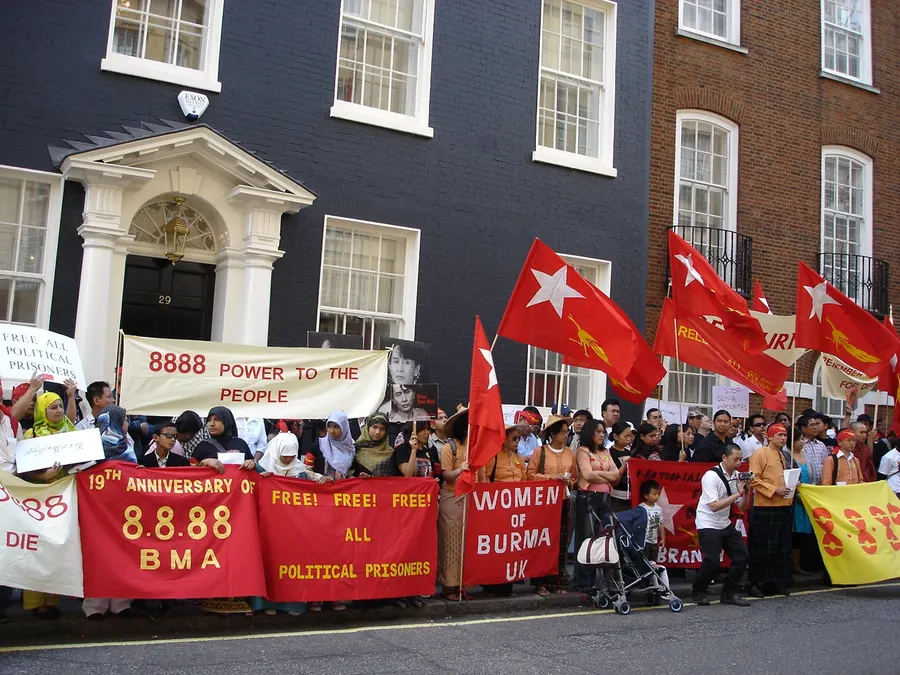
Burmese campaigners and supporters, including the group Women of Burma UK, mark the 19th anniversary of the 8888 uprising on 8 August 2007Burmese campaigners and supporters, including the group Women of Burma UK, mark the 19th anniversary of the 8888 uprising on 8 August 2007Image: Kwantonge · CC BY-SA 3.0
politics · Asia

Burma’s 8888 uprising begins

After 26 years of one-party military rule, a currency decree that wiped out people’s savings and months of student protest, Burma’s leader Ne Win stepped down in July 1988. Protesters chose the date 8.8.88 for a general strike: dockworkers in Rangoon walked out at 8.08 a.m., and huge crowds filled the streets across the country. That night soldiers opened fire, and over the following days many hundreds were killed. The army seized full power in September.

Source: American Diplomacy, University of North Carolina: Military crackdown in Burma and the massacres of 8/8/88 ↗
1988
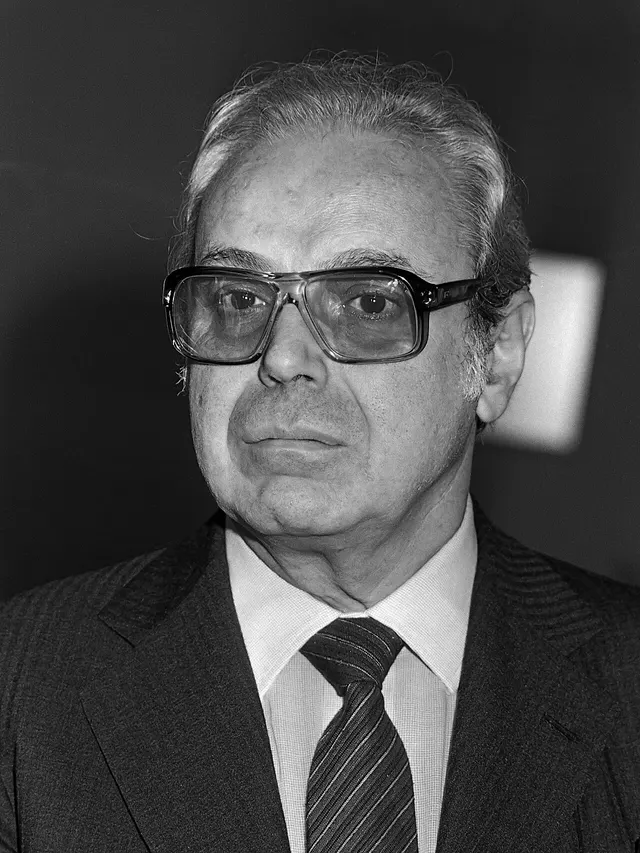
Javier Pérez de Cuéllar, the UN Secretary-General who negotiated the ceasefireJavier Pérez de Cuéllar, the UN Secretary-General who negotiated the ceasefireImage: Rob Bogaerts for Anefo · CC BY-SA 3.0 nl
world · Middle East

The UN announces a ceasefire in the Iran-Iraq war

Iraq invaded Iran in September 1980, and eight years of war followed, with trench fighting, missile attacks on cities and the use of poison gas, at the cost of hundreds of thousands of lives. In July 1988 Iran at last accepted the UN Security Council’s Resolution 598. On 8 August 1988 the Secretary-General, Javier Pérez de Cuéllar, announced that both sides had agreed to a ceasefire from 20 August, to be watched by UN military observers.

Source: United Nations Peacekeeping: UN Iran-Iraq Military Observer Group, background ↗
1992
David Robinson takes a free throw for the Dream Team against Puerto Rico at the Barcelona Olympics on 4 August 1992David Robinson takes a free throw for the Dream Team against Puerto Rico at the Barcelona Olympics on 4 August 1992Image: Ken Hackman, U.S. Air Force · Public domain
sport · Europe

The Dream Team wins Olympic basketball gold in Barcelona

Until 1992 the stars of the American professional league, the NBA, could not play at the Olympics. When the rules changed, the United States sent a team that included Michael Jordan, Magic Johnson, Larry Bird, Charles Barkley and Scottie Pippen, coached by Chuck Daly. Crowds followed them around Barcelona, and opponents asked for photographs and autographs. The Dream Team won all eight of its games by an average of 44 points. In the final on 8 August 1992 it beat Croatia, playing at its first Games as an independent country, by 117 points to 85, its closest game of the tournament. The team did much to spread basketball around the world, and players from many countries later followed them into the NBA.

Source: Olympics.com: Dream Team 1992 revisited ↗
VI
2000 TO TODAY

Modern Day

The events of recent decades that have already become part of the historical record.

2000
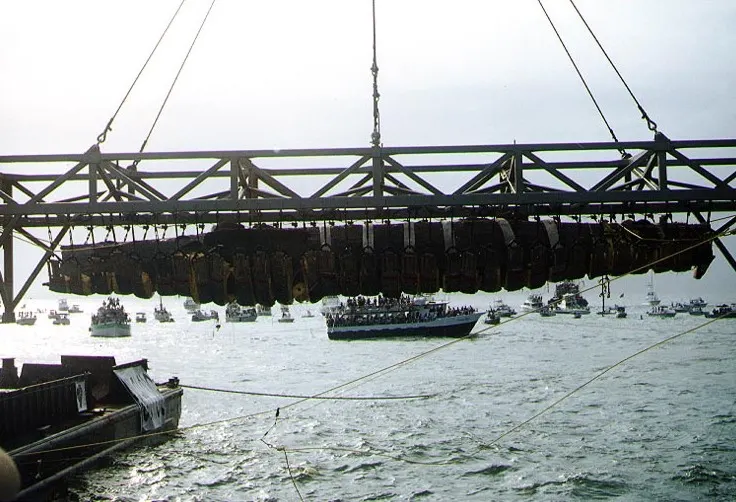
The H. L. Hunley, slung beneath its steel recovery frame, is lifted from the sea off Charleston on 8 August 2000The H. L. Hunley, slung beneath its steel recovery frame, is lifted from the sea off Charleston on 8 August 2000Image: Barbara Voulgaris, Naval Historical Center · Public domain
science · Americas

The Confederate submarine Hunley is raised after 136 years

On the night of 17 February 1864, during the American Civil War, the hand-cranked Confederate submarine H. L. Hunley rammed a torpedo into the Union warship Housatonic off Charleston, South Carolina, and sank her. It was the first time a submarine had sunk an enemy ship in combat. But the Hunley and her crew of eight never came home, and for more than a century nobody knew where she lay. A team funded by the novelist Clive Cussler found the wreck under the sand in 1995. On 8 August 2000, after months of work by divers and archaeologists, a crane lifted the submarine in a specially built steel frame, and at 8.37 a.m. she broke the surface for the first time in 136 years, watched by crowds in hundreds of small boats. She was taken to a conservation laboratory in North Charleston, where the remains of all eight crewmen were found inside.

Source: Friends of the Hunley: The search and recovery ↗
2000
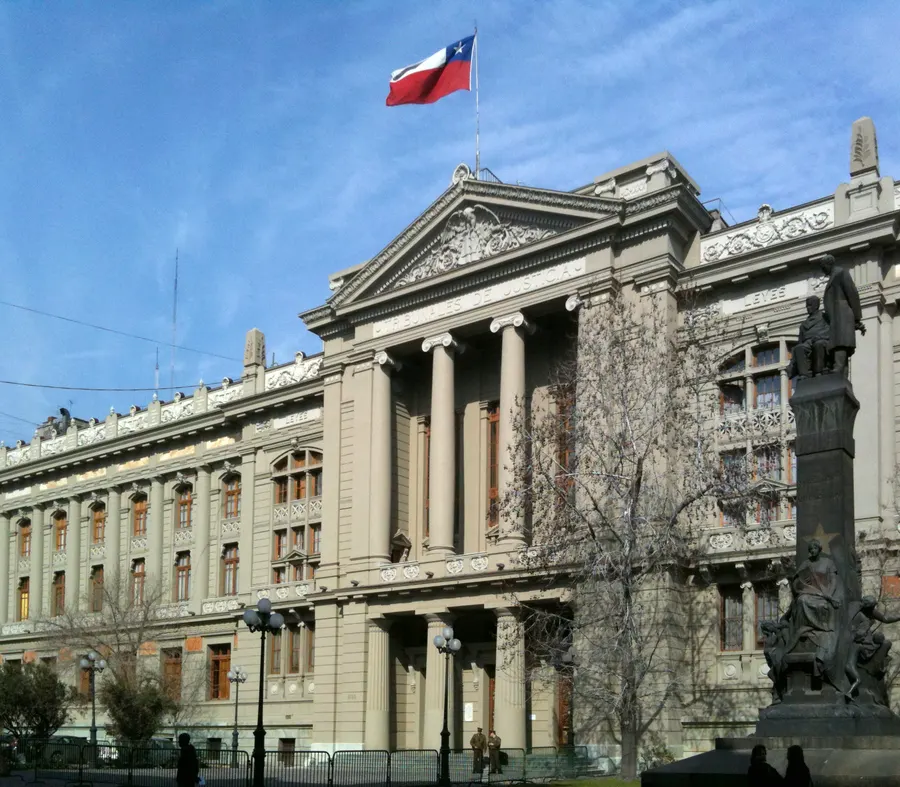
The Palace of the Courts of Justice in Santiago, home of Chile's Supreme CourtThe Palace of the Courts of Justice in Santiago, home of Chile’s Supreme CourtImage: Falmazan · CC BY 3.0
politics · Americas

Chile’s Supreme Court rules that Pinochet can face trial

General Augusto Pinochet ruled Chile from the 1973 coup until 1990, and thousands of people were killed or disappeared under his regime. As a senator for life he was protected from prosecution. On 8 August 2000 the Supreme Court upheld the removal of his immunity, opening the way to a trial over the ‘Caravan of Death’ killings after the coup. The case was later halted when courts found him unfit to stand trial, and he died in 2006 without being convicted.

Source: Human Rights Watch: Chile Supreme Court rejects Pinochet immunity (8 August 2000) ↗
RESEARCH

Sources & Further Reading

Selected authoritative references supporting the events on this page.

Royal Museums Greenwich: The Spanish Armada, history, causes and timeline↗Britannica: Spanish Armada↗Britannica: Michel-Gabriel Paccard↗Chamonix Mont-Blanc: The story of Jacques Balmat’s alpine stick↗Australian War Memorial: The Battle of Amiens, 8 August 1918↗Canadian War Museum: Land battles, Amiens↗Britannica: Treaty of Rawalpindi↗Encyclopaedia Iranica: Anglo-Afghan wars↗Indian Culture, Ministry of Culture: The clarion call to Quit India at the AICC in Bombay↗Know India, National Portal of India: Quit India Movement↗US Department of State, Office of the Historian: Foreign Relations of the United States, Potsdam conference, document 1382↗National WWII Museum: The end of World War II, 1945↗The Postal Museum: The Great Train Robbery↗Britannica: Great Train Robbery↗ASEAN: History, the founding of ASEAN↗Wikipedia: ASEAN Declaration↗Abbey Road Studios: Deconstructing the Abbey Road cover photography session↗Historic England: Zebra crossing near Abbey Road Studios, list entry 1396390↗American Diplomacy, University of North Carolina: Military crackdown in Burma and the massacres of 8/8/88↗The Irrawaddy: Remembering Burma’s 1988 uprising↗United Nations Peacekeeping: UN Iran-Iraq Military Observer Group, background↗Britannica: Iran-Iraq War↗Olympics.com: Dream Team 1992 revisited↗NBA.com: Top moments, Dream Team takes world by storm in 1992↗Friends of the Hunley: The search and recovery↗Naval History and Heritage Command: H. L. Hunley wreck (1864)↗Human Rights Watch: Chile Supreme Court rejects Pinochet immunity (8 August 2000)↗Human Rights Watch: Chile, Pinochet escapes justice (2002)↗
WHY THESE MOMENTS?

Significance before volume

This page is not the longest possible list of events. It is a chronological journey through 8 August, where each entry is chosen for historical significance, human interest and reliability.

Facts are checked against authoritative museums, archives, universities and reference works. Where sources disagree, the page says so.

EXPLORED THE DEEPER STORY?

Return to the highlights of 8 August

Discover the lighter side of the date with famous birthdays, culture, firsts and lives remembered.

Explore This Day →
← PREVIOUS DAY7 August
HISTORY & TIMELINE8 August
NEXT DAY →9 August