1520Magellan finds the way through
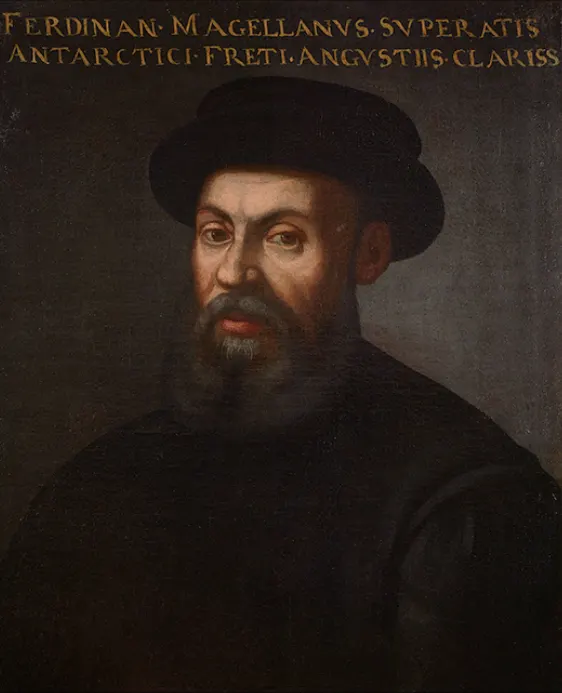
On 21 October 1520 Ferdinand Magellan rounded a headland he named the Cape of the Eleven Thousand Virgins, at the southern tip of what is now Argentina, and turned his ships into an opening in the coast. Nobody knew whether it was a bay, a river mouth or a way through to the other ocean. He had already put down a mutiny and lost one ship; another deserted and sailed home while he was in the channel.
It took thirty-eight days of working through 570 kilometres of fog, tides and dead-end inlets before he came out on 28 November into water so calm after the Atlantic that he called it the Pacific. He was killed in the Philippines the following April. One ship of the five, the Victoria, reached Spain in September 1522 with eighteen men aboard, having gone round the world.
Read the full storyHistory & Timeline →Source: Encyclopaedia Britannica: Ferdinand Magellan, discovery of the Strait of Magellan ↗
1600One day’s fighting decides 265 years
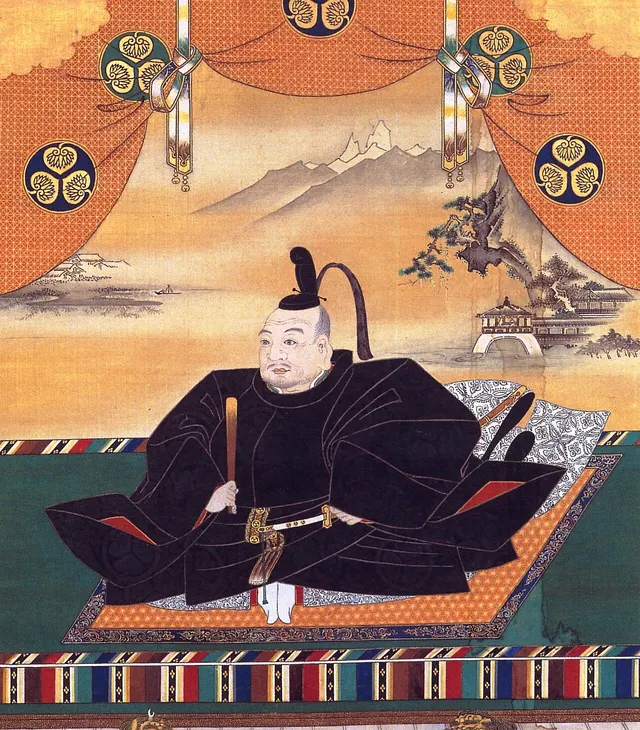
Toyotomi Hideyoshi had left Japan in the hands of five regents to protect his infant son. Two years later they were at war with each other. On 21 October 1600, in a valley at Sekigahara in central Honshu, Tokugawa Ieyasu’s eastern army of nearly 89,000 men met the western coalition raised by Ishida Mitsunari in the Toyotomi name.
Mitsunari’s plan was to trap Ieyasu in the valley, and on the ground it should have worked. It failed because of defections arranged beforehand: Kobayakawa Hideaki turned on his own side in the middle of the battle and the western line collapsed. Ieyasu redistributed the country’s land among his allies and in 1603 was made shogun. The Tokugawa shogunate governed Japan until 1868.
Read the full storyHistory & Timeline →Source: Encyclopaedia Britannica: Battle of Sekigahara ↗
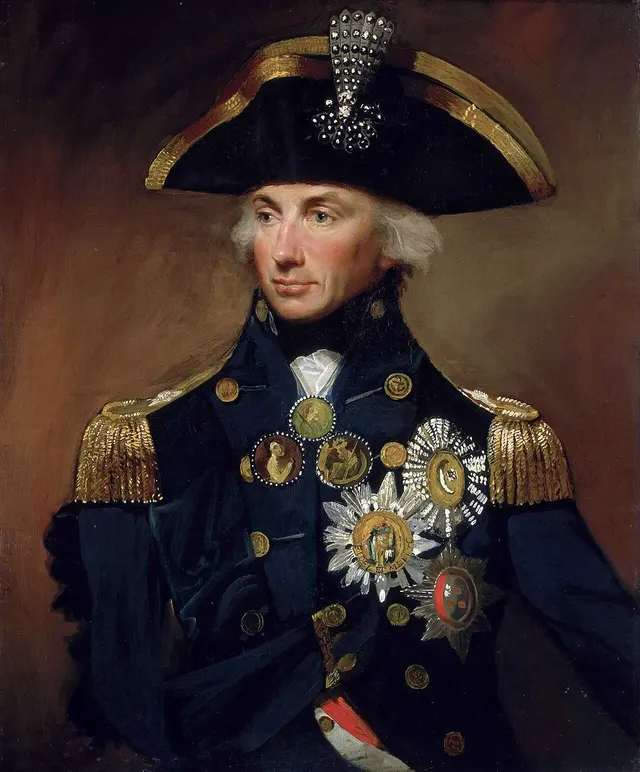
1805Nelson wins and dies off Cape Trafalgar
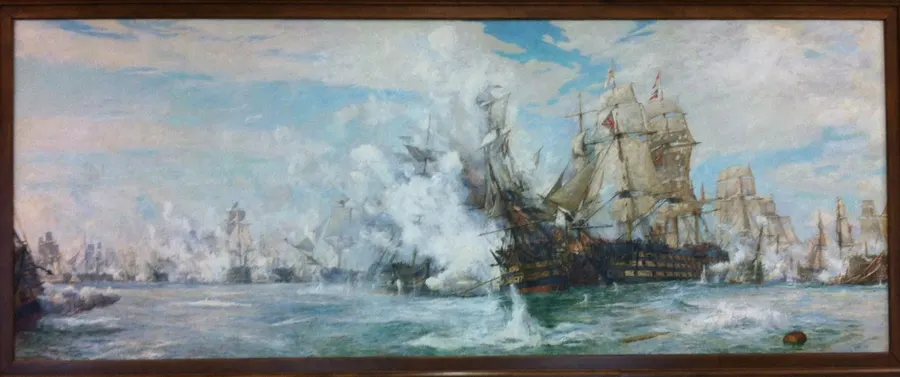
At ten to twelve on 21 October 1805, west of Cape Trafalgar between Cádiz and Gibraltar, Nelson had a signal run up the Victory’s masts: England expects that every man will do his duty. He then did something unorthodox - instead of forming a line alongside the enemy, he drove two columns straight through the Franco-Spanish line at right angles, accepting heavy fire on the approach in exchange for breaking the formation into pieces.
It worked completely. The allied fleet lost around 14,000 men killed, wounded or captured, and Admiral Villeneuve was taken prisoner; the British lost about 1,500 and not one ship. Nelson was shot by a sniper from the rigging of the Redoutable and died at half past four, already certain of the result. Trafalgar ended any prospect of a French invasion of Britain and left the Royal Navy dominant at sea for a century.
Read the full storyHistory & Timeline →Source: Royal Museums Greenwich: Battle of Trafalgar timeline ↗
1854Thirty-eight nurses leave for the Crimea
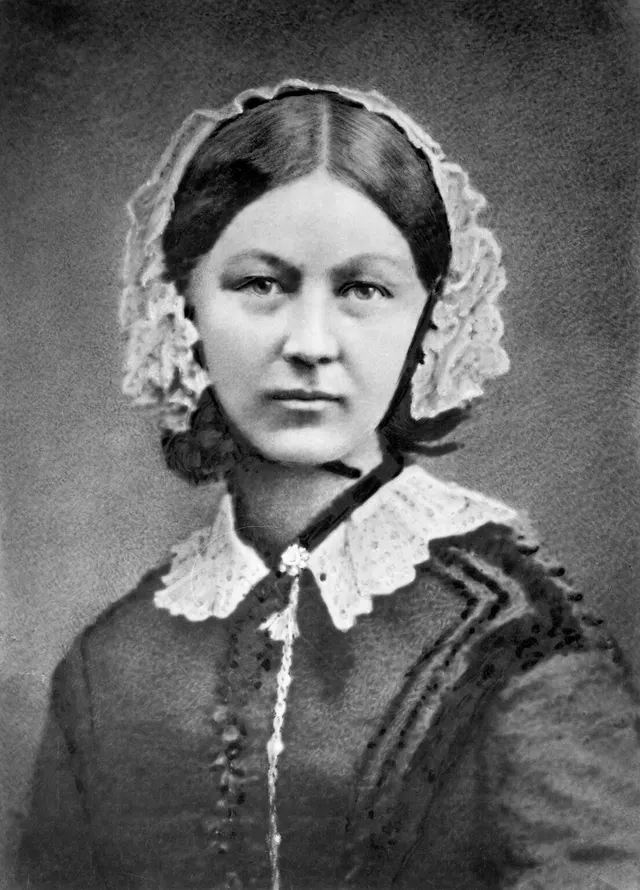
Florence Nightingale left London on 21 October 1854 with a party of thirty-eight women, the first officially sanctioned group of British nurses sent to a war. Newspaper reports of the state of the wounded after the Battle of the Alma had caused a public outcry, and the government had asked her to go. They reached the Barrack Hospital at Scutari, across the water from Constantinople, on 5 November.
What she found there she described as the kingdom of hell: no clean water, no laundry, no proper drains, and men dying of cholera, typhus and dysentery in far greater numbers than of their wounds. Her lasting contribution was less the lamp than the arithmetic - she kept meticulous records, and the diagrams she drew from them persuaded the army and the government that sanitation was a military matter. She founded the first secular nursing school in 1860.
Read the full storyHistory & Timeline →Source: Encyclopaedia Britannica: Florence Nightingale ↗
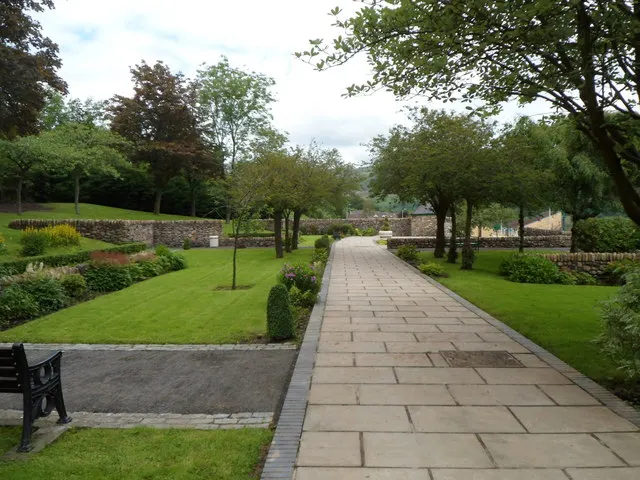
1966Aberfan
Tip number seven above the village of Aberfan, in the Merthyr valley, had been built on ground riddled with springs. After days of rain it gave way on the morning of 21 October 1966 and about 150,000 cubic metres of liquefied colliery waste came down the mountain at speed. It reached Pantglas Junior School minutes after the children had gone into their classrooms. A clock recovered from the wreckage had stopped at 9.13.
A hundred and sixteen children and twenty-eight adults were killed, most of them in the school; the village lost about half of its primary school age children in one morning. Villagers dug with their hands until the rescue teams arrived, and very few people were brought out alive. The tribunal of inquiry found that the National Coal Board had ignored years of warnings about tipping over springs. The board then took £150,000 from the public disaster fund towards removing the remaining tips - money the government repaid, with interest, only in 1997 and 2007.
Read the full storyHistory & Timeline →Source: Encyclopaedia Britannica: Aberfan disaster ↗