1066England changes hands in a single day
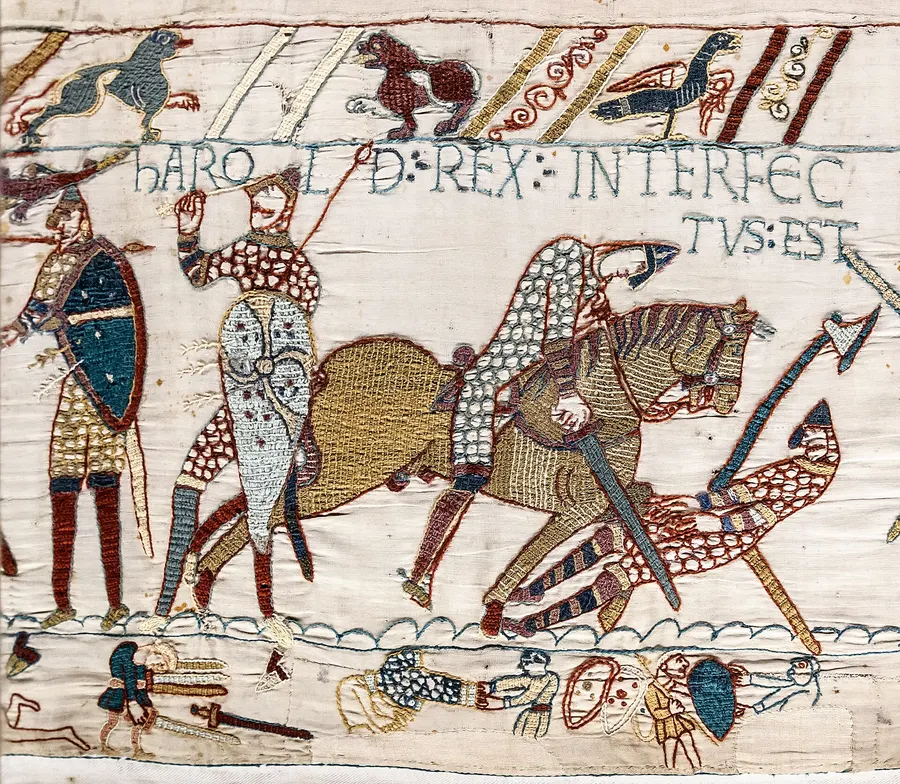
The fighting began at dawn on 14 October 1066 on a ridge about ten miles north-west of Hastings, and it went on all day - unusual for a medieval battle, where one side normally broke within hours. Duke William of Normandy had landed at Pevensey in late September with a few thousand men; Harold Godwinson had been crowned in January, on the strength of a deathbed nomination from Edward the Confessor, and had just marched the length of England after beating off a Norwegian invasion in Yorkshire.
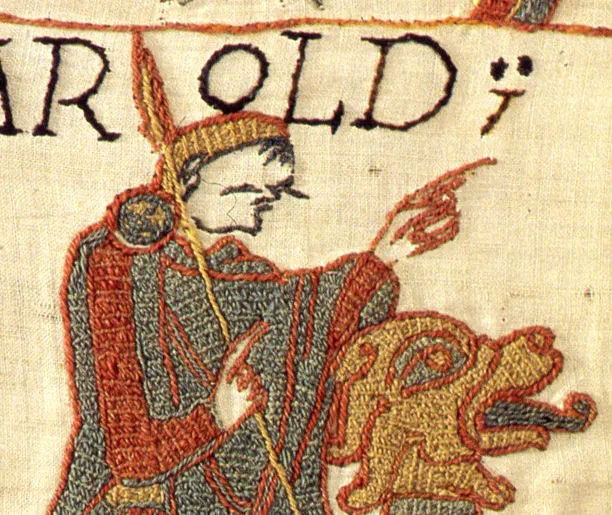
The two armies were closely matched, and Harold’s shield wall held for most of the day. What broke it, according to the Norman accounts, was a feigned retreat: English soldiers chased the retreating Normans downhill and left gaps that the cavalry rode into. The Bayeux Tapestry shows Harold falling late in the afternoon. William was crowned at Westminster on Christmas Day, and the language, landholding and ruling class of England were remade within a generation.
Read the full storyHistory & Timeline →Source: English Heritage: What happened at the Battle of Hastings ↗
1913Britain’s worst mining disaster
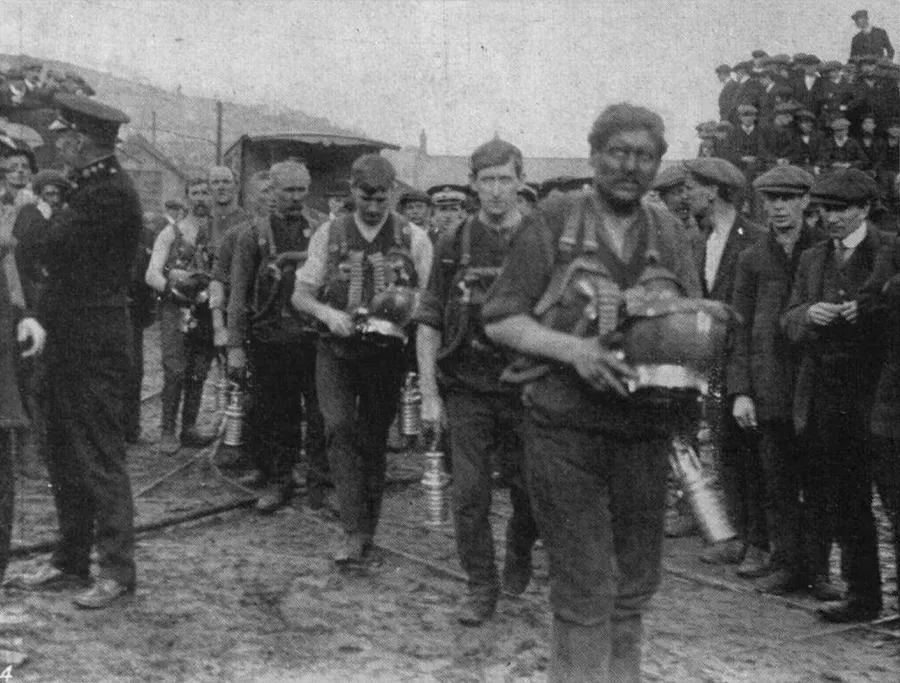
At ten past eight on the morning of 14 October 1913, the day shift at the Universal Colliery in Senghenydd, in the Aber valley north of Caerphilly, had just started work when an explosion tore through the workings. The blast was strong enough to throw the two-ton cage up the Lancaster shaft into the headgear above it. Of the 950 men underground, 439 died. It remains the worst mining disaster in British history.
The men on the east side of the pit were brought up alive. The west side burned, and very few came out of it; some bodies were never recovered. The inquiry could not establish what had ignited the firedamp, but it did establish that safety requirements had not been met, and the manager was fined a sum that a Welsh newspaper reduced to a famous arithmetic: the miners’ lives had been valued at about fivepence-halfpenny each. The village had already lost 81 men in an explosion at the same colliery in 1901.
Read the full storyHistory & Timeline →Source: Museum Wales: the Government enquiry into the 1913 Senghenydd mine disaster ↗
1964The Kremlin removes Khrushchev
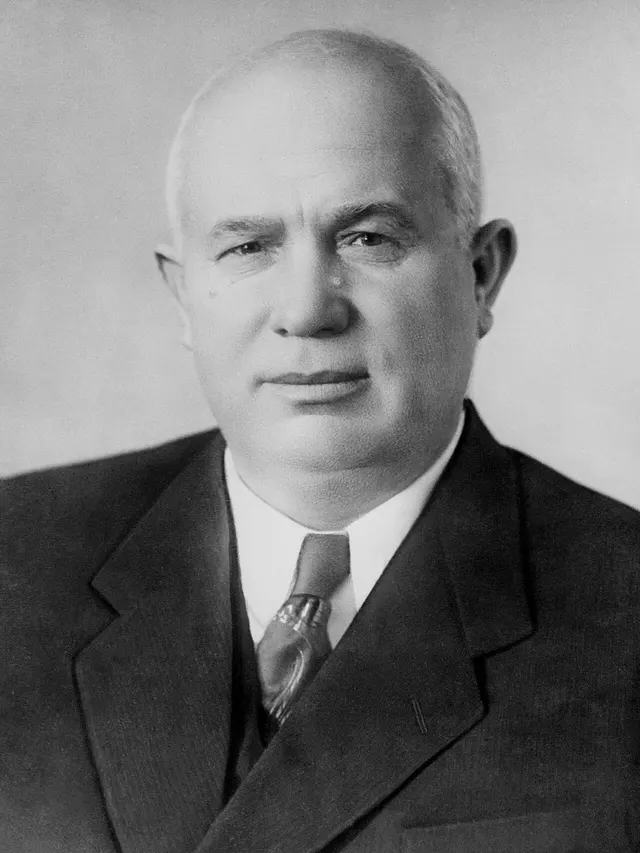
Nikita Khrushchev was on holiday by the Black Sea when he was summoned back to Moscow. On 14 October 1964 the party Presidium and then the Central Committee voted to accept his ‘request’ to retire, on grounds of advanced age and poor health. He was 70, and the request was not his. Leonid Brezhnev, whom he had promoted, took the party leadership; Alexei Kosygin took the government.
The charge sheet was long: the failure of the farm campaigns, the split with China, the humiliating end of the Cuban missile crisis and, above all, what his colleagues called his arbitrary way of doing business. What was new was the ending. The man who had denounced Stalin in 1956 was not shot or imprisoned but pensioned off to a dacha, where he dictated his memoirs. For the Soviet Union it was the start of eighteen years of Brezhnev.
Read the full storyHistory & Timeline →Source: Encyclopaedia Britannica: Nikita Khrushchev, leadership of the Soviet Union ↗
1964A phone call to a hospital room in Atlanta
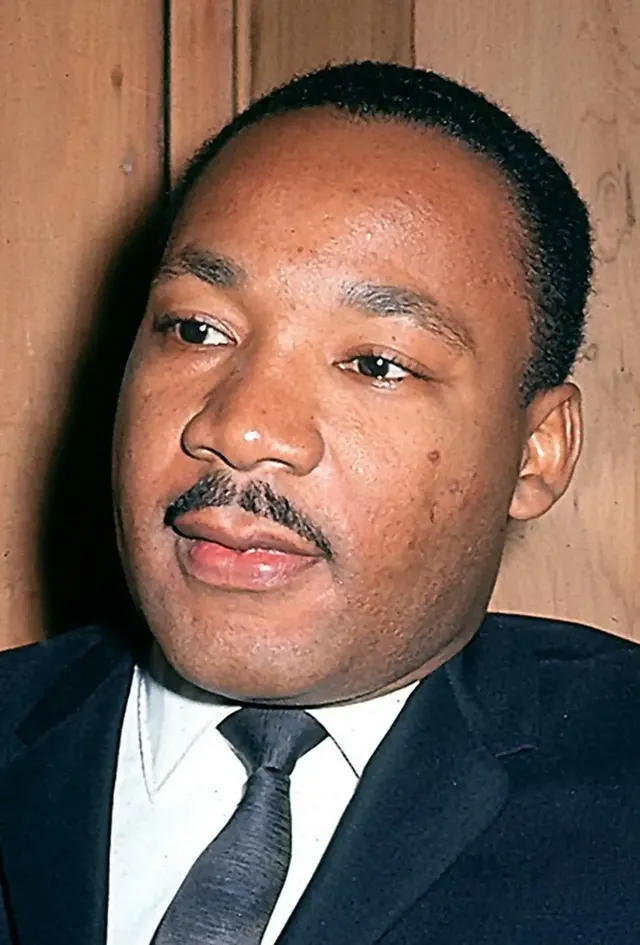
Martin Luther King Jr. had checked into an Atlanta hospital simply to rest. On the morning of 14 October 1964 his wife Coretta telephoned to tell him that the Norwegian Nobel Committee had given him that year’s Peace Prize, for his non-violent struggle for the civil rights of Black Americans. He was 35, the youngest man to have received it at that point.
The award came fifteen months after the March on Washington and three months after the Civil Rights Act was signed. King went to Oslo in December and accepted the prize not for himself but, as he put it, for the people of a movement he called a mighty army of love. The prize money went straight to the movement.
Read the full storyHistory & Timeline →Source: The Nobel Prize: the Nobel Peace Prize 1964 ↗
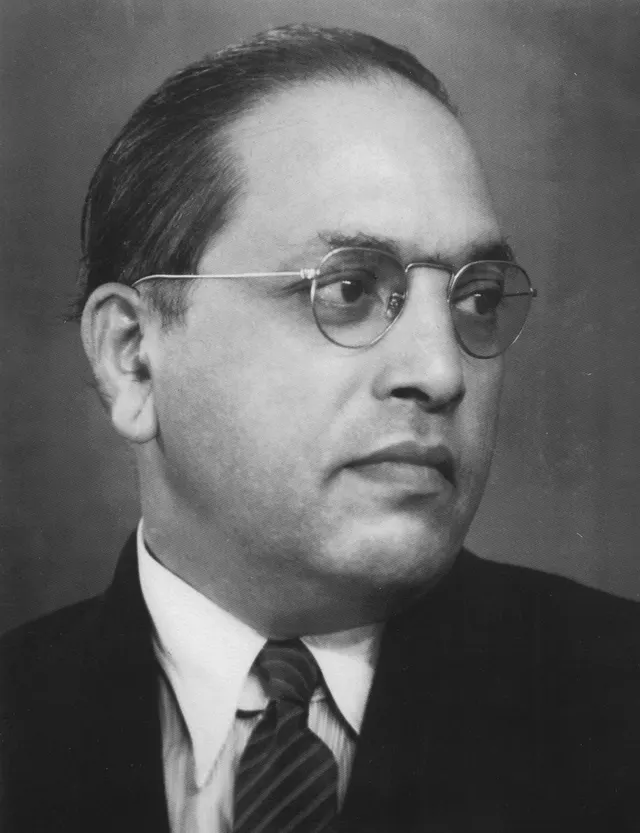
1956Ambedkar and a crowd of thousands become Buddhists
B. R. Ambedkar had said in 1935 that though he was born a Hindu he would not die one. On 14 October 1956, at a ground in Nagpur that is now called Deekshabhoomi, he made good on it: he took the vows of a Buddhist, and around him so did a crowd usually counted in the hundreds of thousands, most of them Dalits from his own Mahar community.
Ambedkar had been the principal draughtsman of the constitution of independent India, which outlawed untouchability on paper. He had concluded that the caste order would not yield to law alone, and that a religion which did not recognise caste at all was the way out. He chose Nagpur deliberately and explained why in a speech the following morning. He died less than two months later, on 6 December 1956.
Read the full storyHistory & Timeline →Source: Columbia University Libraries: Ambedkar - conversion to Buddhism ↗