
HISTORY & TIMELINE
21 October

A journey through
21 October in history

From a disastrous ambush on the road to the Holy Land in 1096 to a filament of carbonised cotton thread burning for forty hours in New Jersey, 21 October is a day of long odds. This timeline follows the date across nine centuries.

JUMP THROUGH TIME
II
THE MIDDLE AGES

Medieval History

Kingdoms, conflict, faith, power and the changing medieval world.

1096
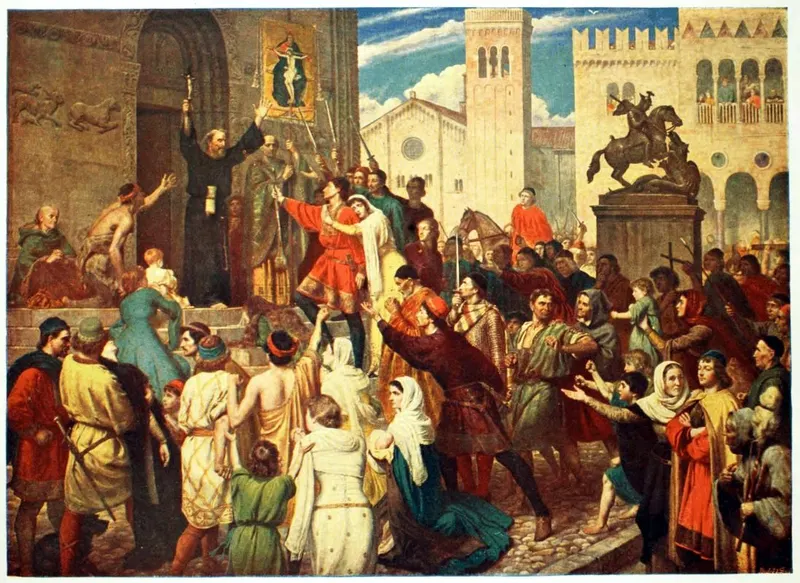
Peter the Hermit preaching the First Crusade, in a later painting.Peter the Hermit preaching the First Crusade, in a later painting.Image: AnonymousUnknown author · Public domain
world · Asia

The People’s Crusade is destroyed at Civetot

Months before the armies of the First Crusade set out, bands of poorly armed pilgrims had already left for the east, the largest of them gathered by the preacher Peter the Hermit. They caused chaos across Hungary and the Balkans, attacked Jewish communities in the Rhineland on the way, and reached Constantinople in the summer of 1096. The Byzantine emperor ferried them across the Bosporus to get them out of the city. On 21 October, while Peter was back in Constantinople asking for help, Seljuk Turkish forces ambushed his followers near Civetot and killed almost all of them. Peter survived and joined the main crusade the following year.

Source: Encyclopaedia Britannica: Peter the Hermit ↗
III
A CHANGING WORLD

Early Modern Era

Exploration, political change, scientific development and expanding global connections.

1520
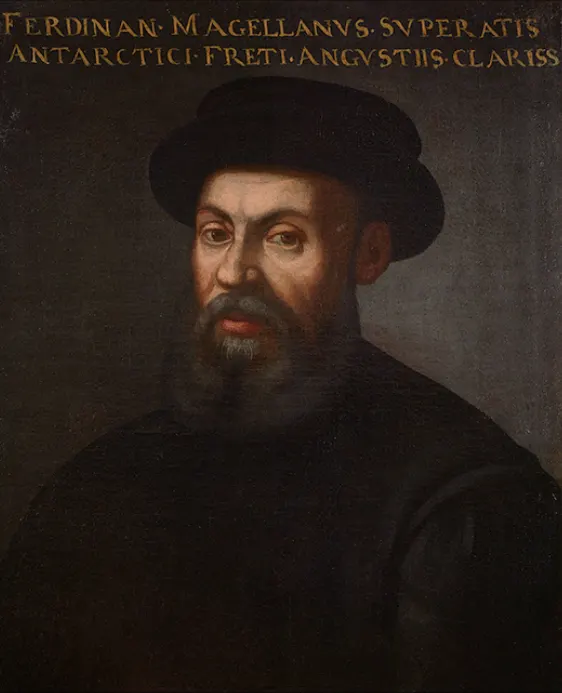
Ferdinand Magellan, in a portrait by an unknown artist.Ferdinand Magellan, in a portrait by an unknown artist.Image: Unknown authorUnknown author · Public domain
world · Americas

Magellan finds the way through

On 21 October 1520 Ferdinand Magellan rounded a headland he named the Cape of the Eleven Thousand Virgins, at the southern tip of what is now Argentina, and turned his ships into an opening in the coast. Nobody knew whether it was a bay, a river mouth or a way through to the other ocean. He had already put down a mutiny and lost one ship; another deserted and sailed home while he was in the channel. It took thirty-eight days of working through 570 kilometres of fog, tides and dead-end inlets before he came out on 28 November into water so calm after the Atlantic that he called it the Pacific. He was killed in the Philippines the following April. One ship of the five, the Victoria, reached Spain in September 1522 with eighteen men aboard, having gone round the world.

Source: Encyclopaedia Britannica: Ferdinand Magellan, discovery of the Strait of Magellan ↗
1600
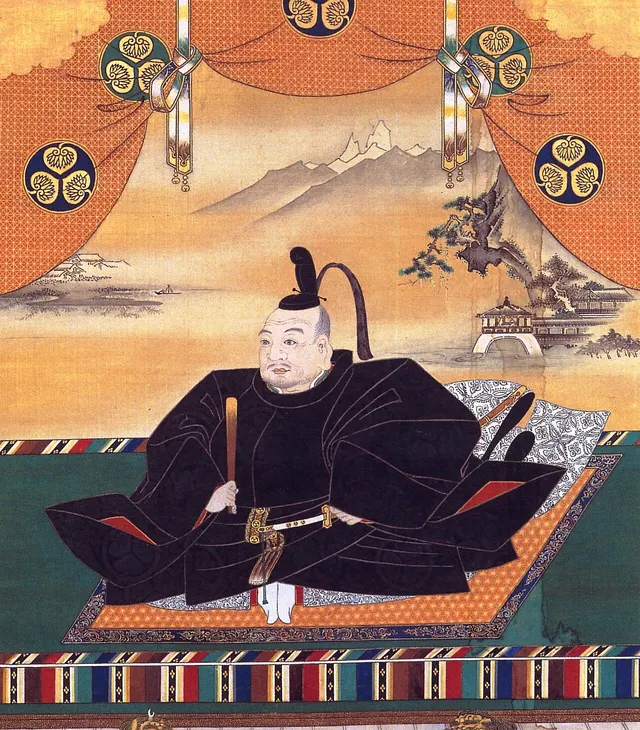
Tokugawa Ieyasu, painted by Kanō Tan'yū.Tokugawa Ieyasu, painted by Kanō Tan’yū.Image: Kanō Tan'yū · Public domain
world · Asia

One day’s fighting decides 265 years

Toyotomi Hideyoshi had left Japan in the hands of five regents to protect his infant son. Two years later they were at war with each other. On 21 October 1600, in a valley at Sekigahara in central Honshu, Tokugawa Ieyasu’s eastern army of nearly 89,000 men met the western coalition raised by Ishida Mitsunari in the Toyotomi name. Mitsunari’s plan was to trap Ieyasu in the valley, and on the ground it should have worked. It failed because of defections arranged beforehand: Kobayakawa Hideaki turned on his own side in the middle of the battle and the western line collapsed. Ieyasu redistributed the country’s land among his allies and in 1603 was made shogun. The Tokugawa shogunate governed Japan until 1868.

Source: Encyclopaedia Britannica: Battle of Sekigahara ↗
1797
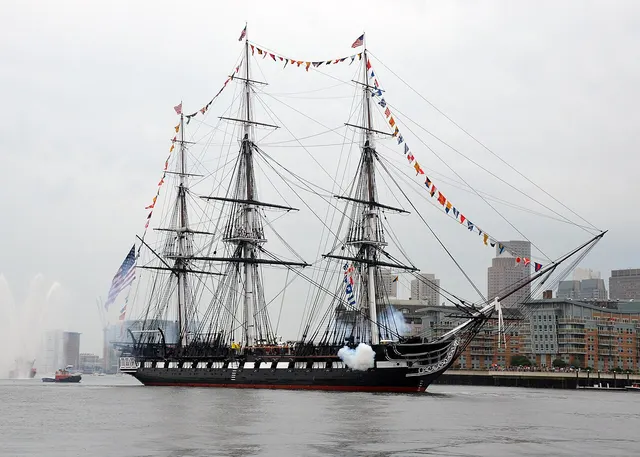
USS Constitution dressed with flags in Boston harbour.USS Constitution dressed with flags in Boston harbour.Image: (U.S. Navy photo by Seaman Matthew R. Fairchild/Released) 140704-N-OG138-866 · Public domain
world · Americas

Old Ironsides goes into the water

USS Constitution slid down the ways at Edmund Hartt’s shipyard in Boston on 21 October 1797, at the third attempt; the first two, the previous month, had stuck. She was one of six frigates authorised to give the new United States a navy, designed by Joshua Humphreys to be faster than anything stronger and stronger than anything faster, with an unusually thick live-oak hull. That hull earned her the name Old Ironsides during the War of 1812, when British shot was seen to bounce off it. She is still a commissioned warship, the oldest afloat anywhere in the world, and still occasionally sails under her own canvas in Boston harbour.

Source: Naval History and Heritage Command: USS Constitution fact sheet ↗
IV
THE NINETEENTH CENTURY

The 1800s

Industry, empire, invention, reform and a century of enormous transformation.

1805
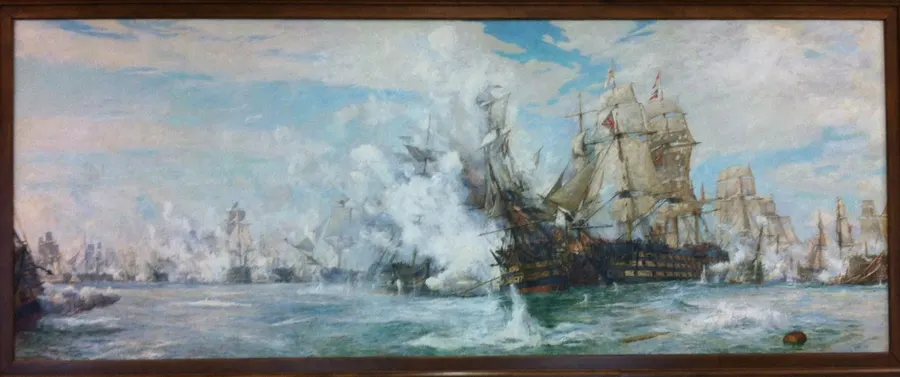
William Lionel Wyllie's panorama of the Battle of Trafalgar.William Lionel Wyllie’s panorama of the Battle of Trafalgar.Image: William Lionel Wyllie · Public domain
world · Europe

Nelson wins and dies off Cape Trafalgar

At ten to twelve on 21 October 1805, west of Cape Trafalgar between Cádiz and Gibraltar, Nelson had a signal run up the Victory’s masts: England expects that every man will do his duty. He then did something unorthodox - instead of forming a line alongside the enemy, he drove two columns straight through the Franco-Spanish line at right angles, accepting heavy fire on the approach in exchange for breaking the formation into pieces. It worked completely. The allied fleet lost around 14,000 men killed, wounded or captured, and Admiral Villeneuve was taken prisoner; the British lost about 1,500 and not one ship. Nelson was shot by a sniper from the rigging of the Redoutable and died at half past four, already certain of the result. Trafalgar ended any prospect of a French invasion of Britain and left the Royal Navy dominant at sea for a century.

Source: Royal Museums Greenwich: Battle of Trafalgar timeline ↗
1854
Florence Nightingale, photographed by Henry Hering.Florence Nightingale, photographed by Henry Hering.Image: Henry Hering (1814-1893) · Public domain
world · Europe

Thirty-eight nurses leave for the Crimea

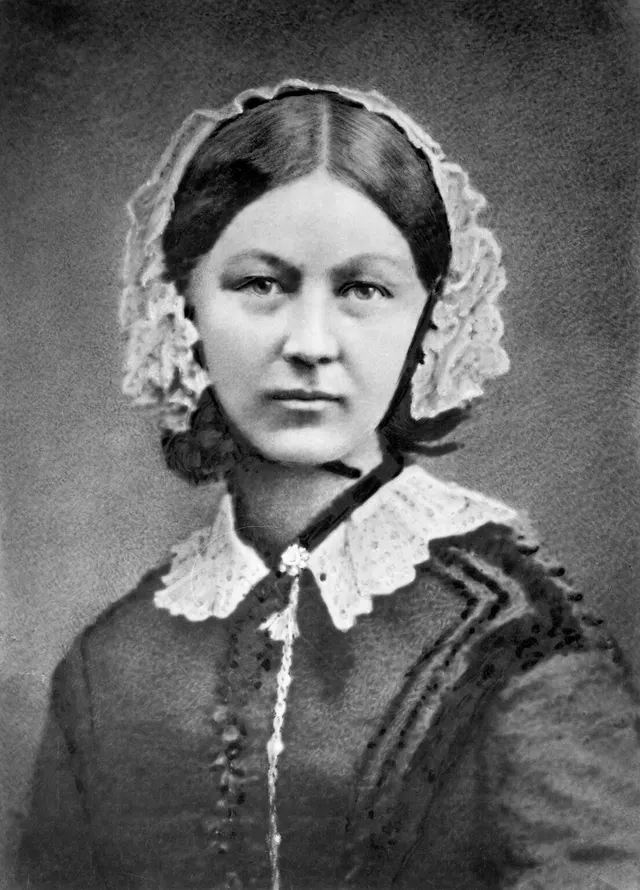
Florence Nightingale left London on 21 October 1854 with a party of thirty-eight women, the first officially sanctioned group of British nurses sent to a war. Newspaper reports of the state of the wounded after the Battle of the Alma had caused a public outcry, and the government had asked her to go. They reached the Barrack Hospital at Scutari, across the water from Constantinople, on 5 November. What she found there she described as the kingdom of hell: no clean water, no laundry, no proper drains, and men dying of cholera, typhus and dysentery in far greater numbers than of their wounds. Her lasting contribution was less the lamp than the arithmetic - she kept meticulous records, and the diagrams she drew from them persuaded the army and the government that sanitation was a military matter. She founded the first secular nursing school in 1860.

Source: Encyclopaedia Britannica: Florence Nightingale ↗
1879
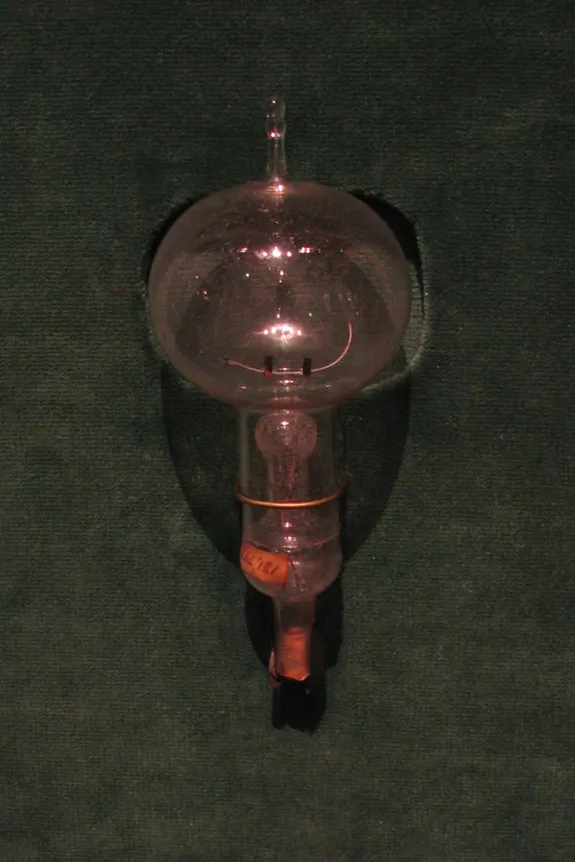
A reproduction of an Edison carbon-filament lamp.A reproduction of an Edison carbon-filament lamp.Image: Terren · CC BY 2.0
science · Americas

A cotton thread that burned for forty hours

The notebook page is dated Menlo Park, 21 October 1879, and headed ‘Electric Light Carbon Spirals’. Over that day and the next, Edison and his staff ran a filament of carbonised cotton thread in a glass bulb from which the air had been pumped out, and it glowed for about forty hours without burning away. It was the first carbon-filament lamp that looked like a practical product. Edison had spent a year on platinum filaments and elaborate regulators before the improved vacuum pumps in the laboratory made plain carbon workable. He filed the fundamental patent a few weeks later. The team then tested every fibrous material they could find - hemp, palmetto, fishing line, beard hair - before settling on carbonised bamboo for the commercial lamps. He was not the only person working on incandescent light, and Joseph Swan in England had a parallel claim, but Edison was building an entire electricity system, not just a bulb.

Source: Rutgers University, Thomas A. Edison Papers: the carbon-filament lamp ↗
V
THE TWENTIETH CENTURY

The 1900s

War and peace, technological leaps, social change, politics, sport and popular culture.

1941
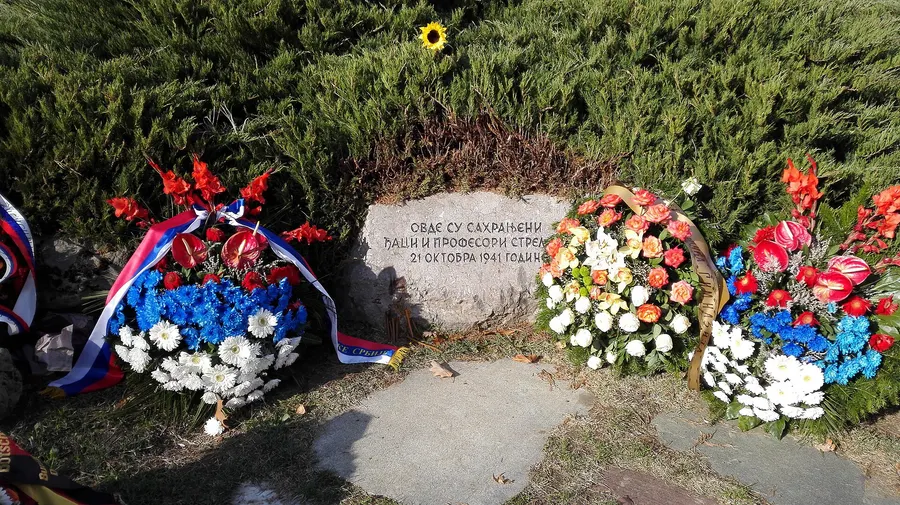
The Šumarice Memorial Park at Kragujevac, on the site of the shootings.The Šumarice Memorial Park at Kragujevac, on the site of the shootings.Image: Mickey Mystique · CC BY-SA 4.0
world · Europe

The reprisal shootings at Kragujevac

German occupation policy in Serbia set a reprisal rate of a hundred civilians shot for every German soldier killed by partisans and fifty for every one wounded. After an ambush in the Gornji Milanovac district, German troops rounded up the male population of Kragujevac and shot them in the fields at Šumarice on 20 and 21 October 1941, including schoolboys taken with their teachers. Estimates of the dead there range from about 2,300 upwards, part of some 7,000 men and boys killed in the Kragujevac and Kraljevo reprisals that month. The ground is now a memorial park.

Source: United States Holocaust Memorial Museum: Kragujevac, 21 October 1941 (Holocaust survivors and victims database source) ↗
1959
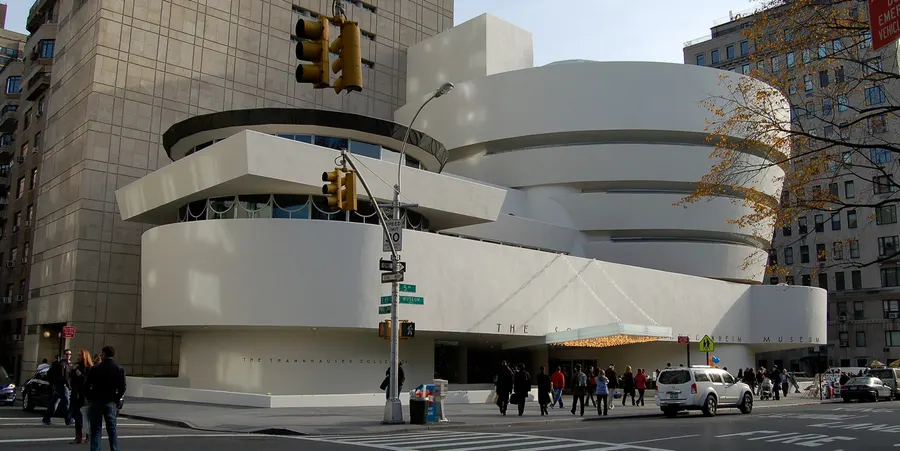
The Solomon R. Guggenheim Museum on Fifth Avenue, New York.The Solomon R. Guggenheim Museum on Fifth Avenue, New York.Image: Sam valadi · CC BY 2.0
culture · Americas

A museum you walk down

The Solomon R. Guggenheim Museum opened to the public on 21 October 1959, sixteen years after Frank Lloyd Wright was commissioned to design it and six months after he died. Wright’s idea was an inverted ziggurat: visitors take a lift to the top and walk down a continuous spiral ramp round a glass-roofed void, seeing the whole collection without ever retracing their steps or going through a door. The delays came from changes to the design, extra land purchases, post-war building costs and the death of the benefactor in 1949. Twenty-one artists signed a letter objecting that the curved, sloping walls were hostile to paintings. The argument never entirely went away, and neither did the building’s standing: it was recognised as a landmark almost at once and became a UNESCO World Heritage Site in 2019.

Source: The Guggenheim Museums and Foundation: Frank Lloyd Wright and the Guggenheim New York ↗
1966
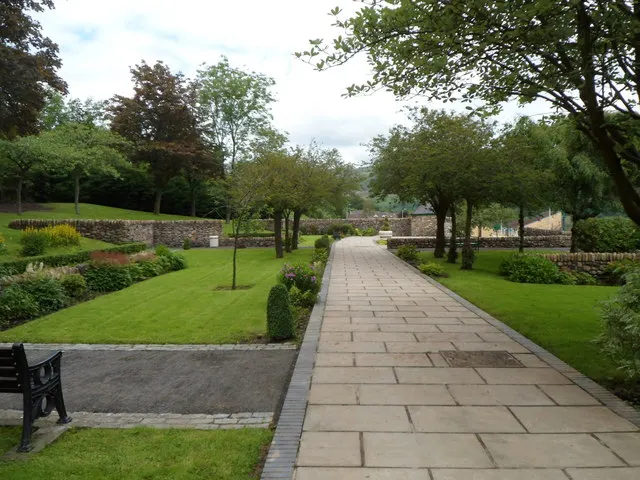
The memorial garden at Aberfan, on the site of Pantglas Junior School.The memorial garden at Aberfan, on the site of Pantglas Junior School.Image: Jaggery · CC BY-SA 2.0
world · Europe

Aberfan

Tip number seven above the village of Aberfan, in the Merthyr valley, had been built on ground riddled with springs. After days of rain it gave way on the morning of 21 October 1966 and about 150,000 cubic metres of liquefied colliery waste came down the mountain at speed. It reached Pantglas Junior School minutes after the children had gone into their classrooms. A clock recovered from the wreckage had stopped at 9.13. A hundred and sixteen children and twenty-eight adults were killed, most of them in the school; the village lost about half of its primary school age children in one morning. Villagers dug with their hands until the rescue teams arrived, and very few people were brought out alive. The tribunal of inquiry found that the National Coal Board had ignored years of warnings about tipping over springs. The board then took £150,000 from the public disaster fund towards removing the remaining tips - money the government repaid, with interest, only in 1997 and 2007.

Source: Encyclopaedia Britannica: Aberfan disaster ↗
WHY THESE MOMENTS?

Significance before volume

This page is not the longest possible list of events. It is a chronological journey through 21 October, where each entry is chosen for historical significance, human interest and reliability.

Facts are checked against authoritative museums, archives, universities and reference works. Where sources disagree, the page says so.

EXPLORED THE DEEPER STORY?

Return to the highlights of 21 October

Discover the lighter side of the date with famous birthdays, culture, firsts and lives remembered.

Explore This Day →
← PREVIOUS DAY20 October
HISTORY & TIMELINE21 October
NEXT DAY →22 October