HISTORY & TIMELINE
22 October

A journey through
22 October in history

From a college charter in colonial New Jersey to a spacecraft leaving for the Moon, 22 October has been a day of leaps of faith — some of them literal. This timeline follows the date from 1746 to 2008.

III
A CHANGING WORLD

Early Modern Era

Exploration, political change, scientific development and expanding global connections.

1707
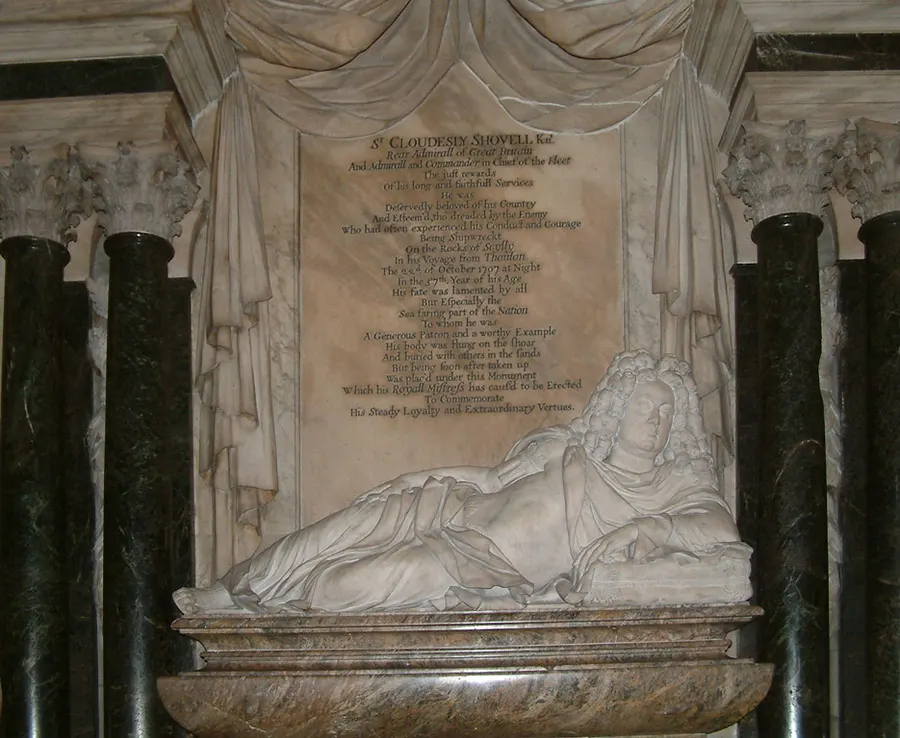
The memorial to Sir Cloudesley Shovell in Westminster Abbey.The memorial to Sir Cloudesley Shovell in Westminster Abbey.Image: Op._Deo · Public domain
world · Europe

A British fleet is wrecked on the Isles of Scilly

On the evening of 22 October 1707 Sir Cloudesley Shovell’s flagship Association struck the Gilstone Ledges off the Isles of Scilly and sank within minutes, followed by the Eagle, the Firebrand and the Romney. More than 1,300 men were lost, Shovell among them, and only 26 are reported to have survived. The fleet, homeward bound from the Mediterranean in bad weather, had believed itself far to the south, off Brittany. The disaster became the standing example of why sailors needed a reliable way of fixing longitude at sea, and is linked to the Longitude Act of 1714. The date is Old Style; Britain was still using the Julian calendar.

Source: Royal Museums Greenwich: The 1707 Isles of Scilly disaster ↗
1746
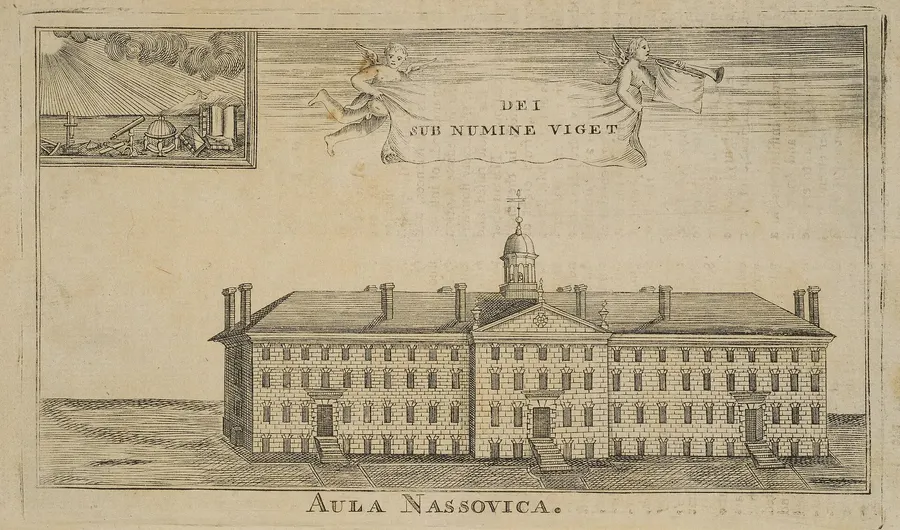
An early engraving of Nassau Hall, the college's first building at Princeton.An early engraving of Nassau Hall, the college’s first building at Princeton.Image: Unknown authorUnknown author · Public domain
world · Americas

The college that became Princeton is chartered

The charter creating the Trustees of the College of New Jersey passed the Great Seal of the province on 22 October 1746, in the name of King George II. It was granted by John Hamilton, president of the provincial council, who was acting as governor — and because his authority was questioned, a second charter had to be issued by Governor Jonathan Belcher in September 1748. The college moved to Princeton in 1756 and took the town’s name in 1896.

Source: Princeton University Archives: The charter of the College of New Jersey, 1746 and 1748 ↗
1797
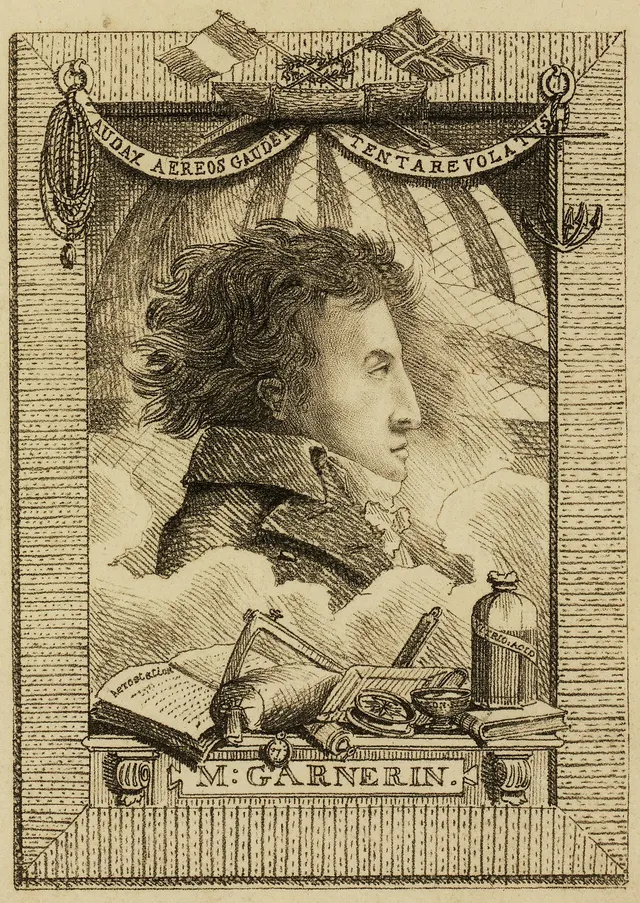
André-Jacques Garnerin in an engraved portrait of 1802, with a balloon behind him.André-Jacques Garnerin in an engraved portrait of 1802, with a balloon behind him.Image: Edward Hawke Locker · Public domain
science · Europe

The first parachute jump

On 22 October 1797 André-Jacques Garnerin rose over the Parc Monceau in Paris under a hydrogen balloon, cut himself loose at about a thousand metres and came down under a canvas parachute roughly seven metres across. It was the first recorded parachute descent by a person. The canopy had no vent, so it swung violently on the way down and Garnerin was badly shaken by the time he landed — a problem later solved by cutting a hole in the top. A commemorative medal struck for the jump records the place and the date.

Source: Smithsonian National Air and Space Museum: Medal, André-Jacques Garnerin ↗
IV
THE NINETEENTH CENTURY

The 1800s

Industry, empire, invention, reform and a century of enormous transformation.

1836
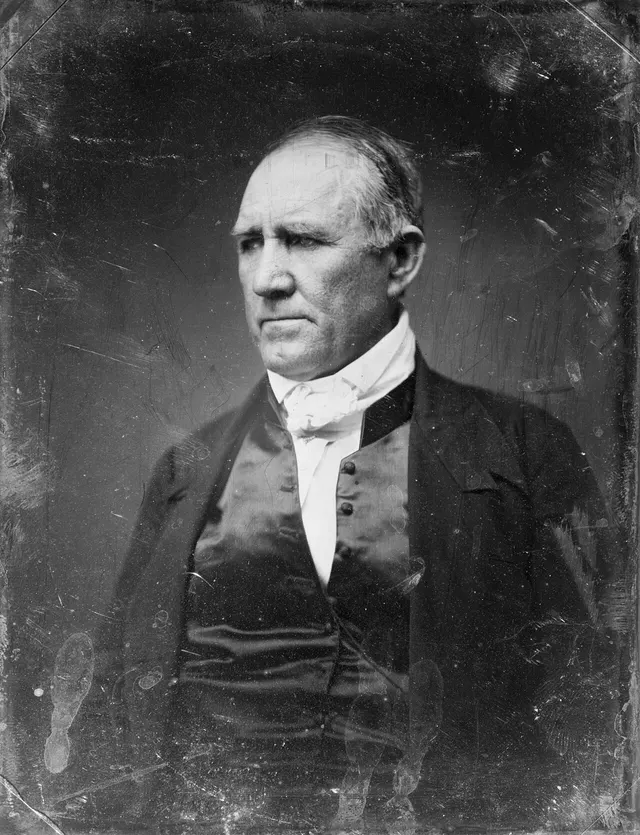
Sam Houston.Sam Houston.Image: Oldag07 (talk) · Public domain
politics · Americas

Sam Houston is sworn in as president of Texas

On 22 October 1836 Sam Houston took the oath of office before a joint session of the Texan Congress at Columbia, becoming the first elected president of the Republic of Texas. The ad interim government formed during the revolution came to an end the same day. Houston had beaten Stephen F. Austin in the election. In his inaugural address he pressed the case for treaties with the Indian nations and for vigilance towards Mexico. His first term ran until December 1838.

Source: Texas State Historical Association: Inauguration of Sam Houston ↗
1844
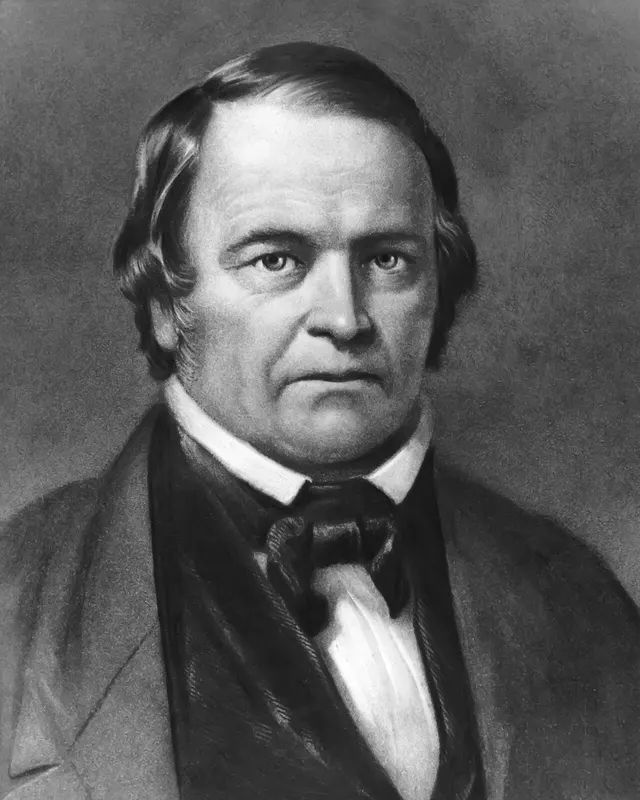
William Miller, the preacher whose reading of the Book of Daniel began the movement.William Miller, the preacher whose reading of the Book of Daniel began the movement.Image: Unknown authorUnknown author · Public domain
world · Americas

The Great Disappointment

Tens of thousands of Americans had been told to expect the return of Christ on 22 October 1844. The date came from followers of William Miller, a farmer-turned-preacher who had worked out from the Book of Daniel that the Second Coming was close; when his own window of March 1843 to March 1844 passed, associates settled on the October day. Nothing happened, and the day became known as the Great Disappointment. Many of Miller’s followers left him. Others regrouped around Hiram Edson and James and Ellen White, and in 1863 formally organised the denomination now known as the Seventh-day Adventists.

Source: Encyclopaedia Britannica: Millerism ↗
1859
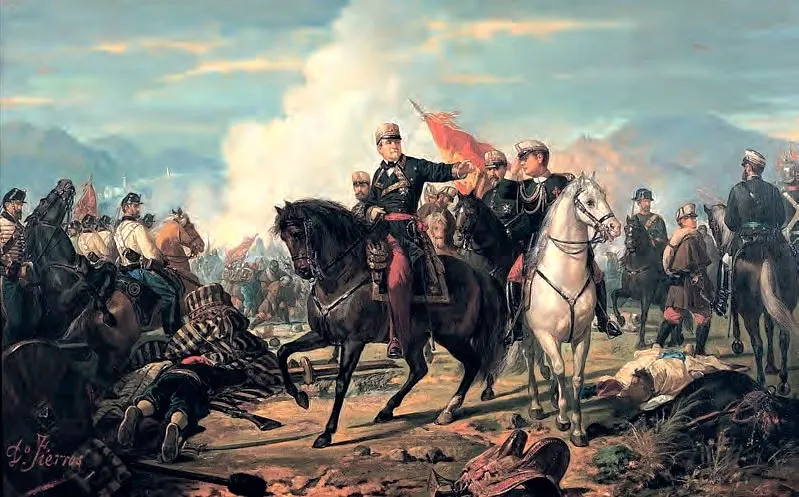
The Battle of Tetuán, painted by Dionisio Fierros in 1894.The Battle of Tetuán, painted by Dionisio Fierros in 1894.Image: Dionisio Fierros · Public domain
politics · Africa

Spain moves towards war with Morocco

On 22 October 1859 the Spanish head of government, Leopoldo O’Donnell, put the declaration of war on Morocco before the Cortes, after a dispute over the boundaries of the Spanish enclave at Ceuta and an attack on a Spanish work party. An expeditionary force of some 36,000 men was sent against Tetuán and Tangier. Tetuán fell in February 1860, and the Treaty of Wad-Ras that April enlarged Ceuta and Melilla and imposed an indemnity on Morocco.

Source: Portal de Archivos Españoles (PARES): Guerra de África, 1859-1860 ↗
V
THE TWENTIETH CENTURY

The 1900s

War and peace, technological leaps, social change, politics, sport and popular culture.

1962
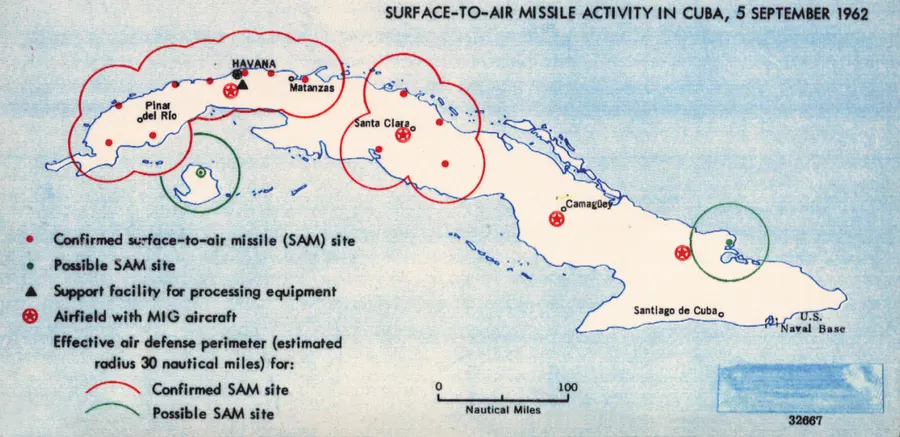
A United States intelligence map of surface-to-air missile activity in Cuba, dated 5 September 1962.A United States intelligence map of surface-to-air missile activity in Cuba, dated 5 September 1962.Image: Central Intelligence Agency from Washington, D.C. · Public domain
politics · Americas

Kennedy tells America about the missiles in Cuba

On 22 October 1962 President Kennedy told the American people in a televised address that the Soviet Union had built nuclear missile sites in Cuba, and announced a naval quarantine of the island. It was the moment the Cuban Missile Crisis became public.

Source: John F. Kennedy Presidential Library: Address during the Cuban Missile Crisis ↗
1964
culture · Europe

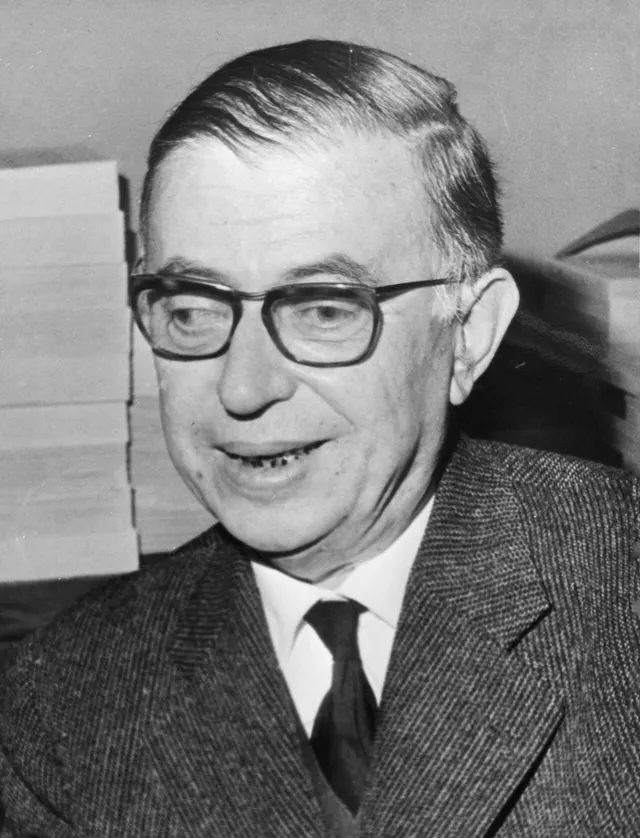
Sartre turns down the Nobel Prize

The Swedish Academy announced on 22 October 1964 that the Nobel Prize in Literature had gone to Jean-Paul Sartre, for work ‘rich in ideas and filled with the spirit of freedom and the quest for truth’. Sartre refused it. He had written to the Academy in advance, not realising its decisions could not be withdrawn. In a statement printed the next day he explained that he had always declined official honours — the Legion of Honour among them — because a writer who accepts them lets himself be turned into an institution.

Source: The Nobel Prize: The Nobel Prize in Literature 1964, press release ↗
1975
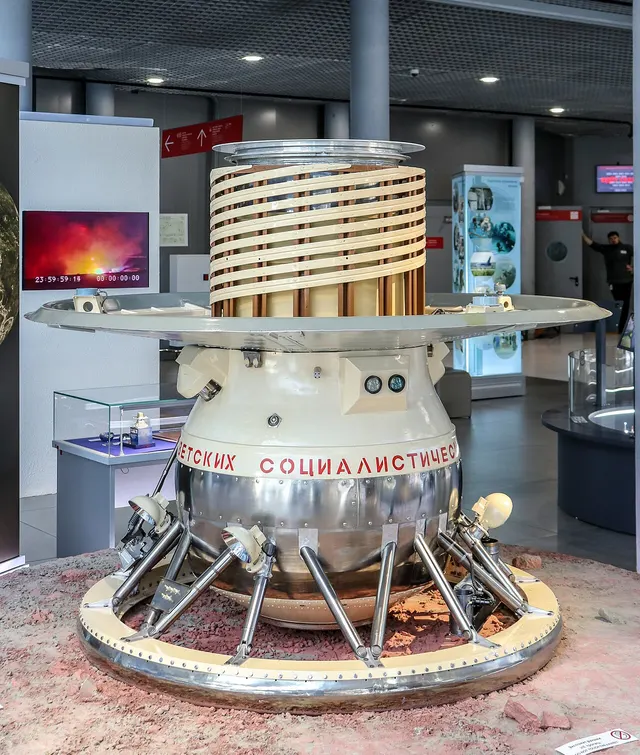
A Venera 9 lander on museum display.A Venera 9 lander on museum display.Image: Stolbovsky · CC BY 4.0
science · Europe

The first photograph from the surface of another planet

The Soviet lander Venera 9 touched down on Venus at 05:13 UT on 22 October 1975 and worked for fifty-three minutes in an atmosphere hot enough to melt lead. In that time it sent back the first photograph ever taken from the surface of another planet. The picture showed a field of angular, partly weathered rocks about thirty to forty centimetres across, many of them half buried in soil. One of the two camera covers failed to release, so instead of the intended full circle the spacecraft returned only half a panorama.

Source: NASA Science: First look at Venus ↗
VI
2000 TO TODAY

Modern Day

The events of recent decades that have already become part of the historical record.

2008
Chandrayaan-1 mapped water on the Moon; this image marks where the evidence was found.Chandrayaan-1 mapped water on the Moon; this image marks where the evidence was found.Image: Credits: ISRO/NASA/JPL-Caltech/USGS/Brown Univ. · Public domain
science · Asia

India launches its first mission to the Moon

At 06:22 Indian Standard Time on 22 October 2008 a PSLV-C11 rocket lifted off from Sriharikota carrying Chandrayaan-1, the 1,380-kilogram spacecraft that became India’s first mission beyond Earth orbit. It carried eleven instruments built in India and five other countries. One of them, NASA’s Moon Mineralogy Mapper, found the signature of water molecules bound into the lunar soil — a result that changed how scientists think about the Moon.

Source: Indian Space Research Organisation: PSLV-C11 ↗
WHY THESE MOMENTS?

Significance before volume

This page is not the longest possible list of events. It is a chronological journey through 22 October, where each entry is chosen for historical significance, human interest and reliability.

Facts are checked against authoritative museums, archives, universities and reference works. Where sources disagree, the page says so.

EXPLORED THE DEEPER STORY?

Return to the highlights of 22 October

Discover the lighter side of the date with famous birthdays, culture, firsts and lives remembered.

Explore This Day →
← PREVIOUS DAY21 October
HISTORY & TIMELINE22 October
NEXT DAY →23 October