
HISTORY & TIMELINE
20 October

A journey through
20 October in history

From crusaders sitting down outside Antioch in 1097 to the metre being redefined by the speed of light in 1983, 20 October is a day of arrivals and reckonings. This timeline follows the date across nine centuries.

JUMP THROUGH TIME
II
THE MIDDLE AGES

Medieval History

Kingdoms, conflict, faith, power and the changing medieval world.

1097
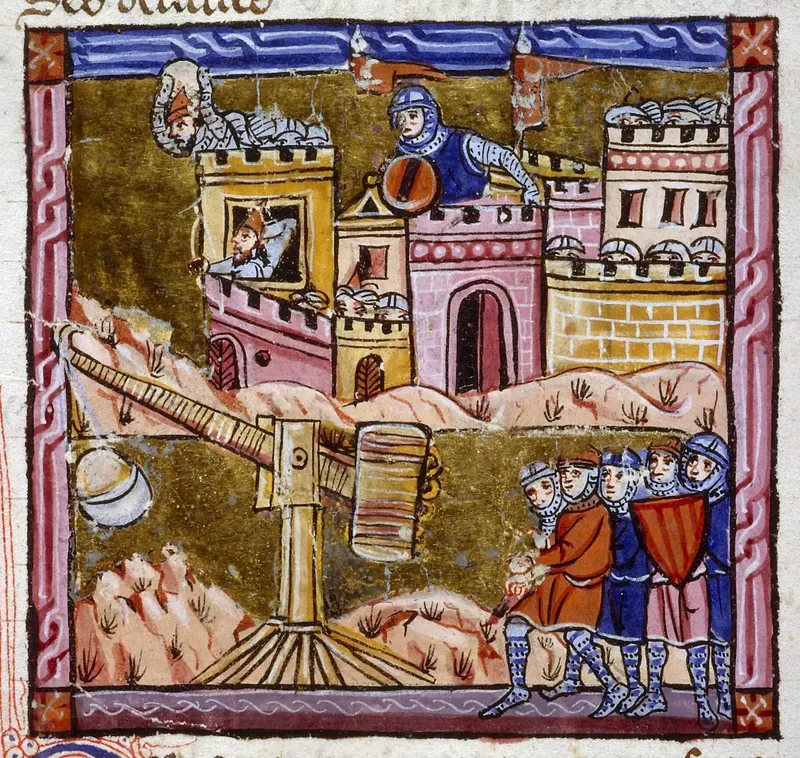
The siege of Antioch, in a medieval manuscript held at the Municipal Library of Lyon.The siege of Antioch, in a medieval manuscript held at the Municipal Library of Lyon.Image: AnonymousUnknown author · Public domain
world · Asia

The crusaders sit down outside Antioch

The armies of the First Crusade reached Antioch on 20 October 1097 and began a siege that lasted more than seven months. The city was enormous and its walls ran for miles, so the crusaders could not surround it; they starved in front of it through the winter while its garrison was supplied. Antioch fell on 3 June 1098 when an Armenian officer opened a gate to Bohemond of Taranto, and the crusaders then found themselves besieged in their turn by a relief army from Mosul. They marched out on 28 June and scattered it. Bohemond kept the city and made himself its prince.

Source: Encyclopaedia Britannica: Siege of Antioch (1097-1098) ↗
III
A CHANGING WORLD

Early Modern Era

Exploration, political change, scientific development and expanding global connections.

1740
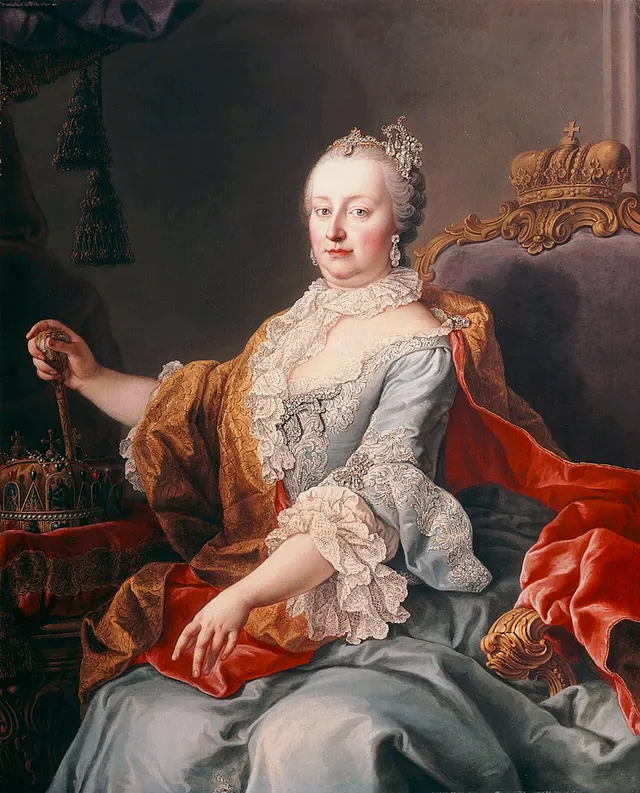
Maria Theresa, painted by Martin van Meytens.Maria Theresa, painted by Martin van Meytens.Image: Martin van Meytens · Public domain
politics · Europe

Maria Theresa inherits, and Europe goes to war over it

Charles VI, the last Habsburg emperor in the male line, died on 20 October 1740. He had spent much of his reign persuading the powers of Europe to accept the Pragmatic Sanction, which allowed his lands to pass whole to his daughter Maria Theresa. She was twenty-three. Within eight weeks Frederick II of Prussia had invaded Silesia, the richest of the Habsburg provinces, and France, Bavaria and Saxony had decided the Sanction did not bind them after all. The War of the Austrian Succession lasted until 1748. Maria Theresa lost Silesia and kept everything else, and went on to reform the monarchy from top to bottom over forty years.

Source: Encyclopaedia Britannica: Maria Theresa ↗
IV
THE NINETEENTH CENTURY

The 1800s

Industry, empire, invention, reform and a century of enormous transformation.

1803
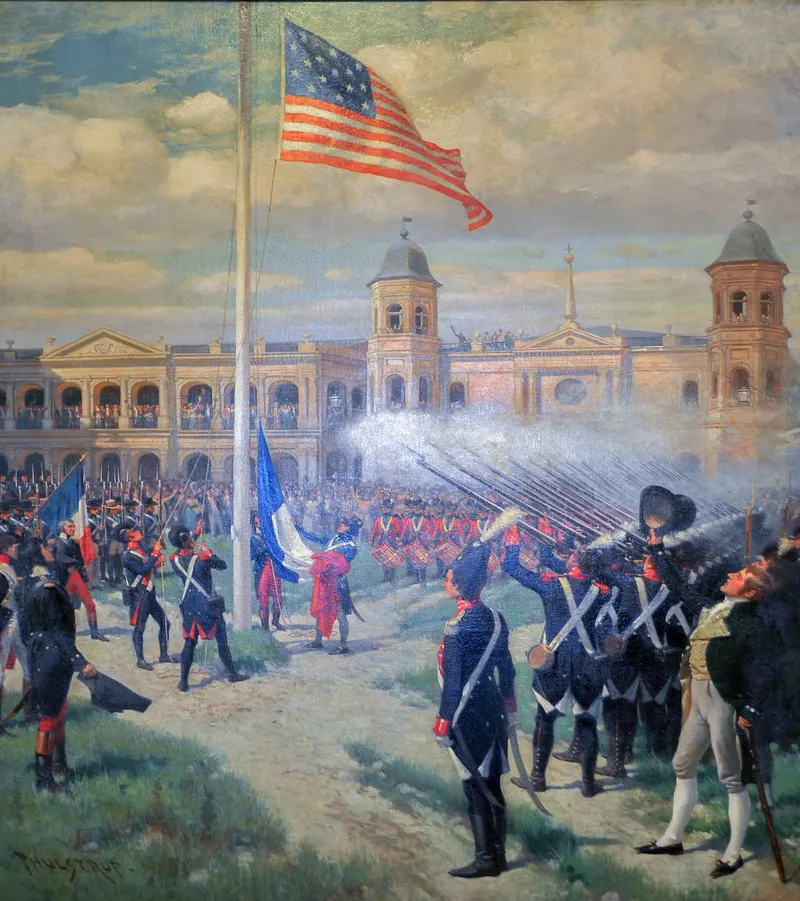
A depiction of the handover ceremony for Louisiana.A depiction of the handover ceremony for Louisiana.Image: Matysik · CC0
politics · Americas

The Senate ratifies the Louisiana Purchase

On 20 October 1803 the United States Senate voted 24 to 7 to approve the treaty by which France sold Louisiana to the United States for about fifteen million dollars. The purchase roughly doubled the size of the country, adding land that became Louisiana, Arkansas, Missouri, Iowa, Oklahoma, Kansas, Nebraska and the Dakotas, and parts of several other states. Jefferson had sent envoys to buy New Orleans and been offered the whole territory, because Napoleon had given up on an American empire after the revolution in Haiti. Jefferson had private doubts about whether the constitution allowed him to buy land at all, and did it anyway.

Source: United States Senate: the Senate approves for ratification the Louisiana Purchase treaty ↗
1827
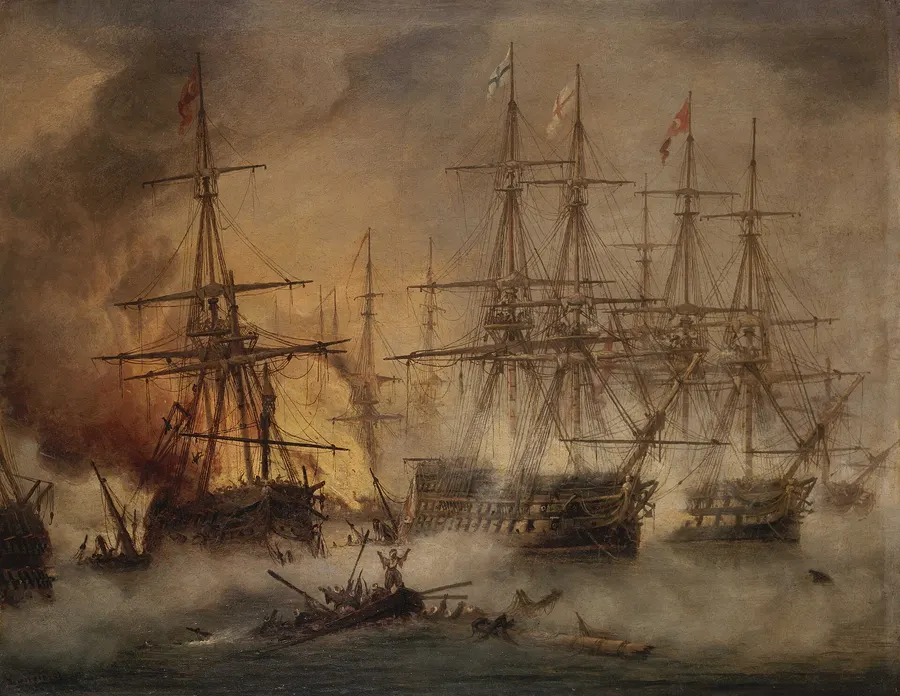
The Battle of Navarino, 20 October 1827, in a painting after George Philip Reinagle.The Battle of Navarino, 20 October 1827, in a painting after George Philip Reinagle.Image: Thomas Luny / After George Philip Reinagle · Public domain
world · Europe

An accidental battle that made Greece

Britain, France and Russia had sent squadrons to the eastern Mediterranean to press for an armistice in the Greek war of independence, with orders to make a friendly demonstration of force. On 20 October 1827 Admiral Sir Edward Codrington took the allied ships into Navarino Bay, where the Ottoman and Egyptian fleet lay at anchor. A skirmish between small boats started the shooting, and within hours the bay was a wreck. It was the last major engagement fought entirely under sail. Around sixty Turkish and Egyptian ships were destroyed and some 6,000 men killed or wounded, against about 700 allied casualties. Nobody in London had wanted a battle - the government called it an untoward event - but it settled the matter: Ottoman forces left Greece within ten months and the Kingdom of Greece was recognised in 1832.

Source: Royal Museums Greenwich: the Battle of Navarino, 20 October 1827 ↗
V
THE TWENTIETH CENTURY

The 1900s

War and peace, technological leaps, social change, politics, sport and popular culture.

1944
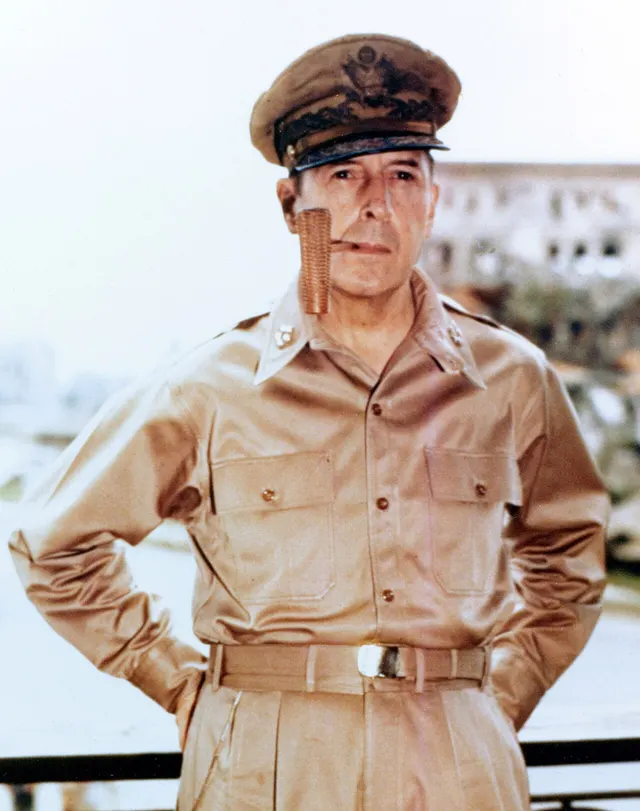
General Douglas MacArthur, who commanded the return to the Philippines.General Douglas MacArthur, who commanded the return to the Philippines.Image: Photographer not credited. · Public domain
world · Asia

MacArthur comes back to the Philippines

Four divisions of the US Sixth Army went ashore on the island of Leyte on 20 October 1944. That afternoon General Douglas MacArthur waded in from a landing craft with the Philippine president Sergio Osmeña beside him, and broadcast to the country he had left in 1942: ‘People of the Philippines, I have returned.’ The landing began one of the hardest campaigns of the Pacific war and drew the Japanese fleet into the Battle of Leyte Gulf, the largest naval engagement of the twentieth century, three days later. The Philippines were not declared liberated until July 1945, at enormous cost to Filipino civilians, the capital Manila among the most destroyed cities of the war.

Source: National WWII Museum: MacArthur returns to the Philippines ↗
1944
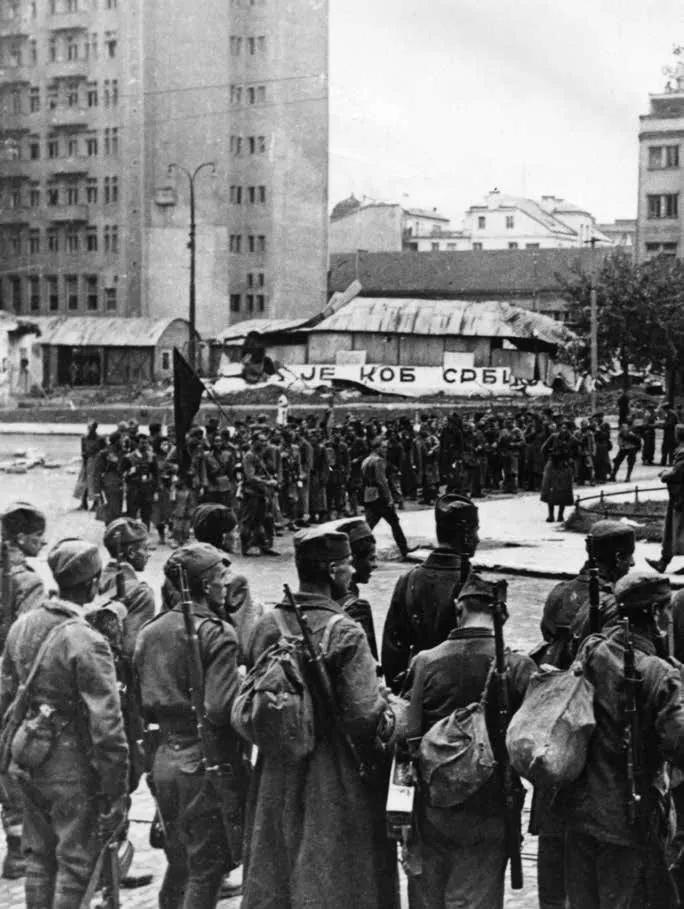
Partisan fighters of the First Proletarian Division on Republic Square in Belgrade, October 1944.Partisan fighters of the First Proletarian Division on Republic Square in Belgrade, October 1944.Image: Rista Marjanovic · Public domain
world · Europe

Belgrade falls to the Partisans and the Red Army

Belgrade was taken on 20 October 1944 by a joint operation of the Soviet Red Army and Tito’s Yugoslav Partisans, after a week of street fighting. The city had been under German occupation since April 1941. The Partisans went on to clear the rest of the country largely by themselves, which mattered politically: Yugoslavia was the one country in eastern Europe whose communists came to power without depending on Soviet occupation, and Tito broke with Stalin in 1948 on the strength of it. For the Yugoslav monarchy, which had spent the war in London, the liberation of Belgrade settled the question of whether there would be anything to come back to.

Source: Encyclopaedia Britannica: Partisan, Yugoslav resistance force ↗
1962
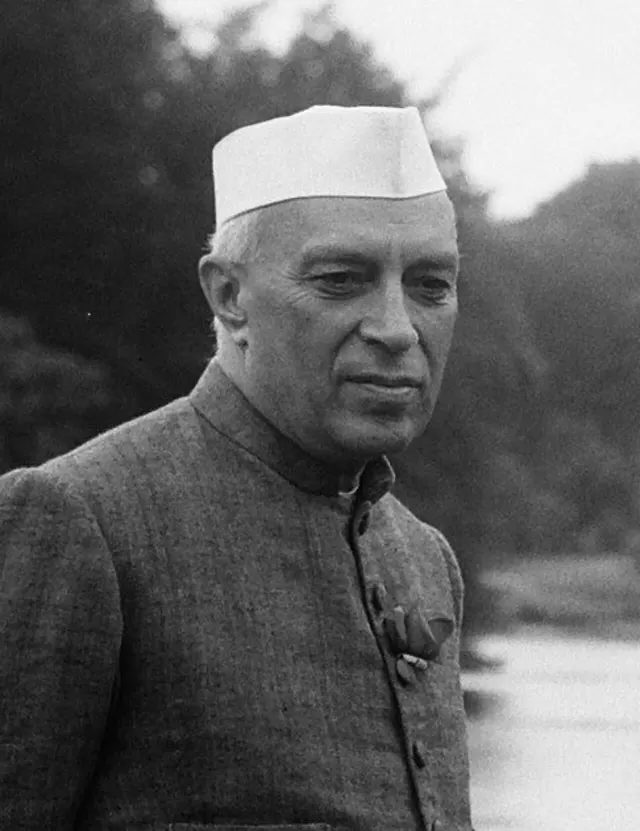
Jawaharlal Nehru, prime minister of India in 1962.Jawaharlal Nehru, prime minister of India in 1962.Image: Harry Pot · CC0
politics · Asia

China attacks across the Himalayan border

On 20 October 1962 the People’s Liberation Army attacked simultaneously in Ladakh in the west and across the McMahon Line in the east, opening a month-long war with India. The border had never been agreed; the two sides had been skirmishing since 1959, when India granted asylum to the Dalai Lama after the rising in Tibet. Indian forces, badly equipped for high-altitude fighting and strung out along the passes, were quickly beaten; about 7,000 men were killed or captured, and the way into the Assam lowlands lay open. China declared a unilateral ceasefire on 20 November and pulled back in the east, keeping most of Aksai Chin in the west. The shock ended Nehru’s standing as the leader of non-alignment, and the border remains disputed.

Source: Encyclopaedia Britannica: Sino-Indian War ↗
1973
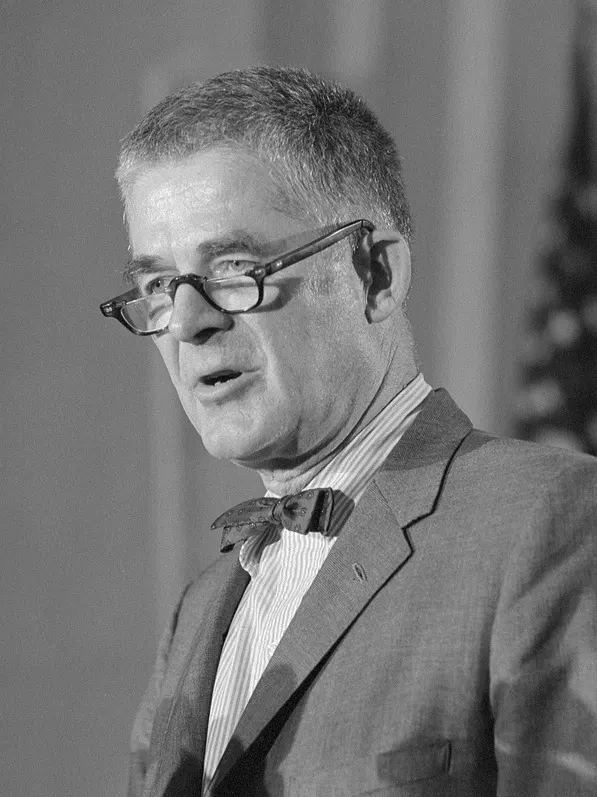
Archibald Cox, the Watergate special prosecutor dismissed on 20 October 1973.Archibald Cox, the Watergate special prosecutor dismissed on 20 October 1973.Image: Warren K. Leffler · Public domain
politics · Americas

The Saturday Night Massacre

Archibald Cox, the special prosecutor investigating Watergate, had subpoenaed the tapes President Nixon had made of his own White House conversations. Nixon offered summaries instead; Cox refused them. On the evening of Saturday 20 October 1973 Nixon ordered the attorney general, Elliot Richardson, to fire him. Richardson resigned. His deputy, William Ruckelshaus, resigned rather than do it. The solicitor general, Robert Bork, carried out the order. The White House also had the special prosecutor’s offices sealed. The reaction was immediate and enormous - a firestorm of telegrams to Congress, and the first serious impeachment resolutions. A federal court later ruled the dismissal illegal, a new special prosecutor was appointed, and the tapes went to the Supreme Court. Nixon resigned the following August.

Source: Encyclopaedia Britannica: Saturday Night Massacre ↗
1973
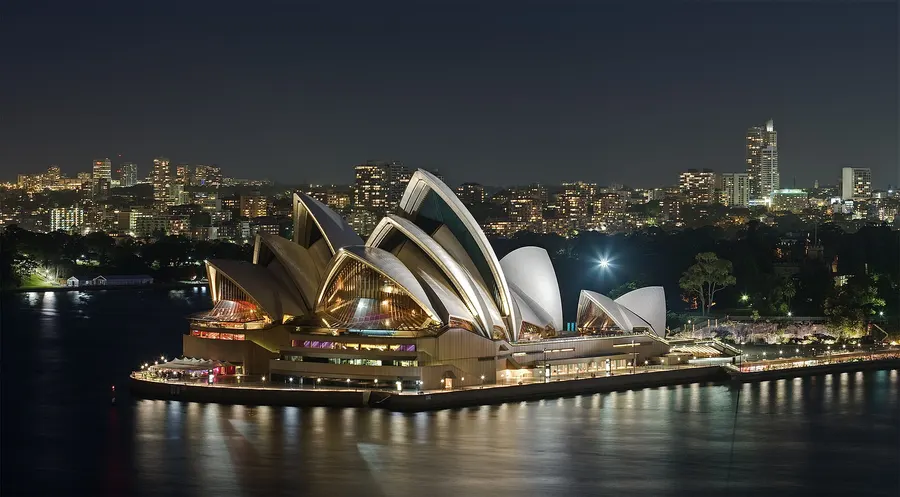
The Sydney Opera House on Bennelong Point.The Sydney Opera House on Bennelong Point.Image: Diliff · CC BY-SA 3.0
culture · Oceania

The Queen opens the Sydney Opera House

Elizabeth II opened the Sydney Opera House on Bennelong Point on 20 October 1973, standing in the wind to congratulate Sydney on a remarkable addition to its architecture. Building had begun in 1959 and had been expected to take four years; it took fourteen, and cost roughly fifteen times the original estimate, most of it raised by a state lottery. The design came from an unknown Danish architect, Jørn Utzon, whose entry had been pulled out of a rejected pile. He resigned in 1966 after a change of state government and a dispute over money and control, left Australia and never saw the finished building; an Australian team led by Peter Hall completed the interiors. Utzon was reconciled with the Opera House in the 1990s and it became a World Heritage Site in 2007, one of very few listed in its architect’s lifetime.

Source: Sydney Opera House: fifty years of extraordinary moments ↗
1983
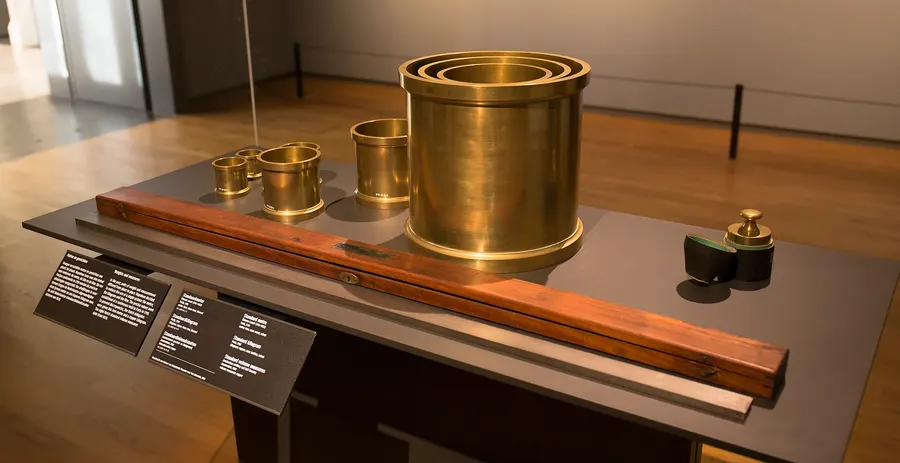
Nineteenth-century metric standards in the Rijksmuseum, Amsterdam.Nineteenth-century metric standards in the Rijksmuseum, Amsterdam.Image: Yerpo · CC BY-SA 4.0
science · Global

The metre becomes a piece of time

In 1983 the General Conference on Weights and Measures redefined the metre as the distance light travels in a vacuum in 1/299,792,458 of a second. NIST dates the decision to 20 October. It replaced a definition based on the wavelength of krypton-86 light, which had in turn replaced a platinum-iridium bar kept outside Paris. The consequence is neat and slightly strange: the speed of light is no longer something to be measured but a number fixed by definition, exactly 299,792,458 metres per second. Any improvement in measurement now makes the metre more precise rather than changing what the speed of light turns out to be. The same logic was later applied to the kilogram, which stopped being a lump of metal in 2019.

Source: National Institute of Standards and Technology: timeline for the definition of the meter ↗
WHY THESE MOMENTS?

Significance before volume

This page is not the longest possible list of events. It is a chronological journey through 20 October, where each entry is chosen for historical significance, human interest and reliability.

Facts are checked against authoritative museums, archives, universities and reference works. Where sources disagree, the page says so.

EXPLORED THE DEEPER STORY?

Return to the highlights of 20 October

Discover the lighter side of the date with famous birthdays, culture, firsts and lives remembered.

Explore This Day →
← PREVIOUS DAY19 October
HISTORY & TIMELINE20 October
NEXT DAY →21 October