
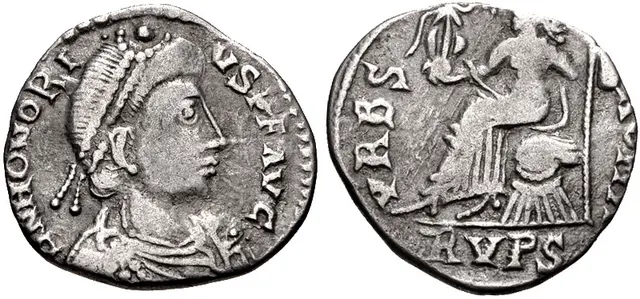
 A silver coin of Gaiseric, king of the Vandals and Alans.Image: Unknown authorUnknown author · CC BY-SA 2.5
The Vandals take Carthage
On 19 October 439 Gaiseric, king of the Vandals, took Carthage and threw off the arrangement under which he had nominally held North Africa on Rome’s behalf. He made the city his capital. His people - some 80,000 of them, by the figure the sources give - had crossed from Spain into Africa ten years earlier and had met very little that could stop them. It was a heavier blow than the size of the army suggests. Roman Africa was the western empire’s granary and one of its richest tax provinces, and Carthage was its second city. With it Gaiseric acquired a fleet, and with the fleet the western Mediterranean; in 455 he sacked Rome itself. Rome recognised the Vandal kingdom by treaty in 442. Byzantium did not take Africa back for nearly a century.
Source: Encyclopaedia Britannica: Gaiseric ↗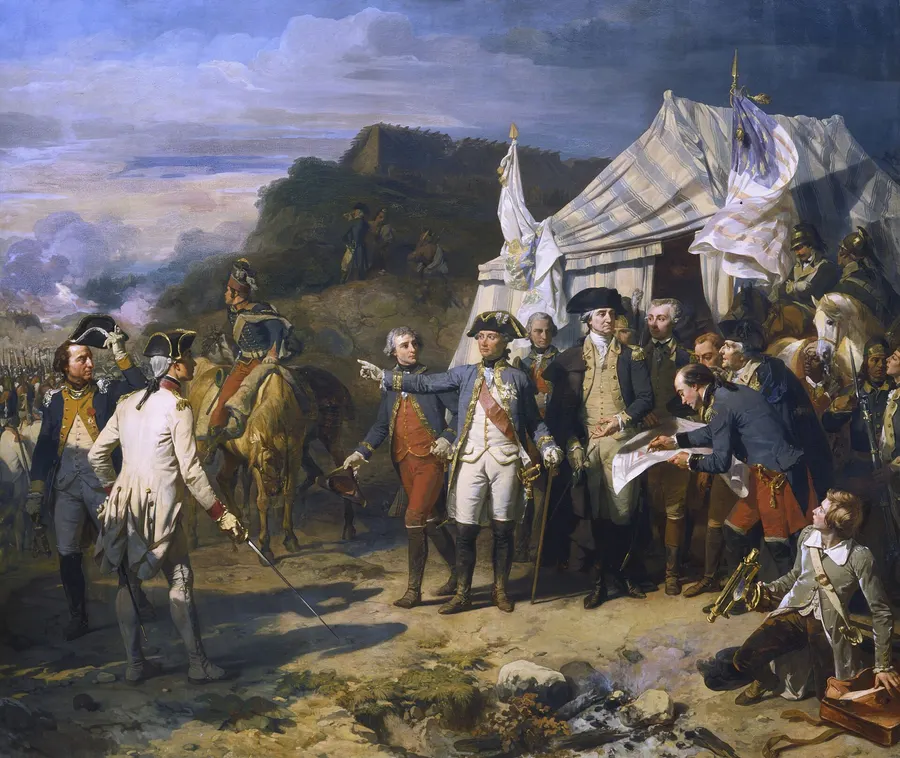 Auguste Couder’s painting of the siege of Yorktown.Image:
 Adolph Northen’s nineteenth-century painting of the retreat from Moscow.Image:
 Max Planck, photographed by Hugo Erfurth.Image:
 The Menin Gate at Ypres, the memorial to the Commonwealth dead of the Ypres salient who have no known grave.Image:
 A laboratory assay of streptomycin.Image:
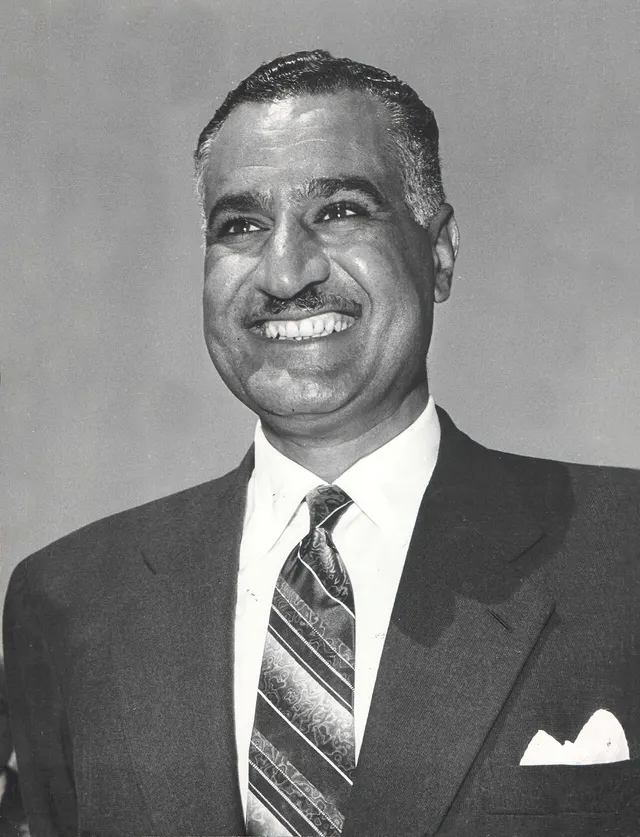 Gamal Abdel Nasser, who signed the 1954 agreement for Egypt.Image:
 The S&P 500 index around the crash of October 1987, charted by the Federal Reserve.Image:
 Saddam Hussein, president of Iraq from 1979 to 2003.Image: