
HISTORY & TIMELINE
18 October

A journey through
18 October in history

From a Danish victory in an Essex field in 1016 to a long jump nobody could believe in 1968, 18 October is a day of handovers, departures and records. This timeline follows the date across a thousand years.

JUMP THROUGH TIME
II
THE MIDDLE AGES

Medieval History

Kingdoms, conflict, faith, power and the changing medieval world.

1016
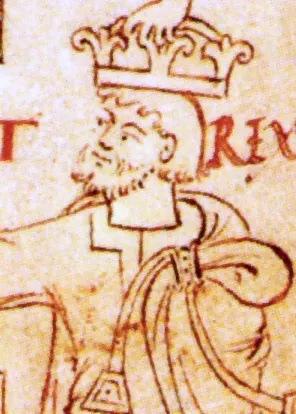
Cnut, in a medieval manuscript illustration.Cnut, in a medieval manuscript illustration.Image: See Description (unknown) · Public domain
world · Europe

Cnut defeats Edmund Ironside at Assandun

On 18 October 1016 the Danish army of Cnut beat the English under Edmund Ironside at Assandun, most probably in Essex. Contemporary accounts blame the English defeat on the treachery of Eadric Streona, who is said to have changed sides during the fighting. Edmund survived the battle and agreed to divide the kingdom, then died on 30 November, which left Cnut ruler of all England - and, in time, of Denmark and Norway as well. Cnut founded a memorial church on the battlefield. Far less is known about Assandun than about Hastings fifty years later, because far fewer sources survive.

Source: British Library: remembering Assandun ↗
1356
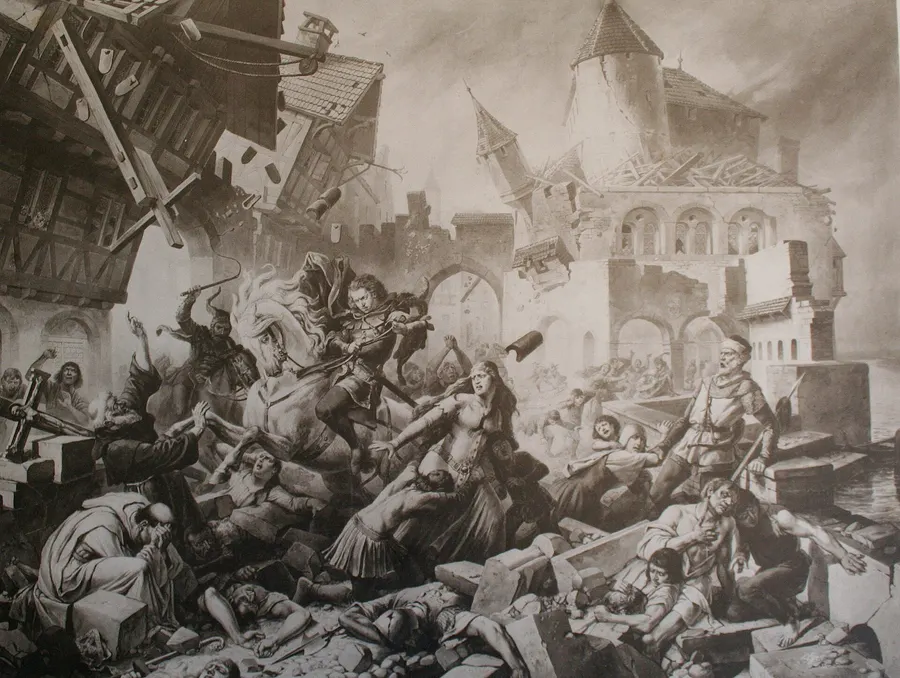
A nineteenth-century painting by Karl Jauslin imagining the Basel earthquake of 1356.A nineteenth-century painting by Karl Jauslin imagining the Basel earthquake of 1356.Image: Karl Jauslin · Public domain
world · Europe

The strongest earthquake recorded north of the Alps

The shaking at Basel began around midday on 18 October 1356; a stronger shock at about six in the evening did the first serious damage, and the largest, estimated at magnitude 6.6, came at about ten at night. Most people had already gone outdoors and stayed there, which probably saved many lives. The city burned, the castles for miles around were wrecked, and aftershocks went on for months. It remains the strongest earthquake documented anywhere north of the Alps. Around twenty documents written shortly afterwards survive, and they are the reason so much is known about a disaster nearly seven centuries old.

Source: Swiss Seismological Service, ETH Zurich: Basel 1356 ↗
III
A CHANGING WORLD

Early Modern Era

Exploration, political change, scientific development and expanding global connections.

1685
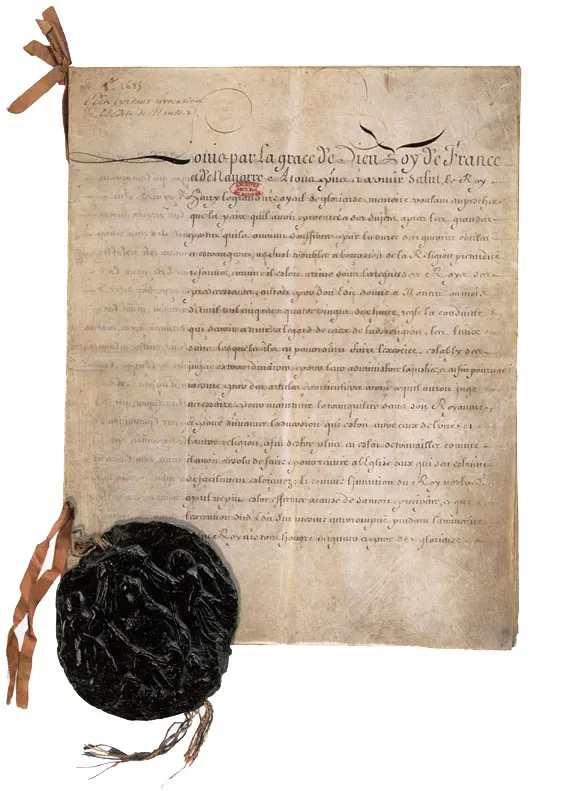
The Edict of Fontainebleau of 1685, revoking the Edict of Nantes.The Edict of Fontainebleau of 1685, revoking the Edict of Nantes.Image: Louis XIV of France. · Public domain
politics · Europe

Louis XIV revokes the Edict of Nantes

The Edict of Nantes, granted by Henry IV in 1598, had given French Protestants the right to worship and a measure of civil protection. On 18 October 1685 Louis XIV signed the Edict of Fontainebleau, which took it all away: Protestant worship banned, churches pulled down, pastors expelled, children to be baptised as Catholics. It also forbade Protestants to leave the country - an unusual provision even by the standards of seventeenth-century Europe, since it compelled conversion without offering exile as a way out. For twenty years the crown had been narrowing the edict piece by piece and billeting dragoons on Protestant households to frighten them into converting. Several hundred thousand Huguenots left anyway, for England, the Dutch Republic, Prussia, Switzerland and the American colonies, taking their trades with them. Some accounts date the edict 22 October, when it was registered.

Source: Musée protestant: the Edict of Fontainebleau or the Revocation (1685) ↗
IV
THE NINETEENTH CENTURY

The 1800s

Industry, empire, invention, reform and a century of enormous transformation.

1851
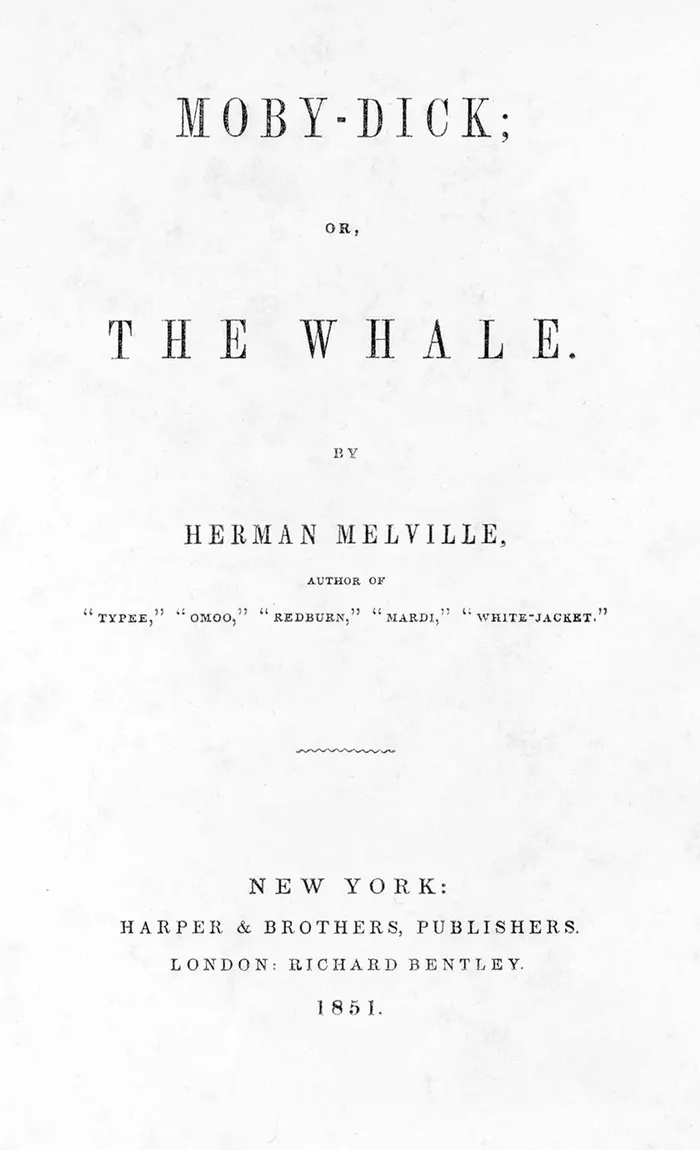
The title page of the first American edition of Moby-Dick, published a month after the London edition.The title page of the first American edition of Moby-Dick, published a month after the London edition.Image: The original uploader was Chick Bowen at English Wikipedia. · Public domain
culture · Americas

A long novel about a whale

Herman Melville’s sixth book appeared first in London, published by Richard Bentley on 18 October 1851 in three handsome volumes under the title The Whale. The American edition, called Moby-Dick; or, The Whale, followed on 14 November. Melville had sent Bentley a set of the American proof sheets, which were then edited for British taste and British spelling. The London version also lost the epilogue, in which Ishmael explains how he survived - so British reviewers complained, reasonably, that the story was told by a narrator who had drowned. The book sold poorly in Melville’s lifetime and he died in 1891 largely forgotten. Its reputation as one of the great American novels was built in the 1920s, thirty years after his death.

Source: Herman Melville Electronic Library: Moby-Dick, American and British first editions ↗
1867
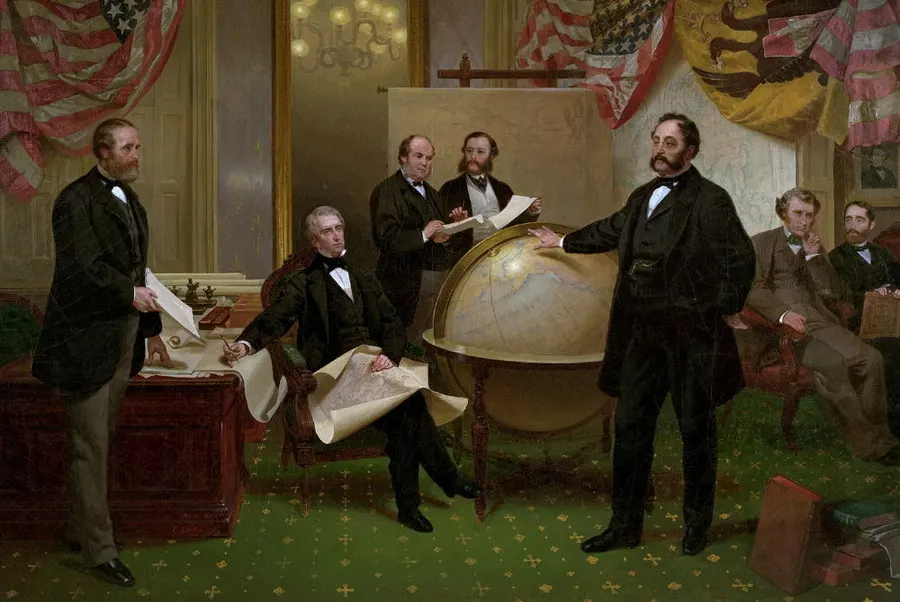
Emanuel Leutze's painting of the signing of the Alaska treaty in March 1867.Emanuel Leutze’s painting of the signing of the Alaska treaty in March 1867.Image: Emanuel Leutze · Public domain
world · Americas

A flag comes down on Castle Hill

On the afternoon of 18 October 1867, on the rock above Sitka the Russians called Castle Hill, Brigadier General Lovell Rousseau and Captain Alexei Peshchurov met at the foot of the flagstaff outside the governor’s house. Russian and American troops lined the parapet. The Russian flag came down, the American flag went up, and Russian America became a territory of the United States. The money - 7.2 million dollars, about two cents an acre - had been agreed in March, in a treaty signed at four in the morning by the secretary of state William Seward and the Russian minister Eduard de Stoeckl. Russia wanted to sell a colony it could not defend; American newspapers called the purchase Seward’s Folly. Nobody at the ceremony consulted the Tlingit, Haida and Aleut peoples whose land it was. Alaska Day is still kept on 18 October.

Source: National Park Service: American Flag Raising Site, Sitka ↗
1898
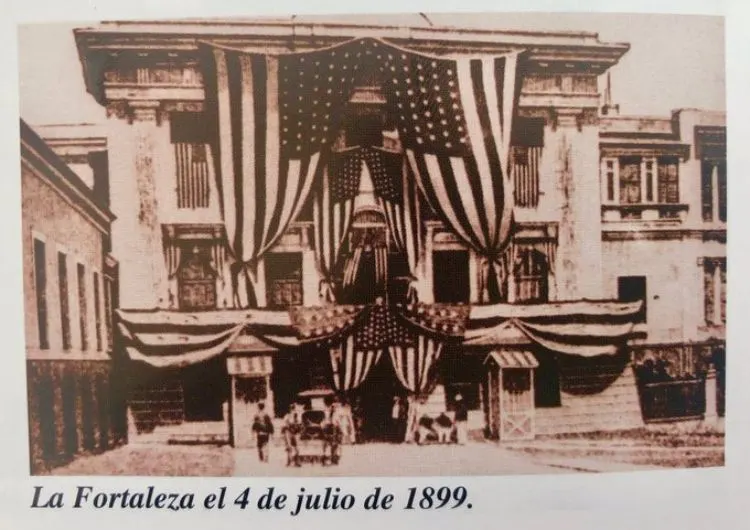
La Fortaleza in San Juan, hung with United States flags on 4 July 1899, the year after the handover.La Fortaleza in San Juan, hung with United States flags on 4 July 1899, the year after the handover.Image: Arequipa belleza · CC BY-SA 4.0
world · Americas

Four hundred years of Spanish rule end in Puerto Rico

The last Spanish troops sailed from Puerto Rico on 18 October 1898, and the United States flag was raised over the public buildings of San Juan. American forces under General Nelson Miles had landed in July, during the Spanish-American War; an armistice followed in August, and the formal handover took two months to complete. The Treaty of Paris in December confirmed the transfer. It ended slightly more than four centuries of Spanish rule, begun when Columbus reached the island in 1493. Puerto Rico had won a charter of autonomy from Madrid only the previous year, and it was set aside. The island’s people were made United States citizens in 1917; its political status has been argued over ever since.

Source: Library of Congress: the changing of the guard - Puerto Rico in 1898 ↗
V
THE TWENTIETH CENTURY

The 1900s

War and peace, technological leaps, social change, politics, sport and popular culture.

1922
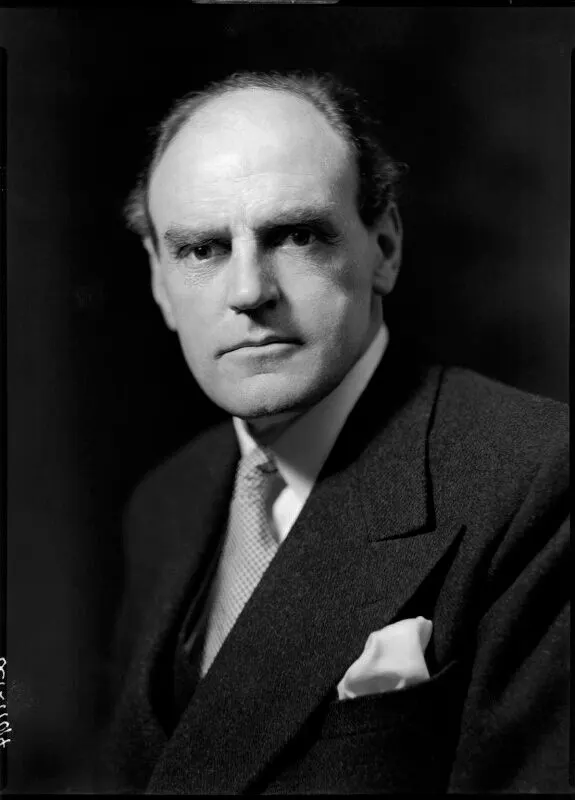
John Reith, the BBC's first general manager and later its director general.John Reith, the BBC’s first general manager and later its director general.Image: Howard Coster · Public domain
culture · Europe

The British Broadcasting Company is formed

The British Broadcasting Company Ltd was established on 18 October 1922 as a private firm owned by the wireless manufacturers, who wanted something worth listening to so that people would buy their sets. Only bona fide manufacturers could hold shares, and the directors met under an independent chairman. Daily broadcasting began from the 2LO transmitter in London on 14 November. Its first general manager was John Reith, a 33-year-old Scottish engineer with a formidable sense of purpose and a formula for what broadcasting was for: to inform, educate and entertain. A parliamentary committee concluded that something this influential should not be owned by set-makers, and in 1927 the company was wound up and replaced by the British Broadcasting Corporation, answerable to Parliament but run day to day by its own governors.

Source: Encyclopaedia Britannica: formation of the British Broadcasting Company ↗
1963
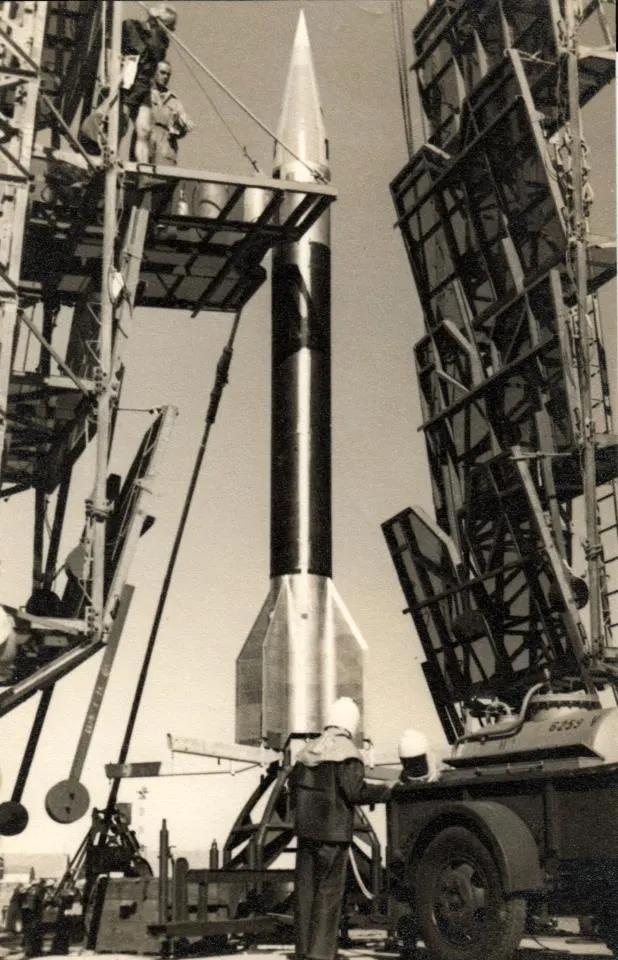
A Véronique sounding rocket, the type used for the 1963 flight.A Véronique sounding rocket, the type used for the 1963 flight.Image: Eric Salard · Public domain
science · Africa

The first cat in space

On 18 October 1963 a French Véronique sounding rocket lifted off from Hammaguir, the launch site France then maintained in the Algerian Sahara, carrying a small black-and-white cat. The flight reached the edge of space and lasted about a quarter of an hour; the capsule came down by parachute and the cat was recovered alive. The animal was called Félicette, though early press reports gave the name as Félix and the mistake has been repeated ever since. She was one of fourteen stray cats bought in Paris and trained for the programme, and she remains the only cat to have flown in space. A bronze statue of her was put up at the International Space University in Strasbourg in 2019.

Source: Smithsonian National Air and Space Museum: has there ever been a cat in space? ↗
1967
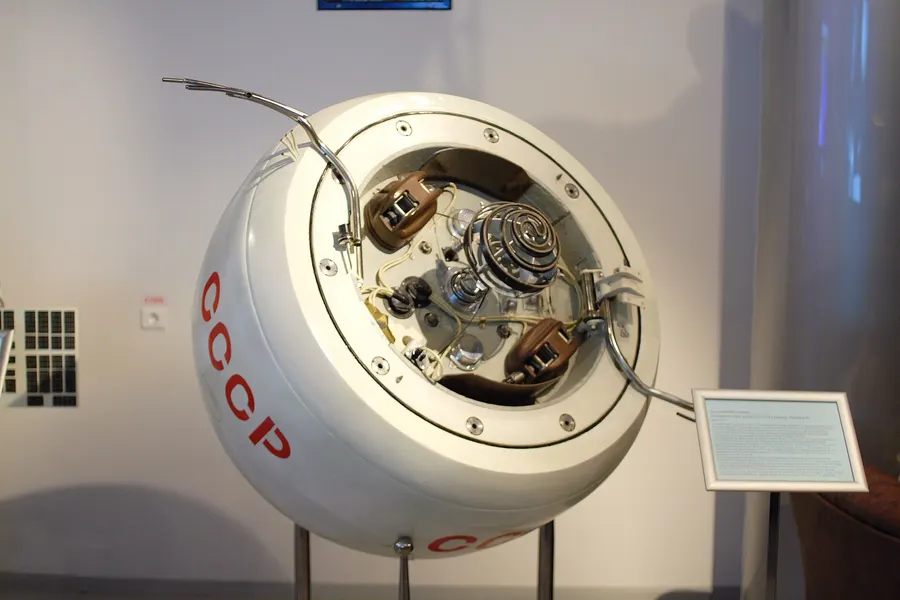
A Venera 4 descent capsule on display in a museum.A Venera 4 descent capsule on display in a museum.Image: Rave · CC BY-SA 3.0
science · Europe

The first readings from the air of another planet

The descent capsule of the Soviet probe Venera 4 entered the atmosphere of Venus on 18 October 1967, on the planet’s night side, and transmitted for ninety-three minutes as it came down under a parachute. It was the first spacecraft to measure the atmosphere of another planet directly and send the numbers home. What it found was a shock. The air was 90 to 95 per cent carbon dioxide, and the temperature and pressure rose so fast that the capsule stopped transmitting around 25 kilometres up, crushed and cooked long before it reached the surface. Soviet engineers had badly underestimated Venus. Later Venera craft were built like bathyspheres, and in 1975 Venera 9 sent back the first photograph taken from the surface of another planet.

Source: NASA Space Science Data Coordinated Archive: Venera 4 ↗
1968
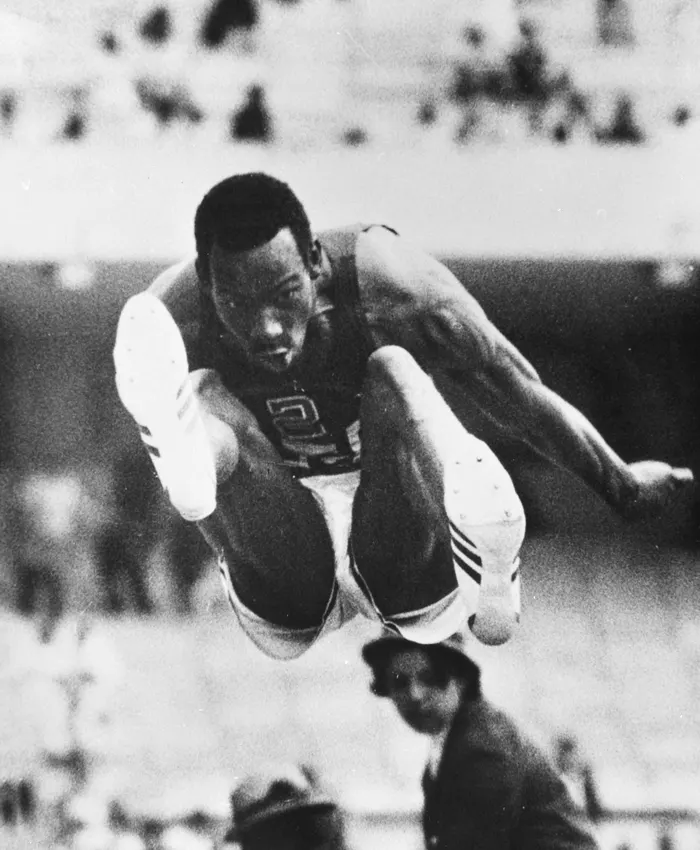
Bob Beamon at the 1968 Olympic Games in Mexico City.Bob Beamon at the 1968 Olympic Games in Mexico City.Image: Unknown authorUnknown author · CC0
sport · Americas

The jump that broke the measuring device

On 18 October 1968, in his first jump of the Olympic long jump final in Mexico City, Bob Beamon landed so far down the pit that the optical measuring device slid off the end of its rail. Officials had to fetch a steel tape. The distance was 8.90 metres - 55 centimetres beyond the existing world record, a margin nobody had come close to before or has since. Beamon did not understand the metric figure until his team-mate Ralph Boston told him it was over 29 feet; he then sank to the ground in a cataplexic fit and had to be helped up. The thin air of Mexico City and a following wind at the legal limit helped, but the jump stood as a world record for twenty-three years and is still the Olympic record. The word ‘Beamonesque’ entered the language for a performance that leaves the field behind.

Source: World Athletics: the perfect jump - Beamon’s 8.90m at fifty ↗
1991
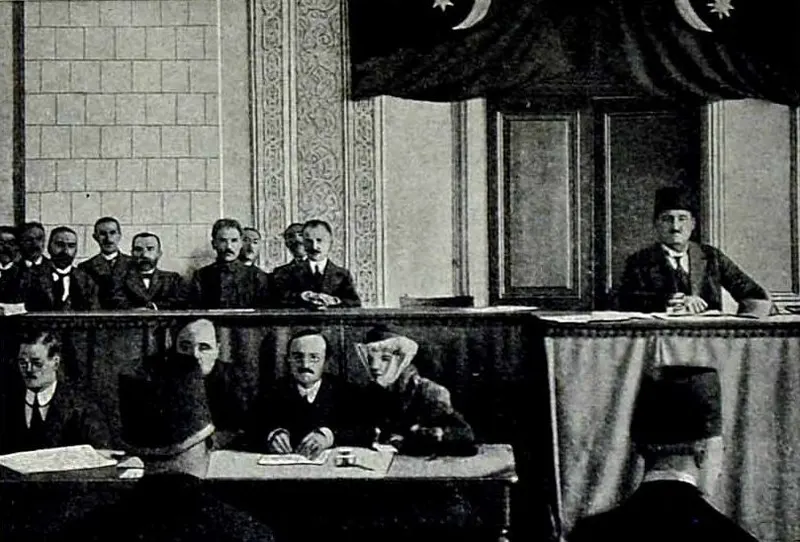
The opening of the parliament of the first Azerbaijan Democratic Republic in 1918, the state the 1991 act set out to restore.The opening of the parliament of the first Azerbaijan Democratic Republic in 1918, the state the 1991 act set out to restore.Image: Azerbaijan Agency · Public domain
politics · Asia

Azerbaijan writes its independence into law

On 18 October 1991 the Supreme Soviet in Baku adopted the Constitutional Act on the State Independence of the Republic of Azerbaijan. A declaration had been made in August, in the confusion after the failed coup in Moscow, but the act of 18 October is the document that set out the legal and economic foundations of the new state, and it is the date Azerbaijan keeps. The act deliberately presented itself as a restoration rather than a new beginning: the Azerbaijan Democratic Republic of 1918-20, one of the first parliamentary republics in the Muslim world and among the first states anywhere to give women the vote, had been absorbed by the Red Army in 1920. Independence came with the war in Nagorno-Karabakh already under way.

Source: Council of Europe: constitutional legislation of Azerbaijan ↗
WHY THESE MOMENTS?

Significance before volume

This page is not the longest possible list of events. It is a chronological journey through 18 October, where each entry is chosen for historical significance, human interest and reliability.

Facts are checked against authoritative museums, archives, universities and reference works. Where sources disagree, the page says so.

EXPLORED THE DEEPER STORY?

Return to the highlights of 18 October

Discover the lighter side of the date with famous birthdays, culture, firsts and lives remembered.

Explore This Day →
← PREVIOUS DAY17 October
HISTORY & TIMELINE18 October
NEXT DAY →19 October