The Stamp Act becomes law
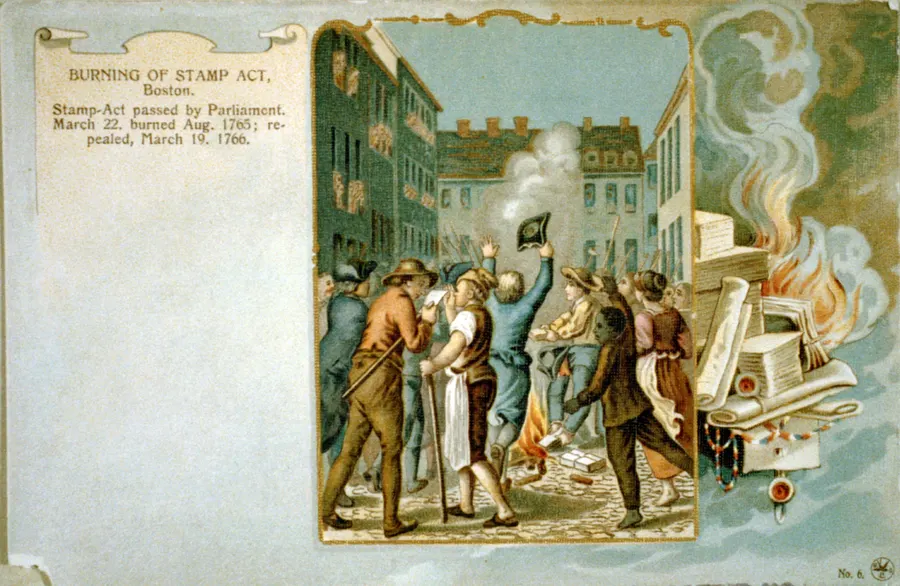
On 22 March 1765 the Stamp Act received royal assent in London. It was the first direct tax that Parliament laid on Britain’s thirteen American colonies: from November, newspapers, legal documents, pamphlets, playing cards and even dice would have to carry a paid-for stamp.
The prime minister, George Grenville, wanted the colonies to share the cost of defending them after the Seven Years’ War. Instead the tax united them in protest under the cry of ‘no taxation without representation’. Stamp distributors were forced to resign, and Parliament repealed the act in 1766, but the quarrel it began ended in revolution.
Read the full storyHistory & Timeline →Source: UK Parliament: The Stamp Act, 1765 ↗