Explore 27 February

Explore 27 February: fire guts the Reichstag in Berlin, the Dominican Republic breaks away from Haiti, Boer marksmen win at Majuba Hill and a young physicist announces the neutron. Meet Henry Wadsworth Longfellow, John Steinbeck and Elizabeth Taylor, born on this date.

This day through time →14 verified events across 3 eras

Firemen at work on the burning Reichstag, 27 February 1933.
Image creditUnknown authorUnknown author · Public domainResized and cropped for display.

Fire destroys the Reichstag in Berlin

On the night of 27 February 1933, four weeks after Adolf Hitler became chancellor, fire broke out at several points inside the Reichstag, Germany’s parliament building in Berlin, and the debating chamber was gutted. Police arrested a 24-year-old Dutch drifter, Marinus van der Lubbe, at the scene.

The Nazi leadership at once claimed the fire was the start of a Communist uprising. The next day an emergency decree suspended freedom of speech, of the press and of assembly, and it stayed in force until 1945. Only van der Lubbe was convicted, and who was behind the fire is still debated.

Read the full storyHistory & Timeline →Source: United States Holocaust Memorial Museum: The Reichstag fire ↗
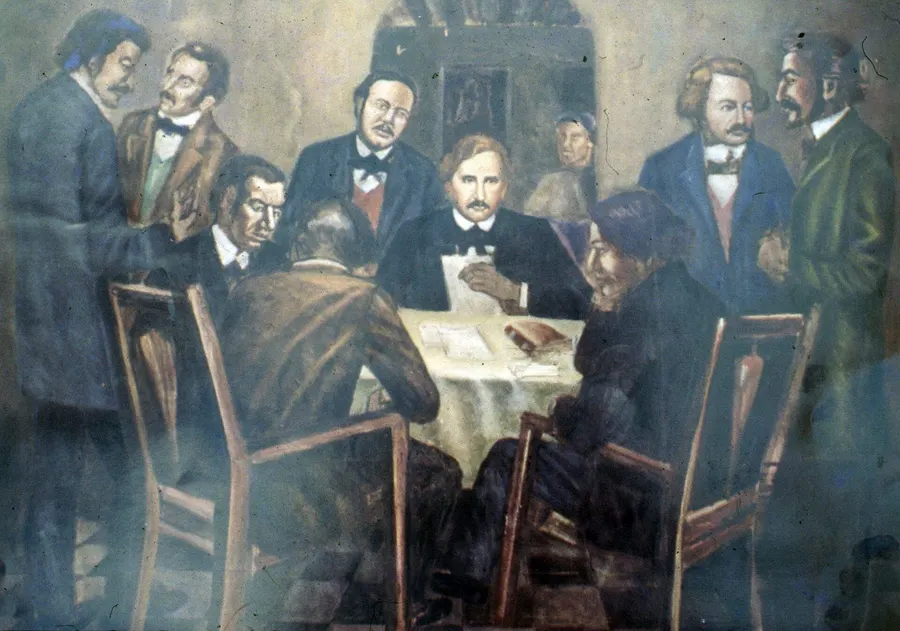
A painting of the secret society La Trinitaria, whose members planned the break with Haiti.
Image creditUnknown/Desconocido · Public domainResized and cropped for display.

The Dominican Republic breaks away from Haiti

Haiti had ruled the whole island of Hispaniola since 1822. On 27 February 1844 rebels in Santo Domingo rose against Haitian rule and proclaimed an independent Dominican Republic on the eastern two-thirds of the island.

The revolt grew out of La Trinitaria, a secret society founded by Juan Pablo Duarte. Duarte, Francisco del Rosario Sánchez, who led the rising itself, and Matías Ramón Mella are honoured as the country’s three founding fathers, and 27 February is its national day.

Read the full storyHistory & Timeline →Source: US Department of State, Office of the Historian: Dominican Republic ↗
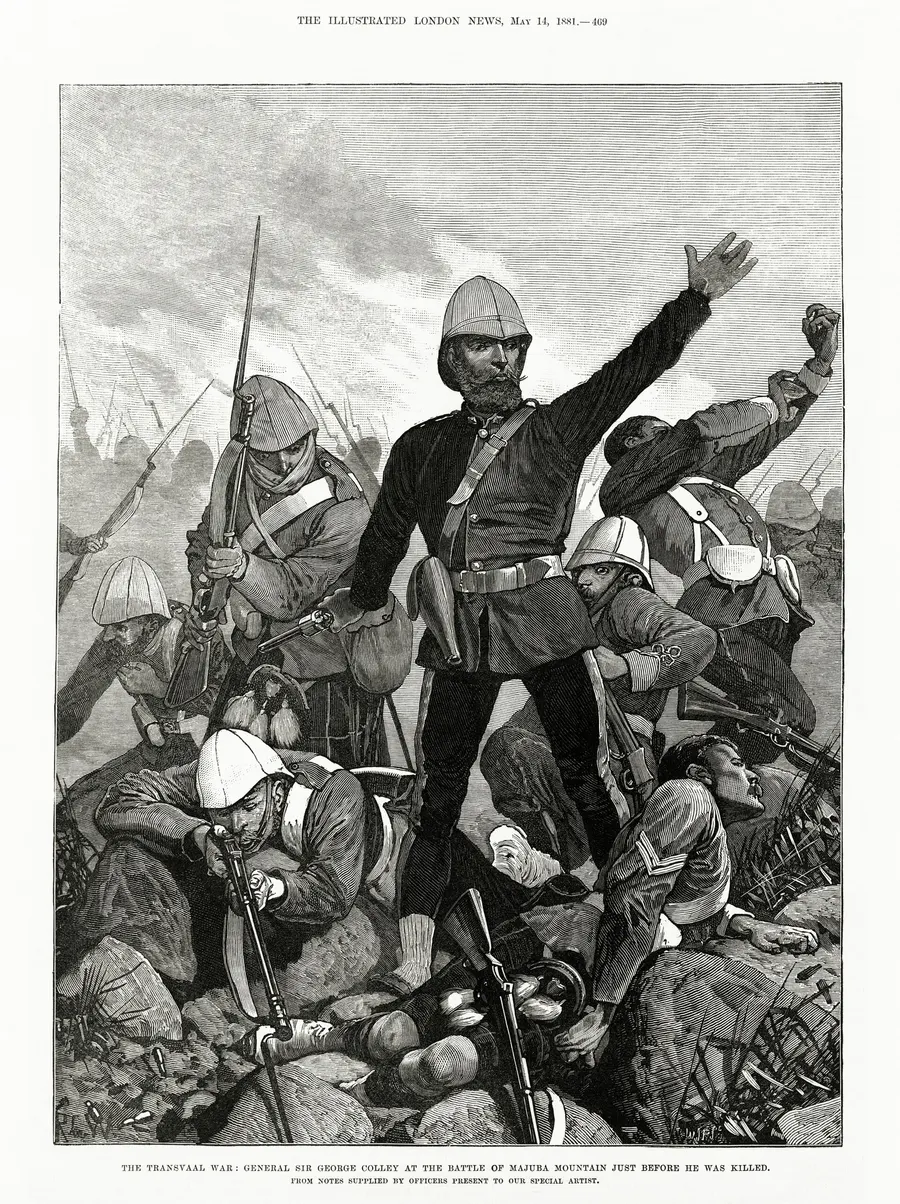
General Sir George Colley at Majuba shortly before he was killed, drawn by Melton Prior for the Illustrated London News, 1881.
Image creditMelton Prior (1845-1910). · Public domainResized and cropped for display.

Boer marksmen win at Majuba Hill

During the night of 26 February 1881, Major-General Sir George Colley led several hundred British soldiers up Majuba Hill, on the border of Natal and the Transvaal, to overlook the Boer positions. On the morning of 27 February Boer riflemen worked their way up the slopes and drove them off the summit.

About 285 British soldiers were killed or wounded, Colley among the dead, against a handful of Boer casualties. The defeat ended the First Anglo-Boer War, and the Pretoria Convention that August restored self-government to the Transvaal.

Read the full storyHistory & Timeline →Source: Encyclopaedia Britannica: Battle of Majuba Hill ↗
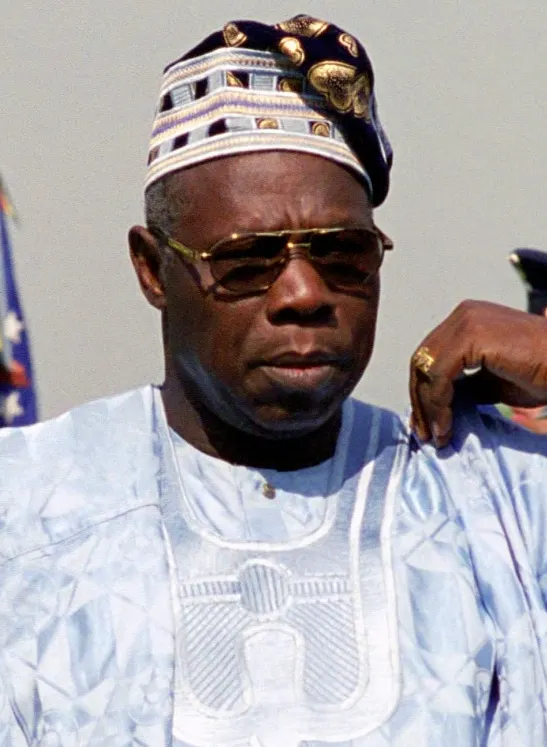
Olusegun Obasanjo as President of Nigeria, on a visit to Washington in 2001.
Image creditHelene C. Stikkel · Public domainResized and cropped for display.

Nigeria votes for a civilian president

After fifteen years of military rule, Nigerians voted for a president on 27 February 1999. Olusegun Obasanjo of the People’s Democratic Party won about 62 per cent of the vote against Olu Falae, though observers, among them a mission led by Jimmy Carter, reported irregularities.

Obasanjo, a former general, had himself handed power to civilians as military head of state in 1979. He was sworn in on 29 May 1999, the start of the longest unbroken period of civilian government in Nigeria’s history.

Read the full storyHistory & Timeline →Source: Council on Foreign Relations: The legacy of Nigeria’s 1999 transition to democracy ↗
♙
PEOPLE

Born Today

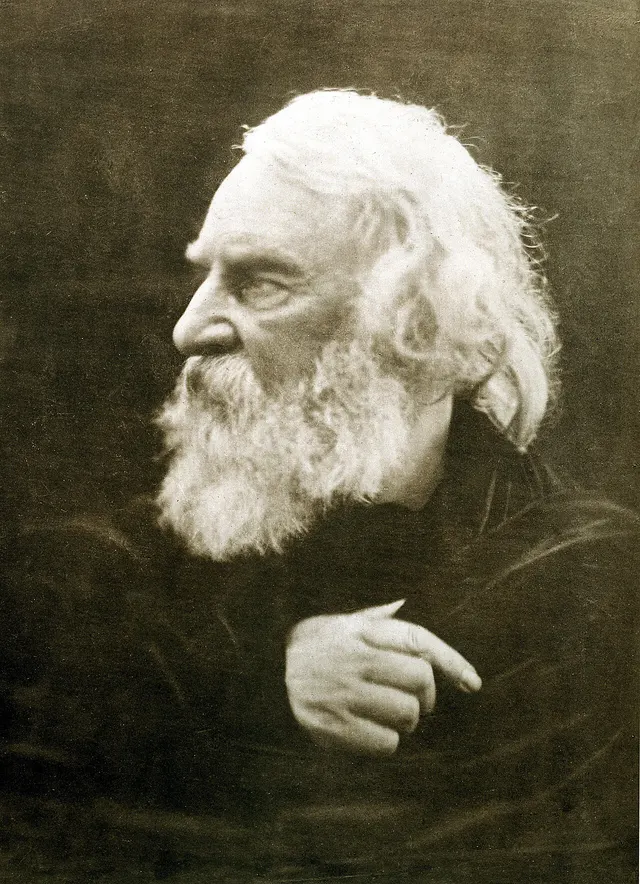
Henry Wadsworth Longfellow
Image creditJulia Margaret Cameron · Public domainResized and cropped for display.

Henry Wadsworth Longfellow

American poet of The Song of Hiawatha and Paul Revere’s Ride.

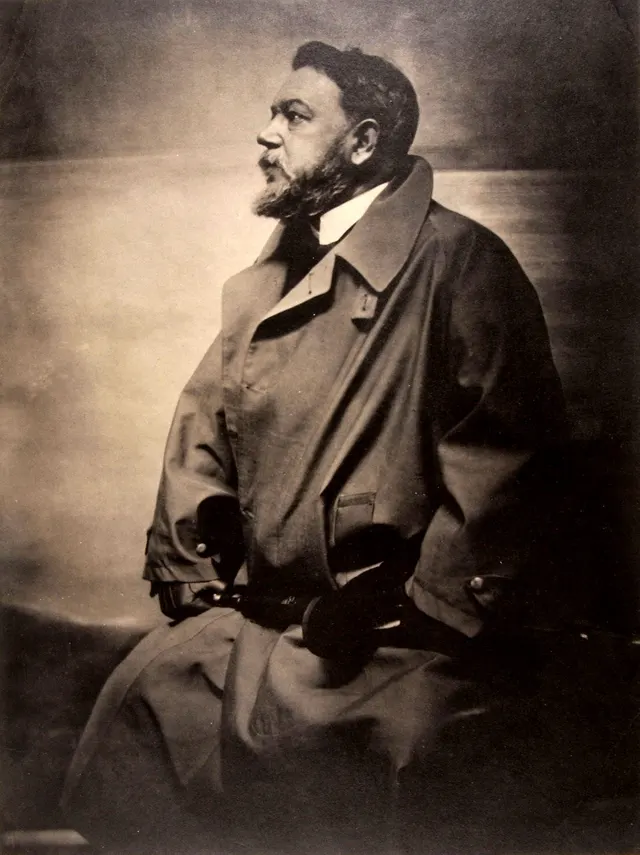
Joaquín Sorolla
Image creditGertrude Käsebier · Public domainResized and cropped for display.

Joaquín Sorolla

Spanish painter famed for sunlit beach scenes of his native Valencia.

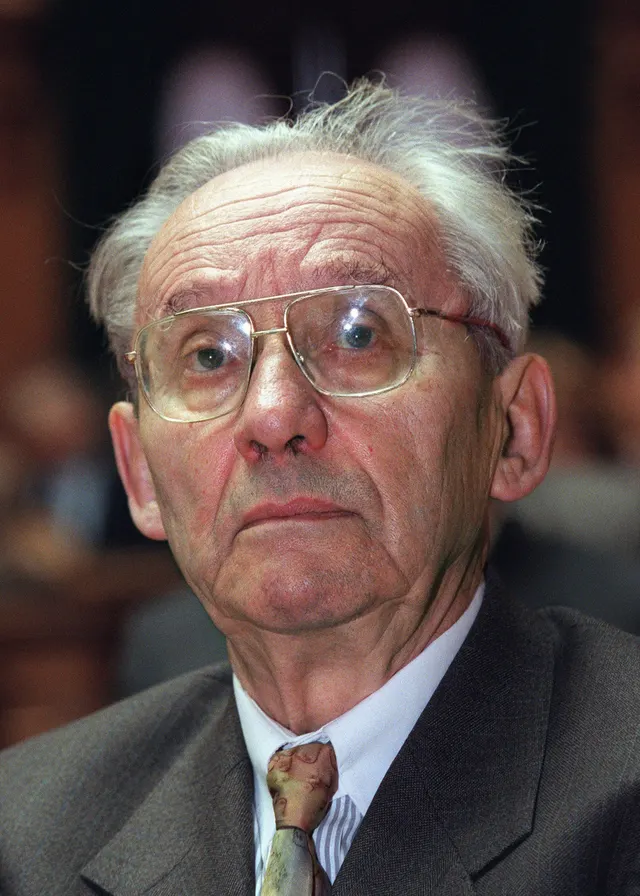
Paul Ricœur
Image creditJuerg Mueller / Scanpix. · CC0Resized and cropped for display.

Paul Ricœur

French philosopher of memory, language and interpretation.

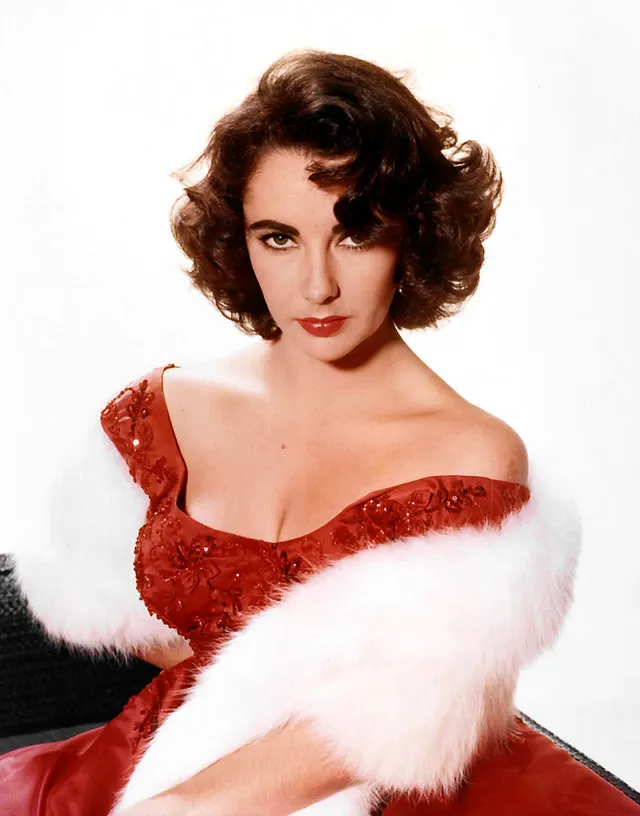
Elizabeth Taylor
Image creditStudio publicity still · Public domainResized and cropped for display.

Elizabeth Taylor

London-born film star of Cleopatra and Who’s Afraid of Virginia Woolf?, and a campaigner against AIDS.

◉
IDEAS THAT CHANGED THINGS

Firsts, Science & Discoveries

A diagram of Chadwick's experiment: radiation from beryllium knocks protons out of paraffin wax.
A diagram of Chadwick’s experiment: radiation from beryllium knocks protons out of paraffin wax.
Image creditBdushaw · CC BY-SA 4.0Resized and cropped for display.

Chadwick announces the neutron

On 27 February 1932 the journal Nature published a short letter from James Chadwick of the Cavendish Laboratory in Cambridge, titled ‘Possible existence of a neutron’. Beryllium struck by alpha particles gave off a penetrating radiation that others had taken for gamma rays; Chadwick showed it was better explained as a stream of uncharged particles about as heavy as protons.

The neutron completed the basic picture of the atom’s nucleus and soon became a tool for splitting it. Chadwick received the Nobel Prize in Physics in 1935.

Read the full storyHistory & Timeline →Source: American Physical Society, APS News: May 1932, Chadwick reports the discovery of the neutron ↗
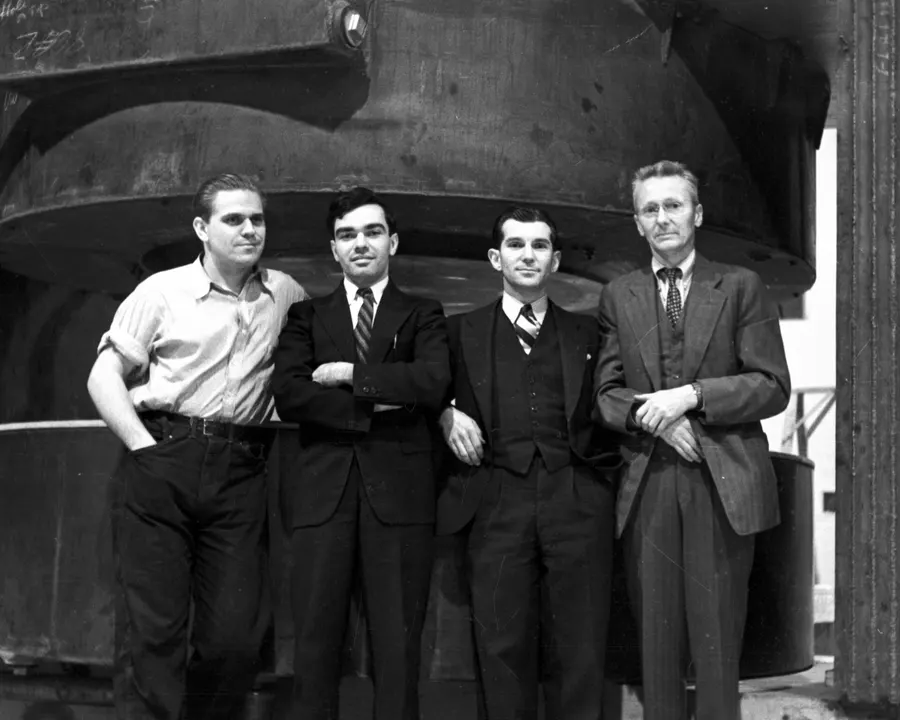
Martin Kamen (second from left) with colleagues in front of the 60-inch cyclotron at Berkeley, 1938.
Image creditDonald Cooksey · Public domainResized and cropped for display.

Carbon-14 is discovered at Berkeley

Martin Kamen and Sam Ruben spent weeks bombarding a graphite target with deuterons in the 60-inch cyclotron at the University of California’s Radiation Laboratory. On 27 February 1940 they confirmed that it had produced a long-lived radioactive form of carbon, carbon-14.

The new isotope became one of science’s most useful tools. Biologists used it to trace chemical pathways in living things, and Willard Libby later used it to date ancient remains, the method known as radiocarbon dating.

Read the full storyHistory & Timeline →Source: Lawrence Livermore National Laboratory: The discovery of carbon-14 and CAMS ↗
♫
MUSIC • FILM • BOOKS • CULTURE

Culture Stories

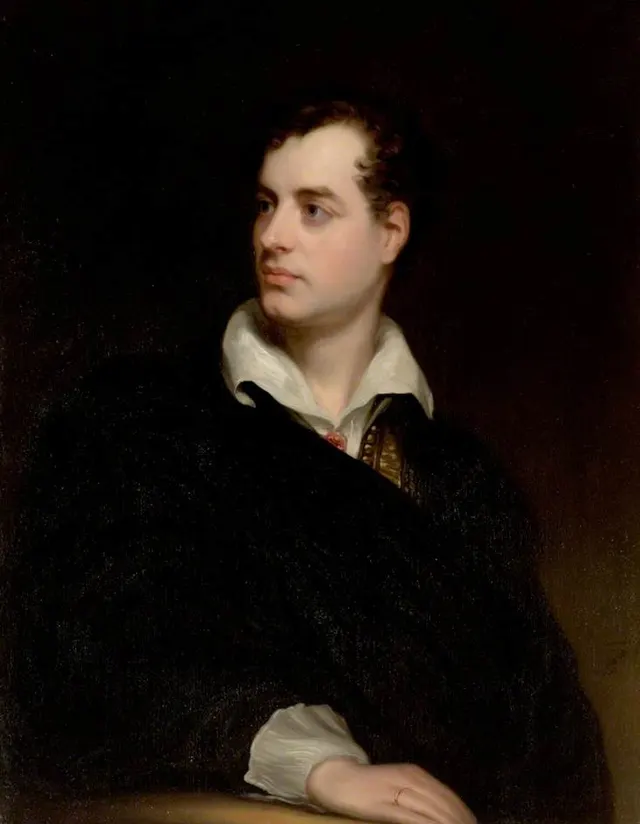
Lord Byron, painted by Thomas Phillips in 1813.
Image creditThomas Phillips · Public domainResized and cropped for display.

Byron speaks up for the Luddites

On 27 February 1812 the 24-year-old poet Lord Byron made his first speech in the House of Lords. He spoke against the Frame Work Bill, which would make breaking stocking frames a crime punishable by death, and argued that the Nottinghamshire weavers who smashed the machines had been driven to it by hunger.

The bill passed all the same. Byron turned to verse, publishing an anonymous satire on its authors a few days later; within weeks the first cantos of Childe Harold’s Pilgrimage had made him famous.

Read the full storyHistory & Timeline →Source: UK Parliament, Historic Hansard: Frame Work Bill, House of Lords, 27 February 1812 ↗
✦
LIVES REMEMBERED

Remembered Today

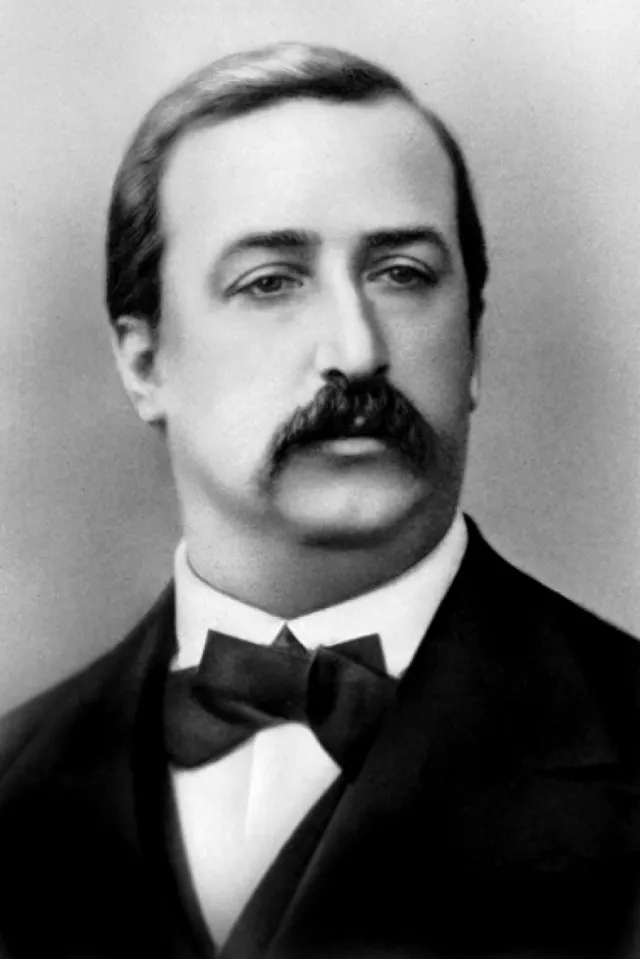
Alexander Borodin
Image creditUnknown photographer · Public domainResized and cropped for display.

Alexander Borodin

Russian composer of Prince Igor and a professor of chemistry (15 February Old Style).

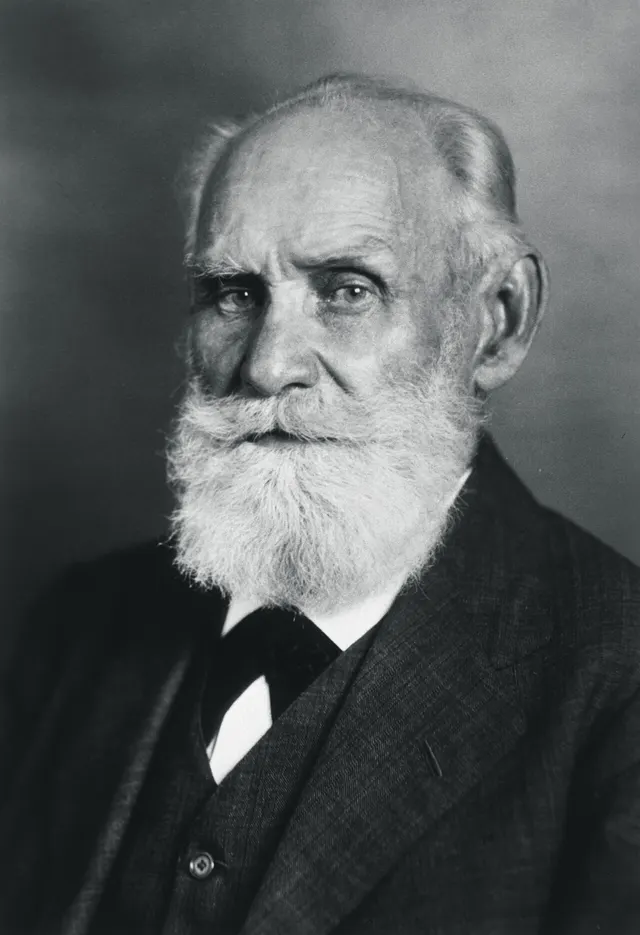
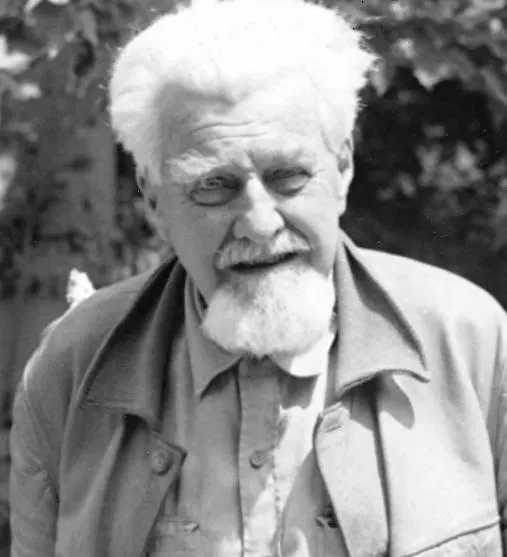
Ivan Pavlov
Image creditUnknown authorUnknown author · Public domainResized and cropped for display.

Ivan Pavlov

Russian physiologist known for his studies of conditioned reflexes in dogs, Nobel laureate in 1904.

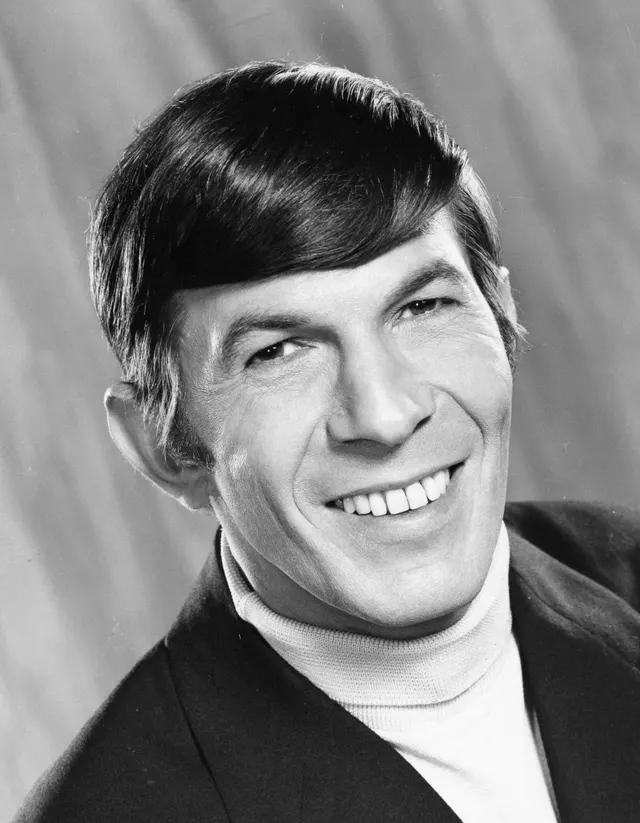
Leonard Nimoy
Image creditCBS Television · Public domainResized and cropped for display.

Leonard Nimoy

American actor who played Mr Spock in Star Trek.

☉
AROUND THE WORLD

Observances & Anniversaries

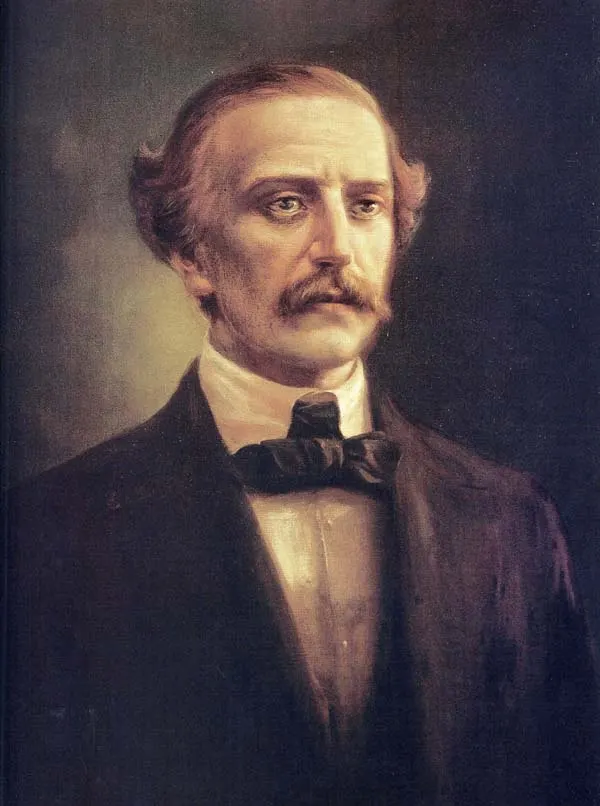
Juan Pablo Duarte, founder of La Trinitaria, in a portrait by Abelardo Rodríguez Urdaneta.
Image creditAbelardo Rodríguez Urdaneta (1870-1933). · Public domainResized and cropped for display.

Independence Day in the Dominican Republic

Dominicans mark 27 February, the day of the 1844 break from Haitian rule, as their national Independence Day, with parades, flags and tributes to the founding fathers Duarte, Sánchez and Mella.

Source: US Department of State: Dominican Republic National Day ↗
HISTORY & TIMELINE

Finished the highlights?

Follow 27 February chronologically, from the Middle Ages to the modern day, with 14 verified events and the sources behind them.

This day through time →