1522The Victoria returns to Spain after the first voyage around the world
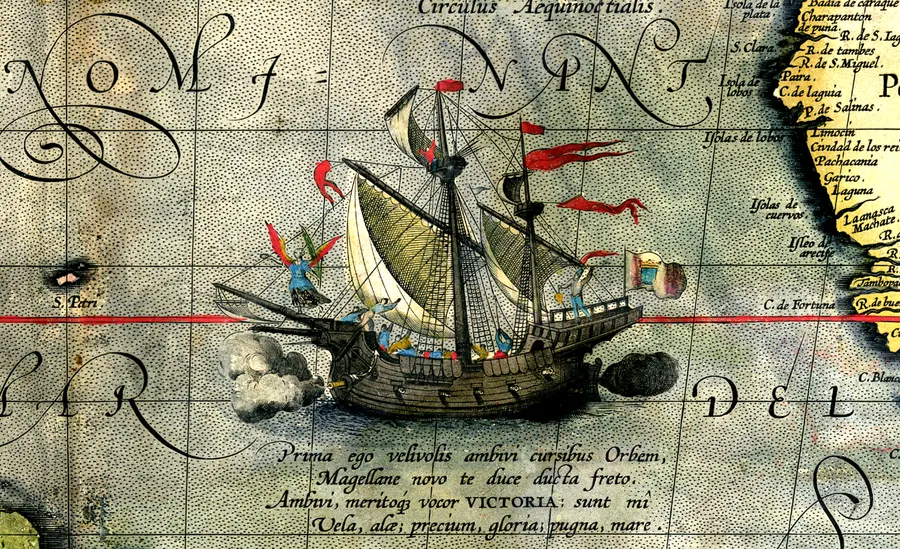
In September 1519 five Spanish ships and some 250 men under the Portuguese captain Ferdinand Magellan set out to reach the Spice Islands, the Moluccas, by sailing west. They found a passage around the tip of South America and crossed the vast Pacific, but the voyage cost them dearly. Ships were wrecked or deserted, scurvy and hunger killed many of the crew, and in April 1521 Magellan himself was killed in a fight on the island of Mactan in the Philippines.
The Basque navigator Juan Sebastián Elcano took command of the Victoria, loaded her with cloves in the Moluccas and brought her home westwards across the Indian Ocean and around Africa, avoiding Portuguese ports. On 6 September 1522 the leaking ship, kept afloat only by constant pumping, reached Sanlúcar de Barrameda at the mouth of the Guadalquivir with just 18 men on board. They had completed the first known voyage around the world. The emperor Charles V gave Elcano a coat of arms showing a globe and the words ‘You were the first to sail around me’.
Read the full storyHistory & Timeline →Source: Britannica: Sebastián del Cano ↗
1620The Mayflower sets sail from Plymouth for America
A group of English Puritans who had broken away from the Church of England had lived for some years in exile in Leiden, in the Dutch Republic. Hoping to build a community of their own, they joined with other settlers and backers in London to found a colony in North America. In the summer of 1620 they set out from Southampton in two ships, the Mayflower and the Speedwell, but the Speedwell leaked so badly that both turned back, first to Dartmouth and then to Plymouth.
There the Speedwell was given up, and some of its passengers crowded on to the Mayflower. On 6 September 1620 by the calendar then used in England (16 September by today’s), the Mayflower left Plymouth with 102 passengers and a crew of around 30. After a stormy crossing of more than two months they sighted Cape Cod in November. Before going ashore the men signed the Mayflower Compact, agreeing to govern themselves, and in the following weeks they founded Plymouth Colony in what is now Massachusetts.
Read the full storyHistory & Timeline →Source: Pilgrim Hall Museum: The Mayflower ↗
1901President McKinley is shot at the Pan-American Exposition
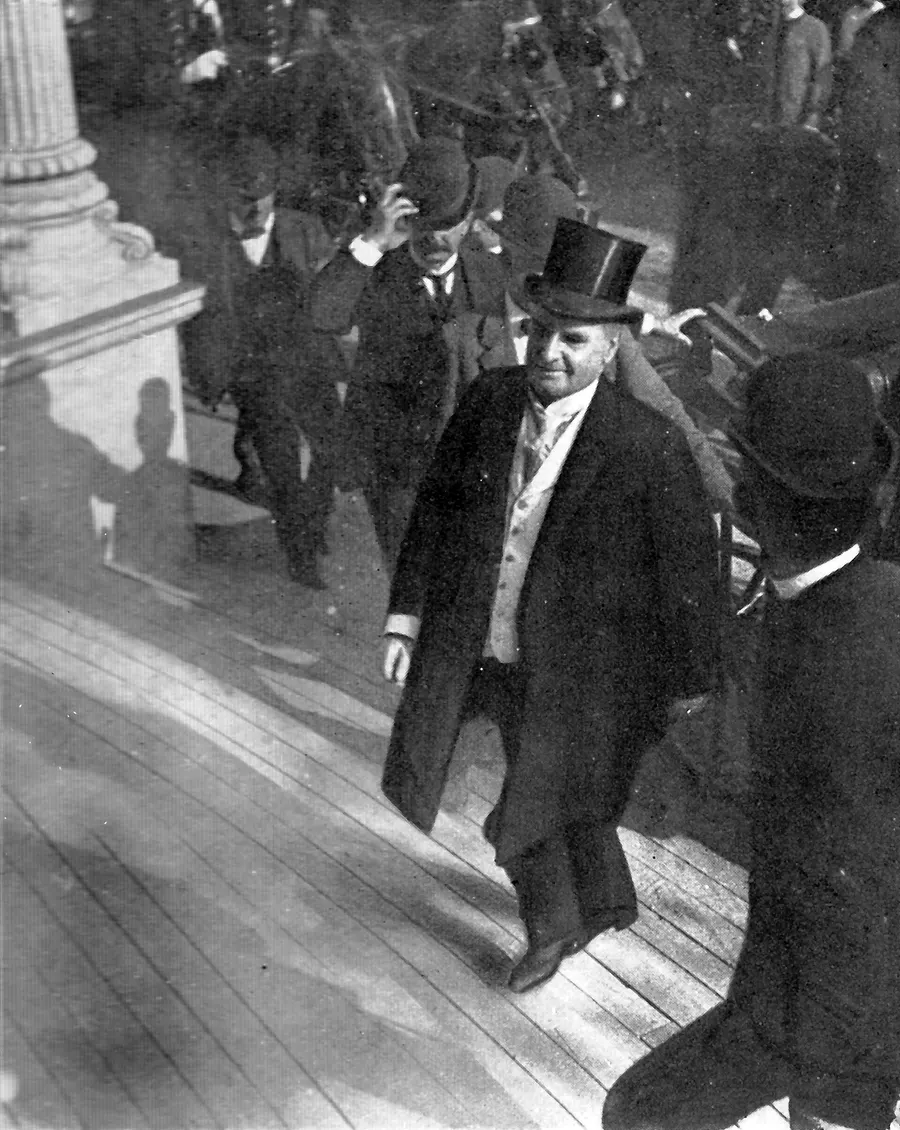
In 1901 the city of Buffalo, New York, staged the Pan-American Exposition, a world’s fair celebrating the progress of the Americas, lit at night by electricity from the new power station at Niagara Falls. President William McKinley, re-elected the year before, came to visit, and on 5 September he spoke to a vast crowd about trade and America’s place in the world.
The next afternoon, 6 September, he stood in the exposition’s Temple of Music to shake hands with members of the public. Among them was Leon Czolgosz, a young anarchist who had hidden a revolver under a handkerchief. He fired twice at close range, hitting the president in the chest and abdomen. McKinley was operated on at the exposition’s hospital and at first seemed to recover, but the wound became infected and he died on 14 September. Theodore Roosevelt became president, and Czolgosz was tried and executed within weeks. After the killing, protecting the president became a full-time task of the Secret Service.
Read the full storyHistory & Timeline →Source: Library of Congress: William McKinley, a resource guide ↗
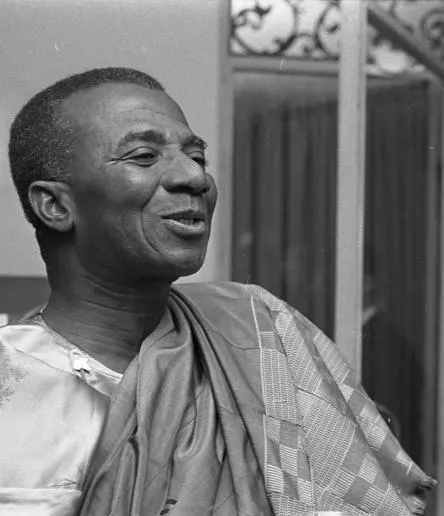
1968Swaziland becomes independent under King Sobhuza II
The Swazi kingdom, a small, mountainous country between South Africa and Mozambique, came under British control after the South African War at the start of the 1900s. Its king, Sobhuza II, had been chosen as a baby in 1899 and took up his full powers in 1921. For decades he worked to win back land lost to European settlers and to keep Swazi institutions alive under colonial rule.
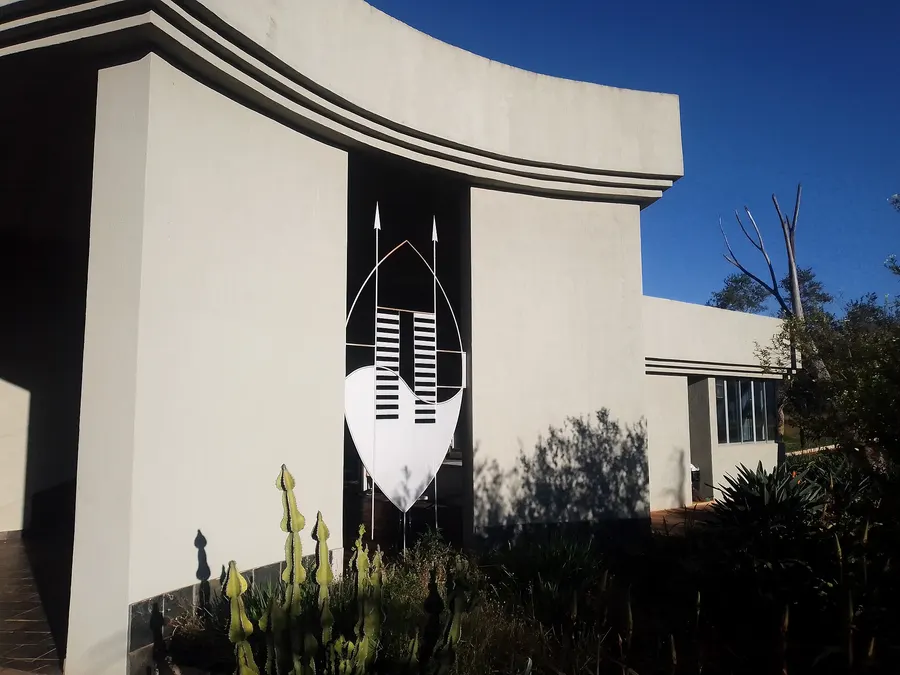
In the 1960s Britain prepared to hand over power. A constitution brought limited self-government, and in 1967 Swaziland became a protected state with Sobhuza recognised as king. On 6 September 1968 it became fully independent as a kingdom within the Commonwealth, with Sobhuza as head of state. He went on to reign until his death in 1982, one of the longest reigns on record. In 2018, the fiftieth anniversary year of independence, the country took the name Eswatini, and 6 September remains its Independence Day.
Read the full storyHistory & Timeline →Source: Britannica: Eswatini, colonial administration ↗
1991The Soviet Union recognises the independence of Estonia, Latvia and Lithuania
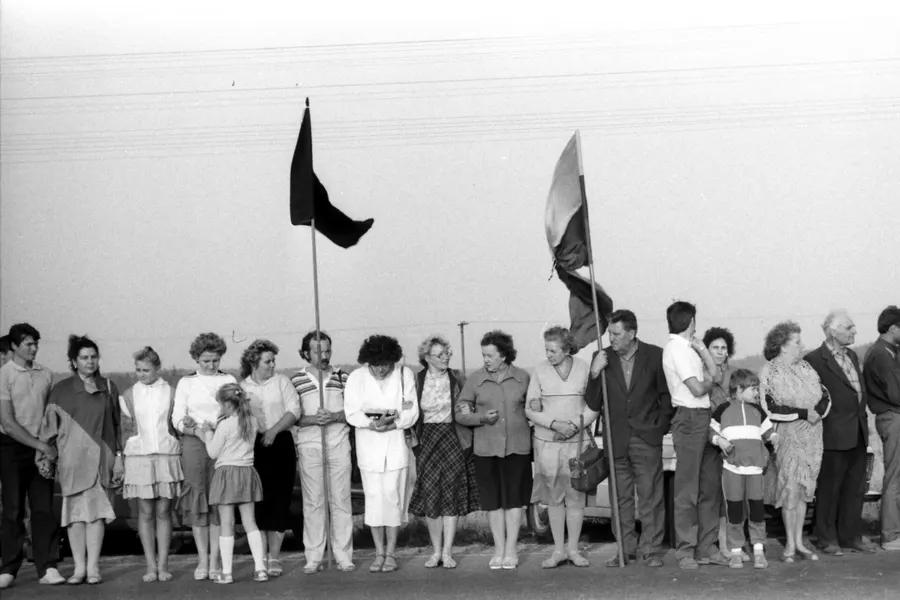
Estonia, Latvia and Lithuania won their independence after the First World War, but in 1940 the Soviet Union occupied and annexed them. Many Western countries never accepted the annexation. In the late 1980s, as Mikhail Gorbachev loosened controls, mass movements grew in all three countries; on 23 August 1989 around two million people joined hands in a human chain, the Baltic Way, stretching from Tallinn to Vilnius. Lithuania declared the restoration of its independence in March 1990, and Estonia and Latvia moved the same way.
Moscow answered with pressure and, in January 1991, deadly force in Vilnius and Riga. Then in August 1991 hard-liners tried to overthrow Gorbachev. As the coup collapsed, Estonia and Latvia declared full independence, and country after country recognised the three states. On 6 September 1991 the Soviet Union’s new State Council did the same. Less than two weeks later all three joined the United Nations, and in 2004 they became members of NATO and the European Union.
Read the full storyHistory & Timeline →Source: Britannica: Estonia, independence lost and regained ↗