1666The Great Fire of London breaks out in a bakery on Pudding Lane
London in 1666 was a crowded city of timber houses, many of them leaning so far over the narrow streets that their upper storeys almost touched. The summer had been long and dry, warehouses by the Thames were stacked with pitch, oil and timber, and the city was still recovering from the Great Plague of the year before. There was no fire brigade, only leather buckets, hand squirts and hooks for pulling houses down.
In the early hours of Sunday 2 September 1666 (12 September in the modern calendar; England still used the old Julian calendar) a fire started in the bakery of Thomas Farriner, baker to King Charles II, in Pudding Lane near London Bridge. Driven by a strong east wind, it raged for four days and destroyed about 13,000 houses, 87 parish churches and Old St Paul’s Cathedral, leaving most of the walled city in ashes. It was finally stopped by blowing up houses with gunpowder to make firebreaks. The recorded death toll was very small, though the true number is unknown. London was rebuilt in brick and stone, and Christopher Wren’s new St Paul’s rose over the city.
Read the full storyHistory & Timeline →Source: Britannica: Great Fire of London ↗
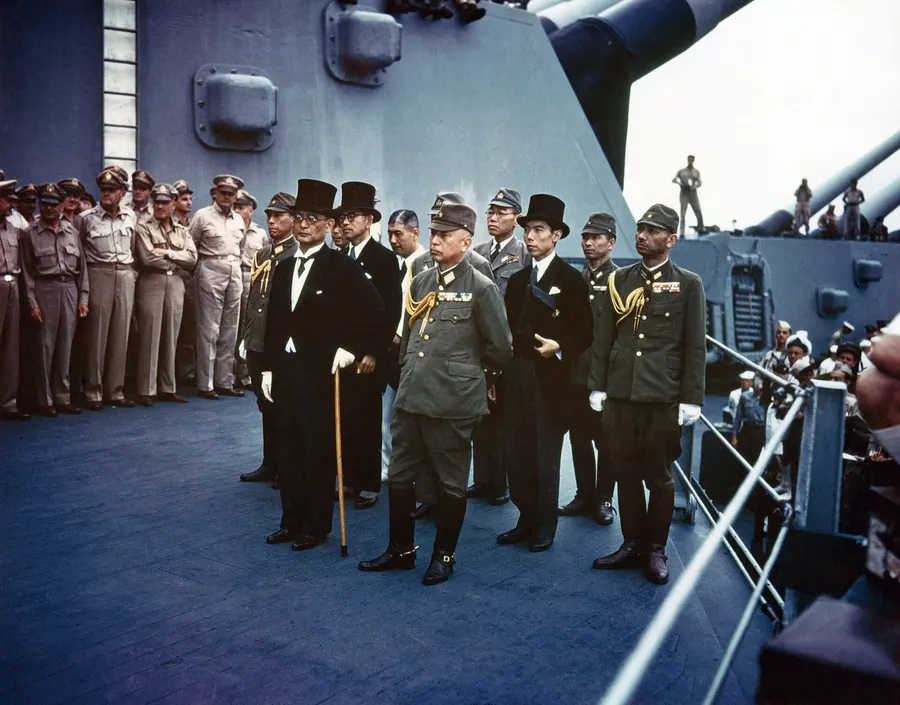
1945Japan signs its surrender aboard USS Missouri and the Second World War ends
After the atomic bombing of Hiroshima and Nagasaki and the Soviet Union’s declaration of war, Emperor Hirohito told his people by radio on 15 August 1945 that Japan would accept the Allies’ terms. Fighting died away across Asia and the Pacific, and American forces began to land in Japan. The formal ceremony was set for the deck of the battleship USS Missouri, anchored in Tokyo Bay among a great Allied fleet.
On the morning of 2 September 1945 Foreign Minister Mamoru Shigemitsu signed the Instrument of Surrender for the Japanese government and General Yoshijiro Umezu for the armed forces. General Douglas MacArthur then signed as Supreme Commander for the Allied Powers, followed by Admiral Chester Nimitz for the United States and representatives of China, Britain, the Soviet Union, Australia, Canada, France, the Netherlands and New Zealand. The ceremony took less than half an hour. It formally ended the Second World War, six years and a day after Germany had invaded Poland, and began the Allied occupation of Japan.
Read the full storyHistory & Timeline →Source: US National Archives: Surrender of Japan (1945) ↗
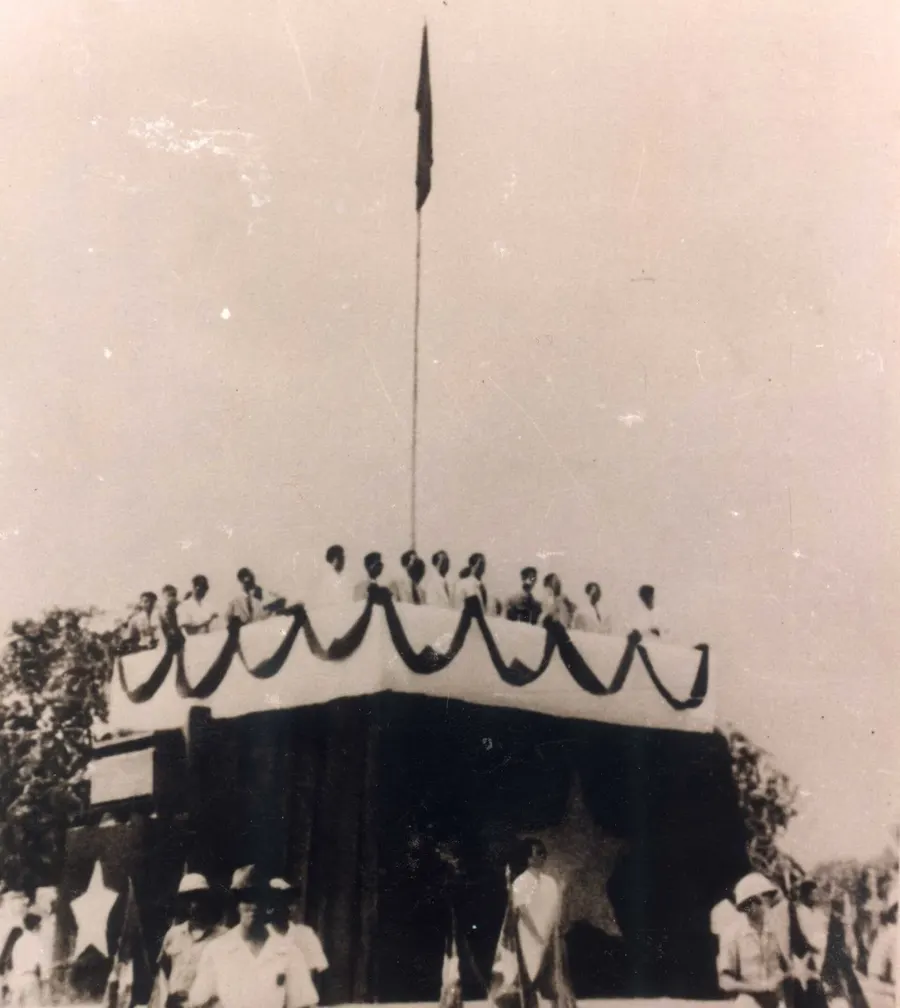
1945Ho Chi Minh proclaims Vietnam’s independence in Hanoi
France had ruled Vietnam since the 19th century, but in 1940 Japan moved into Indochina, and in March 1945 it swept the French administration aside. When Japan surrendered in August, the Viet Minh, the independence front led by the communist Ho Chi Minh, moved fast: in what Vietnamese call the August Revolution its forces took over Hanoi on 19 August, and within days the last emperor, Bao Dai, gave up his throne.
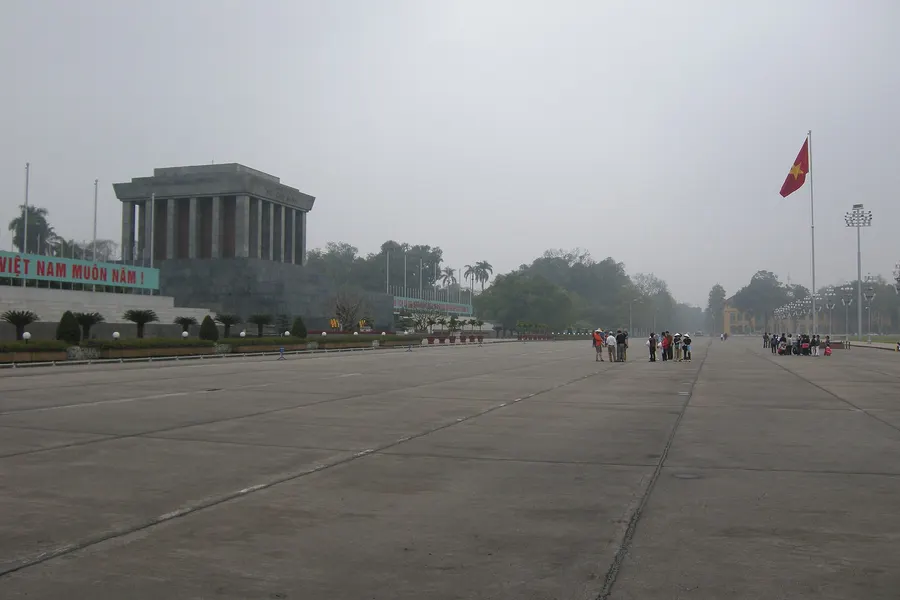
On 2 September 1945, the same day Japan signed its surrender in Tokyo Bay, Ho Chi Minh stood before an enormous crowd in Ba Dinh Square in Hanoi and read a Declaration of Independence founding the Democratic Republic of Vietnam. He opened with words borrowed from the American Declaration of Independence, that all men are created equal, and quoted France’s own Declaration of the Rights of Man. France refused to accept the new state, and by the end of 1946 the two were at war. The day is kept as Vietnam’s National Day.
Read the full storyHistory & Timeline →Source: Britannica: Ho Chi Minh, World War II and the founding of the Vietnamese state ↗
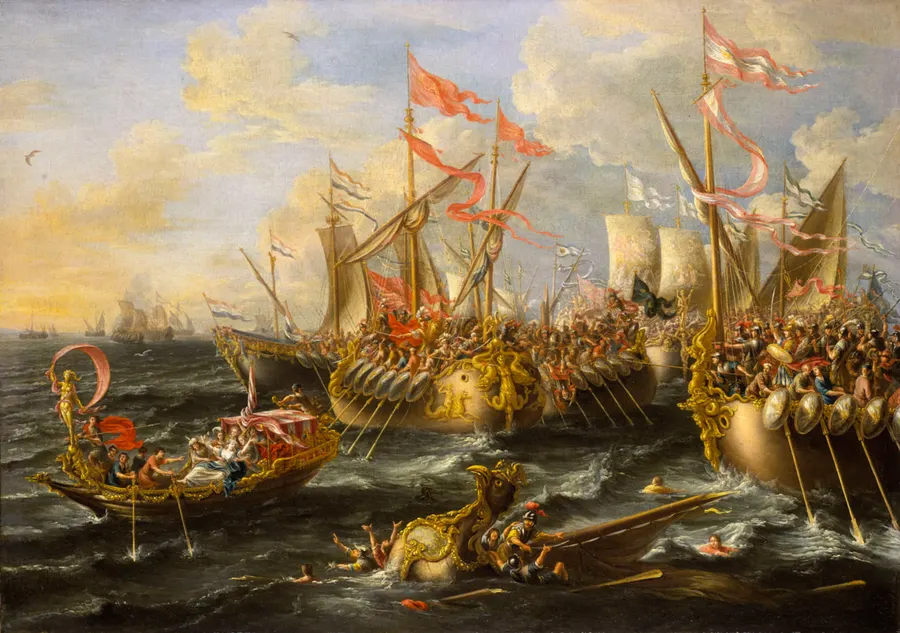
-31Octavian’s fleet defeats Antony and Cleopatra at Actium
After the murder of Julius Caesar in 44 BC, his great-nephew and heir Octavian and his general Mark Antony shared out the Roman world between them. Antony took the East, where he became the partner of Cleopatra VII, queen of Egypt, and gave territories to her and their children. Octavian turned opinion in Rome against him, and in 32 BC the Senate declared war on Cleopatra. Antony and Cleopatra gathered their army and fleet on the west coast of Greece, at the mouth of the Gulf of Ambracia.
Octavian’s admiral Marcus Agrippa cut their supply lines and blockaded them, and on 2 September 31 BC Antony’s fleet rowed out to break through. Agrippa’s lighter, more nimble ships held their own against Antony’s heavy warships, and in the middle of the battle Cleopatra’s squadron broke away and made for Egypt. Antony followed with a few ships, leaving most of his fleet and army to surrender. Within a year both he and Cleopatra were dead, Egypt became a Roman province, and Octavian, soon to be called Augustus, stood alone as the first Roman emperor.
Read the full storyHistory & Timeline →Source: Britannica: Battle of Actium ↗
1898Kitchener’s army destroys the Mahdist state’s forces at Omdurman
In 1885 the followers of Muhammad Ahmad, who called himself the Mahdi, took Khartoum and killed the British general Charles Gordon, and they went on to rule most of Sudan. The Mahdi died soon afterwards and his successor, the Khalifa Abdallahi, governed from Omdurman across the Nile. In 1896, worried by French and other European ambitions on the upper Nile, Britain sent an Anglo-Egyptian army under General Herbert Kitchener to reconquer the country, building a railway across the desert to supply it.
On the morning of 2 September 1898 the Khalifa’s army, some 50,000 to 60,000 strong, attacked Kitchener’s force of about 25,000 camped by the river north of Omdurman. Armed with modern rifles, artillery and Maxim machine guns, and supported by gunboats, the Anglo-Egyptian troops cut down wave after wave of attackers; around 10,000 Sudanese were killed, against a few hundred casualties on Kitchener’s side. The young Winston Churchill rode in the charge of the 21st Lancers. Omdurman fell that day, and Sudan was ruled jointly by Britain and Egypt until 1956.
Read the full storyHistory & Timeline →Source: Britannica: Battle of Omdurman ↗