
HISTORY & TIMELINE
2 September

A journey through
2 September in history

The story of 2 September runs from the naval battle of Actium in 31 BC to the day a refrigerator-sized machine at UCLA became the first node of the ARPANET in 1969. In between come the truce between Richard the Lionheart and Saladin, the closing of England’s theatres at the start of the Civil War, the Great Fire of London, the founding of the US Treasury, the fall of Atlanta to Sherman, Napoleon III’s surrender at Sedan, the Battle of Omdurman, Theodore Roosevelt’s ‘big stick’ speech, Japan’s formal surrender, Ho Chi Minh’s declaration of Vietnam’s independence and Wilma Rudolph’s first Olympic gold in Rome.

I
EARLIEST RECORDS

Ancient & Early History

The earliest worthwhile records and events connected with this date.

-31
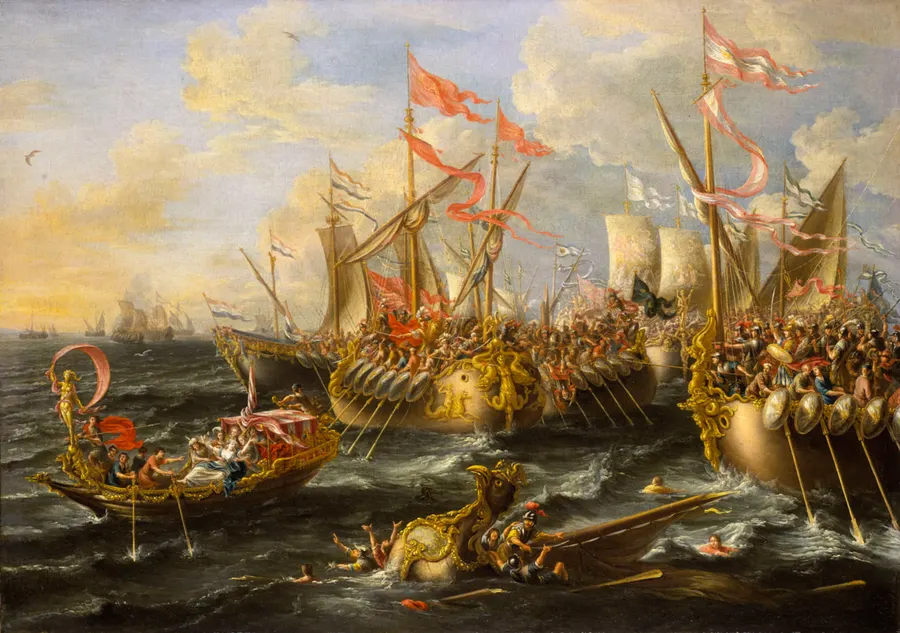
The Battle of Actium, a 17th-century painting by Laureys a CastroThe Battle of Actium, a 17th-century painting by Laureys a CastroImage: Laureys a Castro · Public domain
world · Europe

Octavian’s fleet defeats Antony and Cleopatra at Actium

After the murder of Julius Caesar in 44 BC, his great-nephew and heir Octavian and his general Mark Antony shared out the Roman world between them. Antony took the East, where he became the partner of Cleopatra VII, queen of Egypt, and gave territories to her and their children. Octavian turned opinion in Rome against him, and in 32 BC the Senate declared war on Cleopatra. Antony and Cleopatra gathered their army and fleet on the west coast of Greece, at the mouth of the Gulf of Ambracia. Octavian’s admiral Marcus Agrippa cut their supply lines and blockaded them, and on 2 September 31 BC Antony’s fleet rowed out to break through. Agrippa’s lighter, more nimble ships held their own against Antony’s heavy warships, and in the middle of the battle Cleopatra’s squadron broke away and made for Egypt. Antony followed with a few ships, leaving most of his fleet and army to surrender. Within a year both he and Cleopatra were dead, Egypt became a Roman province, and Octavian, soon to be called Augustus, stood alone as the first Roman emperor.

Source: Britannica: Battle of Actium ↗
II
THE MIDDLE AGES

Medieval History

Kingdoms, conflict, faith, power and the changing medieval world.

1192
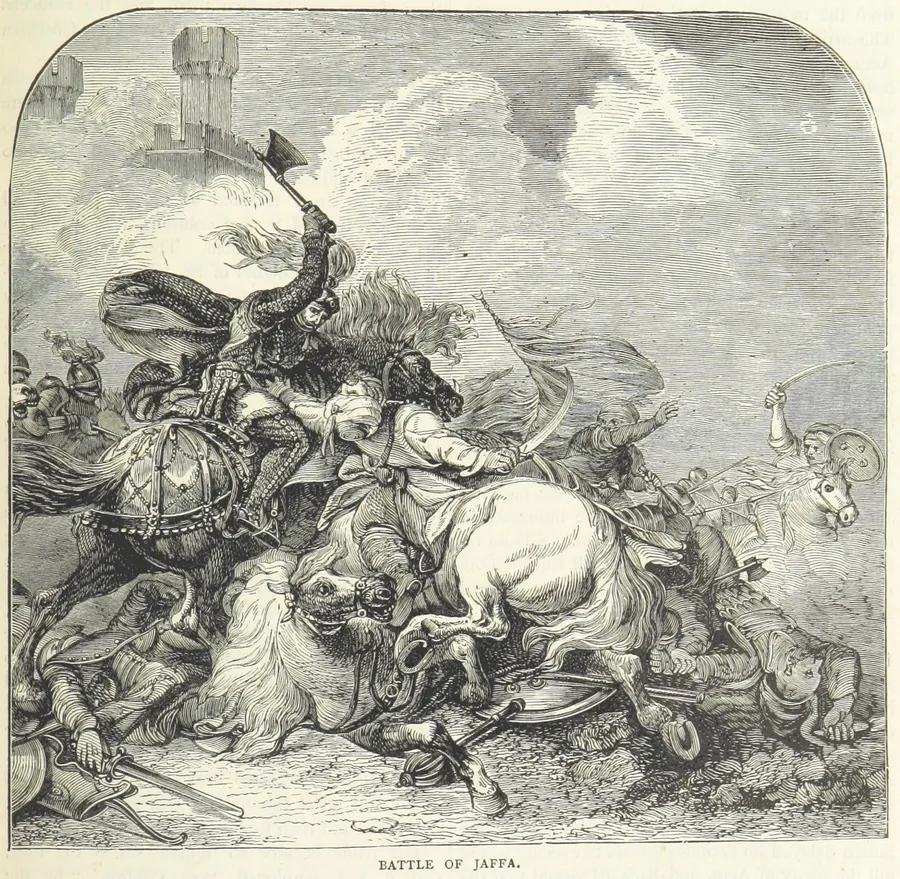
Richard I of England at the Battle of Jaffa, an engraving from a book by James Grant published in 1873Richard I of England at the Battle of Jaffa, an engraving from a book by James Grant published in 1873Image: James Grant · Public domain
world · Middle East

Richard the Lionheart and Saladin agree the Treaty of Jaffa

The Third Crusade had won back Acre and much of the coast of the Holy Land, but twice Richard I of England turned back short of Jerusalem, judging that he could not hold it. After a last fierce fight at Jaffa, he and Saladin agreed a three-year truce on 2 September 1192. The crusaders kept the coast from Tyre to Jaffa, Ascalon was to be demolished, and Christian pilgrims could visit Jerusalem freely. Richard sailed for home a few weeks later.

Source: Britannica: Third Crusade ↗
III
A CHANGING WORLD

Early Modern Era

Exploration, political change, scientific development and expanding global connections.

1642
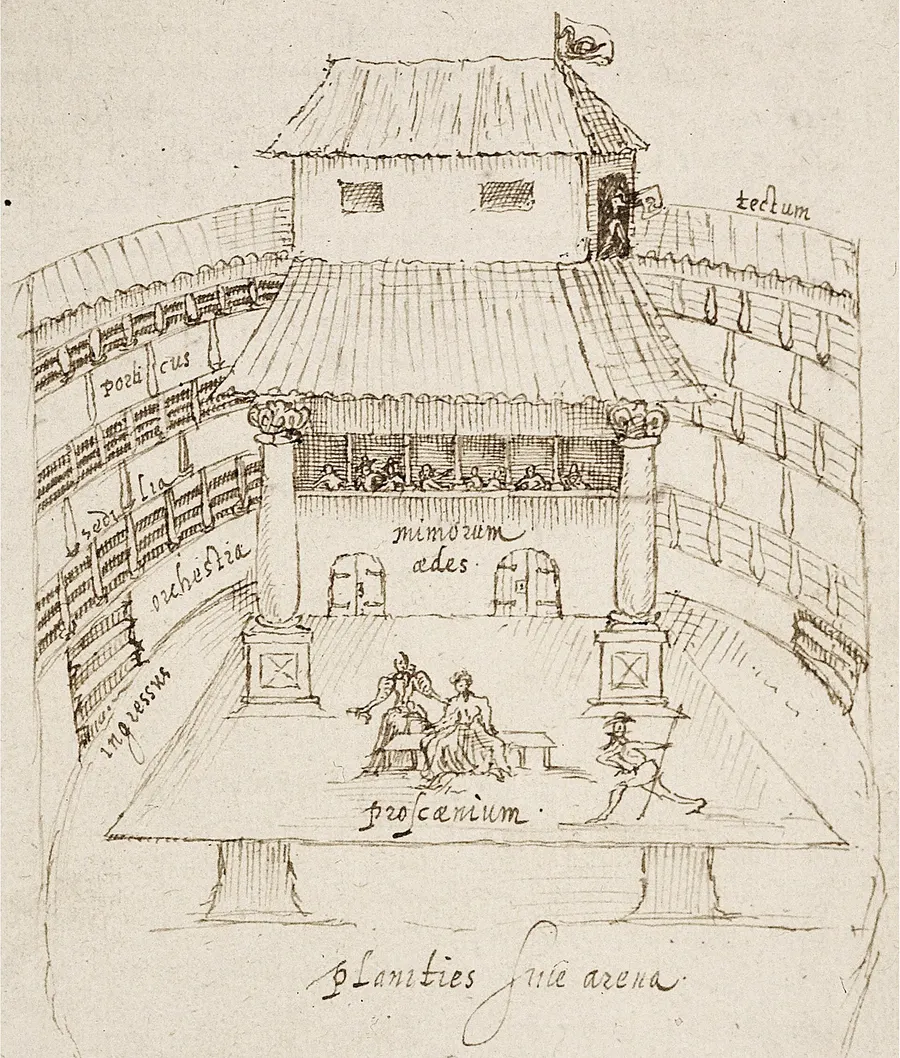
A copy of Johannes de Witt's 1596 sketch of the Swan playhouse in London, the only surviving drawing of the inside of an Elizabethan public theatreA copy of Johannes de Witt’s 1596 sketch of the Swan playhouse in London, the only surviving drawing of the inside of an Elizabethan public theatreImage: Aernout van Buchel, after Johannes de Witt · Public domain
culture · Europe

Parliament closes England’s theatres at the start of the Civil War

In the half-century after the first purpose-built playhouses opened in London in the 1570s, English theatre had its greatest age, with the plays of Marlowe, Shakespeare, Jonson and many others performed to crowds at the Globe, the Fortune and indoor theatres such as Blackfriars. Puritan preachers and the City authorities had long attacked the playhouses as places of idleness and vice, and the actors’ companies depended on the protection of the king and court. In August 1642 Charles I raised his standard and civil war began between king and Parliament. On 2 September 1642 Parliament ordered that ‘public stage-plays shall cease’, saying that times of public calamity called for prayer and fasting rather than ‘spectacles of pleasure’. The ban, meant to be temporary, was made harsher in 1648, when the playhouses were ordered to be pulled down and actors could be whipped. Some players kept performing in secret, but the public theatres stayed shut for 18 years. When they reopened after the Restoration of Charles II in 1660, professional actresses appeared on the English public stage for the first time.

Source: British History Online, Acts and Ordinances of the Interregnum: Order for Stage-plays to cease, September 1642 ↗
1666
The Great Fire of London seen from a boat near Tower Wharf, with Old London Bridge and Old St Paul's, painted by an unknown artist around 1675The Great Fire of London seen from a boat near Tower Wharf, with Old London Bridge and Old St Paul’s, painted by an unknown artist around 1675Image: Unknown artist · Public domain
world · Europe

The Great Fire of London breaks out in a bakery on Pudding Lane

London in 1666 was a crowded city of timber houses, many of them leaning so far over the narrow streets that their upper storeys almost touched. The summer had been long and dry, warehouses by the Thames were stacked with pitch, oil and timber, and the city was still recovering from the Great Plague of the year before. There was no fire brigade, only leather buckets, hand squirts and hooks for pulling houses down. In the early hours of Sunday 2 September 1666 (12 September in the modern calendar; England still used the old Julian calendar) a fire started in the bakery of Thomas Farriner, baker to King Charles II, in Pudding Lane near London Bridge. Driven by a strong east wind, it raged for four days and destroyed about 13,000 houses, 87 parish churches and Old St Paul’s Cathedral, leaving most of the walled city in ashes. It was finally stopped by blowing up houses with gunpowder to make firebreaks. The recorded death toll was very small, though the true number is unknown. London was rebuilt in brick and stone, and Christopher Wren’s new St Paul’s rose over the city.

Source: Britannica: Great Fire of London ↗
1789
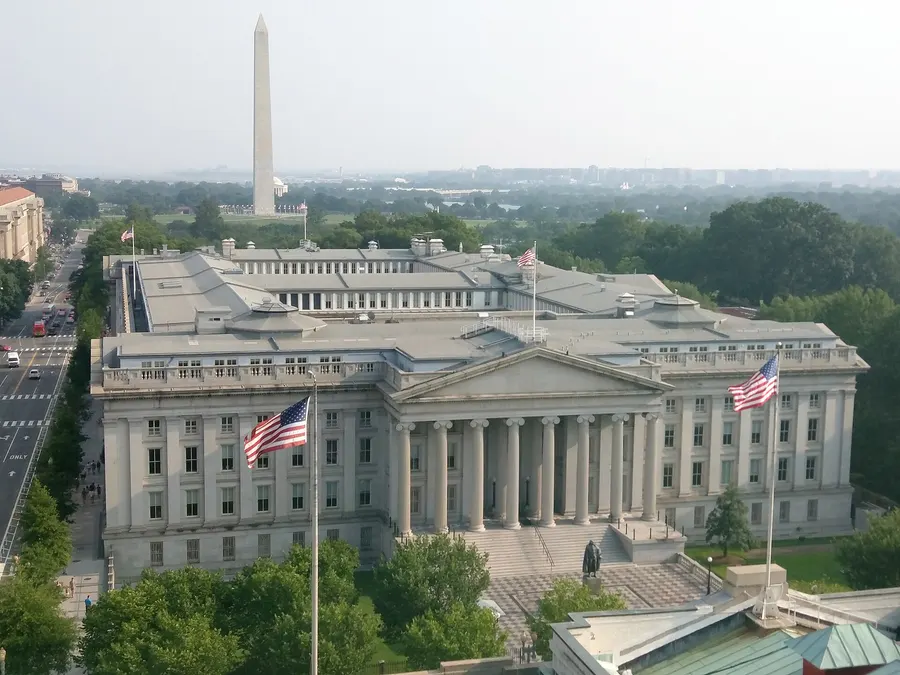
The US Treasury Building in Washington, DC, with the Washington Monument behindThe US Treasury Building in Washington, DC, with the Washington Monument behindImage: MeanieHyaena · CC BY 4.0
politics · Americas

Congress creates the US Department of the Treasury

The new United States had come out of its war of independence deep in debt and with no proper system for collecting taxes or paying its bills. On 2 September 1789 Congress passed an act setting up a permanent Treasury Department, headed by a Secretary of the Treasury with a comptroller, auditor, treasurer and register under him. Alexander Hamilton took office as the first Secretary later that month and set about restoring the country’s credit.

Source: US Department of the Treasury: Act of Congress establishing the Treasury Department ↗
IV
THE NINETEENTH CENTURY

The 1800s

Industry, empire, invention, reform and a century of enormous transformation.

1864
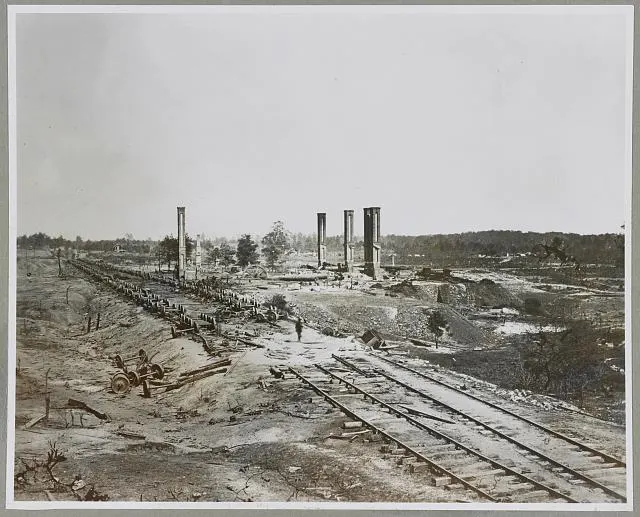
Ruins of the rolling mill and railway cars destroyed by Confederate troops as they left Atlanta in 1864, photographed by George N. BarnardRuins of the rolling mill and railway cars destroyed by Confederate troops as they left Atlanta in 1864, photographed by George N. BarnardImage: George N. Barnard · Public domain
world · Americas

Atlanta surrenders to Union troops

Through the summer of 1864 General William T. Sherman’s Union armies fought their way towards Atlanta, a vital rail hub of the Confederacy. When they cut the last railway into the city, the Confederate army marched out on the night of 1 September, blowing up its ammunition trains. On 2 September 1864 Mayor James Calhoun rode out and surrendered the city, and Sherman was soon able to telegraph Washington that ‘Atlanta is ours, and fairly won’. The victory lifted Northern spirits and helped Abraham Lincoln win re-election that November.

Source: American Battlefield Trust: Surrender of Atlanta ↗
1870
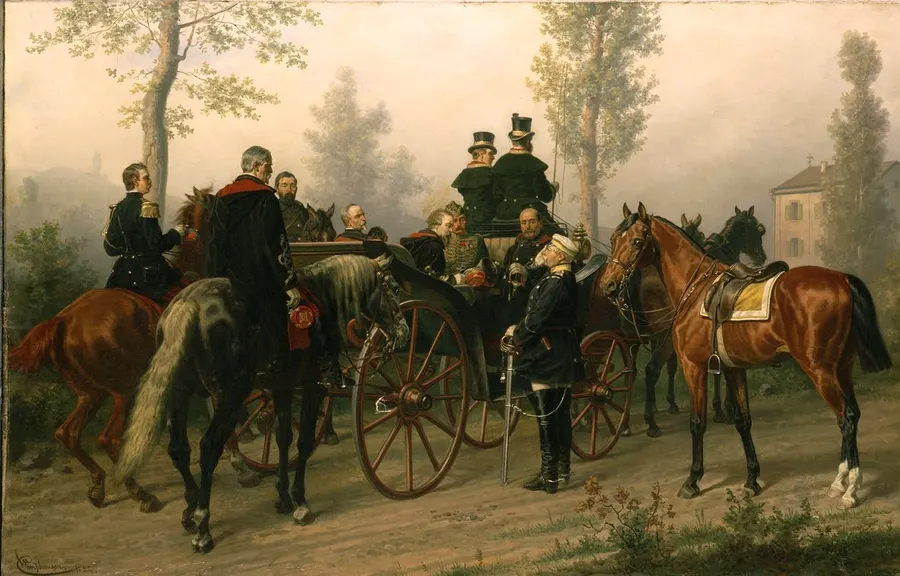
Napoleon III and Otto von Bismarck after the Battle of Sedan, in a painting by Wilhelm CamphausenNapoleon III and Otto von Bismarck after the Battle of Sedan, in a painting by Wilhelm CamphausenImage: Wilhelm Camphausen · Public domain
world · Europe

Napoleon III surrenders to the Prussians at Sedan

In the summer of 1870 France went to war with Prussia and its German allies, and within weeks a French army under Marshal MacMahon, with the emperor Napoleon III himself, was trapped against the Belgian border at Sedan. After a day of heavy defeat on 1 September, the sick emperor raised the white flag and on 2 September 1870 surrendered himself and more than 100,000 men to King Wilhelm I. Two days later Paris proclaimed the Third Republic, and the German victory led to the founding of the German Empire in 1871.

Source: Britannica: Battle of Sedan (1870) ↗
1898
The charge of the 21st Lancers at the Battle of Omdurman, in a painting by Edward Matthew HaleThe charge of the 21st Lancers at the Battle of Omdurman, in a painting by Edward Matthew HaleImage: Edward Matthew Hale · Public domain
world · Africa

Kitchener’s army destroys the Mahdist state’s forces at Omdurman

In 1885 the followers of Muhammad Ahmad, who called himself the Mahdi, took Khartoum and killed the British general Charles Gordon, and they went on to rule most of Sudan. The Mahdi died soon afterwards and his successor, the Khalifa Abdallahi, governed from Omdurman across the Nile. In 1896, worried by French and other European ambitions on the upper Nile, Britain sent an Anglo-Egyptian army under General Herbert Kitchener to reconquer the country, building a railway across the desert to supply it. On the morning of 2 September 1898 the Khalifa’s army, some 50,000 to 60,000 strong, attacked Kitchener’s force of about 25,000 camped by the river north of Omdurman. Armed with modern rifles, artillery and Maxim machine guns, and supported by gunboats, the Anglo-Egyptian troops cut down wave after wave of attackers; around 10,000 Sudanese were killed, against a few hundred casualties on Kitchener’s side. The young Winston Churchill rode in the charge of the 21st Lancers. Omdurman fell that day, and Sudan was ruled jointly by Britain and Egypt until 1956.

Source: Britannica: Battle of Omdurman ↗
V
THE TWENTIETH CENTURY

The 1900s

War and peace, technological leaps, social change, politics, sport and popular culture.

1901
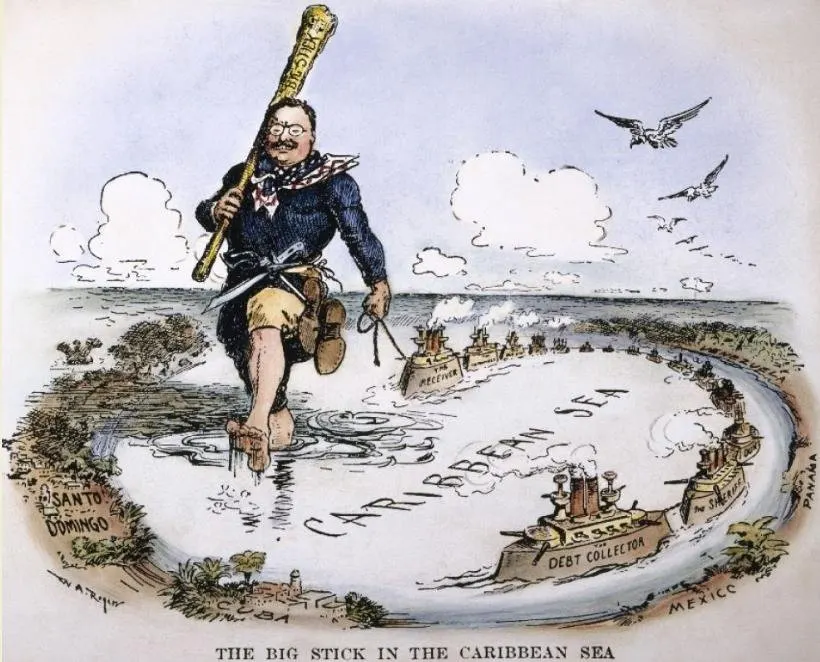
The Big Stick in the Caribbean Sea, a 1904 cartoon by William Allen Rogers showing Theodore Roosevelt towing warships around the CaribbeanThe Big Stick in the Caribbean Sea, a 1904 cartoon by William Allen Rogers showing Theodore Roosevelt towing warships around the CaribbeanImage: William Allen Rogers · Public domain
politics · Americas

Theodore Roosevelt tells the Minnesota State Fair to ‘speak softly and carry a big stick’

On 2 September 1901 Vice President Theodore Roosevelt addressed a large crowd at the Minnesota State Fair. Calling for a strong but restrained America at home and abroad, he quoted what he called a West African proverb: ‘Speak softly and carry a big stick; you will go far.’ Four days later President William McKinley was shot, and when he died on 14 September Roosevelt became president. ‘Big stick’ became the name for his forceful foreign policy, above all in Latin America and the Caribbean.

Source: Theodore Roosevelt Center, Dickinson State University: Address of Vice President Roosevelt, Minnesota State Fair, 2 September 1901 ↗
1945
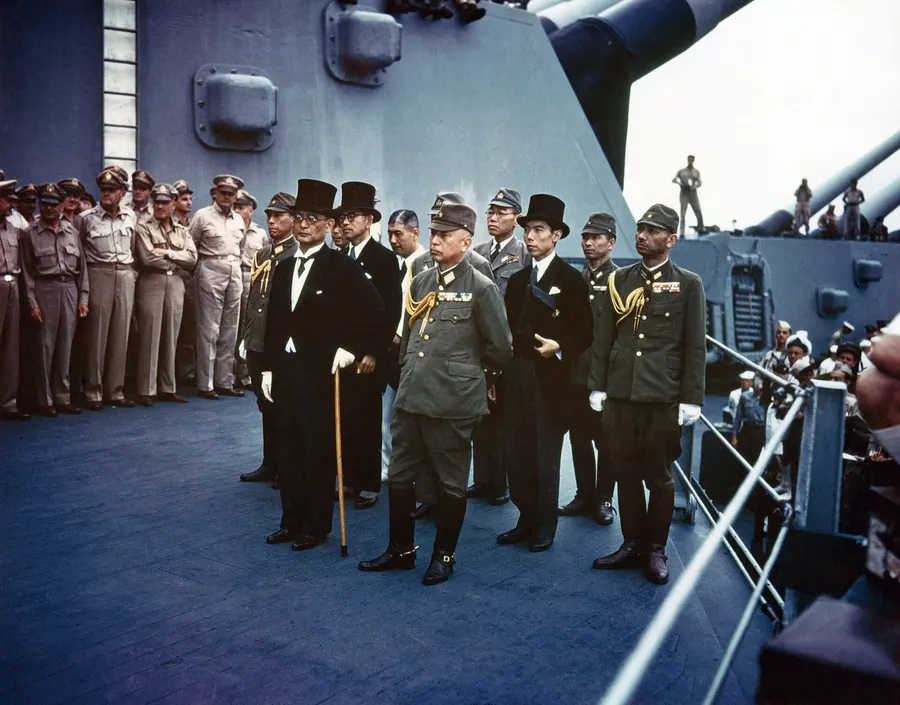
The Japanese delegation stands on the deck of USS Missouri in Tokyo Bay during the surrender ceremony on 2 September 1945The Japanese delegation stands on the deck of USS Missouri in Tokyo Bay during the surrender ceremony on 2 September 1945Image: Army Signal Corps · Public domain
world · Asia

Japan signs its surrender aboard USS Missouri and the Second World War ends

After the atomic bombing of Hiroshima and Nagasaki and the Soviet Union’s declaration of war, Emperor Hirohito told his people by radio on 15 August 1945 that Japan would accept the Allies’ terms. Fighting died away across Asia and the Pacific, and American forces began to land in Japan. The formal ceremony was set for the deck of the battleship USS Missouri, anchored in Tokyo Bay among a great Allied fleet. On the morning of 2 September 1945 Foreign Minister Mamoru Shigemitsu signed the Instrument of Surrender for the Japanese government and General Yoshijiro Umezu for the armed forces. General Douglas MacArthur then signed as Supreme Commander for the Allied Powers, followed by Admiral Chester Nimitz for the United States and representatives of China, Britain, the Soviet Union, Australia, Canada, France, the Netherlands and New Zealand. The ceremony took less than half an hour. It formally ended the Second World War, six years and a day after Germany had invaded Poland, and began the Allied occupation of Japan.

Source: US National Archives: Surrender of Japan (1945) ↗
1945
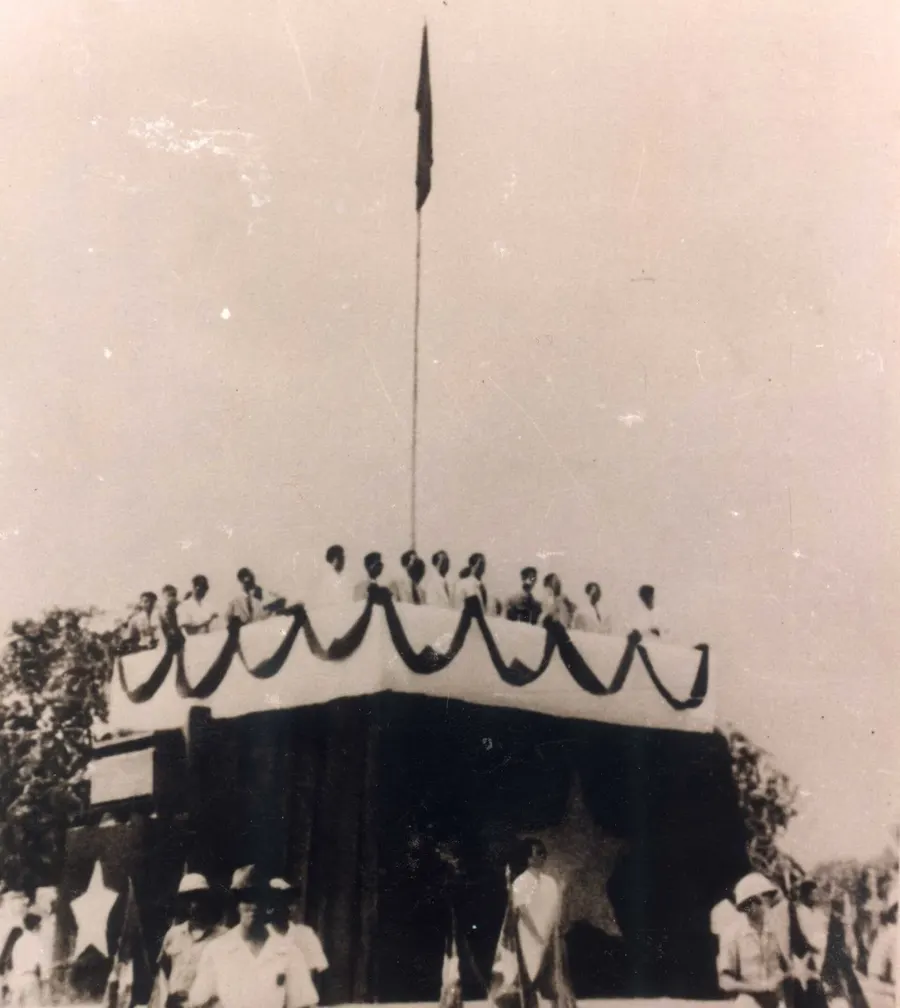
The flag-topped platform at Ba Dinh Square in Hanoi from which Ho Chi Minh read Vietnam's Declaration of Independence on 2 September 1945The flag-topped platform at Ba Dinh Square in Hanoi from which Ho Chi Minh read Vietnam’s Declaration of Independence on 2 September 1945Image: Unknown · Public domain
world · Asia

Ho Chi Minh proclaims Vietnam’s independence in Hanoi

France had ruled Vietnam since the 19th century, but in 1940 Japan moved into Indochina, and in March 1945 it swept the French administration aside. When Japan surrendered in August, the Viet Minh, the independence front led by the communist Ho Chi Minh, moved fast: in what Vietnamese call the August Revolution its forces took over Hanoi on 19 August, and within days the last emperor, Bao Dai, gave up his throne. On 2 September 1945, the same day Japan signed its surrender in Tokyo Bay, Ho Chi Minh stood before an enormous crowd in Ba Dinh Square in Hanoi and read a Declaration of Independence founding the Democratic Republic of Vietnam. He opened with words borrowed from the American Declaration of Independence, that all men are created equal, and quoted France’s own Declaration of the Rights of Man. France refused to accept the new state, and by the end of 1946 the two were at war. The day is kept as Vietnam’s National Day.

Source: Britannica: Ho Chi Minh, World War II and the founding of the Vietnamese state ↗
1960
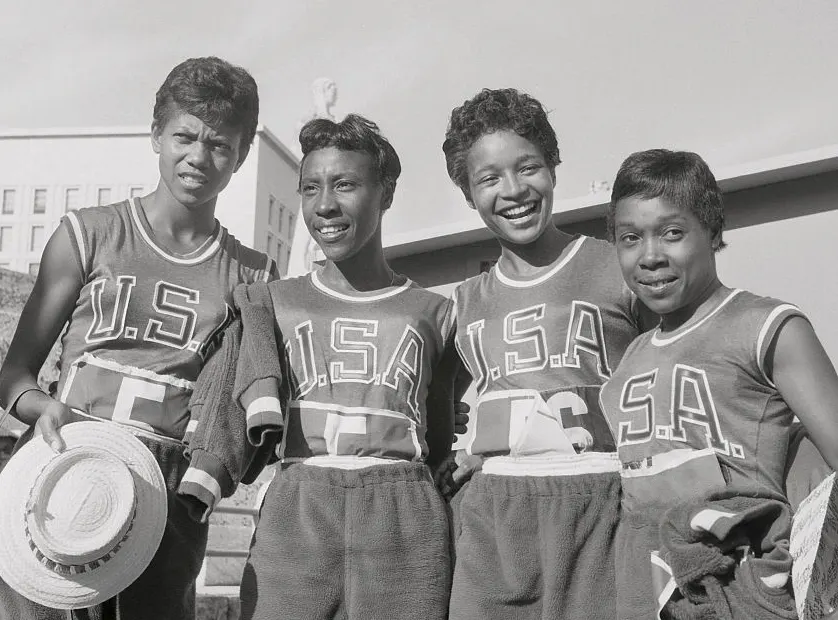
Wilma Rudolph (left) with her relay team-mates Lucinda Williams, Barbara Jones and Martha Hudson at the Rome Olympics in 1960Wilma Rudolph (left) with her relay team-mates Lucinda Williams, Barbara Jones and Martha Hudson at the Rome Olympics in 1960Image: Unknown photographer (ANSA) · Public domain
sport · Europe

Wilma Rudolph wins the Olympic 100 metres in Rome

Wilma Rudolph was born in Tennessee in 1940, one of more than 20 children of a poor family, and as a small child she survived polio and wore a brace on her left leg. By her teens she was a basketball star, and the track coach Ed Temple brought her into his Tigerbelles team at Tennessee State University. She won a relay bronze at the 1956 Olympics aged 16, and four years later arrived in Rome as a tall, graceful sprinter at the height of her powers. On 2 September 1960 she equalled the world record of 11.3 seconds in her semi-final and then, little more than an hour later, won the final in 11.0 seconds, well clear of Britain’s Dorothy Hyman; a following wind meant the time could not count as a record. She went on to win the 200 metres and anchor the American 4 x 100 metres relay to victory, the first American woman to win three gold medals at one Olympics. Back home, she insisted that the celebrations in her home town of Clarksville be open to Black and white people alike.

Source: World Athletics: Sixty years since historic Olympic triple, Rudolph’s legacy lives on ↗
1969
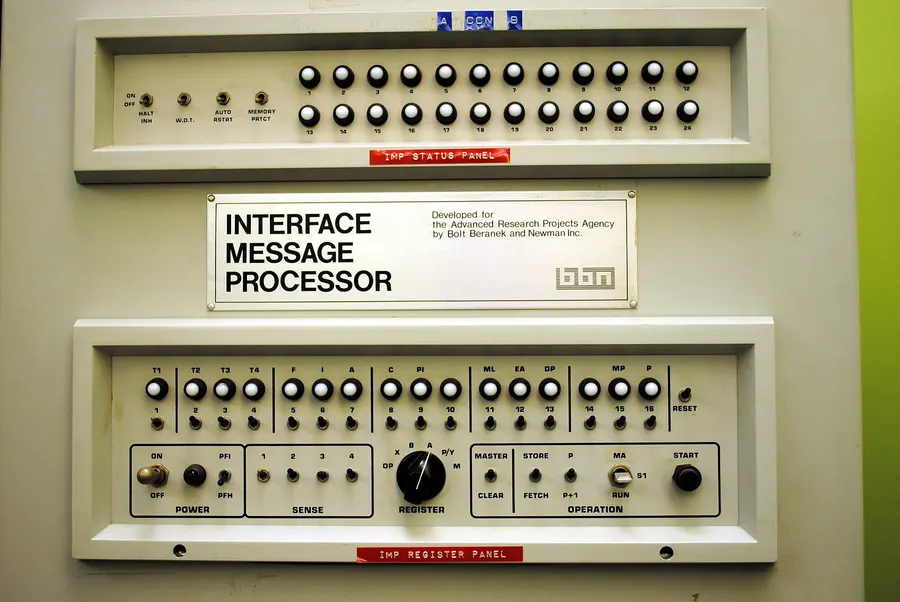
The front panel of the first Interface Message Processor, the machine installed at UCLA in 1969 that became the first node of the ARPANETThe front panel of the first Interface Message Processor, the machine installed at UCLA in 1969 that became the first node of the ARPANETImage: FastLizard4 · CC BY-SA 3.0
science · Americas

The first node of the ARPANET comes to life at UCLA

In the 1960s the US Defense Department’s Advanced Research Projects Agency (ARPA) paid for expensive computers at universities across the country and wanted them to share their resources. Its planners settled on a network that would break messages into small packets and pass them between dedicated switching computers, called Interface Message Processors (IMPs), one at each site. The Boston firm Bolt Beranek and Newman built the IMPs, and the first was sent to the laboratory of Leonard Kleinrock at the University of California, Los Angeles, a pioneer of the mathematics of such networks. The IMP, a cabinet the size of a refrigerator, arrived at UCLA’s Boelter Hall over the Labor Day weekend, and on 2 September 1969 Kleinrock’s team connected it to the university’s Sigma 7 computer. Data began to flow between the two machines that same day; Kleinrock later called it the day the infant internet took its first breath. A second IMP was installed at the Stanford Research Institute, and on 29 October 1969 UCLA sent the first message across the network. By the end of the year four sites were linked, the beginning of the ARPANET, ancestor of today’s internet.

Source: UCLA, Leonard Kleinrock: Personal history, the birth of the internet ↗
RESEARCH

Sources & Further Reading

Selected authoritative references supporting the events on this page.

WHY THESE MOMENTS?

Significance before volume

This page is not the longest possible list of events. It is a chronological journey through 2 September, where each entry is chosen for historical significance, human interest and reliability.

Facts are checked against authoritative museums, archives, universities and reference works. Where sources disagree, the page says so.

EXPLORED THE DEEPER STORY?

Return to the highlights of 2 September

Discover the lighter side of the date with famous birthdays, culture, firsts and lives remembered.

Explore This Day →