
HISTORY & TIMELINE
3 September

A journey through
3 September in history

The story of 3 September runs from the consecration of Pope Gregory the Great in 590 to the coming into force of the UN convention on women’s rights in 1981. In between come the coronation of Richard the Lionheart, the Mamluk victory over the Mongols at Ain Jalut, Cromwell’s victory at Dunbar, the Treaty of Paris, the day that never happened in Britain’s calendar of 1752, Frederick Douglass’s escape from slavery, Malcolm Campbell’s run at more than 300 miles an hour, the start of the Second World War for Britain and France, the first Taiwan Strait crisis, Sweden’s switch to driving on the right, Qatar’s independence and Viking 2’s landing on Mars.

JUMP THROUGH TIME
II
THE MIDDLE AGES

Medieval History

Kingdoms, conflict, faith, power and the changing medieval world.

590
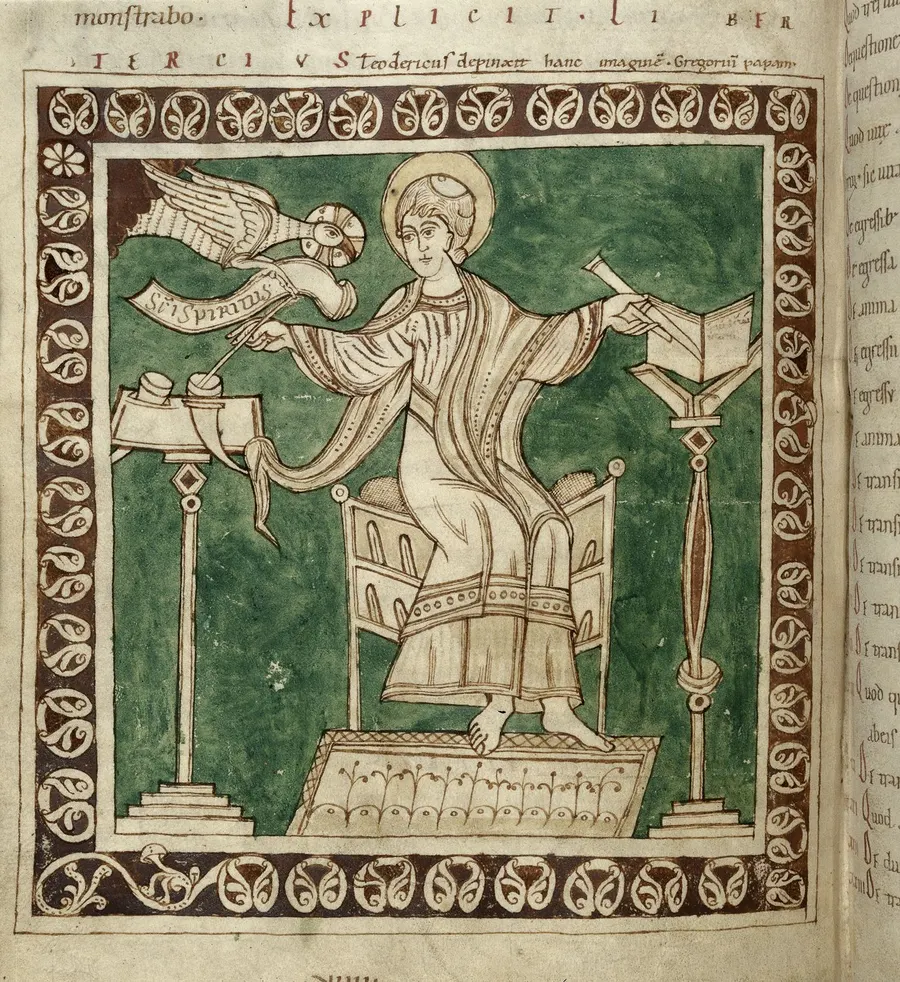
Pope Gregory the Great writing, inspired by the Holy Spirit in the form of a dove, in an early 12th-century manuscript at the British LibraryPope Gregory the Great writing, inspired by the Holy Spirit in the form of a dove, in an early 12th-century manuscript at the British LibraryImage: British Library · CC0
culture · Europe

Gregory the Great is consecrated pope

When Pope Pelagius II died of plague in February 590, the clergy and people of Rome chose Gregory, a former prefect of the city who had become a monk and abbot. He tried to refuse, and the election needed the Byzantine emperor’s confirmation, but on 3 September 590 he was consecrated at St Peter’s. The first monk to become pope, he fed Rome through famine, negotiated with the Lombards, sent missionaries to the English and became one of the most influential popes of the Middle Ages.

Source: Catholic Encyclopedia (New Advent): Pope St Gregory I ↗
1189
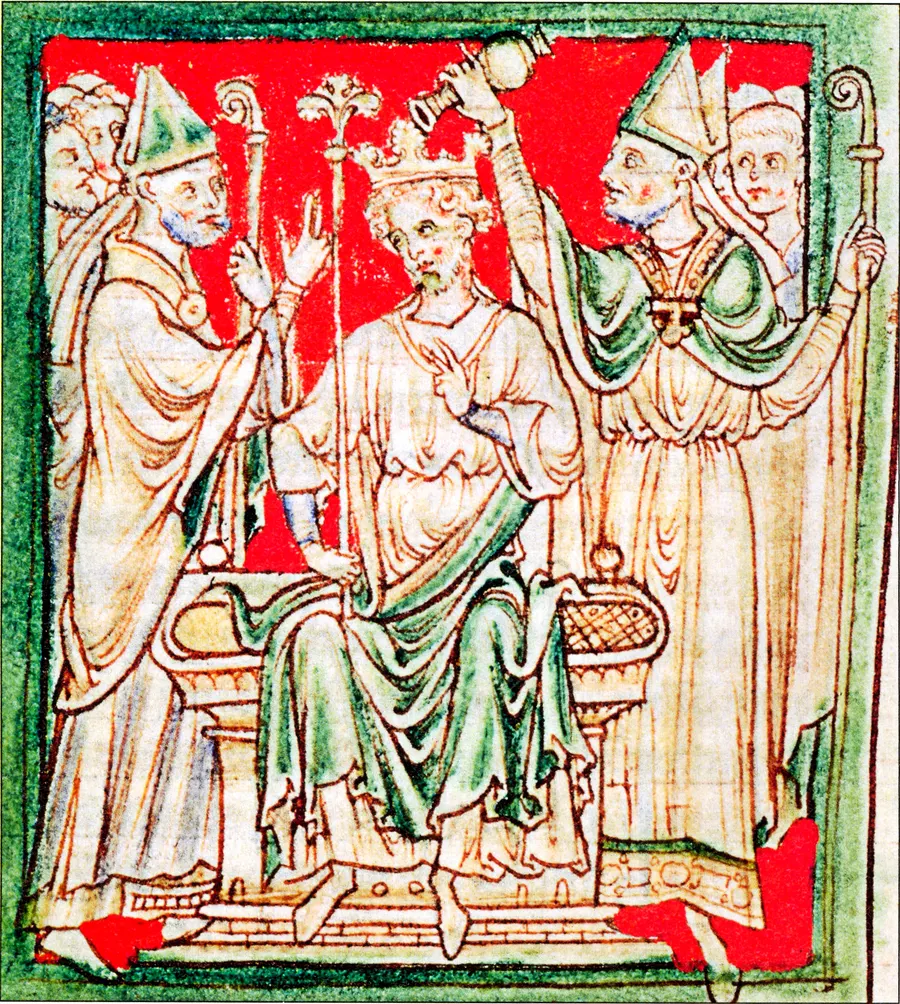
Richard I being anointed at his coronation in Westminster Abbey, in a 13th-century manuscript illustration attributed to Matthew ParisRichard I being anointed at his coronation in Westminster Abbey, in a 13th-century manuscript illustration attributed to Matthew ParisImage: Matthew Paris · Public domain
politics · Europe

Richard the Lionheart is crowned at Westminster

Richard, the warrior son of Henry II, was crowned King of England in Westminster Abbey on 3 September 1189. His is the first coronation for which a detailed account survives: Richard took the crown from the altar himself and handed it to the Archbishop of Canterbury, while two earls helped bear its weight. The day was darkened by attacks on London’s Jews that began when a Jewish delegation came to bring gifts. Richard soon left on the Third Crusade and spent only a few months of his ten-year reign in England.

Source: Westminster Abbey: Richard I ↗
1260
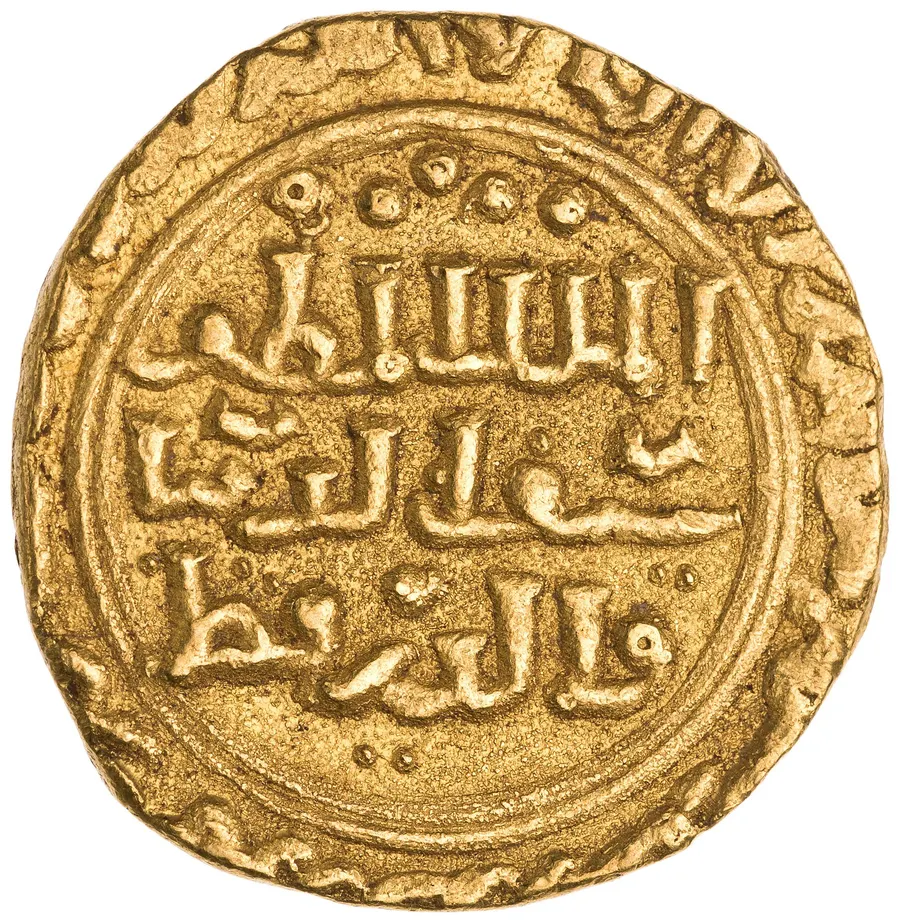
A gold dinar struck in the name of the Mamluk sultan Qutuz, who led the army at Ain Jalut, from the American Numismatic SocietyA gold dinar struck in the name of the Mamluk sultan Qutuz, who led the army at Ain Jalut, from the American Numismatic SocietyImage: American Numismatic Society · CC0
world · Middle East

The Mamluks halt the Mongols at Ain Jalut

In the 1250s the Mongol prince Hülegü, brother of the Great Khan, swept through Persia and in 1258 sacked Baghdad, ending the Abbasid caliphate. In 1260 his armies took Aleppo and Damascus. When Hülegü withdrew east with most of his forces after the death of the Great Khan, he left his general Kitbuqa to hold Syria, and sent envoys to Cairo demanding the surrender of Egypt’s new Mamluk sultan, Qutuz, who had them put to death. Qutuz marched north into Palestine with his commander Baybars, and on 3 September 1260 (25 Ramadan 658 in the Islamic calendar) the two armies met at Ain Jalut, the ‘Spring of Goliath’, in the valley of Jezreel. The Mamluks lured the Mongol cavalry forward with a feigned retreat and then counter-attacked; Kitbuqa was captured and killed. It was the first great defeat of a Mongol army in the region. Mongol rule west of the Euphrates collapsed, and the Mamluks went on to rule Egypt and Syria for more than 250 years.

Source: Encyclopaedia Iranica: Il-Khanids i. Dynastic history ↗
III
A CHANGING WORLD

Early Modern Era

Exploration, political change, scientific development and expanding global connections.

1650
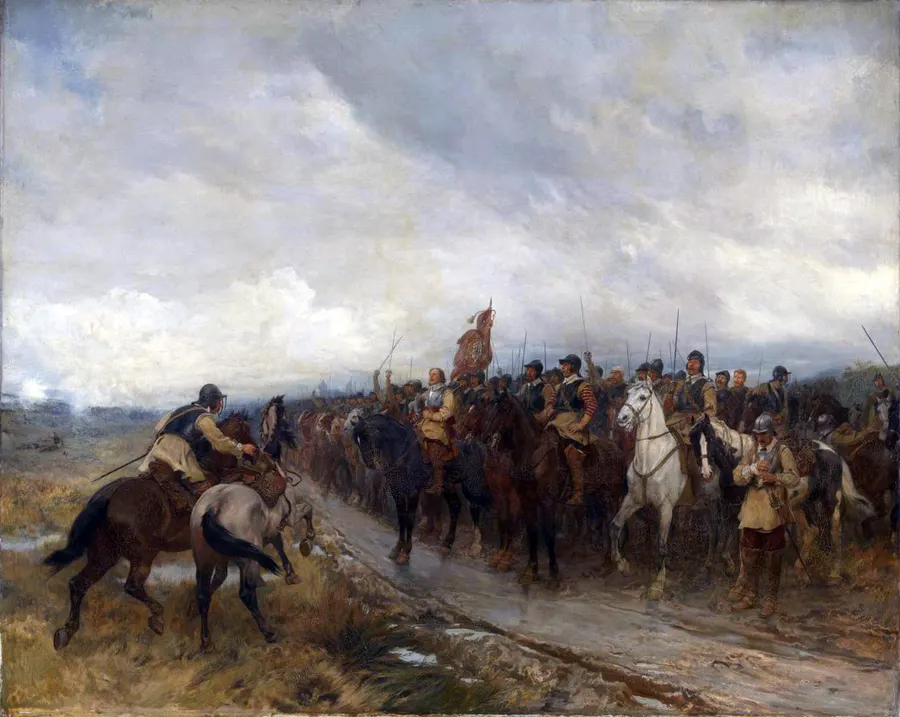
Cromwell at Dunbar, a painting by Andrew Carrick Gow made in 1886Cromwell at Dunbar, a painting by Andrew Carrick Gow made in 1886Image: Andrew Carrick Gow · Public domain
world · Europe

Cromwell routs the Scots at Dunbar

After the execution of Charles I in January 1649, the Scots, who had first fought against the king, proclaimed his son Charles II as their king. England’s new republic saw this as a direct threat, and in July 1650 Oliver Cromwell led the New Model Army into Scotland. The Scottish commander David Leslie refused to give battle outside Edinburgh, and by the end of August Cromwell’s sick and hungry army had fallen back to the coast at Dunbar, hemmed in by a Scottish force about twice its size. Leslie moved his army down from the hills to close the trap. Before dawn on 3 September 1650 (by the Old Style calendar then used in Britain), Cromwell attacked first and broke the Scottish lines within about an hour. Some 3,000 Scots were killed and around 10,000 captured, and many of the prisoners died on a forced march south or in captivity at Durham. Southern Scotland fell to English rule. A year later to the day, on 3 September 1651, Cromwell crushed Charles II’s last army at Worcester.

Source: Britannica: Battle of Dunbar ↗
1752
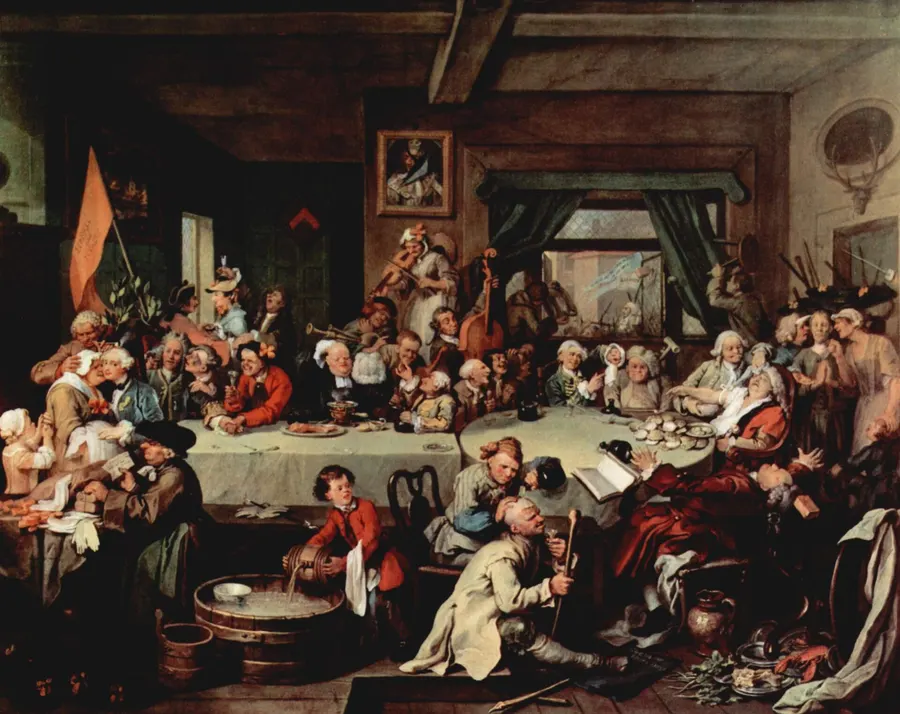
An Election Entertainment by William Hogarth, 1754-55, in which a captured banner reads 'Give us our eleven days'An Election Entertainment by William Hogarth, 1754-55, in which a captured banner reads ‘Give us our eleven days’Image: William Hogarth · Public domain
science · Europe

The day that never happened in Britain

Most of Catholic Europe had adopted the more accurate Gregorian calendar in 1582, but Britain kept the old Julian calendar, which by the 18th century was 11 days behind. The Calendar (New Style) Act of 1750 fixed the gap: in Britain and its colonies, Wednesday 2 September 1752 was followed by Thursday 14 September. So 3 September 1752 never happened there. Stories of crowds demanding ‘give us our eleven days’ grew up later, but there is little evidence of real calendar riots.

Source: legislation.gov.uk: Calendar (New Style) Act 1750 ↗
1783
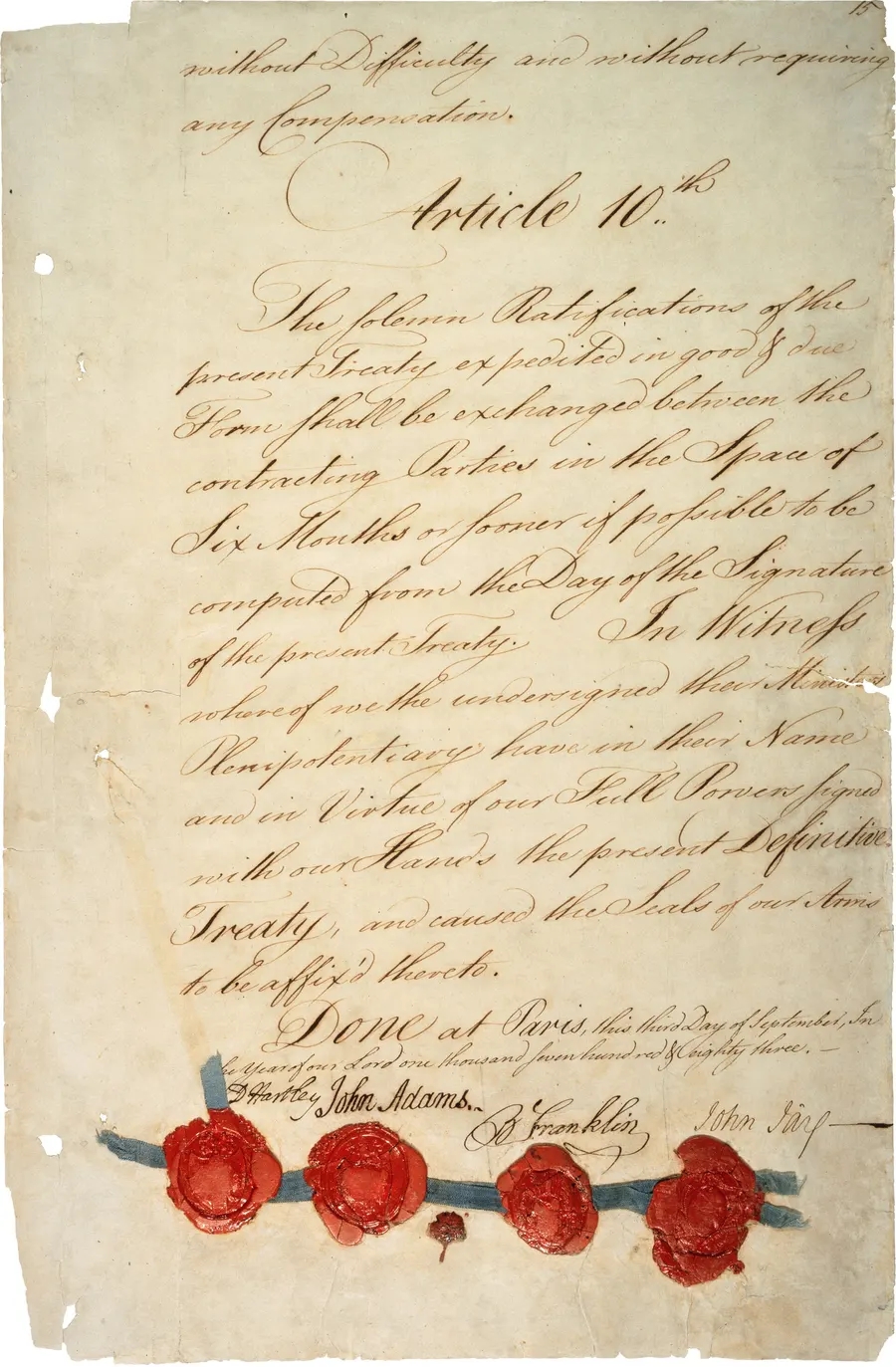
The last page of the Treaty of Paris of 1783, with the signatures and seals of David Hartley for Britain and John Adams, Benjamin Franklin and John Jay for the United StatesThe last page of the Treaty of Paris of 1783, with the signatures and seals of David Hartley for Britain and John Adams, Benjamin Franklin and John Jay for the United StatesImage: Unknown · Public domain
world · Americas

The Treaty of Paris ends the American War of Independence

The fighting in the American War of Independence had all but ended when a British army under Lord Cornwallis surrendered at Yorktown in October 1781. Peace talks began in Paris the next spring. The American commissioners, Benjamin Franklin, John Adams and John Jay, negotiated directly with the British envoy, and in November 1782 they agreed preliminary terms, even though their French allies had expected to be consulted first. The final treaty was signed in Paris on 3 September 1783, on the same day as Britain’s separate peace with France and Spain at Versailles. Britain recognised the independence of the United States, with a western border on the Mississippi River, while keeping Canada. Americans kept the right to fish off Newfoundland, debts on both sides were to be honoured, and Congress was to urge the states to restore property taken from loyalists. Congress ratified the treaty in January 1784, bringing a new nation formally into being.

Source: US National Archives: Treaty of Paris (1783) ↗
IV
THE NINETEENTH CENTURY

The 1800s

Industry, empire, invention, reform and a century of enormous transformation.

1838
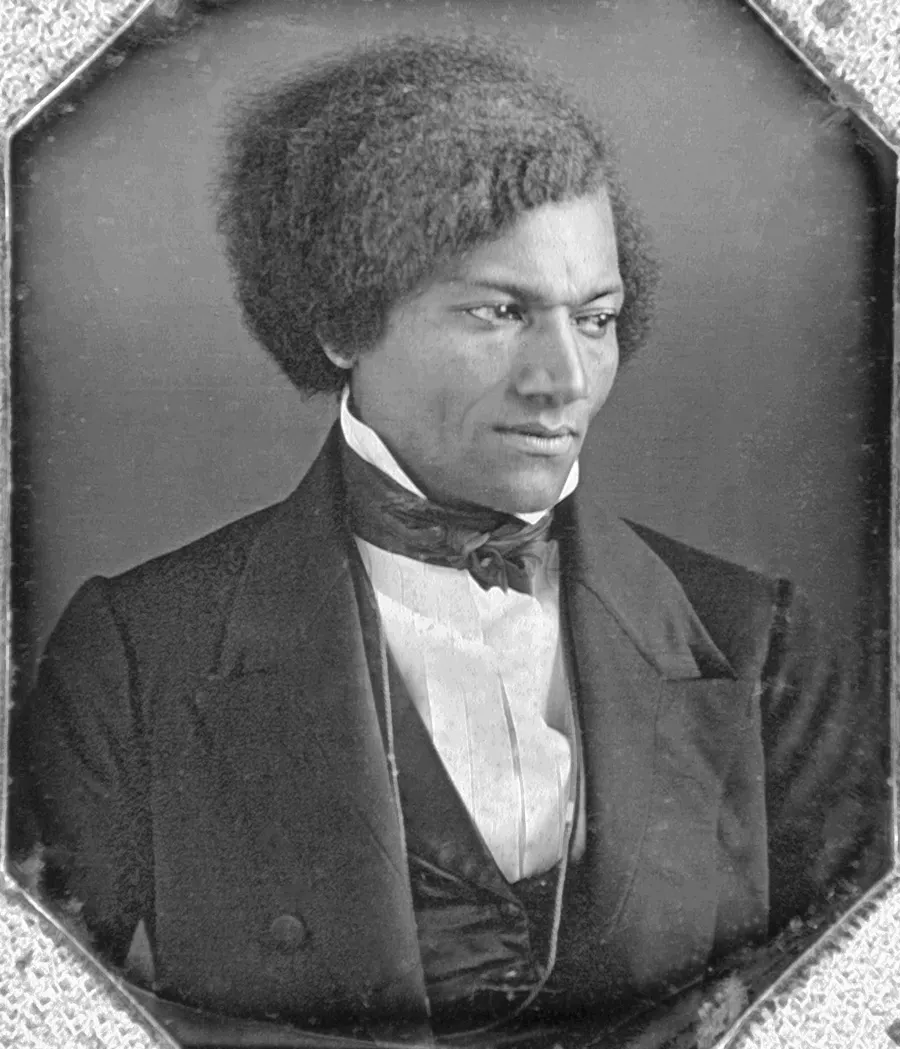
Frederick Douglass as a young man, in a portrait from the 1840s, the decade after his escapeFrederick Douglass as a young man, in a portrait from the 1840s, the decade after his escapeImage: Unknown · Public domain
world · Americas

Frederick Douglass escapes from slavery

Frederick Bailey, enslaved in Maryland, was working as a ship caulker in Baltimore when he planned his escape with the help of Anna Murray, a free Black woman. On 3 September 1838, dressed as a sailor and carrying papers borrowed from a free Black seaman, he boarded a train north. Travelling by train and steamboat through Delaware and Philadelphia, he reached New York within a day. He married Anna, took the name Douglass and became the most famous abolitionist speaker and writer of his age.

Source: Library of Congress: Frederick Douglass timeline ↗
V
THE TWENTIETH CENTURY

The 1900s

War and peace, technological leaps, social change, politics, sport and popular culture.

1935
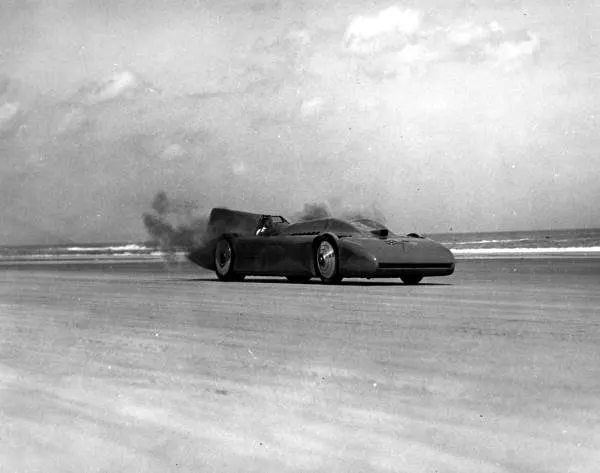
Malcolm Campbell's Bluebird on Daytona Beach in 1935, months before its record run on the Bonneville Salt FlatsMalcolm Campbell’s Bluebird on Daytona Beach in 1935, months before its record run on the Bonneville Salt FlatsImage: Richard LeSesne · Public domain
sport · Americas

Malcolm Campbell breaks 300 miles an hour

The British racing driver Malcolm Campbell had chased the world land speed record since the 1920s, first on Welsh sands and then on the beach at Daytona in Florida, in a series of cars all named Bluebird after a play by Maurice Maeterlinck. By 1935 his Bluebird had a 2,500-horsepower Rolls-Royce aero engine, but the Daytona sand was too bumpy for the speeds he wanted. He took the car to the Bonneville Salt Flats in Utah, a vast, flat dry lake bed. On 3 September 1935 he was timed over two runs at an average of just over 301 miles per hour (about 484 km/h), the first time a car had officially passed 300 mph. It was his last land speed record; he turned to water speed records instead. Bonneville became the home of record-breaking for decades, and his son Donald later set records of his own on land and water.

Source: Britannica: Sir Malcolm Campbell ↗
1939
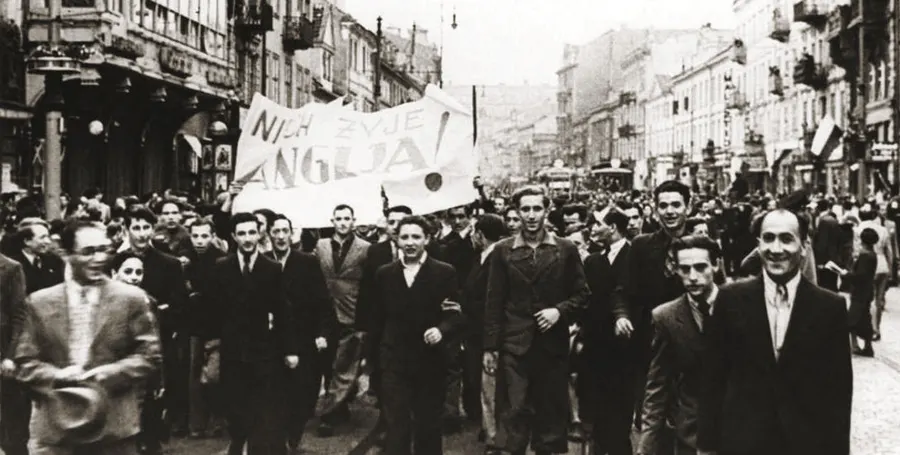
Crowds outside the British Embassy in Warsaw cheer Britain's declaration of war on Germany on 3 September 1939Crowds outside the British Embassy in Warsaw cheer Britain’s declaration of war on Germany on 3 September 1939Image: Unknown · Public domain
world · Europe

Britain and France declare war on Germany

Through the 1930s Britain and France had tried to avoid another great war by giving way to Adolf Hitler, most famously at Munich in 1938, when they let Germany take part of Czechoslovakia. When Hitler seized the rest of the country in March 1939, they promised to defend Poland. On 1 September German forces invaded Poland, and the two governments demanded that Germany withdraw. At nine o’clock on the morning of Sunday 3 September 1939 the British ambassador in Berlin delivered a final ultimatum that expired at eleven. No reply came, and at 11.15 the prime minister, Neville Chamberlain, told the nation by radio that Britain was at war with Germany. France’s ultimatum ran out later that day, and Australia and New Zealand also declared war. Yet the allies could do little to save Poland, and months of the ‘Phoney War’ passed before the fighting in the west began in earnest.

Source: Imperial War Museums: How Europe went to war in 1939 ↗
1954
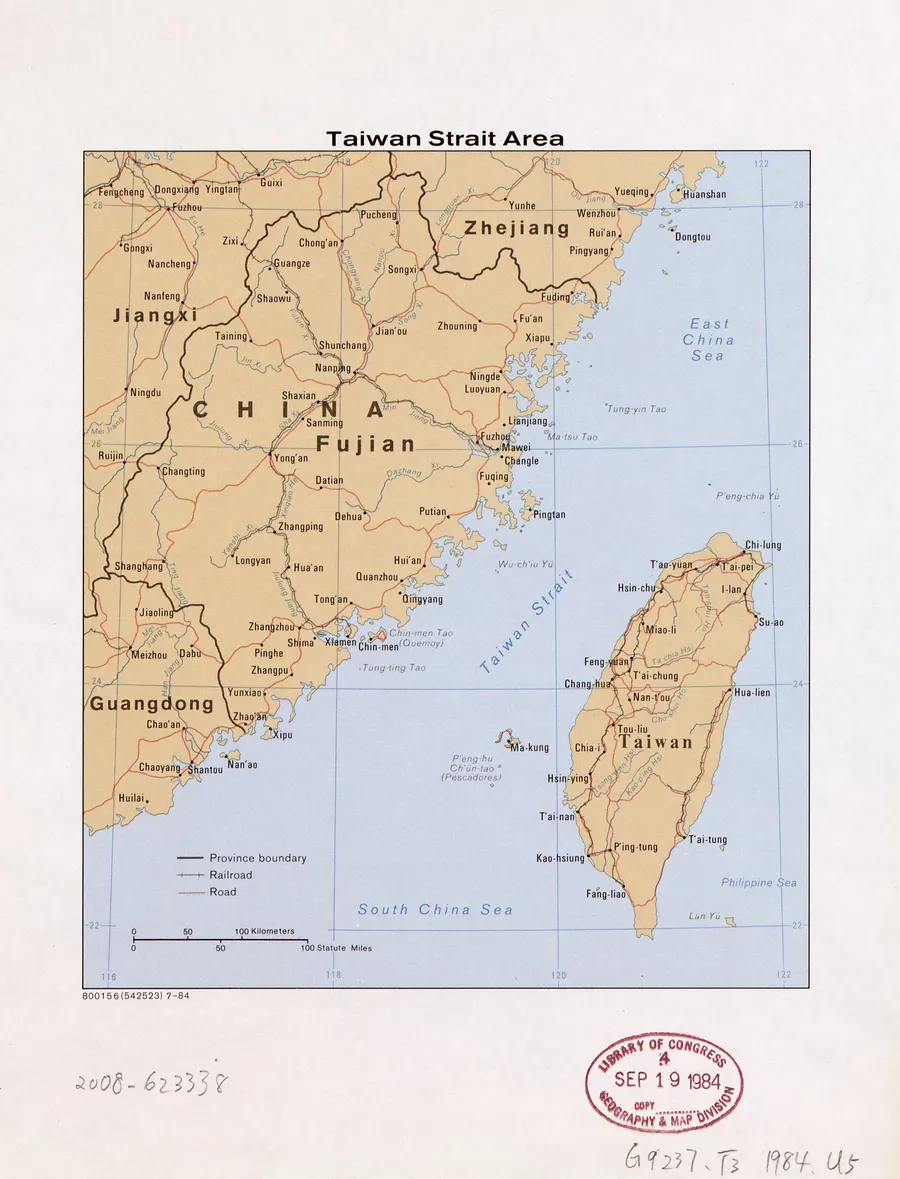
A 1984 US Central Intelligence Agency map of the Taiwan Strait area, showing Taiwan and the Chinese coast opposite, from the Library of CongressA 1984 US Central Intelligence Agency map of the Taiwan Strait area, showing Taiwan and the Chinese coast opposite, from the Library of CongressImage: United States. Central Intelligence Agency · Public domain
world · Asia

Chinese guns shell Quemoy and the first Taiwan Strait crisis begins

After losing the Chinese civil war in 1949, Chiang Kai-shek’s Nationalist government held Taiwan and a string of small islands just off the mainland coast, among them Quemoy (Kinmen). On 3 September 1954 the People’s Liberation Army began a heavy artillery bombardment of Quemoy. The crisis lasted into 1955, as the PLA seized the island of Yijiangshan and the Nationalists evacuated the Dachen Islands, and it led the United States to sign a mutual defence treaty with Taiwan in December 1954.

Source: US Office of the Historian: Foreign Relations of the United States, 1952-1954, China and Japan, document 276 ↗
1967
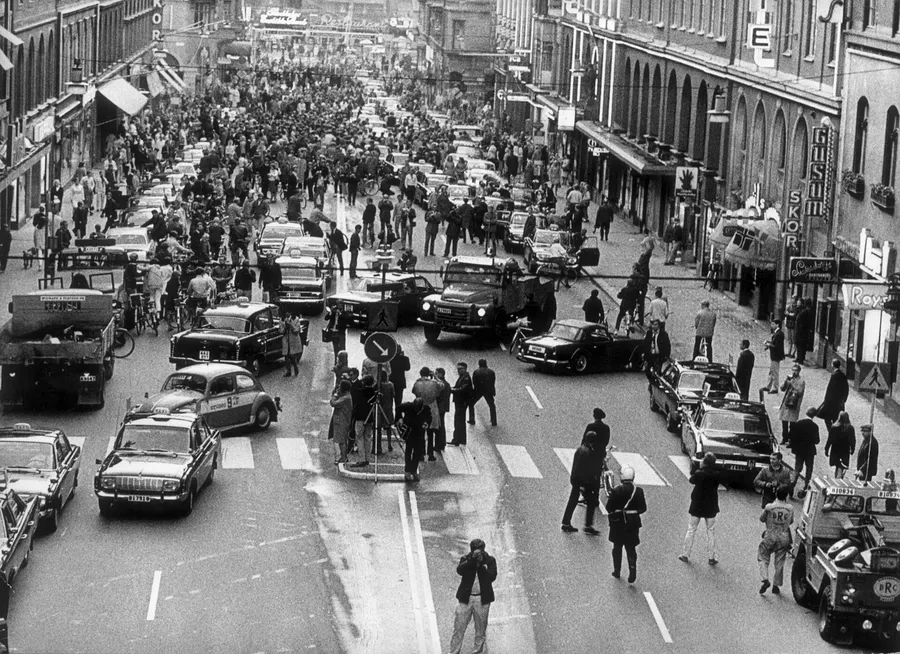
Kungsgatan in Stockholm at 4.50 in the morning of 3 September 1967, as traffic prepares to change to the right-hand side of the roadKungsgatan in Stockholm at 4.50 in the morning of 3 September 1967, as traffic prepares to change to the right-hand side of the roadImage: Jan Collsiöö · Public domain
world · Europe

Sweden switches to driving on the right

Sweden drove on the left, even though its neighbours drove on the right and most Swedish cars had the steering wheel on the left. In a referendum in 1955 more than four out of five voters rejected a change, but as traffic grew the problem would not go away, and in 1963 the Swedish parliament decided to switch anyway. A four-year publicity campaign followed, with its own logo, a big letter H for ‘höger’, meaning right, printed on everything from milk cartons to underwear. On Sunday 3 September 1967, the day known as Dagen H, almost all private traffic was banned from the roads in the early hours. At 4.50 a.m. vehicles still moving stopped, crossed carefully to the other side of the road and waited, and at 5 a.m. traffic set off on the right. Thousands of road signs had been changed overnight and buses rebuilt with doors on the other side. Accident numbers actually fell for a time, as drivers took extra care.

Source: Nordiska museet (via DigitaltMuseum): Högertrafikomläggningen, 3 September 1967 ↗
1971
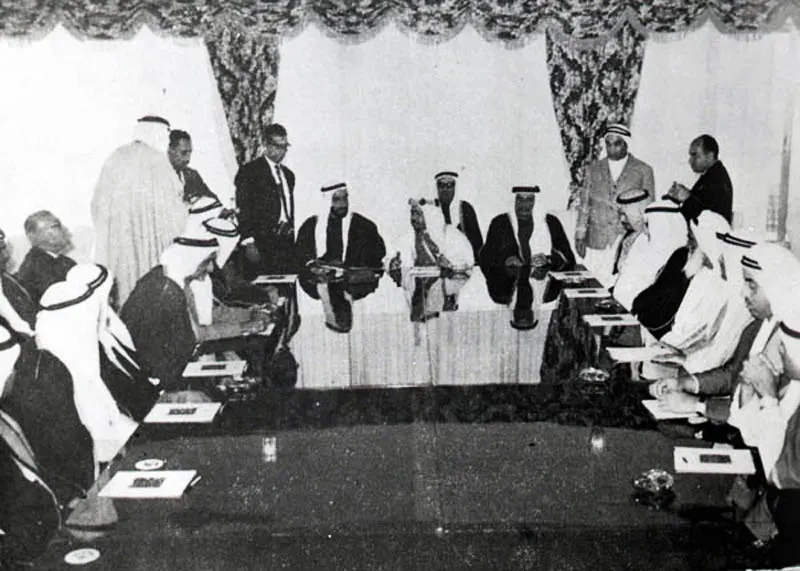
Rulers of the Gulf emirates, including Qatar, at the opening of their first conference on a possible union in February 1968, after Britain announced it would leave the GulfRulers of the Gulf emirates, including Qatar, at the opening of their first conference on a possible union in February 1968, after Britain announced it would leave the GulfImage: Anonymous photographer · Public domain

politics · Middle East

Qatar becomes an independent state

For more than half a century Qatar, a peninsula jutting into the Persian Gulf, had been a British protected state under a treaty signed in 1916, with Britain in charge of its defence and foreign affairs. Oil, exported from 1949, transformed its economy. In January 1968 Britain announced that it would withdraw its forces from east of Suez, and Qatar joined talks with Bahrain and the Trucial States on forming a union of Gulf emirates. The talks failed to agree, and Qatar chose to go its own way. On 3 September 1971 the heir apparent and prime minister, Sheikh Khalifa bin Hamad Al Thani, announced the end of the 1916 treaty and Qatar’s full independence, and a new treaty of friendship with Britain replaced it. Qatar joined the United Nations and the Arab League within weeks. Its vast reserves of natural gas later made it one of the richest countries in the world.

Source: Amiri Diwan of the State of Qatar: History of Qatar ↗
1976
The first colour picture taken by the Viking 2 lander at Utopia Planitia, showing rocks strewn across the plain and part of the spacecraftThe first colour picture taken by the Viking 2 lander at Utopia Planitia, showing rocks strewn across the plain and part of the spacecraftImage: NASA/JPL · Public domain
science · Global

Viking 2 lands on Mars

NASA’s Viking programme sent two identical spacecraft to Mars, each made up of an orbiter and a lander. Viking 1 made the first successful American landing on 20 July 1976. Viking 2 reached Mars orbit in August, and its controllers studied pictures from orbit to choose a safe site far to the north, on the plain of Utopia Planitia, where water ice was more likely and the chances of finding signs of life seemed better. On 3 September 1976 the lander separated from its orbiter and touched down safely, about 6,500 kilometres from Viking 1. It photographed a rock-strewn plain, measured the weather and later recorded a thin layer of frost on the ground in the Martian winter. Its biology experiments, like Viking 1’s, found puzzling chemical activity in the soil but no convincing evidence of life. The lander worked for nearly four years, until its batteries failed in April 1980.

Source: NASA: Sept. 3, 1976, Viking 2 lands on Mars ↗
1981
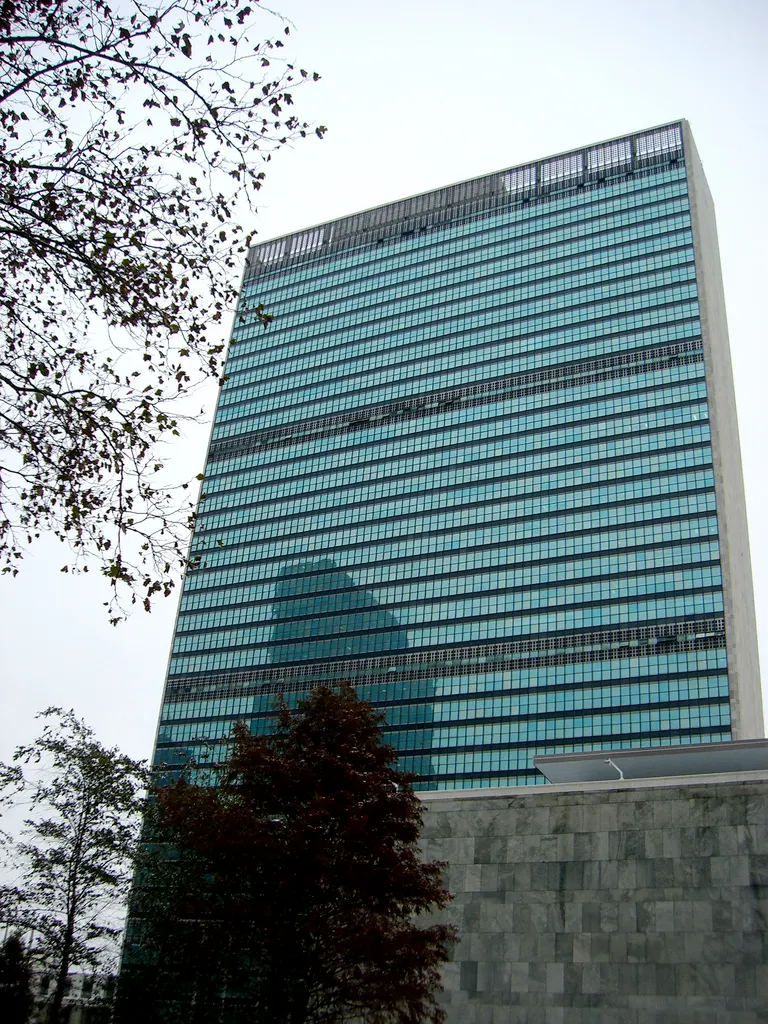
United Nations Headquarters in New York, where the General Assembly adopted the convention in 1979United Nations Headquarters in New York, where the General Assembly adopted the convention in 1979Image: Clare Cridland · CC BY 2.0
world · Global

The UN convention on women’s rights comes into force

The Convention on the Elimination of All Forms of Discrimination against Women, often called an international bill of rights for women, was adopted by the UN General Assembly in December 1979. It commits states to end discrimination against women in law, politics, education, work, health and family life. It came into force on 3 September 1981, thirty days after the twentieth country ratified it, faster than any earlier human rights convention, and it is now one of the most widely ratified UN treaties.

Source: United Nations, Division for the Advancement of Women: Short history of CEDAW Convention ↗
RESEARCH

Sources & Further Reading

Selected authoritative references supporting the events on this page.

Catholic Encyclopedia (New Advent): Pope St Gregory I↗The Holy See: Gregory I↗Westminster Abbey: Richard I↗Britannica: Richard I, king of England↗Encyclopaedia Iranica: Il-Khanids i. Dynastic history↗Britannica: Kitbuga↗Britannica: Battle of Dunbar↗Historic Environment Scotland: Battle of Dunbar II (inventory of historic battlefields)↗English Heritage: Charles II and the Royal Oak↗legislation.gov.uk: Calendar (New Style) Act 1750↗Britannica: Did a calendar change cause riots in England?↗US National Archives: Treaty of Paris (1783)↗Library of Congress: Treaty of Paris, primary documents in American history↗Britannica: Peace of Paris (1783)↗Library of Congress: Frederick Douglass timeline↗US National Park Service: Frederick Douglass↗Britannica: Sir Malcolm Campbell↗Wikipedia: Campbell-Railton Blue Bird↗Imperial War Museums: How Europe went to war in 1939↗UK Parliament, Hansard: War with Germany, House of Commons, 3 September 1939↗US Office of the Historian: Foreign Relations of the United States, 1952-1954, China and Japan, document 276↗Britannica: Taiwan Strait crises↗Nordiska museet (via DigitaltMuseum): Högertrafikomläggningen, 3 September 1967↗Sveriges Radio: Sweden marks 50th anniversary of right-hand side driving↗Amiri Diwan of the State of Qatar: History of Qatar↗Britannica: History of Qatar↗US Office of the Historian: Qatar↗NASA: Sept. 3, 1976, Viking 2 lands on Mars↗NASA Science: Viking 2↗United Nations, Division for the Advancement of Women: Short history of CEDAW Convention↗Britannica: Convention on the Elimination of All Forms of Discrimination Against Women↗
WHY THESE MOMENTS?

Significance before volume

This page is not the longest possible list of events. It is a chronological journey through 3 September, where each entry is chosen for historical significance, human interest and reliability.

Facts are checked against authoritative museums, archives, universities and reference works. Where sources disagree, the page says so.

EXPLORED THE DEEPER STORY?

Return to the highlights of 3 September

Discover the lighter side of the date with famous birthdays, culture, firsts and lives remembered.

Explore This Day →