
HISTORY & TIMELINE
4 September

A journey through
4 September in history

The story of 4 September runs from the deposition of the boy emperor Romulus Augustulus in 476 to the opening of the UN’s Fourth World Conference on Women in Beijing in 1995. In between come the Sienese victory over Florence at Montaperti, the founding of Los Angeles, the restart of work on Cologne Cathedral, the proclamation of France’s Third Republic, Geronimo’s surrender in Skeleton Canyon, the switching on of Edison’s Pearl Street power station, the first Southern 500 at Darlington, the turning away of the Little Rock Nine, the opening of the Forth Road Bridge, Salvador Allende’s election in Chile and the second Sinai disengagement agreement between Egypt and Israel.

I
EARLIEST RECORDS

Ancient & Early History

The earliest worthwhile records and events connected with this date.

476
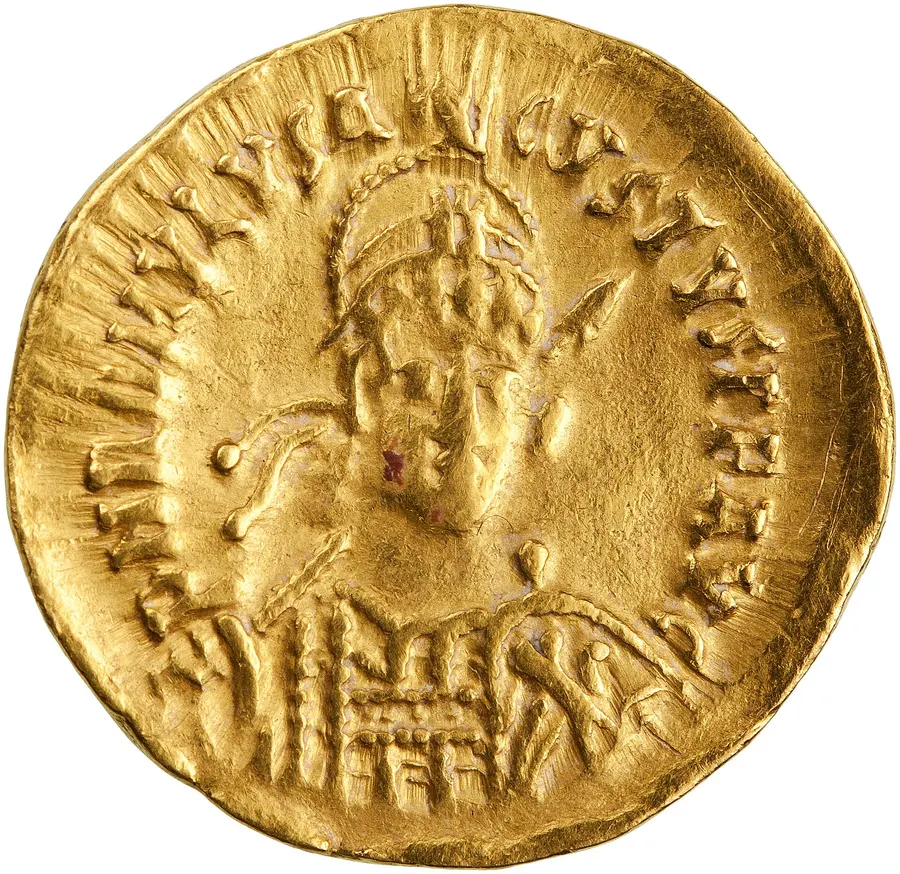
A gold solidus of Romulus Augustulus, the last emperor of the Western Roman Empire, in the collection of the American Numismatic SocietyA gold solidus of Romulus Augustulus, the last emperor of the Western Roman Empire, in the collection of the American Numismatic SocietyImage: ANS · CC0
politics · Europe

The last Western Roman emperor, Romulus Augustulus, is deposed

In 475 the general Orestes drove the emperor Julius Nepos out of Ravenna and placed his own son Romulus, still a boy, on the Western Roman throne. Mocked as Augustulus, ‘the little emperor’, he had no power of his own. Real strength lay with the army in Italy, made up largely of Germanic soldiers, and when Orestes refused their demand for land of their own, they turned to one of their officers, Odoacer, and proclaimed him king on 23 August 476. Odoacer defeated and killed Orestes, then took Ravenna and its emperor. The ancient sources do not give an exact day, but the deposition of Romulus took place on or soon after 4 September 476. Odoacer spared the boy because of his youth, gave him a pension and sent him to live with relatives in Campania. Rather than take the imperial title himself, Odoacer sent the regalia to Constantinople and ruled Italy as king. No new emperor was ever named in the West, and 476 became the date traditionally given for the fall of the Western Roman Empire.

Source: De Imperatoribus Romanis (Loyola University Chicago): Romulus Augustulus ↗
II
THE MIDDLE AGES

Medieval History

Kingdoms, conflict, faith, power and the changing medieval world.

1260
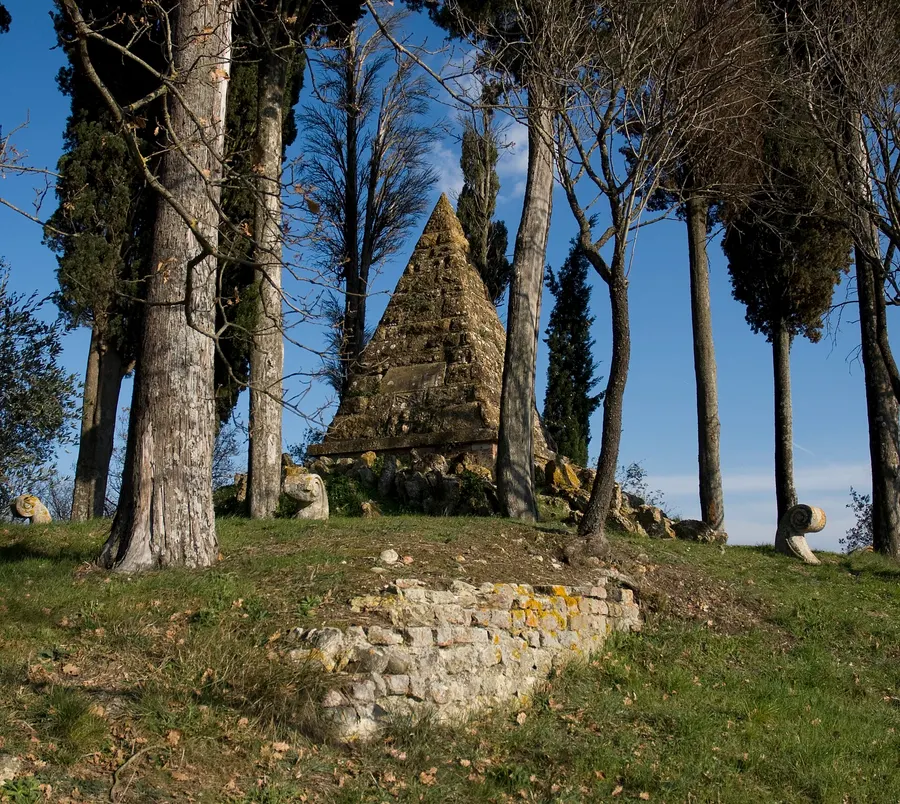
The pyramid on the hill at Montaperti that commemorates the battle of 1260The pyramid on the hill at Montaperti that commemorates the battle of 1260Image: Vignaccia76 · CC BY-SA 3.0
world · Europe

Siena defeats Florence at Montaperti

In the 13th century the cities of Tuscany were divided between Guelphs, who backed the papacy, and Ghibellines, who backed the emperor. On 4 September 1260 the Guelph army of Florence met the Ghibellines of Siena, helped by German knights sent by King Manfred of Sicily and Florentine exiles under Farinata degli Uberti, at Montaperti near Siena. The Florentines were routed, and their Ghibelline exiles took over Florence. Dante recalled the slaughter in his Inferno, and a small pyramid marks the battlefield today.

Source: Treccani: Montaperti ↗
III
A CHANGING WORLD

Early Modern Era

Exploration, political change, scientific development and expanding global connections.

1781
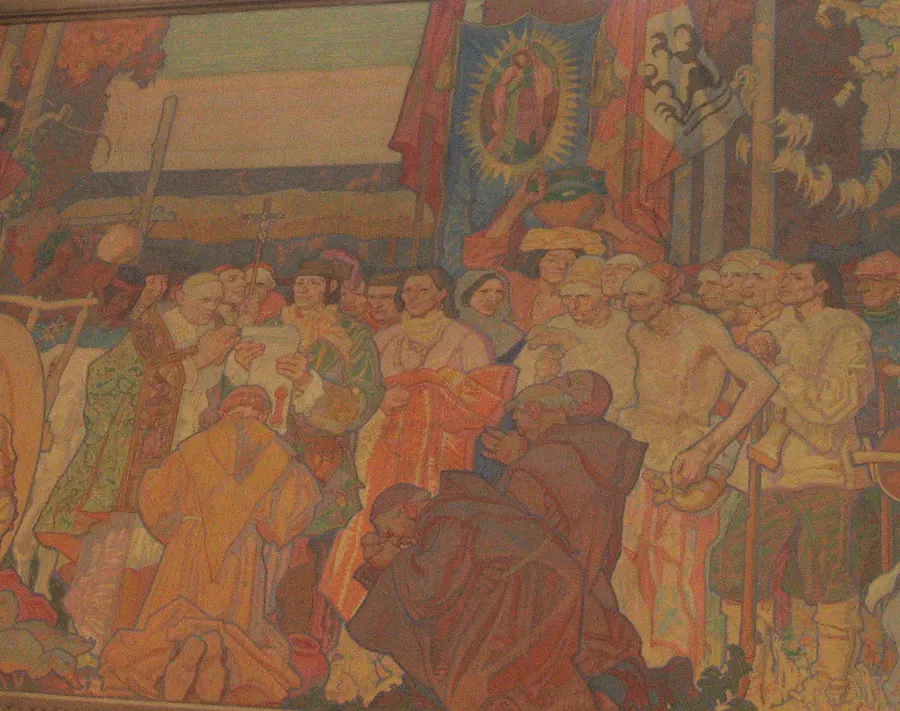
The founding of Los Angeles, part of Dean Cornwell's mural of California history in the Los Angeles Central LibraryThe founding of Los Angeles, part of Dean Cornwell’s mural of California history in the Los Angeles Central LibraryImage: User:Geographer · Public domain
world · Americas

Los Angeles is founded as a Spanish farming town

Felipe de Neve, the Spanish governor of the Californias, planned farming towns to feed the province’s missions and garrisons. Forty-four settlers, most of them of Indigenous and African descent, were recruited in Sonora and Sinaloa and made the long journey north. The city of Los Angeles dates its founding to 4 September 1781, when the town of El Pueblo de Nuestra Señora la Reina de los Ángeles was established near the Native village of Yaanga, beside the Los Angeles River.

Source: City of Los Angeles: The history of Los Angeles ↗
IV
THE NINETEENTH CENTURY

The 1800s

Industry, empire, invention, reform and a century of enormous transformation.

1842
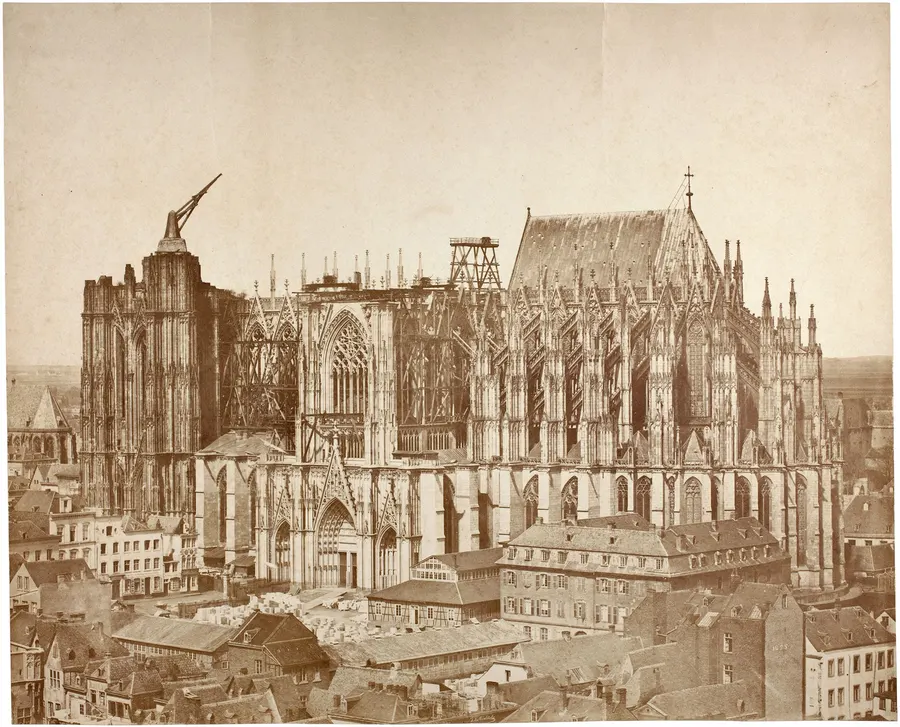
Cologne Cathedral under construction in 1855, in an early salt-paper photograph, with the medieval crane still on the unfinished south towerCologne Cathedral under construction in 1855, in an early salt-paper photograph, with the medieval crane still on the unfinished south towerImage: Johannes Franciscus Michiels · Public domain
culture · Europe

Work resumes on Cologne Cathedral after almost three centuries

Building on Cologne Cathedral began in 1248 to house the relics of the Three Kings, but work slowed over the centuries and stopped altogether in the 1500s. For about 300 years the unfinished choir stood beside a stump of the south tower, topped by a wooden crane that became a familiar part of the city’s skyline. In the early 19th century, as German Romantics rediscovered the Gothic, the rediscovery of the cathedral’s original medieval plans revived the dream of finishing it. On 4 September 1842 King Friedrich Wilhelm IV of Prussia, with the coadjutor archbishop Johannes von Geissel, laid the foundation stone for the cathedral’s completion. The king saw it as a national monument for all Germans, and the citizens of Cologne founded the Central Cathedral Building Society, which raised most of the money. Following the medieval designs, the builders finished the cathedral in 1880. Its twin spires, 157 metres high, made it for a few years the tallest building in the world, and it is now a UNESCO World Heritage Site.

Source: Kölner Dom (Cologne Cathedral): History ↗
1870
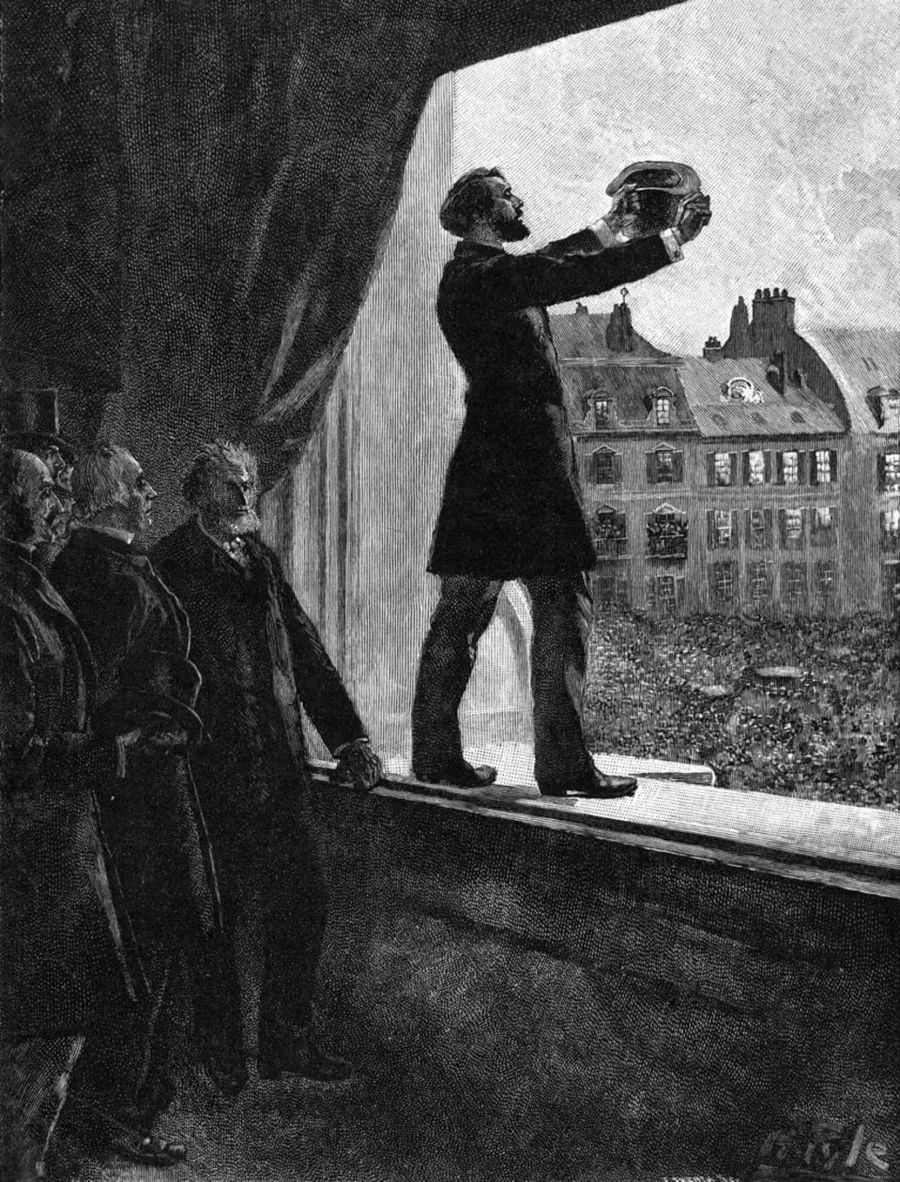
Léon Gambetta proclaiming the Republic of France, in an illustration by Howard PyleLéon Gambetta proclaiming the Republic of France, in an illustration by Howard PyleImage: Howard Pyle · Public domain
politics · Europe

Paris proclaims the Third Republic

In July 1870 Emperor Napoleon III took France into war with Prussia and its German allies, confident of a quick victory. Instead the French armies were outmanoeuvred and beaten in a few weeks. On 2 September the emperor himself surrendered with an entire army at Sedan, near the Belgian border, and was taken prisoner. When the news reached Paris on the night of 3 September, the capital rose in anger against the regime that had led it to disaster. On 4 September 1870 crowds invaded the Palais Bourbon, where the legislature sat, and the republican deputies Léon Gambetta and Jules Favre led them across the city to the Hôtel de Ville. There Gambetta proclaimed the Republic, and a Government of National Defence was formed to carry on the war. The Second Empire fell without a shot being fired, and the empress fled to England. The new republic began amid siege, defeat and the bloody Paris Commune of 1871, yet it lasted until 1940, longer than any French regime since the Revolution.

Source: Assemblée nationale: Defeat at Sedan, proclamation of the Republic and provisional government ↗
1882
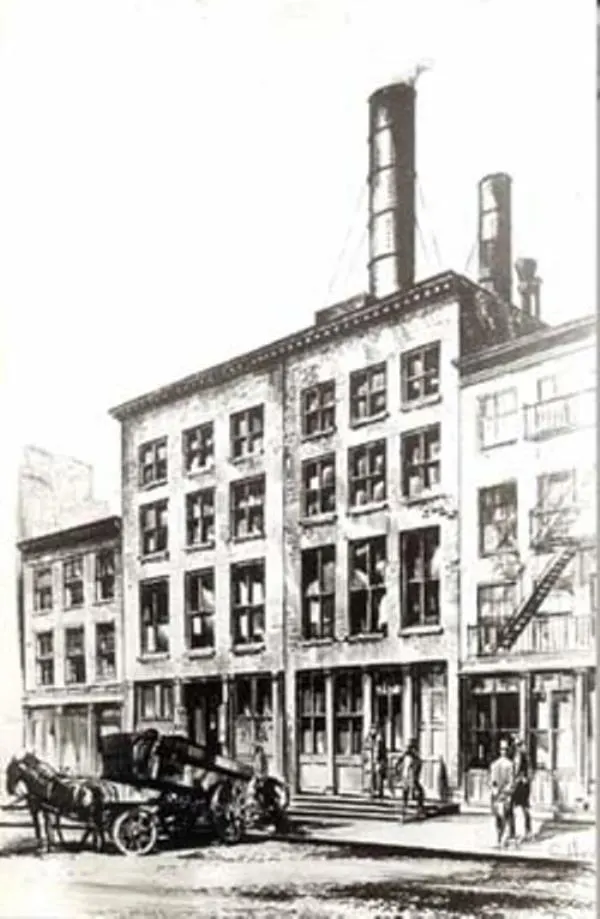
A sketch of Edison's Pearl Street power station in Lower ManhattanA sketch of Edison’s Pearl Street power station in Lower ManhattanImage: Earl Morter · Public domain
science · Americas

Edison’s Pearl Street station switches on New York’s electric light

Thomas Edison’s incandescent lamp of 1879 was of little use without a reliable supply of electricity, and Edison set out to build a whole system: generators, underground cables, meters, switches and fuses. He chose a district of Lower Manhattan around Wall Street, home to banks and newspapers that could afford the new light, and bought two buildings at 255 and 257 Pearl Street for his power station. On 4 September 1882, from the office of the banker J. P. Morgan, Edison gave the signal to switch on. Six large steam-driven dynamos began sending direct current to about 85 customers with some 400 lamps in a district of about a quarter of a square mile. It was the first permanent central power station for incandescent lighting and the model for the power stations that would soon spread to cities around the world. It ran until 1890, when it was badly damaged by fire.

Source: IEEE, Engineering and Technology History Wiki: Milestones, Pearl Street Station, 1882 ↗
1886
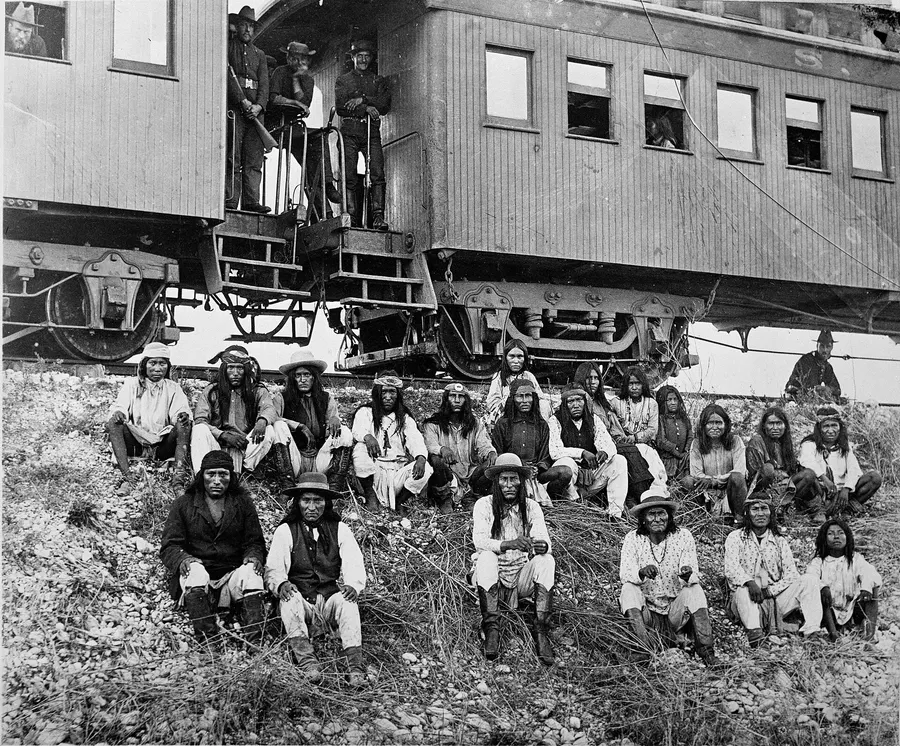
Geronimo (third from the right, in front) and other Apache prisoners beside the Southern Pacific Railway near the Nueces River, Texas, on 10 September 1886, on their way to exile in FloridaGeronimo (third from the right, in front) and other Apache prisoners beside the Southern Pacific Railway near the Nueces River, Texas, on 10 September 1886, on their way to exile in FloridaImage: Unknown photographer · Public domain
world · Americas

Geronimo makes his final surrender

Geronimo, a Bedonkohe Apache war leader, had fought Mexican and American forces for decades as settlers and soldiers pushed into the Apache homelands of the south-west. Confined with his people to the San Carlos reservation in Arizona, he broke out several times, and in May 1885 he fled again into the mountains of northern Mexico with a small band. Thousands of American and Mexican troops spent more than a year hunting a few dozen men, women and children. Apache scouts finally found the band, and Lieutenant Charles Gatewood persuaded Geronimo to meet General Nelson Miles. On 4 September 1886, in Skeleton Canyon in southern Arizona, Geronimo surrendered, ending the last major armed resistance by the Apache. Miles promised that the Apache would be allowed to return to Arizona, but the promise was broken. Geronimo and hundreds of Chiricahua Apache, including the scouts who had served the army, were sent as prisoners of war to Florida and later Alabama and Oklahoma. Geronimo never saw his homeland again and died at Fort Sill in 1909.

Source: US National Park Service, Chiricahua National Monument: Post Apache Wars ↗
V
THE TWENTIETH CENTURY

The 1900s

War and peace, technological leaps, social change, politics, sport and popular culture.

1950
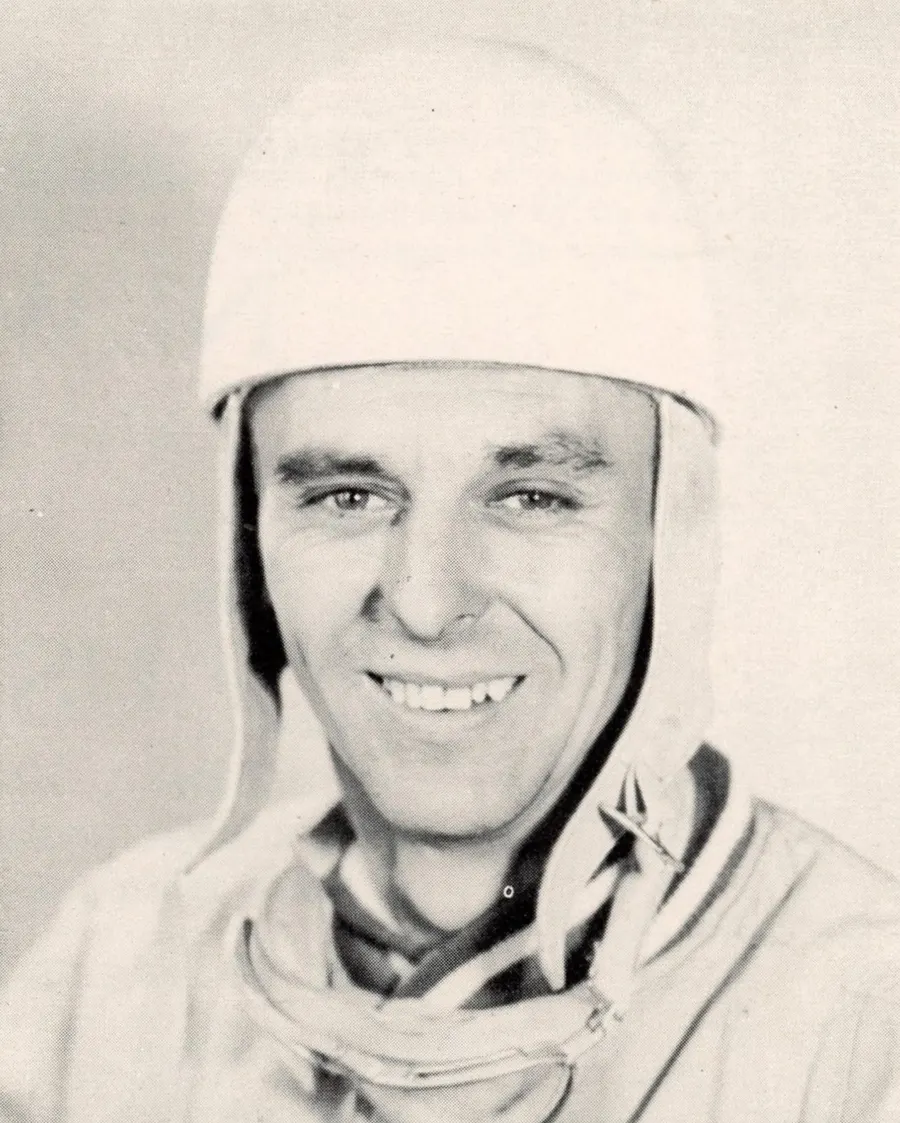
Johnny Mantz, winner of the first Southern 500, photographed around 1957Johnny Mantz, winner of the first Southern 500, photographed around 1957Image: Trenton International Speedway · Public domain
sport · Americas

The first Southern 500 is run at Darlington

In the late 1940s stock-car racing in the American South was mostly run on short dirt tracks. Harold Brasington, a businessman in Darlington, South Carolina, had seen the Indianapolis 500 and decided to build a paved track long and fast enough for a 500-mile race. The egg-shaped oval he built on farmland outside the town became the first superspeedway in the young NASCAR series. The first Southern 500 was run on 4 September 1950, Labor Day, with a record field of 75 cars and some 25,000 spectators. It took more than six and a half hours. The winner was the Californian Johnny Mantz, the slowest qualifier, who used hard-wearing truck tyres while his rivals kept stopping for new ones, and finished nine laps ahead. It was NASCAR’s first 500-mile race and its first on asphalt, and the Southern 500 remains one of the sport’s most famous events.

Source: NASCAR Hall of Fame: The first Southern 500 ↗
1957
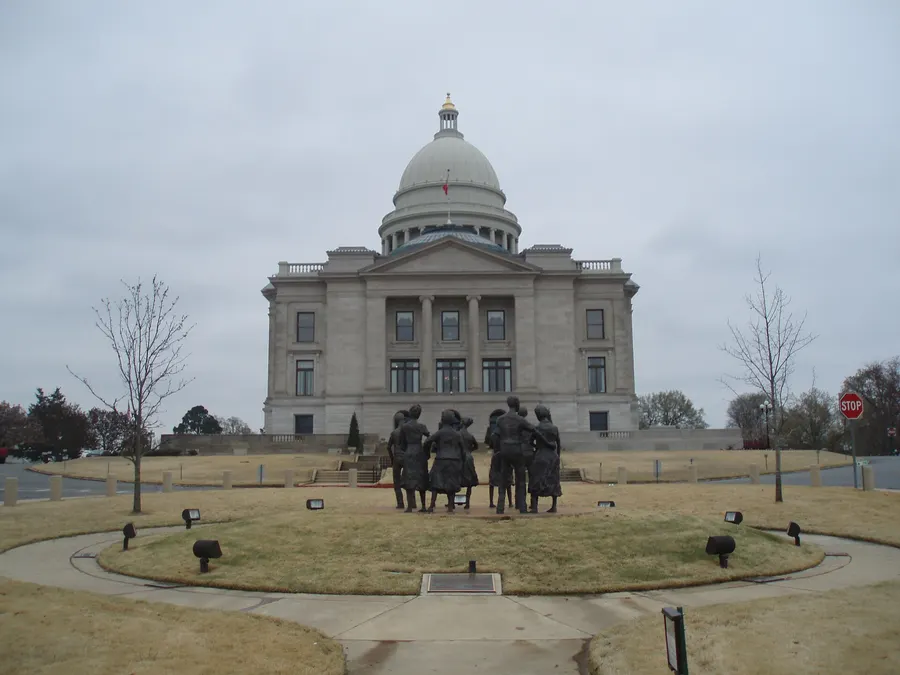
Testament, the memorial to the Little Rock Nine in the grounds of the Arkansas State CapitolTestament, the memorial to the Little Rock Nine in the grounds of the Arkansas State CapitolImage: DaFoos · CC BY-SA 3.0
world · Americas

Arkansas troops turn the Little Rock Nine away from school

After the Supreme Court ruled school segregation unlawful in 1954, Little Rock planned to admit nine Black students to its all-white Central High School. On 2 September 1957 Governor Orval Faubus ordered the Arkansas National Guard to the school, and on 4 September the guardsmen turned the students away while a hostile crowd jeered. Fifteen-year-old Elizabeth Eckford, who arrived alone, had to walk back through the mob. The students were kept out for nearly three weeks, until President Eisenhower sent federal troops.

Source: US National Park Service: The 1957 crisis at Central High ↗
1964
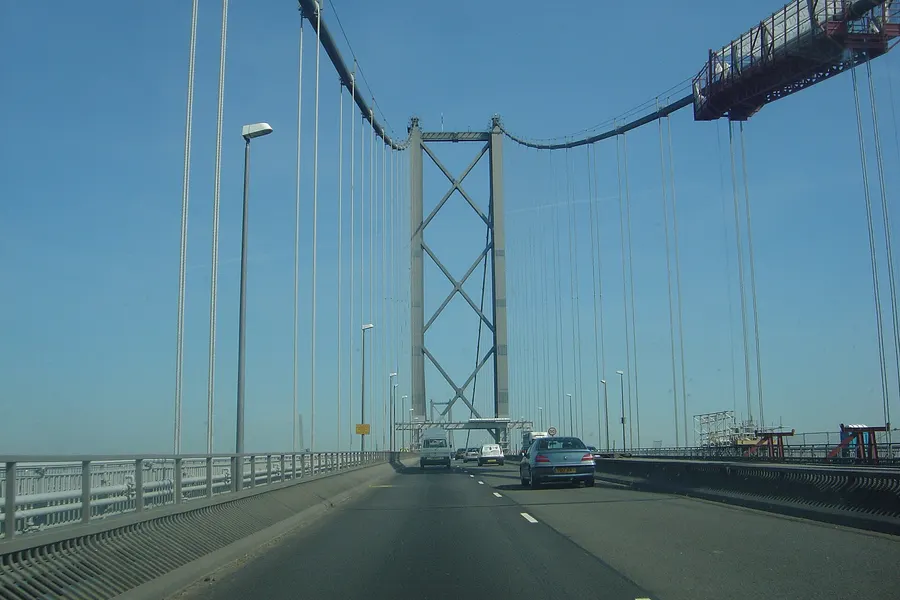
Driving across the Forth Road Bridge over the Firth of Forth, north-west of Edinburgh, in 2005Driving across the Forth Road Bridge over the Firth of Forth, north-west of Edinburgh, in 2005Image: David Monniaux · CC BY-SA 3.0
world · Europe

The Forth Road Bridge opens in Scotland

For centuries travellers crossing the Firth of Forth near Edinburgh had depended on ferries at Queensferry. On 4 September 1964 Queen Elizabeth II opened the Forth Road Bridge, a suspension bridge about 2.5 kilometres long beside the famous Victorian railway bridge. It was then the longest suspension bridge in Europe, and the Queen returned across the water on the last run of the ferry service it replaced. Since 2017 the newer Queensferry Crossing has carried most traffic, leaving the old bridge to buses, cyclists and walkers.

Source: The Forth Bridges (Transport Scotland): Forth Road Bridge history ↗
1970
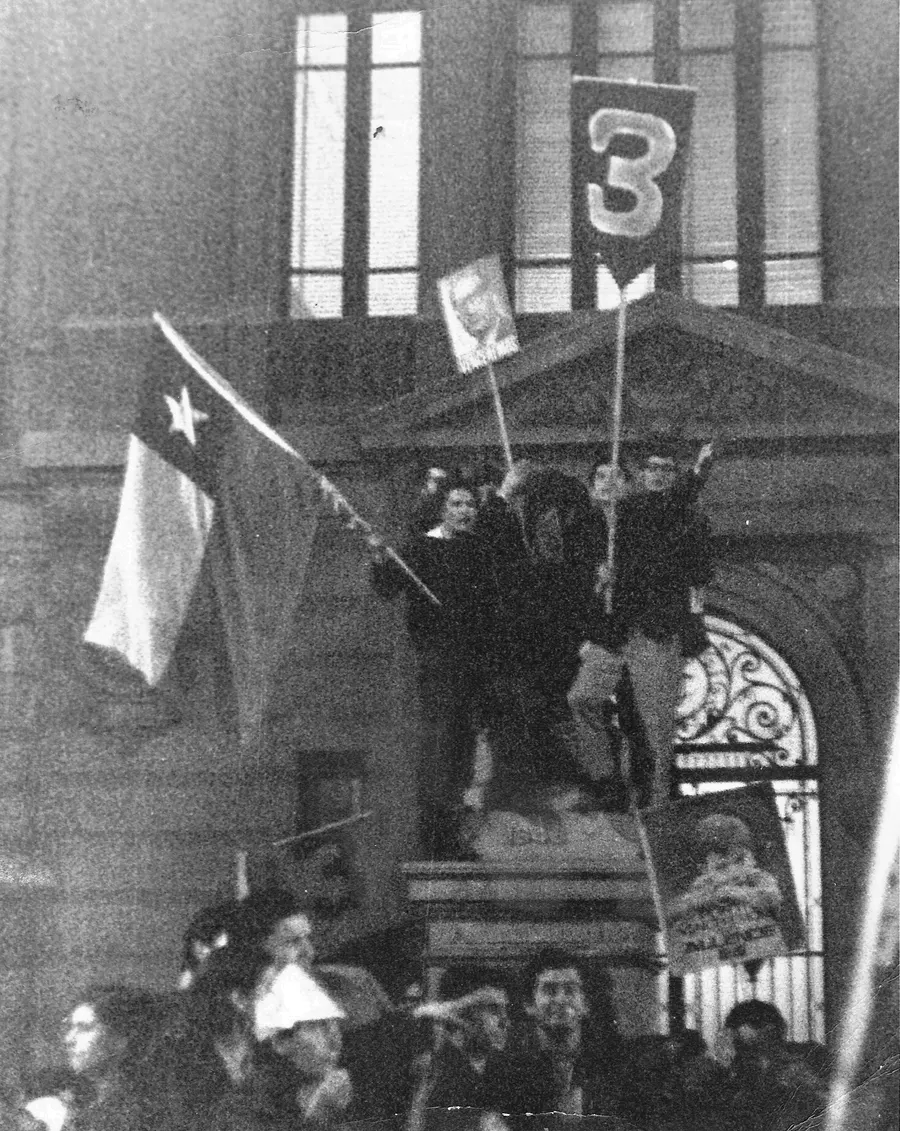
Supporters of Salvador Allende celebrate in front of the Catholic University on the Alameda in Santiago on the night of his election win, 4 September 1970Supporters of Salvador Allende celebrate in front of the Catholic University on the Alameda in Santiago on the night of his election win, 4 September 1970Image: Paul Lowry from New York, EEUU de A · CC BY 2.0
politics · Americas

Salvador Allende wins Chile’s presidential election

Salvador Allende, a doctor and veteran Socialist senator, had stood for the presidency of Chile three times before and lost each time. In 1970 he ran again at the head of Popular Unity, a coalition of Socialists, Communists and smaller left-wing parties, promising to nationalise the great copper mines, speed up land reform and lead Chile peacefully towards socialism. In the three-way election on 4 September 1970 Allende came first with about 36 per cent of the vote, narrowly ahead of the conservative former president Jorge Alessandri. With no candidate holding a majority, Congress had to choose, and on 24 October it confirmed Allende after he agreed to constitutional guarantees demanded by the Christian Democrats. He took office on 3 November as one of the first Marxists to win the presidency of a country through an open election. The United States worked secretly against his government, and it was overthrown in a military coup in September 1973, during which Allende died.

Source: National Security Archive (George Washington University): Allende Wins ↗
1975
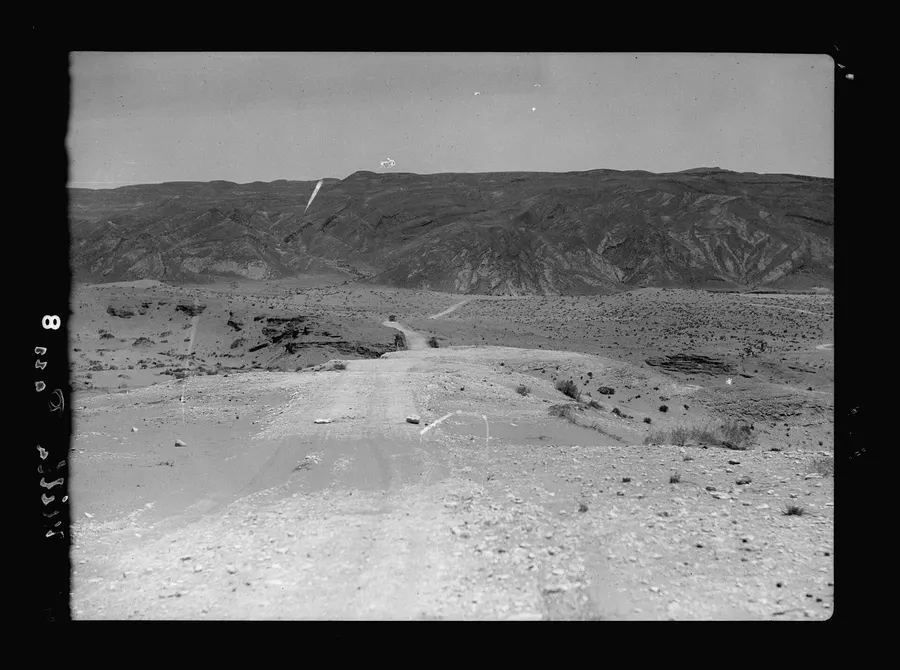
The Mitla Pass in the Sinai, looking east from the plain, in an early 20th-century photograph from the Matson Collection at the Library of CongressThe Mitla Pass in the Sinai, looking east from the plain, in an early 20th-century photograph from the Matson Collection at the Library of CongressImage: Matson Collection · Public domain
world · Middle East

Egypt and Israel sign the second Sinai agreement

After the 1973 Arab-Israeli war the US Secretary of State Henry Kissinger shuttled between Cairo and Jerusalem to separate the two armies. A first disengagement deal was signed in January 1974; the second, after months of hard bargaining, was initialled on 1 September 1975 and signed at Geneva on 4 September. Israel pulled back to the eastern ends of the Mitla and Gidi passes and gave up the Abu Rudeis oilfields, a UN buffer zone was widened, and both sides pledged not to resolve their dispute by force, a step towards the peace treaty of 1979.

Source: US Office of the Historian: Shuttle diplomacy and the Arab-Israeli dispute, 1974-1975 ↗
1995
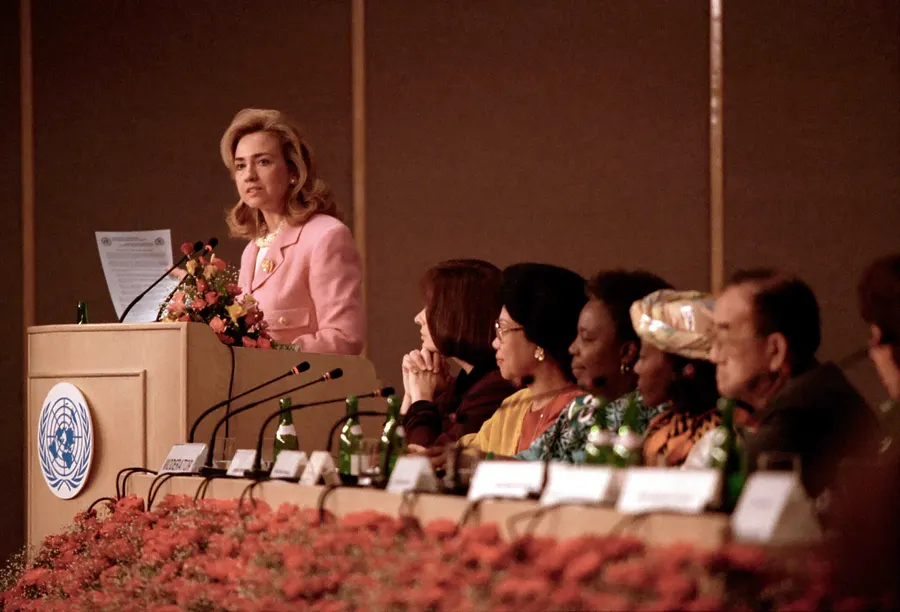
The US First Lady Hillary Clinton speaking at the UN Fourth World Conference on Women in Beijing, September 1995The US First Lady Hillary Clinton speaking at the UN Fourth World Conference on Women in Beijing, September 1995Image: White House Photograph Office · Public domain
world · Asia

The UN’s Fourth World Conference on Women opens in Beijing

The United Nations held its first world conference on women in Mexico City in 1975, followed by meetings in Copenhagen in 1980 and Nairobi in 1985. Each pushed governments to treat equality between women and men as a matter of law and policy, but progress was slow and uneven, and by the 1990s campaigners wanted a single agreed plan that every country would sign up to. The Fourth World Conference on Women opened in Beijing on 4 September 1995 and ran until 15 September. More than 17,000 people took part, among them some 6,000 government delegates, while about 30,000 more gathered at a parallel forum for non-governmental groups at Huairou, outside the city. On 5 September the US First Lady Hillary Clinton declared that ‘women’s rights are human rights’. The conference ended with 189 countries adopting the Beijing Declaration and Platform for Action, which set goals in twelve areas, from education and health to violence and political power, and is still the main global plan for gender equality.

Source: United Nations: Fourth World Conference on Women, Beijing 1995 ↗
RESEARCH

Sources & Further Reading

Selected authoritative references supporting the events on this page.

De Imperatoribus Romanis (Loyola University Chicago): Romulus Augustulus↗Britannica: Romulus Augustulus↗Treccani: Montaperti↗Britannica: Farinata degli Uberti↗City of Los Angeles: The history of Los Angeles↗US National Park Service: El Pueblo de Los Angeles Historical Monument↗Kölner Dom (Cologne Cathedral): History↗UNESCO World Heritage Centre: Cologne Cathedral↗Assemblée nationale: Defeat at Sedan, proclamation of the Republic and provisional government↗Élysée: 150 ans en République↗IEEE, Engineering and Technology History Wiki: Milestones, Pearl Street Station, 1882↗Thomas A. Edison Papers (Rutgers University): Edison Electric Illuminating Company of New York↗US National Park Service, Chiricahua National Monument: Post Apache Wars↗US National Archives, Prologue: Geronimo, Apache chief↗NASCAR Hall of Fame: The first Southern 500↗South Carolina Encyclopedia (University of South Carolina): Southern 500↗US National Park Service: The 1957 crisis at Central High↗Encyclopedia of Arkansas: Little Rock Nine↗The Forth Bridges (Transport Scotland): Forth Road Bridge history↗Transport Scotland: Forth Road Bridge 60th anniversary↗National Security Archive (George Washington University): Allende Wins↗Britannica: Salvador Allende↗US Office of the Historian: Shuttle diplomacy and the Arab-Israeli dispute, 1974-1975↗UN Peacemaker: Interim Agreement between Israel and Egypt (Sinai II)↗United Nations: Fourth World Conference on Women, Beijing 1995↗UN Women: World conferences on women↗
WHY THESE MOMENTS?

Significance before volume

This page is not the longest possible list of events. It is a chronological journey through 4 September, where each entry is chosen for historical significance, human interest and reliability.

Facts are checked against authoritative museums, archives, universities and reference works. Where sources disagree, the page says so.

EXPLORED THE DEEPER STORY?

Return to the highlights of 4 September

Discover the lighter side of the date with famous birthdays, culture, firsts and lives remembered.

Explore This Day →