1783The Treaty of Paris ends the American War of Independence
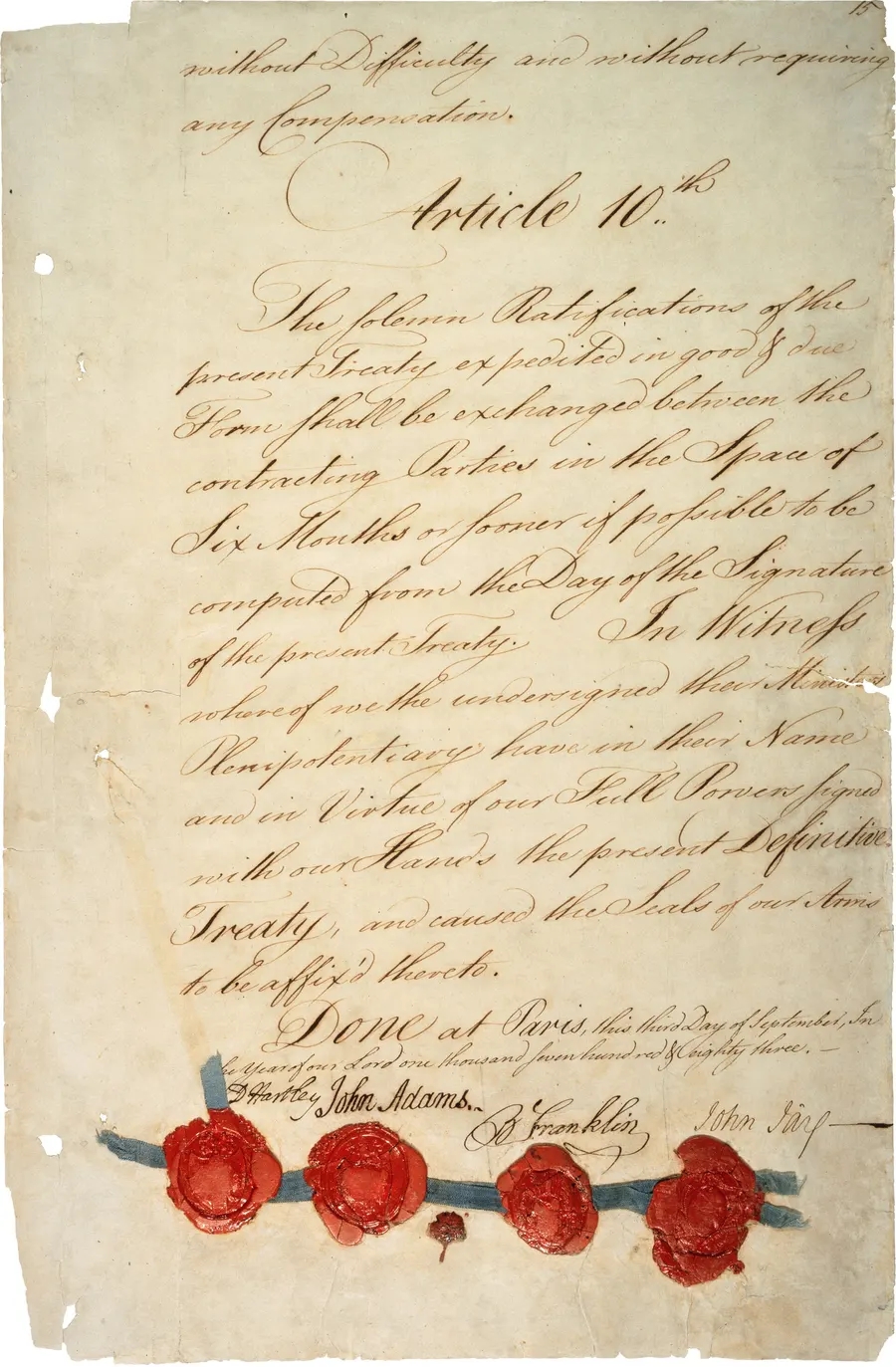
The fighting in the American War of Independence had all but ended when a British army under Lord Cornwallis surrendered at Yorktown in October 1781. Peace talks began in Paris the next spring. The American commissioners, Benjamin Franklin, John Adams and John Jay, negotiated directly with the British envoy, and in November 1782 they agreed preliminary terms, even though their French allies had expected to be consulted first.
The final treaty was signed in Paris on 3 September 1783, on the same day as Britain’s separate peace with France and Spain at Versailles. Britain recognised the independence of the United States, with a western border on the Mississippi River, while keeping Canada. Americans kept the right to fish off Newfoundland, debts on both sides were to be honoured, and Congress was to urge the states to restore property taken from loyalists. Congress ratified the treaty in January 1784, bringing a new nation formally into being.
Read the full storyHistory & Timeline →Source: US National Archives: Treaty of Paris (1783) ↗
1939Britain and France declare war on Germany
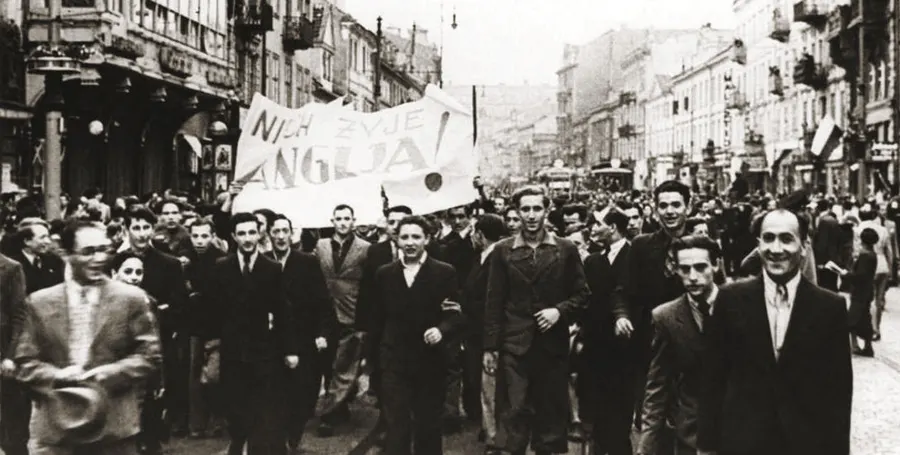
Through the 1930s Britain and France had tried to avoid another great war by giving way to Adolf Hitler, most famously at Munich in 1938, when they let Germany take part of Czechoslovakia. When Hitler seized the rest of the country in March 1939, they promised to defend Poland. On 1 September German forces invaded Poland, and the two governments demanded that Germany withdraw.
At nine o’clock on the morning of Sunday 3 September 1939 the British ambassador in Berlin delivered a final ultimatum that expired at eleven. No reply came, and at 11.15 the prime minister, Neville Chamberlain, told the nation by radio that Britain was at war with Germany. France’s ultimatum ran out later that day, and Australia and New Zealand also declared war. Yet the allies could do little to save Poland, and months of the ‘Phoney War’ passed before the fighting in the west began in earnest.
Read the full storyHistory & Timeline →Source: Imperial War Museums: How Europe went to war in 1939 ↗
1971Qatar becomes an independent state
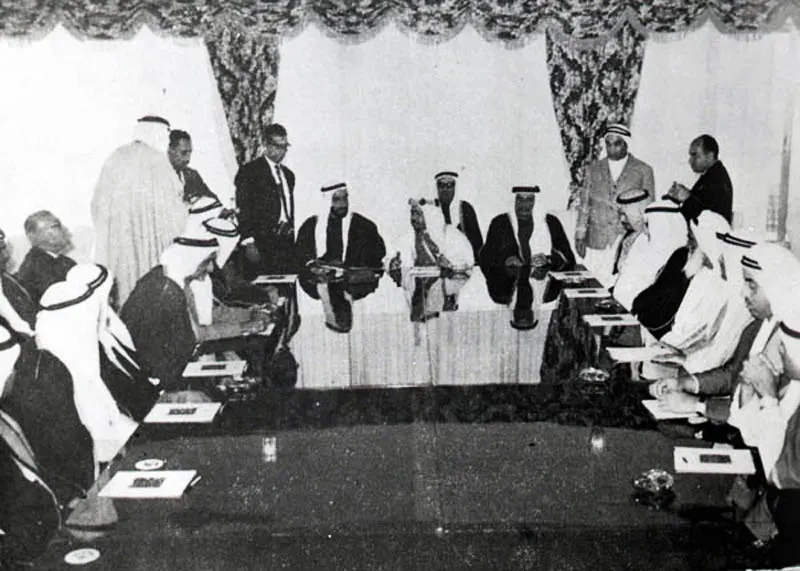
For more than half a century Qatar, a peninsula jutting into the Persian Gulf, had been a British protected state under a treaty signed in 1916, with Britain in charge of its defence and foreign affairs. Oil, exported from 1949, transformed its economy. In January 1968 Britain announced that it would withdraw its forces from east of Suez, and Qatar joined talks with Bahrain and the Trucial States on forming a union of Gulf emirates.
The talks failed to agree, and Qatar chose to go its own way. On 3 September 1971 the heir apparent and prime minister, Sheikh Khalifa bin Hamad Al Thani, announced the end of the 1916 treaty and Qatar’s full independence, and a new treaty of friendship with Britain replaced it. Qatar joined the United Nations and the Arab League within weeks. Its vast reserves of natural gas later made it one of the richest countries in the world.
Read the full storyHistory & Timeline →Source: Amiri Diwan of the State of Qatar: History of Qatar ↗
1260The Mamluks halt the Mongols at Ain Jalut
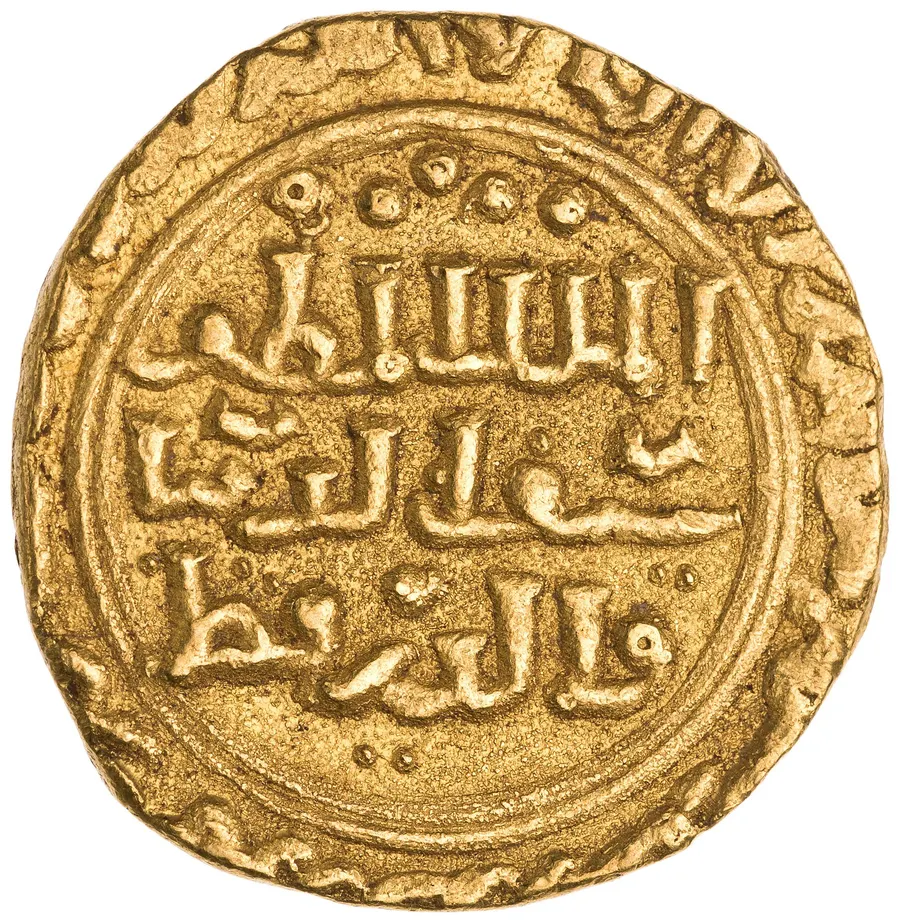
In the 1250s the Mongol prince Hülegü, brother of the Great Khan, swept through Persia and in 1258 sacked Baghdad, ending the Abbasid caliphate. In 1260 his armies took Aleppo and Damascus. When Hülegü withdrew east with most of his forces after the death of the Great Khan, he left his general Kitbuqa to hold Syria, and sent envoys to Cairo demanding the surrender of Egypt’s new Mamluk sultan, Qutuz, who had them put to death.
Qutuz marched north into Palestine with his commander Baybars, and on 3 September 1260 (25 Ramadan 658 in the Islamic calendar) the two armies met at Ain Jalut, the ‘Spring of Goliath’, in the valley of Jezreel. The Mamluks lured the Mongol cavalry forward with a feigned retreat and then counter-attacked; Kitbuqa was captured and killed. It was the first great defeat of a Mongol army in the region. Mongol rule west of the Euphrates collapsed, and the Mamluks went on to rule Egypt and Syria for more than 250 years.
Read the full storyHistory & Timeline →Source: Encyclopaedia Iranica: Il-Khanids i. Dynastic history ↗
1650Cromwell routs the Scots at Dunbar
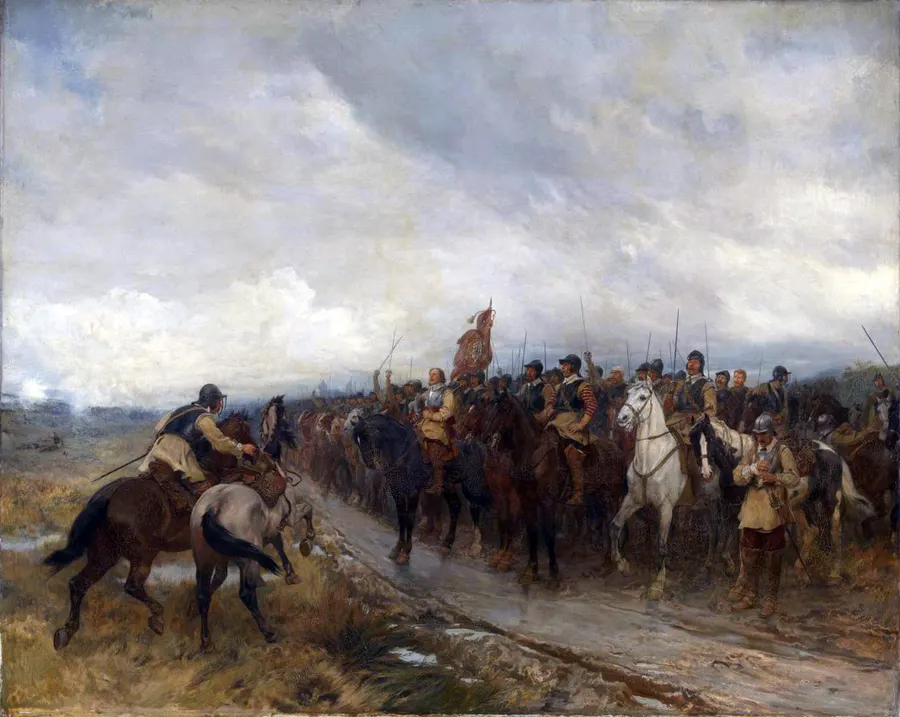
After the execution of Charles I in January 1649, the Scots, who had first fought against the king, proclaimed his son Charles II as their king. England’s new republic saw this as a direct threat, and in July 1650 Oliver Cromwell led the New Model Army into Scotland. The Scottish commander David Leslie refused to give battle outside Edinburgh, and by the end of August Cromwell’s sick and hungry army had fallen back to the coast at Dunbar, hemmed in by a Scottish force about twice its size.
Leslie moved his army down from the hills to close the trap. Before dawn on 3 September 1650 (by the Old Style calendar then used in Britain), Cromwell attacked first and broke the Scottish lines within about an hour. Some 3,000 Scots were killed and around 10,000 captured, and many of the prisoners died on a forced march south or in captivity at Durham. Southern Scotland fell to English rule. A year later to the day, on 3 September 1651, Cromwell crushed Charles II’s last army at Worcester.
Read the full storyHistory & Timeline →Source: Britannica: Battle of Dunbar ↗