1883Krakatoa tears itself apart in the loudest explosion ever recorded
Krakatoa was a small volcanic island in the Sunda Strait, the busy channel between Java and Sumatra in what was then the Dutch East Indies. After a few months of minor activity, the volcano began a series of ever more violent explosions on the afternoon of 26 August 1883, throwing a black cloud of ash many kilometres into the sky and darkening the coasts on either side of the strait.
On the morning of 27 August 1883 the eruption reached its climax. The greatest explosion was heard as far away as Australia and is still the loudest sound in recorded history, and about two-thirds of the island collapsed into the sea. The tsunamis that followed, some more than 30 metres high, swept over the shores of Java and Sumatra and killed about 36,000 people. Fine ash and gas spread around the world, cooling the climate and colouring sunsets for many months afterwards.
Read the full storyHistory & Timeline →Source: Britannica: Krakatoa ↗
1896Britain and Zanzibar fight the shortest war in history
Zanzibar, an island sultanate off the coast of East Africa, had become a British protectorate in 1890, and Britain expected to approve the choice of each new sultan. When Sultan Hamad bin Thuwaini died suddenly on 25 August 1896, his cousin Khalid bin Barghash, whom the British did not favour, moved into the palace with a few thousand armed supporters and declared himself sultan.
The British gave him until 9 a.m. on 27 August 1896 to leave. When he refused, Rear Admiral Harry Rawson’s ships opened fire on the palace, which was soon in flames. The firing stopped after no more than 40 minutes, by which time some 500 of Khalid’s men had been killed or wounded, against one British sailor seriously hurt. Khalid fled to the German consulate, and Britain installed its own candidate, Hamud bin Muhammed, as sultan.
Read the full storyHistory & Timeline →Source: Britannica: What happened in the Anglo-Zanzibar War? ↗
1928Fifteen nations sign a pact to outlaw war
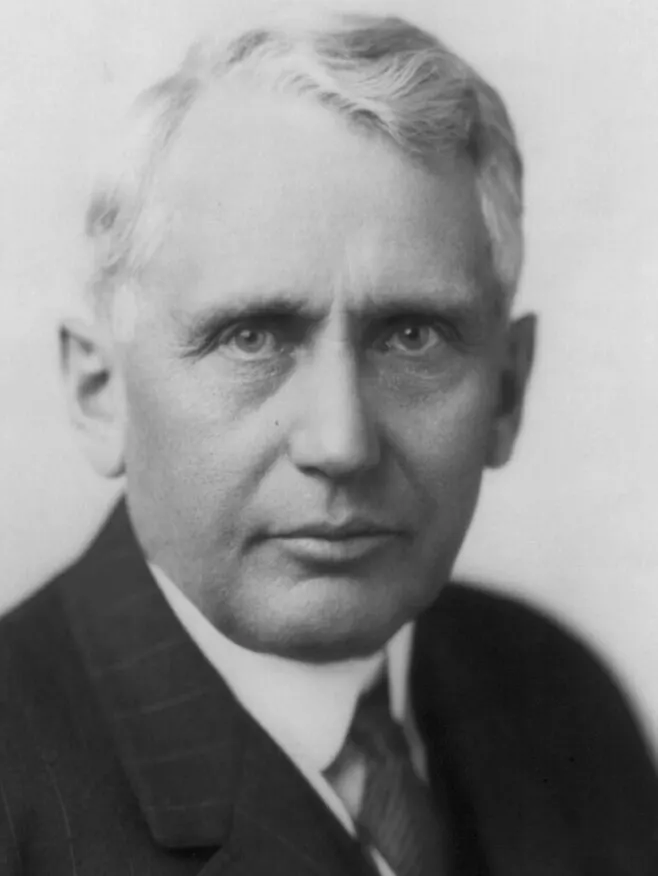
Ten years after the First World War, the hope of preventing another was still strong. In 1927 the French foreign minister Aristide Briand proposed a treaty in which France and the United States would renounce war against each other. The US Secretary of State, Frank B. Kellogg, wary of a bilateral alliance, suggested instead a general treaty open to every nation.
On 27 August 1928, in Paris, fifteen countries, among them the United States, France, Britain, Germany, Italy and Japan, signed the General Treaty for the Renunciation of War. They agreed to give up war as an instrument of national policy and to settle disputes by peaceful means. Eventually some 62 nations joined, and Kellogg won the Nobel Peace Prize. The pact had no means of enforcement and could not stop the wars of the 1930s, but its principle later underpinned the charge of crimes against peace at the Nuremberg trials and the United Nations Charter.
Read the full storyHistory & Timeline →Source: US Office of the Historian: The Kellogg-Briand Pact, 1928 ↗
1689Russia and Qing China agree their first border at Nerchinsk
During the 17th century Russian fur traders and Cossacks pushed east across Siberia and down into the valley of the Amur River, building forts such as Albazin on land the Manchu rulers of China considered their own. The Qing army besieged Albazin in the 1680s, and both sides, with other wars to worry about, decided to negotiate.
The envoys met at Nerchinsk, east of Lake Baikal, and signed the treaty on 27 August 1689 by the Julian calendar then used in Russia (6 September in the modern calendar). Two Jesuit missionaries serving the Kangxi Emperor acted as interpreters, and Latin was the common language of the text. Russia gave up Albazin and the Amur valley, the border was drawn along the Argun River and the mountains to the north, and trade between the two empires was allowed. It was China’s first treaty with a European power, and it kept the peace on the frontier for more than 150 years.
Read the full storyHistory & Timeline →Source: Britannica: Treaty of Nerchinsk ↗
1859Edwin Drake strikes oil at Titusville and starts an industry
In the 1850s oil seeping from the ground in north-western Pennsylvania was skimmed off creeks and sold as medicine, but chemists had shown it could be refined into kerosene for lamps. The Seneca Oil Company of Connecticut sent Edwin L. Drake, a former railway conductor, to Titusville to find a way of getting it out of the ground in large quantities. He hired a salt-well driller, William ‘Uncle Billy’ Smith, and borrowed the methods used to drill for brine, driving an iron pipe down through the loose ground to stop the hole collapsing.
Late in the afternoon of 27 August 1859, at a depth of about 69 feet (21 metres), Smith saw oil rising in the pipe. The well soon produced about 25 barrels a day. It was the first commercially successful oil well in the United States, and within months Oil Creek was crowded with derricks. Drake never patented his method and later lost his money, but the petroleum industry that grew from his well changed transport and the world economy.
Read the full storyHistory & Timeline →Source: Pennsylvania Historical and Museum Commission: Drake Well Museum ↗