
HISTORY & TIMELINE
27 August

A journey through
27 August in history

The story of 27 August runs from the second coronation of Henry the Young King in 1172 to the launch of Mariner 2 towards Venus in 1962. In between come the Treaty of Nerchinsk between Russia and Qing China, the Battle of Long Island, Napoleon’s victory at Dresden, Black Hawk’s surrender, Drake’s oil well at Titusville, the great eruption of Krakatoa, the Anglo-Zanzibar War, the Qing court’s outline constitution, the first radio broadcast in Argentina, the Kellogg-Briand Pact, the first flight of a jet aircraft and the first Guinness Book of Records.

JUMP THROUGH TIME
II
THE MIDDLE AGES

Medieval History

Kingdoms, conflict, faith, power and the changing medieval world.

1172
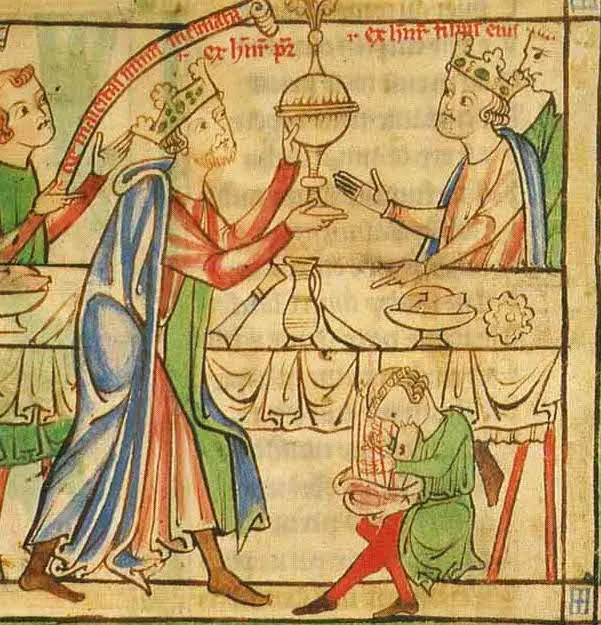
The banquet after Henry the Young King's first coronation in 1170, in the Becket Leaves, a manuscript of about 1220-1240The banquet after Henry the Young King’s first coronation in 1170, in the Becket Leaves, a manuscript of about 1220-1240Image: Unknown author · Public domain
politics · Europe

Henry the Young King is crowned a second time, with his wife Margaret

To secure the succession, Henry II of England had his eldest surviving son, also Henry, crowned king in his own lifetime at Westminster in 1170, but the boy’s wife, Margaret, daughter of Louis VII of France, was left out, to her father’s anger. On 27 August 1172 the young couple were crowned together, at Winchester. Henry the Young King never ruled in his own right: he rebelled against his father and died in 1183, six years before him.

Source: Britannica: Henry the Young King ↗
III
A CHANGING WORLD

Early Modern Era

Exploration, political change, scientific development and expanding global connections.

1689
A page of the Latin text of the Treaty of Nerchinsk, kept in the Russian foreign policy archiveA page of the Latin text of the Treaty of Nerchinsk, kept in the Russian foreign policy archiveImage: Unknown author · Public domain
politics · Asia

Russia and Qing China agree their first border at Nerchinsk

During the 17th century Russian fur traders and Cossacks pushed east across Siberia and down into the valley of the Amur River, building forts such as Albazin on land the Manchu rulers of China considered their own. The Qing army besieged Albazin in the 1680s, and both sides, with other wars to worry about, decided to negotiate. The envoys met at Nerchinsk, east of Lake Baikal, and signed the treaty on 27 August 1689 by the Julian calendar then used in Russia (6 September in the modern calendar). Two Jesuit missionaries serving the Kangxi Emperor acted as interpreters, and Latin was the common language of the text. Russia gave up Albazin and the Amur valley, the border was drawn along the Argun River and the mountains to the north, and trade between the two empires was allowed. It was China’s first treaty with a European power, and it kept the peace on the frontier for more than 150 years.

Source: Britannica: Treaty of Nerchinsk ↗
1776
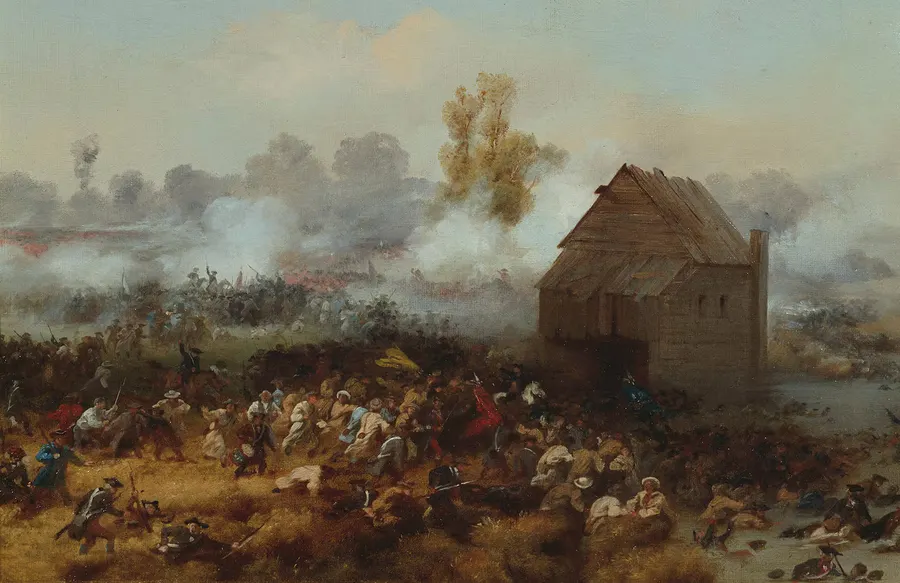
The Battle of Long Island, in an 1858 painting by Alonzo ChappelThe Battle of Long Island, in an 1858 painting by Alonzo ChappelImage: Alonzo Chappel · Public domain
world · Americas

The British rout Washington’s army at the Battle of Long Island

In the summer of 1776 a huge British force landed on Long Island to take New York. On the night of 26 August General William Howe led some 10,000 men round the American left through the unguarded Jamaica Pass, and on 27 August 1776 they fell on George Washington’s troops from behind while Hessian and British units attacked in front. The Americans were driven back to Brooklyn Heights; two nights later Washington ferried his army across the East River to Manhattan, but New York stayed in British hands for the rest of the war.

Source: American Battlefield Trust: Brooklyn ↗
IV
THE NINETEENTH CENTURY

The 1800s

Industry, empire, invention, reform and a century of enormous transformation.

1813
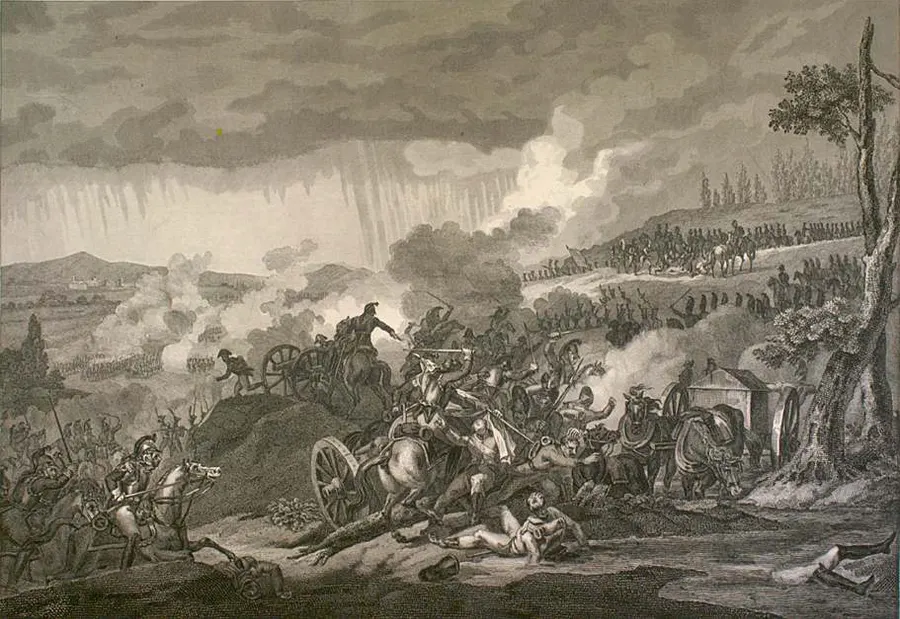
French cavalry attacking at the Battle of Dresden, 27 August 1813, in an engraving after Thomas Charles NaudetFrench cavalry attacking at the Battle of Dresden, 27 August 1813, in an engraving after Thomas Charles NaudetImage: Thomas Charles Naudet, French historical artist, 1773-1810 · Public domain
world · Europe

Napoleon wins his last great victory in Germany, at Dresden

After the retreat from Moscow, Austria, Prussia and Russia combined against Napoleon. On 26 August 1813 their army under Prince Schwarzenberg attacked his forces at Dresden, the Saxon capital, and Napoleon, arriving after forced marches, drove them back. On 27 August 1813 he went on the attack in pouring rain, and his artillery decided the day. The allies retreated with heavy losses, but Napoleon fell ill and did not lead the pursuit, and his commanders were beaten in the days that followed. Within two months he was defeated at Leipzig.

Source: Britannica: Battle of Dresden ↗
1832
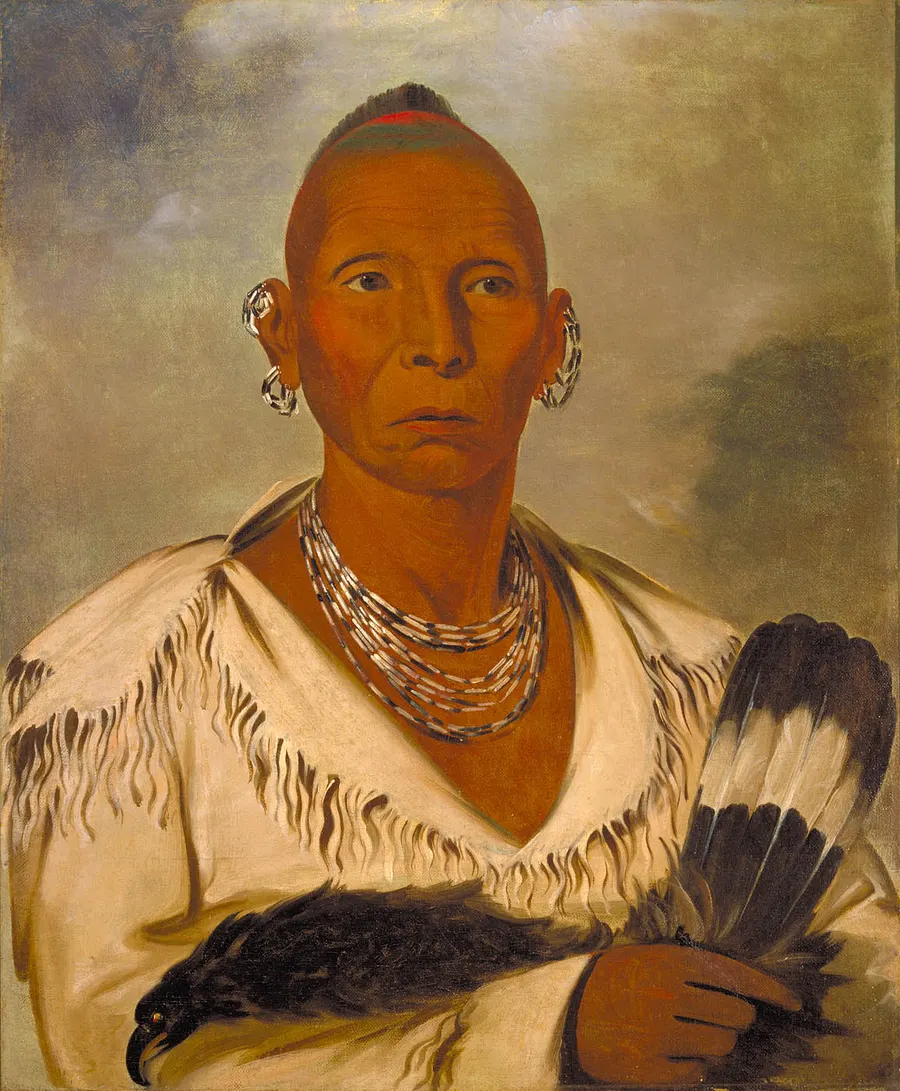
Black Hawk, painted by George Catlin in 1832, now in the Smithsonian American Art MuseumBlack Hawk, painted by George Catlin in 1832, now in the Smithsonian American Art MuseumImage: George Catlin · Public domain
world · Americas

Black Hawk surrenders at Prairie du Chien

In 1832 the Sauk leader Black Hawk led about a thousand of his people back across the Mississippi into Illinois to reclaim land they believed had been taken from them unfairly. US troops and militia pursued them into what is now Wisconsin, and at the Bad Axe River on 2 August most of the band were killed. Black Hawk escaped, but on 27 August 1832 he gave himself up to the US agent at Prairie du Chien, ending the Black Hawk War. He was held prisoner and later taken on a tour of eastern cities.

Source: Britannica: Black Hawk War ↗
1859
Edwin L. Drake (right) beside his well at Titusville, in a retouched photograph reproduced in 1890Edwin L. Drake (right) beside his well at Titusville, in a retouched photograph reproduced in 1890Image: Unknown author · Public domain
science · Americas

Edwin Drake strikes oil at Titusville and starts an industry

In the 1850s oil seeping from the ground in north-western Pennsylvania was skimmed off creeks and sold as medicine, but chemists had shown it could be refined into kerosene for lamps. The Seneca Oil Company of Connecticut sent Edwin L. Drake, a former railway conductor, to Titusville to find a way of getting it out of the ground in large quantities. He hired a salt-well driller, William ‘Uncle Billy’ Smith, and borrowed the methods used to drill for brine, driving an iron pipe down through the loose ground to stop the hole collapsing. Late in the afternoon of 27 August 1859, at a depth of about 69 feet (21 metres), Smith saw oil rising in the pipe. The well soon produced about 25 barrels a day. It was the first commercially successful oil well in the United States, and within months Oil Creek was crowded with derricks. Drake never patented his method and later lost his money, but the petroleum industry that grew from his well changed transport and the world economy.

Source: Pennsylvania Historical and Museum Commission: Drake Well Museum ↗
1883
The eruption of Krakatoa in an 1888 lithographThe eruption of Krakatoa in an 1888 lithographImage: Parker & Coward (lithograph) · Public domain
world · Asia

Krakatoa tears itself apart in the loudest explosion ever recorded

Krakatoa was a small volcanic island in the Sunda Strait, the busy channel between Java and Sumatra in what was then the Dutch East Indies. After a few months of minor activity, the volcano began a series of ever more violent explosions on the afternoon of 26 August 1883, throwing a black cloud of ash many kilometres into the sky and darkening the coasts on either side of the strait. On the morning of 27 August 1883 the eruption reached its climax. The greatest explosion was heard as far away as Australia and is still the loudest sound in recorded history, and about two-thirds of the island collapsed into the sea. The tsunamis that followed, some more than 30 metres high, swept over the shores of Java and Sumatra and killed about 36,000 people. Fine ash and gas spread around the world, cooling the climate and colouring sunsets for many months afterwards.

Source: Britannica: Krakatoa ↗
1896
British warships bombarding the Sultan's palace at Zanzibar, from the Illustrated London News of 1896British warships bombarding the Sultan’s palace at Zanzibar, from the Illustrated London News of 1896Image: Fred T. Jane · Public domain
world · Africa

Britain and Zanzibar fight the shortest war in history

Zanzibar, an island sultanate off the coast of East Africa, had become a British protectorate in 1890, and Britain expected to approve the choice of each new sultan. When Sultan Hamad bin Thuwaini died suddenly on 25 August 1896, his cousin Khalid bin Barghash, whom the British did not favour, moved into the palace with a few thousand armed supporters and declared himself sultan. The British gave him until 9 a.m. on 27 August 1896 to leave. When he refused, Rear Admiral Harry Rawson’s ships opened fire on the palace, which was soon in flames. The firing stopped after no more than 40 minutes, by which time some 500 of Khalid’s men had been killed or wounded, against one British sailor seriously hurt. Khalid fled to the German consulate, and Britain installed its own candidate, Hamud bin Muhammed, as sultan.

Source: Britannica: What happened in the Anglo-Zanzibar War? ↗
V
THE TWENTIETH CENTURY

The 1900s

War and peace, technological leaps, social change, politics, sport and popular culture.

1908
The Guangxu Emperor, in whose name the outline constitution was issuedThe Guangxu Emperor, in whose name the outline constitution was issuedImage: Anonymous · Public domain
politics · Asia

The Qing court announces China’s first outline constitution

Shaken by defeat and by Japan’s rise as a constitutional monarchy, the Qing court promised political reform. On 27 August 1908 it issued the Outline of the Imperial Constitution, China’s first constitutional document, with a nine-year programme leading to an elected parliament. The emperor kept almost unlimited power, but subjects were granted freedom of speech, press and association within the law. The plan was overtaken by events: the Guangxu Emperor and the Empress Dowager Cixi both died that November, and the dynasty fell in 1911-12.

Source: Cambridge University Press: Charter 08’s Qing Dynasty Precursor ↗
1920
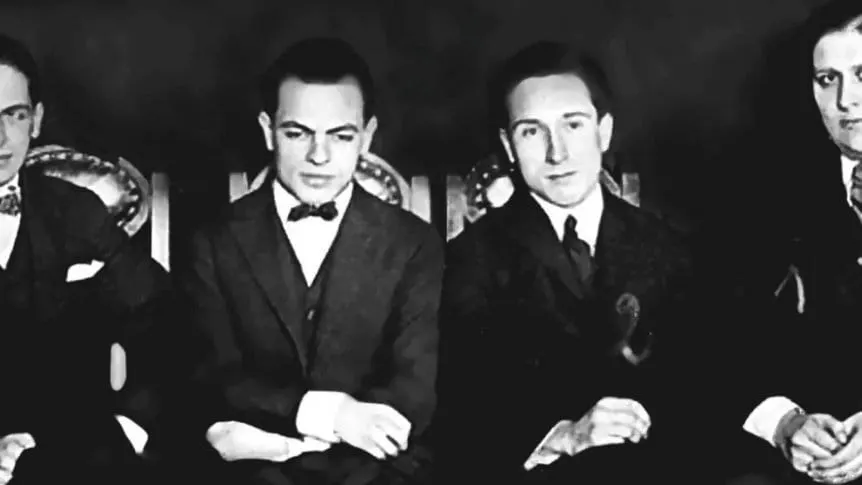
A photograph of the Argentine radio pioneers known as los locos de la azoteaA photograph of the Argentine radio pioneers known as los locos de la azoteaImage: Unknown author · Public domain
culture · Americas

Buenos Aires hears its first radio broadcast, Wagner’s Parsifal

On the evening of 27 August 1920 four young enthusiasts led by Enrique Telémaco Susini set up a transmitter on the roof of the Teatro Coliseo in Buenos Aires and broadcast a performance of Wagner’s opera Parsifal from the stage below. Fewer than a hundred people with receivers are thought to have heard it, but it is counted as Argentina’s first radio broadcast and one of the first anywhere to be aimed at the public. The pioneers became known as ‘los locos de la azotea’, the madmen on the roof, and 27 August is Argentina’s Day of Broadcasting.

Source: Government of Argentina: 101 years since the first Argentine radio broadcast ↗
1928
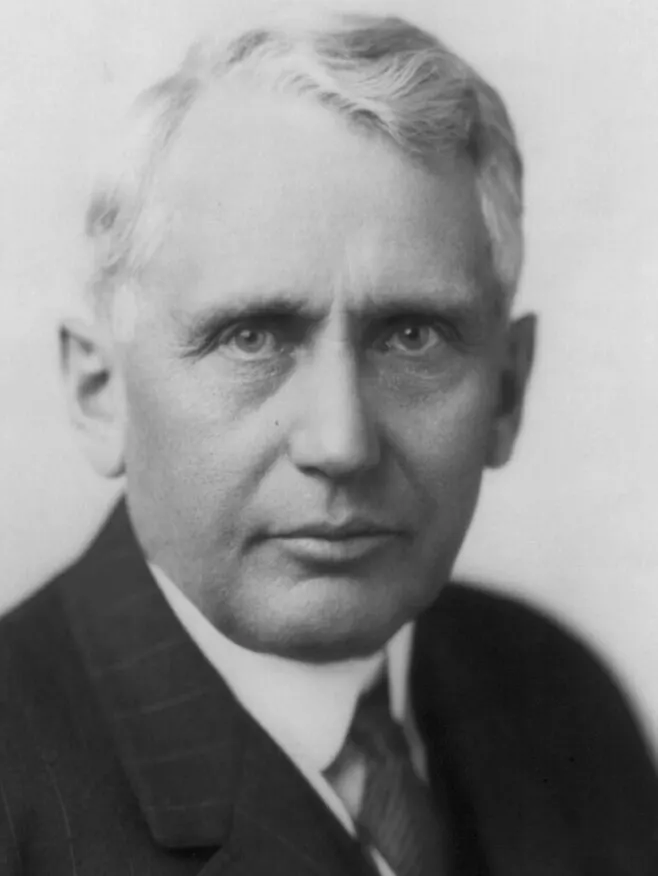
Frank B. Kellogg, the US Secretary of State who gave the pact half its nameFrank B. Kellogg, the US Secretary of State who gave the pact half its nameImage: Miscellaneous Items in High Demand, PPOC, Library of Congress · Public domain
politics · Global

Fifteen nations sign a pact to outlaw war

Ten years after the First World War, the hope of preventing another was still strong. In 1927 the French foreign minister Aristide Briand proposed a treaty in which France and the United States would renounce war against each other. The US Secretary of State, Frank B. Kellogg, wary of a bilateral alliance, suggested instead a general treaty open to every nation. On 27 August 1928, in Paris, fifteen countries, among them the United States, France, Britain, Germany, Italy and Japan, signed the General Treaty for the Renunciation of War. They agreed to give up war as an instrument of national policy and to settle disputes by peaceful means. Eventually some 62 nations joined, and Kellogg won the Nobel Peace Prize. The pact had no means of enforcement and could not stop the wars of the 1930s, but its principle later underpinned the charge of crimes against peace at the Nuremberg trials and the United Nations Charter.

Source: US Office of the Historian: The Kellogg-Briand Pact, 1928 ↗
1939
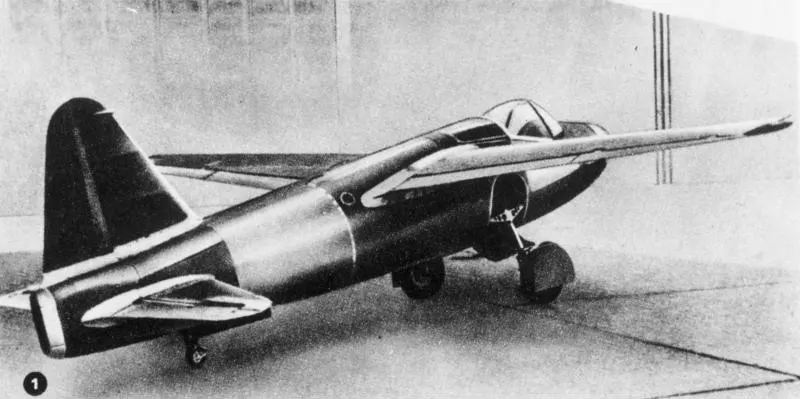
The Heinkel He 178, the first aircraft to fly on jet power, in a photograph from the German Federal ArchivesThe Heinkel He 178, the first aircraft to fly on jet power, in a photograph from the German Federal ArchivesImage: Unknown author · CC BY-SA 3.0 de
science · Europe

The Heinkel He 178 makes the first flight on jet power

In the 1930s two young engineers, Frank Whittle in Britain and Hans von Ohain in Germany, worked separately on the idea of the turbojet, an engine that drives an aircraft by blasting out hot gas rather than turning a propeller. The aircraft maker Ernst Heinkel took von Ohain on in 1936 and paid for his work as a private venture, building a small experimental aircraft, the He 178, around his engine. On the morning of 27 August 1939, at Heinkel’s factory airfield at Rostock-Marienehe on the Baltic coast, the test pilot Erich Warsitz took off in the He 178 and flew a short circuit before landing safely. It was the first flight of an aircraft powered by a turbojet. Five days later Germany invaded Poland, and the German air ministry showed little interest at first, but within a few years jet fighters were in service and the jet engine went on to transform air travel.

Source: Britannica: He 178 ↗
1955
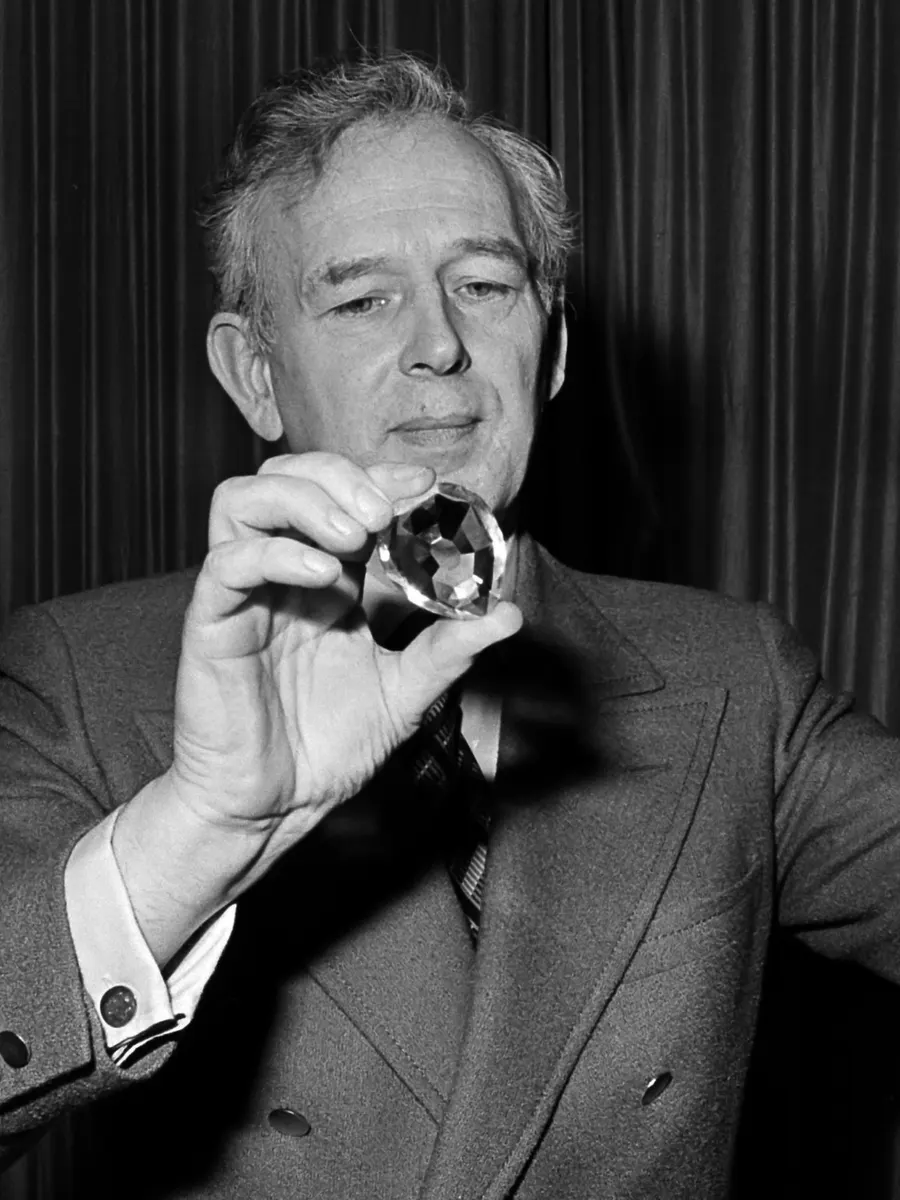
Norris McWhirter, co-founder of The Guinness Book of Records, holding up a model of a record-breaking diamond at the launch of a Dutch edition in 1977Norris McWhirter, co-founder of The Guinness Book of Records, holding up a model of a record-breaking diamond at the launch of a Dutch edition in 1977Image: Hans Peters for Anefo · CC BY-SA 3.0
culture · Europe

The first Guinness Book of Records is published

In 1951 Sir Hugh Beaver, managing director of the Guinness brewery, became caught up in an argument at a shooting party in Ireland about which was Europe’s fastest game bird, and found that no book could settle it. He reasoned that arguments like this went on in pubs all over the country, and that a book of facts and records might help. In 1954 Guinness was introduced to Norris and Ross McWhirter, twin brothers who ran a fact-finding agency in London, and commissioned them to compile it. Working long hours for months, the twins gathered some 4,000 entries, and the first edition of The Guinness Book of Records, 198 pages long, was published on 27 August 1955. It topped the British bestseller lists by Christmas. Now called Guinness World Records, it has been updated every year since and has become one of the best-selling copyrighted books of all time.

Source: Guinness World Records: Our story, timeline ↗
1962
Mariner 2, the first spacecraft to fly past another planetMariner 2, the first spacecraft to fly past another planetImage: NASA/Jet Propulsion Laboratory · Public domain
science · Global

Mariner 2 sets off to become the first spacecraft to visit another planet

A month after its twin, Mariner 1, was destroyed soon after launch, NASA’s Mariner 2 lifted off from Cape Canaveral on an Atlas-Agena rocket on 27 August 1962. Built in a hurry from a lunar Ranger design, it flew past Venus on 14 December 1962 at about 34,800 kilometres and found a planet far hotter than many scientists had hoped. It was the first successful mission to another planet.

Source: NASA Science: Mariner 2 ↗
RESEARCH

Sources & Further Reading

Selected authoritative references supporting the events on this page.

WHY THESE MOMENTS?

Significance before volume

This page is not the longest possible list of events. It is a chronological journey through 27 August, where each entry is chosen for historical significance, human interest and reliability.

Facts are checked against authoritative museums, archives, universities and reference works. Where sources disagree, the page says so.

EXPLORED THE DEEPER STORY?

Return to the highlights of 27 August

Discover the lighter side of the date with famous birthdays, culture, firsts and lives remembered.

Explore This Day →
← PREVIOUS DAY26 August
HISTORY & TIMELINE27 August
NEXT DAY →28 August