
HISTORY & TIMELINE
26 August

A journey through
26 August in history

The story of 26 August runs from the Battle of Manzikert in 1071 to the election of Pope John Paul I in 1978. In between come the Habsburg victory on the Marchfeld, the Battle of Crécy, the Declaration of the Rights of Man and of the Citizen, the German surrender in Togoland, Chad’s decision to join Free France, the premiere of Pather Panchali in Calcutta, the opening of the Munich Olympics, Quebec’s French-language charter, Sigmund Jähn’s flight into space and Aung San Suu Kyi’s first great speech in Rangoon.

JUMP THROUGH TIME
II
THE MIDDLE AGES

Medieval History

Kingdoms, conflict, faith, power and the changing medieval world.

1071
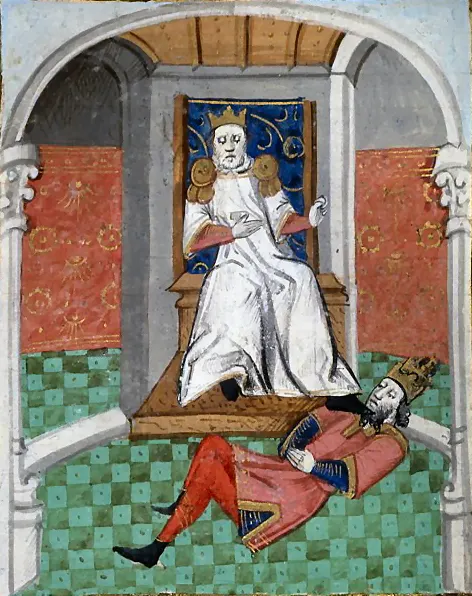
The sultan Alp Arslan humiliating the captured emperor Romanus IV, in a 15th-century French manuscript of Boccaccio's De casibus (BnF)The sultan Alp Arslan humiliating the captured emperor Romanus IV, in a 15th-century French manuscript of Boccaccio’s De casibus (BnF)Image: Boccace, De Casibus · Public domain
world · Middle East

The Seljuq Turks crush a Byzantine army at Manzikert

By the 11th century the Seljuq Turks had built a great empire stretching from Central Asia to Baghdad, and Turkmen raiders were pushing ever deeper into the Byzantine provinces of eastern Anatolia and Armenia. In 1071 the emperor Romanus IV Diogenes, a soldier who had taken the throne to restore the empire’s defences, marched east with a large but divided army that included many foreign mercenaries. On 26 August 1071, near the fortress of Manzikert, north of Lake Van in today’s eastern Turkey, he met the sultan Alp Arslan. Some of the emperor’s Turkic troops had gone over to the enemy, and when part of his army under Andronicus Ducas withdrew from the field, the rest was destroyed and Romanus, wounded, was taken prisoner. Alp Arslan freed him in return for a ransom and a treaty, but at home Romanus was deposed and blinded. Turkish settlers poured into Anatolia, the heartland of what would one day become Turkey, and Byzantium’s appeals for help in the following decades helped set off the First Crusade.

Source: Britannica: Battle of Manzikert ↗
1278
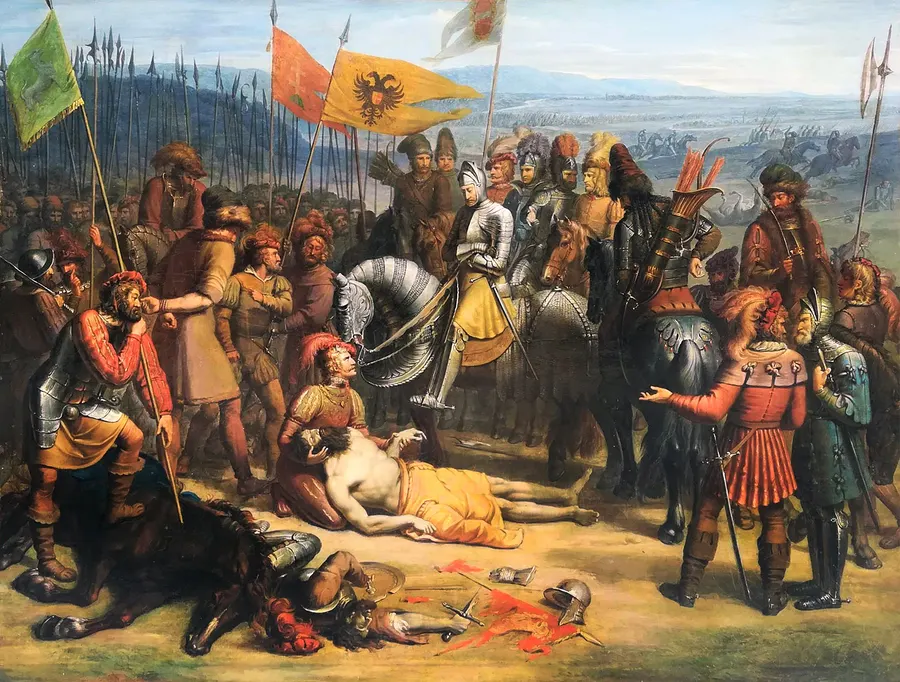
The Battle on the Marchfeld in a 19th-century painting by Anton PetterThe Battle on the Marchfeld in a 19th-century painting by Anton PetterImage: Anton Petter · Public domain
world · Europe

Rudolf of Habsburg defeats Ottokar of Bohemia on the Marchfeld

Ottokar II of Bohemia had built a powerful realm that included Austria, Styria and Carinthia, but he refused to recognise Rudolf of Habsburg, elected King of the Romans in 1273. On 26 August 1278 their armies met on the Marchfeld, the plain east of Vienna between Dürnkrut and Jedenspeigen. Rudolf, helped by Ladislaus IV of Hungary, won a narrow victory, and Ottokar was killed in the fighting. The battle gave the Habsburgs Austria, which they would rule until 1918.

Source: Habsburger.net: Rudolf I, the decisive battle ↗
1346
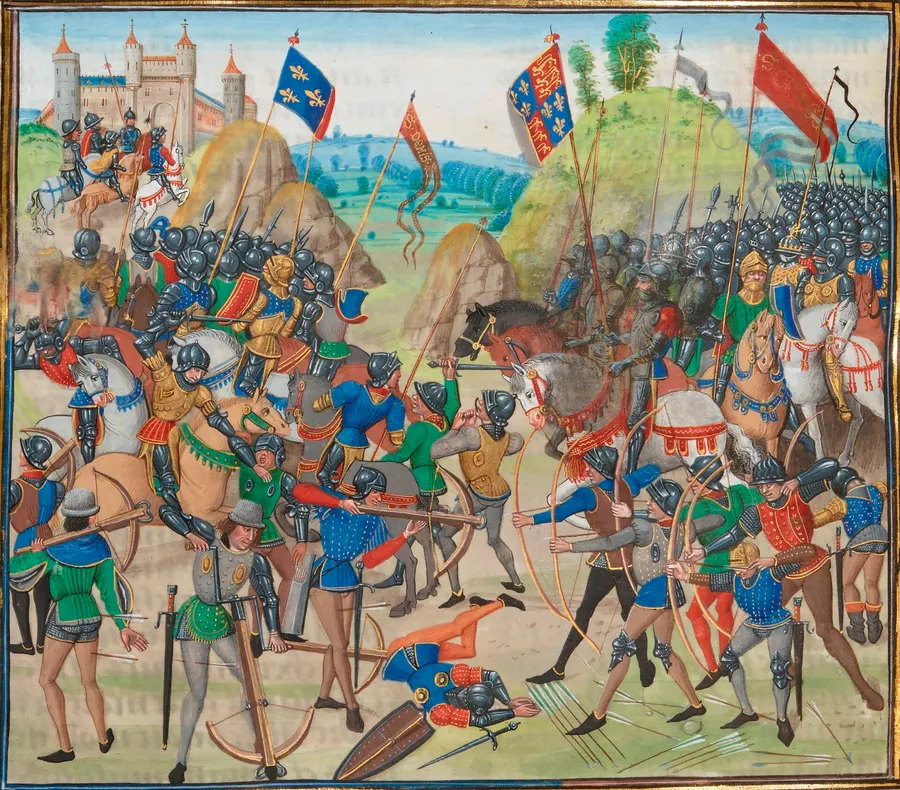
The Battle of Crécy in a 15th-century manuscript of Jean Froissart's Chronicles, illuminated by Loyset Liédet, with English longbowmen facing Genoese crossbowmenThe Battle of Crécy in a 15th-century manuscript of Jean Froissart’s Chronicles, illuminated by Loyset Liédet, with English longbowmen facing Genoese crossbowmenImage: Loyset Liédet · Public domain
world · Europe

English archers win the Battle of Crécy

Edward III of England claimed the crown of France through his mother, and in 1337 the quarrel grew into the conflict later called the Hundred Years’ War. In July 1346 Edward landed in Normandy with an army of about 10,000 men and marched across northern France, plundering as he went. Philip VI of France gathered a much larger army and caught up with him near the village of Crécy, in Picardy, where the English took up a strong position on a slope. On the evening of 26 August 1346 the French attacked, led by hired Genoese crossbowmen. The English longbowmen could shoot far faster, and their arrows drove the Genoese back into the path of the French knights, who charged again and again into the hail of arrows and the dismounted English men-at-arms. Among the many French dead was the blind King John of Bohemia, who had himself led into the fight; Edward’s 16-year-old son, later known as the Black Prince, fought in the front line. The victory let Edward besiege and take Calais, and it showed Europe what disciplined archers could do against mounted knights.

Source: Britannica: Edward III ↗
III
A CHANGING WORLD

Early Modern Era

Exploration, political change, scientific development and expanding global connections.

1789
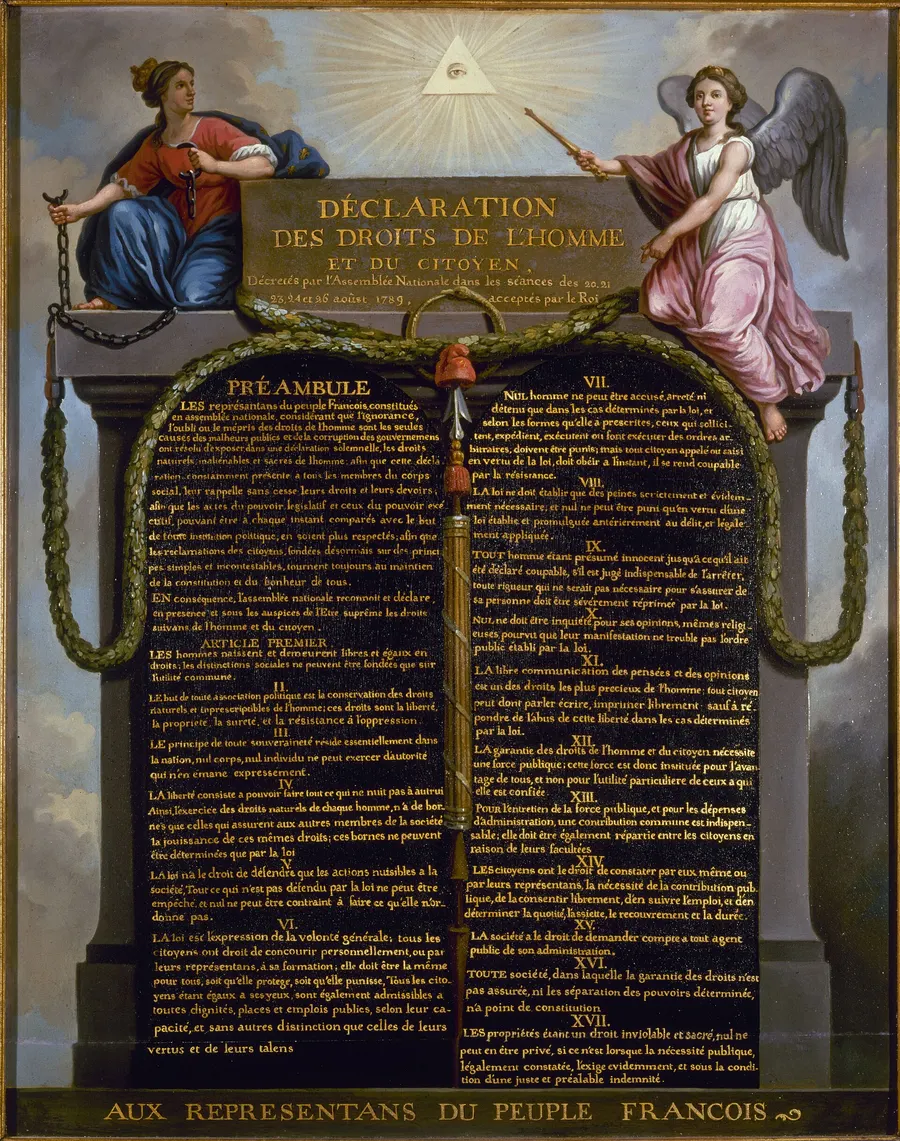
The Declaration of the Rights of Man and of the Citizen in a painting of 1789 attributed to Jean-Jacques-François Le BarbierThe Declaration of the Rights of Man and of the Citizen in a painting of 1789 attributed to Jean-Jacques-François Le BarbierImage: Unknown author · Public domain
politics · Europe

France’s revolutionaries adopt the Declaration of the Rights of Man

In the summer of 1789 France’s old order collapsed with startling speed. The Estates-General, summoned by Louis XVI to solve a financial crisis, turned itself into a National Assembly, the Bastille fell on 14 July, and on the night of 4 August the deputies voted away the privileges of the nobility and clergy. Before writing a new constitution, the Assembly decided to set out the principles it would rest on, drawing on Enlightenment thinkers and on the American example; the Marquis de Lafayette drafted an early version with advice from Thomas Jefferson, then the American minister in Paris. The deputies debated and voted the text article by article from 20 August and completed it on 26 August 1789. In a preamble and 17 articles it declared that ‘men are born and remain free and equal in rights’, named liberty, property, security and resistance to oppression as natural rights, and set out equality before the law, freedom of opinion and of the press, and the separation of powers. The king accepted it only in October, and it left out women, as Olympe de Gouges pointed out in 1791. Yet it became one of the founding texts of modern democracy, and it still forms part of France’s constitution today.

Source: Élysée: The Declaration of the Rights of Man and of the Citizen ↗
V
THE TWENTIETH CENTURY

The 1900s

War and peace, technological leaps, social change, politics, sport and popular culture.

1914
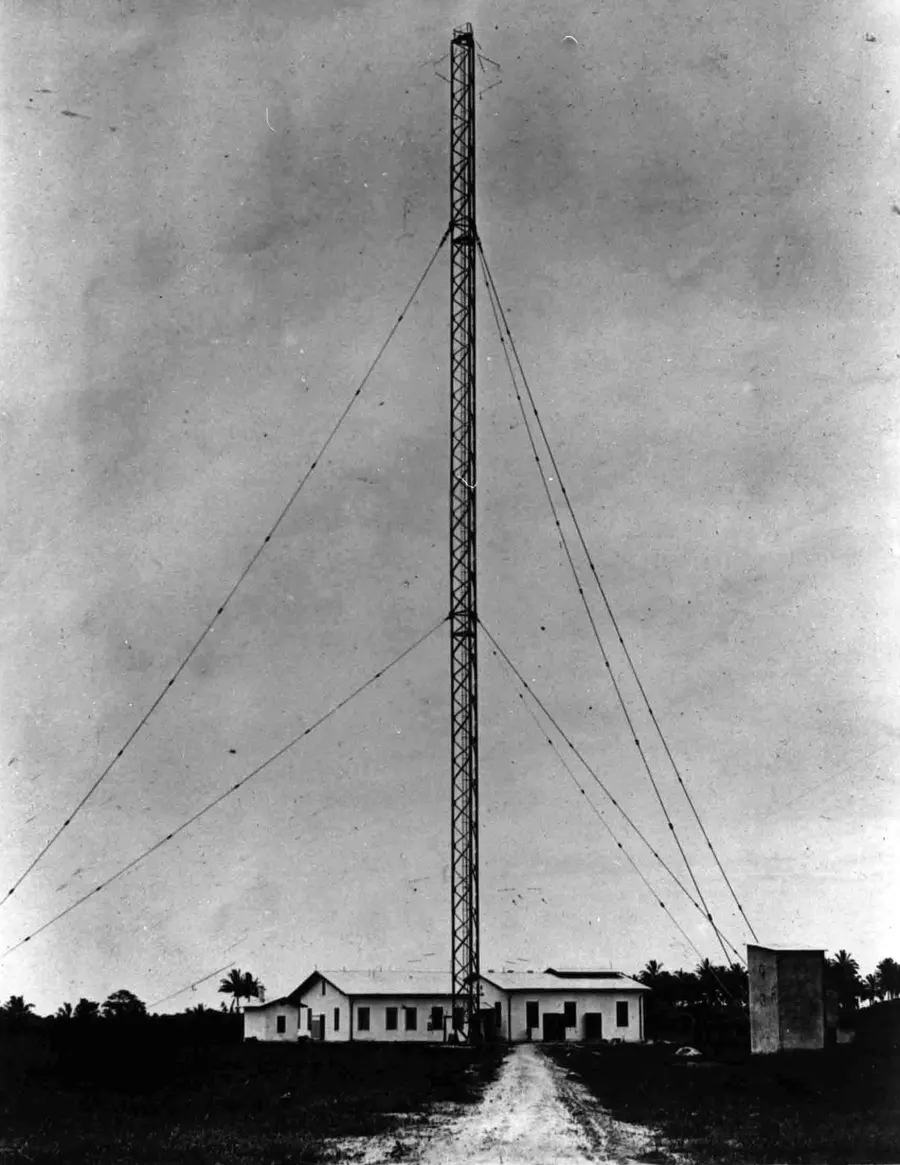
A transmitter mast of the German radio station at Kamina in Togo, around 1914A transmitter mast of the German radio station at Kamina in Togo, around 1914Image: Deutsche Kolonialgesellschaft (DKG) - Reproduktion · Public domain
world · Africa

Germany’s colony of Togoland surrenders

In the first days of the First World War, British troops from the Gold Coast and French troops from Dahomey invaded the small German colony of Togoland. Its great prize was the new radio station at Kamina, which linked Berlin with Germany’s colonies and ships in the Atlantic. Outnumbered, the Germans blew up the station and surrendered; the surrender is usually dated 26 August 1914, though some accounts put it a day earlier. It was one of the first Allied successes of the war, and Togoland was later divided between Britain and France.

Source: 1914-1918-Online, International Encyclopedia of the First World War: West Africa ↗
1940
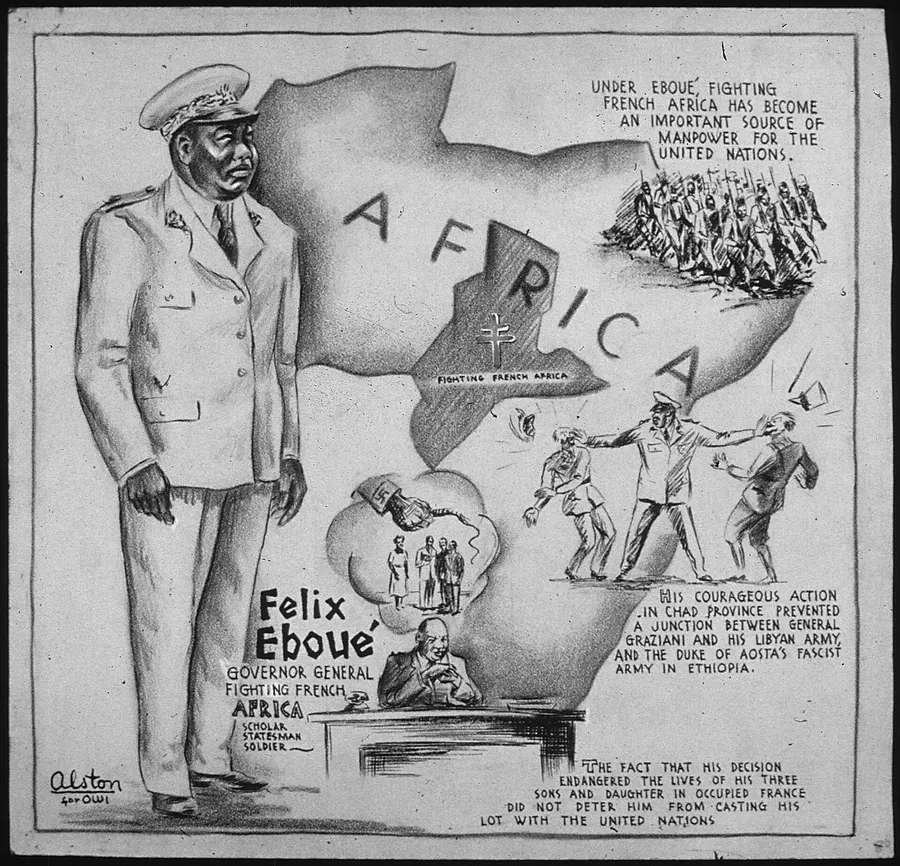
Félix Éboué on a wartime poster by Charles Alston for the US Office of War Information, held by the US National ArchivesFélix Éboué on a wartime poster by Charles Alston for the US Office of War Information, held by the US National ArchivesImage: Charles Alston · Public domain
world · Africa

Chad becomes the first French colony to join de Gaulle

When France fell to Germany in June 1940, its colonial empire had to choose between the new Vichy government of Marshal Pétain and the handful of ‘Free French’ who had followed Charles de Gaulle to London. In the vast colony of Chad, in central Africa, the governor was Félix Éboué, born in Cayenne in French Guiana and descended from enslaved Africans, and at the time the most senior Black official in the French colonial service. Éboué had already made his choice. Two envoys of de Gaulle, René Pleven and Colonel Colonna d’Ornano, reached Fort-Lamy, today’s N’Djamena, on 24 August, and on 26 August 1940 Éboué and the military commander, Lieutenant-Colonel Pierre Marchand, proclaimed that Chad was joining Free France. Cameroon and the French Congo followed within two days, giving de Gaulle his first real territory. Chad became the base from which Free French troops under Leclerc struck north into Libya. Éboué was made governor-general of French Equatorial Africa, and after his death in 1944 he became the first Black man to be buried in the Panthéon in Paris.

Source: Fondation Charles de Gaulle: 26-28 August 1940, French Equatorial Africa rallies to Free France ↗
1955
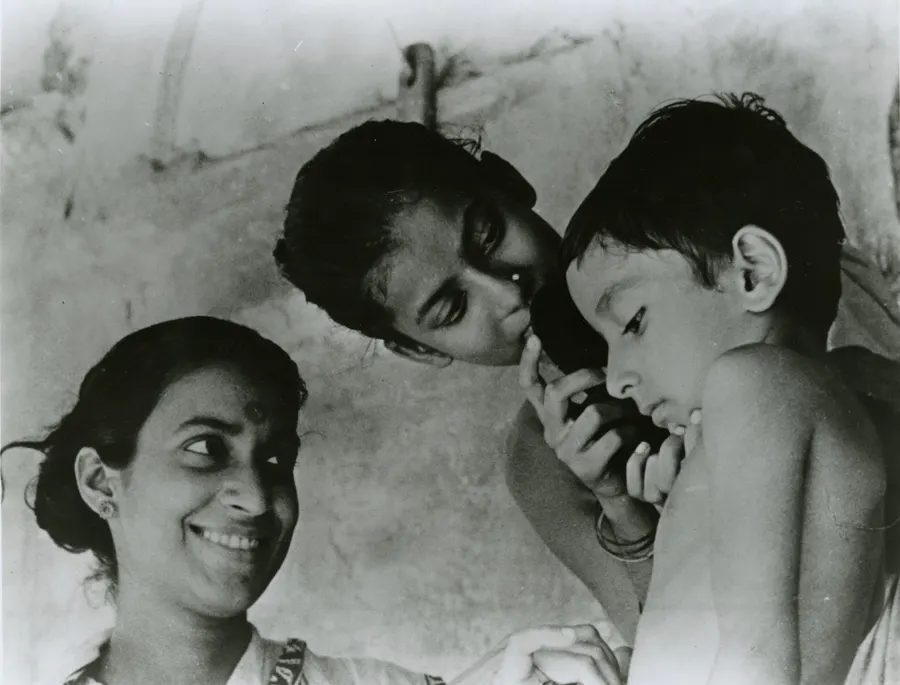
Karuna Banerjee, Subir Banerjee and Uma Dasgupta in a publicity still from Pather Panchali, 1955Karuna Banerjee, Subir Banerjee and Uma Dasgupta in a publicity still from Pather Panchali, 1955Image: Satyajit Ray/Government of West Bengal · Public domain
culture · Asia

Satyajit Ray’s Pather Panchali opens in Calcutta

Satyajit Ray was a commercial artist in a Calcutta advertising agency when he set out to film Bibhutibhushan Bandyopadhyay’s novel Pather Panchali, the story of a poor Brahmin family in a Bengal village seen through the eyes of a small boy, Apu, and his sister Durga. He had no experience of directing, cast mostly newcomers, shot on location and ran out of money so often that the work dragged on for years, until the government of West Bengal stepped in to help finish it. Ravi Shankar wrote the music. The film was released in Calcutta on 26 August 1955. It started slowly, but word spread, and within weeks it was playing to packed houses. Jawaharlal Nehru made sure it went to the Cannes Film Festival in 1956, where it won a special prize as the ‘Best Human Document’. With Aparajito and Apur Sansar it became the Apu Trilogy, and it brought Indian cinema to world attention. Ray went on to make more than 30 feature films and received an honorary Academy Award in 1992.

Source: Satyajit Ray Society: Triumph of Pather Panchali ↗
1972
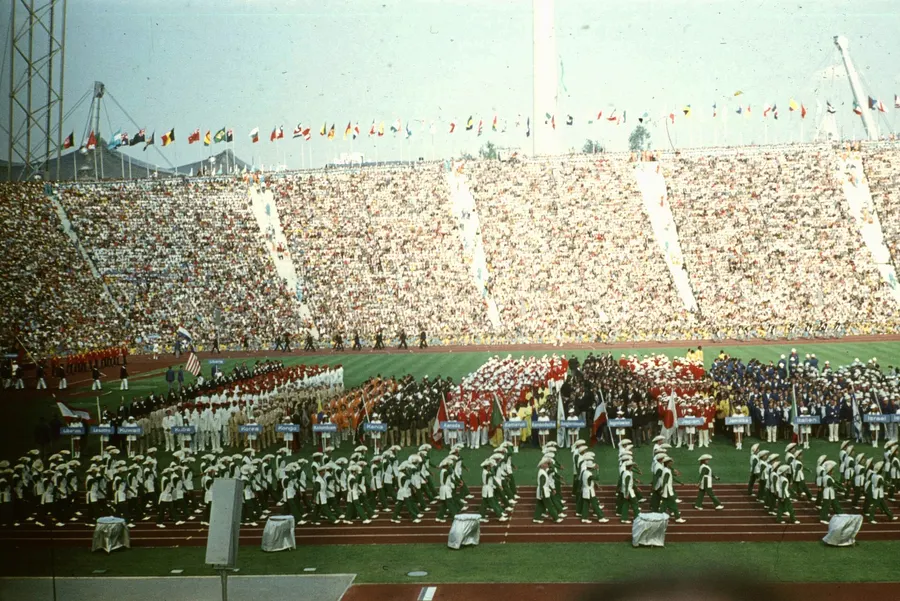
The opening ceremony of the Munich Olympic Games in the Olympic Stadium on 26 August 1972The opening ceremony of the Munich Olympic Games in the Olympic Stadium on 26 August 1972Image: Fortepan / Romák Éva · CC BY-SA 3.0
sport · Europe

The Munich Olympics open as the ‘Cheerful Games’

West Germany wanted the 1972 Olympic Games to show the world a democratic, open country, very different from the Nazi-staged Berlin Games of 1936. Munich built a new Olympic Park on old wasteland, with a stadium under a sweeping transparent tent roof, and the organisers promised ‘cheerful Games’ with light blue uniforms, relaxed security and modern design. On 26 August 1972 President Gustav Heinemann opened the Games, and the young runner Günther Zahn lit the Olympic flame, accompanied by runners from the other four continents. More than 7,000 athletes from over 120 countries took part. The American swimmer Mark Spitz won seven gold medals and the Soviet gymnast Olga Korbut won hearts. But on 5 September Palestinian gunmen of the Black September group attacked the Israeli team in the Olympic village, and 11 Israeli team members were killed. The Games were halted for a memorial service and then resumed.

Source: Olympics.com: Munich 1972 ↗
1977
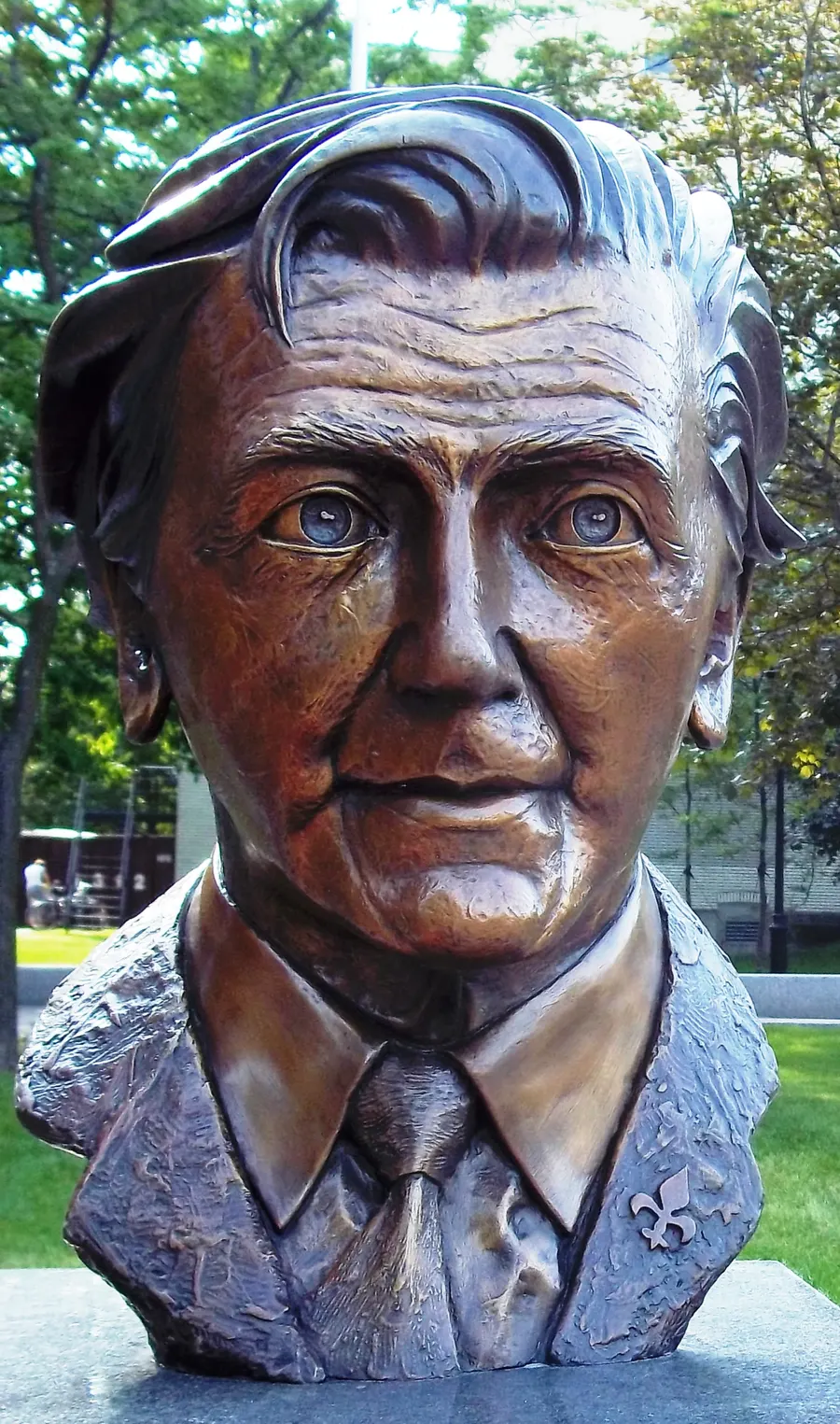
A bronze bust of Camille Laurin, the minister behind Bill 101, in a park in MontrealA bronze bust of Camille Laurin, the minister behind Bill 101, in a park in MontrealImage: Jean Gagnon · CC BY-SA 3.0
politics · Americas

Quebec passes its Charter of the French Language

René Lévesque’s Parti Québécois government, elected in 1976, made the protection of French its first priority. On 26 August 1977 Quebec’s National Assembly passed Bill 101, the Charter of the French Language, steered through by the minister Camille Laurin. It made French the language of the government, the courts, the workplace, business and public signs, and required most children of newcomers to attend French-language schools. Courts later struck down some of its clauses, but the charter reshaped daily life in Quebec.

Source: The Canadian Encyclopedia: Bill 101 (Charter of the French Language) ↗
1978
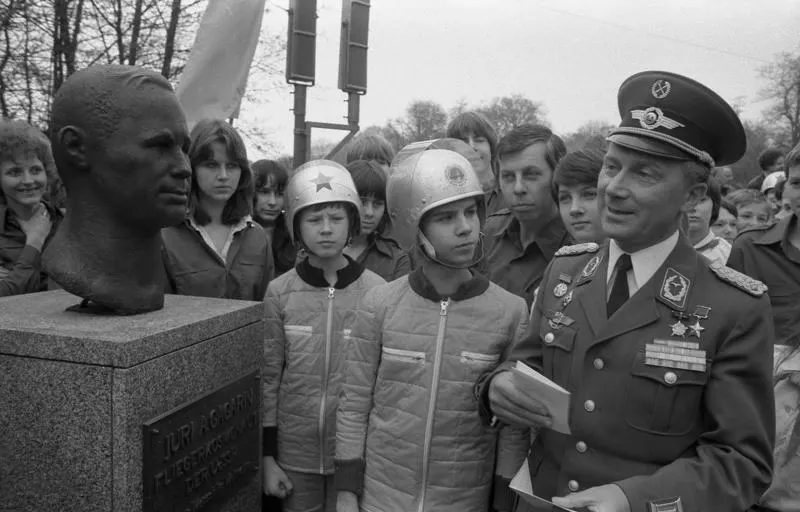
Sigmund Jähn with young visitors beside a bust of Yuri Gagarin in Berlin in April 1981, in a photograph from the German Federal ArchivesSigmund Jähn with young visitors beside a bust of Yuri Gagarin in Berlin in April 1981, in a photograph from the German Federal ArchivesImage: Peter Heinz Junge · CC BY-SA 3.0 de
science · Europe

Sigmund Jähn becomes the first German in space

In the 1970s the Soviet Union opened its space programme to cosmonauts from its allies through the Interkosmos programme, and East Germany chose Sigmund Jähn, a fighter pilot in its air force born in 1937 in the Vogtland, to fly. After two years of training at Star City near Moscow, he was launched from the Baikonur Cosmodrome on 26 August 1978 aboard Soyuz 31, alongside the veteran Soviet commander Valery Bykovsky. The pair docked with the Salyut 6 space station, where Jähn carried out 25 experiments in remote sensing of the Earth, medicine, biology and materials science, and returned to Earth on 3 September after almost eight days in orbit. East Germany celebrated him as a hero, proud that the first German in space came from the East rather than the West. After German reunification he worked as an adviser to the German space agency and to the European Space Agency, helping to train a new generation of astronauts.

Source: European Space Agency: Sigmund Jähn, the first German in space ↗
1978
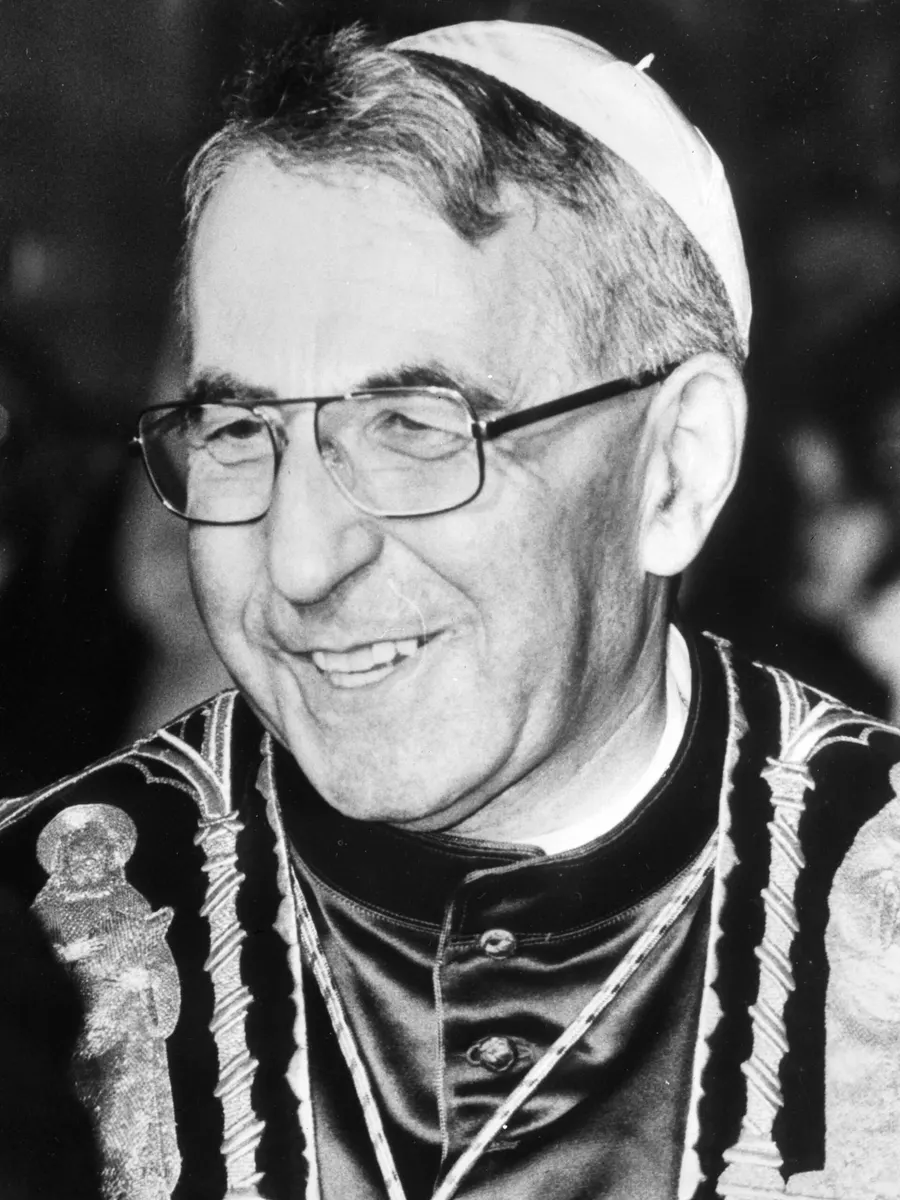
Pope John Paul I in September 1978Pope John Paul I in September 1978Image: Anefo · CC0
world · Europe

Albino Luciani is elected Pope John Paul I

After the death of Paul VI, the cardinals met in the Sistine Chapel, and on 26 August 1978, after a conclave of only about a day, they elected Albino Luciani, Patriarch of Venice and the son of a working-class family, on the fourth ballot. He took the double name John Paul in honour of his two predecessors, the first pope to do so. His warmth won him the name ‘the smiling pope’, but he died suddenly on 28 September after just 33 days, one of the shortest reigns in the history of the papacy.

Source: Vatican News: 40 years ago, Cardinal Luciani elected Pope ↗
1988
Gilded shrines on the platform of the Shwedagon Pagoda in Yangon (Rangoon), where Aung San Suu Kyi made her first public speechGilded shrines on the platform of the Shwedagon Pagoda in Yangon (Rangoon), where Aung San Suu Kyi made her first public speechImage: Vyacheslav Argenberg · CC BY 4.0
politics · Asia

Aung San Suu Kyi speaks to half a million people at the Shwedagon Pagoda

Aung San Suu Kyi was the daughter of Aung San, the hero of Burma’s struggle for independence, who was assassinated in 1947 when she was two. She had spent most of her adult life abroad and was living in Oxford when, in April 1988, she flew home to Rangoon to nurse her dying mother. She arrived as the country rose against a quarter of a century of military-backed one-party rule: students led huge pro-democracy protests, and in August the army shot hundreds of demonstrators. On 26 August 1988 she stepped into public life, speaking to a crowd estimated at half a million outside the Shwedagon Pagoda, Burma’s holiest Buddhist shrine and the place where her father had once called for independence. She asked for a democratic government and urged the crowd to stay united, disciplined and peaceful. In September she helped found the National League for Democracy, and from July 1989 she was held under house arrest for much of the next two decades, winning the Nobel Peace Prize in 1991 while still confined.

Source: The Nobel Prize: Aung San Suu Kyi, biographical ↗
WHY THESE MOMENTS?

Significance before volume

This page is not the longest possible list of events. It is a chronological journey through 26 August, where each entry is chosen for historical significance, human interest and reliability.

Facts are checked against authoritative museums, archives, universities and reference works. Where sources disagree, the page says so.

EXPLORED THE DEEPER STORY?

Return to the highlights of 26 August

Discover the lighter side of the date with famous birthdays, culture, firsts and lives remembered.

Explore This Day →
← PREVIOUS DAY25 August
HISTORY & TIMELINE26 August
NEXT DAY →27 August