Paris is liberated after four years of German occupation
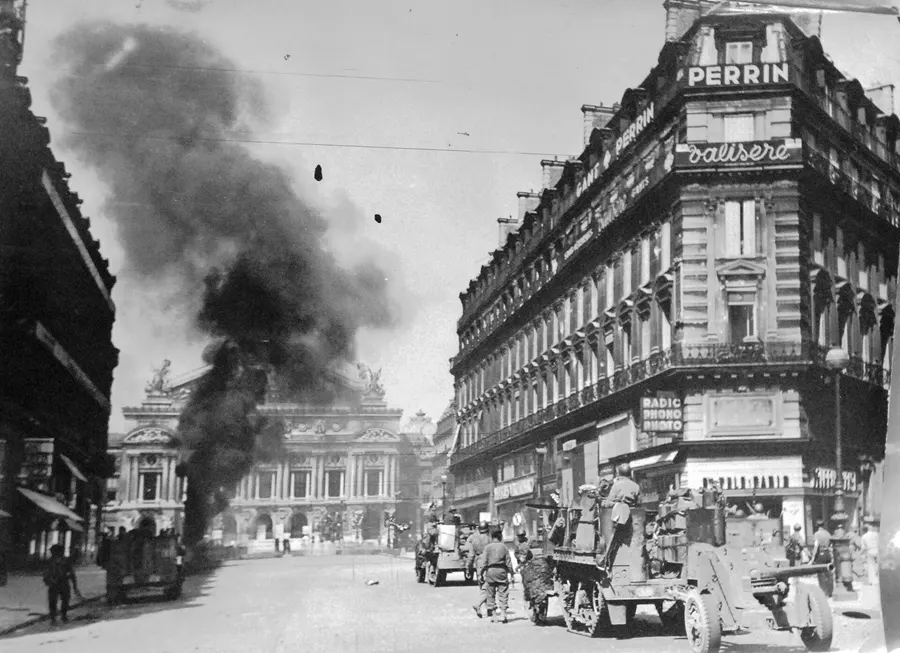
German troops had marched into Paris in June 1940, and for four years the city lived under curfews, rationing, arrests and deportations. After the Allied landings in Normandy in June 1944 the German front in France collapsed, and on 19 August the Paris Resistance rose against the garrison. The Allied commander Dwight Eisenhower had planned to bypass the city, but with fighting in the streets he agreed that the Free French 2nd Armoured Division of General Philippe Leclerc should go in first, followed by the US 4th Infantry Division.
Leclerc’s tanks reached the centre on the morning of 25 August 1944. The German commander, General Dietrich von Choltitz, had not carried out Hitler’s order to leave the city in ruins, and that afternoon he signed the surrender of the garrison. In the evening Charles de Gaulle spoke at the Hôtel de Ville of a Paris broken and martyred, but liberated by its own people with the help of France, and the next day he led a victory march down the Champs-Élysées before huge crowds.
Read the full storyHistory & Timeline →Source: The National WWII Museum: The Liberation of Paris ↗