1430Joan of Arc is captured outside Compiègne
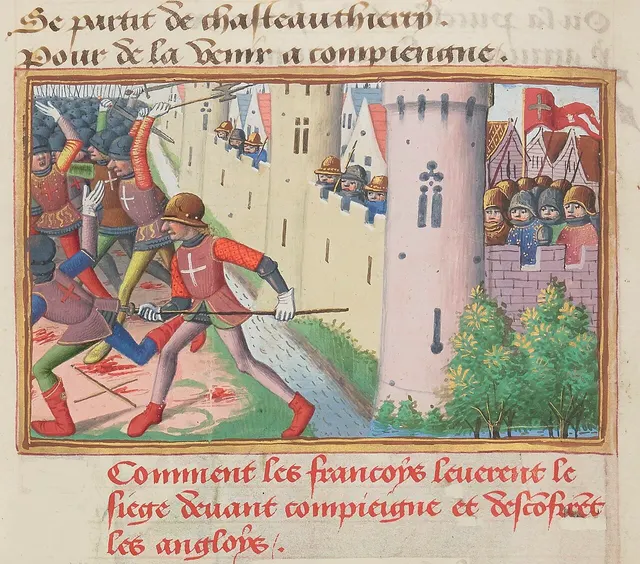
A year after she had lifted the siege of Orléans, Joan of Arc rode to help the town of Compiègne, north of Paris, which was besieged by Burgundian forces allied to England. On 23 May 1430 she led a sortie out of the town against the Burgundian lines, but English reinforcements came up on the flank and the French were driven back towards the gate.
Fighting in the rearguard, Joan was cut off when the town’s gate was closed, and she was pulled from her horse and taken prisoner by Burgundian soldiers. They later handed her over to the English, who put her before a church court at Rouen. She was tried for heresy and burned there in May 1431, aged about 19.
Read the full storyHistory & Timeline →Source: Britannica: Saint Joan of Arc ↗
1618Imperial officials are thrown from a window in Prague
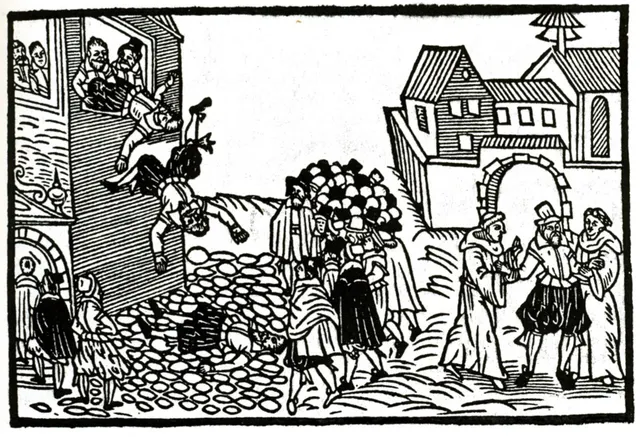
Bohemian Protestants were furious that Catholic officials had closed their new chapels, breaking the religious freedoms promised by Emperor Rudolf II in his Letter of Majesty of 1609. On 23 May 1618 an assembly of Protestants at Prague Castle put two of the emperor’s regents, Vilém Slavata and Jaroslav Martinic, on trial and found them guilty of violating those guarantees.
The two men and their secretary were then thrown out of a window of the council room. All three survived the fall, but the act was a declaration of revolt against the Habsburgs. The Bohemian uprising that followed became one of the opening phases of the Thirty Years’ War, which would draw in much of Europe.
Read the full storyHistory & Timeline →Source: Britannica: Defenestration of Prague (1618) ↗
1844A young merchant in Shiraz announces a new faith
In the Persian city of Shiraz, a 25-year-old merchant named Siyyid ʿAlí Muḥammad received a travelling scholar, Mullá Ḥusayn, at his home. Their conversation ran through the night, and on 23 May 1844 ʿAlí Muḥammad declared that he was the Báb, meaning ‘the Gate’, a messenger sent to renew religion and prepare the way for a new age.
His movement spread quickly across Persia and was harshly persecuted by the state and the clergy; the Báb himself was executed in Tabriz in 1850. Bahá’ís regard him as the forerunner of Bahá’u’lláh, the founder of their faith, and mark the Declaration of the Báb each year as one of their holy days.
Read the full storyHistory & Timeline →Source: Britannica: The Bāb ↗
1949West Germany’s Basic Law comes into being
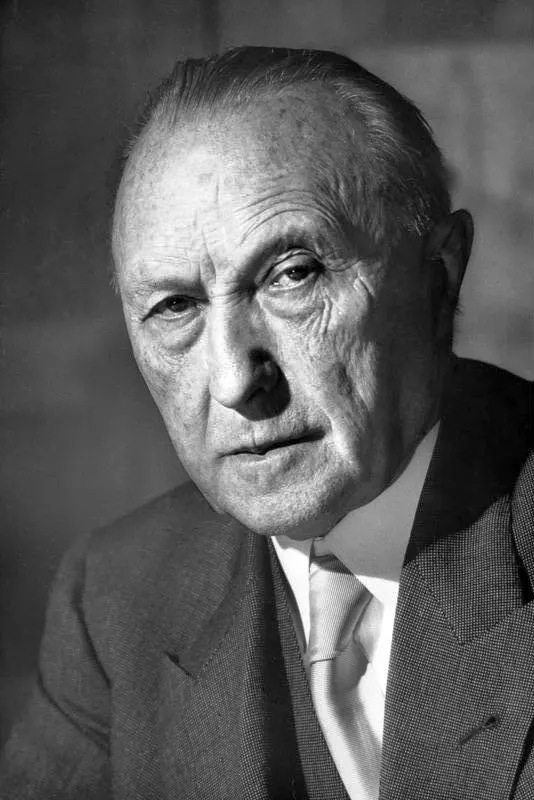
Four years after the Second World War, the Western Allies asked German politicians in their occupation zones to draw up a constitution for a new state. A Parliamentary Council meeting in Bonn adopted the Basic Law on 8 May 1949, and once more than two thirds of the regional parliaments had approved it, the council formally signed and promulgated it on 23 May 1949.
The Federal Republic of Germany, known as West Germany, was born. The text was called a Basic Law rather than a constitution because it was meant to be temporary until Germany was reunited. When reunification came in 1990, the Basic Law was kept, and it remains Germany’s constitution today.
Read the full storyHistory & Timeline →Source: German Bundestag: Basic Law for the Federal Republic of Germany (promulgation text) ↗
1951Tibet signs the Seventeen Point Agreement with China
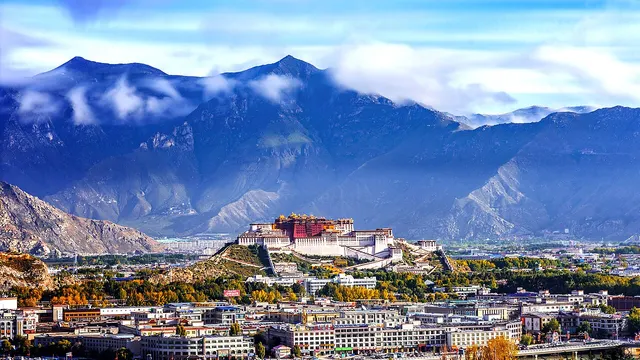
In October 1950 the People’s Liberation Army advanced into eastern Tibet and defeated the small Tibetan army at Chamdo. A Tibetan delegation was then sent to Beijing, and on 23 May 1951 it signed a ‘Seventeen Point Agreement’ with the government of the People’s Republic of China, accepting Chinese authority in return for promises of autonomy for the Tibetan people.
Tibetans later said the agreement had been signed under duress. Chinese troops marched into Lhasa that September. Tensions grew through the 1950s, and after the uprising of 1959 the 14th Dalai Lama fled to India, where he set up a government in exile and rejected the agreement.
Read the full storyHistory & Timeline →Source: Britannica: Tibet since 1900 ↗