1455The Wars of the Roses begin in the streets of St Albans
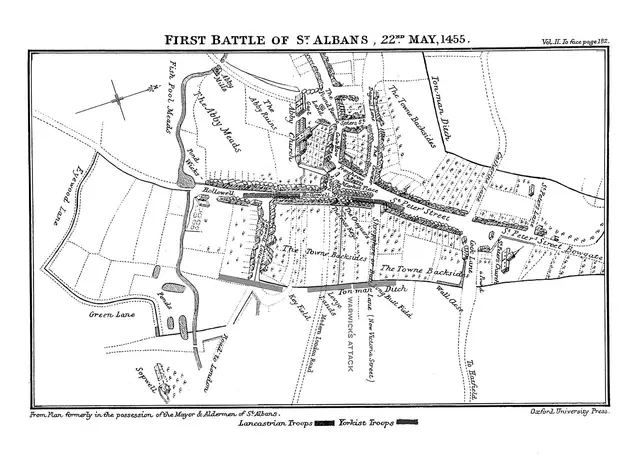
By the spring of 1455 England’s court was split between Richard, Duke of York, and the circle around Henry VI, his queen Margaret of Anjou and Edmund Beaufort, Duke of Somerset. Fearing he would be charged with treason, York gathered an armed force and on 22 May caught the royal party at St Albans, a market town north of London, as it travelled towards Leicester.
The fighting spilled through the town’s streets and was over in less than an hour. Somerset was killed, the king was wounded in the neck by an arrow and fell into York’s hands, and York soon took charge of government again as Protector. It was a small battle with enormous consequences: the rivalry between York and Lancaster it unleashed would last for thirty years.
Read the full storyHistory & Timeline →Source: Britannica: Battles of Saint Albans ↗
1809Napoleon is beaten on the battlefield for the first time
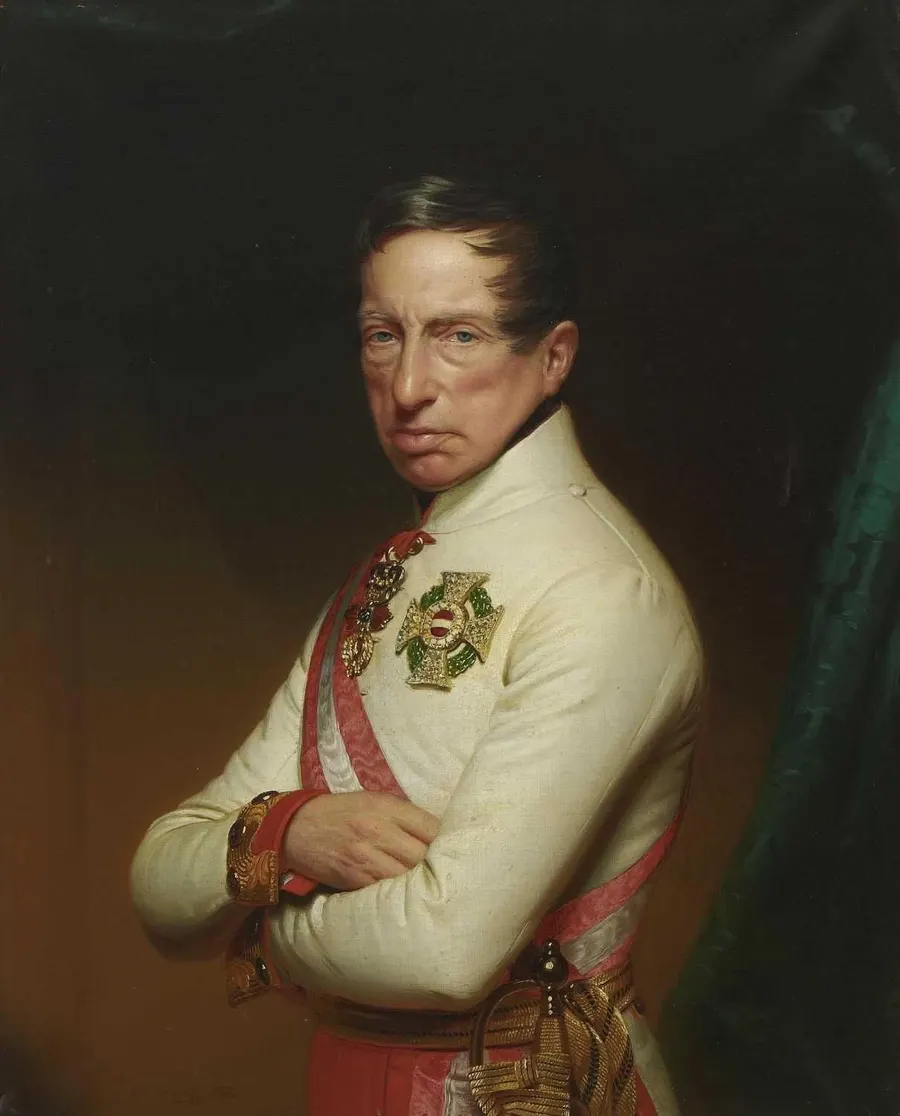
After taking Vienna in May 1809, Napoleon tried to cross the swollen Danube and strike at the Austrian army of Archduke Charles. His troops fought their way into the villages of Aspern and Essling on 21 May, but the bridges behind them kept breaking, and reinforcements and ammunition struggled to get across. On 22 May the Austrians renewed the attack with overwhelming artillery fire.
By the end of the day Napoleon had to pull his army back to the island of Lobau in the river. One of his most trusted commanders, Marshal Jean Lannes, was mortally wounded. It was the first time an army led by Napoleon in person had been driven from the field, and it dented his aura across Europe, although he recovered to beat Charles at Wagram six weeks later.
Read the full storyHistory & Timeline →Source: Britannica: Napoleonic Wars, Aspern-Essling ↗
1960The most powerful earthquake ever recorded strikes Chile
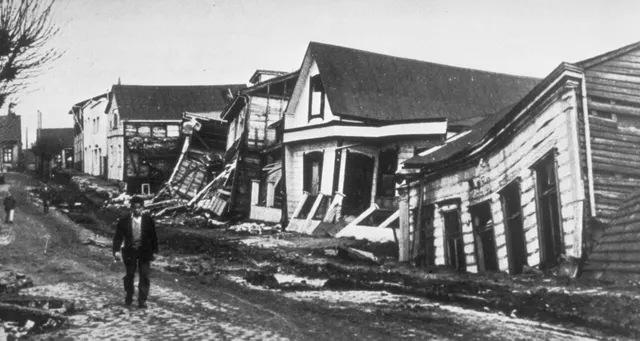
At about 3.11 in the afternoon on 22 May 1960, the ocean floor off southern Chile ruptured along a stretch of fault close to 1,000 kilometres long, where the Nazca Plate slides beneath South America. The earthquake, centred near the city of Valdivia, reached magnitude 9.5, the largest ever measured by instruments.
Coastal towns were swamped by a tsunami up to 25 metres high, and the waves crossed the Pacific to cause deaths and damage in Hawaii, Japan and the Philippines. Estimates of the dead range from hundreds to several thousand, and around two million people in Chile lost their homes. The disaster became a key case study for scientists working on tsunami warnings.
Read the full storyHistory & Timeline →Source: USGS: M 9.5 1960 Great Chilean Earthquake (Valdivia Earthquake) ↗
1972Ceylon becomes the Republic of Sri Lanka
Ceylon had won its independence from Britain in 1948, but the British monarch was still its head of state, represented by a governor-general. On 22 May 1972 a new constitution, drawn up by a constituent assembly under Prime Minister Sirimavo Bandaranaike’s government, came into force and declared the island a free, sovereign and independent republic.
The constitution also gave the country a new name, Sri Lanka, replaced the governor-general with a president and swapped the two-chamber parliament for a single National State Assembly. It gave Buddhism the foremost place and kept Sinhala as the official language, choices that deepened tensions with the Tamil minority. Sri Lanka remained a member of the Commonwealth.
Read the full storyHistory & Timeline →Source: Sri Lanka National Archives: Becoming a republic ↗
1990North and South Yemen unite as one republic
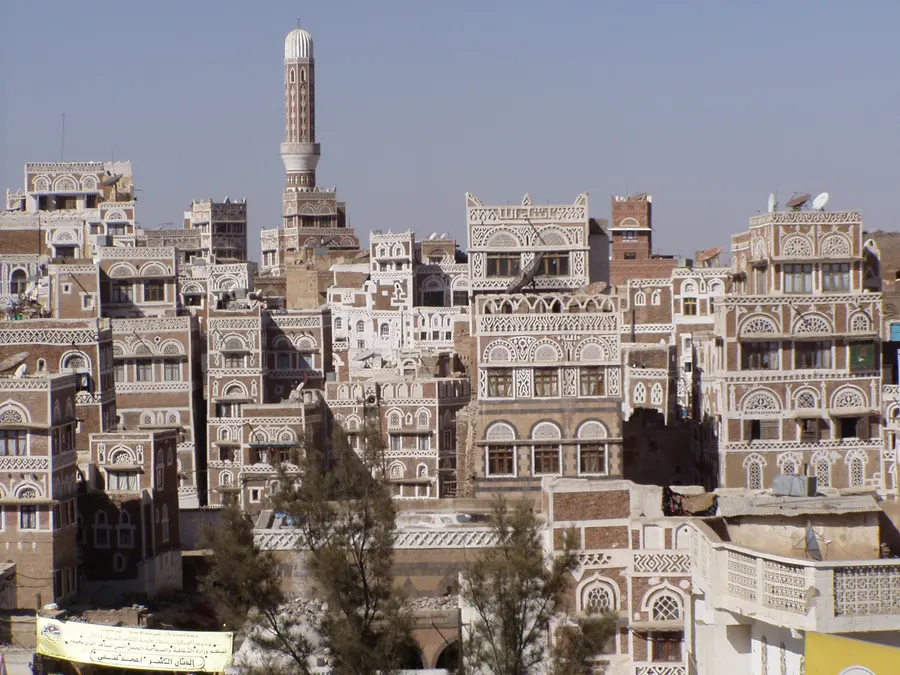
For decades the south-west corner of Arabia was split between two states: the Yemen Arab Republic in the north, with its capital at Sanaa, and the Marxist People’s Democratic Republic of Yemen in the south, based in the port of Aden. As the Cold War wound down, their leaders agreed on a unity constitution first drafted in 1981.
On 22 May 1990 the two parliaments adopted it and the Republic of Yemen was proclaimed. The northern leader Ali Abdullah Saleh became president and the southern leader Ali Salim al-Beidh vice-president, with Sanaa as the political capital and Aden the economic one. The union was tested by a short civil war in 1994, and 22 May is still marked in Yemen as Unity Day.
Read the full storyHistory & Timeline →Source: US Office of the Historian: Yemen ↗