
1455
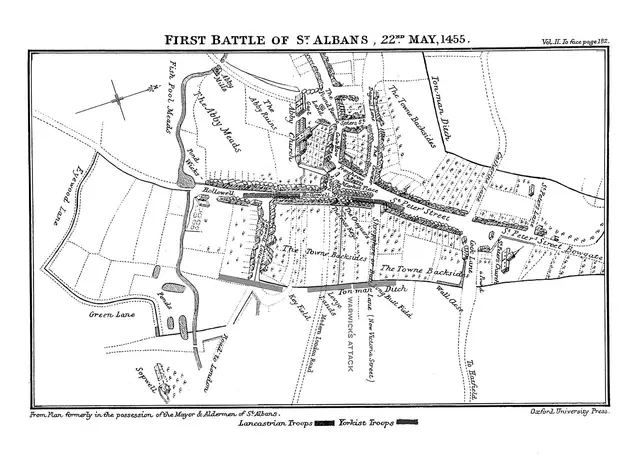 A plan of the town and the fighting at the First Battle of St Albans, 22 May 1455, from a Victorian historyImage: James Henry Ramsay (1859–1925)[1] · Public domain
world · Europe
The Wars of the Roses begin in the streets of St Albans
By the spring of 1455 England’s court was split between Richard, Duke of York, and the circle around Henry VI, his queen Margaret of Anjou and Edmund Beaufort, Duke of Somerset. Fearing he would be charged with treason, York gathered an armed force and on 22 May caught the royal party at St Albans, a market town north of London, as it travelled towards Leicester. The fighting spilled through the town’s streets and was over in less than an hour. Somerset was killed, the king was wounded in the neck by an arrow and fell into York’s hands, and York soon took charge of government again as Protector. It was a small battle with enormous consequences: the rivalry between York and Lancaster it unleashed would last for thirty years.
Source: Britannica: Battles of Saint Albans ↗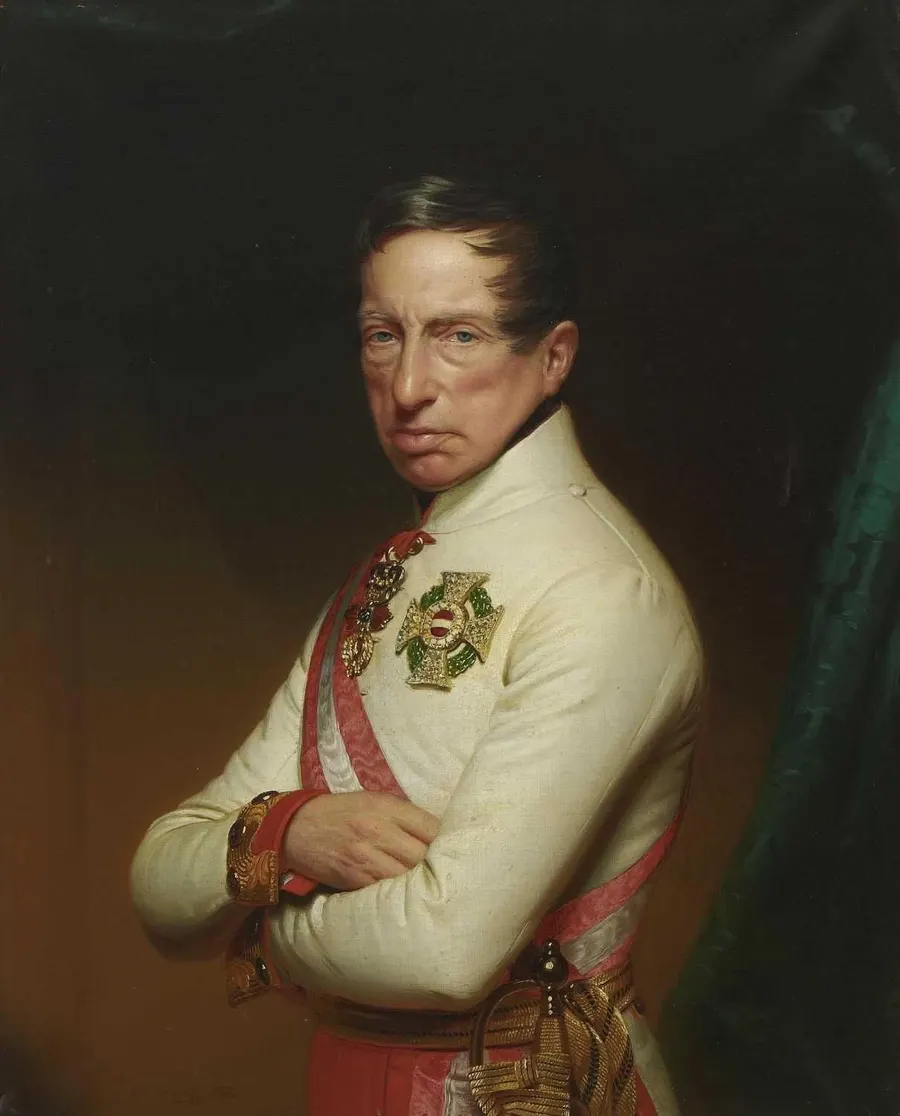 Archduke Charles of Austria, who led the Austrian army at Aspern-Essling, painted by Anton EinsleImage:
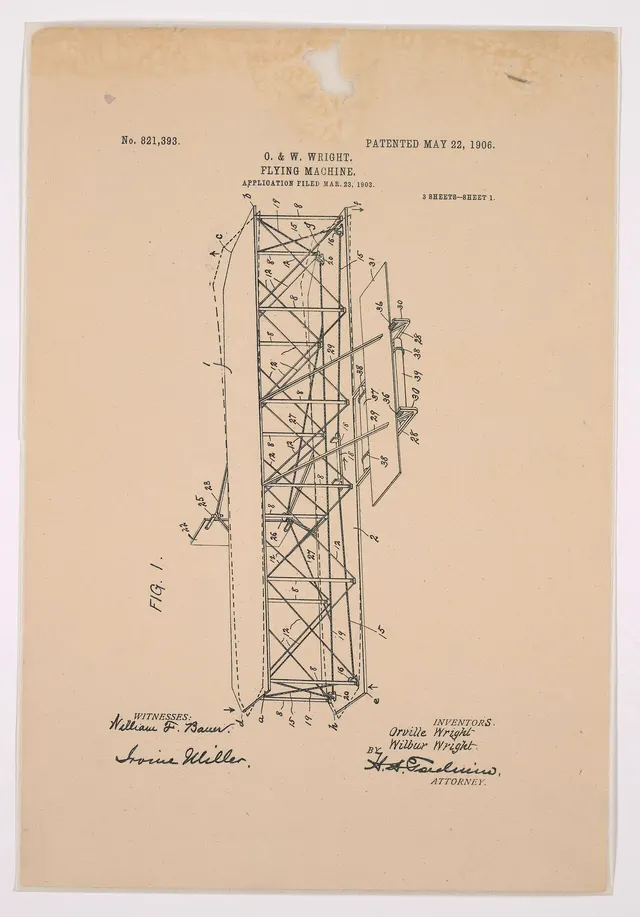 A drawing from the Wright brothers’ flying-machine patentImage:
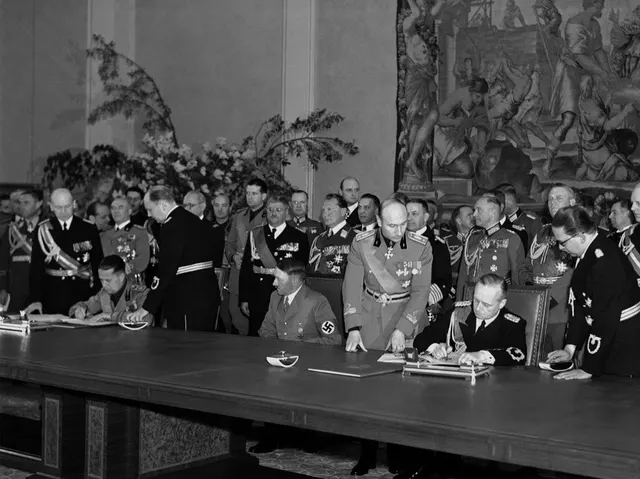 The signing of the Pact of Steel in Berlin, May 1939Image:
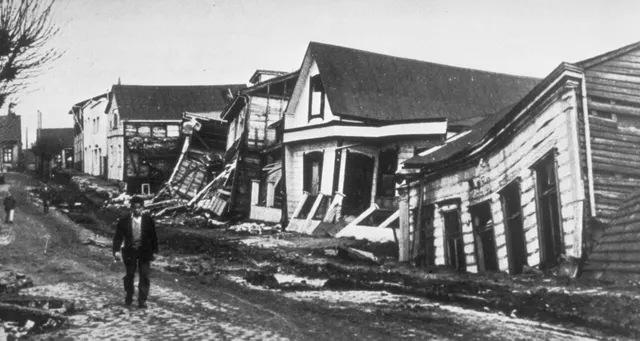 Wrecked houses in Valdivia after the 1960 earthquakeImage:
 Apollo 10’s lunar module Snoopy above the Moon’s surface, photographed from the command moduleImage:
 Sirimavo Bandaranaike, prime minister when Sri Lanka became a republicImage:
 Richard Nixon, the first US president to visit the Soviet UnionImage:
 A Pac-Man arcade machineImage:
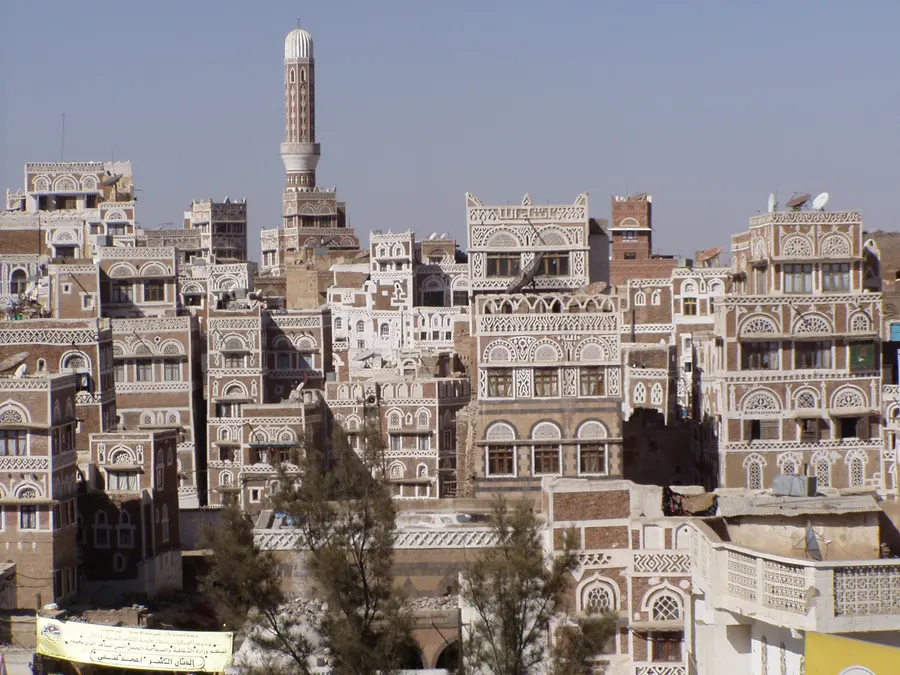 The tower houses of the old city of Sanaa, capital of the united YemenImage:
 Bill Gates, co-founder of Microsoft, which launched Windows 3.0Image:
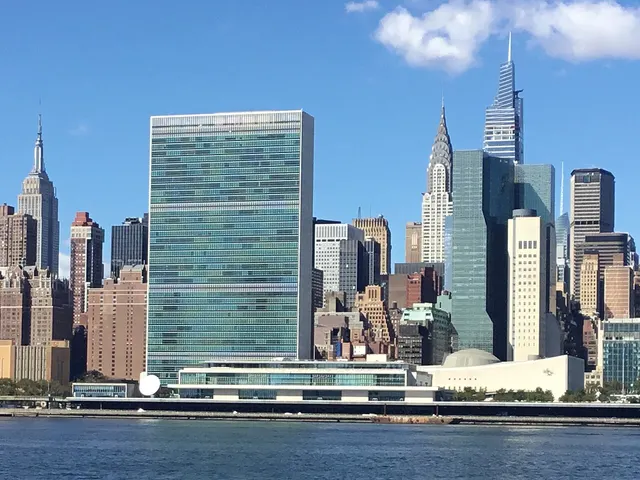 United Nations headquarters in New YorkImage:
 José Mourinho, the coach who led Inter to the treble in 2010Image: