
HISTORY & TIMELINE
23 May

A journey through
23 May in history

The story of 23 May runs from a desert battle near Merv in 1040 that opened the way for the Seljuk Turks, to AC Milan lifting the European Cup in Athens in 2007. In between come a royal annulment in England, a window in Prague that started a long war, a new police force for the Canadian west, Italy’s entry into the First World War, a constitution for West Germany and South Africa’s welcome into the Organisation of African Unity.

II
THE MIDDLE AGES

Medieval History

Kingdoms, conflict, faith, power and the changing medieval world.

1040
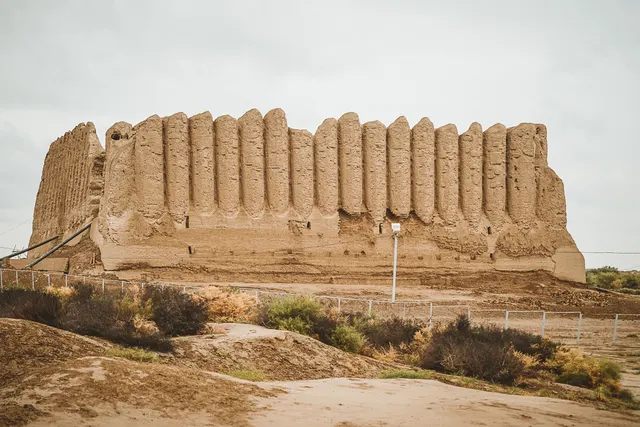
A ruined fortress at Merv in Turkmenistan, the great oasis city fought over in 1040A ruined fortress at Merv in Turkmenistan, the great oasis city fought over in 1040Image: Kalpak Travel · CC BY-SA 4.0
world · Asia

The Seljuks defeat the Ghaznavids at Dandanqan

In the desert between Merv and Sarakhs, in today’s Turkmenistan, a Turkmen force of some 16,000 led by the Seljuk brothers Toghrïl Beg and Chaghrï Beg routed the army of the Ghaznavid sultan Masʿūd I on 23 May 1040. The victory gave the Seljuks Khorasan and left Toghrïl free to conquer the Iranian plateau, the first step towards a Seljuk empire reaching Baghdad and Anatolia.

Source: Encyclopaedia Iranica: Dandānqān ↗
1430
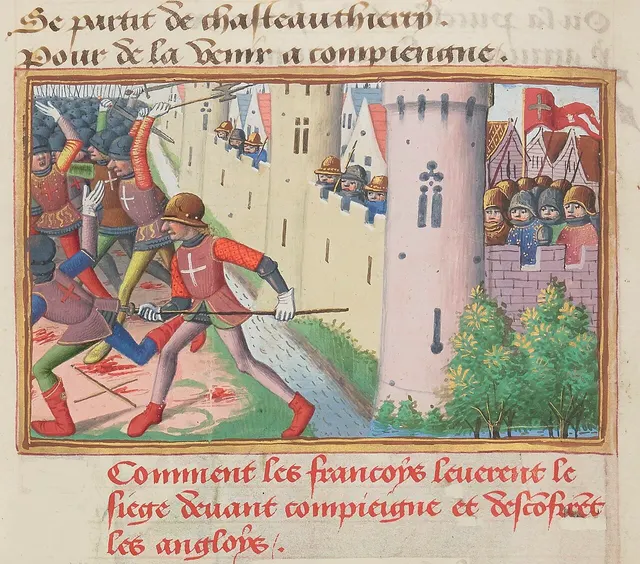
A 15th-century miniature of fighting outside the walls during the siege of CompiègneA 15th-century miniature of fighting outside the walls during the siege of CompiègneImage: Unknown author · Public domain
world · Europe

Joan of Arc is captured outside Compiègne

A year after she had lifted the siege of Orléans, Joan of Arc rode to help the town of Compiègne, north of Paris, which was besieged by Burgundian forces allied to England. On 23 May 1430 she led a sortie out of the town against the Burgundian lines, but English reinforcements came up on the flank and the French were driven back towards the gate. Fighting in the rearguard, Joan was cut off when the town’s gate was closed, and she was pulled from her horse and taken prisoner by Burgundian soldiers. They later handed her over to the English, who put her before a church court at Rouen. She was tried for heresy and burned there in May 1431, aged about 19.

Source: Britannica: Saint Joan of Arc ↗
III
A CHANGING WORLD

Early Modern Era

Exploration, political change, scientific development and expanding global connections.

1533
The Priory Church of St Peter in Dunstable, BedfordshireThe Priory Church of St Peter in Dunstable, BedfordshireImage: JohnArmagh · Public domain
culture · Europe

Archbishop Cranmer declares Henry VIII’s first marriage void

After years in which the Pope refused to end his marriage to Catherine of Aragon, Henry VIII had quietly married Anne Boleyn in January 1533. His new Archbishop of Canterbury, Thomas Cranmer, held a church court at Dunstable, and on 23 May 1533 declared that the king’s first marriage had been void from the beginning. Cranmer then pronounced the marriage to Anne valid, and she was crowned on 1 June.

Source: Britannica: Thomas Cranmer ↗
1618
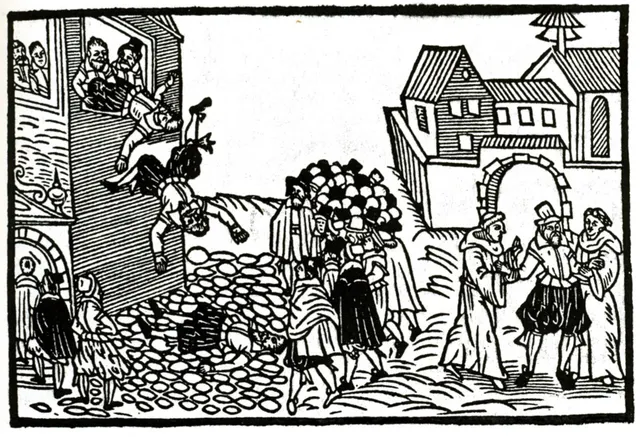
A woodcut from a 1618 news sheet showing the officials being thrown from the castle windowA woodcut from a 1618 news sheet showing the officials being thrown from the castle windowImage: Unknown author · Public domain
politics · Europe

Imperial officials are thrown from a window in Prague

Bohemian Protestants were furious that Catholic officials had closed their new chapels, breaking the religious freedoms promised by Emperor Rudolf II in his Letter of Majesty of 1609. On 23 May 1618 an assembly of Protestants at Prague Castle put two of the emperor’s regents, Vilém Slavata and Jaroslav Martinic, on trial and found them guilty of violating those guarantees. The two men and their secretary were then thrown out of a window of the council room. All three survived the fall, but the act was a declaration of revolt against the Habsburgs. The Bohemian uprising that followed became one of the opening phases of the Thirty Years’ War, which would draw in much of Europe.

Source: Britannica: Defenestration of Prague (1618) ↗
1788
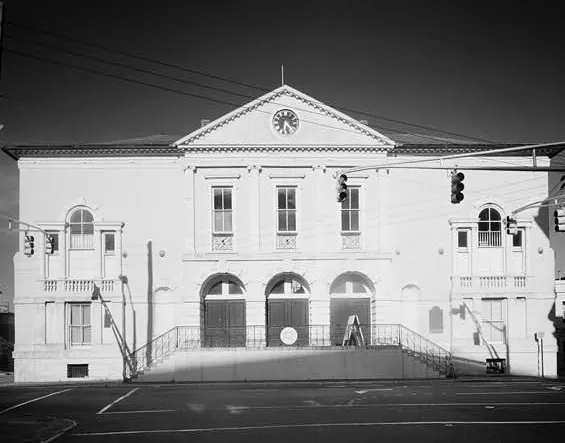
The Exchange building in Charleston, South CarolinaThe Exchange building in Charleston, South CarolinaImage: Charles N. Bayless · Public domain
politics · Americas

South Carolina ratifies the US Constitution

Meeting in Charleston, a state convention voted on 23 May 1788 to accept the new Constitution of the United States, making South Carolina the eighth state to ratify it. Nine states were needed to bring the Constitution into force, and New Hampshire became the ninth a month later. The new federal government began work in 1789.

Source: US Senate: South Carolina timeline ↗
IV
THE NINETEENTH CENTURY

The 1800s

Industry, empire, invention, reform and a century of enormous transformation.

1844
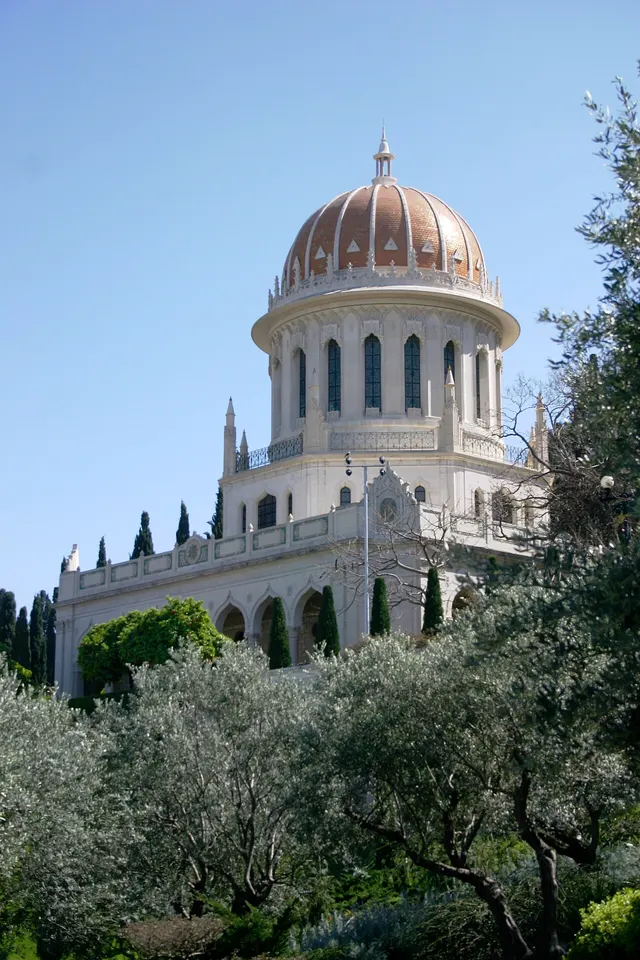
The Shrine of the Báb in Haifa, where his remains now lieThe Shrine of the Báb in Haifa, where his remains now lieImage: Tom Habibi · CC BY-SA 3.0

culture · Middle East

A young merchant in Shiraz announces a new faith

In the Persian city of Shiraz, a 25-year-old merchant named Siyyid ʿAlí Muḥammad received a travelling scholar, Mullá Ḥusayn, at his home. Their conversation ran through the night, and on 23 May 1844 ʿAlí Muḥammad declared that he was the Báb, meaning ‘the Gate’, a messenger sent to renew religion and prepare the way for a new age. His movement spread quickly across Persia and was harshly persecuted by the state and the clergy; the Báb himself was executed in Tabriz in 1850. Bahá’ís regard him as the forerunner of Bahá’u’lláh, the founder of their faith, and mark the Declaration of the Báb each year as one of their holy days.

Source: Britannica: The Bāb ↗
1873
The badge of the North-West Mounted PoliceThe badge of the North-West Mounted PoliceImage: ConfidentBobcat · Public domain
world · Americas

Canada creates the North-West Mounted Police

With settlers moving west and whisky traders causing trouble on the prairies, Prime Minister John A. Macdonald’s government asked Parliament for a mounted police force for the North-West Territories. The Act creating it was passed on 23 May 1873, and the following year the first recruits made their long march west. The force later became the Royal Canadian Mounted Police, famous for its red serge tunics.

Source: Government of Canada: RCMP celebrates 135 years of history ↗
V
THE TWENTIETH CENTURY

The 1900s

War and peace, technological leaps, social change, politics, sport and popular culture.

1915
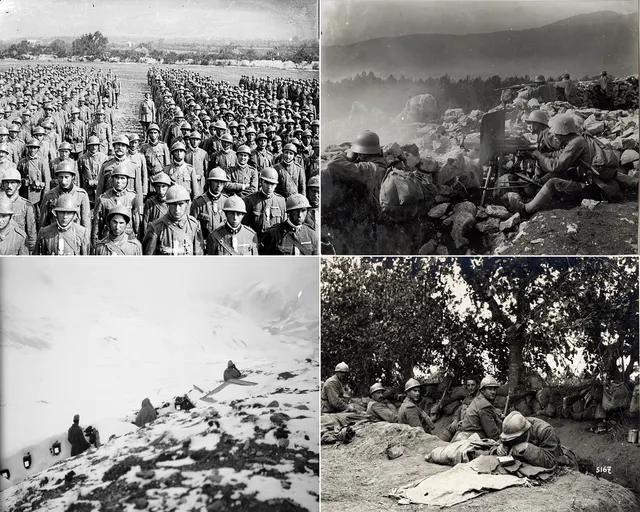
Scenes from the Italian front in the First World WarScenes from the Italian front in the First World WarImage: Unknown · Public domain
world · Europe

Italy declares war on Austria-Hungary

Italy had stayed neutral when the First World War began, although it was allied to Germany and Austria-Hungary. In the secret Treaty of London of April 1915, Britain, France and Russia promised it Austrian lands in return for joining them, and on 23 May 1915 Italy declared war on Austria-Hungary. It did not declare war on Germany until August 1916, and fighting on the mountainous Italian front proved long and costly.

Source: Britannica: World War I, Italy and the Italian front, 1915-16 ↗
1949
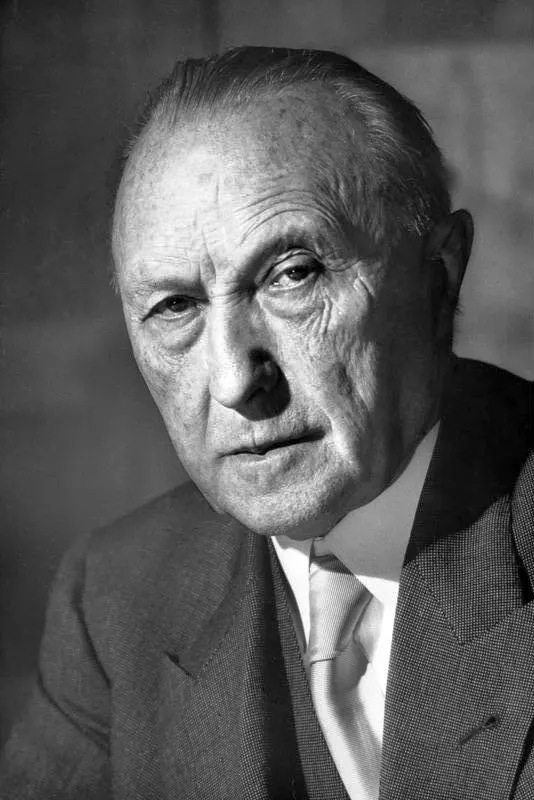
Konrad Adenauer, who presided over the Parliamentary Council that drew up the Basic LawKonrad Adenauer, who presided over the Parliamentary Council that drew up the Basic LawImage: Katherine Young (1906–1993) · CC BY-SA 3.0 de
politics · Europe

West Germany’s Basic Law comes into being

Four years after the Second World War, the Western Allies asked German politicians in their occupation zones to draw up a constitution for a new state. A Parliamentary Council meeting in Bonn adopted the Basic Law on 8 May 1949, and once more than two thirds of the regional parliaments had approved it, the council formally signed and promulgated it on 23 May 1949. The Federal Republic of Germany, known as West Germany, was born. The text was called a Basic Law rather than a constitution because it was meant to be temporary until Germany was reunited. When reunification came in 1990, the Basic Law was kept, and it remains Germany’s constitution today.

Source: German Bundestag: Basic Law for the Federal Republic of Germany (promulgation text) ↗
1951
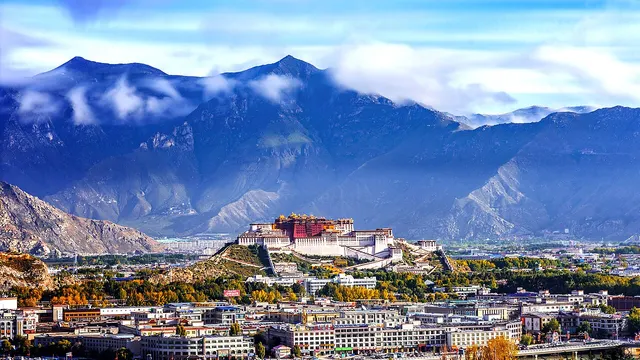
The Potala Palace in Lhasa, the traditional seat of the Dalai LamasThe Potala Palace in Lhasa, the traditional seat of the Dalai LamasImage: Lhasa Government · CC BY-SA 4.0
politics · Asia

Tibet signs the Seventeen Point Agreement with China

In October 1950 the People’s Liberation Army advanced into eastern Tibet and defeated the small Tibetan army at Chamdo. A Tibetan delegation was then sent to Beijing, and on 23 May 1951 it signed a ‘Seventeen Point Agreement’ with the government of the People’s Republic of China, accepting Chinese authority in return for promises of autonomy for the Tibetan people. Tibetans later said the agreement had been signed under duress. Chinese troops marched into Lhasa that September. Tensions grew through the 1950s, and after the uprising of 1959 the 14th Dalai Lama fled to India, where he set up a government in exile and rejected the agreement.

Source: Britannica: Tibet since 1900 ↗
1980
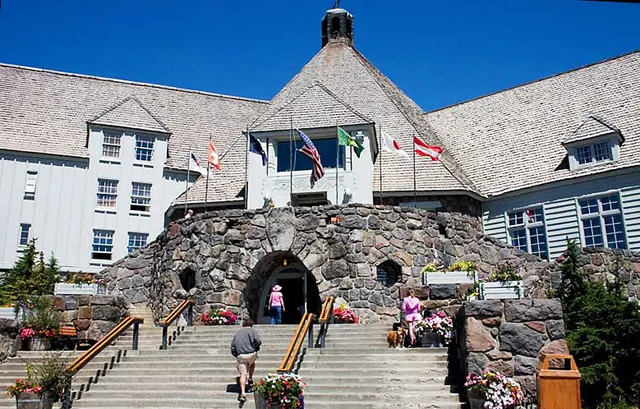
Timberline Lodge on Mount Hood, Oregon, used for the exterior of the Overlook HotelTimberline Lodge on Mount Hood, Oregon, used for the exterior of the Overlook HotelImage: Kelvin Kay, Kkmd at en.wikipedia · CC BY-SA 3.0
culture · Americas

Kubrick’s The Shining opens in cinemas

Stanley Kubrick spent years on his version of Stephen King’s 1977 novel about a struggling writer who takes his wife and young son to look after a remote mountain hotel through the winter. Most of the film was shot in 1978 on specially built sets in Hertfordshire, England, with Jack Nicholson and Shelley Duvall in the lead roles, and it premiered on 23 May 1980. Kubrick set aside the screenplay King had written and wrote a new one with the American novelist Diane Johnson. Early reviews were mixed, but the film did well at the box office, and its long corridors, eerie twins and snowbound maze have made it one of the best-known horror films of the 20th century.

Source: Britannica: The Shining (film by Kubrick) ↗
1994
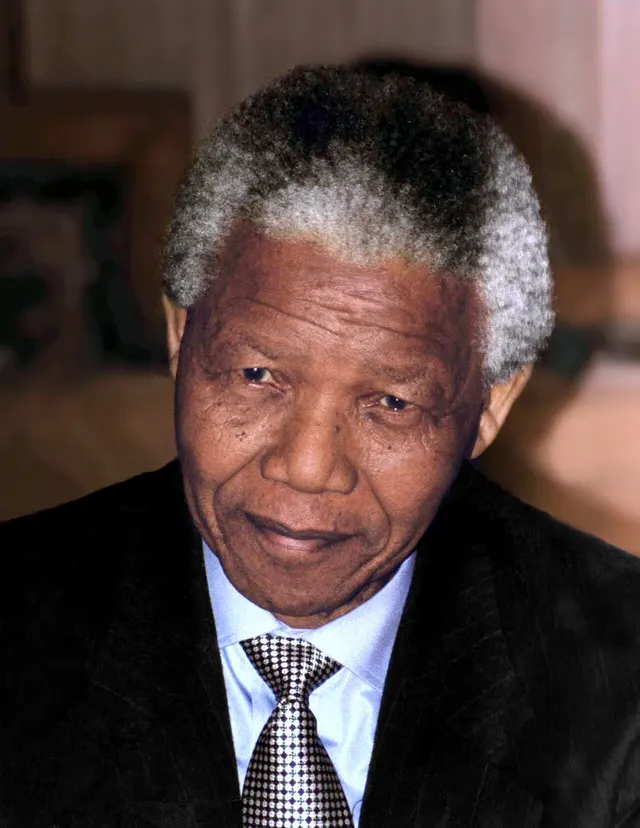
Nelson Mandela in 1994, the year he became South Africa's presidentNelson Mandela in 1994, the year he became South Africa’s presidentImage: Kingkongphoto & www.celebrity-photos.com from Laurel · CC BY-SA 2.0

politics · Africa

South Africa joins the Organisation of African Unity

For three decades the Organisation of African Unity had campaigned against apartheid, and South Africa’s white-minority government had no place in it. Two weeks after Nelson Mandela was sworn in as the country’s first democratically elected president, South Africa was admitted on 23 May 1994 as the organisation’s 53rd member. The OAU was replaced by the African Union in 2002.

Source: South African History Online: The Organisation of African Unity is formed ↗
1995
James Gosling, the Sun Microsystems engineer who led the creation of JavaJames Gosling, the Sun Microsystems engineer who led the creation of JavaImage: Peter Campbell · CC BY-SA 4.0
world · Americas

Sun Microsystems unveils the Java programming language

Java began life at Sun Microsystems in California as a project led by James Gosling to write software for interactive television and other household devices. That market never took off, but the rise of the World Wide Web gave the language a new purpose, and on 23 May 1995 Sun formally presented Java, together with a web browser called HotJava, at its SunWorld conference. Its promise was ‘write once, run anywhere’: a program written in Java runs on a virtual machine, so it does not have to be rewritten for each type of computer. Netscape agreed to build Java into its popular browser, and the language went on to power business software, web servers and billions of Android phones.

Source: Britannica Kids (Encyclopaedia Britannica): Java ↗
VI
2000 TO TODAY

Modern Day

The events of recent decades that have already become part of the historical record.

2007
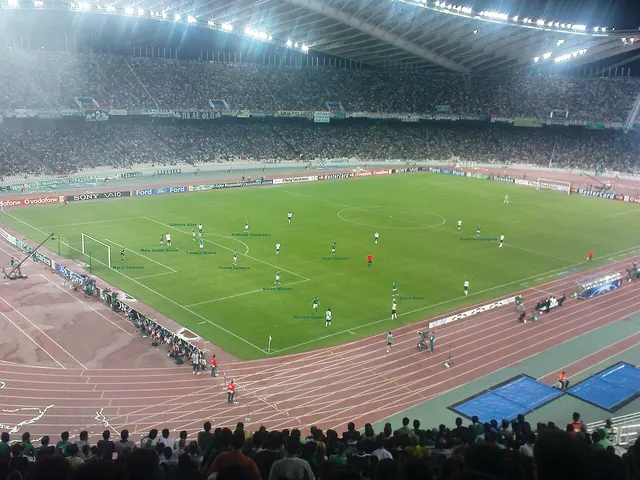
The Olympic Stadium in Athens, venue of the 2007 final, during a match in 2008The Olympic Stadium in Athens, venue of the 2007 final, during a match in 2008Image: Sportingn · Public domain
sport · Europe

AC Milan take revenge on Liverpool in Athens

Two years earlier in Istanbul, AC Milan had led Liverpool 3-0 at half-time in the Champions League final, only to lose on penalties. On 23 May 2007 the same two clubs met again in the final at the Olympic Stadium in Athens, and this time the Italian side, managed by Carlo Ancelotti and captained by Paolo Maldini, were determined not to let the chance slip. Filippo Inzaghi gave Milan the lead just before half-time and added a second goal eight minutes after the break. Dirk Kuyt pulled one back for Liverpool in the last minute of normal time, but Milan held on to win 2-1 and lift the European Cup for the seventh time. Ancelotti called it the greatest victory of his time at the club.

Source: UEFA: Milan 2-1 Liverpool, 2006/07 final ↗
WHY THESE MOMENTS?

Significance before volume

This page is not the longest possible list of events. It is a chronological journey through 23 May, where each entry is chosen for historical significance, human interest and reliability.

Facts are checked against authoritative museums, archives, universities and reference works. Where sources disagree, the page says so.

EXPLORED THE DEEPER STORY?

Return to the highlights of 23 May

Discover the lighter side of the date with famous birthdays, culture, firsts and lives remembered.

Explore This Day →
← PREVIOUS DAY22 May
HISTORY & TIMELINE23 May
NEXT DAY →24 May