1942American dive bombers turn the tide at Midway
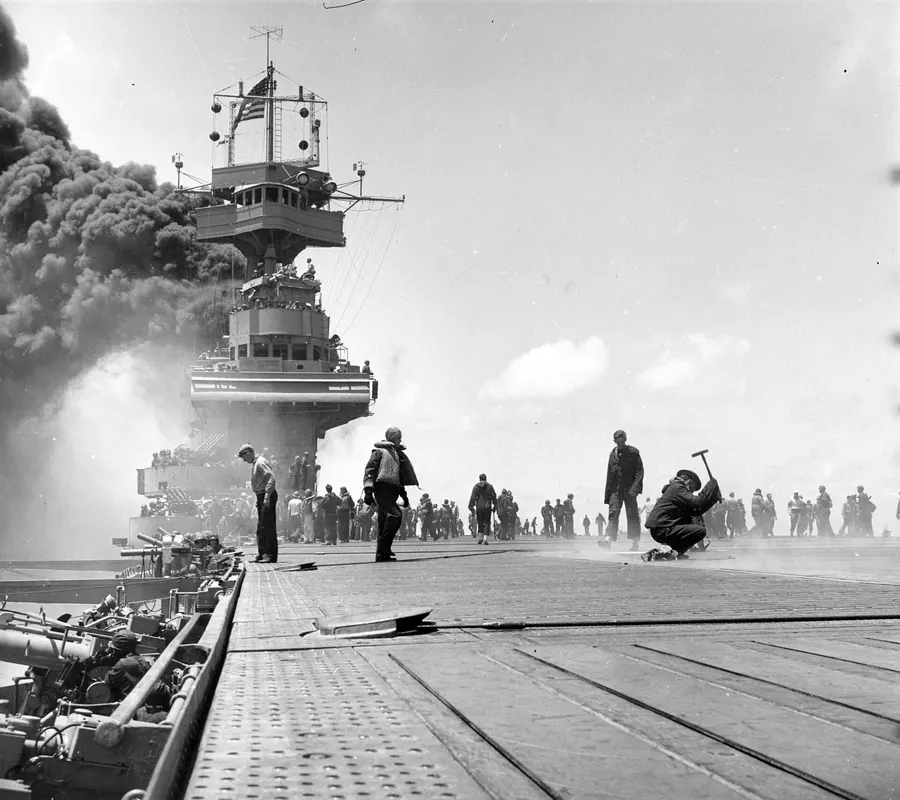
Six months after Pearl Harbor, Japan’s navy set out to seize Midway, a tiny atoll at the western end of the Hawaiian chain, and to draw the surviving American carriers into a decisive battle. But American codebreakers had read enough of the Japanese signals to know the plan. Admiral Chester Nimitz sent the carriers Enterprise, Hornet and Yorktown to lie in wait north-east of the island.
Early on 4 June 1942 Admiral Nagumo Chūichi’s carrier force launched its planes against Midway. Wave after wave of American torpedo bombers attacked his ships and were shot down, but at about 10.20 in the morning dive bombers from Enterprise and Yorktown arrived overhead and in a few minutes wrecked the carriers Akagi, Kaga and Sōryū. Hiryū was hit that afternoon. Japan lost all four carriers that had struck Pearl Harbor; the Americans lost Yorktown. The Japanese advance in the Pacific never recovered.
Read the full storyHistory & Timeline →Source: Naval History and Heritage Command: 1942, June 4, Battle of Midway ↗
1920Hungary signs away two-thirds of its lands at Trianon
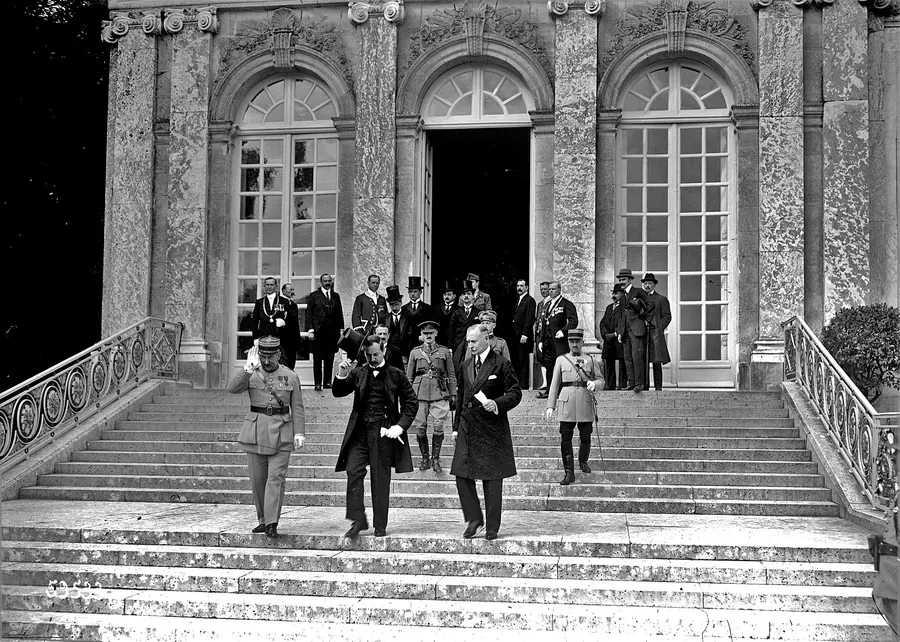
The Kingdom of Hungary had been one half of the Austro-Hungarian monarchy, which broke apart in the last weeks of the First World War. Its Slovak, Romanian, Serb and Croat regions had already declared for new or neighbouring states, and the victorious Allies drew up the peace terms in Paris without letting Hungary negotiate them. The Hungarian delegation protested, but had no choice but to accept.
On 4 June 1920 the treaty was signed in the Grand Trianon palace at Versailles. Hungary lost about 71 per cent of its territory and around two-thirds of its people. Slovakia and Ruthenia went to Czechoslovakia, Transylvania and much of the Banat to Romania, and Croatia and the rest of the south to the new Yugoslavia. Millions of Hungarian speakers found themselves living outside the new borders, and the loss of ‘Trianon’ shaped Hungarian politics for the rest of the century.
Read the full storyHistory & Timeline →Source: Britannica: Treaty of Trianon ↗
1989The army clears the streets around Tiananmen Square
In April 1989 the death of Hu Yaobang, a reforming Communist Party leader, brought students into Beijing’s Tiananmen Square to mourn him and to call for political reform, a free press and an end to corruption. The protests grew for weeks, spreading to workers and to other cities, and at their height hundreds of thousands filled the square. In May the government declared martial law, but crowds of residents blocked the troops sent into the city.
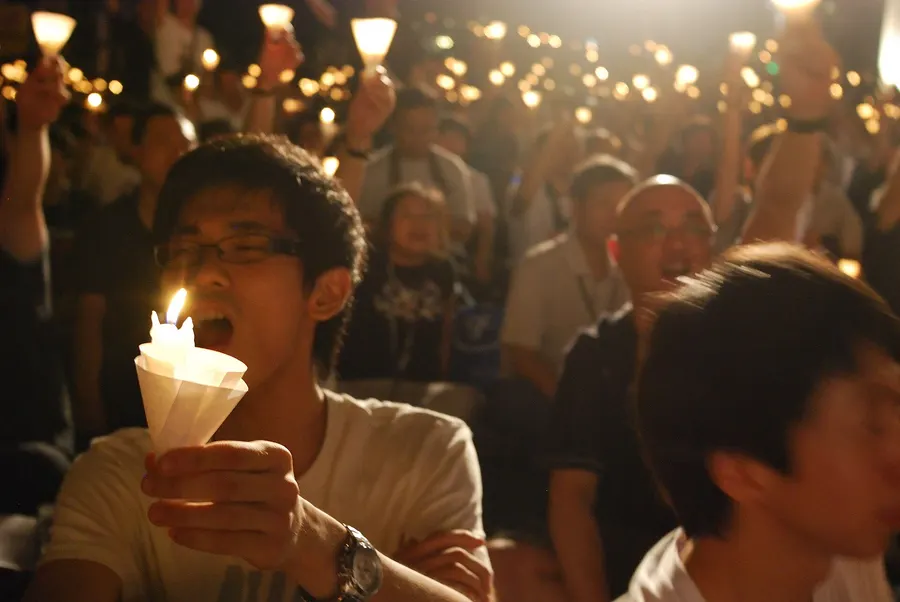
On the night of 3 to 4 June the army forced its way into central Beijing with tanks and live fire, and by the morning of 4 June the square had been cleared. The government gave an official death toll of about 240; other estimates run far higher, and the true number is still unknown. Public remembrance of the events is forbidden in mainland China, and for three decades Hong Kong held the largest annual vigils until they too were banned.
Read the full storyHistory & Timeline →Source: Britannica: Tiananmen Square incident ↗
1970Tonga steps out as a fully independent kingdom
Tonga was never colonised. In the 1800s King George Tupou I united its islands, gave them a written constitution and kept them free while Britain, France and Germany carved up much of the Pacific. In 1900, to keep German ambitions at bay, his successor signed a treaty that made Tonga a British protected state, leaving Britain in charge of its foreign affairs while the monarchy continued to govern at home.
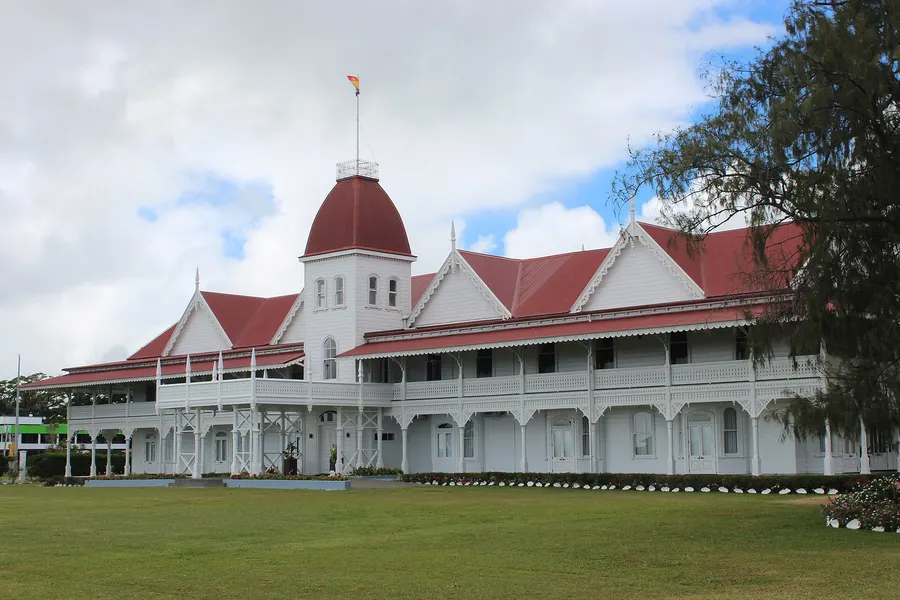
On 4 June 1970, under King Tāufaʻāhau Tupou IV, Tonga took back full control of its foreign affairs and became a fully independent country, joining the Commonwealth the same year. It is the only Polynesian kingdom to have survived from before the arrival of Europeans, and its monarchy still reigns from the white wooden palace on the waterfront at Nukuʻalofa.
Read the full storyHistory & Timeline →Source: Britannica: History of Tonga ↗
1615Osaka Castle falls and the Toyotomi line comes to an end
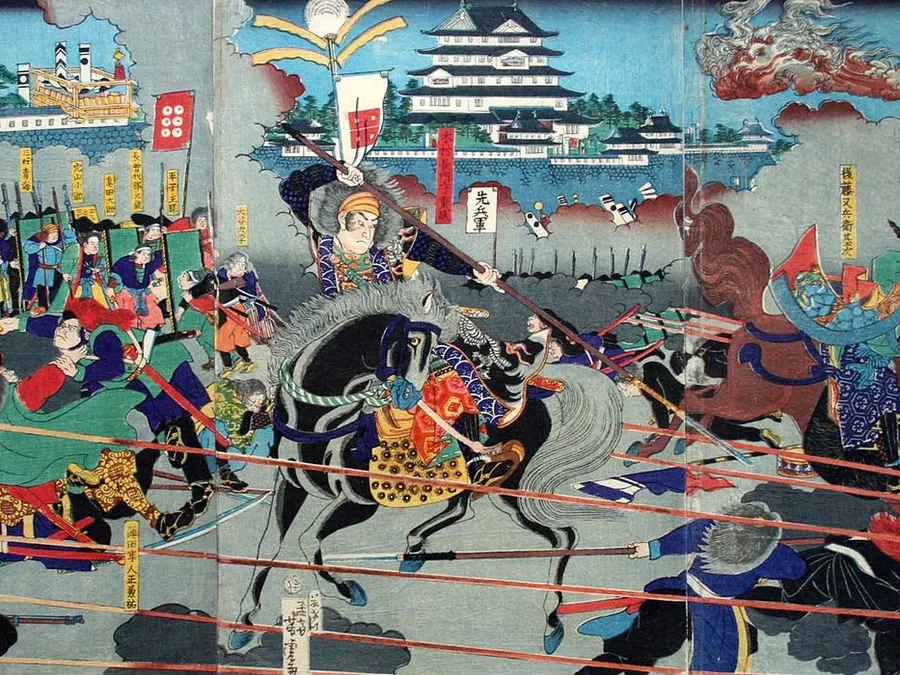
Toyotomi Hideyoshi had united Japan in the 1590s, but he died leaving only a small son, Hideyori. Power passed to Tokugawa Ieyasu, who became shogun in 1603, while Hideyori lived on in the great fortress his father had built at Osaka, a rallying point for anyone unhappy with Tokugawa rule. In the winter of 1614 Ieyasu besieged the castle, then agreed a truce under which its outer moats were filled in.
When Hideyori began to dig the moats out again and gather masterless samurai, Ieyasu returned in the summer of 1615 with a huge army. The defenders fought bravely outside the walls, but the castle was stormed and set ablaze, and on 4 June the 22-year-old Hideyori and his mother took their own lives. With the Toyotomi gone, nothing stood between the Tokugawa family and 250 years of rule over Japan.
Read the full storyHistory & Timeline →Source: Britannica: Toyotomi Hideyori ↗