1770The Endeavour runs onto the Great Barrier Reef
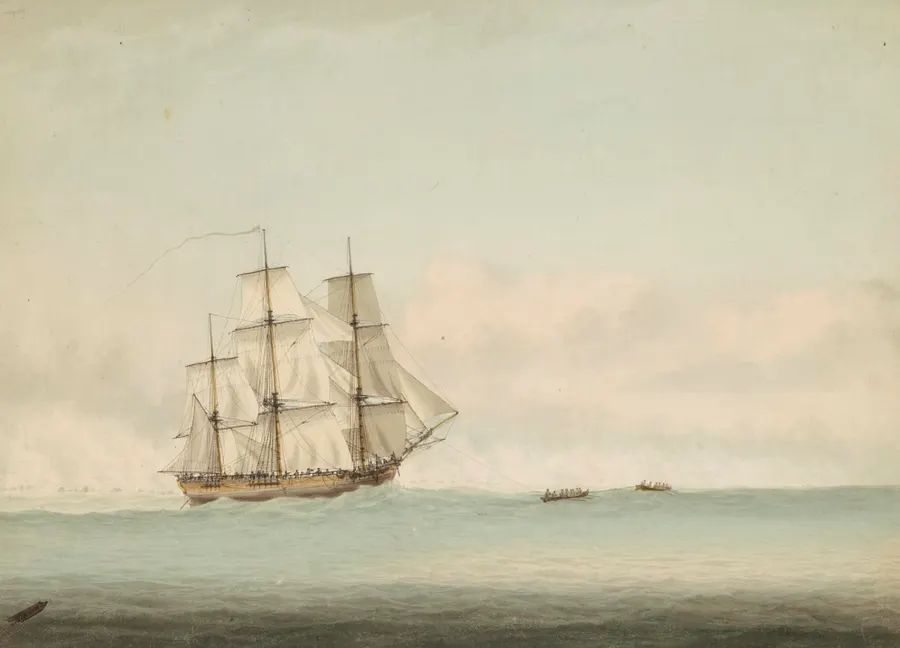
James Cook’s first Pacific voyage had already observed the transit of Venus from Tahiti and charted the coasts of New Zealand when, in 1770, the Endeavour turned north along the east coast of Australia. As she sailed on, the ship moved without knowing it into the maze of shoals and coral inside the Great Barrier Reef, with a crew taking soundings as they went.
Late on the night of 11 June 1770, in calm moonlight, the Endeavour struck a coral reef off what is now north Queensland and stuck fast. To lighten her, the crew threw overboard ballast, stores and six of her cannon, and the next day, with the rising tide and anchors laid out by the boats, they hauled her free. A sail drawn under the hull slowed the leak while the men took turns at the pumps. Days later Cook brought the ship into a river mouth, which he named the Endeavour River, and she was beached there for weeks of repairs, a long stay in the country of the Guugu Yimithirr people.
Read the full storyHistory & Timeline →Source: National Museum of Australia: Endeavour Reef ↗
1509The young Henry VIII marries Catherine of Aragon
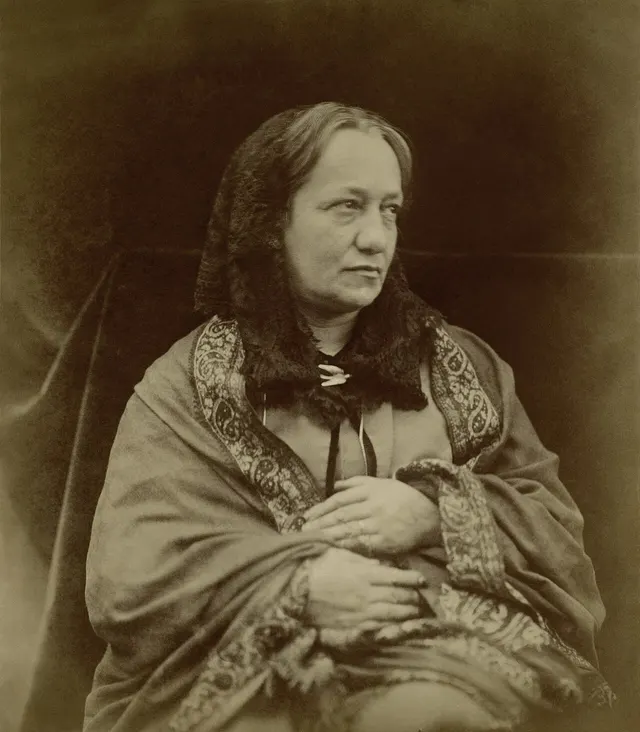
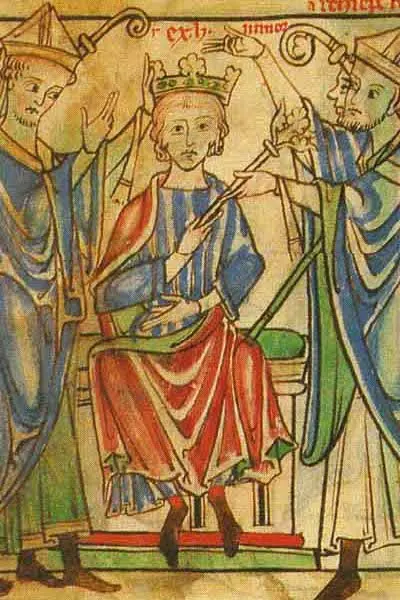
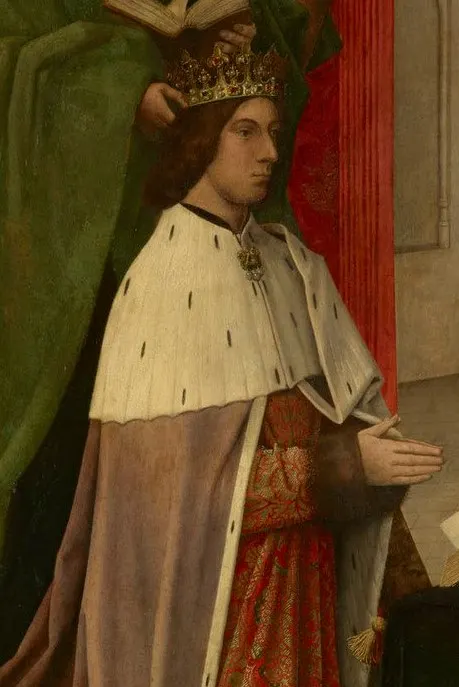
Catherine of Aragon, a daughter of Ferdinand and Isabella of Spain, came to England in 1501 to marry Arthur, Prince of Wales, the heir of Henry VII. Arthur died a few months after the wedding, and Catherine stayed on in England for years, a pawn in the bargaining between the two crowns, while a papal dispensation was obtained so that she could one day marry Arthur’s younger brother, Henry.
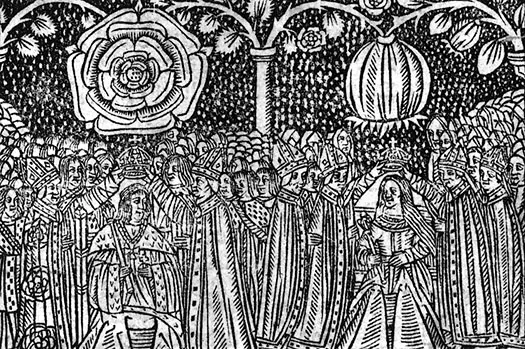
Henry VII died in April 1509, and his seventeen-year-old son quickly settled the matter. Henry VIII and Catherine were married at Greenwich on 11 June 1509, and on 24 June they were crowned together in Westminster Abbey. The marriage lasted more than twenty years, but of their children only a daughter, the future Mary I, survived. Henry’s longing for a son, and the Pope’s refusal to annul the marriage, led him to break with Rome and set England on the road to the Reformation.
Read the full storyHistory & Timeline →Source: Historic Royal Palaces: Katherine of Aragon ↗
1865Brazil’s navy wins the Battle of Riachuelo
In 1865 Paraguay, under its president Francisco Solano López, went to war with its much larger neighbours. On 1 May that year Brazil, Argentina and Uruguay signed the Treaty of the Triple Alliance against him, beginning the bloodiest war in South America’s history. The great rivers were the region’s highways, and control of the Paraná was vital to both sides.
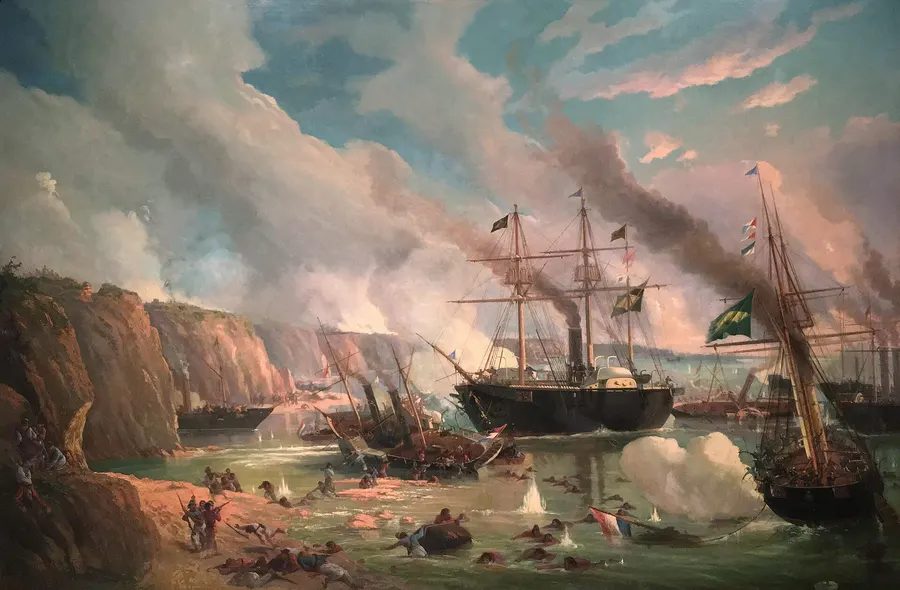
On 11 June 1865 a Paraguayan flotilla attacked the Brazilian squadron on the Paraná near the mouth of the Riachuelo stream, close to the Argentine city of Corrientes. The Brazilian commander, Francisco Manuel Barroso da Silva, turned the battle by using his flagship, the Amazonas, to ram the Paraguayan steamers. The victory left Brazil in command of the rivers and cut Paraguay off from the sea and from the warships it had ordered in Europe. The Brazilian Navy still marks 11 June every year as its day.
Read the full storyHistory & Timeline →Source: Marinha do Brasil: Batalha Naval do Riachuelo, Data Magna da Marinha ↗
1963A Buddhist monk’s protest in Saigon shocks the world
South Vietnam’s president, Ngô Đình Diệm, was a Roman Catholic in a mostly Buddhist country, and his government was widely seen as favouring Catholics. In May 1963 government forces fired on a Buddhist crowd in Huế protesting against a ban on flying religious flags, and several people died. Strikes and demonstrations by monks and lay Buddhists spread to Saigon and were met with arrests and force.
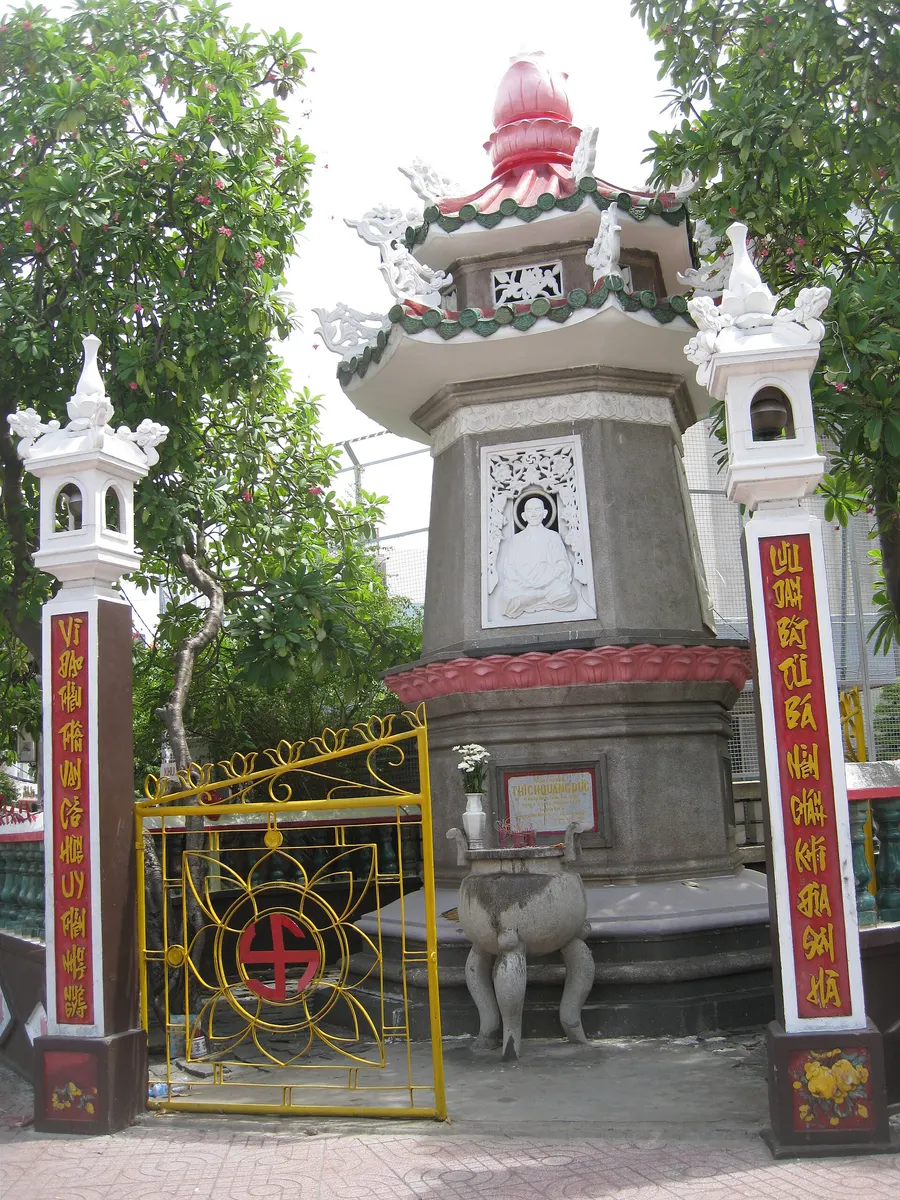
On 11 June 1963 Thích Quảng Đức, an elderly monk, sat down at a busy Saigon crossroads and died by setting himself alight in protest at the regime’s treatment of Buddhists. Photographs of his death appeared in newspapers around the world the next day. The protest deepened the crisis, turned opinion abroad against Diệm and increased American pressure on his government, which was overthrown in a coup that November.
Read the full storyHistory & Timeline →Source: Britannica: Thich Quang Duc ↗
1963A governor at the door, and a president’s call for civil rights
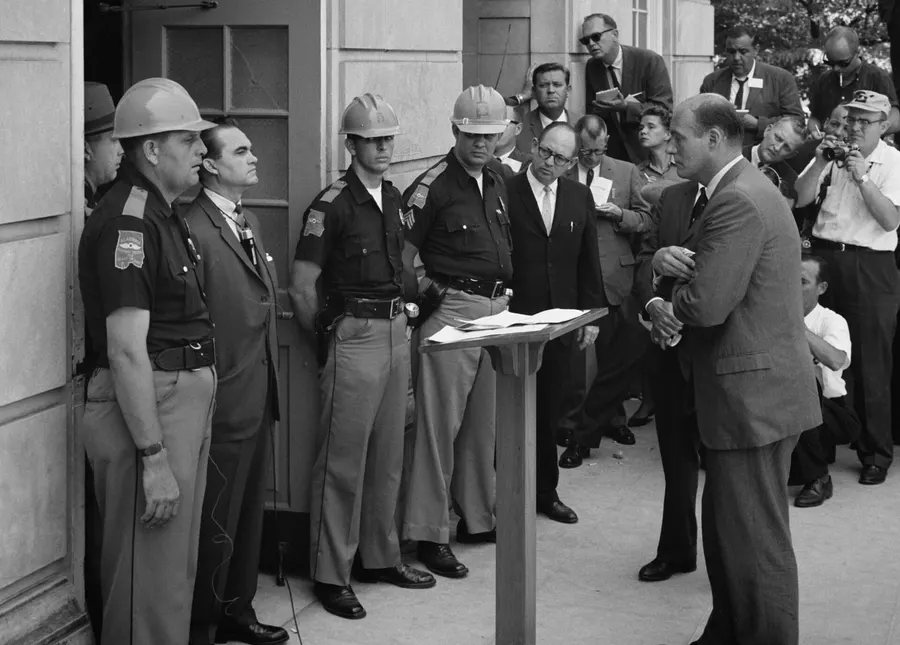
On the morning of 11 June 1963 the Governor of Alabama, George Wallace, stood in the doorway of Foster Auditorium at the University of Alabama to stop two Black students, Vivian Malone and James Hood, from registering. He had promised voters ‘segregation forever’. President John F. Kennedy federalised the Alabama National Guard, and when its commander asked Wallace to stand aside that afternoon, he did. The students enrolled.
That evening Kennedy went on television and radio, speaking to the nation from the Oval Office. He told Americans that civil rights were a moral issue ‘as old as the scriptures’ and as clear as the Constitution, and announced that he would ask Congress for a law to end segregation in public places and protect the right to vote. Parts of the speech were still being written as he sat down, and he spoke the ending without a script. The bill became the Civil Rights Act of 1964, passed after his death.
Read the full storyHistory & Timeline →Source: JFK Presidential Library: Televised Address to the Nation on Civil Rights ↗