
HISTORY & TIMELINE
11 June

A journey through
11 June in history

The story of 11 June runs from the young Henry VIII marrying Catherine of Aragon at Greenwich in 1509 to the first World Cup in Africa kicking off in Johannesburg in 2010. In between come a ship holed on a coral reef, a naval battle on the Paraná, a new relief society for Ottoman soldiers, riots in Alexandria, London’s first great show of surrealism, a monk’s protest in Saigon, a governor at a schoolhouse door, a raft on San Francisco Bay and a spacecraft’s close look at Saturn’s moon Phoebe.

III
A CHANGING WORLD

Early Modern Era

Exploration, political change, scientific development and expanding global connections.

1509
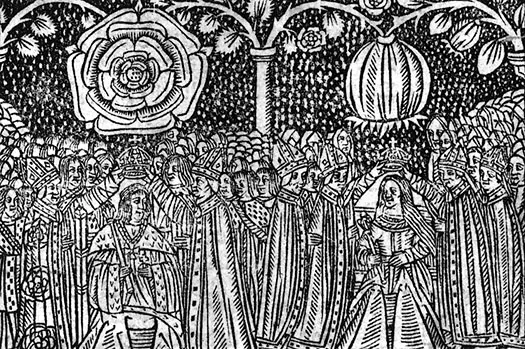
Henry VIII and Catherine of Aragon crowned side by side beneath the Tudor rose and Catherine's pomegranate, a woodcut of their coronation in 1509Henry VIII and Catherine of Aragon crowned side by side beneath the Tudor rose and Catherine’s pomegranate, a woodcut of their coronation in 1509Image: Unidentified engraver · Public domain
world · Europe

The young Henry VIII marries Catherine of Aragon

Catherine of Aragon, a daughter of Ferdinand and Isabella of Spain, came to England in 1501 to marry Arthur, Prince of Wales, the heir of Henry VII. Arthur died a few months after the wedding, and Catherine stayed on in England for years, a pawn in the bargaining between the two crowns, while a papal dispensation was obtained so that she could one day marry Arthur’s younger brother, Henry. Henry VII died in April 1509, and his seventeen-year-old son quickly settled the matter. Henry VIII and Catherine were married at Greenwich on 11 June 1509, and on 24 June they were crowned together in Westminster Abbey. The marriage lasted more than twenty years, but of their children only a daughter, the future Mary I, survived. Henry’s longing for a son, and the Pope’s refusal to annul the marriage, led him to break with Rome and set England on the road to the Reformation.

Source: Historic Royal Palaces: Katherine of Aragon ↗
1770
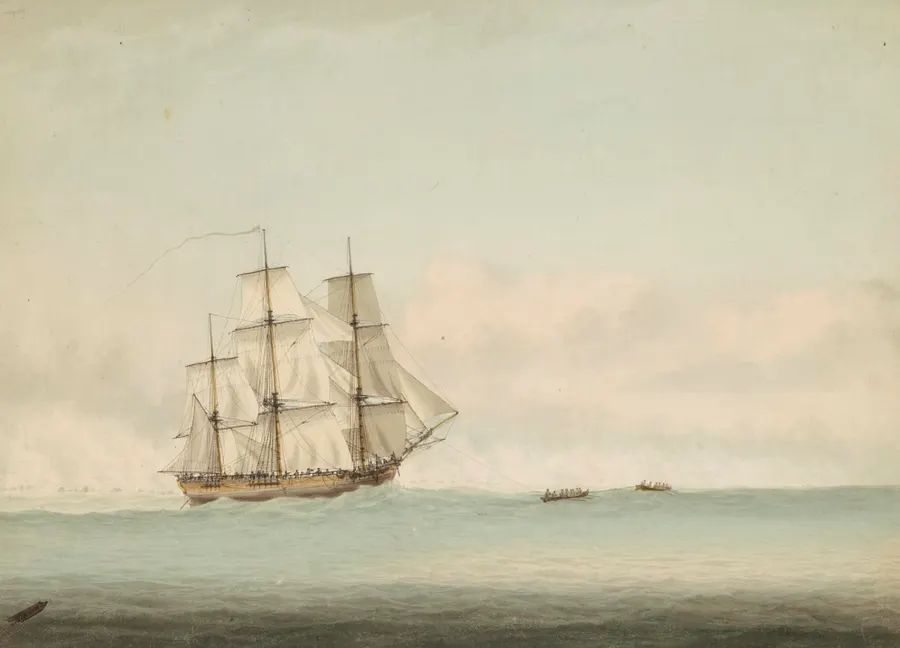
HMS Endeavour off the coast of New Holland, a watercolour by Samuel Atkins from about 1794HMS Endeavour off the coast of New Holland, a watercolour by Samuel Atkins from about 1794Image: Samuel Atkins · Public domain
world · Oceania

The Endeavour runs onto the Great Barrier Reef

James Cook’s first Pacific voyage had already observed the transit of Venus from Tahiti and charted the coasts of New Zealand when, in 1770, the Endeavour turned north along the east coast of Australia. As she sailed on, the ship moved without knowing it into the maze of shoals and coral inside the Great Barrier Reef, with a crew taking soundings as they went. Late on the night of 11 June 1770, in calm moonlight, the Endeavour struck a coral reef off what is now north Queensland and stuck fast. To lighten her, the crew threw overboard ballast, stores and six of her cannon, and the next day, with the rising tide and anchors laid out by the boats, they hauled her free. A sail drawn under the hull slowed the leak while the men took turns at the pumps. Days later Cook brought the ship into a river mouth, which he named the Endeavour River, and she was beached there for weeks of repairs, a long stay in the country of the Guugu Yimithirr people.

Source: National Museum of Australia: Endeavour Reef ↗
IV
THE NINETEENTH CENTURY

The 1800s

Industry, empire, invention, reform and a century of enormous transformation.

1865
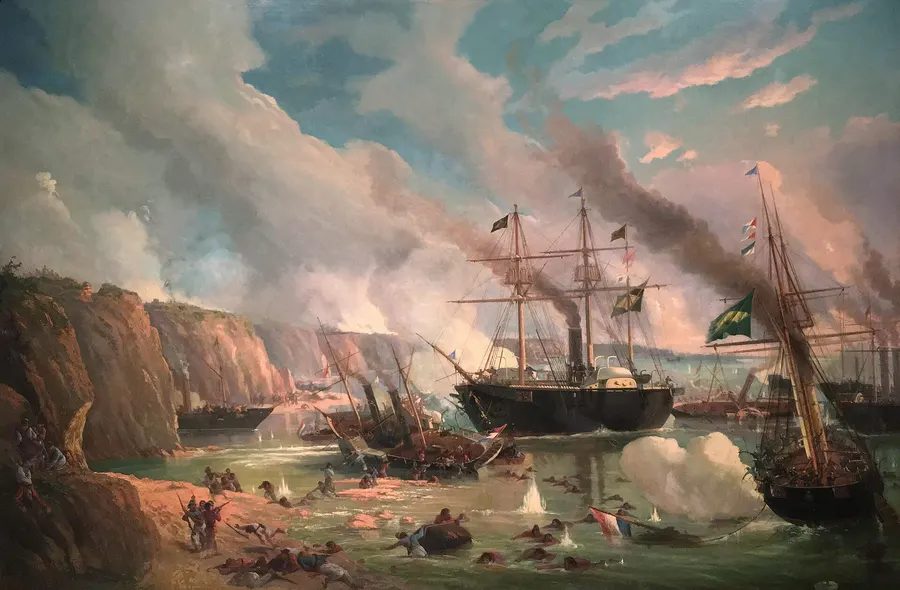
The naval battle of Riachuelo, painted by Eduardo de MartinoThe naval battle of Riachuelo, painted by Eduardo de MartinoImage: Eduardo de Martino · Public domain
world · Americas

Brazil’s navy wins the Battle of Riachuelo

In 1865 Paraguay, under its president Francisco Solano López, went to war with its much larger neighbours. On 1 May that year Brazil, Argentina and Uruguay signed the Treaty of the Triple Alliance against him, beginning the bloodiest war in South America’s history. The great rivers were the region’s highways, and control of the Paraná was vital to both sides. On 11 June 1865 a Paraguayan flotilla attacked the Brazilian squadron on the Paraná near the mouth of the Riachuelo stream, close to the Argentine city of Corrientes. The Brazilian commander, Francisco Manuel Barroso da Silva, turned the battle by using his flagship, the Amazonas, to ram the Paraguayan steamers. The victory left Brazil in command of the rivers and cut Paraguay off from the sea and from the warships it had ordered in Europe. The Brazilian Navy still marks 11 June every year as its day.

Source: Marinha do Brasil: Batalha Naval do Riachuelo, Data Magna da Marinha ↗
1868
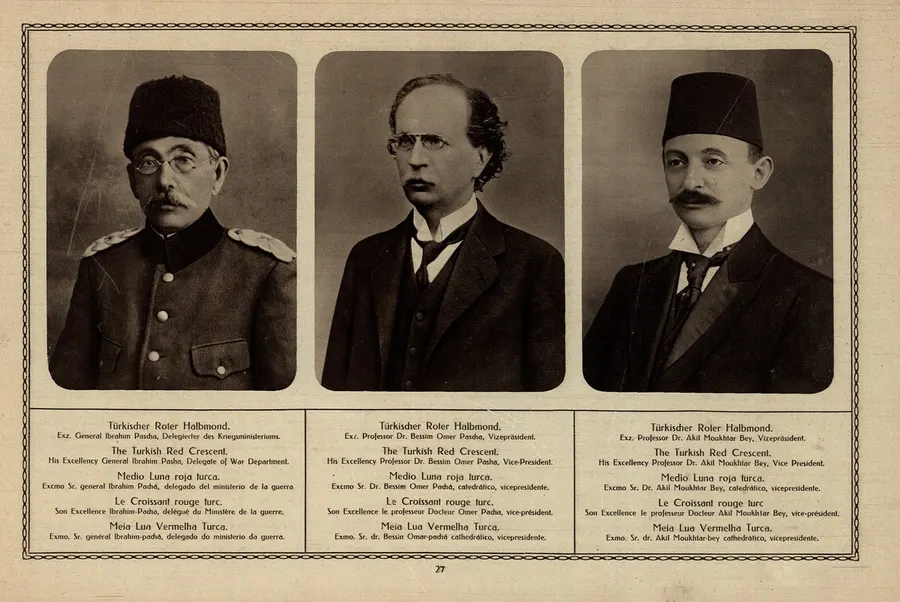
A plate from around 1916 with portraits of three officials of the Ottoman Red Crescent SocietyA plate from around 1916 with portraits of three officials of the Ottoman Red Crescent SocietyImage: Unknown author · Public domain
world · Middle East

A relief society for wounded Ottoman soldiers is founded

Four years after the first Geneva Convention, a society to aid wounded and sick Ottoman soldiers was founded in Istanbul on 11 June 1868, the Ottoman Empire’s national society in the new Red Cross movement. In 1877 it took the name Ottoman Red Crescent Society, and its emblem, a red crescent on white, came to stand alongside the red cross. It lives on today as the Turkish Red Crescent, Türk Kızılay.

Source: Türk Kızılay: History ↗
1882
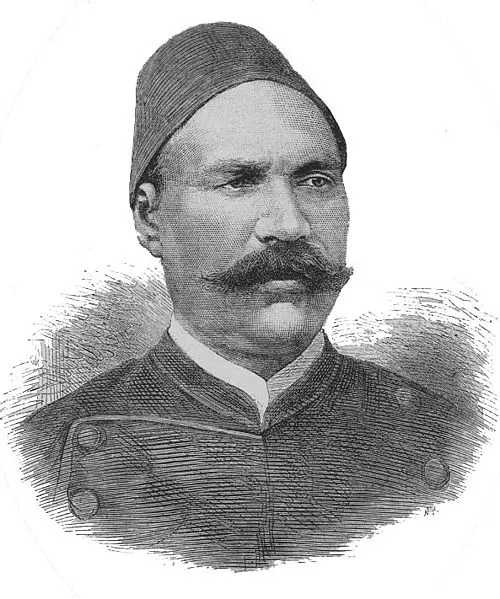
Ahmed Urabi, leader of the Egyptian nationalist movement, in a 19th-century engravingAhmed Urabi, leader of the Egyptian nationalist movement, in a 19th-century engravingImage: Unknown author · Public domain
politics · Africa

Riots in Alexandria bring Egypt’s crisis to a head

In 1882 Egypt’s nationalists, led by Colonel Ahmed Urabi, were challenging the British and French who controlled the country’s finances, and Anglo-French warships lay off Alexandria. On 11 June a street quarrel in the city grew into rioting in which some fifty to sixty Europeans and a number of Egyptians were killed. A month later the British fleet bombarded Alexandria, and in September British troops defeated Urabi at Tel el-Kebir, beginning decades of British occupation.

Source: Royal Museums Greenwich: ‘Well Done Condor’, the bombardment of Alexandria ↗
V
THE TWENTIETH CENTURY

The 1900s

War and peace, technological leaps, social change, politics, sport and popular culture.

1901
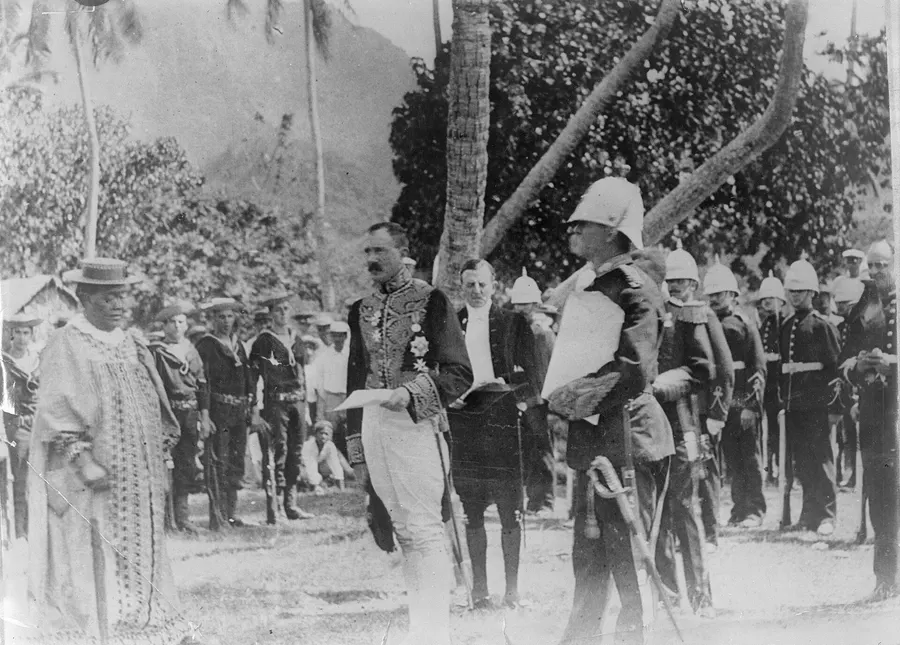
Lord Ranfurly, Governor of New Zealand, reads the annexation proclamation to Queen Makea on Rarotonga on 7 October 1900Lord Ranfurly, Governor of New Zealand, reads the annexation proclamation to Queen Makea on Rarotonga on 7 October 1900Image: Unknown author · Public domain
politics · Oceania

New Zealand’s borders are extended to the Cook Islands

The Cook Islands had been a British protectorate since 1888, and in 1900 they were annexed after a petition from leading ariki of Rarotonga and neighbouring islands. On 11 June 1901 New Zealand’s boundaries were formally extended to take in both the southern and northern Cook Islands, together with Niue, making them New Zealand’s first colony in the South Pacific. The Cook Islands became self-governing in free association with New Zealand in 1965.

Source: Te Ara, the Encyclopedia of New Zealand: Cook Islands, Niue, Tokelau and Nauru ↗
1936
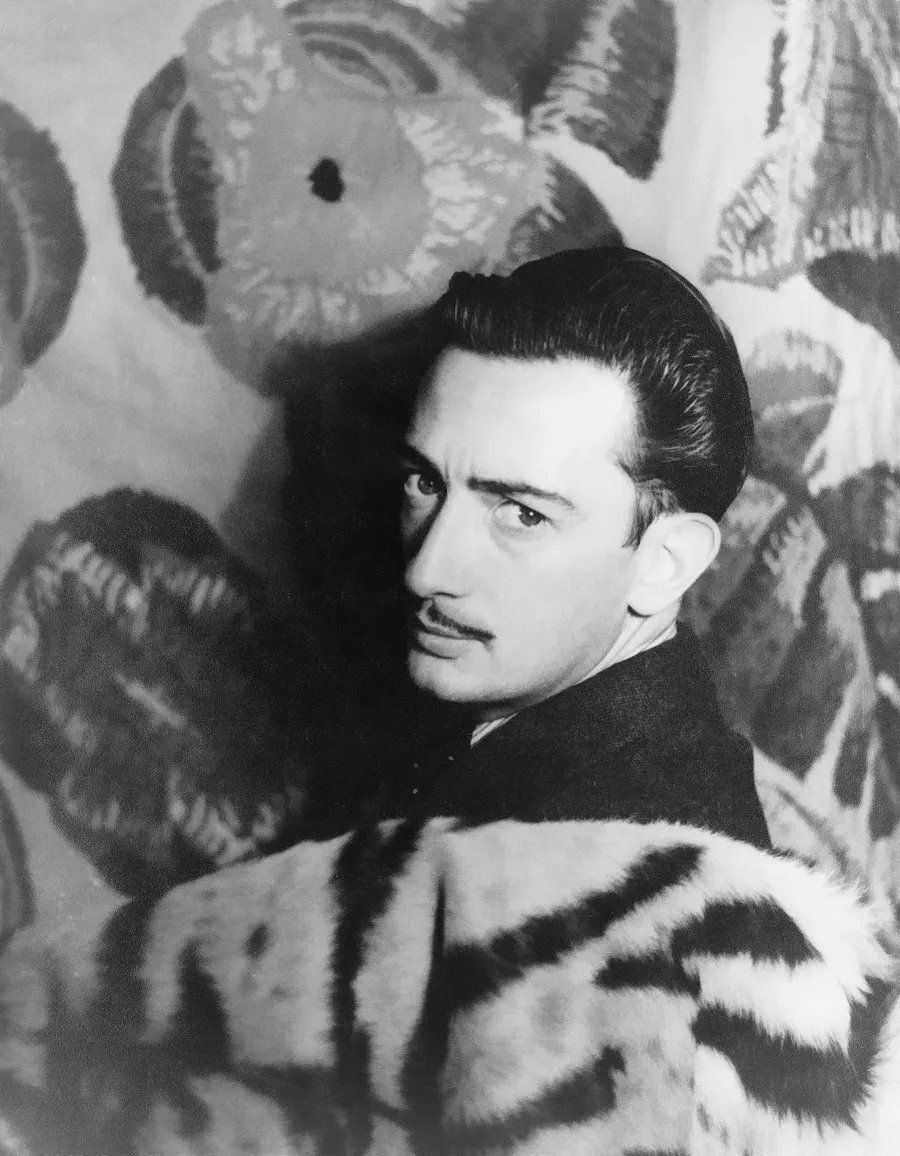
Salvador Dalí, who lectured at the exhibition, photographed by Carl Van Vechten in 1939Salvador Dalí, who lectured at the exhibition, photographed by Carl Van Vechten in 1939Image: Carl Van Vechten · Public domain
culture · Europe

Surrealism takes London by storm

Surrealism, the movement launched in Paris by the poet André Breton in 1924, set out to free the imagination by drawing on dreams and the unconscious. By the mid-1930s it had spread across Europe, but Britain had seen little of it. The artist and collector Roland Penrose and the young poet David Gascoyne, working with Breton, Paul Éluard and the critic Herbert Read, set out to change that. The International Surrealist Exhibition opened at the New Burlington Galleries in London on 11 June 1936. It brought together around 390 paintings, sculptures and objects by 68 artists, among them Dalí, Miró, Magritte, Ernst and Picasso alongside British painters and sculptors. More than 23,000 people came during its three-week run, and the press was by turns outraged and delighted. Dalí gave a lecture dressed in a diving suit, and Dylan Thomas wandered the rooms offering visitors cups of boiled string. The show gave rise to a British Surrealist group.

Source: Britannica: International Surrealist Exhibition, London 1936 ↗
1962
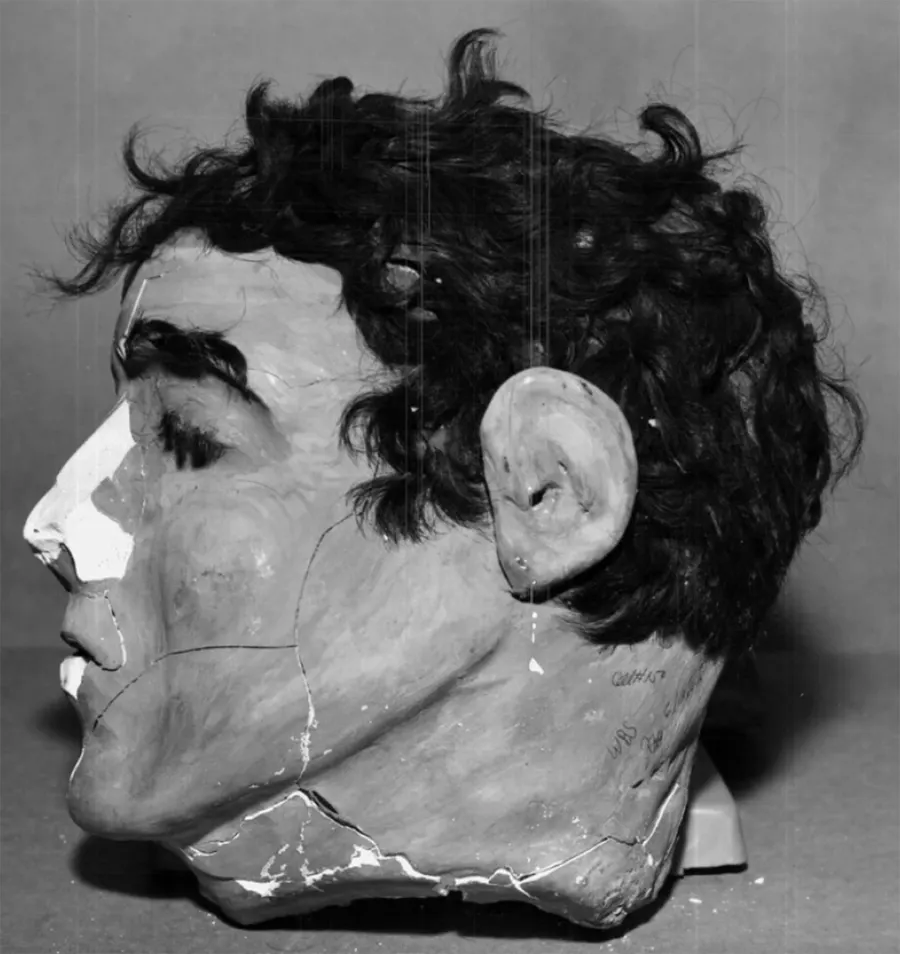
One of the dummy heads left in the escapers' beds, photographed by the FBIOne of the dummy heads left in the escapers’ beds, photographed by the FBIImage: FBI · Public domain
world · Americas

Three prisoners vanish from Alcatraz

On the night of 11 June 1962 Frank Morris and the brothers John and Clarence Anglin slipped out of their cells on Alcatraz through holes dug around the air vents, leaving dummy heads of plaster, paint and real hair in their beds. They climbed out over the roof, reached the shore and launched a home-made raft into San Francisco Bay. The escape was found at the morning count. The men were never seen again; the FBI concluded they most likely drowned, but the case remains open.

Source: FBI: Alcatraz Escape ↗
1963
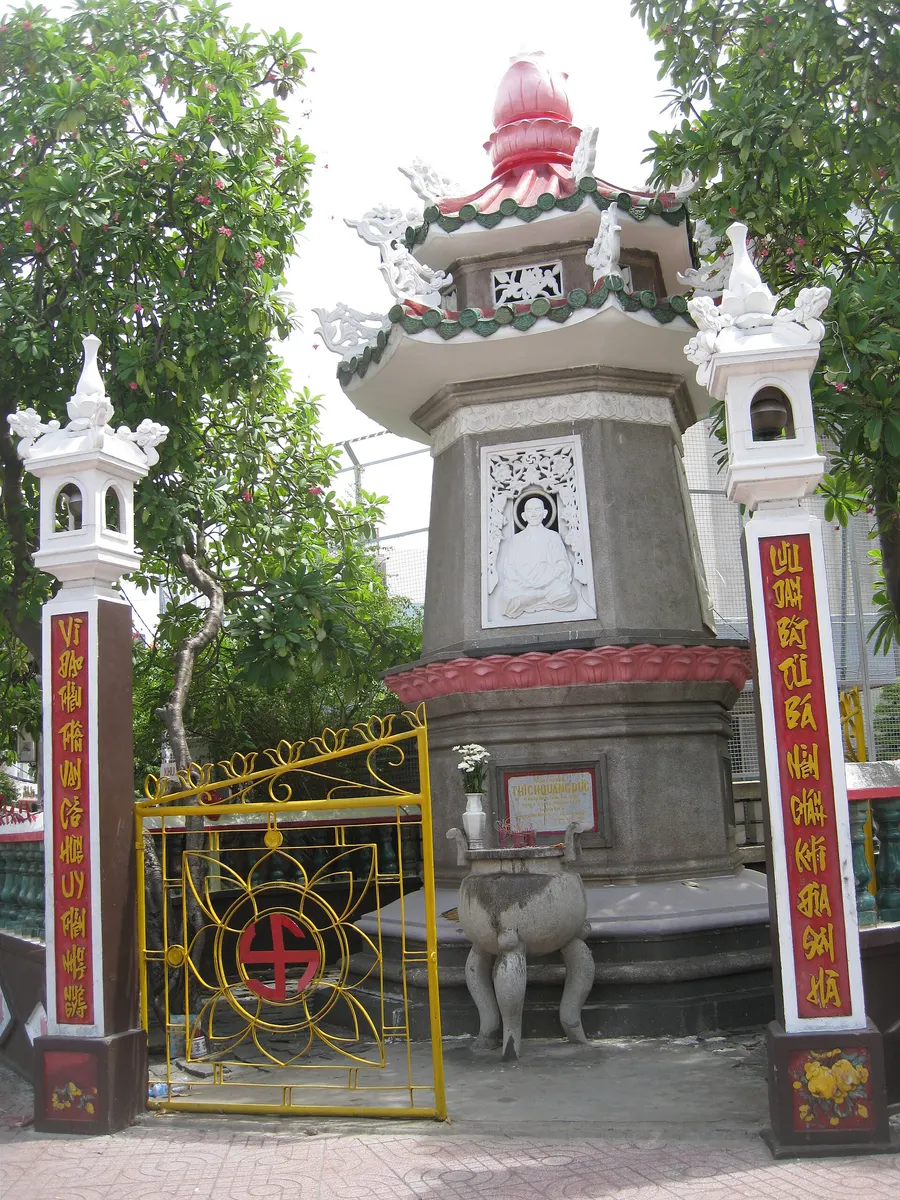
The memorial to Thích Quảng Đức in Ho Chi Minh CityThe memorial to Thích Quảng Đức in Ho Chi Minh CityImage: Nguyễn Thanh Quang · CC BY-SA 3.0
culture · Asia

A Buddhist monk’s protest in Saigon shocks the world

South Vietnam’s president, Ngô Đình Diệm, was a Roman Catholic in a mostly Buddhist country, and his government was widely seen as favouring Catholics. In May 1963 government forces fired on a Buddhist crowd in Huế protesting against a ban on flying religious flags, and several people died. Strikes and demonstrations by monks and lay Buddhists spread to Saigon and were met with arrests and force. On 11 June 1963 Thích Quảng Đức, an elderly monk, sat down at a busy Saigon crossroads and died by setting himself alight in protest at the regime’s treatment of Buddhists. Photographs of his death appeared in newspapers around the world the next day. The protest deepened the crisis, turned opinion abroad against Diệm and increased American pressure on his government, which was overthrown in a coup that November.

Source: Britannica: Thich Quang Duc ↗
1963
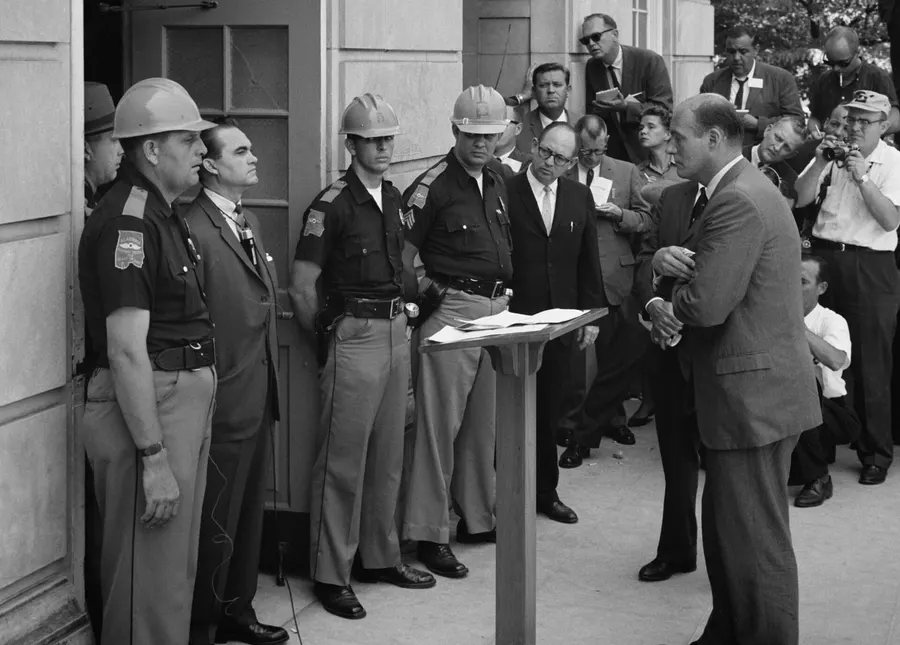
Governor George Wallace stands at the door of Foster Auditorium at the University of Alabama, confronted by Deputy Attorney General Nicholas KatzenbachGovernor George Wallace stands at the door of Foster Auditorium at the University of Alabama, confronted by Deputy Attorney General Nicholas KatzenbachImage: Warren K. Leffler, U.S. News & World Report Magazine · Public domain
world · Americas

A governor at the door, and a president’s call for civil rights

On the morning of 11 June 1963 the Governor of Alabama, George Wallace, stood in the doorway of Foster Auditorium at the University of Alabama to stop two Black students, Vivian Malone and James Hood, from registering. He had promised voters ‘segregation forever’. President John F. Kennedy federalised the Alabama National Guard, and when its commander asked Wallace to stand aside that afternoon, he did. The students enrolled. That evening Kennedy went on television and radio, speaking to the nation from the Oval Office. He told Americans that civil rights were a moral issue ‘as old as the scriptures’ and as clear as the Constitution, and announced that he would ask Congress for a law to end segregation in public places and protect the right to vote. Parts of the speech were still being written as he sat down, and he spoke the ending without a script. The bill became the Civil Rights Act of 1964, passed after his death.

Source: JFK Presidential Library: Televised Address to the Nation on Civil Rights ↗
VI
2000 TO TODAY

Modern Day

The events of recent decades that have already become part of the historical record.

2004
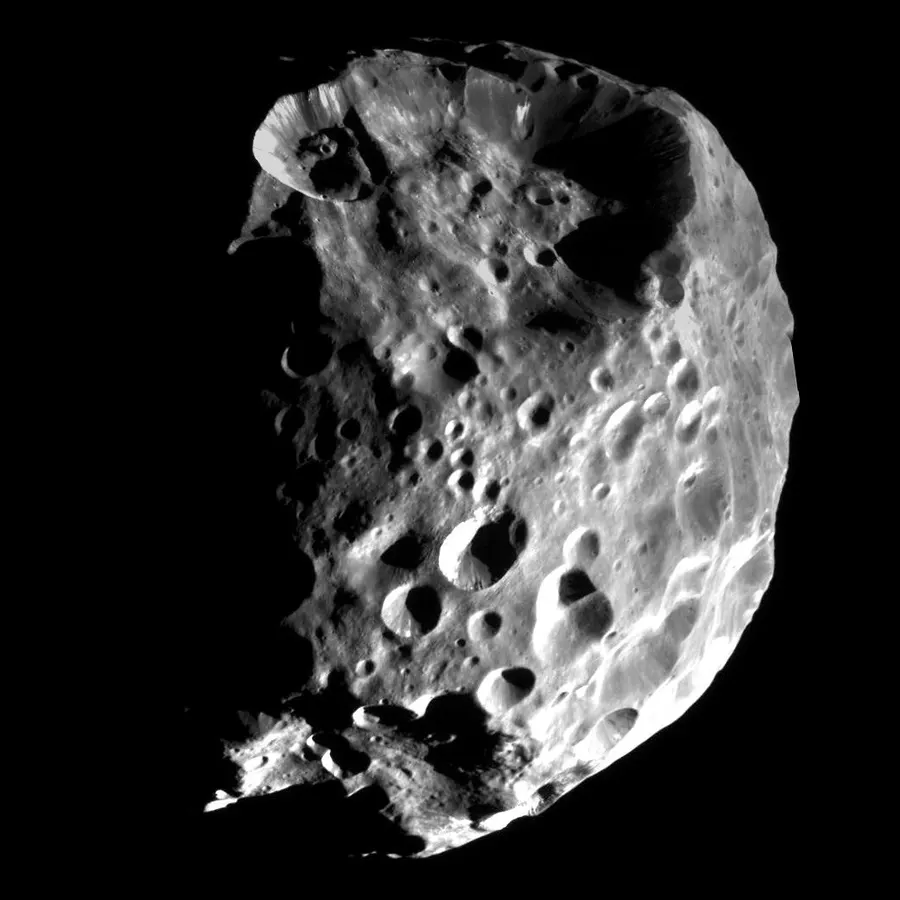
Saturn's moon Phoebe, photographed by the Cassini spacecraft during its close flyby in June 2004Saturn’s moon Phoebe, photographed by the Cassini spacecraft during its close flyby in June 2004Image: NASA/JPL/Space Science Institute · Public domain
science · Global

Cassini takes a close look at Saturn’s moon Phoebe

Phoebe is an odd moon. About 213 kilometres across, it circles Saturn at a great distance and in the opposite direction to the planet’s large moons, which suggests it did not form around Saturn at all. Discovered on photographic plates in 1899, it had been seen close up only once before, as a blur from Voyager 2 in 1981. The Cassini spacecraft, a joint mission of NASA, the European Space Agency and the Italian Space Agency, launched in 1997 on a seven-year journey to Saturn. On 11 June 2004, nineteen days before it went into orbit around the planet, it flew past Phoebe at about 2,068 kilometres, its only close pass of one of Saturn’s distant outer moons. Its pictures, far sharper than any before, showed a battered, heavily cratered world with ice beneath a dark surface, supporting the idea that Phoebe is a body from the outer solar system captured by Saturn’s gravity.

Source: NASA Jet Propulsion Laboratory: Cassini Spacecraft Near First Stop in Historic Saturn Tour ↗
2008
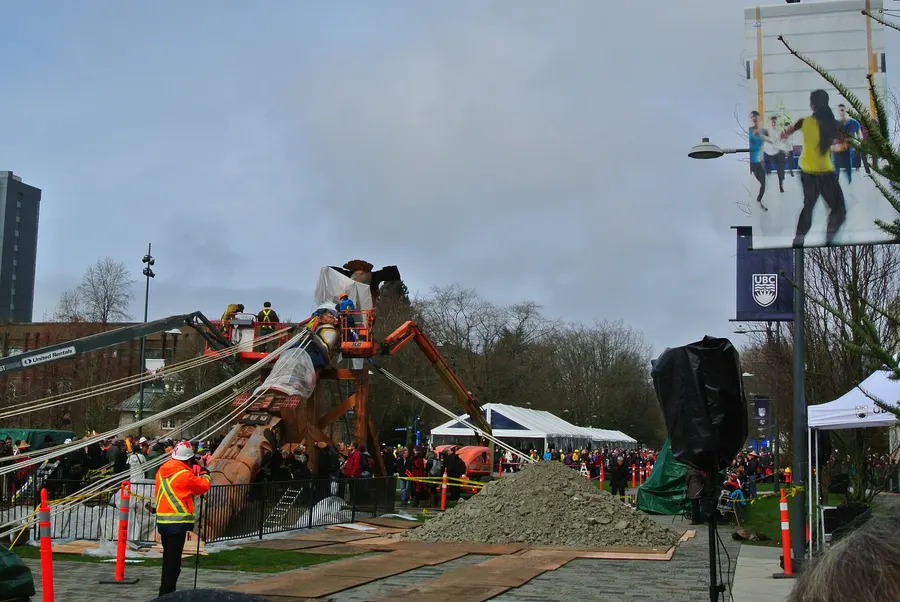
The Reconciliation Pole by the Haida carver James Hart being raised at the University of British Columbia in 2017The Reconciliation Pole by the Haida carver James Hart being raised at the University of British Columbia in 2017Image: Allison Mills · CC BY-SA 4.0
world · Americas

Canada apologises for its residential schools

For more than a century Canada’s government funded boarding schools, most of them run by churches, which took more than 150,000 First Nations, Inuit and Métis children from their families to cut them off from their languages and cultures; many suffered neglect and abuse. On 11 June 2008 Prime Minister Stephen Harper apologised in the House of Commons on behalf of the government, with survivors and Indigenous leaders present in the chamber.

Source: Crown-Indigenous Relations Canada: Statement of apology to former students of Indian Residential Schools ↗
2010
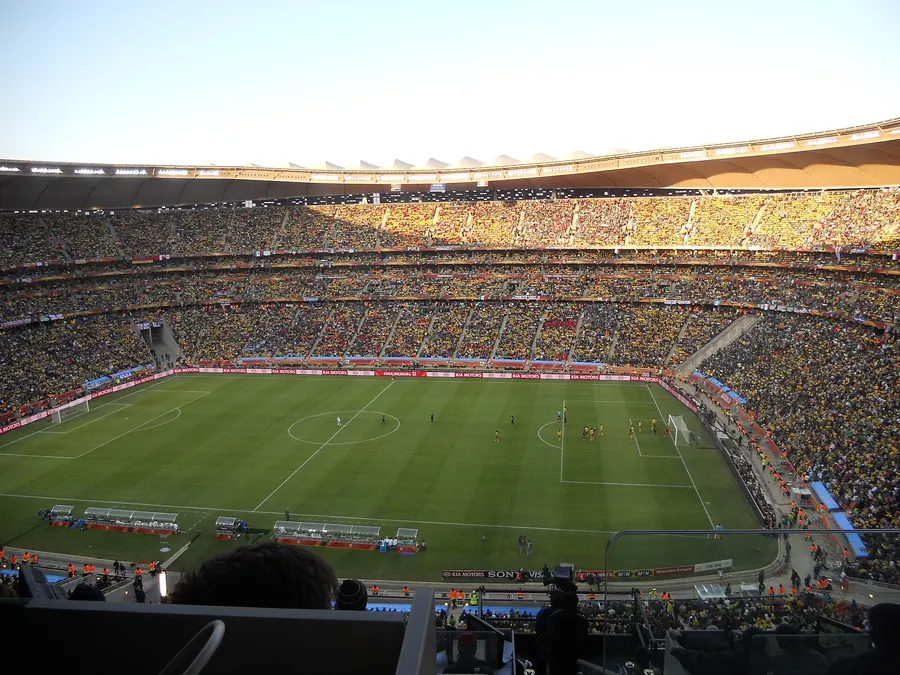
The opening match of the 2010 World Cup between South Africa and Mexico at Soccer City, JohannesburgThe opening match of the 2010 World Cup between South Africa and Mexico at Soccer City, JohannesburgImage: 2010 World Cup - Shine 2010 · CC BY 2.0
sport · Africa

The first World Cup in Africa kicks off in Johannesburg

Africa had sent teams to the World Cup since 1934, but the tournament had never been played on the continent. In 2004 FIFA chose South Africa as host for 2010, ten years after the end of apartheid, and the country built and rebuilt stadiums across its nine provinces. The opening game was set for Soccer City, the great bowl near Soweto in Johannesburg. On 11 June 2010, after a colourful opening ceremony, South Africa played Mexico before a roaring crowd and the drone of thousands of vuvuzelas. Early in the second half the South African midfielder Siphiwe Tshabalala broke clear and struck a left-footed shot into the top corner, the first goal of the tournament and one of its most famous. Rafael Márquez equalised late on and the match ended 1-1. A month later Spain won the final in the same stadium.

Source: FIFA: Tshabalala’s stunner lifts the roof off Soccer City ↗
RESEARCH

Sources & Further Reading

Selected authoritative references supporting the events on this page.

Historic Royal Palaces: Katherine of Aragon↗Britannica: Catherine of Aragon↗National Museum of Australia: Endeavour Reef↗National Museum of Australia: Cook’s journal, June 1770↗Marinha do Brasil: Batalha Naval do Riachuelo, Data Magna da Marinha↗Government of Brazil: Batalha Naval do Riachuelo↗Türk Kızılay: History↗IFRC: Turkish Red Crescent Society↗Royal Museums Greenwich: ‘Well Done Condor’, the bombardment of Alexandria↗Britannica: Egypt, renewed European intervention 1879-82↗Te Ara, the Encyclopedia of New Zealand: Cook Islands, Niue, Tokelau and Nauru↗NZ History (Ministry for Culture and Heritage): Cook Islands achieves self-government↗Britannica: International Surrealist Exhibition, London 1936↗National Galleries of Scotland: The International Surrealist Exhibition 1936↗FBI: Alcatraz Escape↗U.S. Marshals Service: Clarence Anglin↗Britannica: Thich Quang Duc↗US Office of the Historian: Foreign Relations of the United States, 1961-63, Vietnam, document 164↗JFK Presidential Library: Televised Address to the Nation on Civil Rights↗JFK Presidential Library: Whose Law? State Sovereignty and the Integration of the University of Alabama↗NASA Jet Propulsion Laboratory: Cassini Spacecraft Near First Stop in Historic Saturn Tour↗European Space Agency: Encounter with Phoebe↗Crown-Indigenous Relations Canada: Statement of apology to former students of Indian Residential Schools↗Government of Canada: Prime Minister Harper offers full apology on behalf of Canadians for the Indian Residential Schools system↗FIFA: Tshabalala’s stunner lifts the roof off Soccer City↗FIFA: Mexico and South Africa meet again in World Cup opener↗
WHY THESE MOMENTS?

Significance before volume

This page is not the longest possible list of events. It is a chronological journey through 11 June, where each entry is chosen for historical significance, human interest and reliability.

Facts are checked against authoritative museums, archives, universities and reference works. Where sources disagree, the page says so.

EXPLORED THE DEEPER STORY?

Return to the highlights of 11 June

Discover the lighter side of the date with famous birthdays, culture, firsts and lives remembered.

Explore This Day →
← PREVIOUS DAY10 June
HISTORY & TIMELINE11 June
NEXT DAY →12 June