
HISTORY & TIMELINE
12 June

A journey through
12 June in history

The story of 12 June runs from Joan of Arc storming the walls of Jargeau in 1429 to a handshake in Singapore in 2018. In between come a new town on the Finnish coast, a French explorer’s death in New Zealand, the first ride on a two-wheeled running machine, a flag raised at Kawit, a truce in the Gran Chaco, a girl’s birthday diary, a ruling that ended America’s bans on mixed marriage and a man pedalling a plane across the English Channel.

II
THE MIDDLE AGES

Medieval History

Kingdoms, conflict, faith, power and the changing medieval world.

1429
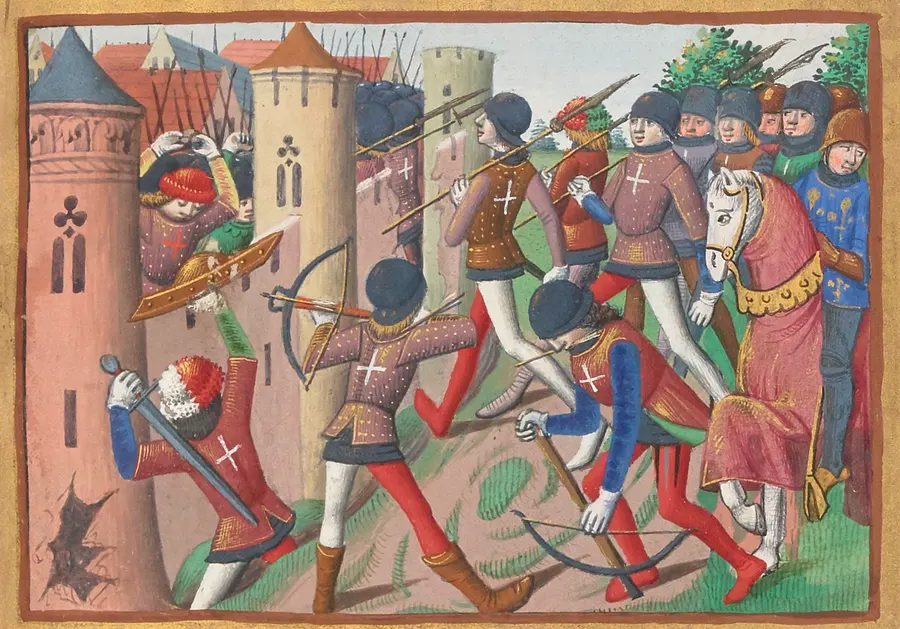
The assault on Jargeau, an illumination from Martial d'Auvergne's Vigiles de Charles VIIThe assault on Jargeau, an illumination from Martial d’Auvergne’s Vigiles de Charles VIIImage: Anonymous · Public domain
world · Europe

Joan of Arc takes Jargeau from the English

A month after lifting the siege of Orléans, French forces led by the Duke of Alençon and Joan of Arc turned on the English-held town of Jargeau on the Loire. After two days of fighting they stormed the walls on 12 June 1429; Joan was struck on the helmet by a stone while climbing a ladder but got up again. The town fell and the English commander, the Earl of Suffolk, was taken prisoner. It opened a run of French victories on the Loire.

Source: Britannica: William de la Pole, 1st Duke of Suffolk ↗
III
A CHANGING WORLD

Early Modern Era

Exploration, political change, scientific development and expanding global connections.

1550
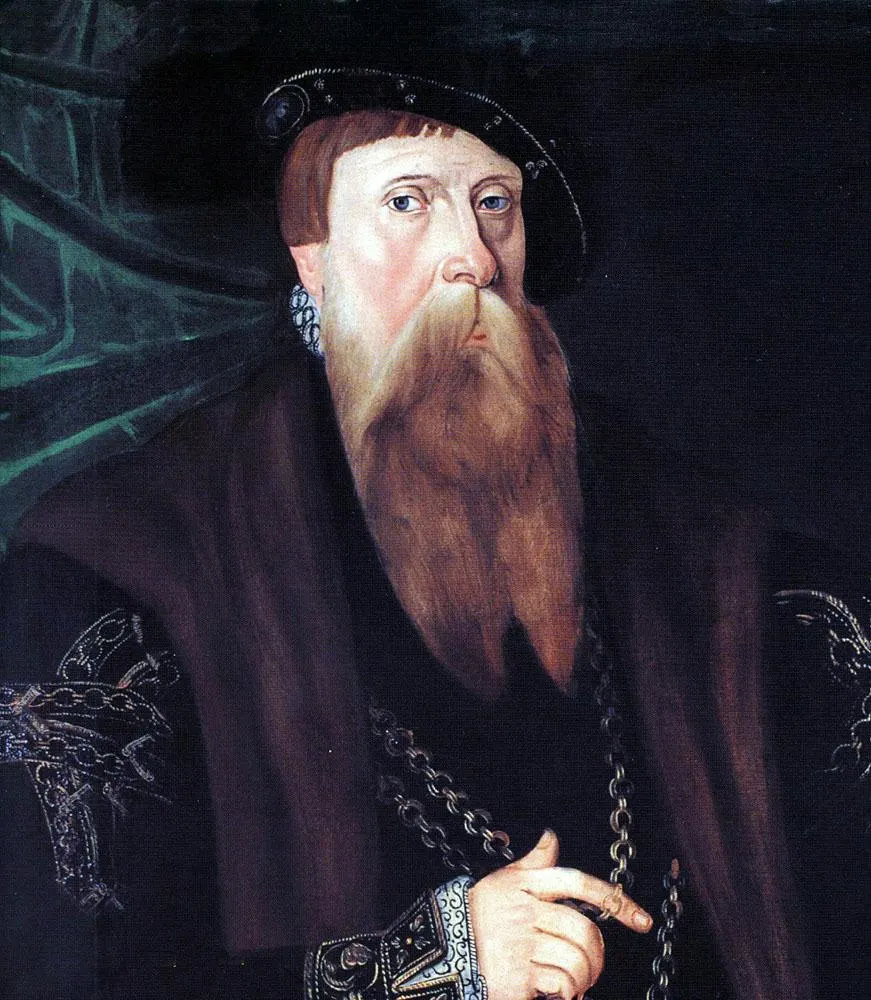
Gustav I Vasa, King of Sweden, in a portrait by an unidentified painter from around 1550, the year he founded HelsinkiGustav I Vasa, King of Sweden, in a portrait by an unidentified painter from around 1550, the year he founded HelsinkiImage: Unidentified painter · Public domain
politics · Europe

A Swedish king founds Helsinki

In the middle of the 16th century Finland was part of the kingdom of Sweden, and King Gustav I Vasa wanted a share of the rich trade with Russia that passed through the Gulf of Finland. Most of it went through Tallinn, a Hanseatic town on the southern shore. Gustav’s answer was to build a Swedish rival directly opposite. On 12 June 1550 the king authorised the founding of Helsinki at the mouth of the Vantaa river, and ordered townspeople from several other Finnish towns to move there. The new town grew slowly and for two centuries stayed small; in 1640 it was moved a few kilometres south to the headland where the centre now stands. Its fortunes changed after Russia took Finland in 1809 and made Helsinki the capital in 1812. The city has celebrated 12 June as Helsinki Day since 1959.

Source: City of Helsinki: 1550, founding Helsinki ↗
1772
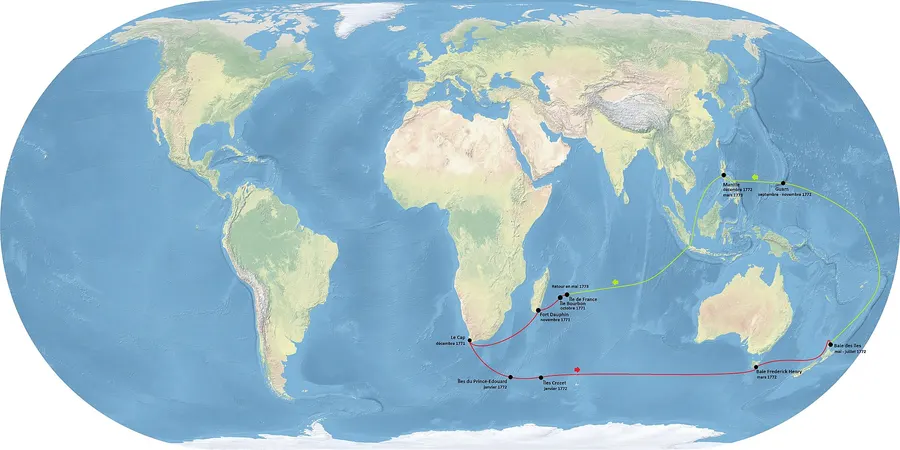
A modern map of the route of Marion du Fresne's ships Mascarin and Marquis de Castries, 1771 to 1773A modern map of the route of Marion du Fresne’s ships Mascarin and Marquis de Castries, 1771 to 1773Image: Nweider · CC BY-SA 4.0
world · Oceania

The French explorer Marion du Fresne is killed in New Zealand

Marc-Joseph Marion du Fresne brought two French ships into the Bay of Islands in May 1772 and spent weeks there repairing them, at first on friendly terms with local Māori. Relations soured, partly because the French broke a tapu by fishing in a sacred bay. On 12 June 1772 (some accounts give the 13th) he and about two dozen of his men were killed ashore. The French took savage revenge, killing an estimated 250 Māori.

Source: Te Ara, Dictionary of New Zealand Biography: Marion du Fresne, Marc Joseph ↗
IV
THE NINETEENTH CENTURY

The 1800s

Industry, empire, invention, reform and a century of enormous transformation.

1817
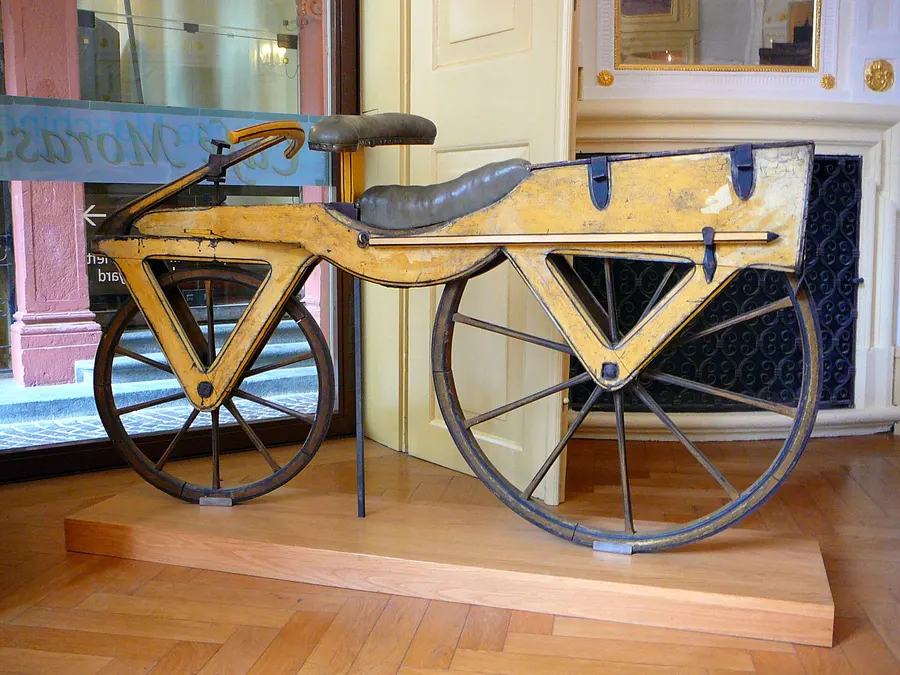
A wooden draisine, or running machine, from around 1820, the forerunner of the bicycleA wooden draisine, or running machine, from around 1820, the forerunner of the bicycleImage: Gun Powder Ma · CC BY-SA 3.0
world · Europe

Karl Drais takes the first ride on his running machine

Karl Drais was a forestry official and inventor in the German state of Baden. At a time when bad harvests had made horses scarce and costly to feed, he set out to build a vehicle a person could move under their own power. His answer was a wooden frame on two wheels, one behind the other, with a seat and a steerable front wheel. The rider sat astride it and pushed along with their feet. On 12 June 1817 Drais rode his Laufmaschine, or running machine, out of Mannheim along the best road in Baden towards Schwetzingen, turned at a coaching inn about seven kilometres away and came back, the whole journey taking little more than an hour. The draisine, or dandy horse, became a brief craze in Europe. It had no pedals, which were added decades later, but it was the first two-wheeled, rider-powered machine, and the ancestor of every bicycle.

Source: City of Mannheim: Karl Drais und seine Laufmaschine ↗
1898
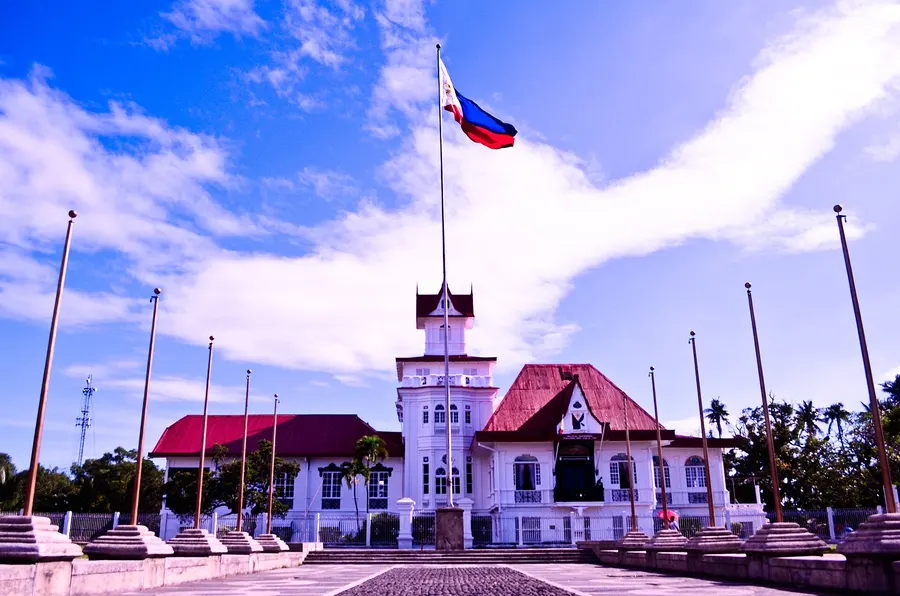
The Aguinaldo house in Kawit, Cavite, from whose window the independence of the Philippines was proclaimed, now a national shrineThe Aguinaldo house in Kawit, Cavite, from whose window the independence of the Philippines was proclaimed, now a national shrineImage: Jenielle Herrera · CC BY-SA 3.0
politics · Asia

Aguinaldo proclaims the independence of the Philippines

Spain had ruled the Philippines for more than 300 years when revolution broke out in 1896. Its young general Emilio Aguinaldo was driven into exile in Hong Kong, but when war broke out between Spain and the United States in 1898 and an American fleet destroyed the Spanish squadron in Manila Bay on 1 May, he returned home and rallied the revolutionary army once more. On 12 June 1898, at his family home in Cavite el Viejo, now Kawit, a declaration of independence was read out and the new national flag was displayed from a window, while the national march was played for the first time. Aguinaldo became head of a revolutionary government. But the United States took the islands from Spain later that year, and full independence came only in 1946. In 1962 the Philippines moved its Independence Day to 12 June, and it is still celebrated then.

Source: Britannica: Independence Day (Philippines) ↗
V
THE TWENTIETH CENTURY

The 1900s

War and peace, technological leaps, social change, politics, sport and popular culture.

1935
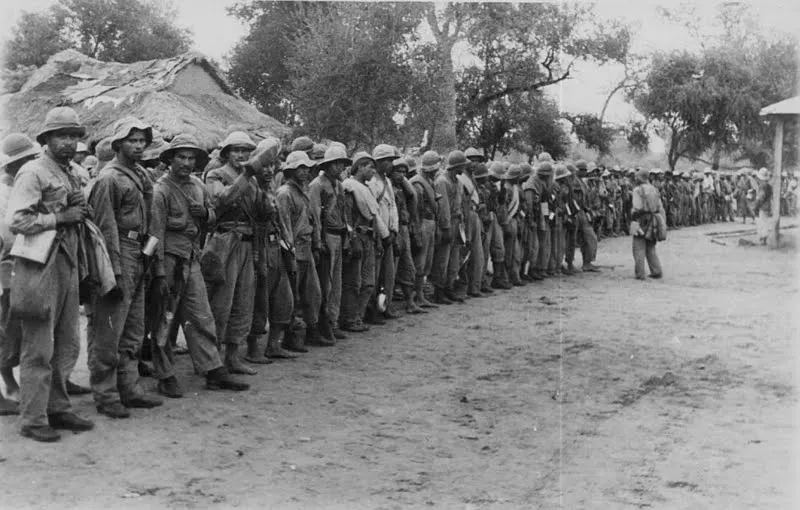
Paraguayan soldiers lined up at Alihuatá in the Gran Chaco during the warParaguayan soldiers lined up at Alihuatá in the Gran Chaco during the warImage: Doctor Carlos De Sanctis · Public domain
politics · Americas

A truce ends the Chaco War between Bolivia and Paraguay

The Chaco Boreal is a vast, hot and thinly peopled plain north of the Pilcomayo river. Bolivia and Paraguay had both claimed it for decades, and hopes that it held oil sharpened the quarrel. Bolivia, which had lost its coast to Chile, also wanted an outlet to the Atlantic along the Paraguay river. Border clashes turned into full-scale war in 1932. Bolivia had the larger army, but Paraguay’s troops knew the terrain and pushed deep into the disputed land. Thirst and disease killed as many men as the fighting, and around 100,000 died in all. With both countries exhausted and the Bolivians counter-attacking, neighbouring states and the United States brokered a truce, agreed on 12 June 1935. A peace treaty signed in Buenos Aires in 1938 gave Paraguay most of the Chaco and Bolivia a corridor to the Paraguay river.

Source: Britannica: Chaco War ↗
1939
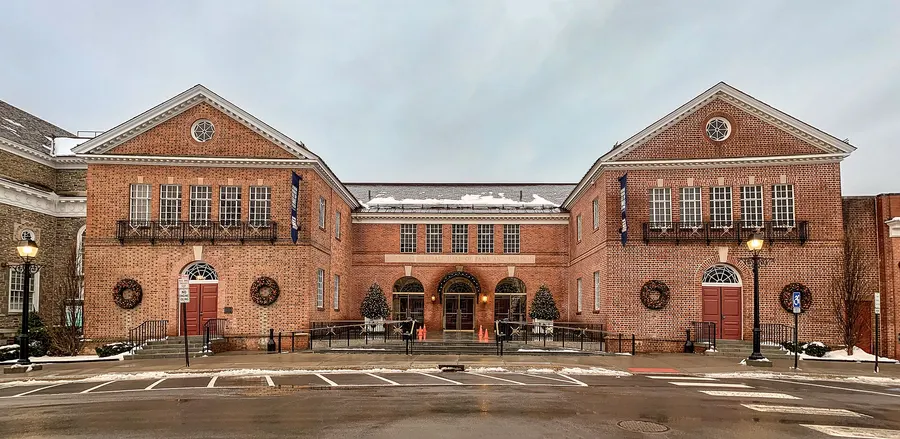
The National Baseball Hall of Fame and Museum on Main Street, Cooperstown, New YorkThe National Baseball Hall of Fame and Museum on Main Street, Cooperstown, New YorkImage: Kenneth C. Zirkel · CC BY-SA 4.0
sport · Americas

The Baseball Hall of Fame opens in Cooperstown

In the 1930s the small village of Cooperstown in upstate New York, long said to be the birthplace of baseball, planned to mark the game’s supposed centenary with a museum. Voting for a Hall of Fame began in 1936, and the first class chosen included Ty Cobb, Babe Ruth, Honus Wagner, Christy Mathewson and Walter Johnson. On 12 June 1939 the National Baseball Hall of Fame and Museum opened its doors. The 25 players and pioneers elected so far were honoured with bronze plaques, and all 11 who were still living came to Cooperstown for the first induction ceremony, watched by a crowd of about 12,000. The day brought a parade, speeches, a special postage stamp and an exhibition game at Doubleday Field. The induction weekend has been held in Cooperstown ever since.

Source: National Baseball Hall of Fame: Heroes and legends at the inaugural Hall of Fame weekend ↗
1942
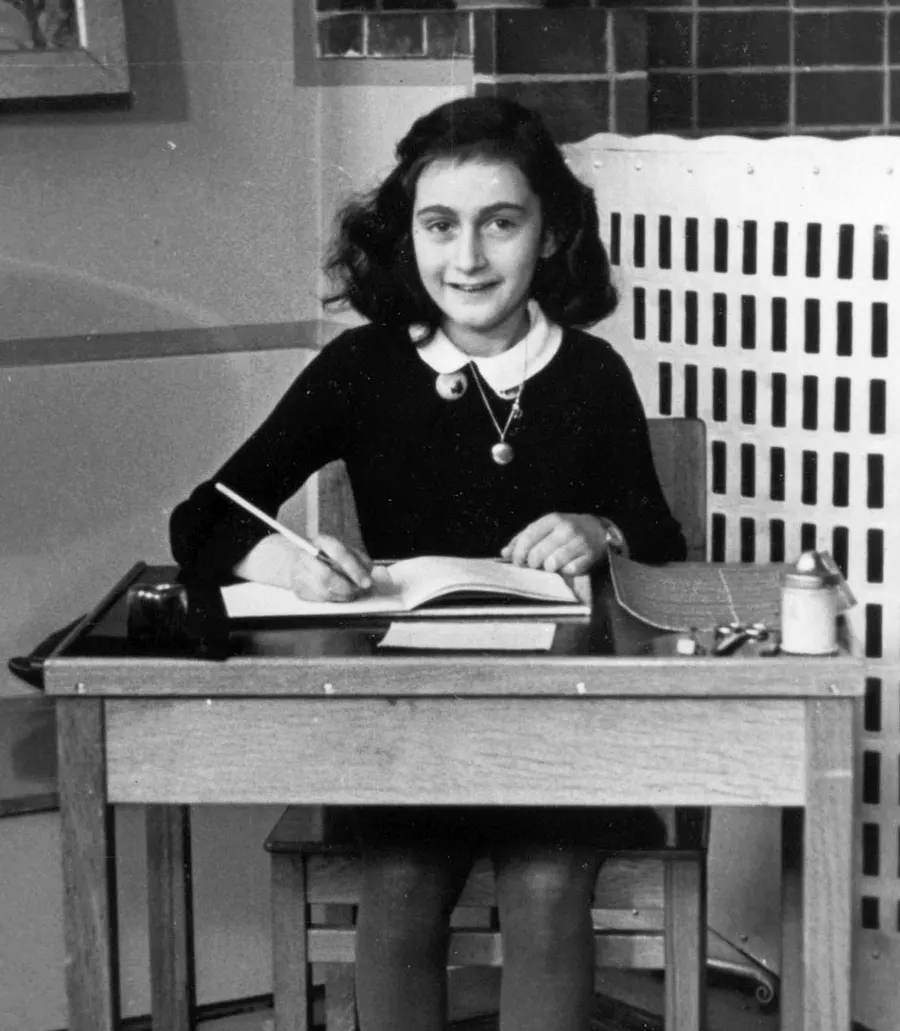
Anne Frank writing at a desk in 1940, two years before she was given her diaryAnne Frank writing at a desk in 1940, two years before she was given her diaryImage: Unknown photographer; Collectie Anne Frank Stichting Amsterdam · Public domain
culture · Europe

Anne Frank is given a diary for her 13th birthday

Anne Frank was born in Frankfurt in 1929. After the Nazis came to power her Jewish family moved to Amsterdam, but in 1940 Germany occupied the Netherlands and anti-Jewish laws closed in around them. On her 13th birthday, Friday 12 June 1942, one of her presents was a red-checked autograph book she had chosen herself in a bookshop, and she began writing in it as a diary within days. Less than a month later the family went into hiding in a secret annex behind her father’s business on the Prinsengracht. There Anne kept writing, and began rewriting her diary in the hope of publishing it after the war. The hiding place was betrayed in August 1944, and Anne died in the Bergen-Belsen camp in early 1945. Her father, the only one of the family to survive, published her writings in 1947. The diary has since been read by millions around the world.

Source: Anne Frank House: Anne receives a diary ↗
1967
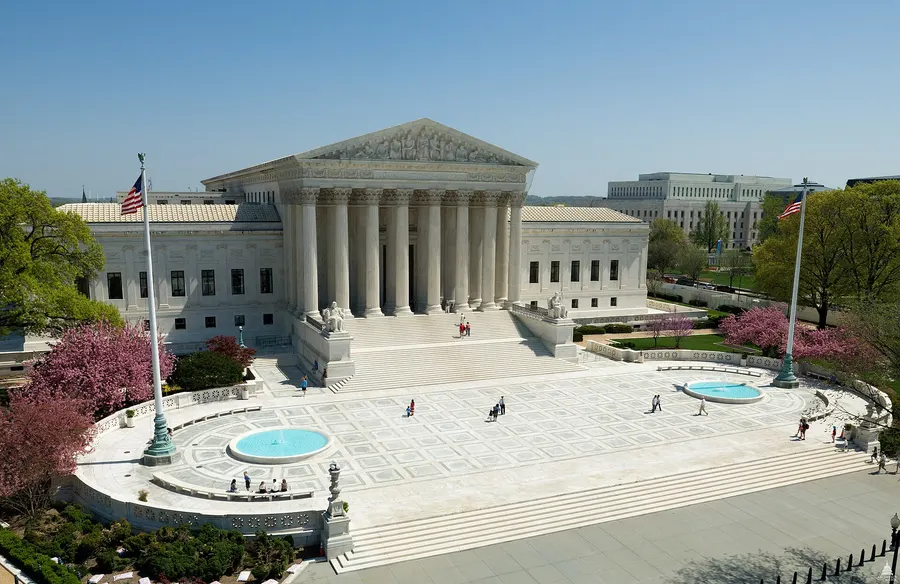
The United States Supreme Court Building in Washington, DCThe United States Supreme Court Building in Washington, DCImage: USCapitol · Public domain
politics · Americas

The Supreme Court strikes down bans on mixed marriage

In 1958 Mildred Jeter, a Black woman, and Richard Loving, a white man, travelled from their home in Virginia to Washington, DC, to marry, because Virginia law forbade marriage between white and Black people. Weeks after they returned, police arrested them. They were convicted and sentenced to a year in jail, suspended on condition that they leave Virginia and not come back together for 25 years. With the help of civil rights lawyers the Lovings challenged the law, and the case reached the United States Supreme Court. On 12 June 1967 the court ruled unanimously in their favour, finding that the ban broke the Fourteenth Amendment’s promises of equal protection and due process. The judgment struck down similar laws in 15 other states. The Lovings went home to Virginia, and 12 June is still marked by many Americans as Loving Day.

Source: Oyez: Loving v. Virginia ↗
1975
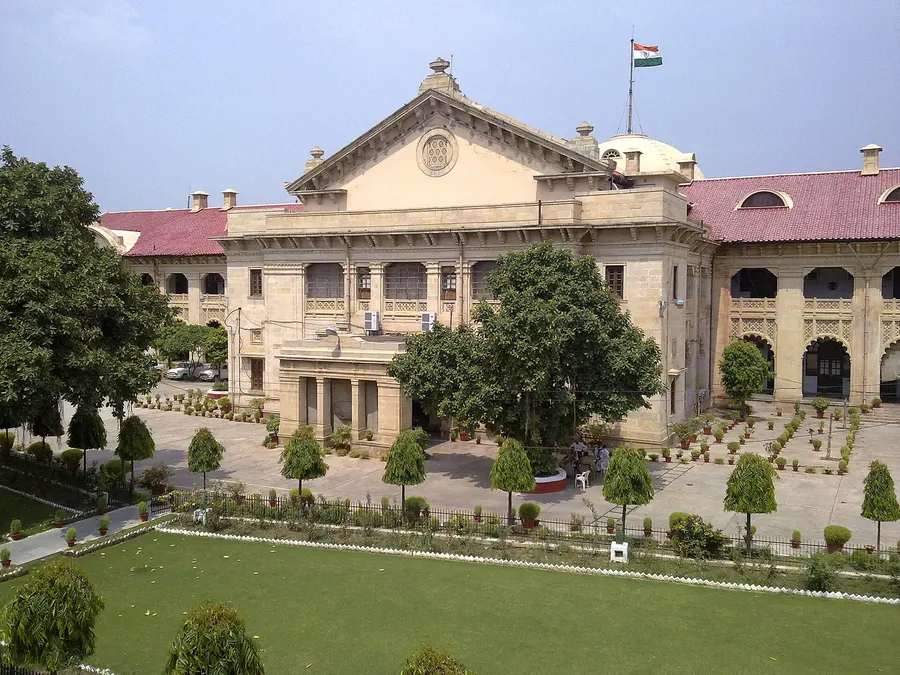
The Allahabad High Court building in Prayagraj, IndiaThe Allahabad High Court building in Prayagraj, IndiaImage: Vroomtrapit at English Wikipedia · CC0
politics · Asia

A court voids Indira Gandhi’s election

On 12 June 1975 Justice Jagmohanlal Sinha of the Allahabad High Court upheld a petition by the socialist Raj Narain, who had lost to Prime Minister Indira Gandhi at Rae Bareli in 1971. He found that she had misused government machinery in her campaign, set aside her election and barred her from office for six years. As protests grew while she appealed, Gandhi declared a state of Emergency on 25 June, which lasted until 1977.

Source: Britannica: The Emergency (India) ↗
1979
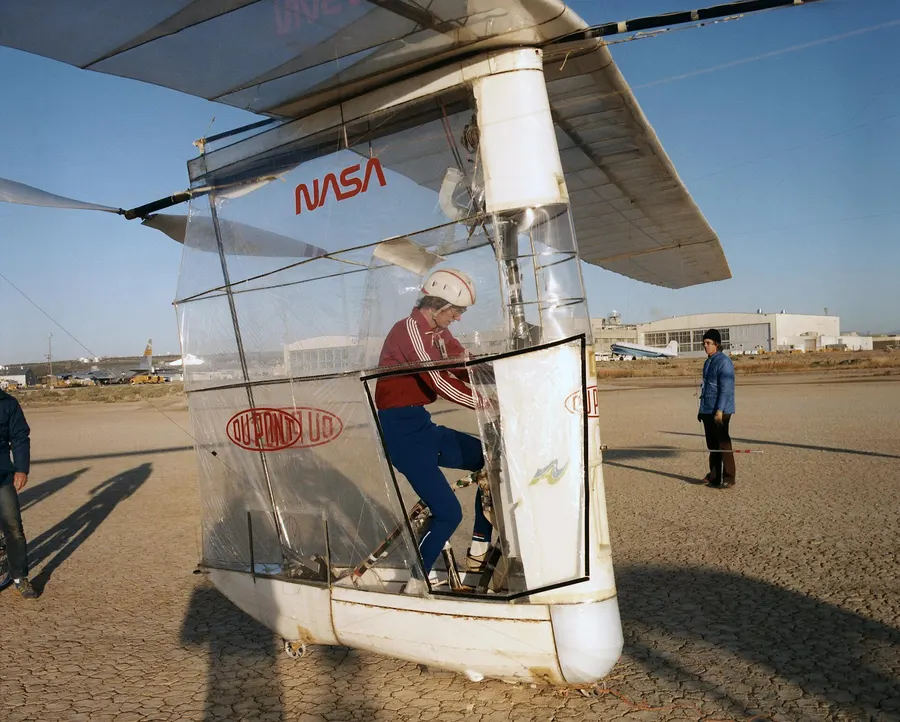
Gossamer Albatross II, the backup aircraft built alongside the Channel plane, being prepared for tests at NASA's Dryden centre in California in 1980Gossamer Albatross II, the backup aircraft built alongside the Channel plane, being prepared for tests at NASA’s Dryden centre in California in 1980Image: Glenn Research Center · Public domain
world · Europe

A pedal-powered plane crosses the English Channel

On 12 June 1979 the American cyclist and pilot Bryan Allen pedalled the Gossamer Albatross from Folkestone to Cap Gris-Nez in France, 36 kilometres, in 2 hours and 49 minutes, the first crossing of the Channel by a human-powered aircraft. Designed by Paul MacCready’s team and built of carbon-fibre tubes and clear plastic film, it won the £100,000 Kremer Prize. The aircraft is now in the Smithsonian’s National Air and Space Museum.

Source: Smithsonian National Air and Space Museum: MacCready Gossamer Albatross ↗
1987
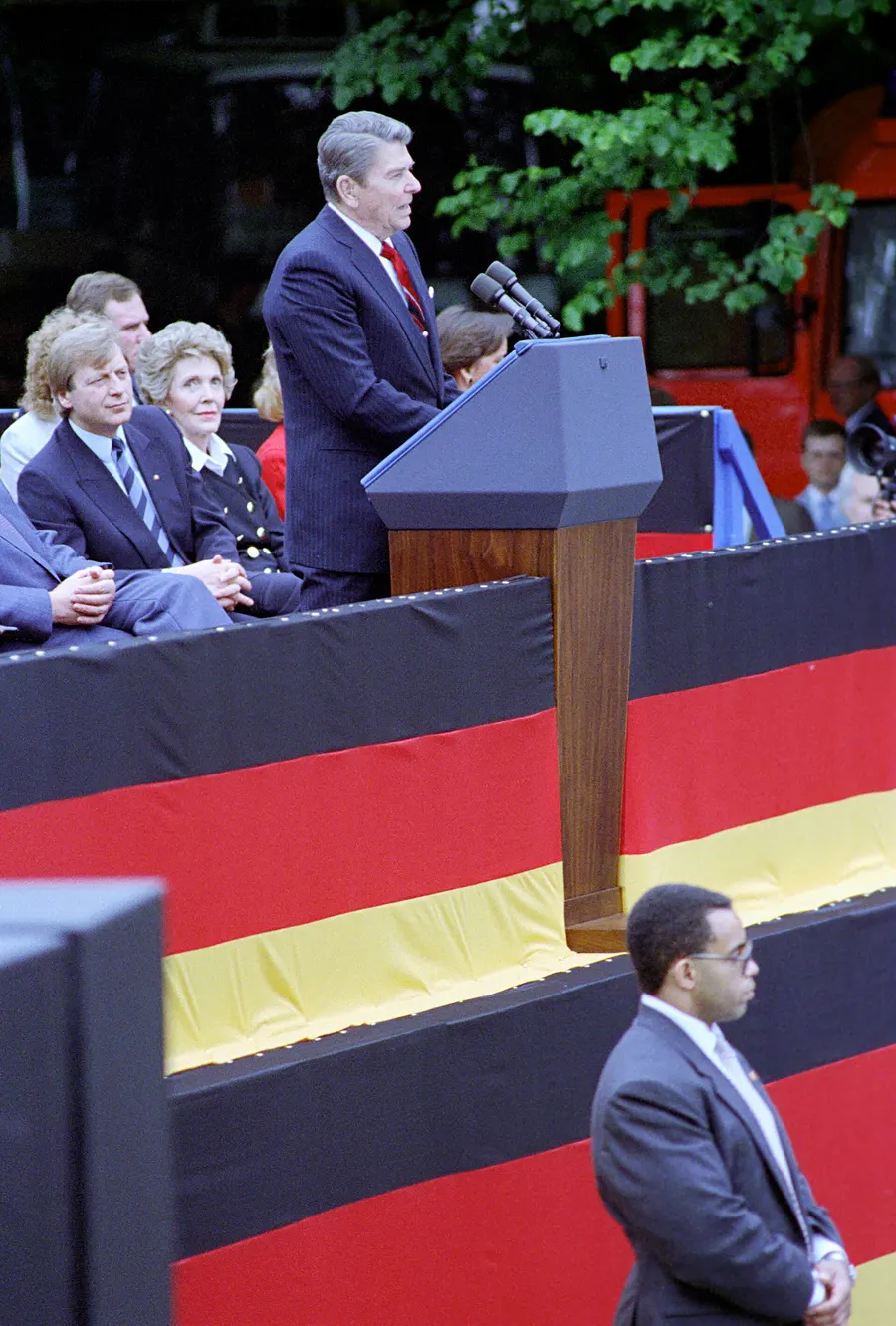
President Reagan speaking at the Brandenburg Gate in West Berlin, with Nancy Reagan and Berlin's mayor Eberhard Diepgen on the platformPresident Reagan speaking at the Brandenburg Gate in West Berlin, with Nancy Reagan and Berlin’s mayor Eberhard Diepgen on the platformImage: White House Photographic Office · Public domain
politics · Europe

Reagan tells Gorbachev to ‘tear down this wall’

Speaking in front of the Brandenburg Gate in West Berlin on 12 June 1987, with the Berlin Wall behind him, US President Ronald Reagan called on the Soviet leader directly: ‘Mr. Gorbachev, open this gate! Mr. Gorbachev, tear down this wall!’ Some of his advisers had wanted the line cut as too provocative. Little changed at the time, but the wall was opened two and a half years later, in November 1989.

Source: Ronald Reagan Presidential Library: Remarks on East-West relations at the Brandenburg Gate ↗
1993
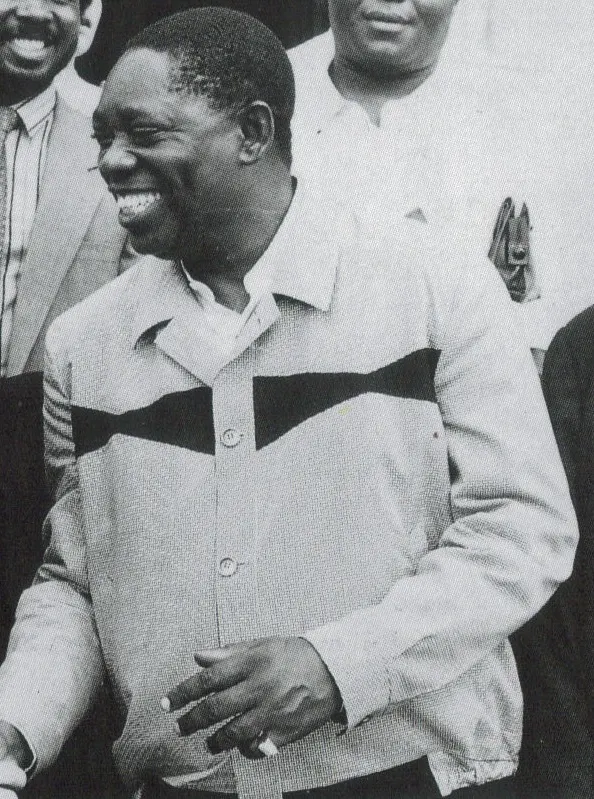
Moshood Abiola, the businessman who won Nigeria's presidential election of 12 June 1993Moshood Abiola, the businessman who won Nigeria’s presidential election of 12 June 1993Image: Unknown photographer · CC BY-SA 3.0
politics · Africa

Nigerians vote in the election that was taken away

Nigeria had been under military rule since 1983. General Ibrahim Babangida, in power from 1985, promised a return to civilian government and set up two political parties to contest a presidential election. The Social Democratic Party chose the wealthy businessman and publisher Moshood Abiola; the National Republican Convention chose Bashir Tofa. The vote on 12 June 1993 was widely seen as the freest and fairest in the country’s history, and early results showed Abiola clearly ahead. But before the official result was announced, Babangida annulled the election. The outcry forced him from power that August, and in November General Sani Abacha seized control. Abiola was later arrested after declaring himself president and died in detention in 1998. In 2018 the government named 12 June Nigeria’s Democracy Day and honoured Abiola with the country’s highest award.

Source: Britannica: Nigeria, military regimes 1983-99 ↗
VI
2000 TO TODAY

Modern Day

The events of recent decades that have already become part of the historical record.

2018
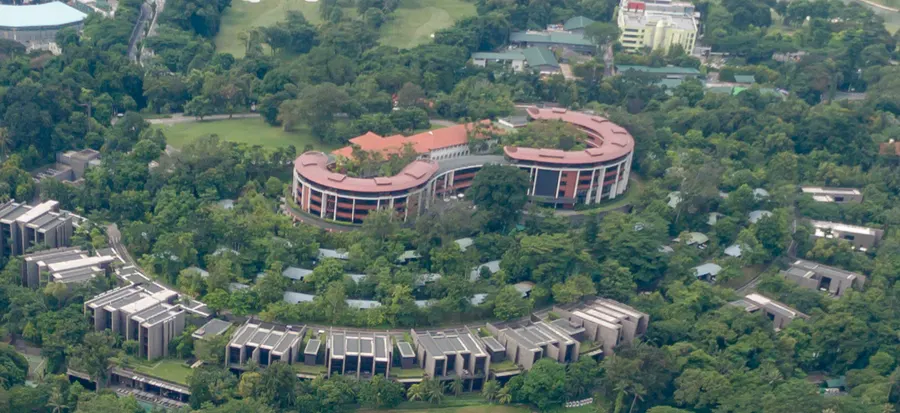
The Capella hotel on Sentosa island, Singapore, seen from the airThe Capella hotel on Sentosa island, Singapore, seen from the airImage: dronepicr · CC BY 2.0
politics · Asia

The leaders of the United States and North Korea meet for the first time

On 12 June 2018 US President Donald Trump and North Korea’s leader Kim Jong Un met at a hotel on Singapore’s Sentosa island, the first meeting ever between a sitting American president and a North Korean leader. They signed a short joint statement promising new relations and a lasting peace, with North Korea committing to work towards the complete denuclearisation of the Korean peninsula. Later talks failed to turn those promises into a deal.

Source: The White House (archived): Joint statement at the Singapore Summit ↗
RESEARCH

Sources & Further Reading

Selected authoritative references supporting the events on this page.

Britannica: William de la Pole, 1st Duke of Suffolk↗Jeanne-darc.info: The Battle of Jargeau↗City of Helsinki: 1550, founding Helsinki↗Britannica: Helsinki↗Te Ara, Dictionary of New Zealand Biography: Marion du Fresne, Marc Joseph↗NZHistory (Ministry for Culture and Heritage): Marion du Fresne↗City of Mannheim: Karl Drais und seine Laufmaschine↗Britannica: Draisienne↗Britannica: Independence Day (Philippines)↗National Historical Commission of the Philippines: Site of the Proclamation of Philippine Independence↗Britannica: Chaco War↗US Office of the Historian: Chaco dispute between Bolivia and Paraguay (1935)↗National Baseball Hall of Fame: Heroes and legends at the inaugural Hall of Fame weekend↗National Baseball Hall of Fame: History of the museum↗Anne Frank House: Anne receives a diary↗United States Holocaust Memorial Museum: Anne Frank, diary↗Oyez: Loving v. Virginia↗US National Archives: The fight for the right to marry, the Loving v. Virginia case↗Britannica: The Emergency (India)↗Press Information Bureau, Government of India: Emergency factsheet↗Smithsonian National Air and Space Museum: MacCready Gossamer Albatross↗Britannica: Gossamer Albatross↗Ronald Reagan Presidential Library: Remarks on East-West relations at the Brandenburg Gate↗US National Archives, Prologue: ‘Tear down this wall’↗Britannica: Nigeria, military regimes 1983-99↗State House, Abuja: President Buhari declares June 12 the new Democracy Day↗The White House (archived): Joint statement at the Singapore Summit↗Ministry of Foreign Affairs, Singapore: Reply to parliamentary question on the summit↗
WHY THESE MOMENTS?

Significance before volume

This page is not the longest possible list of events. It is a chronological journey through 12 June, where each entry is chosen for historical significance, human interest and reliability.

Facts are checked against authoritative museums, archives, universities and reference works. Where sources disagree, the page says so.

EXPLORED THE DEEPER STORY?

Return to the highlights of 12 June

Discover the lighter side of the date with famous birthdays, culture, firsts and lives remembered.

Explore This Day →
← PREVIOUS DAY11 June
HISTORY & TIMELINE12 June
NEXT DAY →13 June