
HISTORY & TIMELINE
4 June

A journey through
4 June in history

The story of 4 June runs from the fall of Osaka Castle and the end of the Toyotomi line in 1615 to Li Na becoming Asia’s first Grand Slam singles champion in Paris in 2011. In between come a Dutch East India ship wrecked off Western Australia, a French victory at Magenta, Britain taking charge of Cyprus, Henry Ford’s first drive, a suffragette at the Derby, a soldiers’ uprising in Ghana and Poland’s first partly free election.

III
A CHANGING WORLD

Early Modern Era

Exploration, political change, scientific development and expanding global connections.

1615
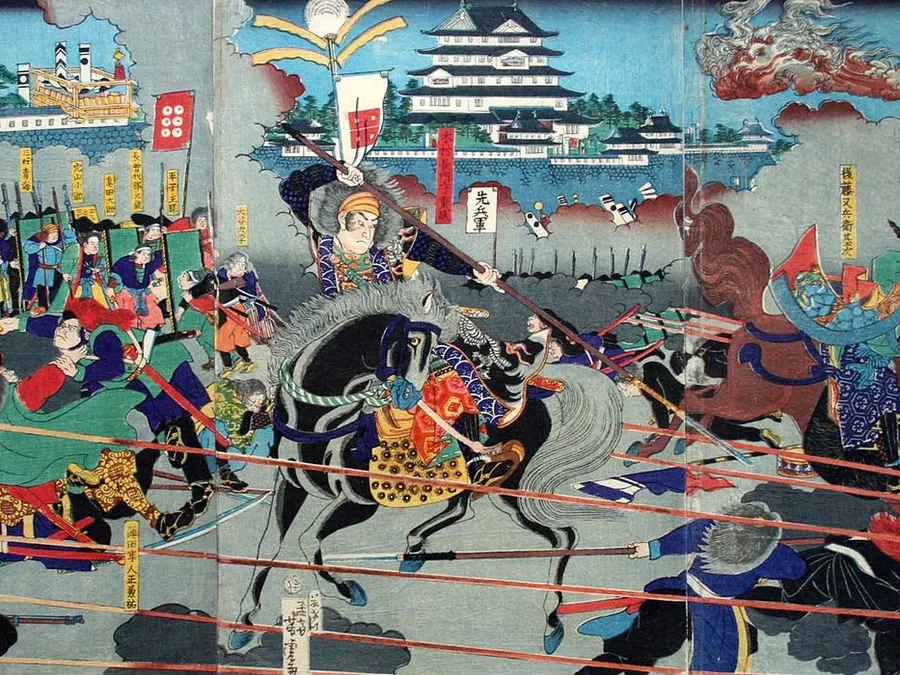
Samurai fighting beneath Osaka Castle, in a 19th-century woodblock print by Utagawa YoshitoraSamurai fighting beneath Osaka Castle, in a 19th-century woodblock print by Utagawa YoshitoraImage: Utagawa Yoshitora · Public domain
world · Asia

Osaka Castle falls and the Toyotomi line comes to an end

Toyotomi Hideyoshi had united Japan in the 1590s, but he died leaving only a small son, Hideyori. Power passed to Tokugawa Ieyasu, who became shogun in 1603, while Hideyori lived on in the great fortress his father had built at Osaka, a rallying point for anyone unhappy with Tokugawa rule. In the winter of 1614 Ieyasu besieged the castle, then agreed a truce under which its outer moats were filled in. When Hideyori began to dig the moats out again and gather masterless samurai, Ieyasu returned in the summer of 1615 with a huge army. The defenders fought bravely outside the walls, but the castle was stormed and set ablaze, and on 4 June the 22-year-old Hideyori and his mother took their own lives. With the Toyotomi gone, nothing stood between the Tokugawa family and 250 years of rule over Japan.

Source: Britannica: Toyotomi Hideyori ↗
1629
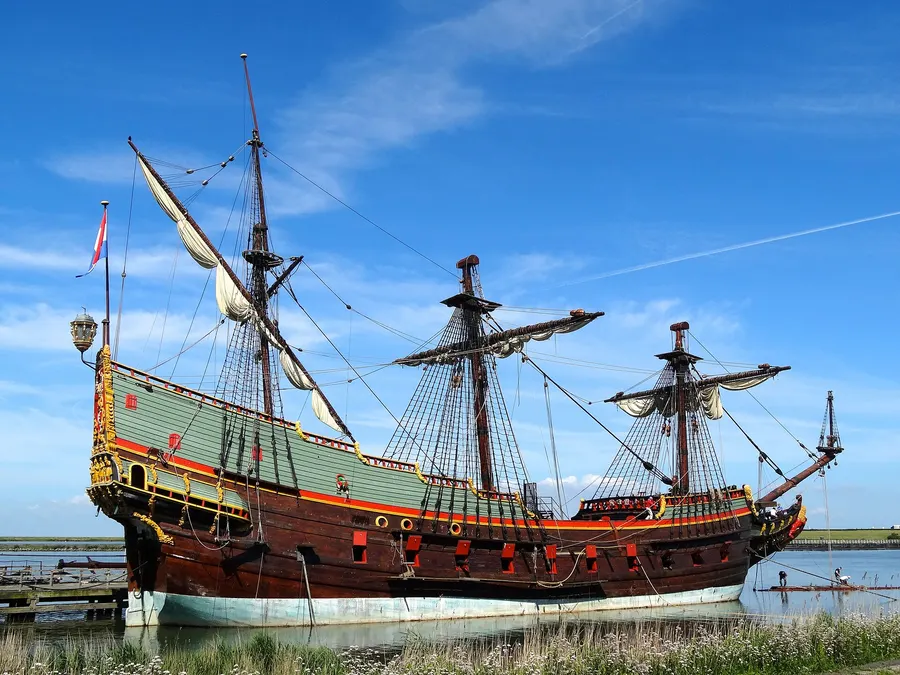
The modern replica of the Batavia at Lelystad in the NetherlandsThe modern replica of the Batavia at Lelystad in the NetherlandsImage: Gouwenaar · CC0
world · Oceania

The Dutch ship Batavia is wrecked off Western Australia

The Batavia, a new Dutch East India Company ship carrying more than 300 people and a cargo of silver, was bound for Java when she struck Morning Reef in the Houtman Abrolhos islands on the night of 4 June 1629. Most on board reached nearby islands. While the commander, Francisco Pelsaert, sailed an open boat to Java for help, a group of mutineers murdered more than 100 survivors. The wreck was found in 1963.

Source: Western Australian Museum: Batavia’s history ↗
1783
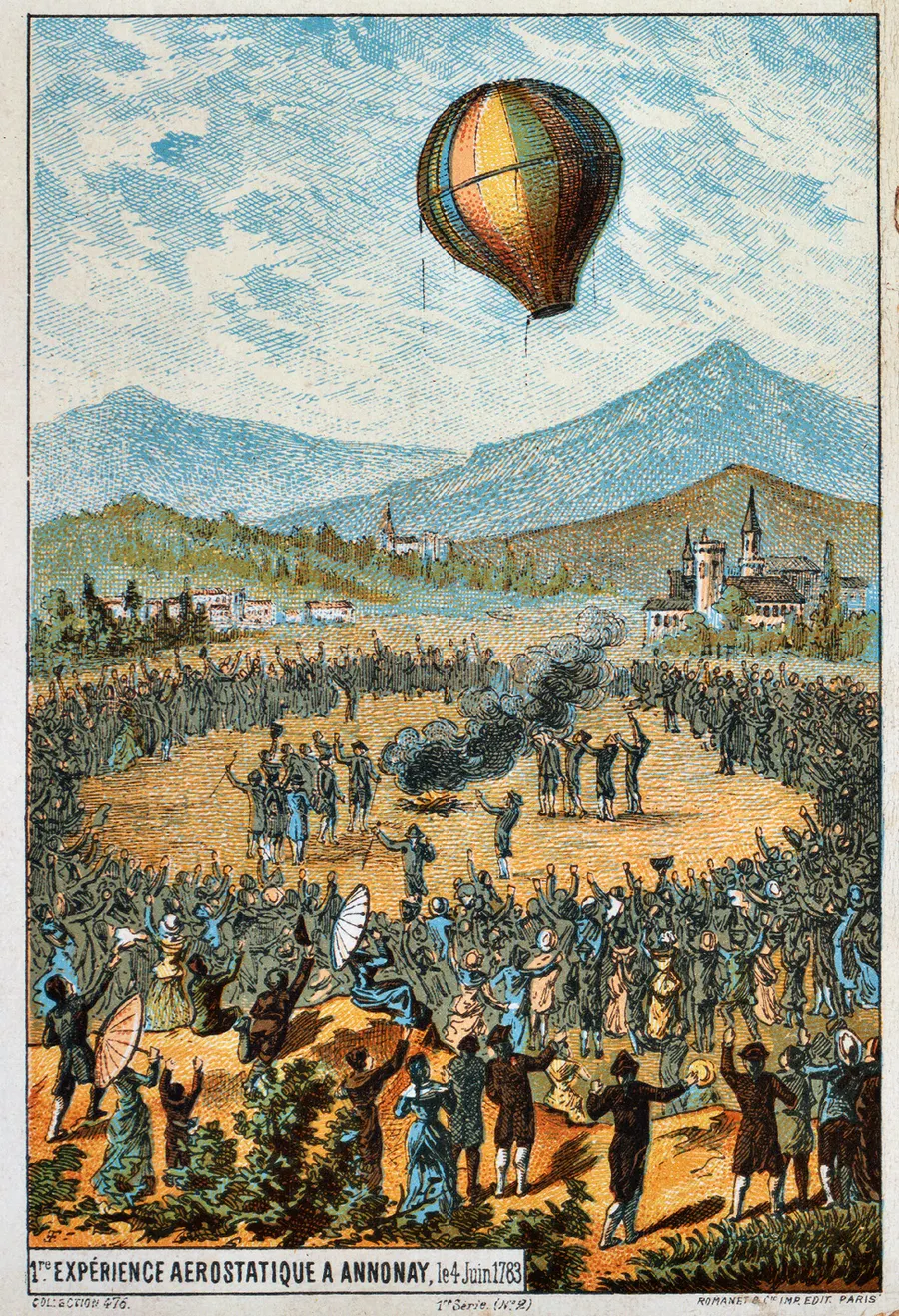
A later French print of the Montgolfier brothers' balloon rising above the crowd at Annonay in 1783A later French print of the Montgolfier brothers’ balloon rising above the crowd at Annonay in 1783Image: Romanet & Cie, Paris · Public domain
science · Europe

The Montgolfier brothers send a balloon soaring over Annonay

Joseph-Michel and Jacques-Étienne Montgolfier were two of the sixteen children of a prosperous paper-maker near Annonay, in the south of France. In 1782 they found that a light bag of paper or fabric, filled with hot air, would rise by itself. They tested ever larger bags in private, and decided to show their invention to the public before anyone else could claim it. On 4 June 1783, in the market square of Annonay, they held a linen-and-paper globe about ten metres across over a fire of straw and wool. When it was released, it rose to around a thousand metres, stayed up for about ten minutes and came down more than two kilometres away. News reached Paris within weeks. By the autumn the brothers had sent a sheep, a duck and a cockerel aloft at Versailles, and in November two men made the first human flight in one of their balloons.

Source: Britannica: Montgolfier brothers ↗
IV
THE NINETEENTH CENTURY

The 1800s

Industry, empire, invention, reform and a century of enormous transformation.

1859
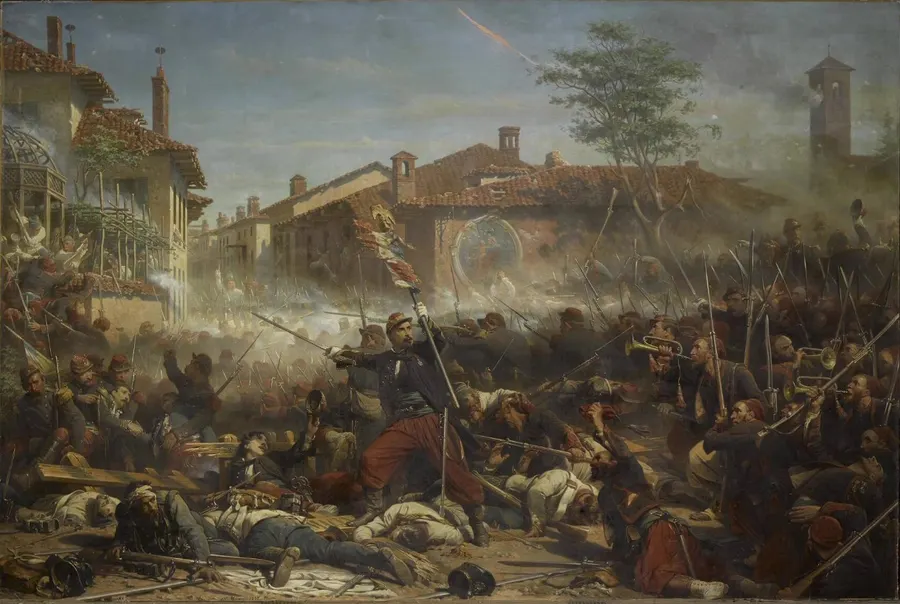
The Battle of Magenta, painted by Adolphe YvonThe Battle of Magenta, painted by Adolphe YvonImage: Adolphe Yvon · Public domain
world · Europe

France beats Austria at Magenta

Napoleon III had allied France with Piedmont to drive Austria out of northern Italy, moving more than 100,000 men to the front by railway. On 4 June 1859 the French met the Austrian army at Magenta, west of Milan, in a confused battle that left thousands dead and wounded. General MacMahon’s troops took the town and won a narrow victory, opening the way to Milan. A new purplish-red dye was named magenta in its honour.

Source: Britannica: Battle of Magenta ↗
1878
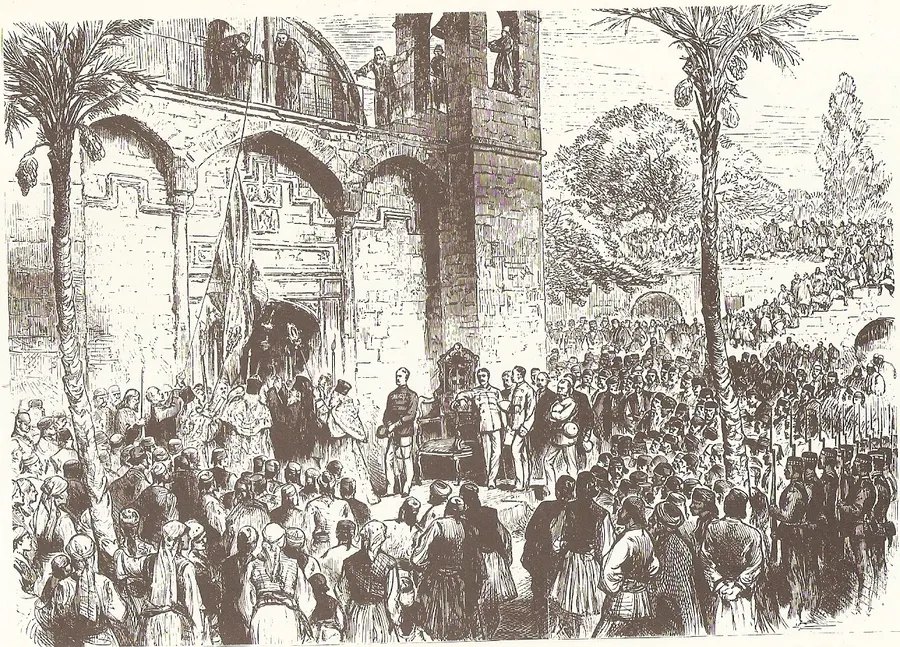
Greek Cypriot clergy blessing the British flag in Nicosia, from The Illustrated London News, 1878Greek Cypriot clergy blessing the British flag in Nicosia, from The Illustrated London News, 1878Image: The Illustrated London News · Public domain
politics · Middle East

Britain takes charge of Cyprus

After Russia’s victory over the Ottoman Empire in 1877-78, Britain offered to defend the sultan’s Asian lands against further Russian advances. In return, under a secret convention signed on 4 June 1878, the sultan let Britain occupy and govern Cyprus as a base in the eastern Mediterranean, while the island stayed nominally Ottoman and Britain paid over its surplus revenue. Britain annexed Cyprus outright in 1914.

Source: Britannica: Cyprus Convention of 1878 ↗
1896
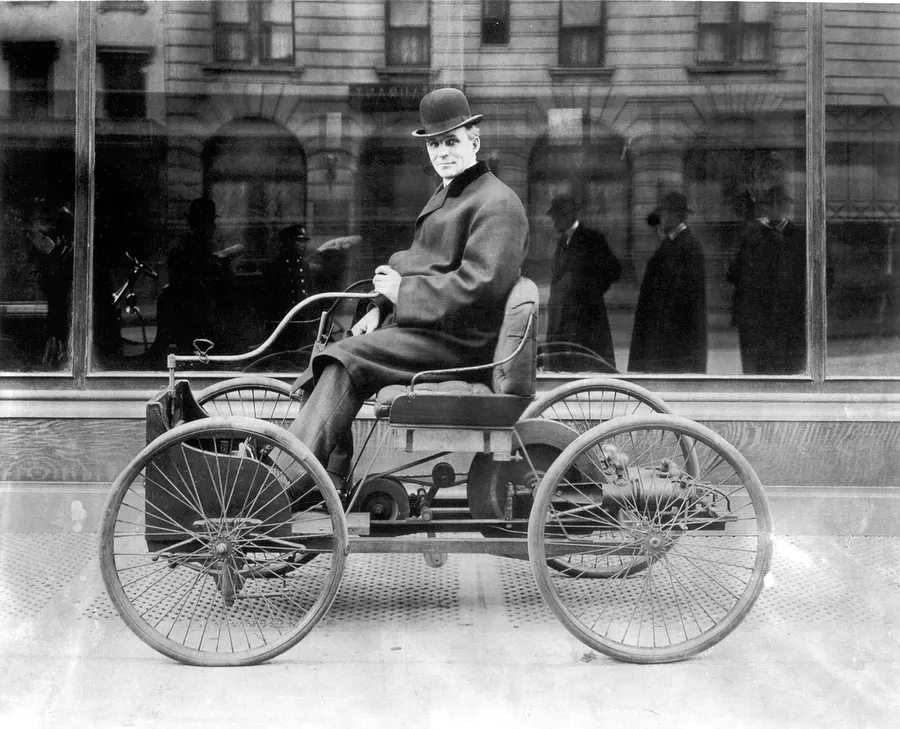
Henry Ford seated in his 1896 Quadricycle, photographed some years laterHenry Ford seated in his 1896 Quadricycle, photographed some years laterImage: Spooner & Wells, Inc. · Public domain
world · Americas

Henry Ford takes his first car for a drive

Henry Ford, then an engineer at the Edison Illuminating Company in Detroit, spent his spare time building a petrol-driven vehicle in a shed behind his rented house on Bagley Avenue. In the early hours of 4 June 1896 he drove his Quadricycle out for its first successful run. It had a buggy seat, bicycle wheels and no reverse gear. He sold it that year for $200 and later bought it back for $65.

Source: The Henry Ford: Henry Ford’s first car ↗
V
THE TWENTIETH CENTURY

The 1900s

War and peace, technological leaps, social change, politics, sport and popular culture.

1913
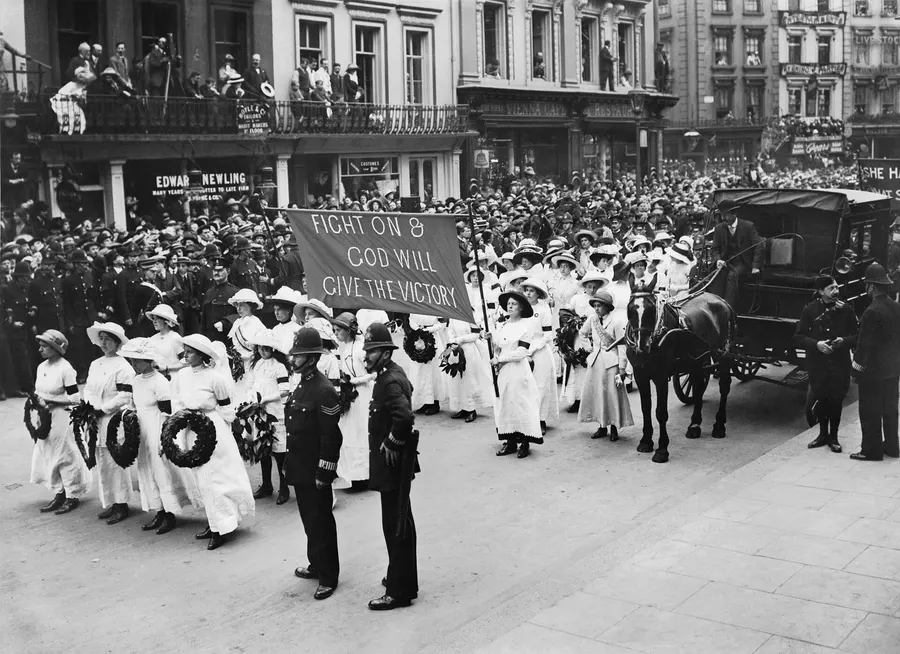
Suffragettes in white, carrying wreaths and a banner, walk in Emily Davison's funeral procession, June 1913Suffragettes in white, carrying wreaths and a banner, walk in Emily Davison’s funeral procession, June 1913Image: Unknown author (Imperial War Museums Q81834) · Public domain
politics · Europe

Suffragette Emily Davison is struck down at the Derby

Emily Wilding Davison was one of the most determined militants in the fight for women’s votes, jailed many times and repeatedly force-fed on hunger strike. At the Epsom Derby on 4 June 1913 she stepped on to the course at Tattenham Corner and was struck by Anmer, the King’s horse. She died four days later. Whether she meant to die, or to fix a suffragette flag to the horse, is still debated.

Source: UK Parliament: Emily Wilding Davison and Parliament ↗
1917
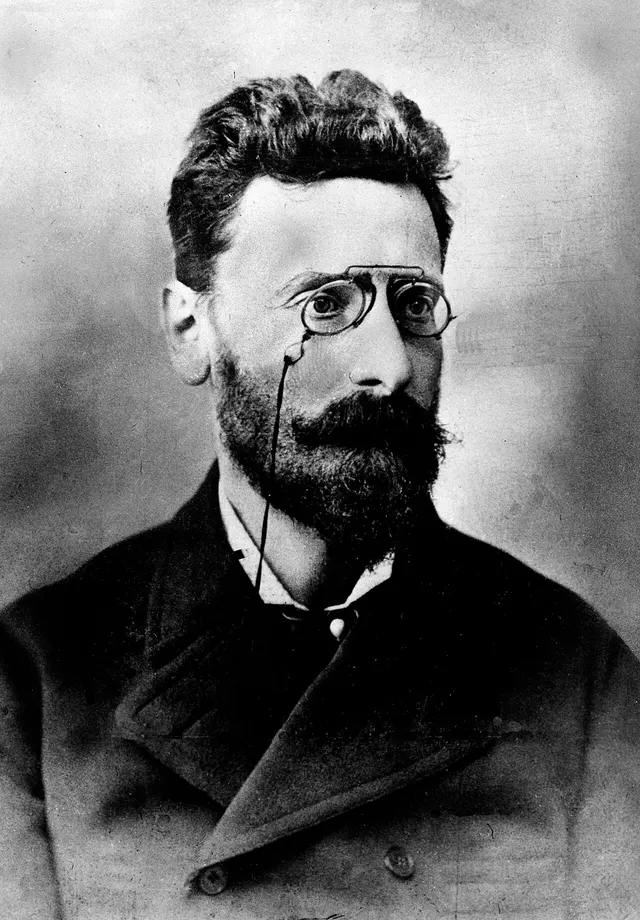
Joseph Pulitzer, the newspaper publisher whose will founded the prizesJoseph Pulitzer, the newspaper publisher whose will founded the prizesImage: Unknown authorUnknown author · Public domain
culture · Americas

The first Pulitzer Prizes are announced

Joseph Pulitzer, the Hungarian-born publisher of the New York World, had built his fortune on crusading, popular journalism. In his will he left money to Columbia University to found a school of journalism and a set of annual prizes to encourage good reporting, writing and public service. He died in 1911, and the journalism school opened two years later. The first prizes were announced on 4 June 1917 and presented at Columbia’s commencement two days later. There were awards in journalism, letters and drama, education and travelling scholarships, though with the United States newly at war and few entries, some categories went unawarded, among them the novel. The biography prize went to Laura E. Richards and Maude Howe Elliott, with Florence Hall, for a life of their mother, Julia Ward Howe. The Pulitzers have been awarded every year since.

Source: The Pulitzer Prizes: ‘A Noble Profession’, the first Pulitzer Prize cycle ↗
1920
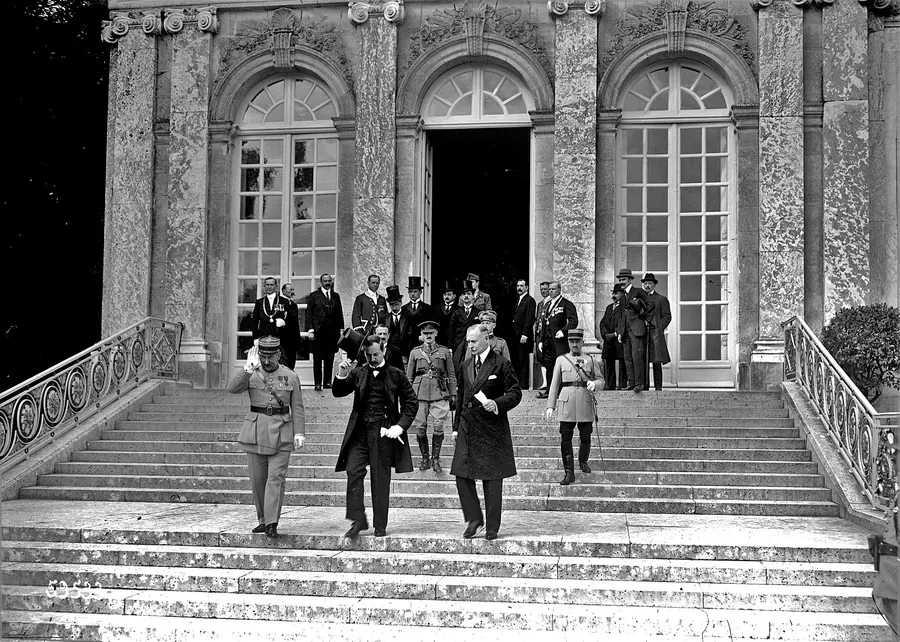
The Hungarian delegates leave the Grand Trianon palace at Versailles after signing the peace treaty, 4 June 1920The Hungarian delegates leave the Grand Trianon palace at Versailles after signing the peace treaty, 4 June 1920Image: Agence Rol · Public domain
politics · Europe

Hungary signs away two-thirds of its lands at Trianon

The Kingdom of Hungary had been one half of the Austro-Hungarian monarchy, which broke apart in the last weeks of the First World War. Its Slovak, Romanian, Serb and Croat regions had already declared for new or neighbouring states, and the victorious Allies drew up the peace terms in Paris without letting Hungary negotiate them. The Hungarian delegation protested, but had no choice but to accept. On 4 June 1920 the treaty was signed in the Grand Trianon palace at Versailles. Hungary lost about 71 per cent of its territory and around two-thirds of its people. Slovakia and Ruthenia went to Czechoslovakia, Transylvania and much of the Banat to Romania, and Croatia and the rest of the south to the new Yugoslavia. Millions of Hungarian speakers found themselves living outside the new borders, and the loss of ‘Trianon’ shaped Hungarian politics for the rest of the century.

Source: Britannica: Treaty of Trianon ↗
1942
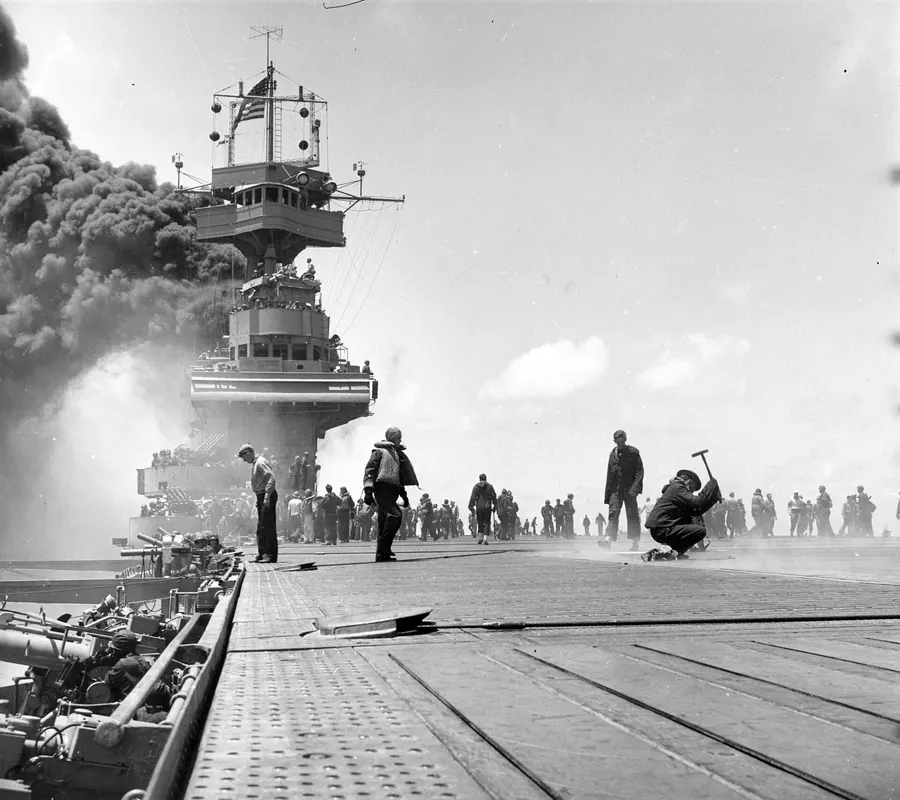
Crewmen on the smoke-covered flight deck of the carrier USS Yorktown after Japanese bombs struck her at Midway, June 1942Crewmen on the smoke-covered flight deck of the carrier USS Yorktown after Japanese bombs struck her at Midway, June 1942Image: National Museum of the U.S. Navy · Public domain
world · Oceania

American dive bombers turn the tide at Midway

Six months after Pearl Harbor, Japan’s navy set out to seize Midway, a tiny atoll at the western end of the Hawaiian chain, and to draw the surviving American carriers into a decisive battle. But American codebreakers had read enough of the Japanese signals to know the plan. Admiral Chester Nimitz sent the carriers Enterprise, Hornet and Yorktown to lie in wait north-east of the island. Early on 4 June 1942 Admiral Nagumo Chūichi’s carrier force launched its planes against Midway. Wave after wave of American torpedo bombers attacked his ships and were shot down, but at about 10.20 in the morning dive bombers from Enterprise and Yorktown arrived overhead and in a few minutes wrecked the carriers Akagi, Kaga and Sōryū. Hiryū was hit that afternoon. Japan lost all four carriers that had struck Pearl Harbor; the Americans lost Yorktown. The Japanese advance in the Pacific never recovered.

Source: Naval History and Heritage Command: 1942, June 4, Battle of Midway ↗
1970
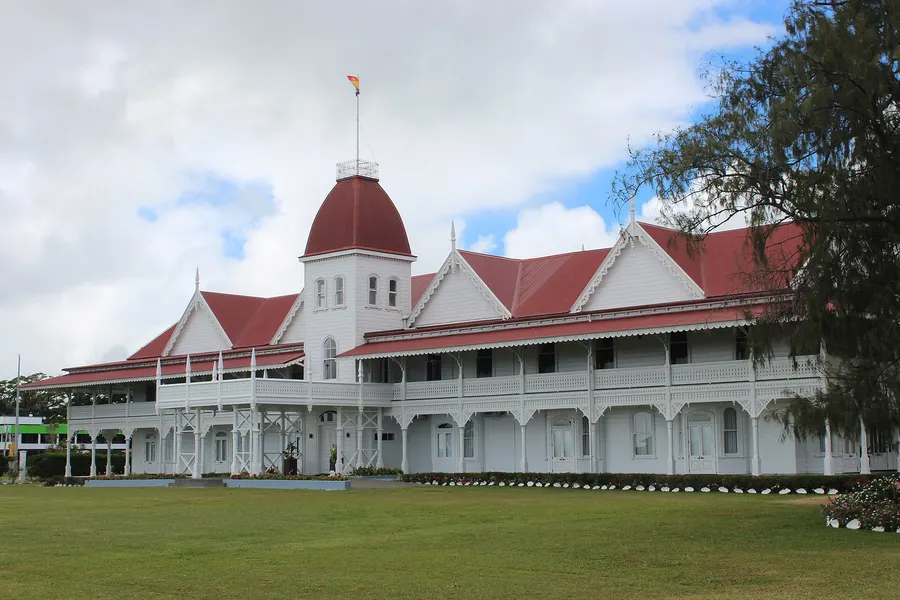
The Royal Palace in Nukuʻalofa, the capital of Tonga, photographed in 2018The Royal Palace in Nukuʻalofa, the capital of Tonga, photographed in 2018Image: Uhooep · CC BY-SA 4.0
politics · Oceania

Tonga steps out as a fully independent kingdom

Tonga was never colonised. In the 1800s King George Tupou I united its islands, gave them a written constitution and kept them free while Britain, France and Germany carved up much of the Pacific. In 1900, to keep German ambitions at bay, his successor signed a treaty that made Tonga a British protected state, leaving Britain in charge of its foreign affairs while the monarchy continued to govern at home. On 4 June 1970, under King Tāufaʻāhau Tupou IV, Tonga took back full control of its foreign affairs and became a fully independent country, joining the Commonwealth the same year. It is the only Polynesian kingdom to have survived from before the arrival of Europeans, and its monarchy still reigns from the white wooden palace on the waterfront at Nukuʻalofa.

Source: Britannica: History of Tonga ↗
1979
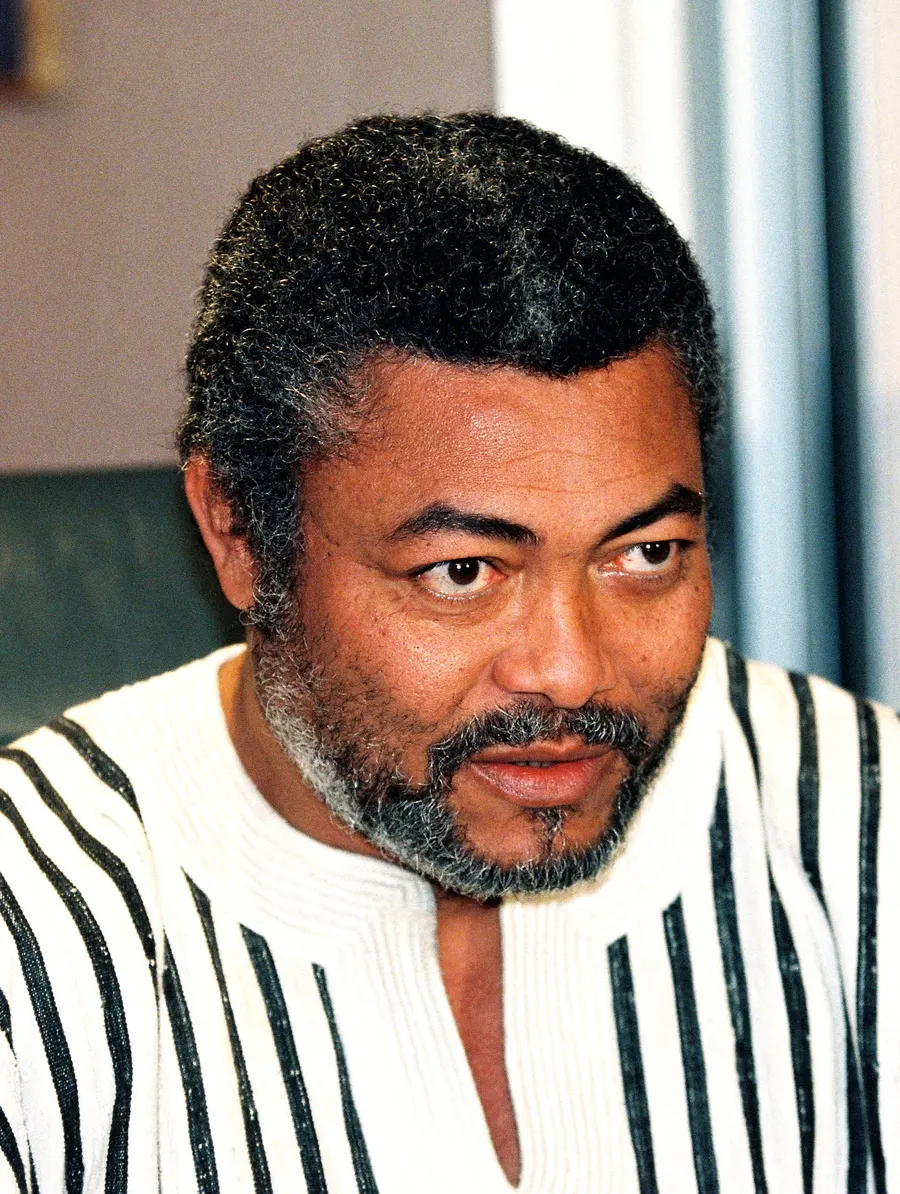
Jerry Rawlings, photographed in Brussels in 1998, when he was President of GhanaJerry Rawlings, photographed in Brussels in 1998, when he was President of GhanaImage: Mark Renders / European Communities · CC BY 4.0
politics · Africa

Soldiers free Jerry Rawlings and seize power in Ghana

Flight Lieutenant Jerry Rawlings was on trial for a failed mutiny against Ghana’s military government when, early on 4 June 1979, junior soldiers broke him out of custody and overthrew the regime of General Fred Akuffo. Rawlings’s Armed Forces Revolutionary Council ruled for 112 days, carried out a harsh anti-corruption purge in which former leaders were executed, then handed power to the elected civilian president, Hilla Limann.

Source: Britannica: Jerry J. Rawlings ↗
1989
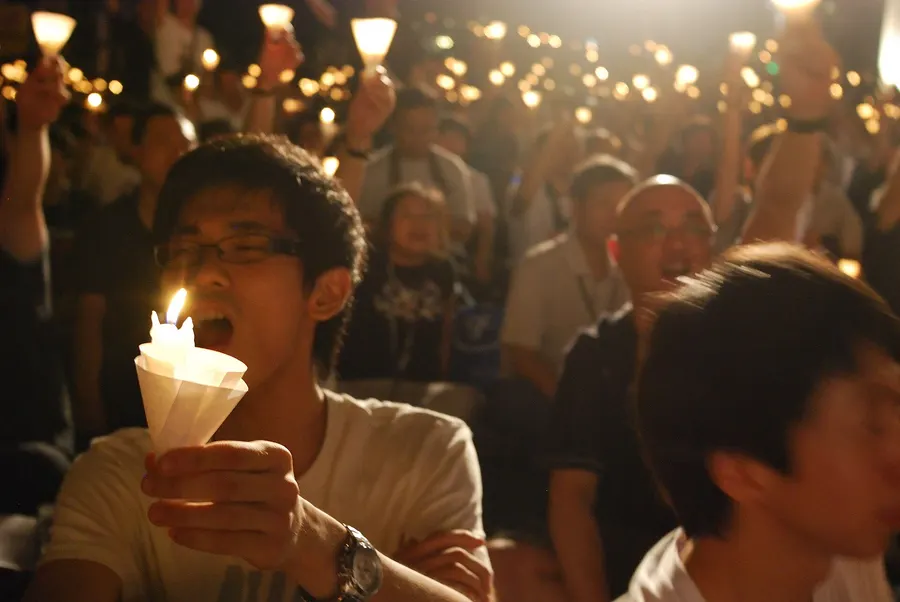
People holding candles at the annual vigil in Hong Kong's Victoria Park remembering 4 June 1989, photographed in 2009People holding candles at the annual vigil in Hong Kong’s Victoria Park remembering 4 June 1989, photographed in 2009Image: ryanne lai · CC BY 2.0
politics · Asia

The army clears the streets around Tiananmen Square

In April 1989 the death of Hu Yaobang, a reforming Communist Party leader, brought students into Beijing’s Tiananmen Square to mourn him and to call for political reform, a free press and an end to corruption. The protests grew for weeks, spreading to workers and to other cities, and at their height hundreds of thousands filled the square. In May the government declared martial law, but crowds of residents blocked the troops sent into the city. On the night of 3 to 4 June the army forced its way into central Beijing with tanks and live fire, and by the morning of 4 June the square had been cleared. The government gave an official death toll of about 240; other estimates run far higher, and the true number is still unknown. Public remembrance of the events is forbidden in mainland China, and for three decades Hong Kong held the largest annual vigils until they too were banned.

Source: Britannica: Tiananmen Square incident ↗
1989
A Solidarity voting guide from Poznań for the June 1989 election, listing the candidates to keep on the ballotA Solidarity voting guide from Poznań for the June 1989 election, listing the candidates to keep on the ballotImage: Unknown author · Public domain
politics · Europe

Solidarity sweeps Poland’s first partly free election

Under a deal struck at the Round Table talks, Poland’s communists kept 65 per cent of the seats in the Sejm for themselves but let the opposition contest the rest, along with a new, freely elected Senate. When Poles voted on 4 June 1989, Solidarity’s candidates won every seat they were allowed to fight in the Sejm and 99 of the 100 in the Senate. By August a Solidarity adviser, Tadeusz Mazowiecki, was prime minister.

Source: Institute of National Remembrance: The elections of 4 June 1989 ↗
VI
2000 TO TODAY

Modern Day

The events of recent decades that have already become part of the historical record.

2011
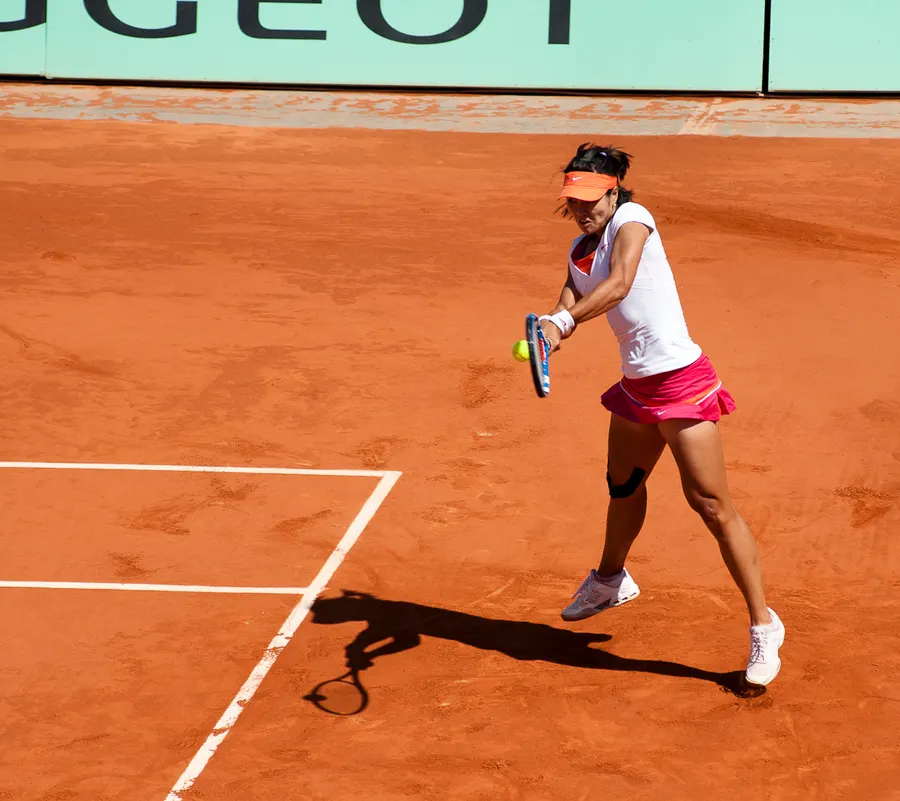
Li Na playing on the clay at the 2011 French Open in ParisLi Na playing on the clay at the 2011 French Open in ParisImage: Frédéric de Villamil · CC BY-SA 2.0
sport · Asia

Li Na becomes Asia’s first Grand Slam singles champion

Li Na grew up in Wuhan and was one of the first Chinese players to leave the state sports system and manage her own career. She had reached the Australian Open final earlier in 2011, but had never won a title on clay, and few expected her to go far at Roland-Garros. In Paris she beat Petra Kvitová, Victoria Azarenka and Maria Sharapova on her way to the final. There she faced the defending champion, Francesca Schiavone of Italy, and won 6-4, 7-6, taking the tie-break without losing a point. It made her China’s first Grand Slam champion and the first Asian-born player to win a Grand Slam singles title. More than 100 million people in China watched the final, and her success helped set off a tennis boom there. She won a second major at the 2014 Australian Open.

Source: WTA: Li Na becomes Asia’s first Grand Slam champion in historic triumph ↗
RESEARCH

Sources & Further Reading

Selected authoritative references supporting the events on this page.

Britannica: Toyotomi Hideyori↗japan-guide.com: Episodes from Japanese History, the Fall of Osaka Castle↗Western Australian Museum: Batavia’s history↗Australian Government DCCEEW: Batavia Shipwreck Site and Survivor Camps Area 1629↗Britannica: Montgolfier brothers↗Smithsonian National Air and Space Museum: Montgolfier Brothers↗Britannica: Battle of Magenta↗Britannica: Patrice de MacMahon↗Britannica: Cyprus Convention of 1878↗The National Archives: Convention, Cyprus (1878 June 4)↗The Henry Ford: Henry Ford’s first car↗The Henry Ford: 1896 Ford Quadricycle Runabout, first car built by Henry Ford↗UK Parliament: Emily Wilding Davison and Parliament↗Britannica: Emily Davison↗The Pulitzer Prizes: ‘A Noble Profession’, the first Pulitzer Prize cycle↗Columbia Magazine: The First Pulitzer Prize↗Britannica: Treaty of Trianon↗Britannica: Hungary, World War I and the Treaty of Trianon↗Naval History and Heritage Command: 1942, June 4, Battle of Midway↗Britannica: Battle of Midway↗Britannica: History of Tonga↗Britannica: Tonga, history↗Britannica: Jerry J. Rawlings↗Wikipedia: June 4th revolution in Ghana↗Britannica: Tiananmen Square incident↗Britannica: How did the Chinese government respond to the 1989 Tiananmen Square protests?↗Institute of National Remembrance: The elections of 4 June 1989↗Britannica: Solidarity↗WTA: Li Na becomes Asia’s first Grand Slam champion in historic triumph↗Roland-Garros: 10-year rewind, Li Na’s glittering moment in Paris↗
WHY THESE MOMENTS?

Significance before volume

This page is not the longest possible list of events. It is a chronological journey through 4 June, where each entry is chosen for historical significance, human interest and reliability.

Facts are checked against authoritative museums, archives, universities and reference works. Where sources disagree, the page says so.

EXPLORED THE DEEPER STORY?

Return to the highlights of 4 June

Discover the lighter side of the date with famous birthdays, culture, firsts and lives remembered.

Explore This Day →
← PREVIOUS DAY3 June
HISTORY & TIMELINE4 June
NEXT DAY →5 June