
HISTORY & TIMELINE
5 June

A journey through
5 June in history

The story of 5 June runs from an English missionary killed by raiders in Frisia in 754 to an Italian tennis player’s surprise victory in Paris in 2010. In between come a French pope elected after an eleven-month deadlock, a new state of matter made in a Colorado laboratory, a hip-swinging television performance that scandalised America, Britain’s first nationwide referendum, the Suez Canal reopening after eight years and a coup in the Seychelles.

JUMP THROUGH TIME
II
THE MIDDLE AGES

Medieval History

Kingdoms, conflict, faith, power and the changing medieval world.

754
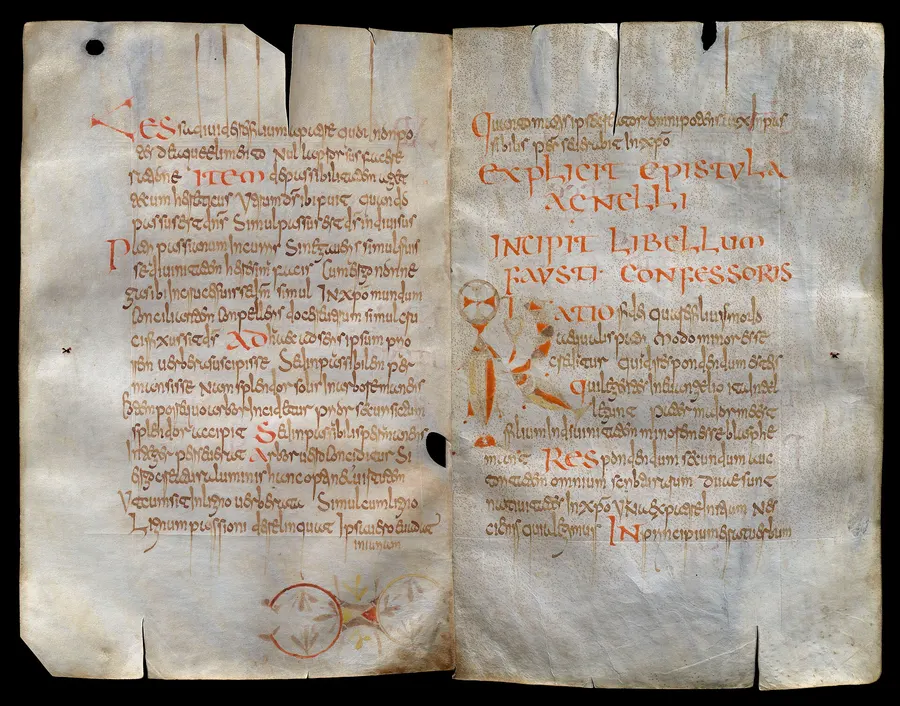
The Ragyndrudis Codex at Fulda, a damaged book long said to have been carried by Boniface when he was killedThe Ragyndrudis Codex at Fulda, a damaged book long said to have been carried by Boniface when he was killedImage: Unknown author (Fulda, Hochschul- und Landesbibliothek) · Public domain
culture · Europe

The missionary Boniface is killed in Frisia

Born in Wessex, Boniface spent decades spreading Christianity among the Germanic peoples and reorganising the Frankish church, becoming archbishop of Mainz. In old age he returned to missionary work among the Frisians, and on 5 June he and his companions were killed by a band of raiders near Dokkum, in the north of today’s Netherlands. Britannica dates his death to 754; some older works give 755. He is honoured as the apostle of Germany and buried at Fulda.

Source: Britannica: Saint Boniface ↗
1305
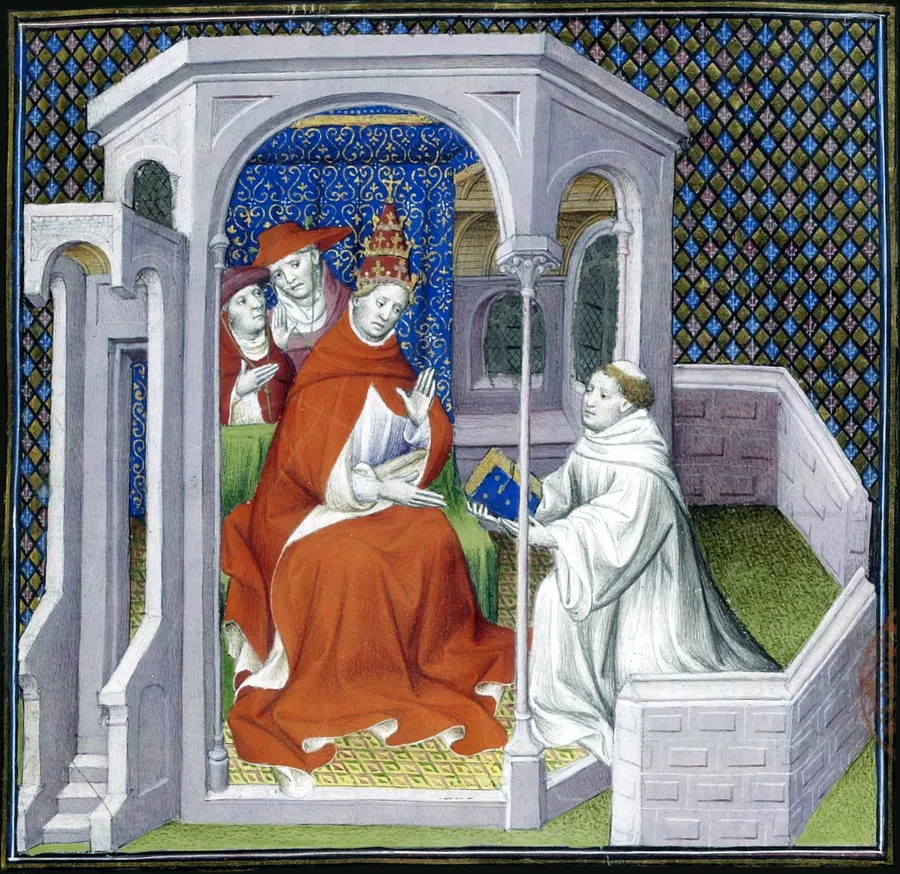
The Armenian monk Hayton of Corycus presents his book to Pope Clement V, in a 15th-century French manuscriptThe Armenian monk Hayton of Corycus presents his book to Pope Clement V, in a 15th-century French manuscriptImage: Maître du Couronnement de la Vierge · Public domain
culture · Europe

A French archbishop is elected pope after an eleven-month deadlock

After Pope Benedict XI died in 1304, the cardinals meeting at Perugia split between French and Italian factions and argued for eleven months. On 5 June 1305 they chose an outsider, Bertrand de Got, archbishop of Bordeaux, who took the name Clement V. He was crowned at Lyons, never went to Rome, and from 1309 lived at Avignon, where the popes would stay for most of the next seventy years.

Source: Catholic Encyclopedia: Pope Clement V ↗
IV
THE NINETEENTH CENTURY

The 1800s

Industry, empire, invention, reform and a century of enormous transformation.

1849
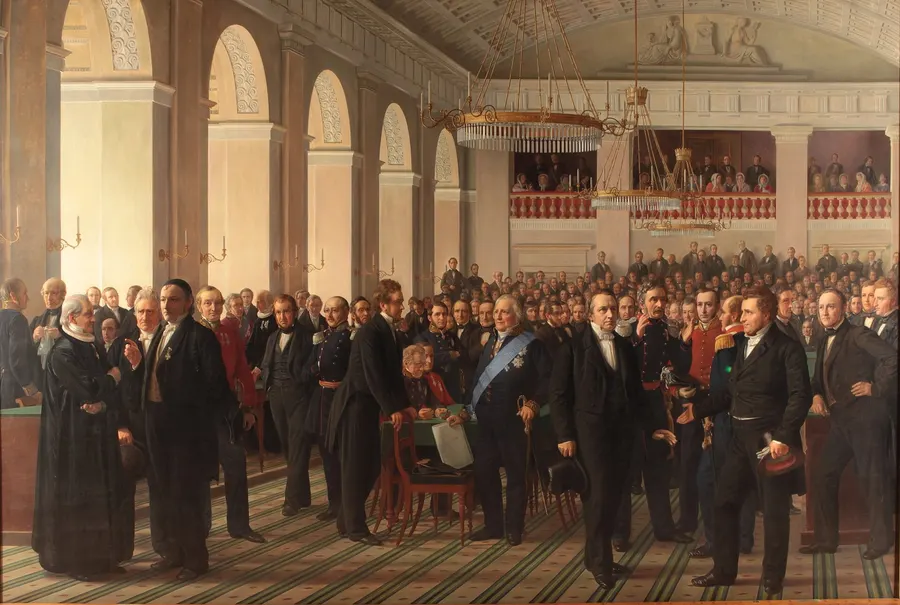
The Constituent Assembly of 1848-49, painted by Constantin HansenThe Constituent Assembly of 1848-49, painted by Constantin HansenImage: Constantin Hansen · Public domain
politics · Europe

Denmark’s king signs away absolute rule

For almost two centuries Denmark’s kings had ruled with absolute power. When Christian VIII died in January 1848, with revolutions breaking out across Europe, Copenhagen’s national liberals pressed his son, Frederik VII, for a free constitution. The new king gave way, appointed a government that included liberal leaders and called an assembly to draw one up. On 5 June 1849 Frederik VII signed Denmark’s first constitution, the Grundlov. It ended absolute monarchy, guaranteed freedoms such as those of the press and of religion, and set up a parliament of two chambers, the Folketing and the Landsting, to share power with the king and his ministers. The constitution has been revised since, notably in 1915, when women won the vote, and Danes still mark 5 June as Constitution Day.

Source: National Museum of Denmark: The nation state 1848-1915 ↗
V
THE TWENTIETH CENTURY

The 1900s

War and peace, technological leaps, social change, politics, sport and popular culture.

1916
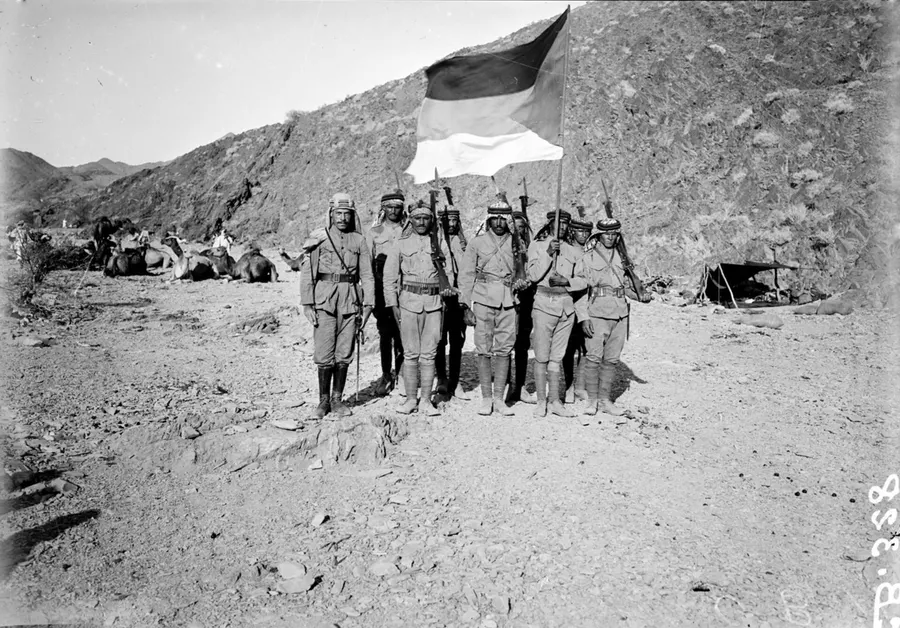
Soldiers of the Arab Revolt with their flag in the Hejaz, photographed by Maurice BaucheSoldiers of the Arab Revolt with their flag in the Hejaz, photographed by Maurice BaucheImage: Maurice Bauche (1878–1956) · Public domain
world · Middle East

The Arab Revolt against the Ottomans begins

When the First World War broke out, the holy cities of Mecca and Medina lay within the Ottoman Empire, which had joined Germany’s side. Hussein ibn Ali, the Sharif of Mecca, had his own ambitions for Arab independence, and in a long exchange of letters with Sir Henry McMahon, Britain’s high commissioner in Egypt, he sought British backing for an Arab state in return for rising against the Ottomans. On 5 June 1916 Hussein’s sons Ali and Faisal opened the revolt by attacking the Ottoman garrison at Medina, which beat them back and held out until after the war. Many histories date the start to 10 June, when Hussein’s men attacked the garrison in Mecca, which soon fell. With British money, arms and advisers, among them T. E. Lawrence, the revolt spread north through Arabia towards Damascus.

Source: Britannica: Arab Revolt ↗
1956
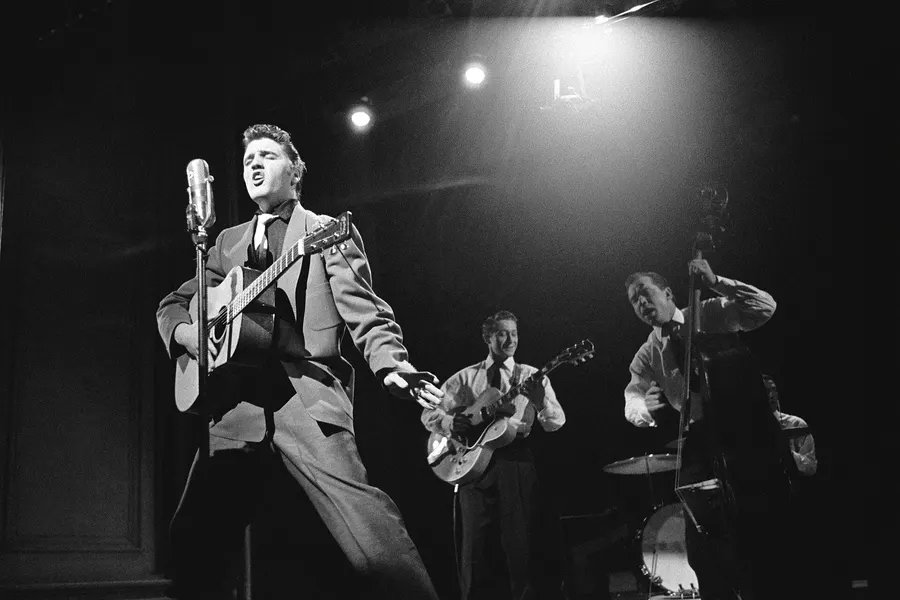
Elvis Presley performing on stage with his band in 1956, from TV Radio Mirror magazineElvis Presley performing on stage with his band in 1956, from TV Radio Mirror magazineImage: Uncredited · Public domain
culture · Americas

Elvis sings ‘Hound Dog’ and shocks television viewers

In the spring of 1956 Elvis Presley, a 21-year-old singer from Memphis, was becoming the biggest new star in American music, with ‘Heartbreak Hotel’ at the top of the charts. Television was the fastest way to reach the whole country, and on 5 June he appeared for the second time on The Milton Berle Show, one of the most popular programmes of the day. This time he put down his guitar and sang ‘Hound Dog’, a rhythm and blues song first recorded by Big Mama Thornton. Halfway through he slowed the song right down, swinging his hips and moving in a way that the studio audience loved and many adult viewers found shocking. Critics and church leaders condemned the performance, and on his next television appearance he sang the song to a real basset hound. The uproar only made him more famous.

Source: Graceland: Rock ‘n’ roll rebel, Elvis Presley on the Milton Berle Show ↗
1959
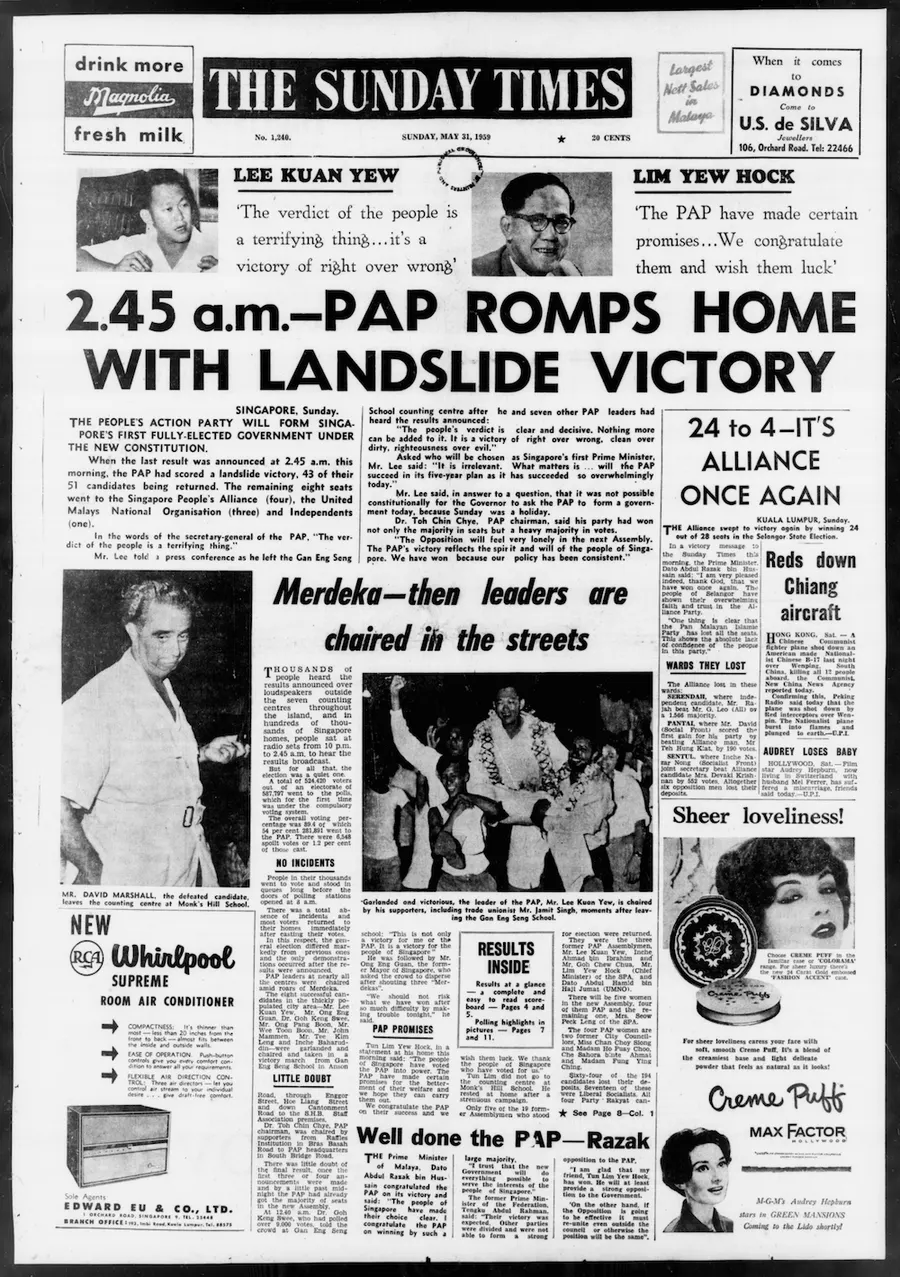
The Sunday Times of Singapore reports the People's Action Party's landslide election victory, 31 May 1959The Sunday Times of Singapore reports the People’s Action Party’s landslide election victory, 31 May 1959Image: The Straits Times. · Public domain
politics · Asia

Singapore swears in its first elected government

Under a new constitution agreed with Britain, Singapore was to govern its own internal affairs, leaving defence and foreign policy to London. The first general election for a fully elected Legislative Assembly was held on 30 May 1959, and the People’s Action Party, led by a 35-year-old lawyer, Lee Kuan Yew, won a landslide. On 5 June 1959 Lee and his nine-member cabinet were sworn in at a closed ceremony in City Hall by Sir William Goode, the last British governor, who now became head of state. The date marks the start of self-government in Singapore. Lee went on to lead the island through its short union with Malaysia and into full independence in 1965, and remained prime minister until 1990.

Source: National Library Board Singapore: The first Cabinet is sworn in ↗
1967
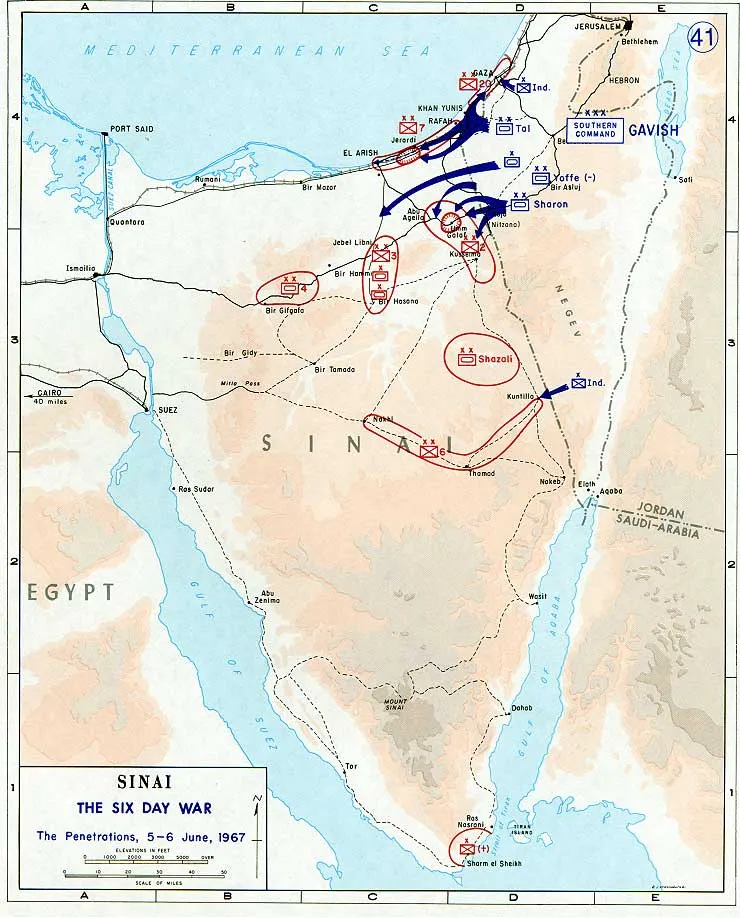
A US Army map of the Sinai campaign of the Six-Day War, showing Israeli advances on 5 and 6 June 1967A US Army map of the Sinai campaign of the Six-Day War, showing Israeli advances on 5 and 6 June 1967Image: US Army / US Military Academy · Public domain
world · Middle East

Israel’s air strikes open the Six-Day War

In May 1967 tension between Israel and its Arab neighbours rose sharply. Egypt’s president, Gamal Abdel Nasser, moved troops into the Sinai Peninsula, asked the United Nations peacekeepers there to leave and closed the Straits of Tiran to Israeli shipping. Jordan and Syria lined up beside Egypt, and Israel, fearing an attack on several fronts at once, decided to strike first. Early on the morning of 5 June Israeli jets swept in low over the Mediterranean and destroyed most of Egypt’s air force on the ground, then turned on the air forces of Jordan and Syria. With control of the skies, Israel’s army pushed across Sinai to the Suez Canal. By the ceasefire on 10 June it held Sinai, the Gaza Strip, the West Bank including East Jerusalem, and the Golan Heights, and the map of the region had changed for decades to come.

Source: Britannica: Six-Day War ↗
1975
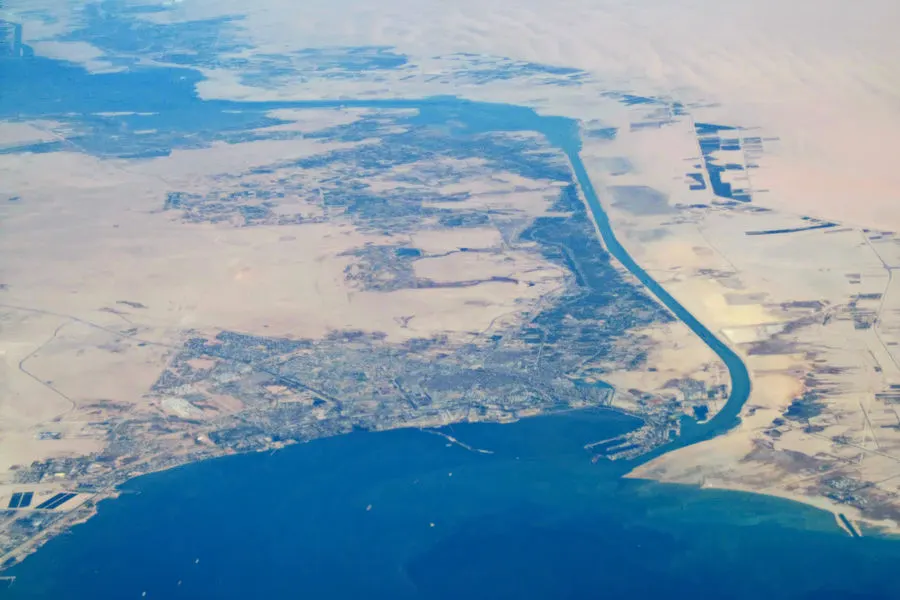
The southern end of the Suez Canal and the city of Suez, seen from the airThe southern end of the Suez Canal and the city of Suez, seen from the airImage: Baycrest · CC BY-SA 2.5
politics · Middle East

The Suez Canal reopens after eight years

Egypt closed the Suez Canal during the war of June 1967, and for eight years it lay blocked by sunken ships and mines, with fifteen merchant ships trapped in the Great Bitter Lake. After the canal was cleared, President Anwar Sadat reopened it on 5 June 1975, sailing through at the head of a convoy aboard the destroyer 6th of October.

Source: Suez Canal Authority: Canal history ↗
1975
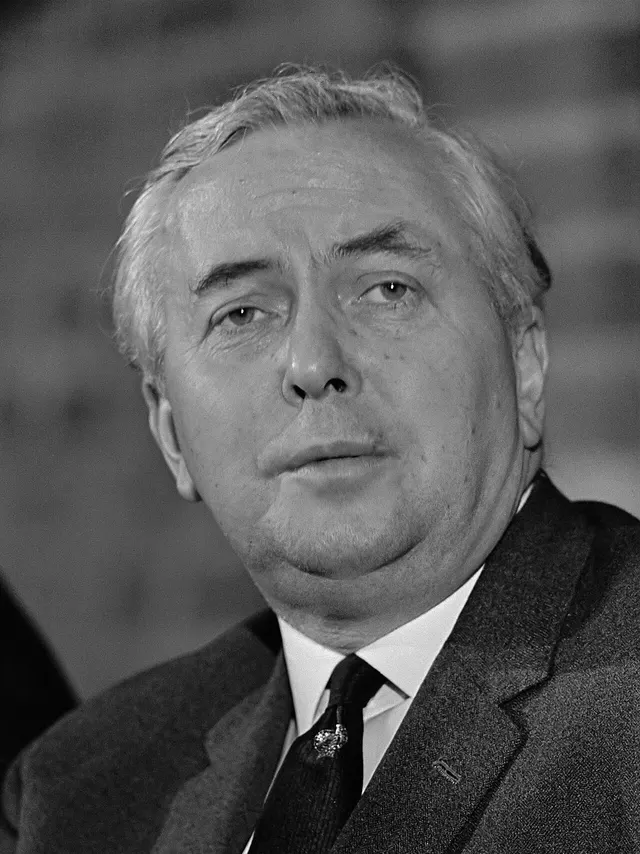
Harold Wilson, the prime minister who called the 1975 referendum, photographed in 1967Harold Wilson, the prime minister who called the 1975 referendum, photographed in 1967Image: Eric Koch for Anefo · CC BY-SA 3.0 nl
politics · Europe

Britain votes to stay in the European Community

Britain had joined the European Economic Community in 1973, but the Labour Party was deeply split over membership. Harold Wilson’s government renegotiated the terms and then, unusually, let its ministers campaign on either side. In the country’s first nationwide referendum, on 5 June 1975, about 67 per cent of voters chose to stay in, on a turnout of about 64 per cent.

Source: House of Commons Library: The 1974-75 UK renegotiation of EEC membership and referendum ↗
1977
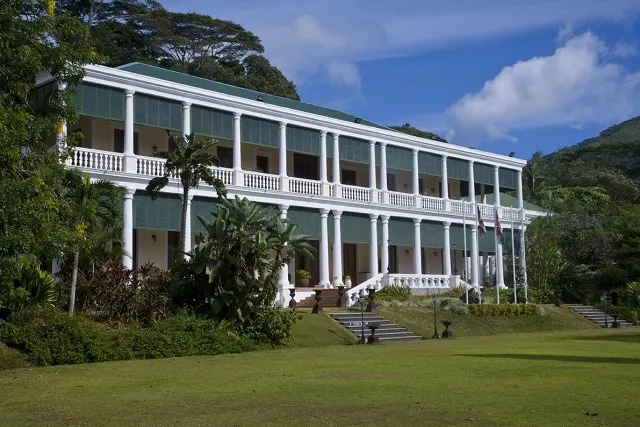
State House in Victoria, the seat of the presidency of the SeychellesState House in Victoria, the seat of the presidency of the SeychellesImage: Gerard Larose, Seychelles Tourism Board · CC BY 4.0
politics · Africa

A coup in the Seychelles brings France-Albert René to power

The Seychelles became independent from Britain in June 1976, with James Mancham as president and his rival France-Albert René as prime minister in a coalition. On 5 June 1977, while Mancham was in London for a Commonwealth conference, René’s supporters seized power in a swift coup and installed him as president. He suspended the constitution, later made the country a one-party state and ruled until 2004.

Source: US Department of State: Background note, Seychelles ↗
1981
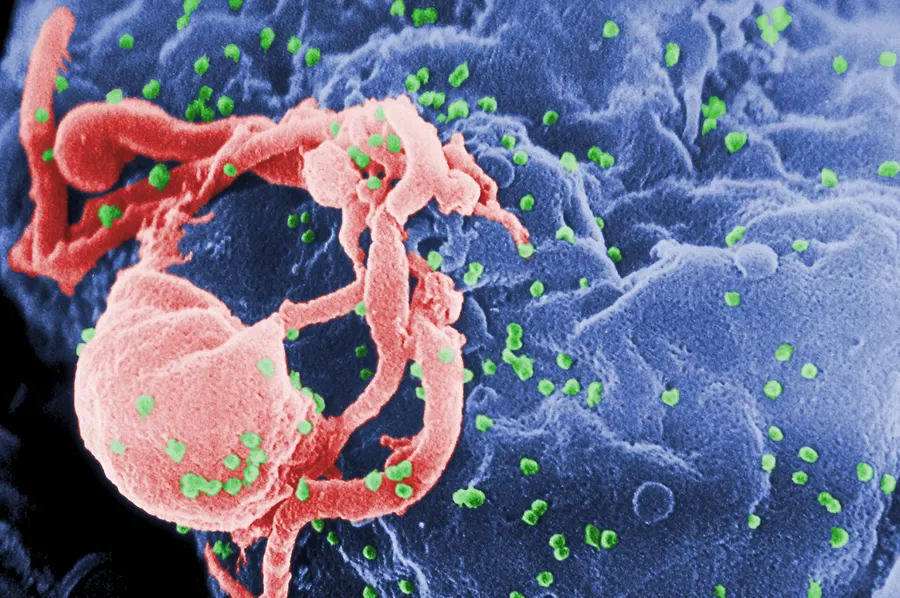
HIV particles budding from a cell, in a coloured electron micrograph from the US Centers for Disease ControlHIV particles budding from a cell, in a coloured electron micrograph from the US Centers for Disease ControlImage: CDC / C. Goldsmith · Public domain
science · Americas

A short medical report gives the first warning of AIDS

Between October 1980 and May 1981, doctors at three Los Angeles hospitals treated five young gay men who were suffering from a rare lung infection, Pneumocystis pneumonia, along with other unusual infections. The illness was normally seen only in people whose immune systems had been badly weakened, and none of the five had any known reason to be so vulnerable. On 5 June 1981 the US Centers for Disease Control published their cases in its weekly bulletin, the Morbidity and Mortality Weekly Report. It was the first published account of the disease later named AIDS, caused by the human immunodeficiency virus, HIV. Within weeks more cases were being reported from New York and California, and the report came to mark the beginning of a pandemic that has since claimed tens of millions of lives.

Source: US Centers for Disease Control and Prevention: First report of AIDS ↗
1995
The velocity distribution of rubidium atoms as the first Bose-Einstein condensate forms, from the JILA team's dataThe velocity distribution of rubidium atoms as the first Bose-Einstein condensate forms, from the JILA team’s dataImage: NIST/JILA/CU-Boulder · Public domain

science · Americas

Physicists in Colorado make a new state of matter

In the 1920s the Indian physicist Satyendra Nath Bose and Albert Einstein predicted that if certain atoms were cooled to within a whisker of absolute zero, they would stop behaving as separate particles and merge into a single quantum state, a kind of super-atom. For seventy years nobody could make atoms cold enough to test the idea. At JILA, a joint institute of the University of Colorado Boulder and the US National Institute of Standards and Technology, Eric Cornell and Carl Wieman led a team that slowed rubidium atoms with laser light, held them in a magnetic trap and cooled them further still. At 10.54 in the morning on 5 June 1995 they saw about 2,000 atoms gather into the first Bose-Einstein condensate. Cornell, Wieman and Wolfgang Ketterle of MIT shared the 2001 Nobel Prize in Physics.

Source: American Physical Society: June 5, 1995, first Bose-Einstein condensate ↗
VI
2000 TO TODAY

Modern Day

The events of recent decades that have already become part of the historical record.

2010
Francesca Schiavone waves to the crowd at Roland-Garros in 2012Francesca Schiavone waves to the crowd at Roland-Garros in 2012Image: Yann Caradec · CC BY-SA 2.0
sport · Europe

Francesca Schiavone becomes Italy’s first woman Grand Slam champion

Francesca Schiavone arrived at the 2010 French Open aged 29, a popular player from Milan but one who had never gone beyond the quarter-finals of a Grand Slam tournament. On the Paris clay she beat a string of seeded players with a bold, varied game, knocking out Caroline Wozniacki and Elena Dementieva to reach the final. There, on 5 June 2010, she met Samantha Stosur of Australia, who had beaten Justine Henin and Serena Williams on the way and was the favourite. Schiavone won 6-4, 7-6, taking the tie-break on her first match point, and knelt to kiss the clay. She was the first Italian woman to win a Grand Slam singles title, and the first Italian of either sex to win in Paris since Adriano Panatta in 1976.

Source: WTA: Fifteen years later, Francesca Schiavone still hears the echoes from Paris ↗
RESEARCH

Sources & Further Reading

Selected authoritative references supporting the events on this page.

WHY THESE MOMENTS?

Significance before volume

This page is not the longest possible list of events. It is a chronological journey through 5 June, where each entry is chosen for historical significance, human interest and reliability.

Facts are checked against authoritative museums, archives, universities and reference works. Where sources disagree, the page says so.

EXPLORED THE DEEPER STORY?

Return to the highlights of 5 June

Discover the lighter side of the date with famous birthdays, culture, firsts and lives remembered.

Explore This Day →
← PREVIOUS DAY4 June
HISTORY & TIMELINE5 June
NEXT DAY →6 June